Tag Archives: Mary

Now and at the Hour of our Death

DSC00169

In the Hail Mary we ask Mary to pray for us sinners, “now and at the hour of our death.” These are the two most important moments in life. We have the past and the future, for sure, but they’re far less important than now and the hour of our death.

“Now” is the time we live in, the present moment. Whether it’s a time of joy or sorrow, a time of satisfaction or disappointment, a time of sickness or health, it’s the time we have to love, to give, to endure, to act, to live.

“The hour of death” is God’s time, when God brings us from this life to the next. It may be instantaneous or prolonged, but it’s the time when God who gave us life takes this life away.

Both of those moments benefit from faith. Mary, the Mother of Jesus, was a believer who trusted in the power and presence of God through these same moments of life. They’re challenging moments.

After the angel left Mary in Nazareth, no other angel came; she walked by faith from the Child’s birth to the death and resurrection of her Son. As we face the mysteries of life, we ask her in our weakness to be with us as a believer and a mother, who knows the goodness and power of God as it is revealed in Jesus Christ her Son.

“Pray for us sinners, now and at the hour of our death.”

Mary, Mother of Mercy

olp


“Hail Holy Queen, mother of mercy, our life, our sweetness and our hope.” Why is Mary called “mother of mercy?” First of all, because she knew she had received the mercy of God which, like the oil poured on kings and priests, gave her power “to fulfill what is beyond human capabilities.” (Anthony Bloom)

Her cousin Elizabeth declared her “blessed among women and blessed is the fruit of your womb.”
Mary’s responded: ‘The Lord who is mighty has done great things to me, holy is his name.” She knew God’s mercy was a work in her to restore the human race. (Luke 1, 43-48)

How, then, was Mary merciful? How did she do what Jesus taught “Be merciful as your heavenly Father is merciful?” How did she live a merciful life? How did she do those works of mercy that tradition ascribes to the merciful person:
• Feed the hungry
• Give drink to the thirsty
• Clothe the naked
• Shelter the homeless
• Visit the sick
• Visit the imprisoned
• Bury the dead

• Admonish the sinner
• Instruct the ignorant
Comfort the sorrowful
Bear wrongs patiently
• Forgive all injuries
• Pray for the living and the dead

The scriptures say hardly anything about her. “Do whatever he tells you.” she says at the marriage feast of Cana. She had no teaching of her own, but always  points  to the teaching of her Son. The mystery of the Incarnation says that  Jesus took his human nature from Mary, his mother. Can we say he who became like us became like her and Joseph, the man who raised him as a child and into his adult years? From Jesus we can tell what Mary was like, a woman of mercy, and her first school was Nazareth. Now she is a teacher in the church.

Mary, the Mother of God

Virgin and Child

The Feast of Mary, the Mother of God (January 1) is celebrated by the Roman Catholic Church as the Christmas celebrations end and a new year begins. This feast begins a month named for the Roman god Janus, the two faced god who looks ahead and looks back. Mary connects us to the world ahead as well as the world of the past, and so we pray to her “that we may be made worthy of the promises of Christ.”

Christian churches of the east have a similar feast at this time honoring the Virgin Mary as the Mother of God. .

“Marvelous is the mystery proclaimed today
Our nature is made new as God becomes man;
He remains what he was and becomes what he was not,
Yet each nature stays distinct and undivided.” Canticle, Morning Prayer

Mary’s Son who came “in the fullness of time” blesses all time:
“The LORD bless you and keep you!
The LORD let his face shine upon you,
and be gracious to you!
The LORD look upon you kindly and give you peace!” (Numbers 6, 22-27)

On this feast of Mary, the Mother of God, I think of a PBS special “What Darwin Never Knew” produced awhile ago on Nova. I don’t remember or understand a lot of the program’s scientific material, but its description of DNAs and embryos caught my attention.

According to scientists, embryos from different living beings–humans, animals, birds, fish– appear remarkably alike at an early stage of development, as if they were from the same source. Then, something triggers a different development in each species. Humans sprout arms and legs and begin human development. The other species develop in their own way.

A few years ago, I visited an exhibit called “Deep Time” at the Smithsonian Museum in Washington which described the development of the earth through 4.5 billion years. One section described our development as human beings from 4.5 billion years ago. Our human species developed over time in an evolving world.

In Mary’s womb, the Word became flesh, connected with the world of the past and the world of the future. Early theologians, like St. Irenaeus, say the Word became truly human, and therefore went through the same process of development as we do. They also say the Word had to assume all that he would redeem. Can we say that in his early embryonic journey in Mary’s womb the Word assumed the creation he would renew? The embryonic journey is a sacred journey that needs to be cared for and recognized.

“Blessed is the fruit of your womb,” Elizabeth says to Mary before Jesus’ birth. (Luke 1,42) At that moment, the Word of God gave the promise of redemption to another infant– Elizabeth’s son John. Was that promise also communicated to the rest of creation in Mary’s womb, by the Word made flesh, who dwelt among us– Jesus Christ, maker and Savior of all?

The World Waits for Mary’s Reply

The world waited for Mary's reply, St. Bernard says:
The price of our salvation is offered to you. We shall be set free at once if you consent. In the eternal Word of God we all came to be, and behold, we die. In your brief response we are to be remade in order to be recalled to life.
Tearful Adam with his sorrowing family begs this of you, O loving Virgin, in their exile from Paradise. Abraham begs it, David begs it. All the other holy patriarchs, your ancestors, ask it of you, as they dwell in the country of the shadow of death. This is what the whole earth waits for, prostrate at your feet. It is right in doing so, for on your word depends comfort for the wretched, ransom for the captive, freedom for the condemned, indeed, salvation for all the sons of Adam, the whole of your race.
Answer quickly, O Virgin. Reply in haste to the angel, or rather through the angel to the Lord. Answer with a word, receive the Word of God. Speak your own word, conceive the divine Word. Breathe a passing word, embrace the eternal Word…
And Mary says, ‘I am the handmaid of the Lord. Be it done to me according to your word.'”

Morning Thoughts: She Planted The Sun


.

There once was a little girl who loved to write “love”.

Over and over she wrote the lovely word.

Straight. Crooked. Curved. Upside down.

“Love”, “Love”, “Love”…

She drew hearts and placed all around.

And in a corner she planted the sun.

Day after day she pecked away.

A little hen marking the ground where she play.

All kinds of chicks came to stay.

She lined her dolls in pretty little rows.

A beauty pageant, all kinds of hair.

Straight. Curly. Blond. Brown.

She loved them all.

Did she favor?

She rotated each day.

She knew who needed extra care.

Though all to be happy.

That the only rule.

No room in her garden for overcast days.

And how her family grew.

She had, my God, so many to attend!

Amazing she could even keep track.

Yet each tiny doll held a special place.

She simply made room.

A little girl who loved to write “love”.

Over and over she wrote the lovely word.

Straight. Crooked. Curved. Upside down.

“Love”, “Love”, “Love”…

She drew hearts and placed all around.

And in a corner she planted the sun.

———

Miriam…Marie…Maria…

Mary…

I guess it depends on the day.

Accent. Pronunciation. Spelling.

Even eye color may change.

But it’s always the same little girl.

Age to age.

Place to place.

The same little girl

Helping save the human race.

The same little girl

In the fullness of time

Forever known:

Full of Grace


.

—Howard Hain

.

Friday Thoughts: Being qua Being


.

Learn from the way the wild flowers grow.

—Matthew 6:28


.

Does a flower make pronouncements? Does it define itself? Does it box itself in with titles, names, and distinctions?

And yet, “not even Solomon in all his splendor was clothed like one of these.” (Matthew 6:29)

———

A flower simply exists.

And its existence glorifies God.

There is no need for it to do more.

By its very existence it magnifies what cannot be further magnified: God’s Presence, God’s Glory, God’s Beauty…

———

“I’m a flower.”

“I’m a rose.”

“Look at me!”

Statements such as these we shall never hear.

Flowers are divinely indifferent to the world’s definitions and distinctions, to its approval and applause.

After all, it’s a person who receives the medal at an orchid show, and not the flower herself. No, her finely-placed petals would only be weighed down by such metallic-based ribbons.

What a gift it is to simply exist.

———

Flowers don’t cling to seasonal life.

When it’s time to go, they gracefully drop their heads and lose their pedals.

Never has there existed a man as poor as a flower.

Never has mankind so possessed the richness of fleeting, transitory, and momentary life.

It’s their genius to instinctively believe that death leads to new abundant life.

———

Flowers graciously receive:

Ladybugs, drops of dew. Beams of light, the relief of shade.

Flowers give and receive as if not a single thing has ever been made by man.

They welcome sun as well as rain.

They never cry over fallen fruit or a stolen piece of pollen.

They quietly applaud instead, rejoicing that their little ones have the opportunity to travel abroad—perhaps even the chance to help nurture a neighbor.

———

A flower, perhaps most of all, knows it place.

It never wishes to be bigger or thinner…greener or higher…it never dreams of being more like a tree.

A flower’s blessing is simplicity beyond you and me.

———

Christ is a flower.

He is the one true perfect eternal flower, through whom all other flowers partake, toward whom all other flowers reach.

Christ is a flower. His ways are not our own. He simply exists. Bowing His head. Dropping pedals. Feeding hungry bees. Giving and receiving. His identity is crucified—leaving nothing behind but being “qua” being.


.

If God so clothes the grass of the field, which grows today and is thrown into the oven tomorrow, will he not much more provide for you, O you of little faith?

—Matthew 6:30


.
.
—Howard Hain
.
.
(Dedicated to Brother Jim, a man who knew how to simply exist.)

.

A Meal in Bethany

IMG_0065
On the Monday of Holy Week John’s gospel (John 12,1-11) calls us to a meal honoring Jesus in Bethany following the resurrection of Lazarus. It’s the last meal mentioned in the gospels before the Passover supper. The gift of life that Jesus gives his friend leads to a sentence of death.

Faithful Martha serves the meal; Lazarus newly alive, is at the table. But the one drawing most of our attention is Mary, their sister who, sensing what’s coming, kneels before Jesus to anoint his feet with precious oil and dry them with her hair. “And the house was filled with the fragrance of the oil.”

The precious oil is an effusive sign of her love and gratitude; it also anoints Jesus for his burial. Only in passing does the gospel mention that evil is in play here. Judas, “the one who would betray him,” complains that the anointing is a waste, but his voice is silenced. Believers are honoring the one they love.

How fitting that Holy Week begins with this gospel when, like Mary, we kneel and pour out the precious oil of our love upon him who pours out his precious life for us.

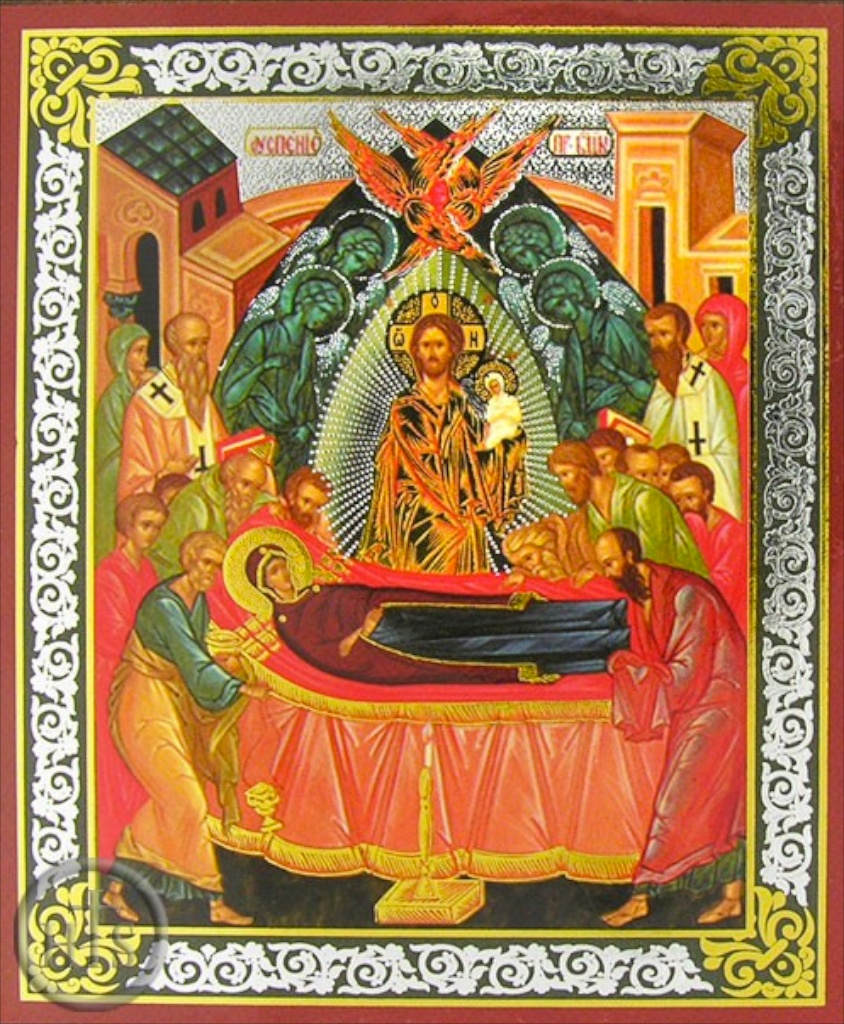
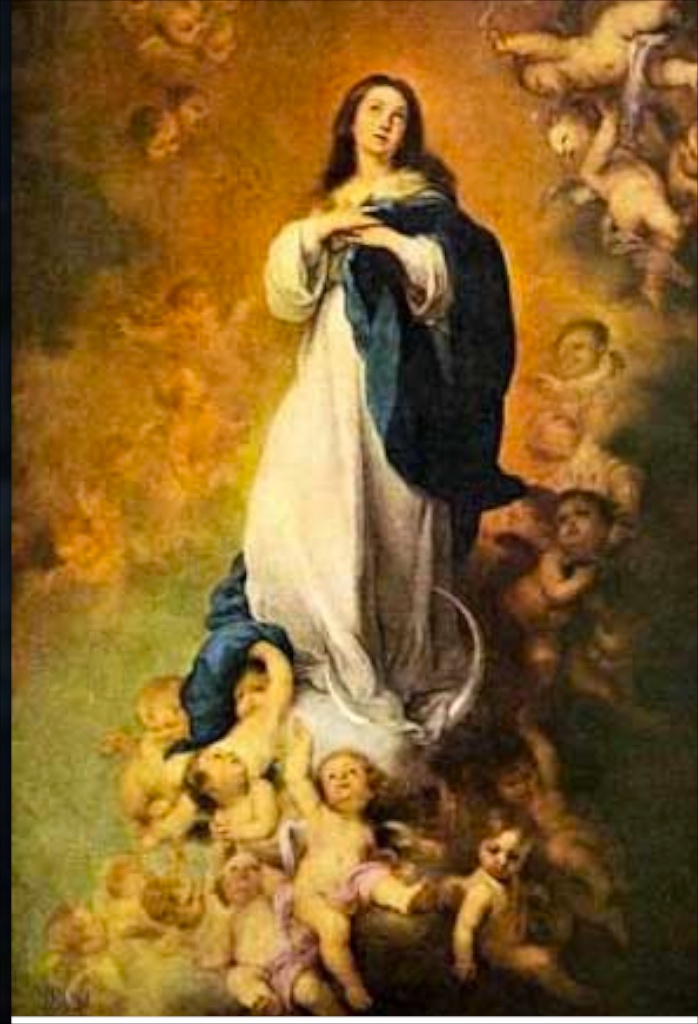
Assumption, Dormition

The Feast of the Assumption, August 15th in the Roman Church, and the Feast of the Dormition in the Eastern Church celebrate the belief that Mary, the Mother of Jesus, was taken body and soul into heaven by her welcoming Son.

The Eastern Church year begins with the Great Feast of the Birth of Mary, September 8 and ends with Great Feast of the Dormition. The mysteries of Jesus take place within these two feasts.

The two churches express the mystery differently in art. In the Western Church Mary, radiantly dressed, often surrounded by angels, turns her face to heaven,

The Eastern Church invariably has Jesus standing over his mother’s body, carrying her soul in his arms as a little child. How else would she be at death? Didn’t Jesus say we cannot enter the kingdom of heaven unless we become a little child. She became one.

Her Son brings her body and soul to heaven. She bore him in her womb through grace, now she enters heaven through grace. The apostles, surrounding her body, have been summoned from the ends of the earth to be witnesses to her death and resurrection. She is the “first fruits” of her Son’s redemption. Angels cry out for heaven’s gates to be opened.

“Open your gates and welcome the One who gave birth to the Creator of Heaven and earth; let us celebrate with hymns of glory her holy and venerable body which housed the Lord who is unseen by us. We also cry out: O worthy of all praise, lift up our heads and save our souls”. (Troparion, Feast of the Dormition)

“Today, the Virgin Mother of God

was assumed into heaven

as the beginning and image

of your church’s coming to perfection

and a sign of sure hope and comfort

to your pilgrim people.” (Preface of the Assumption)

God took Mary, the lowly one, and “raised her up to this grace, that your Only-Begotten Son was born to her according to the flesh and that she was crowned this day with surpassing glory. Grant through her prayers that, saved by the mysteries of your redemption, we may merit to be exalted by you on high.” (Collect, Feast of the Assumption)

Because Mary shares in her Son’s resurrection, she also shares his desire that “all be saved and come to the knowledge of the truth.” She joins her voice to his and intercedes for us.

“In falling asleep, you did not forsake the world, O Mother of God,

You were translated to life, O Mother of Life.

And by your prayers you deliver our souls from death.” (Troparion)

4th Sunday of Advent: Mary, Woman of Faith

King David wonders, in our first reading today of the 4th Sunday of Advent, what he can do for God after all God has done for him. David had built himself a palace of cedar wood in Jerusalem, while the ark of the covenant, the sign of God’s presence, is in a tent. Should I build God a temple, a place of beauty where God would dwell and be honored,” the king asks?
The prophet Nathan tells the king: instead a building, God wants to dwell with you and your people.

In today’s gospel, God goes further. God will dwell in Mary’s womb, to take flesh from her and be cared by her. 
Our gospel begins:
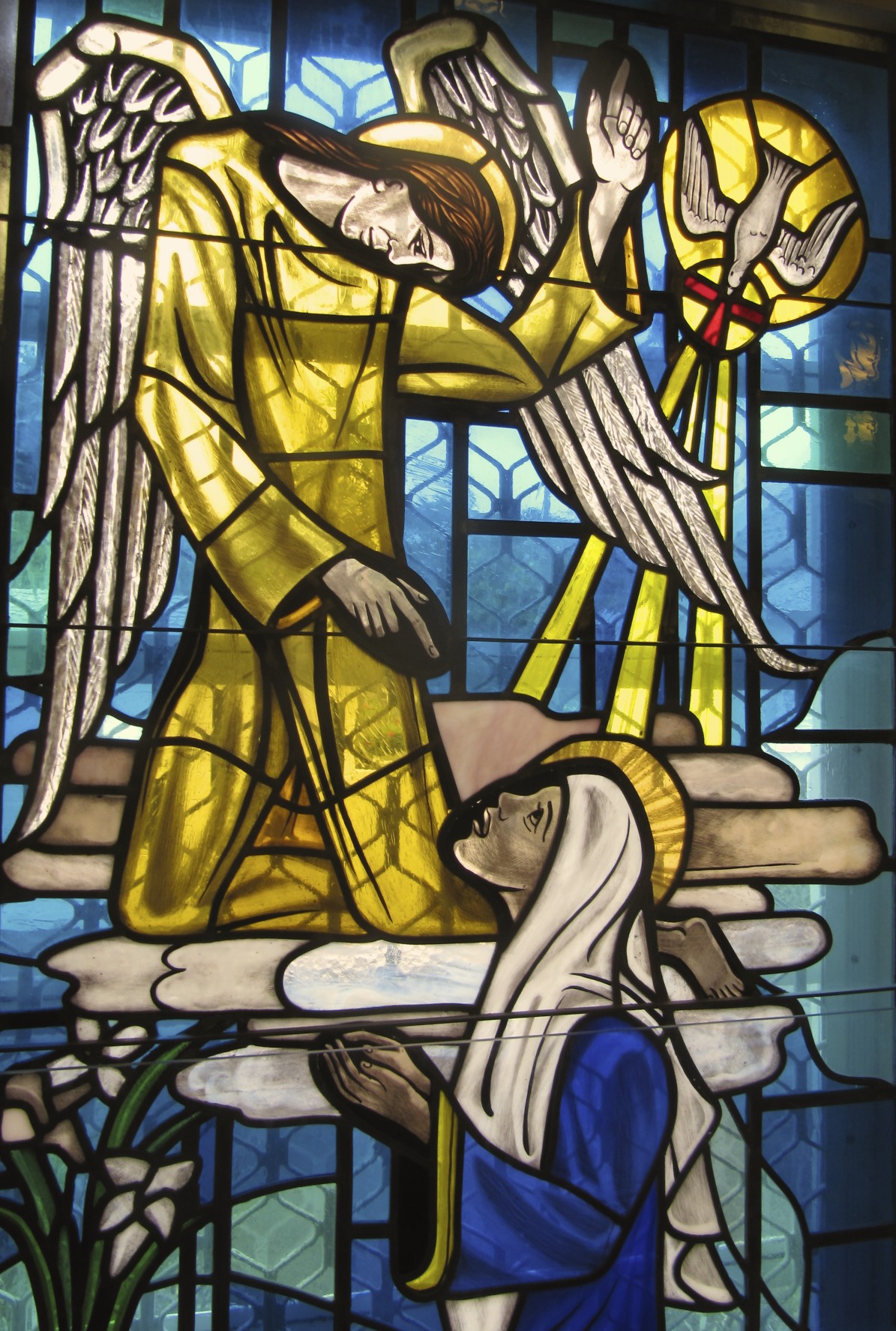
The angel Gabriel was sent from God
to a town of Galilee called Nazareth,
to a virgin betrothed to a man named Joseph,
of the house of David,
and the virgin’s name was Mary.
And coming to her, he said,
Hail, full of grace! The Lord is with you.

This gospel says so much about Mary. God showered graces upon her: “Hail, full of grace! The Lord is with you.” Just a young girl of 15 or 16, Mary answers: “Be it done to me according to your word. She accepts God’ s call, but she has her questions: “How can this be?”
The power of God will overshadow you, the angel tells her. The only sign she’s given is that her cousin, Elizabeth, “has also conceived a son in her old age, and this is the sixth month for her who was called barren; for nothing will be impossible for God.”
“Nothing will be impossible for God.”

Then, the angel leaves, and never returns, as far as we know. Mary meets the days as they come with faith, gathering her experiences and treasuring them in her heart.
At Christmas, we’ll see Mary in Bethlehem, humbly, silently holding the Infant, her Child, God with us. At Easter, we’ll see her standing beneath the cross of Jesus.
She’s his mother, a woman of faith. We learn from her and ask her to pray for us: “Pray for us, O holy Mother of God, that we may be made worth of the promises of Christ. 

Wednesday, 3rd week of Advent


Sacred Heart Church


The angel came to Mary in Nazareth, the last place we might expect an angel’s message. In this little known place, Jesus became flesh. In this young unknown woman, he came to dwell among us.

It wasn’t in Jerusalem, in the temple where God’s Presence was proclaimed. It was in Nazareth, in the quiet hills of Galilee, on a routine day, that He came.

We celebrate the mystery of the Incarnation and pray, “Pray for us, O holy mother of God, that we may be made worthy of the promises of Christ.”