Tag Archives: faith

5th Sunday C Deep Waters


To listen to the audio for today’s homily, select the audio file below:

I usually go out fishing a couple of times a year at the Jersey Shore with a friend of mine who has a boat equipped with radar that tracks fish. I notice, though, he also has some old maps he has marked where the fish usually are; he also looks around to check where the party boats are. They’re the fishermen who are out there day after day and night after night. They make their living off the sea and so if they aren’t catching anything, nobody is.

In our gospel, Peter and his friends are professional fishermen, night and day, everyday fishermen. If they don’t know the waters, nobody does. One recent archeological investigation on the Sea of Galilee, at Magdala on its northwestern shore, close to Capernaum where Peter docked his boats, seems to confirm that at the time of Jesus, the fishing industry in Galilee was quite sophisticated. They had elaborate methods for storing and preserving fish in order to bring them to market at the right time. They had developed a dark blue netting for night fishing. They were good at it.

And so, when Peter tells Jesus, “We have worked hard all night and caught nothing,” he’s a professional talking. Experience is behind him; reason and human skill are behind him. “But at your word I will lower the nets.” Because he accepts the word of Jesus he gets a reward bigger than he could ever expect– a catch so great that their boats were in danger of sinking.

Later on in Mark’s gospel, Jesus asks Peter: “Who do people say I am?” “You are the Messiah,” Peter answers. But when Jesus goes on to say he will be arrested and put to death and rise again, Peter doesn’t want to hear it. That’s not reasonable. “Don’t think about that,” he says. And Jesus calls him Satan. “You’re not thinking like God, you’re thinking like human beings do.”

As he did on the Sea of Galilee, Jesus asks Peter to go beyond human thinking. When God speaks and reveals things we have to go beyond our reasonableness and calculations.

Peter is not the only one who has to go beyond human thinking. We’re also asked to do that too, if we want to be people of faith. In our 2nd reading today the Apostle Paul asks us to believe.

“Brothers and sisters,

I handed on to you as of first importance what I also received:

that Christ died for our sins

in accordance with the Scriptures;

that he was buried;

that he was raised on the third day

in accordance with the Scriptures;

that he appeared to Cephas, then to the Twelve.

Last of all, as to one abnormally born,

he appeared to me, and

so we preach and so you believed.”

Paul wants his hearers to believe in God, the creator of this world. This world did not just happen. Jesus Christ is God’s Son, born of Mary, suffered under Pontius Pilate, died and rose again.

We’re called to follow him, to be with him, to be his companions, his friends, to listen to his words, to hope in his promises, to love others as he has loved us.

“Put out into the deep water and lower your nets for a catch,” That’s what we do when we come to Mass. This is the deep water where we lower our nets to catch those graces God wishes to give us. Surprising graces, more than we imagine, greater than we could expect. This is the sea where believers are blessed.



Friday Thoughts: Playing Around

Bruegel, Children's Games, 1560

Bruegel, “Children’s Games”, (1560)


…and a little child will lead them.

—Isaiah 11:6

———

It’s the simple moments. It’s playing hide-and-seek. It’s pretending that what isn’t is.

Like a game made-up as we go, with only a single rule: It has to make us laugh.

But not the kind of laughter that hurts anyone or anything. No, it has to be true laughter, the kind that comes from and through kindness, through truly wanting to be with one another—so much so that we’ll make up just about any old game, just as long as we wont have to go our separate ways.

“Life” then becomes one big beautiful “excuse” to stay together, and our “actions” take on a tremendously meaningful fashion. They become like soft pieces of colorful clothing gently placed upon our joy-filled affections.

Little children know this through and through. They’re constantly changing and tailoring their “clothes”, adapting and accessorizing as they go, with only one goal in mind: for the “fun” to continue. But the fun they seek is not the kind that you and I normally desire—for little children know what few adults remember. They’re not so easily tricked. They know that fun, true fun, has very little to do with the actual game being played, in and of itself. For little children it’s all about what the game, as a mere instrument, allows them to experience—the freedom to let out love.

That’s why the type of game they play can turn on a dime. It just doesn’t matter.

Rules? Scores? Time-limits?

Who cares about stuff like that?

Are we “laughing”? Are we having “fun”? Are we still “with each other”?

Are we still in love?

These are the only questions that matter to a small child!

And with prayer it is much the same. Saints make up all kinds of “games” in order to “excuse” the time that they want so desperately to spend with God. They play all kinds of little games. They slide beads, they sing little songs, they pretend to be statues while playing hide-and-seek with the Lord, and some—the ones that the world most often calls crazy—even dream up little tales and fanciful stories, imagining along with God what could be if only everyone in the world would join in and play together.

But this is no big secret. All saints in one way or another come to say the same thing: Every technique, every approach, every means of entering into prayer…each and every one…they’re all part of one giant “excuse”, one seemingly never-ending “game”. For at the end of the day, techniques and approaches are at best a mere prelude to divine laughter—that infant-like sound composed of pure joy, that only the Love of God can bring into being.

———

He said to them, “Let the little children come to me, and do not hinder them, for the kingdom of God belongs to such as these. Truly I tell you, anyone who will not receive the kingdom of God like a little child will never enter it.” And he took the children in his arms, placed his hands on them and blessed them.

—Mark 10: 14-16

.

—Howard Hain

.

4th Sunday of Advent. C. Mary’s Faith


To listen to today’s homily, please select the audio file below:

Sometimes, the simplest details of a gospel story reveal its deepest meaning. In Luke’s Gospel this Sunday, Mary goes “in haste” to the hill country to visit her cousin Elizabeth. She has just received the angel’s message inviting her to be the mother of God’s Son, and she says “Yes.” The angel told her that her cousin Elizabeth, though past child-bearing age, also has conceived a son. “Nothing is impossible with God.” (Luke 1,39-45)

Then, Mary goes “in haste” from Nazareth to visit Elizabeth who lives in the hill country near Jerusalem. The angel’s message, first disturbs her, then fills her with joy. She hurries to see the angel’s sign and share the promise she received. What does this tell us? Is it that faith, challenging and raising questions, spurs us on and gives joy. It’s God’s word; it’s true. Believe in it and act on it.

When Mary heard the message of the angel she did not disbelieve, St. Ambrose said, commenting on this gospel, “she was not uncertain about the message, she did not doubt the sign she was given, but happy with the promise, eager to be with her cousin, she hurried on in joy and went up into the hill country.”

“We’re blessed, who hear and believe,” the saint goes on. “ Every soul that believes, both conceives and gives birth to the Word of God and recognizes God’s works. Let the soul of Mary be in each one of us, to proclaim the greatness of the Lord. Let the spirit of Mary be in each one of us, to rejoice in God. According to the flesh only one woman can be the mother of Christ but in the world of faith Christ is the fruit of all of us.”

We share in the mystery we hear. Believe in it, live by it, rejoice in it.

Friday Thoughts: To All Gathered in Thought and Prayer

by Howard Hain

.

Jesus Christ is Real.

.

He is not made of wood or ink or paint. He is not a distant figure from a distant past. He is here. We gather in His name—He is here. He is as real as each one of us. He is what makes each one of us real.

The message is simple:

He is the Son of God. He is the Way, and the Truth, and the Life. He is Love. He is Forgiveness. He is Humility. He is Boldness and Obedience.

He is Lord. He is God. He is Jesus Christ, crucified and risen.

He is Christ Jesus, and He is Real.

I see Him now in each of you. I say to Him, I say to you: “I love You, my Lord and my God.”

.

Now, let us go and tell others…

.

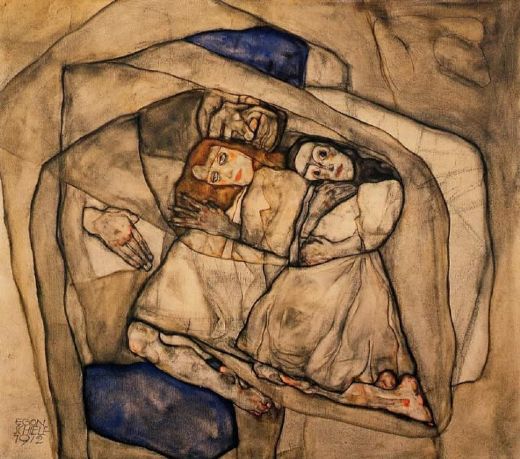
egon-schiele-conversion-78198

Egon Schiele, “Conversion” (1912)

.

And behold, I am with you always, until the end of the age.”

— Matthew 28:20

.

Friday Thoughts: Don’t Look At Me

Caravaggio, Denial of St. Peter, (1610)

Caravaggio, “Denial of St. Peter” (1610)

.

Never look to a man for answers.

Look to Christ who is the answer.

If you insist on looking to a man, then choose one who points to Christ.

For the best teacher is Christ Himself…and His best assistants are those who clearly say: “Don’t look at me.”

.

.

—Howard Hain

.

Friday Thoughts: No Cross Outweighs Christ’s

The more bold we are in God’s name, the greater the mission He assigns—and the greater the resistance from the world.

That resistance is very real, a gravitational force, threatening to crush us, to drive us down beneath the earth—and that resistance takes the form of a cross.

The greater the mission, the heavier the cross.

But fear not, the supernatural force of faith always overcomes. And rest assured in this: No cross outweighs Christ’s, for He took on the weight of the entire world.

Yet, Christ stood, Christ climbed, Christ raised His punctured palms. He overcame the force of death itself and ascended victoriously into Heaven.

So be bold my brothers and sisters in Christ. Accept your mission, pick up your cross and walk, and if you stumble, if you fall…get up. Stand. Stand in faith. And know that you never stand alone.

Know that none of it is an illusion, not the suffering, not the victory.

Know that the struggle is not a figment of your imagination.

No, the weight of your cross is very real…but so is Christ.

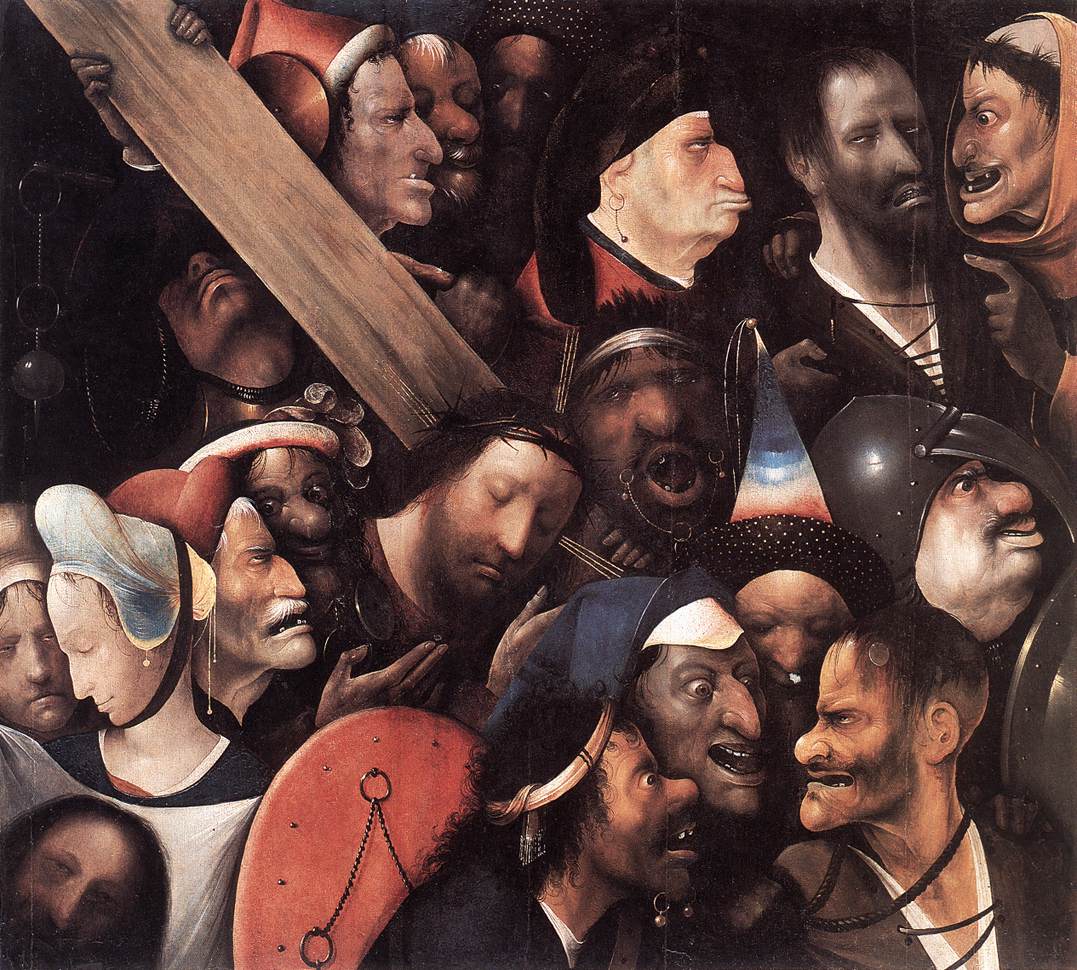
Hieronymus Bosch, Christ Carrying the Cross (1515-16)

Bosch, “Christ Carrying the Cross” (1515-16)

..

—Howard Hain

.

Friday Thoughts: A Cross-Shaped Shadow

But Jesus cried out again in a loud voice, and gave up his spirit. And behold, the veil of the sanctuary was torn in two from top to bottom. The earth quaked, rocks were split, tombs were opened, and the bodies of many saints who had fallen asleep were raised.

—Matthew 27:50-52

.

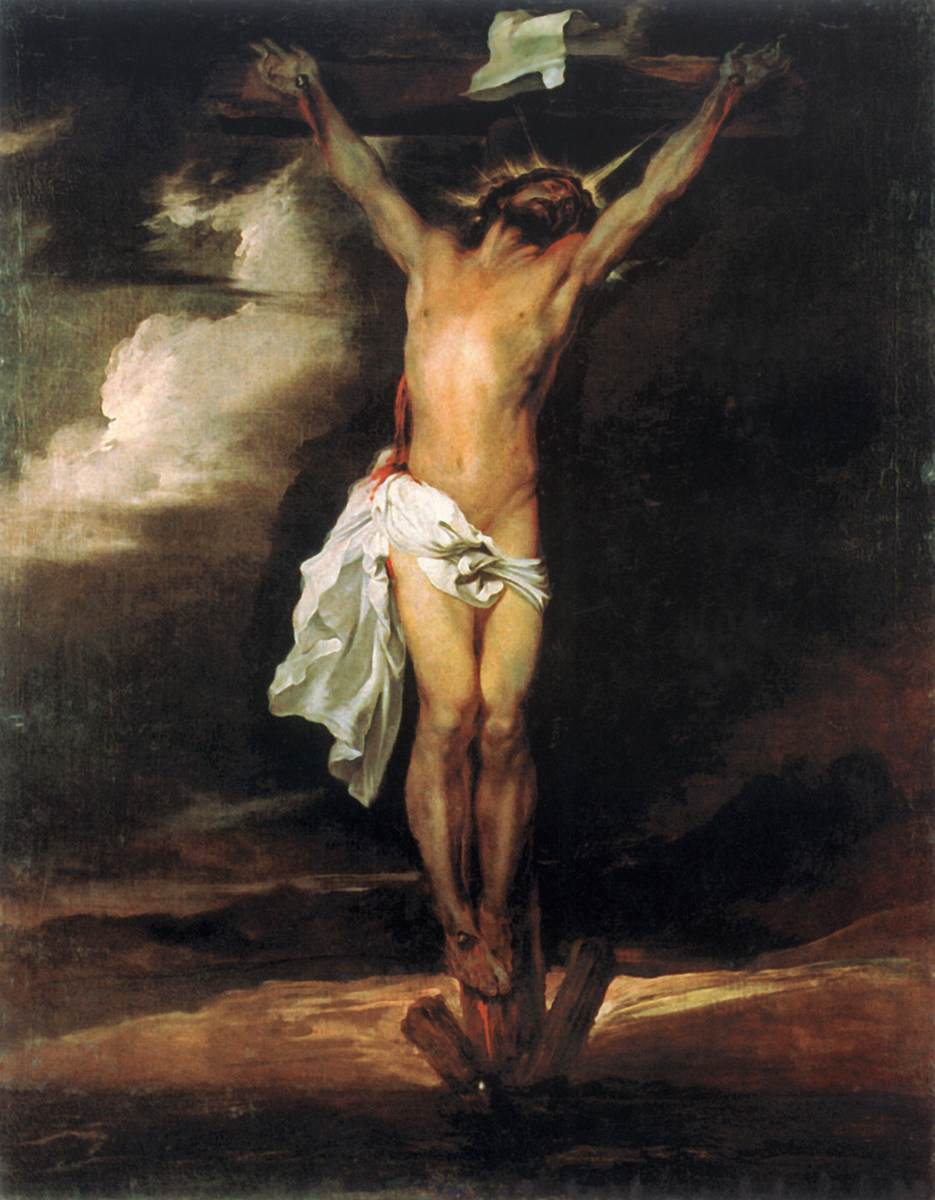
Van Dyck, “Crucifixion” (1622)

.

Get close to the Cross, so close that you stand in its shadow.

It is then that you feel the earth quake and your faith deepen.

It is then that you witness salvation pouring forth from His wounds.

.

.“Clearly this man was the son of God!”

—Mark 15:39


..

—Howard Hain

.

15th Sunday B: Go With What You Have

To listen to today’s homily, please select the audio file below:


We read last Sunday from the Gospel of Mark about the rejection of Jesus in his own hometown of Nazareth. After performing two great miracles, he went home and found himself dismissed and belittled by people he has known all his life, not only townspeople but members of his own family.
“A prophet is not without honor except in his native place and among his own kin and in his own house.” (Mark)

The rejection didn’t stop him, of course. Leaving Nazareth Jesus turns to the twelve he has chosen previously and sends them out to announce the coming of the Kingdom of God. He gives them a commission; he empowers them. But listening to his words in the gospel ,we might wonder if he’s really giving them all they need.

“He instructed them to take nothing for the journey but a walking stick—no food, no sack, no money in their belts. They were, however, to wear sandals but not a second tunic. “

No food, no begging bag, no money? Not even a change of clothes? Doesn’t seem adequate, does it?

A Haitian priest, Father Joseph, is staying with us for a few months trying to learn English and last Friday he celebrated our community Mass for the first time in English. The gospel, appropriately, was from St. Matthew, where Jesus said to his apostles, “Behold, I am sending you like sheep in the midst of wolves… do not worry about how you are to speak or what you are to say. You will be given at that moment what you are to say. For it will not be you who speak but the Spirit of your Father speaking through you.”

We can be a tough audience, of course, but we clapped for him when he finished. No, we couldn’t understand him all the time, but his sincerity, his zeal, the faith of the man stood out. The Spirit was speaking through him.

I think that’s what Jesus tells us in today’s gospel. He’s not talking to his apostles alone; he’s talking to us too. Don’t be afraid to embrace your faith, to live it as well as you can and to offer it to others as well as you can. The Spirit uses us. Even if you think your faith is small, don’t be afraid to use it, even if you don’t have all the answers or can’t put it in the words you would like, say it. Jesus gives us his Spirit; we need to depend on the Spirit, not on our own abilities.

These days the pope is visiting three countries in South America: Ecuador, Bolivia and Paraguay. These are countries that are among the poorest in the world. They don’t have much clout; they’re not among the super-powers. I suppose some would say the pope should manage his time better. Instead of going to places like that why not go to Harvard or Princeton and talk to the intelligentsia. Why not go to Hollywood and talk to the celebrities, they’re the people with power. But pope seems to prefer going to the poor.

And what does he say to them? To a congress in Bolivia of representatives of labor and many marginalized groups he said:”The future of humanity does not lie solely in the hands of great leaders, the great powers and the elites,” he said. “It is fundamentally in the hands of peoples and in their ability to organize. It is in their hands, which can guide with humility and conviction this process of change. I am with you. Let us together say from the heart: no family without lodging, no rural worker without land, no laborer without rights, no people without sovereignty, no individual without dignity, no child without childhood, no young person without a future, no elderly person without a venerable old age. Keep up your struggle and, please, take great care of Mother Earth.” Sounds like something Jesus would say.

The Thomas in us all

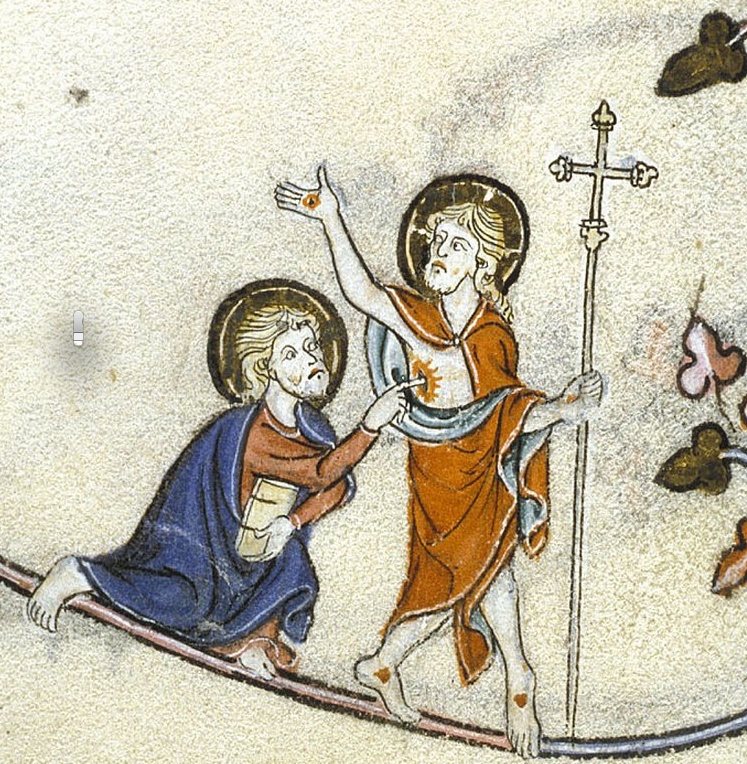
Thomas

Some things — like telling time or tying your shoes — you learn once, but we know Jesus Christ gradually, day by day. Human and divine, he makes himself known to us as he promises and as we are ready to receive him.

That’s why Thomas, the apostle, whose feast is today, is such an important figure. Far from being a lonely skeptic, an isolated dissenter, he represents the slowness of heart and mind, the recurrent skepticism, that affects us all.

Yet, Thomas is a sign of hope. He reminds us that the Risen Jesus offers, even to the most unconvinced, the power to believe.

Lord Jesus,
the Thomas in us all
needs the wounds in your hands and side,
to call us to believe
you are our Lord and God.

Risen, present everywhere,
bless those who have not seen,
blind with doubts
or weakened faith, or no faith at all.

Bless us, Lord,
from your wounded hands and side,
strengthen our faith
to believe in you.

The Homelessness of Faith

“When Paul had finished speaking he knelt down and prayed with them all. They were all weeping loudly as they threw their arms around Paul and kissed him, for they were deeply distressed that he had said that they would never see his face again. Then they escorted him to the ship.”

As the gospel spread to all nations, we seldom see scenes in the scriptures like Paul’s farewell to the presbyters at Ephesus, described in our reading for today, but there must have been others like it. Peter biding farewell to his family at Capernaum; James and John parting from the mother who wanted so much for them; others who left the places and people they knew for the sake of the gospel. Goodbyes are hard, even when they happen for noble purposes.

There’s a homelessness in every human life. The Carmelite poet, Jessica Powers describes it so well in one of her poems:

“It is the homelessness of the soul in the body sown

it is the loneliness of mystery;

of seeing oneself a leaf, inexplicable and unknown

cast from an unimaginable tree;

of knowing one’s life to be a brief wind blown

down a fissure of time in the rock of eternity.”

This is the homelessness that touches us all, even as we believe.

The elders of Ephesus would miss Paul who had been with them for three years and become part of their life, and he would miss them. The disciples of Jesus at the Last Supper must have been touched as he told them he was going away. They had to feel loss.

Only the promise of a spiritual union and a homecoming tempered their sense of loss. Only the promise of reunion of another day.