Tag Archives: Cross

The Easter Tree

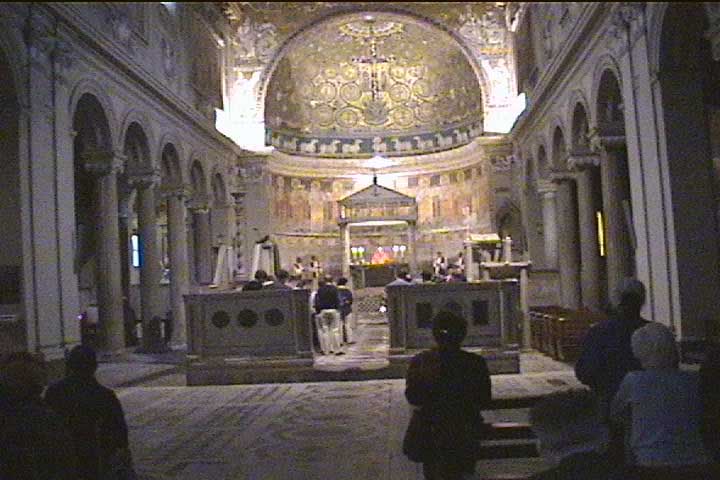
san clemente copy

The Cross  flowers at Easter time. There’s a flowering cross brimming with life  in the great apse of the church of San Clemente in Rome. Its branches swirl with the gifts God gives. It brings life, not death. Humanity is there, signified in Mary and the disciple John. We are there in the doves resting on it. Creation itself is there, drawing new life from it. The hand of God makes it so.

The sacraments offered in this sacred place bring life-giving graces to us.

An early preacher Theodore the Studite  praises the mystery of the cross:.

“How precious the gift of the cross, how splendid to contemplate! In the cross there is no mingling of good and evil, as in the tree of paradise: it is wholly beautiful to behold and good to taste. The fruit of this tree is not death but life, not darkness but light. This tree does not cast us out of paradise, but opens the way for our return.

“This was the tree on which Christ, like a king on a chariot, destroyed the devil, the Lord of death, and freed the human race from his tyranny. This was the tree upon which the Lord, like a brave warrior wounded in his hands, feet and side, healed the wounds of sin that the evil serpent had inflicted on our nature. A tree once caused our death, but now a tree brings life. Once deceived by a tree, we have now repelled the cunning serpent by a tree.

“What an astonishing transformation! That death should become life, that decay should become immortality, that shame should become glory! Well might the holy Apostle exclaim: Far be it from me to glory except in the cross of our Lord Jesus Christ, by which the world has been crucified to me, and I to the world!”

San Clemente, Rome

See Children’s Prayers here for a children’s version of the Easter Tree.

Her Station Keeping

The candles at Tenebrae lead to another reflection. The 15 candles stand for Jesus, his twelve apostles and the two disciples from Emmaus. As 14 candles are extinquished, we remember those who left him on Good Friday and fled. 

Mary, the mother of Jesus, is not represented in the Tenebrae candles. She stood by his cross on Good Friday, but she is not among those our candles represent. Where did she go after his death and burial on Good Friday?  Where was she on Holy Saturday?

She was among the women of Galilee who came up to the feast with Jesus. It’s likely they stayed in Bethany, the traditional place pilgrims from Galilee stayed. She must have been welcomed by the friends of Jesus, Mary, Martha and Lazarus. Did Lazarus, raised from the dead, offer her hope? Still, his death was so unlike that of her Son. He died of some sickness; Jesus was brutally put to death.  

Would Mary have the same questions of God as Martha had of Jesus? Why? This was a day the piercing sword foretold by Simeon the temple struck most deeply into her heart. This was a day her faith was so fiercely tried.

In our calendars, Saturday is a day we remember Mary. We remember her today and ask her to pray that we may believe in the promises of Christ.

At the cross her station keeping,                                            stood the mournful mother weeping,                                             close to Jesus till the last. 

Cyril of Jerusalem: The Power of the Cross

St. Cyril of Jerusalem (313-386) was bishop of Jerusalem when that city was a popular center of Christian pilgrimage.  Ordinary Christians, as well as scholars like St. Jerome and St. Paula, came to the Holy Land at the time to visit the places where Jesus was born, died and rose again. “The whole world is going to an empty tomb,” St. John Chrysostom remarked. 

The church in Jerusalem influenced the liturgical, catechetical and devotional life of Christian churches throughout the world.. Visiting Christians, hearing Cyril’s sermons and masterful catechesis brought devotional and liturgical practices,, like the Stations of the Cross,  to their own churches back home. 

Cyril preached and celebrated the liturgy in the Church of the Holy Sepulcher, built by the Emperor Constantine  and his mother, Helena, over the tomb of Jesus and the place where  he died. The church still stands in Jerusalem today. 

St, Cyril and the church of Jerusalem are remembered, appropriately on March 18, usually during Lent.  

Here’s an excerpt from one of Cyril’s catechetical sermons, preached in the Church of the Holy Sepulcher, where the relic of the cross and the tomb of Jesus were honored. Siloam, the pool where the blind man was cured, Bethany where Lazarus was raised, the precious relic of the cross were not far away, they were nearly, easily seen and visited.

“The Catholic Church glories in every deed of Christ. Her supreme glory, however, is the cross. Well aware of this, Paul says: God forbid that I glory in anything but the cross of our Lord Jesus Christ!

“At Siloam, there was a sense of wonder, and rightly so: a man born blind recovered his sight. But of what importance is this, when there are so many blind people in the world? Lazarus rose from the dead, but even this affected only Lazarus: what of those countless numbers who have died because of their sins? Those miraculous loaves fed five thousand people; yet this is a small number compared to those all over the world who were starved by ignorance. After eighteen years a woman was freed from the bondage of Satan; but are we not all shackled by the chains of our own sins?

For us all, however, the cross is the crown of victory. It has brought light to those blinded by ignorance. It has released those enslaved by sin. Indeed, it has redeemed the whole of mankind!”

The relic of the cross, rescued from the refuse of Calvary, honored by Cyril in the Jerusalem church. was not just a grim reminder of the suffering of Jesus; Encased in gold, it was bathed in the glorious memory  of Jesus’ resurrection celebrated close by in his empty tomb.

Church of the Holy Sepulcher, Jerusalem

For Morning and Evening Prayers today, 4th week.

Thursday after Ash Wednesday

Lent 1


Today’s Readings

Then Jesus said to all,
“If anyone wishes to come after me, he must deny himself
and take up his cross daily and follow me.
For whoever wishes to save his life will lose it,
but whoever loses his life for my sake will save it.

Jesus offers a blunt challenge in this reading from Luke’s gospel;  a challenge to his disciples then and to us now. “If anyone wishes to come after me, he must deny himself and take up his cross daily and follow me.” In fact, he speaks to all.

No one escapes the cross. It’s there each day.  It may not look  like the stark cross Jesus received from the hands of the chief priests, the elders and the scribes in Jerusalem, but it’s there all the same. We may not see it because it’s so much a part of  life, but if we look closely our cross is there.

Actually, taking up our cross is a way of choosing life, which Moses urges in our first reading today, choosing not some “good” life, or idealized life, but life as it is. It means accepting life gratefully, fully, without resentfulness. If we listen to Moses in today’s first reading, choosing life affects not only ourselves but others too. Listen to him:

I have set before you life and death,
the blessing and the curse.
Choose life, then,
that you and your descendants may live, by loving the LORD, your God,
heeding his voice, and holding fast to him.

A traditional Christian practice to begin the day is to make the Sign of the Cross. We do it to remind ourselves of the daily cross we bear and remember we do not bear it alone. God helps us bear whatever life brings each day. Christ bears it with us as he promised. The Sign of the Cross calls us to change the world we live in, as well as bearing with it. Let’s remember this basic Christian practice in lent for the patience and courage it gives us.

St. Paul of the Cross once wrote a letter to Teresa, a woman overwhelmed by life.  What shall I do? she said. Paul urges her to let God’s Will decide for her what to do. He wanted people to find their cross and embrace it. It’s there before us.

“Teresa, listen to me and do what I’m telling you to do in the Name of the Lord. Do all you can to be resigned to the Will of God in all the sufferings that God permits, in your tiredness and in all the work you have to do. Keep your heart at peace and be recollected; don’t get upset by things. If you can go to church, go; if you can’t, stay home quietly; just do the Will of God in the work you have at hand.” (Letter 1135)

Bless me, Lord,
and help me take up the cross
that’s mine today,
though it may not seem like a cross at all. Let me accept it gratefully.

In the name of the Father, and of the Son and of the Holy Spirit. Amen.

The Wisdom of Thomas Aquinas

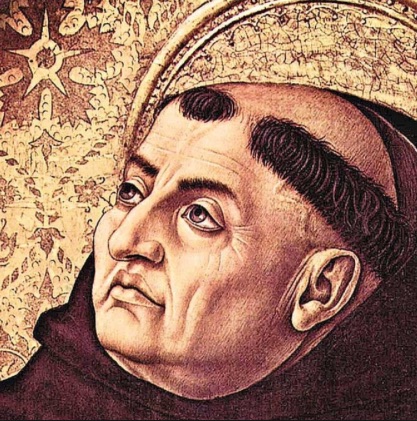
Thomas Acquinas

The feast of St. Thomas Aquinas, January 28th, in my student days was a day for presentations honoring the saint. The presentations were not about the saint’s life but his wisdom. Thomas Aquinas was a great theologian dedicated to the search for truth.

He was a man of faith, searching for understanding. That’s the definition of theology–faith seeking understanding, an understanding that draws us closer to God and helps us know God, the source of all truth.

He was a man of questions, who approached great mysteries through questions. That’s the way St. Thomas begins a sermon he once preached, found today in the Office of Readings for his feast:

 “Why did the Son of God have to suffer for us?” he asks as he looks at the Cross of Jesus. The passion of Jesus was necessary, the saint says, for two reasons. First, as a remedy for sin, and secondly, as an example of how to act.

Interestingly, the saint doesn’t spend much time asking why it’s a remedy for sin. He’s more interested in the passion of Jesus as an example for us. To live as we should, we need to look at Jesus on the cross, an example of every virtue:

“Do you want an example of love? ‘Greater love than this no one has, than to lay down one’s life for one’s friends.’ That’s what Jesus did on the cross. If he gave his life for us, then it should not be difficult to bear whatever hardships arise for his sake.

“If you want patience, you will find no better example than the cross. Great patience occurs in two ways: either when one patiently suffers much, or when one suffers things which one is able to avoid and yet does not avoid.

“Christ endured much on the cross, and did so patiently, because when he suffered he did not threaten; he was led like a sheep to the slaughter and he did not open his mouth. Therefore Christ’s patience on the cross was great. In patience let us run for the prize set before us, looking upon Jesus, the author and perfecter of our faith who, for the joy set before him, bore his cross and despised the shame.

“If you want an example of humility, look upon the crucified one, for God wished to be judged by Pontius Pilate and to die.

“If you want an example of obedience, follow him who became obedient to the Father even unto death. For just as by the disobedience of one man, namely, Adam, many were made sinners, so by the obedience of one man, many were made righteous.

“If you want an example of despising earthly things, follow him who is the King of kings and the Lord of lords, in whom are hidden all the treasures of wisdom and knowledge. Upon the cross he was stripped, mocked, spat upon, struck, crowned with thorns, and given only vinegar and gall to drink.

“Do not be attached, therefore, to clothing and riches, because they divided my garments among themselves. Nor to honours, for he experienced harsh words and scourgings. Nor to greatness of rank, for weaving a crown of thorns they placed it on my head. Nor to anything delightful, for in my thirst they gave me vinegar to drink.”

St. Thomas’ great theological work, the Summa Theologica can be found here.

The Anchor and the Cross

anchor 4

Hold fast to the hope that lies before us. This we have as an anchor of the soul,
sure and firm, which reaches into the interior behind the veil,
where Jesus has entered on our behalf as forerunner,
becoming high priest forever according to the order of Melchizedek. Hebrews 6:10-20

Travelers on the Mediterranean Sea from one port to another in early times were never sure on its unpredictable waters. An anchor became a symbol of their safe arrival . Large ancient seaports on the Mediterranean like Alexandria and Antioch adopted the anchor as a symbol for their city. Welcome home!

Hope is “an anchor of the soul”, the Letter to the Hebrews says. Early Christians adopted the sign as a symbol of their hope for reaching their heavenly port, the kingdom of God. Anchors are common inscriptions in the Christian catacombs expressing hope in Jesus Christ.

The anchor closely resembles a cross and surely that was what early Christians thought it to be. It’s the most common, and sometimes the only mark, found on the earliest Christian graves in the ancient Roman catacombs of Priscilla, Domitilla and Callistus.

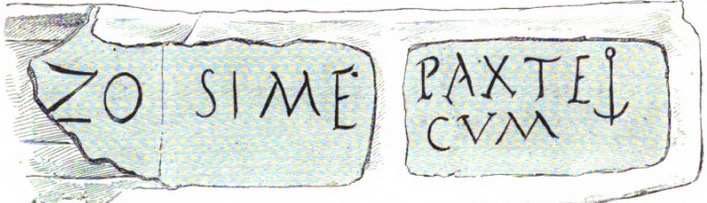
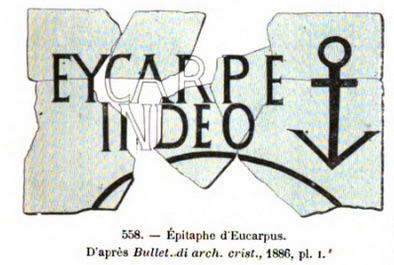
“Pax tecum,” “Peace be with you” the inscription (above) next to an anchor on one of these gravesites reads. “Eucarpus is with God” is the inscription of the deceased on the grave (below) half destroyed by robbers looking for valuables long ago.

anchor 3

Agnes knew that sign, and I would expect it’s found among the number of inscriptions that marked her grave on the Via Nomentana where she is buried.

St. Gabriel Possenti and Theodore Foley, CP

St. Gabriel PossentiToday is the feastday of St. Gabriel Possenti, the young Italian Passionist who died in 1862 and was canonized in 1920. I’m interested in his connection with Fr. Theodore Foley (1913-1974), an American Passionist whose cause for canonization was recently introduced in Rome. As a young boy of 14, Theodore read about  St. Gabriel and decided to become a Passionist;  other young men joined the community in the early 1920s and 30s also influenced by the young Italian saint.

What was St. Gabriel’s appeal ?

The cause for beatification of Father Theodore Foley, C.P. (1913-1974) opened officially on May 9, 2008 in Rome, just two years after the North American Passionist Province of St. Paul of the Cross and affiliate members met in a provincial chapter, which endorsed a proposal requesting that Father Theodore, a member of St. Paul of the Cross province and former superior general of the community, be considered as a candidate for canonization. Appreciation for him has grown steadily over time, for Father Theodore exemplifies the quiet, steady loyal holiness needed today– rooted firmly in the past and reaching with Christian hope to the future. In his preface to Saint Gabriel, Passionist, a popular biography by Fr. Camillus, CP published in 1926, the powerful archbishop of Boston ,William Cardinal O’Connell, denounced the “flood of putrid literature which, for the past ten years of more, has deluged the bookshelves and libraries of our great cities, fueling disappointment and emptiness in a false romanticism.” He urged young Catholics to reject this falseness and live in the real world, like St. Gabriel:

“To live a normal life dedicated to God’s glory, that is the lesson we need most in these days of spectacular posing and movie heroes. And that normal life, lived only for God, quite simply, quite undramatically, but very seriously, each little task done with a happy supernaturalism,-that such a life means sainthood, surely St. Gabriel teaches us; and it is a lesson well worth learning by all of us.”

Young Theodore Foley took Gabriel’s path. He followed the saint into the undramatic life of the Passionists.

Gabriel Possenti’s decision to enter the Passionists has always been something of a mystery, even to his biographers. Did he choose religious life because he got tired of the fast track of his day? And why didn’t he enter a religious community better known to him, like the Jesuits, who could use his considerable talents as a teacher or a scholar? Why the Passionists?

Gabriel–and Theodore Foley after him– was attracted to the Passionists because of  the mystery of the Passion of Christ. It was at the heart of God’s call.

The Passionists were founded in Italy a little more than a century before Gabriel’s death by St. Paul of the Cross, who was convinced that the world was “falling into a forgetfulness of the Passion of Jesus” and needed to be reminded of that mystery again. Paul chose the Tuscan Maremma, then the poorest part of Italy, as the place to preach this mystery, and there he established his first religious houses for those who followed him. He chose the Tuscan Maremma, not to turn his back on the world of his day, but because he found the mystery of the Passion more easily forgotten there.

When Gabriel became a Passionist, the community like others of the time, was recovering from the suppression of religious communities by Napoleon at the beginning of the century. In one sense, it had come back from the dead .  The congregation was now alive with new missionary enthusiasm. Not only were its preachers in demand in Italy, but it had begun new ventures in England (1842) and America (1852).

Paul of the Cross, the founder, was beatified in 1853. Ten years earlier, the cause of St. Vincent Strambi, a Passionist bishop, was introduced. Dominic Barbari, the founder of the congregation in England, would receive John Henry Newman into the church in 1865; the English nobleman, Ignatius Spencer, who became a Passionist in 1847, began a campaign through Europe in the cause of ecumenism. New communities of Passionist women were being formed.

Respected for their zeal and austerity, the Passionists were a growing Catholic community, and their growth in the western world continued up to the years when Theodore Foley became their superior general and then saw its sharp decline.

Success was not what drew Gabriel–and Theodore Foley after him–to the Passionists. Their charism–the mystery of the Passion of Christ– was at the heart of God’s call.

As a boy growing up, Gabriel Possenti understood this mystery, even as he danced away the evening with his school friends. Twice he fell seriously ill and, aware that he might die, promised in prayer to serve God as a religious and take life more seriously. Both times he got better and forgot his promises. Then, in the spring of 1856, the city of Spoleto where he lived at the time was hit by an epidemic of cholera, which took many lives in the city. Few families escaped the scourge. Gabriel’s oldest sister died in the plague.

Overwhelmed by the tragedy, the people of Spoleto gathered for a solemn procession through the city streets carrying the ancient image of Mary, the Mother of Jesus, who stood by the Cross. They prayed that she intercede for them and stop the plague, and they also prayed that she stand by them as they bore the heavy suffering.

It was a transforming experience for Gabriel. Mysteriously, the young man felt drawn into the presence of the Sorrowing Woman whose image was carried in procession. Passing the familiar mansions where he partied many nights and the theater and opera that entertained him so often, he realized they had no wisdom to offer now. He took his place at Mary’s side. At her urging, he resolved to enter the Passionists.

Can we speculate, then, how the life of the Italian St. Gabriel drew the young American Theodore Foley to the Passionists? What similarity was there between them? What grace led him on?

Brought up in a good family and a strong religious environment , Theodore Foley still felt  “dangers and temptations” around him. No, he didn’t experience the social life that tempted Gabriel Possenti a century before. But he did experience the new mass media then sweeping the country.  By 1922 movies, and to a lesser extent the radio, became powerful influences in people’s lives, and Hollywood’s heroes preached a new gospel of fun and success. Through the new media, the “Roaring Twenties” came to Springfield as it did to other prosperous parts of America when Theodore Foley was growing up. Did it bring the  “the dangers and temptations” he feared?

Theodore Foley must have sensed the selfishness, the carelessness about others, the failure to appreciate suffering and weakness and sin in this new gospel. It promised life without the mystery of the Cross, but that was not real life at all. Only 14, he entered the Passionists.

Friday Thoughts: Being qua Being


.

Learn from the way the wild flowers grow.

—Matthew 6:28


.

Does a flower make pronouncements? Does it define itself? Does it box itself in with titles, names, and distinctions?

And yet, “not even Solomon in all his splendor was clothed like one of these.” (Matthew 6:29)

———

A flower simply exists.

And its existence glorifies God.

There is no need for it to do more.

By its very existence it magnifies what cannot be further magnified: God’s Presence, God’s Glory, God’s Beauty…

———

“I’m a flower.”

“I’m a rose.”

“Look at me!”

Statements such as these we shall never hear.

Flowers are divinely indifferent to the world’s definitions and distinctions, to its approval and applause.

After all, it’s a person who receives the medal at an orchid show, and not the flower herself. No, her finely-placed petals would only be weighed down by such metallic-based ribbons.

What a gift it is to simply exist.

———

Flowers don’t cling to seasonal life.

When it’s time to go, they gracefully drop their heads and lose their pedals.

Never has there existed a man as poor as a flower.

Never has mankind so possessed the richness of fleeting, transitory, and momentary life.

It’s their genius to instinctively believe that death leads to new abundant life.

———

Flowers graciously receive:

Ladybugs, drops of dew. Beams of light, the relief of shade.

Flowers give and receive as if not a single thing has ever been made by man.

They welcome sun as well as rain.

They never cry over fallen fruit or a stolen piece of pollen.

They quietly applaud instead, rejoicing that their little ones have the opportunity to travel abroad—perhaps even the chance to help nurture a neighbor.

———

A flower, perhaps most of all, knows it place.

It never wishes to be bigger or thinner…greener or higher…it never dreams of being more like a tree.

A flower’s blessing is simplicity beyond you and me.

———

Christ is a flower.

He is the one true perfect eternal flower, through whom all other flowers partake, toward whom all other flowers reach.

Christ is a flower. His ways are not our own. He simply exists. Bowing His head. Dropping pedals. Feeding hungry bees. Giving and receiving. His identity is crucified—leaving nothing behind but being “qua” being.


.

If God so clothes the grass of the field, which grows today and is thrown into the oven tomorrow, will he not much more provide for you, O you of little faith?

—Matthew 6:30


.
.
—Howard Hain
.
.
(Dedicated to Brother Jim, a man who knew how to simply exist.)

.

Word by Word


As we walk along and lean more and more on God and less and less on human consolation we discover we are never alone.

When we truly give thanks to God for the human consolation that comes our way we discover just how many angels and saints God has placed along the path.

Everyone and everything is originally from God.

He is the only true creator, at the beginning, and at the end of the day.

If we love only Him we love everyone and everything.

Evil is the denial of such undeniable truth.

Evil is the denial of God’s supreme creativity.

Evil is the absence of good.

And shadows and darkness need spaces and voids in order to exist.

Jesus came to cast providential light.

For as the sun rises toward “straight above” the length of negativity surely disappears.

And at perfect high noon darkness does not stand a chance.

For Jesus was raised up upon the crisscrossed tree of life.

Good squelching evil for all the world to see.

———

The foot of that Cross still remains.

The closer we get the brighter the day.

Spaces and voids fill with pure light.

Absence disappears.

Evil is cast into hell.

For what God creates He intends for good.

———

Will we then live good lives?

Will we allow our absences to be filled with genuine goodness?

Will we speak life?

Will we help build the kingdom?

Let us do so.

One stone at a time.

One flickering light at a time.

One Eucharistic encounter at a time.

———

Let us live “on every word that comes forth from the mouth of God.

For when we do,

Stones become bread,

Water becomes wine,

And bread and wine become the Body and Blood of Christ.

———

Lord Jesus, cover us with Your Blood.

Let us hug the foot of Your Cross.

Let us adore Your feet nailed to the trunk of the tree.

Let us get so close that not even a speck of darkness can get in between.

Let us truly ask this in Your Holy and Perfect Name.

Amen.


.

—Howard Hain

http://www.HowardHain.com

.

Morning Thoughts: Who is Paul of the Cross?

st-paul-castellazzo


..

Who is Paul of the Cross?

He’s a saint, canonized by Pope Pius IX in 1867.

He’s the founder of the Passionists , a religious community of priests, brothers, sisters, and laypeople.

He lived in northern and central Italy during most of the 18th century and was originally called Paul Francesco Danei.

There are books written about him. His letters have been collected and printed in large, thick volumes. And time on the internet will easily identify many short biographical sketches, prayers, and sayings. There is also much available about the Passionists, and their life after the death of Saint Paul of the Cross—their growth, history, struggles, saints, and their current configuration, focus, and works.

There are also the many individual members of the Congregation of the Passion of Jesus Christ, living today and based all around the world, and they each have their own story to tell.

But there is also the man named Paul.

And somehow this kind, gentle, humble, and beautifully-flawed human being seems to get lost in all this.

His weaknesses greatly interest me.

Christ’s courage and strength in and through him inspire me.

If we prayerfully put aside the constitutions, the history, the legacy, and even his incredibly personal and guidance-filled letters (that he never intended anyone other than the recipients to read) we just may find a stripped-down saint whose essence and example we badly need in times such as these.

We just may find what we find in each and every great man and woman of God throughout Christian history—that same occurrence that appears again and again through the lives of our brothers and sisters who have truly renounced all their possessions in order to become true disciples of Christ.

———

In Saint Paul of the Cross we just may find…

…a cold, naked infant in a cradle, desperate for his mother’s breast…

…a frightened and insecure child running to keep pace with the visions of his father…

…a tired, distraught, beaten-down young man offering his life for the benefit of his brothers…

We just may find ourselves.

Or we may find someone that we used to know.

Or we may find someone that we should get to know.

But what really matters is that we find the Word made flesh.

And that is the heart of the matter. The fleshy heart that matters.

For while hearts of stone are hard to wound, they are not really hearts at all. They are the hearts of the walking dead, of those whom Jesus Himself says, “let the dead bury their dead.”

Jesus wants our hearts, our entire hearts. He wants undivided, tenderized hearts. Soft and fleshy hearts.

Yes, that type of heart is easily pierced, but in being wounded they are transformed, in being merciful they begin to bleed, and in forgiving they become His. They become sacred. Our hearts become His Most Sacred Heart.

———

The saints show us Jesus. They show us ourselves. They show us where we come from, where we currently need to stand, and where it is that we should go.

And the answer is always the same: With God.

Born of a virgin. Dying on a cross. Raised from the dead. Ascending into Heaven.

———

I am no expert on Saint Paul of the Cross. But I am his friend, and he has been very good to me. And I hope that you get to know him too.

As far as me telling you more about Paul Danei, you probably fall into one of three categories: you already know the details, you have never even heard of him, or you are about to meet a man with a striking resemblance.

For you see, the best thing I can say about Paul is that he is a lot like Jesus—a man in history but not met through it, a man who wore a robe but not defined by it, a man who submitted himself to the law but didn’t let that stop him from transcending it.

A man who at the end of the day, knows that it is all about love.


.

—Howard Hain

.