Today we remember Pope St. John Paul II. We expect all the popes to be holy and saintly, but they’re not, statistics say. There have been 266 popes, but only 95 are remembered as saints, blessed or servants of God. Furthermore, 52 of the popes who are saints are from the first 5 centuries of the church, most of them were martyrs.
Only 2 popes have been canonized since the 16th century until the recent canonizations of Popes John XXIII, John Paul II and Paul VI. Why were these popes canonized? Each was a holy man who played a major role in the Second Vatican Council, a major event in the Catholic Church, which took place from 1962-65 and still inspires its life today.
What was Pope St. John Paul II’s role in that council? The first reading and responsorial psalm for his feast tell us:
Pope John Paul was a missionary who brought the message of Vatican II to the world: “How beautiful upon the mountains are the feet of him who brings glad tidings…” He had a prophet’s role, the first reading from Isaiah says. He fulfilled what Psalm 96 called for: “Proclaim God’s marvelous deeds to all the nations.”
John Paul II was a global pope. Inspired by the Second Vatican Council’s call for a church engaged in the world, he made 104 apostolic journeys to all parts of the globe. It was a world increasingly interconnected, with nations and religions in daily contact with one another. He visited mosques and synagogues and Buddhist temples, as well as his own faithful. He reached out to Protestants and separated Christian churches of the east. As the voice of the Catholic Church, he engaged the world, in the spirit of Vatican II.
John Paul II was a charismatic bishop who became pope as new communications were creating a world wide audience and new political movements, like that in his native Poland, caught the attention of people everywhere.
Within his own church, Pope John Paul canonized more saints, from different countries and backgrounds, than any pope before him had done. The Second Vatican Council taught that holiness could be found everywhere.
The three popes, John XXIII, Paul VI and John Paul II had different gifts, but all saw the Second Vatican Council as the path the church should follow. That’s the way they described the way ahead – a path, a way often unmarked, a winding road where the end is not clearly seen. Still, a path is God’s way, who leads the blind on their journey and strengthens the weak till they reach their home.
Three popes involved in the Second Vatican Council have been canonized: Pope John XXIII, Pope Paul VI and Pope John Paul II.. They were declared saints, not just because they were popes, but because of their holiness and their involvement and promotion of the council.
Three months after his election as pope in 1958, Pope John XXIII, whom we remember today, called for a general council. It was to an “aggiornomento” , an updating of the church for bringing its message to the people of our time and the world of today. His official biography, which can be found here ends, “Since his death on June 3, 1963, much has been written and spoken about the warmth and holiness of the beloved Pope John. Perhaps the testimony of the world was best expressed by a newspaper drawing of the earth shrouded in mourning with the simple caption, “A Death in the Family.”
I was fortunate to meet Pope John personally in 1962 when Father Theodore Foley and I accompanied Bishop Quentin Olwell, bishop of Cotabato, in the Philippines, on his “ad Limina” visit to Rome. The pope told me to “be like St. Gabriel.” That year Pope John was named Time Magazine’s Man of the Year.
The popes often describe the council as the path the church must take into the future. Some years ago at a synod of bishops, Pope Francis described that path as the road Jesus took from Jericho to Jerusalem to enter the mystery of his death and resurrection. It’s a winding road, not easy to travel. Here’s a picture of it from the air in the 1930s.
Today the Passionists celebrate the feast of St. Vincent Strambi, CP (1745-1824). In his early years as a Passionist priest Strambi was a well known preacher, writer and spiritual director. He was a close associate of St. Paul of the Cross and wrote his biography after his death.
He was chosen to be bishop of Marcerata during tumultuous years in Italian history when Napoleon moved to take over Italy, the papacy and the Catholic Church. Strambi was an heroic supporter of the pope and fought for the freedom of the church.
To understand most saints you have to understand the times in which they lived. They’re antidotes for the poison of their time. Unfortunately historians pay little notice to the challenging times Vincent Strambi lived in.
In 1789, following the French Revolution, a Reign of Terror struck the church in France, religious orders were suppressed, priests and religious were imprisoned, exiled, put to death. Word of the terror quickly reached Italy and Rome; the defenseless Italian peninsula would be the next target for France’s fierce revolution.
Pope Pius VI asked for prayers that Rome be spared, and he called on Vincent Strambi, then one of the church’s best preachers, to prepare the people for a blow sure to come. In packed churches and piazzas in Rome Strambi promised that God would not abandon his people. The Roman people gained strength from his words.
In 1796 Napoleon Bonaparte turned to Italy, demanding heavy tribute from the Pope and the Papal States. The murder of the French General Duhot in Rome gave him the pretext for invading the city, deposing and imprisoning the pope and declaring the Papal States a Republic.
Religious houses were suppressed, their goods systematically confiscated. Strambi, a well-known opposition figure, fled to Monte Argentario, a Passionist sanctuary on the Mediterranean Sea.
In 1799 Pius VI died in exile and was succeeded by Pius VII who, in 1801, appointed Strambi bishop of Macerata and Tolentino, two important cities in the Papal States along Italy’s Adriatic coast, poverty-stricken from years of political and military turmoil.
The bishops of the Papal States were largely responsible for temporal as well as spiritual affairs and Bishop Strambi became a champion of the poor in his diocese. He lived sparingly himself, without signs of wealth or position. The poor were constantly on his mind. “Don’t you hear the cries of the poor?” he said one day to the treasurer of his seminary, looking out his window.
The education of poor children interested him especially and he urged his priests to care for them. In sermons he constantly looked to the Passion of Jesus for wisdom in the struggles of the time. His devotion to the Precious Blood of Jesus was influenced, at least in part, from reflection on the bloodshed the Napoleonic Wars brought to millions in Europe. Almost 4 million died as warfare rose to a level never seen before. Their blood was precious to God.
On May 5, 1809, after occupying Rome and most of the Papal States. Napoleon declared the region under French control and the temporal power of the pope abrogated. On June 6, 1809 Pius VII placed notices on church doors throughout Rome excommunicating anyone cooperating with the French. July 6, the French general Radet arrested the pope and brought him north to Savona.
Napoleon then demanded bishops sign an oath of loyalty to his new government. Refusal meant exile and imprisonment, signing was an act of disloyalty to the pope.
“I am ready for prison and for death. I am with the pope,” Strambi declared. On September 28,1808 he left his diocese under guard for northern Italy where he remained for 5 years under house arrest.
After Napoleon’s defeat in 1814 the church’s exiled leaders returned. Bishop Strambi returned to his diocese in May, 1814; immediately the pope asked him to come to Rome to preach a nine day “retreat of reconciliation” in late July and early August. Not all met the French invasion heroically.
In 1816 a typhoid epidemic followed invading armies. Food shortages and inflation spread through the bishop’s diocese. He opened hospitals for the dying and sought supplies for his suffering flock.
Physically frail from birth, Bishop Strambi became increasingly ill and found it harder to manage his diocese. By 1814, the world too had changed. The Papal States had no bishops in the long chaotic period of the Napoleonic invasion and new forces demanding change came to power. Strambi recognized it was too much for him.
In 1823 he asked the new pope, Leo XII, to allow him to retire. The pope accepted his resignation on one condition, that he come and live with him as an advisor in the Quirinal Palace, then the pope’s residence in Rome. A local commentator said of the departing bishop: “ He was a man who lived a holy life, giving alms to all and content with only the necessary for himself. We are sorry to see him go, for we lose a good pastor. The cries of the poor are especially loud, for they lose one who cared for and sustained them.”
Vincent died in Rome on January 1, 1824, having offered his life to the Lord in place of that of the pope who was seriously ill.
Pope Leo ordered the process for his canonization 8 days after his death. He was declared a Saint in 1950 and his relics now rest in Macerata, the city where he was a zealous pastor for twenty-two years.
St. Vincent Strambi’s room, Saints John and Paul Monastery, Rome
With the help of the Holy Spiirt, I on my part will do all I can that the living image of Jesus crucified be imprinted in the hearts of each of you. I do this gladly, not counting the cost. I consider myself fortunate to give my lifeblood so that Christ might be formed in you. I can say, like the apostle, that because of my love for you, I want to share with you “not only God’s message, but our very lives, so dear have you have become to us.”
I urge you, then, to look attentively on the Image of the Crucified, the bishop of your souls, on his throne of grace. In that way I shall fulfill my obligation to announce to you the death of the Lord, an obligation arising from my profession in the Congregation of the Holy Cross and Passion of our Lord Jesus Christ. I shall do all I can to urge you all to fulfill your duty to love him who first loved us, who offered himself on the altar of the cross for us, who shed his blood for us.
( Letter to the people of Marcerata on becoming their bishop)
“Christians live from feast to feast,” St. Athanasius said. The church’s feasts are linked to each other through the year, and every feast is linked to the great feast of the Resurrection of Jesus.
The feasts of Mary follow the pattern of the feasts of her Son, for she shares in his saving work. Following the feasts year by year, we learn the mysteries of God, little by little. Mary was blessed from her conception. ( Immaculate Conception, Dec. 8). We celebrate her birth 9 month later. (The Nativity of Mary, September 7). Her death and assumption into heaven are celebrated Augustus 15th.
The Feast of the Queenship of Mary, August 22, is part of the mystery of her assumption into heaven. Introduced into the liturgy of the Roman Catholic church in 1955, the feast celebrates the privileged place of Mary in heaven. She “was taken up body and soul into heavenly glory when her earthly life was over, and exalted by the Lord as Queen over all things.” (Second Vatican Council, Lumen Gentium 59)
Royal titles were commonly given to God and those anointed by God in the Old Testament; Christianity continued the pratice, giving royal titles to Jesus and Mary. She is called queen in traditional Christian prayers like the Hail Holy Queen (Salve regina) and Queen of Heaven (Regina Coeli):
“Hail, Holy Queen, Mother of mercy, our life, our sweetness and our hope. To you do we cry, poor banished children of Eve. To you do we send up our sighs, mourning and weeping in the valley of tears. Turn then, most gracious advocate, your eyes of mercy towards us, and after this our exile, show to us the blessed fruit of your womb, Jesus. O clement, O loving, O sweet Virgin Mary.
Pray for us, O holy Mother of God, that we may be made worthy of the promises of Christ.
Mary is a queen, but also a mother. She is the Mother of God, Mother of Jesus Christ, Mother of us all, the New Eve, given to us by her Son from the Cross through his disciple John.
Mary knows her greatness is from her Lord, as she acknowledges in her Magnificat:
“My soul proclaims the greatness of the Lord; my spirit rejoices in God, my Savior. He who is mighty has done great things to me; holy is his name.” ( Luke 1:46-55)
In the portrayal above, Fra Angelico captures Mary’s humility; she bows before her Son, her hands closed in prayer. The saints below her know that honors given to her are a reflection of the graces promised to humanity.
“Pray for us, O Holy Mother of God, that we may be made worthy of the promises of Christ.”
When I typed in “Sacred Heart” with “Pope Francis” on the Vatican website yesterday, I got 1826 results. In his 13 years as pope, Francis referenced the Sacred Heart of Jesus that many times in his public statements. . He did it in talks to religious communities dedicated to the Sacred Heart who came to Rome for a general chapter, to representatives of hospitals, universities and places associated with this devotion. There is even a reference to the Sacred Heart in a talk the pope gave on artificial intelligence.
His Encyclical Dilexit Nos, written last October, is a long work that surely reflects years of thought on this mystery. Francis believed a world increasingly heartless needed to be reminded of God’s love.
It’s a work well worth reading. I took away a number of things from Dilexit Nos on the symbolism of the heart. For one thing, Pope Francis cautions against being fixed on one artistic representation of this mystery. The meaning of the Sacred Heart can be expressed in many ways, not just the symbolic heart or the image of Christ showing us his heart that usually recalls this mystery.
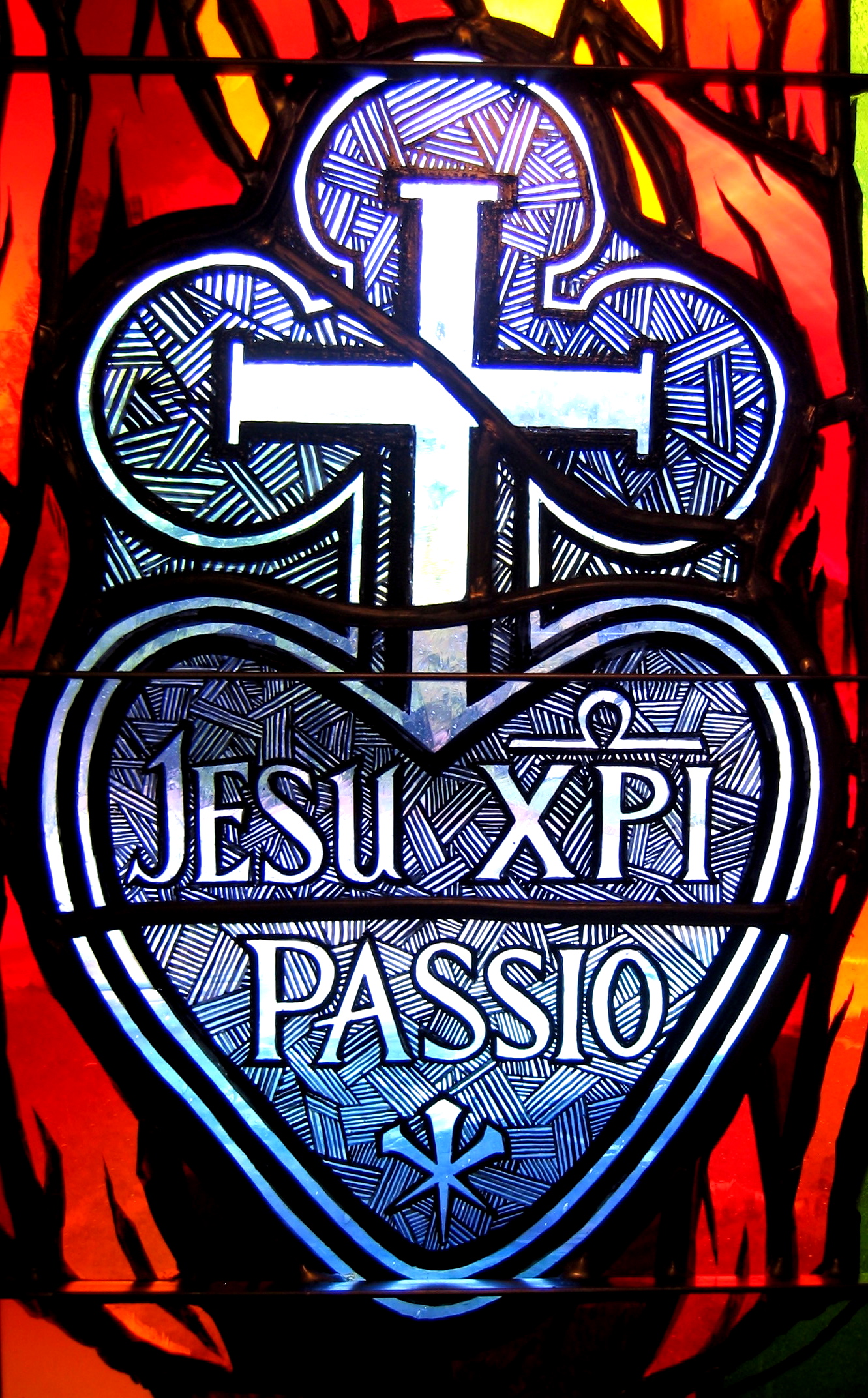
The gospel at Mass today of the Shepherd searching for the lost sheep is an image of the love of God for us. The sign my community the Passionists wears is a symbol of God’s infinite love. The pope is his letter sees a sign of that love in a mother who takes her little child into her arms after the child has done wrong as an example. No matter what her child has done, the mother still loves. The love of God takes many forms; the heart symbolizes them all.
I also like the pope’s observation that devotions change over time. The devotion of First Friday Mass and Communion originally was a response to Jansenism that saw humanity unworthy to approach Jesus present in the Eucharist.
Today, as so many ignore the Eucharist, the pope sees the devotion calling us to remember this Sacrament of God’’s Love.
I discovered on Google books an old study of plants and trees by Richard Folkard, an English botanist. (Plant Lore, Legends and Lyrics, London 1884) It’s a treasure of information.
Folkard says that from earliest times people saw religious meaning in plants, flowers and trees. He writes especially about how they were seen in medieval times.
“In the dark ages the Catholic monks , who cultivated with assiduity all sorts of herbs and flowers in their monastic gardens , came in time to associate them with traditions of the Church , and to look upon them as emblems of particular saints . Aware , also , of the innate love of humanity for flowers , they selected the most popular as symbols of the Church festivals , and in time every flower became connected with some saint of the Calendar , either from flowering at the time of the saint’s day , or from being connected with the saint in some old legend…
But it was more especially upon the Virgin Mary that the early Church bestowed their floral symbolism … The poetry no less than the piety of Europe has inscribed to her the whole bloom and colouring of the fields and hedges. The choicest flowers were wrested from the classic Juno , Venus , and Diana , and from the Scandinavian Bertha and Freyja , and bestowed upon the Madonna , whilst floral offerings of every sort were laid upon her shrines .
Her husband , Joseph , has allotted to him a white Campanula , which in Bologna is known as the little Staff of St. Joseph . In Tuscany the name of St. Joseph’s staff is given to the Oleander. A legend recounts that the good Joseph possessed originally only an ordinary staff , but that when the angel announced to him that he was destined to be the husband of the Virgin Mary , he became so radiant with joy , that his very staff flowered in his hand…
A Catholic writer complained that at the Reformation the very names of plants were changed in order to divert men’s minds from the least recollection of ancient Christian piety A Protestant writer of the last century , bewailing the ruthless action of the Puritans in giving to the ” Queen of Beauty ” flowers named after the ” Queen of Heaven , ” says :’Botany , which in ancient times was full of the Blessed Virgin Mary , is now as full of the heathen Venus .’ ”
Folkard reminds us that the monks were good catechists. That work of theirs is largely ignored today. If you consult Wikipedia’s listings of trees and plants, there’s hardly a trace of that Catholic tradition. I wonder if we shouldn’t mine that tradition again as we try to enhance our care of the earth. Clover .spearmint, foxglove, lupine, campanula, marigolds, cowslip, Lady’s mantel, Lady’s bedstraw are more than a genus and species. They once spoke of the mysteries of God.
The Rosary of the Virgin Mary, which gradually took form in the second millennium under the guidance of the Spirit of God, is a prayer loved by countless Saints and encouraged by the Magisterium. Simple yet profound, it still remains, at the dawn of this third millennium, a prayer of great significance, destined to bring forth a harvest of holiness. It blends easily into the spiritual journey of the Christian life, which, after two thousand years, has lost none of the freshness of its beginnings and feels drawn by the Spirit of God to “set out into the deep” (duc in altum!) in order once more to proclaim, and even cry out, before the world that Jesus Christ is Lord and Saviour, “the way, and the truth and the life” (Jn 14:6), “the goal of human history and the point on which the desires of history and civilization turn.”
The Rosary, though clearly Marian in character, is at heart a Christocentric prayer. In the sobriety of its elements, it has all the depth of the Gospel message in its entirety, of which it can be said to be a compendium. It is an echo of the prayer of Mary, her perennial Magnificat for the work of the redemptive Incarnation which began in her virginal womb. With the Rosary, the Christian people sits at the school of Mary and is led to contemplate the beauty on the face of Christ and to experience the depths of his love. Through the Rosary the faithful receive abundant grace, as though from the very hands of the Mother of the Redeemer.”
Yesterday I witnessed a “dress” rehearsal for a live nativity. The cast was made up of first and second graders, and the audience was mostly composed of residents of a retirement home for religious sisters, Franciscans. It was spectacular.
Last week I was at Radio City Music Hall to watch the Rockettes in their “Christmas Spectacular”. It was quite a production.
Sitting in the dark this morning I cannot help but contrast the two.
I also cannot help but relate to the seven-year old who played the part of The Little Drummer Boy.
As that child walked so slowly toward the foot of the altar, where the rehearsal was being staged, I saw my vocation in an entirely different light.
The children were all singing their hearts out, and many of the eighty and ninety year-old sisters were mouthing the words. The boy with the drum didn’t utter a sound. He just kept walking, slowly, extremely slowly toward the altar, every once in a while ever so slightly pretending to tap two tiny sticks upon a toy drum. He was beautifully awkward.
There was no greater spectacle on earth at that very moment. Shall I dare to say, no greater event that heaven or earth has ever known?
For a child was born. We were all being born.
Come they told me, pa rum pum pum pum
A new born King to see, pa rum pum pum pum
Our finest gifts we bring, pa rum pum pum pum
To lay before the King, pa rum pum pum pum,
rum pum pum pum, rum pum pum pum,
So to honor Him, pa rum pum pum pum, When we come.
Little Baby, pa rum pum pum pum I am a poor boy too, pa rum pum pum pum I have no gift to bring, pa rum pum pum pum That’s fit to give the King, pa rum pum pum pum, rum pum pum pum, rum pum pum pum,
Shall I play for you, pa rum pum pum pum, On my drum?
Mary nodded, pa rum pum pum pum The ox and lamb kept time, pa rum pum pum pum I played my drum for Him, pa rum pum pum pum I played my best for Him, pa rum pum pum pum, rum pum pum pum, rum pum pum pum,
Then He smiled at me, pa rum pum pum pum Me and my drum.*
.
.*(Little Drummer Boy was composed by Katherine K. Davis, Henry Onorati and Harry Simeone in 1958.)
Does a flower make pronouncements? Does it define itself? Does it box itself in with titles, names, and distinctions?
And yet, “not even Solomon in all his splendor was clothed like one of these.” (Matthew 6:29)
———
A flower simply exists.
And its existence glorifies God.
There is no need for it to do more.
By its very existence it magnifies what cannot be further magnified: God’s Presence, God’s Glory, God’s Beauty…
———
“I’m a flower.”
“I’m a rose.”
“Look at me!”
Statements such as these we shall never hear.
Flowers are divinely indifferent to the world’s definitions and distinctions, to its approval and applause.
After all, it’s a person who receives the medal at an orchid show, and not the flower herself. No, her finely-placed petals would only be weighed down by such metallic-based ribbons.
What a gift it is to simply exist.
———
Flowers don’t cling to seasonal life.
When it’s time to go, they gracefully drop their heads and lose their pedals.
Never has there existed a man as poor as a flower.
Never has mankind so possessed the richness of fleeting, transitory, and momentary life.
It’s their genius to instinctively believe that death leads to new abundant life.
———
Flowers graciously receive:
Ladybugs, drops of dew. Beams of light, the relief of shade.
Flowers give and receive as if not a single thing has ever been made by man.
They welcome sun as well as rain.
They never cry over fallen fruit or a stolen piece of pollen.
They quietly applaud instead, rejoicing that their little ones have the opportunity to travel abroad—perhaps even the chance to help nurture a neighbor.
———
A flower, perhaps most of all, knows it place.
It never wishes to be bigger or thinner…greener or higher…it never dreams of being more like a tree.
A flower’s blessing is simplicity beyond you and me.
———
Christ is a flower.
He is the one true perfect eternal flower, through whom all other flowers partake, toward whom all other flowers reach.
Christ is a flower. His ways are not our own. He simply exists. Bowing His head. Dropping pedals. Feeding hungry bees. Giving and receiving. His identity is crucified—leaving nothing behind but being “qua” being.
.
If God so clothes the grass of the field, which grows today and is thrown into the oven tomorrow, will he not much more provide for you, O you of little faith?
—Matthew 6:30
. .
—Howard Hain . . (Dedicated to Brother Jim, a man who knew how to simply exist.)




 The Victor's Place