Morning Thoughts: A Delicate Nose

by Howard Hain

.

In near darkness silhouettes take hold.

So delicate. Features so fragile.

How can such a perfect little nose exist in such a world?

A world of flying soccer balls.

My hardened features cringe at the thought.

Her delicate little nose and a direct encounter.

A soccer ball, an elbow, another child’s brow…my God, how could such beauty absorb any such kind of blow?

And yet it has, seven years and counting.

Time and again the playground gives what it’s got.

Close encounters and direct hits, this night that little nose as delicate as ever.

The chaos, the screams, the various forms of laughter…they too for the time being stand silent.

Before such a sight.

A simply beautiful child sleeps.

A father smiles.

Such beauty is surely painful.

Innocence is everything.

My Lord and my God.

Thank You.

A beautiful child sleeps.

A father wipes away a tear.


.

.

Morning Thoughts: God’s Wealth

by Howard Hain

.

Then they handed him the Roman coin.

He said to them, “Whose image is this and whose inscription?”

They replied, “Caesar’s.”

At that he said to them, “Then repay to Caesar what belongs to Caesar and to God what belongs to God.”

—Matthew 22:19-21

.


.

What has value? What has true, lasting value?

And how do we distinguish between arbitrary and absolute value?

Good questions. Meaningful questions. Questions with great relevance since the first moment of man, and questions still very much relevant today—maybe more so than ever before—as cultures become increasingly pluralistic, governments increasingly complex, and economies, natural resources, and “manpower” increasingly intertwined and qualitatively and quantitatively obscure.

And perhaps nothing better expresses this uncertainty than the incredibly difficult task of evaluating the meaning of money—something that for so long has been so generally accepted—but now a question our present day begs us to ask anew.

What then is the role of currency within our ever-increasing global complexity?

Does “currency” still mean what it meant in its most basic form: A medium of exchange, generally accepted, and possessing integrity with regard to accurately representing the goods, services, and/or resources involved in an exchange?

Complex times, complex questions. I’m sure polished academics, investors, and politicians have complex answers—if they’d even recognize such a naive question in the first place.

Though I have a hunch that if we ask the common man and woman—those who are the actual “human resources” bundled together, broken apart, and tossed back and forth like various sizes of sacks of potatoes—we’d hear a common concern.

I bet the consensus is a growing sense of separation between the real connection between “currency” and the actual “items” being evaluated and exchanged—that the “general acceptance” sees a serious disconnect—no matter how simple or straightforward the words or expressions used to describe it.

Maybe we should follow their common lead. For it just may be our common sense that best suggests the level road. Let’s then move forward by asking a simple and straightforward question: What is made by man and what is made by God?

Such a question quickly restores a humble perspective—one in which the questioner is once again seen as part of the question—viewing God as the Uncreated Creator of all creation, and viewing man as part of it, not the cause of it.

Such a question also reminds us of a comforting reality, one that helps build up our view of humanity, not devalue it: For in God’s eyes, man always has a certain, absolute value, as do animals, plants, and all the earth’s resources: air, soil, water, minerals, metals…every nook and cranny. For God made it all. And what God makes He values. And what God values He values absolutely.

On the other hand, the price we place on them—the fluctuations in “perceptive” worth—is most certainly arbitrary value—completely man-made. In fact, without man there can be no arbitrary value: No man, no human perception, therefore no arbitrary value.

It is worth noting that there seems to be nothing inherently wrong with arbitrary value. But we also know through real experience that freewill and temptation continuously battle it out. We’ve all seen firsthand how arbitrary value can be used quite negatively. It can be manipulated. It can be unjust. It can be a weapon man uses against his fellow-man.

Absolute value is not the same. It never undergoes corruption or discriminates. It never hurts life or creation.

But why do we ask these questions? Why should we wonder about such issues?

Because without big questions—the panoramic views—we ironically lose sight of the intricacies and peaceful beauty of day-to-day reality. In other words, we need philosophers. We need those who ask questions from mountain-peak perspective in order to properly value even the smallest creature within the deepest valley.

It’s about divine perspective. About wisdom: Knowing there’s One Source of all creation, and that all creation—no matter how seemingly infinite and minute its manifestation—is always a reflection of the totality and unity of the One Source.

For the enterprise of philosophy—literally the “love of wisdom”—is not narrow or shallow. It is neither micro nor macro. It is never “either-or”.

Philosophy is not a specific knowledge of a specific something. It is not a specific science encompassing a specific field or a specific mastery of a specific craft or trade. Philosophy is not even a specific art expressing itself through a specific medium.

Philosophy is a relationship. A specific relationship. A love-propelled relationship with wisdom itself. And wisdom is not merely a word existing solely of sound waves and vibrations, nor is wisdom merely a concept existing solely in man’s mind. No, wisdom is beyond words, beyond concepts, beyond ideas. Wisdom is the Ultimate Idea, the Only Concept, and the Unspeakable Word.

Wisdom is. Always. Purely. Absolutely. No starts or stops. No lines, no boundaries. It possesses no arbitrary or man-made qualities.

Wisdom is God Himself.

The philosopher is therefore a lover of God. A lover of the Incarnate Word. Of Incarnate Wisdom. The philosopher is a lover of Jesus Christ—in all His manifestations—in all His creation.

This is why we ask such questions.

True lovers never lose sight of the Beloved. We therefore must never lose sight of true worth and the source of all that has worth. We must correctly identify reality and all that is rightly extracted from it. Leaving behind the rest. For all experience runs through the philosopher’s fingers as if sifting for precious metals—knowing that even what is priceless is not yet our possession.

The philosopher is also a child of faith. And therefore a descendant of the patriarch Abraham, our father in faith, who was promised descendants as numerous as the sand on the seashore. We must therefore be willing to lift up and cherish every “worthless” grain. A task we can hardly achieve. But God who created us shows us how.

The answer is quite absurd—making little logical sense—but it is certain and perfect nonetheless. We must recall Christ’s suffering. And we must partake. It is the only way. For by His Cross and Resurrection, Christ sets us free. Free to use freewill properly. Free to distinguish God’s worth from that which disordered man imposed.

And how does that translate into a more pragmatic approach, into a “practical philosophy” that helps “order our days“?

Hope tells us we must stay grounded. Our toes in the dirt. The nitty-gritty of day-to-day life filling our sensitive nose. Our arms stretched wide, unafraid of having our wind unexpectedly knocked out. And all the while, our chins slightly tilted up and away. Our eyes fixed on the Light of Creation—the One Source that burns away all artificial value.


..
25th Sunday A: A Big Harvest

For this week’s homily, please play the video below:

Divine Flute Player

by Orlando Hernandez

In this Wednesday’s Gospel (Lk 7;31-35) Jesus tells the crowds :

“To what shall I compare the people of this generation? What are they like? They are like children who sit in the marketplace and call to one another,
‘We played the flute for you, but you did not dance.
We sand a dirge, but you did not weep.’ “.

In the previous verses our Lord had been reflecting on the person of John the Baptist. Jesus now speaks with regard to the way so many people rejected John’s stark message of repentance and asceticism (the “dirge”). He is also saddened by the way His message of forgiveness, inclusion, gladness, and salvation is also rejected as perhaps too lenient, too loose, too much like party music.

In our generation, what will satisfy us? My Lord offers me the joy of an eternity in His Glory, and I often find myself looking the other way, at the pleasures and ideas of this world. Why do I do this? Why am I blind and deaf? I suffer frustration and depression when I look at the news and see the sad condition of our planet. My Lord invites me to go into this heart of darkness with Him and do something about it. But nooo, it’s too hard for me. Let me vegetate in front of the TV.

But He returns, inviting again and again until He becomes irresistible. Like the Pied Piper, He arrives with His flute, playing the most delightful melody, a love song, a dance that can make us “rejoice, and leap for joy”. So we follow Him up the mountain. There are crosses waiting at the top. The poverty, the hunger, the mourning, the intolerance of this world are always there waiting for us. He bears them on His body. He carries us. The tune becomes a song of mourning. We’re invited to die with Him.

But resurrection follows, my faith tells me so. Love is stronger than death. The jovial music returns. There is a purpose to life. The Beloved One embraces us into His glorified body. We’re lost in an endless sea of Goodness. “Dissolved and brought to a deep, conscious, felt knowledge of the Divinity”, Paul of the Cross writes. Nothing can be better than that. We are strengthened and inspired by His Grace to love and help our neighbor.

Lord, open my eyes to see the marvelous treasures that You offer to all of us.! Open my ears to hear Your Song of Life.

Orlando Hernandez

24th Sunday: Forgiveness, Seventy-seven Times?


For this week’s homily, please play the video file below:

Beatitudes

By Orlando Hernandez

In today’s Gospel (Lk 6: 20-26) we’re blessed with the “Four Beatitudes” of the Gospel of Luke. I was led to reread Max Lucado’s wonderful book “ The Applause of Heaven”, with his incredibly beautiful interpretation of the Beatitudes. Then I also read pages 70-99 in Pope Benedict XVI’s book “Jesus of Nazareth”. In these pages on the Beatitudes I always discover new treasures that lead me to the meaning of who Christ is, what our church should be about, and what Christian life always is: the unfolding of Love. I really recommend these books.

Rather than present the wonderful thoughts in these two works, I was led to view the
Gospel reading as a form of prayer, a chance for a Christian to discover what message Jesus has for him or her today. He blesses us with the grace of His words.

This is what I experienced. First, I encountered a fifth beatitude (besides the four presented in Luke). The first line in the reading is , “Raising His eyes toward His disciples Jesus said:”(v..20a). I imagine what it would have been like to have been there, and to experience those eyes, probably closed in meditation, slowly opening and looking into your heart! Sometimes prayer can be just so rewarding. My mind searches anxiously into the darkness, and suddenly a light seems to dawn, bathing my soul with a Love too great to bear! This is a blessing, a happiness, that sooner or later the Beautiful One brings to anyone who wishes to be His disciple.

Then He says: “ Blessed are you who are poor, for the Kingdom of God is yours.”( v..20b). I imagine the folks in Florida, coming out of their hot, dark houses to see the devastation outside. They look at the bright sky after the storm has left. The quality of their lives has certainly been impoverished, but they are safe! They relish in the fact of their being alive, God’s great gift, and many of us are blessed with a delightful sense of gratitude. Loved ones call from everywhere. Neighbors and volunteers are there for each other. We get a glimpse of the Kingdom of God.

Our Lord says: “Blessed are you who are hungry, for you will be satisfied.”(v..21a). What an awesome sensation, the hunger for Jesus! What an incredible gift He offers us everyday in the Eucharist. I experience this overwhelming sensation that is simultaneously physical, mental, and spiritual, this need for Him. And He gives Himself to us. Why does He love us like this?

“Blessed are you who are now weeping, for you will laugh.”(v..21b) . Father John Powers CP often says that sorrow is the flaw in love. I was remembering my friend Edith, whom we buried only last week. Her daughter had told me who that beautiful young man in that Bar Mitzvah portrait had been. In our visits Edith had never talked about him. She had lost him many years ago when he was only 20. I thought of the pain she must have carried all these years. I thought about how it would feel to lose my son, or one of my grandchildren. And I missed her. I began to cry in the most loud, unseemly way, out there alone in my backyard. It sounded like laughter, and it reminded me of the many times we had laughed together. She was a lot of fun. I know we will laugh together again.

The Lord says, “Blessed are you when people hate you and when they exclude and insult you, and denounce your name as evil on account of the Son of Man.”(v..22) Last Friday, at the Douglaston Center I saw the Martin Scorsese movie, “Silence”, presented by Father Robert Lauder. Being a disciple of Christ can lead to much horrible suffering and death. My discipleship has fortunately never challenged me this way. When I was young, and I had left he church, I would see Christians expressing their faith, talking to me about it. I would be respectful, but in my mind I would laugh and say, “fanatics”, “crazy hallelujahs”, or “poor deluded people”. I would feel sorry for them. Sometimes I had to tell them, “Listen, leave me alone!”.

Funny how now I am one of “those people”, and get some of my old attitude directed at me. It makes me sad, because when I “Rejoice and leap for joy” with my Sunday prayer group, I realize what they’re missing, and I pray for them.

I know that tomorrow I could read this same passage again and receive different messages, different graces, different words from the Word of God, whose love for us is inexhaustible. He pours upon us Beatitude upon Beatitude. Thank you, Beloved.

Orlando Hernandez

Morning Thoughts: Other People

by Howard Hain

.

Other people. That’s when things get complicated.

Being patient, forgiving, meek, honest, prudent, wise…when it comes to our own wellbeing is hard enough…but when it comes to dealing with the world’s offenses against those we love—especially those put into our care—things can really get out of hand.

For living a life of integrity and peace, of “turning the other cheek”, seems somewhat possible when it’s my cheek, but to ask me to act the same when it comes to witnessing an injustice against my mother, my wife, or my daughter, then it’s a whole other ballgame.

The lamb becomes a lion. I want justice. Now. A roaring lion. Game on. And it is no longer about defense. No, a full-frontal offensive attack is launched. Crush the opponent. Leave no opportunity for the “hyena” to not fully understand: “Not on my watch, you vile creature—you don’t stand a chance—and now you’ll pay tenfold.”

This is all figure of speech, of course. But internally, this hypothetical dialogue is somewhat close.

But then there comes the question of action itself.

What do we actually do?

What should we actually do?

Each situation of course has its own set of circumstances.

But Truth and Wisdom apply to every situation and circumstance.

And that hits upon what is perhaps the biggest affront the world inflicts upon those placed in our care: The lie that Truth, Morality, Virtue, Justice, and Goodness are relevant to time and place, to culture and historical period.

Truth is Truth. Moral Virtue is Moral Virtue. Justice is Justice. And offenses against Eternal Truths are offenses against Eternal Truths, whether you live in Poland, the United States, Russia, China, Saudi Arabia, or Zimbabwe.

And yes, I am fully aware that the above statement makes the assumption that there are Eternal Truths. There are. Period. God’s Love and His demand for Human Dignity are real. God’s reality insists upon it.

Perhaps then this is the best first step in truly defending our families: To know the Truth. To stand in the Truth. To anchor ourselves in and to the Truth.

Day by day. Hour by hour. One Eucharistic encounter at a time.

Here then is such a nugget* that might help us navigate the turbulent waters of this new day:

“The rash man has no integrity; but the just man, because of his faith, shall live.”

—Habakkuk 2:4


.

* nug·get
/ˈnəɡət/
noun
a small lump of gold or other precious metal found ready-formed in the earth.

.


Living in a Dirty Home

Garbage

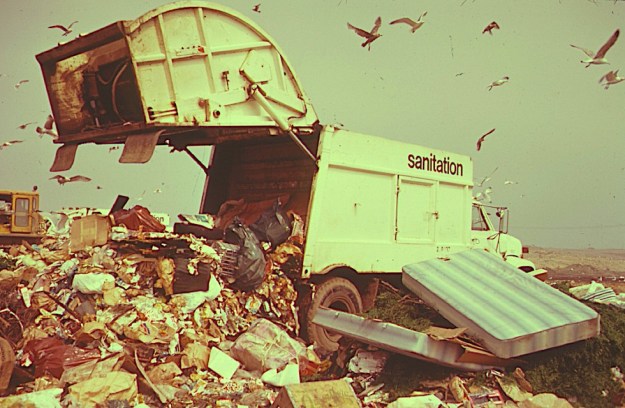
Account must also be taken of the pollution produced by residue, including dangerous waste present in different areas. Each year hundreds of millions of tons of waste are generated, much of it non-biodegradable, highly toxic and radioactive, from homes and businesses, from construction and demolition sites, from clinical, electronic and industrial sources. The earth, our home, is beginning to look more and more like an immense pile of filth. In many parts of the planet, the elderly lament that once beautiful landscapes are now covered with rubbish. Industrial waste and chemical products utilized in cities and agricultural areas can lead to bioaccumulation in the organisms of the local population, even when levels of toxins in those places are low. Frequently no measures are taken until after people’s health has been irreversibly affected.
Pope Francis, Laudato SI, 21

23rd Sunday a: Telling People They’re Wrong

For today’s homily, please play the video below:

Change and Automation


17. Theological and philosophical reflections on the situation of humanity and the world can sound tiresome and abstract, unless they are grounded in a fresh analysis of our present situation, which is in many ways unprecedented in the history of humanity. So, before considering how faith brings new incentives and requirements with regard to the world of which we are a part, I will briefly turn to what is happening to our common home.

18. The continued acceleration of changes affecting humanity and the planet is coupled today with a more intensified pace of life and work which might be called “rapidification”. Although change is part of the working of complex systems, the speed with which human activity has developed contrasts with the naturally slow pace of biological evolution. Moreover, the goals of this rapid and constant change are not necessarily geared to the common good or to integral and sustainable human development. Change is something desirable, yet it becomes a source of anxiety when it causes harm to the world and to the quality of life of much of humanity.

19. Following a period of irrational confidence in progress and human abilities, some sectors of society are now adopting a more critical approach. We see increasing sensitivity to the environment and the need to protect nature, along with a growing concern, both genuine and distressing, for what is happening to our planet.
Pope Francis, Laudato SI, 17-19

Avoiding an “irrational confidence in progress and human abilities”, we need to make “a fresh analysis of our present situation,” the pope says. He speaks of the “rapidification” of life– a fast changing world that cares little for nature or sustainable human development.

Like automation, smart cars, or whatever else puts people out of work and removes them from involvement in society or having a hand in the progress of our created world?