Category Archives: Passionists

House of Prayer

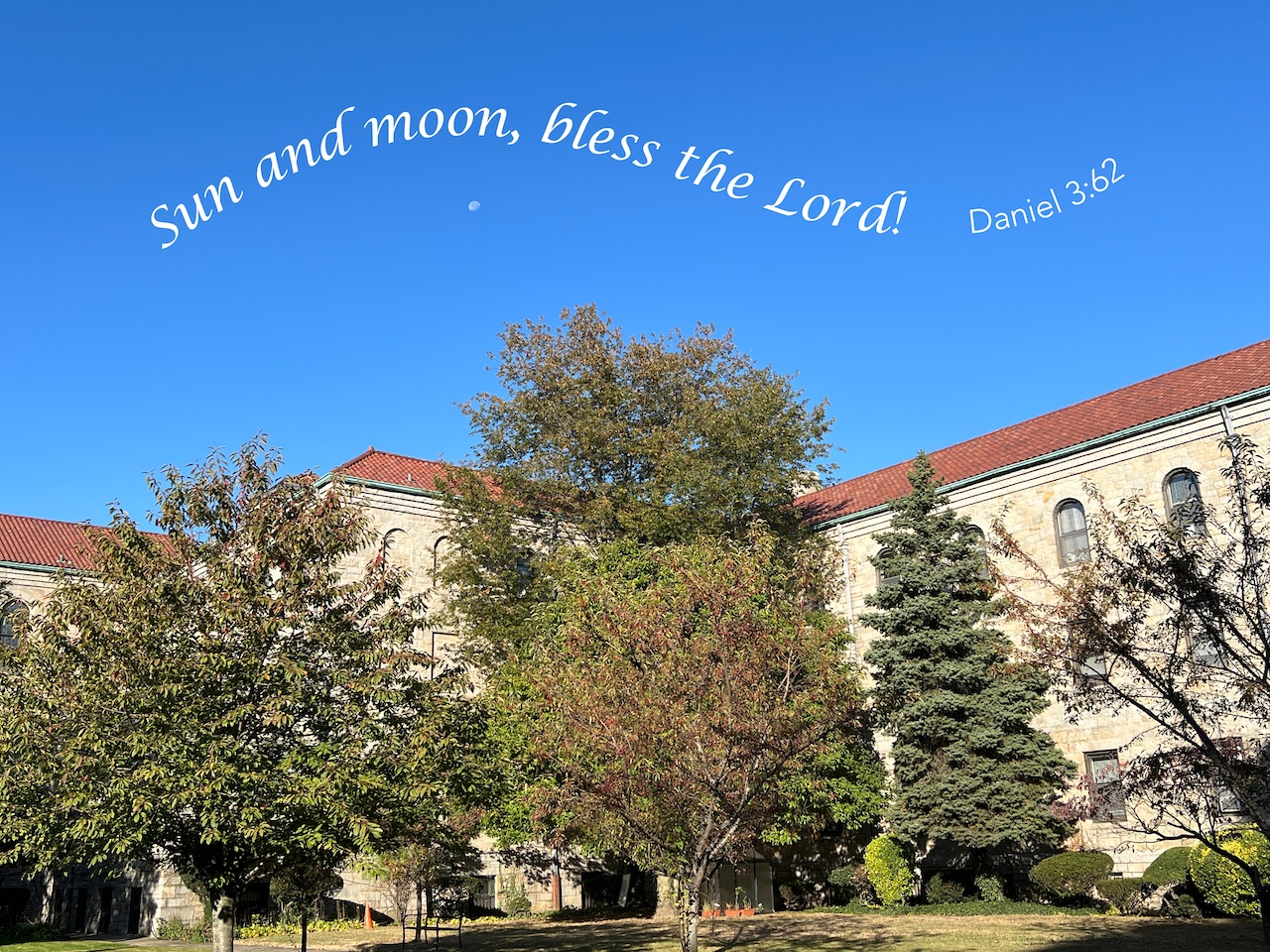
Photo of Passionist Monastery in Jamaica, NY with the text of Daniel 3:62, "Sun and moon, bless the Lord!"
Passionist Monastery in Jamaica, NY

By Gloria M. Chang

A monastery is a house of prayer to pursue the “happy” or blessed life. Our Passionist priests and brothers in Jamaica, NY faithfully pray the Liturgy of the Hours every morning and evening, which prepares them to give the bread of the Word and the Eucharist at Mass and to serve in various ministries. Prayer and the Eucharist, the daily bread of apostles, fuel works of mercy.

In a letter to a Roman noblewoman named Proba, St. Augustine offers valuable insights on prayer. The bishop of Hippo, whose rule of life continues to guide monastic communities today, understood the value of “prayer at appointed hours.” Although he was an extremely busy bishop, St. Augustine kindled his desire for God throughout the day by lifting his heart in prayer from sunrise to sunset. Forgetfulness of God in the midst of constant work makes the heart “lukewarm” and “chill” over time.

Thankfully, we can redeem the time. As the earth revolves around the sun, children of God revolve in the orbit of the Blessed Trinity. Space and time, the materials of our journey from birth to eternity, belong to the Father, Creator of all things through his Word and Spirit. Jesus, who frequently spent the night in prayer, models our way home to the Father.

Can one pray during a busy schedule? St. Augustine teaches that “even in these actions” (work responsibilities), we pray by continually longing for God. Many words are unnecessary. The desert monks discovered that short but frequent prayers, “hurled like swift javelins,” keep the heart and mind fixed on the Lord.

“Ask and it will be given to you; seek and you will find; knock and the door will be opened to you” (Matthew 7:7). Persistence in prayer with sighs and tears unite us with the ineffable God, “for he has established all things through his Word and does not seek human words.” As a monastery is a house of prayer, so are all of us “temples” of prayer in the Holy Spirit (Romans 8:26-27).

The Passionists Pray website offers resources for daily prayer, which can be accessed here.

From a letter to Proba by Saint Augustine, bishop

Let us turn our mind to the task of prayer at appointed hours

Let us always desire the happy life from the Lord God and always pray for it. But for this very reason we turn our mind to the task of prayer at appointed hours, since that desire grows lukewarm, so to speak, from our involvement in other concerns and occupations. We remind ourselves through the words of prayer to focus our attention on the object of our desire; otherwise, the desire that began to grow lukewarm may grow chill altogether and may be totally extinguished unless it is repeatedly stirred into flame.

Therefore, when the Apostle says: Let your petitions become known before God, this should not be taken in the sense that they are in fact becoming known to God who certainly knew them even before they were made, but that they are becoming known before men through boasting.

Since this is the case, it is not wrong or useless to pray even for a long time when there is the opportunity. I mean when it does not keep us from performing the other good and necessary actions we are obliged to do. But even in these actions, as I have said, we must always pray with that desire. To pray for a longer time is not the same as to pray by multiplying words, as some people suppose. Lengthy talk is one thing, a prayerful disposition which lasts a long time is another. For it is even written in reference to the Lord himself that he spent the night in prayer and that he prayed at great length. Was he not giving us an example by this? In time, he prays when it is appropriate; and in eternity, he hears our prayers with the Father.

The monks in Egypt are said to offer frequent prayers, but these are very short and hurled like swift javelins. Otherwise their watchful attention, a very necessary quality for anyone at prayer, could be dulled and could disappear through protracted delays. They also clearly demonstrate through this practice that a person must not quickly divert such attention if it lasts, just as one must not allow it to be blunted if it cannot last.

Excessive talking should be kept out of prayer but that does not mean that one should not spend much time in prayer so long as a fervent attitude continues to accompany his prayer. To talk at length in prayer is to perform a necessary action with an excess of words. To spend much time in prayer is to knock with a persistent and holy fervor at the door of the one whom we beseech. This task is generally accomplished more through sighs than words, more through weeping than speech. He places our tears in his sight, and our sighs are not hidden from him, for he has established all things through his Word and does not seek human words.

Reference

The passage from St. Augustine can be found in the Office of Readings for Monday of the 29th Week in Ordinary Time.

Praise God with St. Paul of the Cross

Statue of St. Paul of the Cross at the Passionist Monastery in Jamaica, NY

“Let everything in creation draw you to God. Refresh your mind with some innocent recreation and needful rest, if it were only to saunter through the garden or the fields, listening to the sermon preached by the flowers, the trees, the meadows, the sun, the sky, and the whole universe. You will find that they exhort you to love and praise God; that they excite you to extol the greatness of the Sovereign Architect who has given them their being.”

St. Paul of the Cross

Native Peoples, Colonists and Missionaries

H.Hudson halfmoon

For the injustices against the native peoples and the land God provided,“Lord, have mercy.”

For the brave missionaries that ministered to them. “Thanks be to God.”

The native peoples are often forgotten in the story of the “discovery” of America. Our heroes tend to be the settlers who came on ships, built towns and cities, explored the land and gave us what we have today. But it came at a price.

If you ever visit New York harbor by way of the Staten Island Ferry look at the  shores now crowded by the buildings and piers of today.  Native peoples once fished, hunted and traded in large numbers here. The water was fresher then, fish and shellfish plentiful, the air cleaner, the earth less damaged by human activity.

The National Museum of the American Indian , located in the old customs house across from Battery Park near the ferry, is a good place to remember the role of the native peoples in the story of America. They traded with the Europeans; they were their guides into an unknown land; they provided many of the foods that fed growing populations in Europe and America. They respected  the land more than those who came after them.

A young Indian woman, Kateri Tekakwitha and a Jesuit priest, Isaac Jogues, are figures to remember  in the customs house. They represent the clash of civilizations that occurred when Europeans and native peoples met. Across the street from the customs house is the statue of Christopher Columbus.

Europeans brought disease.  Smallpox  disfigured and partially blinded Kateri Tekakwitha, a young Mohawk woman who lived along the Mohawk River past Albany, NY. The native peoples had no immunity to small pox and other diseases. Three out of ten died from it. By some estimates 5 million native people lived in North America when the first Europeans arrived. Within a hundred years there were only 500,000. Besides disease, the major cause of their diminishment, the native peoples also suffered from wars and greed.
Museum of American Indian

At the museum, besides Kateri Tekakwitha remember Father Isaac Jogues, the Jesuit missionary who, while attempting to advance peace-keeping efforts with the Mohawks at Ossernonon (Auriesville) was killed by a war party on October 18, 1646. Previously, in 1642  Jogues had been captured by this same tribe. He escaped in 1643, fled here to New Amsterdam (New York City) and then was put on a ship for France by a kindly Dutch minister.

The French missionaries came to the New World out of the turmoils of the Old World expecting a new Pentecost among the native peoples here, but it didn’t turn out that way. Instead, disease and political maneuvering made the native peoples suspicious of  foreigners and the seed of the gospel fell on hard ground.

Letters back to France from the early Jesuits–marvelously preserved in “The Jesuit Relations”–often express the missionaries’ disappointment  over their scarce harvest, but it didn’t stop them. They were well grounded in the mystery of the Cross.

 “My God, it grieves me greatly that you are not known, that in this savage wilderness all have not been converted to you, that sin has not been driven from it. My God, even if all the brutal tortures which prisoners in this region must endure should fall on me, I offer myself most willingly to them and I alone shall suffer them all.” St. John de Brebéuf

The Indian woman and the priest persevered. We forget how difficult it is when civilizations clash– like now. We remember the Christian missionaries: Saints John de Brébeuf and Isaac Jogues, Priests and their compassions on October 19th..

Columbus, Central Park, NYC
Indian behind symbols of European trade and expansion: Customs House, New York City

Here’s a video on the Jesuit Martyrs at Auriesville:

Saints of Auriesville

Catholic Scholars Visit the Mary Garden

Photos: Gloria M. Chang

“What is theology?” asked Professor Andrea Florendo to a group of young Catholic Scholars in the Passionist Monastery Chapel.

“The study of God,” responded a sophomore brightly in the front row. 

“Yes, and where does theology begin?” Professor Florendo continued. Looking at each of the young faces, she exclaimed, “In a garden!” Following the creation account in Genesis, the story of God and humankind unfolds in the Garden of Eden. Flowers, trees, rocks, soil, animals, sun, moon, sky, water, humans—the whole natural world—declare the glory of God. Prayer and liturgy burst forth among flowering plants and birdsong in God’s garden of paradise. 

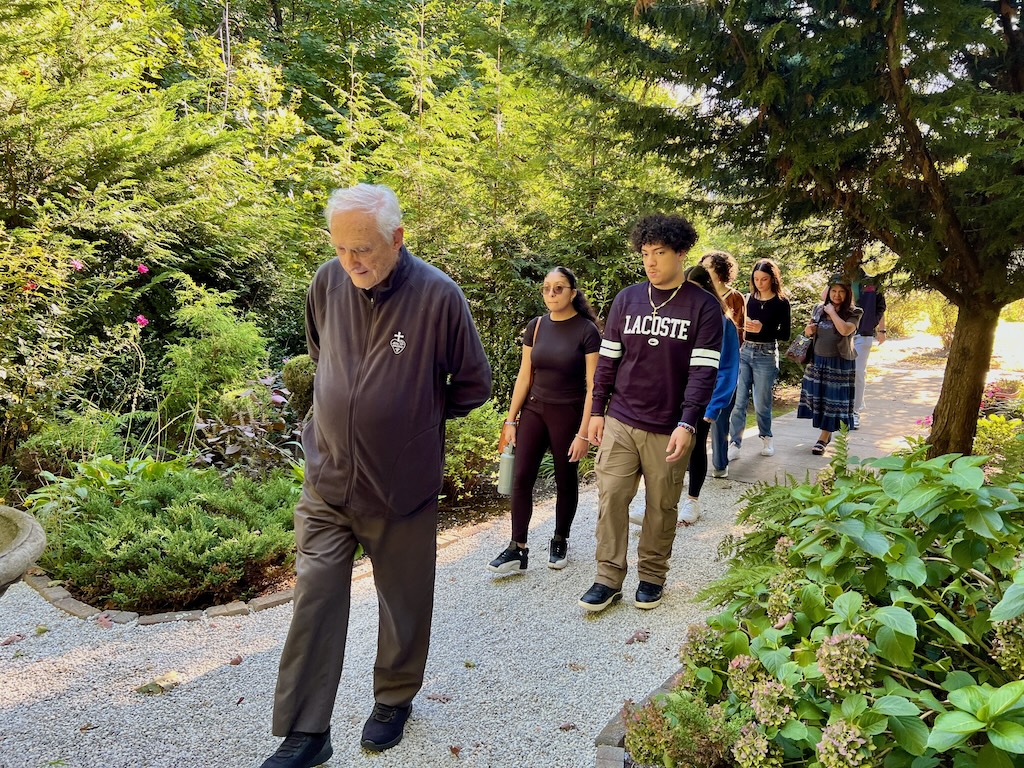
On Sunday, October 6, 2024, seven Catholic Scholars from St. John’s University visited the Mary Garden at the Passionist Monastery in Jamaica, NY. Fr. Victor Hoagland, C.P., Professor Andrea Florendo, and Gloria Chang, founders of the Mary Garden Guild at the Passionist Monastery, welcomed the students warmly. 

Fr. Victor, who has traveled extensively throughout the world on pilgrimages and missions, shared the global Passionist charism with the Catholic Scholars, who are preparing for a life of faith-inspired leadership. The Passionists, who received their mission from St. Paul of the Cross to keep alive in the world the love of Jesus Crucified as seen in His Sacred Passion, have expanded their charism to include the care of creation as taught by Pope Francis in his encyclical Laudato Si. Inspired also by Fr. Thomas Berry, C.P. (1914-2009), a pioneer in ecology, the Passionists have redesigned their retreat center in Jamaica, NY, in his name. 

Andrea Florendo, a retired theology professor at St. John’s University and designer of the Mary Garden, gave a tour, pointing out the significance of the enclosed garden as a symbol of Mary’s virginal womb, the fountain as Christ’s “fountain of living waters,” and the cross path as the four rivers in the Garden of Eden. 


Photo: Gloria M. Chang

Our visit in the Mary Garden ended in praise and thanksgiving to God with prayers from Scripture and a reading from the Book of Genesis. May the Lord bless our Catholic Scholars abundantly with faith and grace as they continue their studies and formation at St. John’s University.

How great is your name, O Lord our God,
through all the earth!

Psalm 8:1

Guardian Angels

We usually associate Guardian Angels with children. In the gospel reading for the Feast of Guardian Angels, October 2, Jesus says we can’t get to heaven unless we become like little children whose “angels in heaven always look upon the face of my heavenly Father.”  (Matthew 18,1-5,10)

Artists, like the above, usually picture children with Guardian Angels, protecting and guiding them as they go on their way in a dangerous world.

Yet, the angels we read about  in the Bible are more than guardians of children; they’re signs of God’s guardianship of the whole world. They bring God’s message to Mary and Joseph and the prophets. They bring bread to Elijah in the desert and save Daniel in the lion’s den. Angels are part of God’s providential hand dealing with the world. They’re guardians and guides of nations, the human family and creation itself.  They’re everywhere instruments of God’s power and love and justice. 

This week’s news will be dominated, as usual,  by politics, wars, human tragedies and scandals, but here we are reading about guardian angels, who will never make the news of the day, yet are powerfully present in our world.  However smart or independent or grown-up we think are, God knows we’re still little children. We never outgrow God’s guidance and care: we have “loyal, prudent, powerful protectors and guides. They  keep us so our ways cannot be overpowered or led astray.” So that’s us in the picture above.

I think of the “principle of subsidiarity” on the feastday of the Guardian Angels. God spreads his  power around. I also remember that sometime ago I nearly hit a truck ahead of me but something suddenly stopped me. “Thanks.”

O God,
in your infinite providence you deign to send your holy angels to be our guardians. Grant to us who pray to you
that we may be defended by them in this life
and rejoice with them in the next.
Through our Lord Jesus Christ, your Son.

St. Thérèse of Lisieux: October 1

therese-close

We celebrate the feast of St. Thérèse, a Doctor of the Church, October 1. Saints are antidotes to the poisons of their times, G.K. Chesterton once wrote. They reveal what’s wrong in their world and counteract its poison by their own lives. Mother Theresa, for example, saw a world poisoned by its neglect of the poor.  She not only pointed out the evil but did something to remedy it.

What poison does St. Thérèse reveal? She lived in late 19th century France, when the poison of unbelief, which first infected French intellectuals like Voltaire, had spread to the country’s ordinary people. Many rejected faith in God and traditional religion. In their place they put their trust in reason and their own lights. As the psalmist said of his day, “There is no thought of God in them.”

Raised in a family of firm faith and traditional beliefs, Thérèse’s childhood was nourished by a sheltered life. Her faith grew in the Carmel of Lisieux, which she entered at 14. There she lived a life of prayer, with people of faith inspired by the spiritual wisdom of the Carmelite tradition. Yet limitations of sickness and unrealized dreams challenged her.

In her last days, she was plunged into a darkness that brought her an experience of  the poison of unbelief. God permitted her to be “invaded by the thickest darkness,” she said, and “the thought of heaven, up to then so sweet to me, was no longer anything but a cause of struggle and torment.”

In her experience she saw herself as a voice for those who do not believe.

“Your child, however, O Lord, has understood Your divine light, and she begs pardon for her brothers. She is resigned to eat the bread of sorrow as long as You desire it; she does not wish to rise up from this table filled with bitterness at which poor sinners are eating until the day set by You.

Can she not say in her name and in the name of her brothers, “Have pity on us, O Lord, for we are poor sinners!” Oh! Lord, send us away justified. May all those who were not enlightened by the bright flame of faith one day see it shine. O Jesus!

if it is needful that the table soiled by them be purified by a soul who loves You, then I desire to eat this bread of trial at this table until it pleases You to bring me into Your bright Kingdom. The only grace I ask of You is that I never offend You!” (Manuscript C, chapter 10)

Sharing the darkness that comes with unbelief, Thérèse  prayed in their name, “’Have pity on us, O Lord, for we are poor sinners!’ Oh! Lord, send us away justified. May all those who were not enlightened by the bright flame of faith one day see it shine. O Jesus!”  Her “struggle and torment” linked her to unbelievers “ not enlightened by the bright flame of faith.”

Mother Theresa seems to have had a similar experience of that darkness. Do other believers today share, in different degrees and different ways, that experience of darkness, that “dark night”, so that “those not enlightened by the bright light of faith may one day see it shine?” It seems so.

Here’s a description of how Thérèse  saw herself:

Since my longing for martyrdom was powerful and unsettling, I turned to the epistles of St Paul in the hope of finally finding an answer. By chance the 12th and 13th chapters of the 1st epistle to the Corinthians caught my attention, and in the first section I read that not everyone can be an apostle, prophet or teacher, that the Church is composed of a variety of members, and that the eye cannot be the hand. Even with such an answer revealed before me, I was not satisfied and did not find peace.

  I persevered in the reading and did not let my mind wander until I found this encouraging theme: Set your desires on the greater gifts. And I will show you the way which surpasses all others. For the Apostle insists that the greater gifts are nothing at all without love and that this same love is surely the best path leading directly to God. At length I had found peace of mind.

  When I had looked upon the mystical body of the Church, I recognised myself in none of the members which St Paul described, and what is more, I desired to distinguish myself more favourably within the whole body. Love appeared to me to be the hinge for my vocation. Indeed I knew that the Church had a body composed of various members, but in this body the necessary and more noble member was not lacking; I knew that the Church had a heart and that such a heart appeared to be aflame with love. I knew that one love drove the members of the Church to action, that if this love were extinguished, the apostles would have proclaimed the Gospel no longer, the martyrs would have shed their blood no more. I saw and realised that love sets off the bounds of all vocations, that love is everything, that this same love embraces every time and every place. In one word, that love is everlasting.

  Then, nearly ecstatic with the supreme joy in my soul, I proclaimed: O Jesus, my love, at last I have found my calling: my call is love. Certainly I have found my place in the Church, and you gave me that very place, my God. In the heart of the Church, my mother, I will be love, and thus I will be all things, as my desire finds its direction.

Feasts are for Reflection

Ryrson cross

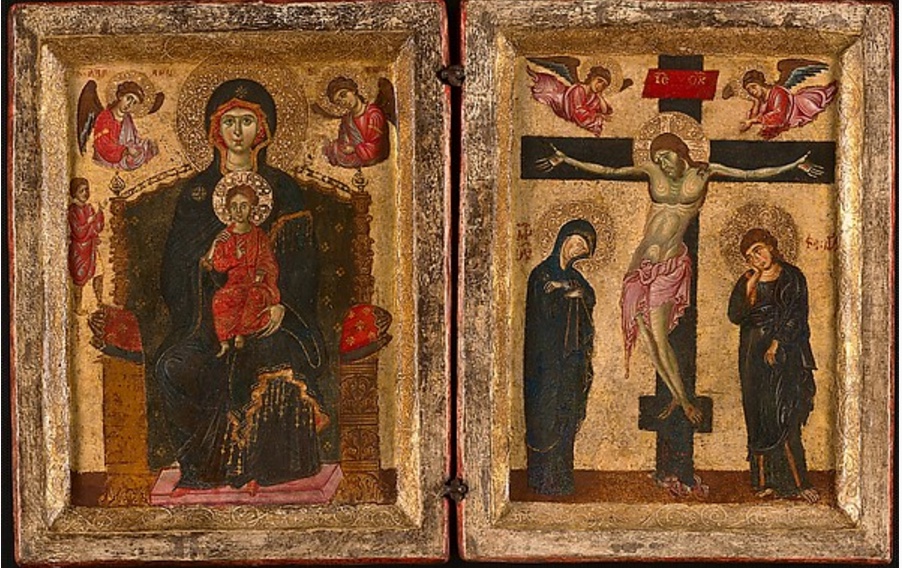
A 13th century European pilgrim to the Holy Land brought this icon home as a reminder of his pilgrimage. What places did that pilgrim visit? Surely, Bethlehem where Jesus was born, and Jerusalem where he was crucified and rose  from the dead. In both places , Mary was there with her Son.

In the picture on the left Mary is a joyful mother holding her Son, a divine Son whom the angels praise.  She is a daughter of Abraham, Isaac and Jacob, a daughter of the human family whom she represents. She never loses that joy, which she invites us to share.

In the picture on the right, Mary stands with John, an image of the church, beneath the cross of Jesus. Angels are astonished at the sight. Jesus seems to enfold his mother and the disciple whom he loves in his arms..

The gospel reading from St. John for the feast of Mary’s Sorrows says simply that Mary stood by the cross of Jesus. She’s a brave woman, not afraid to come close to the fearful place where Jesus was put to death. The Book of Judith, ordinarily the 1st reading for the feast, praises Judith, the brave and wise Jewish woman who’s not afraid to stand with her people at a dangerous moment in their history. Two women of courage face suffering and the challenge it brings.

The prayers, traditions and art of this feast take up the theme of Mary standing by the cross. She’s remembered  in poetry, music and art. “Stabat Mater” Here’s an example in Gregorian Chant and Pergolesi’s magnificent baroque setting.

At the cross her station keeping
Stood the mournful mother keeping
Close to Jesus to the last.

Women mystics, like St.Bridgid of Sweden, a mother herself and an important pilgrim to the Holy Land, saw the life of Jesus, particularly his passion, through a mother’s eyes. Wouldn’t Mary draw close to her Son’s cross and then hold him in her arms as they brought him down. The gospels do not mention it, but women like Bridgid were sure it was  so.

Women mystics like Bridgid gave us the Pieta.

A study of the Pieta in art in early medieval France shows the various ways this scene was pictured in art before Michaelangelo’s Pieta became an overpowering icon surpassing others. “Often she is viewed as caught up in the horror of the moment, but she is also shown praying or even gazing into the distance, as if contemplating comforting memories or the reunion to come. Her demeanor ranges from youthful innocence—the Purity that Time cannot age—to careworn maturity—Our Lady of Sorrows.”

Sorrow. like joy, has a range of faces. Mary shows us them all.

The Gospel of Luke and First Corinthians Go Together

We’re reading Paul’s 1st Letter to the Corinthians and the Gospel of Luke together these days at Mass. The two may be more closely connected than we suspect. Luke wrote some years later than Paul, but his audience would be much like those found in the church of Corinth.

Theophilus, to whom Luke dedicates his gospel, could easily be one of Corinth’s better-off Christians, who surely  would recognize  the lack of concern for the poor that Jesus condemns in Luke’s gospel as present in his own community as well. That unconcern appeared at table, in the celebration of the Eucharist in the Corinthian church, and Paul condemns it. (1 Corinthians 11, 17-22) Luke presents Jesus, over and over, at table, condemning the same unconcern for the poor as well.

Luke begins Jesus’ ministry in Galilee with his visit to Nazareth (Luke 4, 16-30) where he’s not recognized by his own who know him too well and are ready to throw him to his death over the hill.

The Corinthians–how many we are unsure– fail to recognize the humble Savior whom Paul preaches. “I did not come with sublimity of words or of wisdom. For I resolved to know nothing while I was with you except Jesus Christ, and him crucified.” (1 Corinthians 2, 1-5)

In Luke’s gospel, Jesus is the teacher and Lord bringing God’s word to the towns of Galilee. He brings God’s word to Corinth as well, but the Corinthians are attracted to the various disciples of Jesus, causing “jealousy and rivalry among you…Whenever someone says, ‘I belong to Paul,’ and another,’I belong to Apollos,’ are you not merely men? What is Apollos, after all, and what is Paul? Ministers through whom you became believers, just as the Lord assigned each one.”

God plants and waters the growth of his church; the disciples are disciples, only disciples, who must have “the mind of Christ.” (1 Corinthians, 3, 1-9)

Luke has a church like Corinth in mind when he writes his gospel. How about our church too, as we take  sides. “I belong to…” Good to read these two readings together now.

Readings.

Bartholomew, the Apostle: August 24

IMG (160)
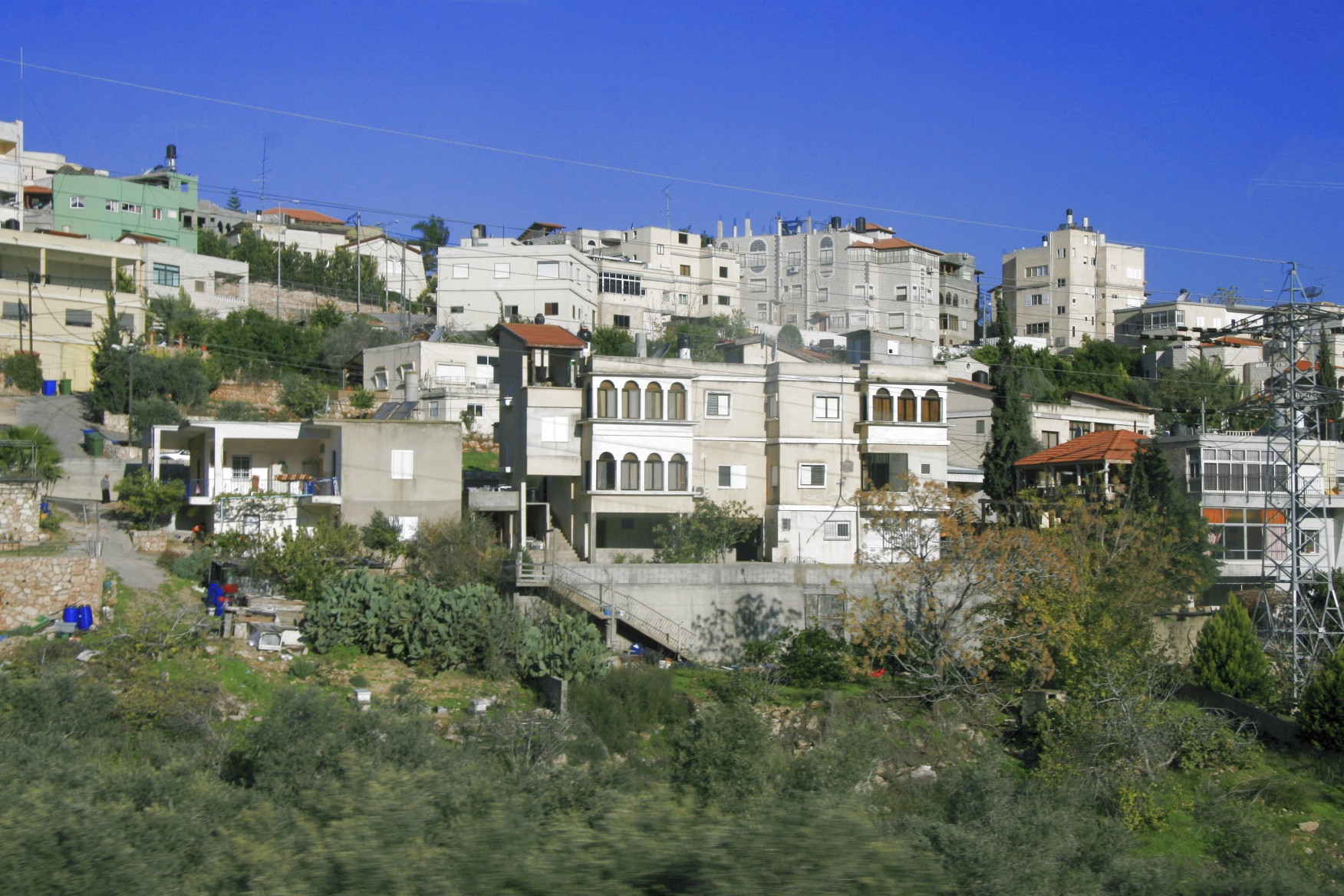
Cana today

August 24th is the feast of the apostle Bartholomew, also identified as Nathaniel,  from Cana in Galilee, only a few miles from Nazareth.  Like Nazareth, Cana attracted little interest in Jesus’ time, yet it played  a major role in Jesus’ early life and  mission.

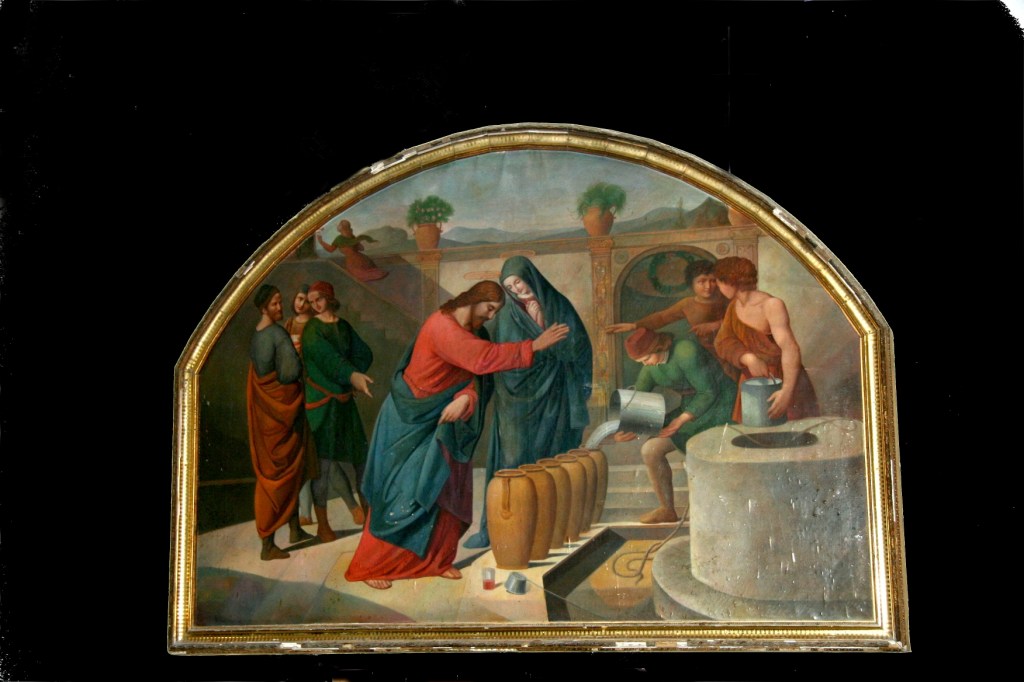
In John’s gospel,  Jesus turns water into wine at a wedding in Cana, his first “sign” that God’s kingdom would come. (Jn 2, 1-12) The family faced a wedding nightmare: the wine was running out and embarrassment was sure to come.

Catholic Church, Cana
cana carol rothstein 7

Was the family related to Jesus? Or Bartholomew?  At least they were close. Why else would Jesus, his mother and his disciples be at the celebration?

The miracle was special,. More than saving a family from embarrassment, it’s a sign in John’s gospel of God’s great love for ordinary people in ordinary towns everywhere. God delights in them, says the Prophet Isaiah, whose words often accompany the Cana miracle,  Cana signifies poor Israel, whom God loves with all the ardor of a “young man marrying a virgin,” God’s love, bountiful, restoring, overflowing with delight, goes out to this poor place, as well as poor places everywhere.

Jesus performed another miracle at Cana, John’s gospel says, another sign of the coming kingdom. Besides the miracle at the wedding, Jesus cured the dying son of a government official from Capernaum, whose ” father came to Cana because he heard that Jesus was there. (John 4.46-54) Jesus saved his son from death.

cana carol rothstein

Through the centuries Cana hasn’t prospered much. It’s not much to look at today.  In the late 19th century, a visiting English vicar described it this way:

“ (Kefr Kenna) lies on high ground, but not on a hill…A broad prickly pear led to the group of houses which perhaps represents the New Testament Cana. Loose stones were scattered around the slope. There may be, possibly, 150 inhabitants, but one cannot envy them their huts of mud and stone, with dunghills at every corner. Huge mud ovens, like great beehives, stood at the sides of some of the houses.

“ In one house a worthy Moslem was squatting on the ground with a number of children, all with slates on which verses of the Koran had been written, which they repeated together. It was the village school, perhaps like that at Nazareth eighteen hundred years ago.

“ A small Franciscan church of white stone with a nice railed wall, with a beautiful garden at the side, had over its doorway these startling words in Latin: ‘Here Jesus Christ from water made wine.’ Some large water jars are shown inside as actually those used in the miracle, but such mock relics, however believed in by simple monks, do the faith of other people more harm than good.”

Cana’s still a poor town. Like other poor places in the world it’s waiting to be raised up to share in the splendor of the heavenly Jerusalem. God loves poor places like this, the Cana miracle says. Bartholomew came from here.

cana carol rothstein 11
Church of St. Bartholomew, Cana

Ezechiel, for those over Thirty

We‘re reading the Prophet Ezekiel at Mass these days. Early Jewish scholars considered him hard to read; only those over 30 should read him, some said. We have the same difficultly. The lectionary for today, Friday in the 19th week of the year, offers a gruesome story of infanticide. A infant girl is thrown out to die. Not a pretty story to look at.

It’s a story harsh to hear and hard to understand. Infanticide, a form of abortion. child abuse, gender discrimination, prostitution, ingratitude, forgetfulness of God. Ezechiel describes his own society in dark terms. Yet, all the while God is there. We’re offered a shorter version in our lectionary to spare us from the ugly details.

But don’t miss God’s intervention:

“You became mine, says the Lord GOD.Then I bathed you with water, washed away your blood, and anointed you with oil. I clothed you with an embroidered gown, put sandals of fine leather on your feet; I gave you a fine linen sash and silk robes to wear. I adorned you with jewelry… You were exceedingly beautiful, with the dignity of a queen.”

“But you were captivated by your own beauty,
you used your renown to make yourself a harlot,
and you lavished your harlotry on every passer-by,
whose own you became.”

“Yet I will remember the covenant I made with you when you were a girl,
and I will set up an everlasting covenant with you,
that you may remember and be covered with confusion,
and that you may be utterly silenced for shame
when I pardon you for all you have done, says the Lord GOD.”
{Ezechiel 16, 1-69)

Ezeckiel’ story of the abandoned girl is a story of sin and redemption. All the while God is there.

Look at the hard times, don’t ignore or hide from them, but see them with the eyes of God, the prophet says. “Thus says the Lord GOD,” I swear I am coming… I will claim my sheep…I will save my sheep…I myself will look after and tend my sheep.” (Ezekiel 34,1-11)

Good words for us today?