Immaculate Conception Church in Jamaica, NY on U.S. Flag
By Gloria M. Chang
On this Election Day, let us entrust the nation to Our Lady of the Immaculate Conception, the patroness of the United States of America. On May 13, 1846, the Catholic bishops of the United States unanimously proclaimed the Blessed Virgin Mary, under her title of the “Immaculate Conception,” patroness of the United States. Pope Pius IX formally ratified this decision on February 7, 1847, seven years before he officially defined the Immaculate Conception as a formal dogma of the Church.
Prayer to the Immaculate Heart of Mary
O Immaculate Heart of Mary, Mother of our country, Heavenly beauty and splendor of the Father, we consecrate ourselves to You, our nation, and our leaders, asking for Your guidance, protection, and intercession. Amen.
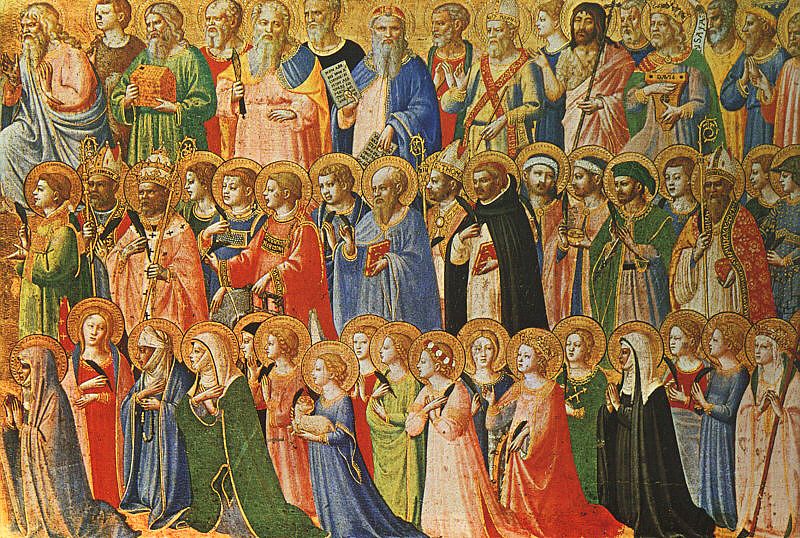
Hubble Ultra Deep FieldFra Angelico, The Forerunners of Christ with Saints and Martyrs
By Gloria M. Chang
From eternity the Lord God designed humanity and the cosmos in his image, envisioning the constellation of saints bursting with Christic Light in the heavens. Formed from the dust of the earth, Adam evolves through the eons to completion in Jesus Christ, his descendant and Lord—the Potter’s masterpiece (Isaiah 64:8).
Kindling the treasure of Christ’s flame in “jars of clay,” we grow day by day into the image of the Blessed Trinity as one Mystical Body (1 Corinthians 15:41). The dazzling kaleidoscope of saints, reflecting the unity and diversity of the Father, Son, and Holy Spirit radiates the infinite rays of divinity. Each saint refined in God’s furnace of Love emerges as an original from the hands of the Divine Artist, for “star differs from star in glory” (1 Corinthians 15:41).
Form me with your hands, Lord, day by day. You are the Potter; I am the clay. From soil you shaped sparkling saints like stars, Blazing your glory from earthen jars.
Just as we have borne the image of the man of dust, we shall also bear the image of the man of heaven.
The Rosary of the Virgin Mary, which gradually took form in the second millennium under the guidance of the Spirit of God, is a prayer loved by countless Saints and encouraged by the Magisterium. Simple yet profound, it still remains, at the dawn of this third millennium, a prayer of great significance, destined to bring forth a harvest of holiness. It blends easily into the spiritual journey of the Christian life, which, after two thousand years, has lost none of the freshness of its beginnings and feels drawn by the Spirit of God to “set out into the deep” (duc in altum!) in order once more to proclaim, and even cry out, before the world that Jesus Christ is Lord and Saviour, “the way, and the truth and the life” (Jn 14:6), “the goal of human history and the point on which the desires of history and civilization turn.”
The Rosary, though clearly Marian in character, is at heart a Christocentric prayer. In the sobriety of its elements, it has all the depth of the Gospel message in its entirety, of which it can be said to be a compendium. It is an echo of the prayer of Mary, her perennial Magnificat for the work of the redemptive Incarnation which began in her virginal womb. With the Rosary, the Christian people sits at the school of Mary and is led to contemplate the beauty on the face of Christ and to experience the depths of his love. Through the Rosary the faithful receive abundant grace, as though from the very hands of the Mother of the Redeemer.”
The words of the Preacher, the son of David, king in Jerusalem. Vanity of vanities, says the Preacher, vanity of vanities! All is vanity. What does man gain by all the toil at which he toils under the sun? A generation goes, and a generation comes, but the earth remains forever. The sun rises, and the sun goes down, and hastens to the place where it rises. The wind blows to the south and goes around to the north; around and around goes the wind, and on its circuits the wind returns. All streams run to the sea, but the sea is not full; to the place where the streams flow, there they flow again. All things are full of weariness; a man cannot utter it; the eye is not satisfied with seeing, nor the ear filled with hearing. What has been is what will be, and what has been done is what will be done, and there is nothing new under the sun. Is there a thing of which it is said, “See, this is new”? It has been already in the ages before us. There is no remembrance of former things, nor will there be any remembrance of later things yet to be among those who come after.
Ecclesiastes 1:1-8 (ESV)
What is the Meaning of Life?
Qoheleth, the “Preacher,” writing in the name of Solomon, the son of David, wrestles with the absolute in the book of Ecclesiastes. The Hebrew word Qoheleth (from qahal, a root that means “assembly” or “congregation”) is Ekklesiastes in Greek, which names the book. Early traditions attribute the book’s authorship to Solomon, but philological evidence dates the book to no earlier than the mid-fifth century B.C., a half-millennium after Solomon’s reign. Thus, Qoheleth, a Hebrew sage, critiques the world through the eyes of King Solomon, the wisest, wealthiest, and most powerful man in the world. He investigates the patterns of nature and human striving, hoping to discover an ultimate purpose behind it all.
World of Vapor
Qoheleth begins by lamenting that all is “vanity” (in Hebrew hebel, “vapor, breath”), which he pronounces five times in a single utterance (1:2). Finding no ultimate profit in the drudgery of human toil, he rhetorically asks, “What does man gain by all the toil at which he toils under the sun?”
Ephemeral phenomena and superficial impressions shift and slide incessantly “under the sun,” where nothing is constant. The rising and setting of the sun, and the circuitous currents of wind go “round and round” ceaselessly in a futile loop. The sea, too, like human ambition and appetite, never finds fulfillment despite continuous filling: “All streams run to the sea, but the sea is not full” (1:7). Jaded by familiarity, Qoheleth deplores the predictable motions of the earth.
“All things are full of weariness,” he despairs, “a man cannot utter it.” “The eye is not satisfied with seeing, nor the ear filled with hearing” (1:8). Ever restless, human desire insatiably consumes the panorama of sight and sound—representative of all sensory and intellectual stimuli. All impressions eventually evaporate like steam (hebel).
Nothing New Under the Sun
What has been is what will be, and what has been done is what will be done, and there is nothing new under the sun. Is there a thing of which it is said, “See, this is new”? It has been already in the ages before us.
Ecclesiastes 1:9-10 (ESV)
Ecclesiastes affirms the truism that “history repeats itself.” As civilizations rise and fall, human nature remains the same. War and peace, joy and sorrow, strength and weakness, freedom and slavery, profit and loss—the same old human affairs cycle round and round, generation after generation, world without end. A keen observer of human nature and historical recurrence, Qoheleth bleakly concludes, “There is nothing new under the sun.”
Puff of the Past
There is no remembrance of former things, nor will there be any remembrance of later things yet to be among those who come after.
Ecclesiastes 1:11 (ESV)
As the sands of time fade away, so does human “remembrance of former things.” Stars and galaxies, fossils, and artifacts provide clues to the mystery of the 13.8 billion-year-old universe and human evolution. Yet billions of ancestors lie buried in the ground, forgotten by their descendants. Apart from cave paintings, oral traditions, scrolls, books, annals, chronicles, and even modern audiovisual media, which capture only fragments from limited perspectives, the past vanishes like vapor “under the sun.” Can fragmentary memories preserve an unbroken, unified recollection of the past? Can mortals achieve immortality in the minds of posterity?
The Value of Struggle
Ecclesiastes challenges the assembly of wisdom seekers to find ultimate purpose and profit “under the sun.” Like Job, Qoheleth embraces disputation and wrestling with elemental questions. Sometimes described as “unorthodox,” these books goad the pious to “struggle with God,” the meaning of Israel’s name (Genesis 32:28). Questions do not threaten religion but expand its horizons.
Without being an atheist, Qoheleth journeys to the edge of human striving to discover its peaks and valleys apart from God. His experiment confirms Paul’s observation that, on account of Adam’s departure from God’s will, “the creation was subjected to futility” (Romans 8:20; Genesis 3:17). The Greek word for futility,mataiotés (“vanity,” “emptiness”), translates the Hebrew word hebel (“vapor,” “breath”) in the Septuagint. Ecclesiastes allows every seeker of meaning to feel the emptiness of a life and vision that never rises above the sun.
I have seen all things that are done under the sun, and behold, all is vanity and a chase after wind.
Ecclesiastes 1:14 (NABRE)
All is vanity, a chase after wind. Series and cycles—these I examined. Under the sun, seasons whirl like vapor. What do humans gain by all their labor?
We usually associate Guardian Angels with children. In the gospel reading for the Feast of Guardian Angels, October 2, Jesus says we can’t get to heaven unless we become like little children whose “angels in heaven always look upon the face of my heavenly Father.” (Matthew 18,1-5,10)
Artists, like the above, usually picture children with Guardian Angels, protecting and guiding them as they go on their way in a dangerous world.
Yet, the angels we read about in the Bible are more than guardians of children; they’re signs of God’s guardianship of the whole world. They bring God’s message to Mary and Joseph and the prophets. They bring bread to Elijah in the desert and save Daniel in the lion’s den. Angels are part of God’s providential hand dealing with the world. They’re guardians and guides of nations, the human family and creation itself. They’re everywhere instruments of God’s power and love and justice.
This week’s news will be dominated, as usual, by politics, wars, human tragedies and scandals, but here we are reading about guardian angels, who will never make the news of the day, yet are powerfully present in our world. However smart or independent or grown-up we think are, God knows we’re still little children. We never outgrow God’s guidance and care: we have “loyal, prudent, powerful protectors and guides. They keep us so our ways cannot be overpowered or led astray.” So that’s us in the picture above.
I think of the “principle of subsidiarity” on the feastday of the Guardian Angels. God spreads his power around. I also remember that sometime ago I nearly hit a truck ahead of me but something suddenly stopped me. “Thanks.”
O God, in your infinite providence you deign to send your holy angels to be our guardians. Grant to us who pray to you that we may be defended by them in this life and rejoice with them in the next. Through our Lord Jesus Christ, your Son.
Every word of God is tested; he is a shield to those who take refuge in him. Add nothing to his words, lest he reprove you, and you will be exposed as a deceiver.
Two things I ask of you, deny them not to me before I die: Put falsehood and lying far from me, give me neither poverty nor riches; provide me only with the food I need; Lest, being full, I deny you, saying, “Who is the LORD?” Or, being in want, I steal, and profane the name of my God.
Proverbs 30:5-9
“Every word of God is pure (tested, refined),” like fruit from a tree of life. “He is a shield to those who take refuge in him.” Comparing divine wisdom to a tree of life (Proverbs 3:18), the Book of Proverbs guides us toward healing our broken relationship with God that occurred in the Garden of Eden. God created us for abundant life, which we reap by hearing and heeding his word.
Ordering life around God, the sage asks for a truthful heart and for “neither poverty nor riches.” Luxury may tempt him to deny the Lord, while penury may incite him to steal and dishonor the name of God. Our heavenly Father, who knows what we need, will give us our “daily bread.” When making choices, the sage seeks the honor and glory of God above all.
Neither poverty nor riches, seek I, But to honor God and him glorify.
God Provides
Jesus summoned the Twelve and gave them power and authority over all demons and to cure diseases, and he sent them to proclaim the kingdom of God and to heal the sick. He said to them, “Take nothing for the journey, neither walking stick, nor sack, nor food, nor money, and let no one take a second tunic. Whatever house you enter, stay there and leave from there. And as for those who do not welcome you, when you leave that town, shake the dust from your feet in testimony against them.” Then they set out and went from village to village proclaiming the good news and curing diseases everywhere.
Luke 9:1-6
Jesus sends his twelve apostles to proclaim the kingdom of God, the fulfillment of his word. The word of the Lord (dabar YHWH), which led the Israelites from Sinai to Jerusalem, has become flesh with divine authority to heal and cast out demons. Jesus, whose Father provides for his children, enjoins the Twelve to “take nothing for the journey.”
The apostle, like the sage of the Book of Proverbs, lives on and through the Word of God, who is a “shield” and refining fire. Christ, the Word of God and Tree of Life, feeds us with himself in the sanctifying Eucharist.
Your word, O Lord, is a lamp for my feet.
Psalm 119:105 (Responsory)
God’s Word protects and purifies Apostles who evangelize.
They left from there and began a journey through Galilee, but he did not wish anyone to know about it. He was teaching his disciples and telling them, “The Son of Man is to be handed over to men and they will kill him, and three days after his death he will rise.” But they did not understand the saying, and they were afraid to question him.
They came to Capernaum and, once inside the house, he began to ask them, “What were you arguing about on the way?” But they remained silent. They had been discussing among themselves on the way who was the greatest. Then he sat down, called the Twelve, and said to them, “If anyone wishes to be first, he shall be the last of all and the servant of all.” Taking a child he placed it in their midst, and putting his arms around it he said to them, “Whoever receives one child such as this in my name, receives me; and whoever receives me, receives not me but the One who sent me.”
Mark 9:30-37
Who is the Greatest?
Walking through Galilee, Jesus’ thoughts and that of his disciples diametrically clashed. A brooding Judas heard his master’s prediction of his betrayal and death. Did the omen disquiet the lone treasurer? Each man heard Jesus uniquely and darkly. The matter of his rising after three days sounded meaningless and opaque.
Filtering out ideas that conflicted with their image of an earthly Messianic kingdom, the Twelve heatedly argued about their relative positions of power. When questioned by Jesus, no one dared answer. Their squabble, in his presence, vanished as vain and arrogant chatter.
Sitting down to teach in the rabbinic manner, Jesus settled their debate: the greatest of all will be the least of all, like a little child. “If anyone wishes to be first, he shall be the last of all and the servant of all.” Jesus’ whole life from his birth in a manger, wrapped in swaddling clothes, to his burial in a tomb, wrapped in grave clothes, bespoke a complete stripping of earthly pride and power.
Jesus felt more at home among the lilies of the field than in the palaces of kings. Like the lowly child, the colorful, fragile flowers in the wild express the splendor of God, the true King of Israel.
Learn from the way the wild flowers grow. They do not work or spin. But I tell you that not even Solomon in all his splendor was clothed like one of them.
Matthew 6:28-29; cf. Luke 12:27
As the Cross loomed, the Twelve vied for power. Jesus bent down to the child and flower.
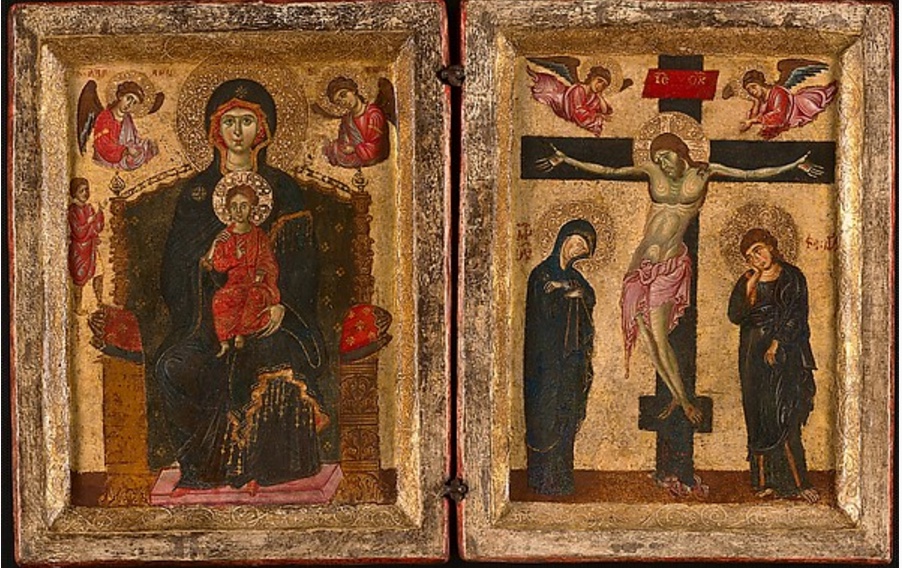
A 13th century European pilgrim to the Holy Land brought this icon home as a reminder of his pilgrimage. What places did that pilgrim visit? Surely, Bethlehem where Jesus was born, and Jerusalem where he was crucified and rose from the dead. In both places , Mary was there with her Son.
In the picture on the left Mary is a joyful mother holding her Son, a divine Son whom the angels praise. She is a daughter of Abraham, Isaac and Jacob, a daughter of the human family whom she represents. She never loses that joy, which she invites us to share.
In the picture on the right, Mary stands with John, an image of the church, beneath the cross of Jesus. Angels are astonished at the sight. Jesus seems to enfold his mother and the disciple whom he loves in his arms..
The gospel reading from St. John for the feast of Mary’s Sorrows says simply that Mary stood by the cross of Jesus. She’s a brave woman, not afraid to come close to the fearful place where Jesus was put to death. The Book of Judith, ordinarily the 1st reading for the feast, praises Judith, the brave and wise Jewish woman who’s not afraid to stand with her people at a dangerous moment in their history. Two women of courage face suffering and the challenge it brings.
The prayers, traditions and art of this feast take up the theme of Mary standing by the cross. She’s remembered in poetry, music and art. “Stabat Mater” Here’s an example in Gregorian Chant and Pergolesi’s magnificent baroque setting.
At the cross her station keeping
Stood the mournful mother keeping
Close to Jesus to the last.
Women mystics, like St.Bridgid of Sweden, a mother herself and an important pilgrim to the Holy Land, saw the life of Jesus, particularly his passion, through a mother’s eyes. Wouldn’t Mary draw close to her Son’s cross and then hold him in her arms as they brought him down. The gospels do not mention it, but women like Bridgid were sure it was so.
Women mystics like Bridgid gave us the Pieta.
A study of the Pieta in art in early medieval France shows the various ways this scene was pictured in art before Michaelangelo’s Pieta became an overpowering icon surpassing others. “Often she is viewed as caught up in the horror of the moment, but she is also shown praying or even gazing into the distance, as if contemplating comforting memories or the reunion to come. Her demeanor ranges from youthful innocence—the Purity that Time cannot age—to careworn maturity—Our Lady of Sorrows.”
Sorrow. like joy, has a range of faces. Mary shows us them all.
The Passionists celebrate the Feast of the Glorious Wounds of Jesus on Friday of the second week of Easter. The four gospels tell the great story of the passion of Jesus, each in its own way. More than the others, John’s gospel focuses on his wounds, unlikely signs revealing the mystery of the Word made flesh.
On Calvary a small symbolic group stands beneath the cross of “the King of the Jews”– Mary, the mother of Jesus, the disciple whom he loved, and a few others. A gentile soldier joins them.
This group represents the “new Jerusalem,” “the inhabitants of Jerusalem who look on the one whom they have pierced…and mourn for him, as one mourns for an only child.” (Zechariah 11, 10 )
They receive a precious gift. “It is finished!” Jesus declares, and bowing his head, he pours out his spirit on them. A Roman soldier thrusts a spear into Jesus’ side. “Immediately blood and water flowed out.” (John 19, 34)
Blood, a sign of his life, flows on those standing beneath his cross. Water, signifying the Spirit within him, is poured out on the world they represent. Far from ending his life, his death is the moment Jesus shares his life.“This is the one who came by water and blood, Jesus Christ.” (I John 5,6)
Artists afterwards picture the wounds of Christ as cosmic signs. They place the grave of Adam beneath the cross — generations wait for the new life Jesus brings. Creation, symbolized by the sun and moon, looks on expectantly, for Calvary is where creation too is redeemed. Angels collect the blood and water from Jesus’ wounds in cups representing the mystery of the Eucharist. All days are found in this one day. On Calvary, the glory of the Lord is revealed in his wounds.
St. Paul of the Cross in his letters often wished the one to whom he’s writing to be placed in the “wounds of Christ” or the “holy Side of Jesus” or his “Sacred Heart.” “I am in a hurry and leave you in the holy Side of Jesus, where I ask rich blessings for you.”
These expressions may seem pious phrases until we read the story of Thomas from John’s gospel. Jesus shows the doubting disciple the wounds in his hands and side, and Thomas believes.
Belief is not something we come to by ourselves. God gives this gift through Jesus Christ. We all stand beneath the life-giving Cross of Jesus. May his life give new hope to us and our world.
I found this Christmas story called “Aidan of the Cows” in an old book.
A young woman named Aidan had a herd of choice cows producing the best milk and cheese anywhere in the village of St.Koatsven in a distant land near the shore of a distant sea.
Unfortunately, Aidan fell on bad times because the young man she loved spent her fortune and all her cows had to be sold to moneylenders.
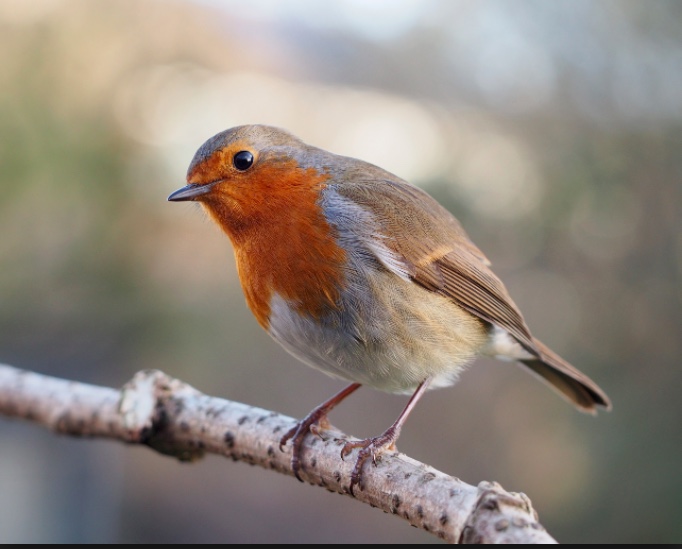
Christmas morning Aidan wandered sadly down a meadow near the sea and heard a robin singing:
She listened with amazement, with fear and trembling, with a fearful joy, because the bird sang in human speech.
“I am Robin Redbreast,” he sang, ” the Bird of Good Hope, much admired among birds. For in ancient times when He was toiling up the heavy hill bearing the bitter Cross, I was moved by Heaven to alight on His head, and I plucked from out His bleeding brow one thorn from the cruel crown that bound His temples. One drop of His blood bedewed my throat as I stooped to the blessed task and dyed my breast in a hue of glorious beauty for ever.”
Aidan listened with all the ears of her heart.
“In remembrance of what I did, a blessing was given me—that once every year, on Christmas-eve, I can give a good gift to the first maiden, good but unhappy, who should put her foot upon the herb Marie, as you, Aidan, have done.”
The girl looked down. Her foot was lightly- pressing the pretty little yellow trefoil plantret, an herb called Marie. “As you have done, Aidan of the Cows,” the robin repeated with a confident chirrup.
Of course, Aidan got her cows back and even got her repentant young man, whom she married, and they live happily ever after. All this took place in a Distant Land where things like this take place.
May the Bird of Good Hope speak to you today.
Unfortunately, we’ve lost this wonderful imaginative tradition that sees divine mysteries allied to the ordinary plants and creatures of creation. Science has taken over our Christian imagination. May we get it back some day; maybe the Christmas mystery so closely allied to a simple stable and donkeys and cattle and camels and straw may help us.






 The Victor's Place