Gloria M. Chang is a multimedia content creator who launched Shalom Snail as a contemplative space for silence, prayer, and gratitude for our divinely designed cosmos.
At that time the disciples approached Jesus and said, “Who is the greatest in the kingdom of heaven?” He called a child over, placed it in their midst, and said, “Amen, I say to you, unless you turn and become like children, you will not enter the kingdom of heaven. Whoever humbles himself like this child is the greatest in the kingdom of heaven. And whoever receives one child such as this in my name receives me.
See that you do not despise one of these little ones, for I say to you that their angels in heaven always look upon the face of my heavenly Father.”
Matthew 18:1-5, 10
Guardian Angels Guide Us to the Father
God, the Father Almighty, maker of heaven and earth, of all things visible and invisible, placed Christ at the center of the angelic world. Every child made in the image of the Incarnate Son of God receives a guardian angel at conception to guide them in their journey home to the Father. As “their angels in heaven always look upon the face of my heavenly Father,” they intercede and light the way through Christ in the Spirit to the heart of the Father.
From its beginning until death, human life is surrounded by their watchful care and intercession. “Beside each believer stands an angel as protector and shepherd leading him to life.” Already here on earth the Christian life shares by faith in the blessed company of angels and men united in God.
Catechism of the Catholic Church 336
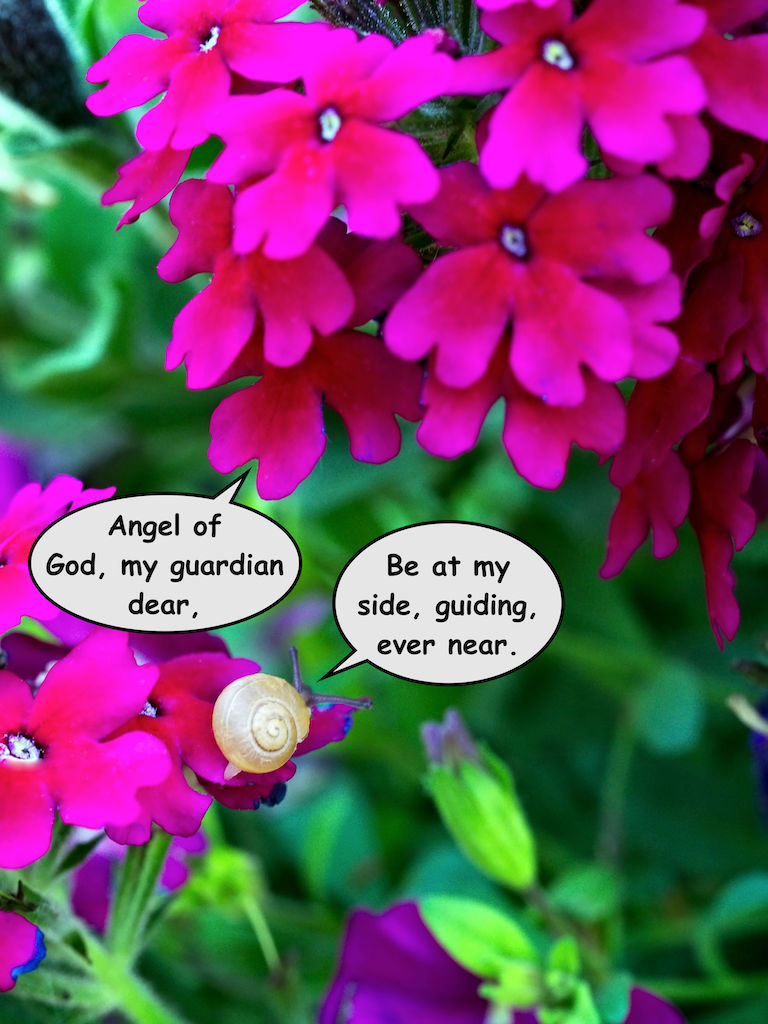
Prayer to My Guardian Angel
Angel of God, my guardian dear, to whom God’s love commits me here, ever this day be at my side, to light and guard, to rule and guide. Amen.
Angel of God, my guardian dear, Be at my side, guiding, ever near.
Statue of Christ the King at the Passionist Monastery in Jamaica, NY (Photo: Gloria M. Chang)
Christ the King Reigns Forever
“On the last Sunday of each liturgical year, the Church celebrates the Solemnity of Our Lord Jesus Christ, King of the Universe, or Christ the King.
Pope Pius XI instituted this feast in 1925 with his encyclical Quas primas (“In the first”) to respond to growing secularism and atheism. He recognized that attempting to ‘thrust Jesus Christ and his holy law’ out of public life would result in continuing discord among people and nations. This solemnity reminds us that while governments come and go, Christ reigns as King forever.”
“To love both countries, that of earth below and that of heaven above, yet in such a mode that the love of our heavenly surpass the love of our earthly home, and that human laws be never set above the divine law, is the essential duty of Christians.”
Pope Leo XIII, Sapientiae Christianae (On Christians as Citizens)
Prayer for Veterans
Lord God, Almighty Father, creator of humankind and author of peace, as we are ever mindful of the cost paid for the liberty we possess, we ask you to bless the members of our armed forces. Give them courage, hope and strength. May they ever experience your firm support, gentle love and compassionate healing. Be their power and protector, leading them from darkness to light. To you be all glory, honor and praise, now and forever. Amen.
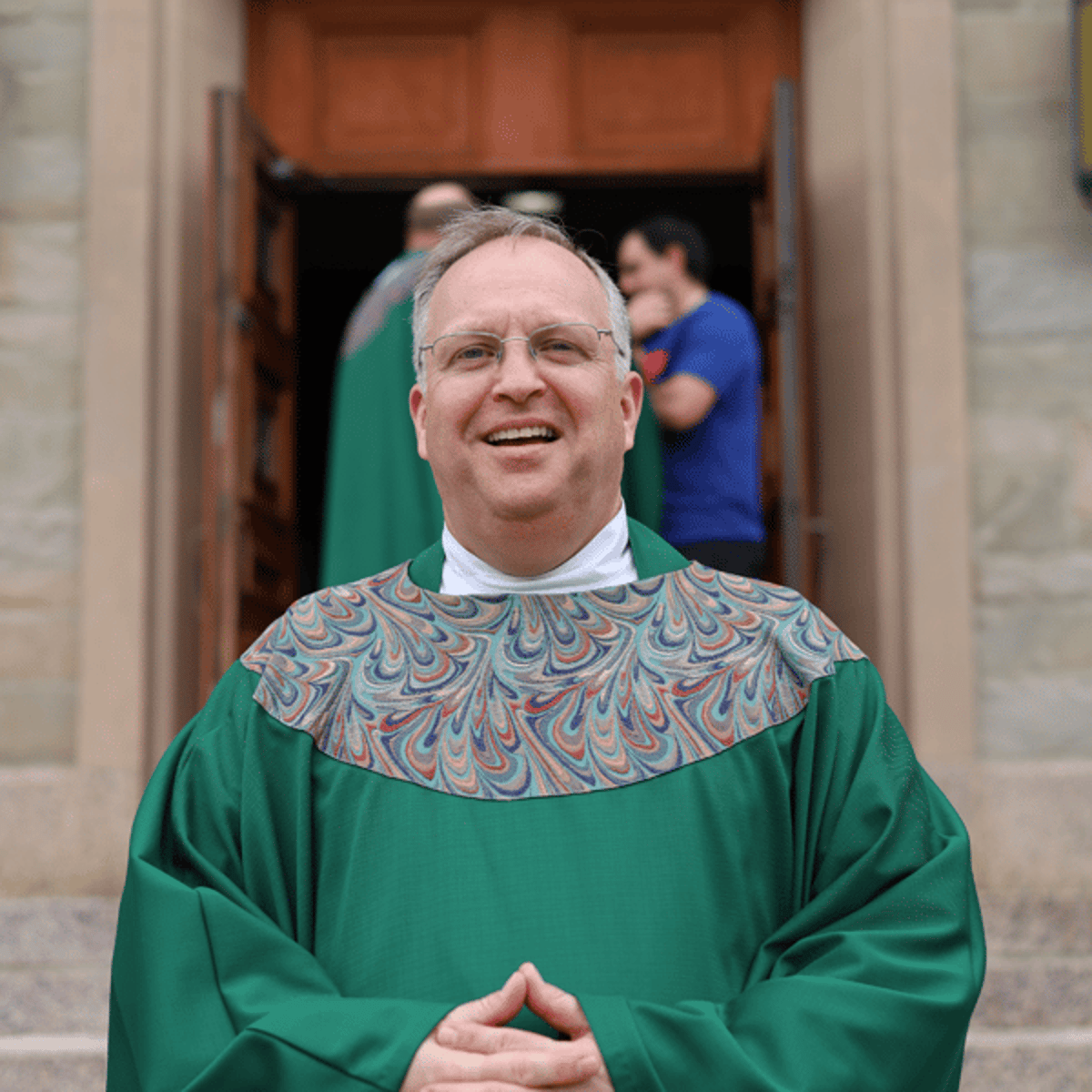
“Amen, I say to you, this poor widow put in more than all the other contributors to the treasury. For they have all contributed from their surplus wealth, but she, from her poverty, has contributed all she had, her whole livelihood.” Today’s gospel image of the generous widow emphasizes the attitude of biblical stewardship that is not based on surplus but on sacrifice. Most of us live this kind of stewardship. We call our offertory collection a “sacrificial offering.” Biblical stewardship goes far beyond the material because something behind that spirit of giving comes from having values, namely the values of sharing, support, and trust. Sharing is not a programmatic gift. It comes from seeing our parents and grandparents sharing a home, their love, shelter, food, and themselves with us so we could grow into generous human beings. Jesus is not advocating financial irresponsibility; he is asking for the freedom to give out of love, not out of calculation.
The early Church put a great emphasis on the care of widows and orphans. It wasn’t a safety net that gave the widow in today’s gospel the strength to give, it was the church that she knew as a family that cared with compassion for those who were in the greatest need.
I remember when I was in Jamaica, West Indies, we had a group from a parish in Pennsylvania visiting. We went to see a woman in a very rural area. She told us that some of her crops from her small plot of vegetables were stolen. We spent an hour with her and as we were leaving, she handed us a bag of beans from her garden. The visiting pastor was speechless and immediately protested knowing her garden was depleted because of a theft. But she smiled, “Father, you cannot come to my home and not receive a gift to take back to your home.” He took the beans and was shocked but said, “I just met the widow from the gospel.” He witnessed the living gospel.
May our eyes be open to those generous hearts who renew our hope in the way God provides and never tires of giving himself to us in his Son whose sacrifice is the ultimate act of generosity.
An Excerpt From Pope Francis, General Audience, Saint Peter’s Square Wednesday, 4 May 2016
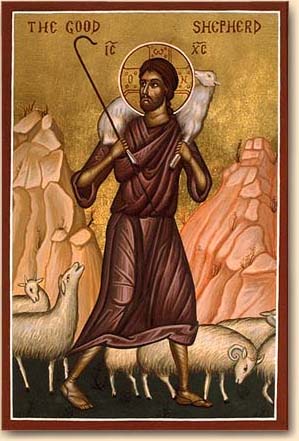
We are all familiar with the image of the Good Shepherd with the little lost lamb on his shoulders. This icon has always been an expression of Jesus’ care for sinners and of the mercy of God who never resigns himself to the loss of anyone. The parable is told by Jesus to make us understand that his closeness to sinners should not scandalize us, but on the contrary it should call us all to serious reflection on how we live our faith. The narrative sees, on the one hand, the sinners who approach Jesus in order to listen to him and, on the other, the suspicious doctors of the law and scribes who move away from him because of his behavior. They move away because Jesus approaches the sinners. These men were proud, arrogant, believed themselves to be just.
The lesson that Jesus wants us to learn is… that not a single one of us can be lost. God’s action is that of one who goes out seeking his lost children and then rejoices and celebrates with everyone at their recovery.
We are all warned: mercy to sinners is the style with which God acts and to this mercy he is absolutely faithful: nothing and no one can distract him from his saving will. God does not share our current throw-away culture… God throws no one away; God loves everyone, looks for everyone: one by one! He doesn’t know what “throwing people away” means, because he is entirely love, entirely mercy.
While he is looking for the lost sheep, he challenges the ninety-nine to participate in the reunification of the flock. Then, not only the lamb on his shoulders, but the whole flock will follow the shepherd to his home to celebrate with “friends and neighbors.”
We should reflect on this parable often, for in the Christian community there is always someone who is missing and if that person is gone, a place is left empty. Sometimes this is daunting and leads us to believe that a loss is inevitable, like an incurable disease.
In Jesus’ vision there are no sheep that are definitively lost, but only sheep that must be found again. We need to understand this well: to God no one is definitively lost. Never! To the last moment, God is searching for us. Think of the good thief; only in the eyes of Jesus no one is definitively lost. For his perspective is entirely dynamic, open, challenging and creative. It urges us to go forth in search of a path to brotherhood. No distance can keep the shepherd away; and no flock can renounce a brother. To find the one who is lost is the joy of the shepherd and of God, but it is also the joy of the flock as a whole! We are all sheep who have been retrieved and brought back by the mercy of the Lord, and we are called to gather the whole flock to the Lord!
Click here to read the full address by Pope Francis.
Immaculate Conception Church in Jamaica, NY on U.S. Flag
By Gloria M. Chang
On this Election Day, let us entrust the nation to Our Lady of the Immaculate Conception, the patroness of the United States of America. On May 13, 1846, the Catholic bishops of the United States unanimously proclaimed the Blessed Virgin Mary, under her title of the “Immaculate Conception,” patroness of the United States. Pope Pius IX formally ratified this decision on February 7, 1847, seven years before he officially defined the Immaculate Conception as a formal dogma of the Church.
Prayer to the Immaculate Heart of Mary
O Immaculate Heart of Mary, Mother of our country, Heavenly beauty and splendor of the Father, we consecrate ourselves to You, our nation, and our leaders, asking for Your guidance, protection, and intercession. Amen.
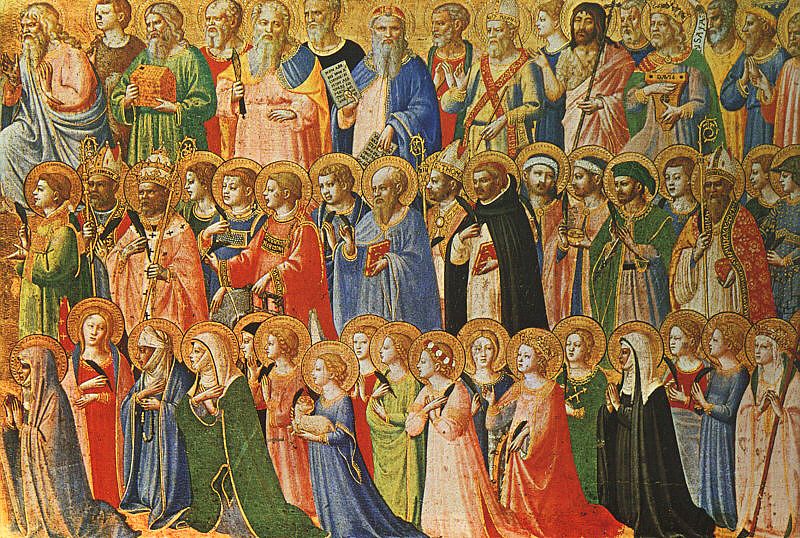
Hubble Ultra Deep FieldFra Angelico, The Forerunners of Christ with Saints and Martyrs
By Gloria M. Chang
From eternity the Lord God designed humanity and the cosmos in his image, envisioning the constellation of saints bursting with Christic Light in the heavens. Formed from the dust of the earth, Adam evolves through the eons to completion in Jesus Christ, his descendant and Lord—the Potter’s masterpiece (Isaiah 64:8).
Kindling the treasure of Christ’s flame in “jars of clay,” we grow day by day into the image of the Blessed Trinity as one Mystical Body (1 Corinthians 15:41). The dazzling kaleidoscope of saints, reflecting the unity and diversity of the Father, Son, and Holy Spirit radiates the infinite rays of divinity. Each saint refined in God’s furnace of Love emerges as an original from the hands of the Divine Artist, for “star differs from star in glory” (1 Corinthians 15:41).
Form me with your hands, Lord, day by day. You are the Potter; I am the clay. From soil you shaped sparkling saints like stars, Blazing your glory from earthen jars.
Just as we have borne the image of the man of dust, we shall also bear the image of the man of heaven.
A monastery is a house of prayer to pursue the “happy” or blessed life. Our Passionist priests and brothers in Jamaica, NY faithfully pray the Liturgy of the Hours every morning and evening, which prepares them to give the bread of the Word and the Eucharist at Mass and to serve in various ministries. Prayer and the Eucharist, the daily bread of apostles, fuel works of mercy.
In a letter to a Roman noblewoman named Proba, St. Augustine offers valuable insights on prayer. The bishop of Hippo, whose rule of life continues to guide monastic communities today, understood the value of “prayer at appointed hours.” Although he was an extremely busy bishop, St. Augustine kindled his desire for God throughout the day by lifting his heart in prayer from sunrise to sunset. Forgetfulness of God in the midst of constant work makes the heart “lukewarm” and “chill” over time.
Thankfully, we can redeem the time. As the earth revolves around the sun, children of God revolve in the orbit of the Blessed Trinity. Space and time, the materials of our journey from birth to eternity, belong to the Father, Creator of all things through his Word and Spirit. Jesus, who frequently spent the night in prayer, models our way home to the Father.
Can one pray during a busy schedule? St. Augustine teaches that “even in these actions” (work responsibilities), we pray by continually longing for God. Many words are unnecessary. The desert monks discovered that short but frequent prayers, “hurled like swift javelins,” keep the heart and mind fixed on the Lord.
“Ask and it will be given to you; seek and you will find; knock and the door will be opened to you” (Matthew 7:7). Persistence in prayer with sighs and tears unite us with the ineffable God, “for he has established all things through his Word and does not seek human words.” As a monastery is a house of prayer, so are all of us “temples” of prayer in the Holy Spirit (Romans 8:26-27).
The Passionists Pray website offers resources for daily prayer, which can be accessed here.
From a letter to Proba by Saint Augustine, bishop
Let us turn our mind to the task of prayer at appointed hours
Let us always desire the happy life from the Lord God and always pray for it. But for this very reason we turn our mind to the task of prayer at appointed hours, since that desire grows lukewarm, so to speak, from our involvement in other concerns and occupations. We remind ourselves through the words of prayer to focus our attention on the object of our desire; otherwise, the desire that began to grow lukewarm may grow chill altogether and may be totally extinguished unless it is repeatedly stirred into flame.
Therefore, when the Apostle says: Let your petitions become known before God, this should not be taken in the sense that they are in fact becoming known to God who certainly knew them even before they were made, but that they are becoming known before men through boasting.
Since this is the case, it is not wrong or useless to pray even for a long time when there is the opportunity. I mean when it does not keep us from performing the other good and necessary actions we are obliged to do. But even in these actions, as I have said, we must always pray with that desire. To pray for a longer time is not the same as to pray by multiplying words, as some people suppose. Lengthy talk is one thing, a prayerful disposition which lasts a long time is another. For it is even written in reference to the Lord himself that he spent the night in prayer and that he prayed at great length. Was he not giving us an example by this? In time, he prays when it is appropriate; and in eternity, he hears our prayers with the Father.
The monks in Egypt are said to offer frequent prayers, but these are very short and hurled like swift javelins. Otherwise their watchful attention, a very necessary quality for anyone at prayer, could be dulled and could disappear through protracted delays. They also clearly demonstrate through this practice that a person must not quickly divert such attention if it lasts, just as one must not allow it to be blunted if it cannot last.
Excessive talking should be kept out of prayer but that does not mean that one should not spend much time in prayer so long as a fervent attitude continues to accompany his prayer. To talk at length in prayer is to perform a necessary action with an excess of words. To spend much time in prayer is to knock with a persistent and holy fervor at the door of the one whom we beseech. This task is generally accomplished more through sighs than words, more through weeping than speech. He places our tears in his sight, and our sighs are not hidden from him, for he has established all things through his Word and does not seek human words.
Reference
The passage from St. Augustine can be found in the Office of Readings for Monday of the 29th Week in Ordinary Time.
You are the light of the world. A city set on a mountain cannot be hidden. Nor do they light a lamp and then put it under a bushel basket; it is set on a lampstand, where it gives light to all in the house.
Matthew 5:14-15
Jesus, the light of the world, purifies hearts and illuminates minds in the truth, restoring lost sons and daughters to the Father. Every child redeemed by the Lamb of God is a Christ-bearer and therefore, a light-bearer, but from where does the light shine?
In a reading by St. Maximus the Confessor, he identifies the lamp of the parable with Jesus Christ and the lampstand as Holy Church. As the Head and the Body are inseparable, the lamp and the lampstand together illumine the “house, which is the world,” filling all people with divine knowledge.
In an age of profound skepticism and disappointment in the institutional Church, St. Maximus’ vision challenges us to lift up our eyes to the mountain of the Lord (Zechariah 8:3), praying to become one with Christ collectively in the communion of saints. For it is by the virtuous lives of the saints that a world parched for mercy and truth is drawn to the Church as its Mother.
In the old covenant, “the word was hidden under the bushel, that is, under the letter of the law,” veiling the eternal light. In the new covenant of grace in the Father, Son, and Holy Spirit, Christified saints become living letters of the law inscribed not on tablets of stone but on hearts of flesh, vivified by the Spirit (2 Corinthians 3:3).
Bereft of the lamp, the lampstand is dark and empty—a tomb of death and despair. Catholics experience the effects of the empty lampstand in the Church on Good Friday to Holy Saturday every year when the Blessed Sacrament is removed from the sanctuary. At dawn on Easter morning, with millions of candles piercing the darkness around the world, the Body of Christ rises with its Head from the empty tomb, joyfully singing “Alleluia! Christ is risen!”
From an inquiry addressed to Thalassius by Saint Maximus the Confessor, abbot
The light that illumines all men
The lamp set upon the lampstand is Jesus Christ, the true light from the Father, the light that enlightens every man who comes into the world. In taking our own flesh he has become, and is rightly called, a lamp, for he is the connatural wisdom and word of the Father. He is proclaimed in the Church of God in accordance with orthodox faith, and he is lifted up and resplendent among the nations through the lives of those who live virtuously in observance of the commandments. So he gives light to all in the house (that is, in this world), just as he himself, God the Word, says: No one lights a lamp and puts it under a bushel, but on a stand, and it gives light to all in the house. Clearly he is calling himself the lamp, he who was by nature God, and became flesh according to God’s saving purpose.
I think the great David understood this when he spoke of the Lord as a lamp, saying: Your word is a lamp to my feet and a light to my path. For God delivers us from the darkness of ignorance and sin, and hence he is greeted as a lamp in Scripture.
Lamp-like indeed, he alone dispelled the gloom of ignorance and the darkness of evil and became the way of salvation for all men. Through virtue and knowledge, he leads to the Father those who are resolved to walk by him, who is the way of righteousness, in obedience to the divine commandments. He has designated holy Church the lampstand, over which the word of God sheds light through preaching, and illumines with the rays of truth whoever is in this house which is the world, and fills the minds of all men with divine knowledge.
This word is most unwilling to be kept under a bushel; it wills to be set in a high place, upon the sublime beauty of the Church. For while the word was hidden under the bushel, that is, under the letter of the law, it deprived all men of eternal light. For then it could not give spiritual contemplation to men striving to strip themselves of a sensuality that is illusory, capable only of deceit, and able to perceive only decadent bodies like their own. But the word wills to be set upon a lampstand, the Church, where rational worship is offered in the spirit, that it may enlighten all men. For the letter, when it is not spiritually understood, bears a carnal sense only, which restricts its expression and does not allow the real force of what is written to reach the hearer’s mind.
Let us, then, not light the lamp by contemplation and action, only to put it under a bushel—that lamp, I mean, which is the enlightening word of knowledge—lest we be condemned for restricting by the letter the incomprehensible power of wisdom. Rather let us place it upon the lampstand of holy Church, on the heights of true contemplation, where it may kindle for all men the light of divine teaching.
Reference
The passage from St. Maximus the Confessor can be found in the Office of Readings for Wednesday of the 28th Week in Ordinary Time.
Statue of St. Paul of the Cross at the Passionist Monastery in Jamaica, NY
“Let everything in creation draw you to God. Refresh your mind with some innocent recreation and needful rest, if it were only to saunter through the garden or the fields, listening to the sermon preached by the flowers, the trees, the meadows, the sun, the sky, and the whole universe. You will find that they exhort you to love and praise God; that they excite you to extol the greatness of the Sovereign Architect who has given them their being.”







 The Victor's Place