Tag Archives: pilgrimage

Friday Thoughts: You Dirty Rat

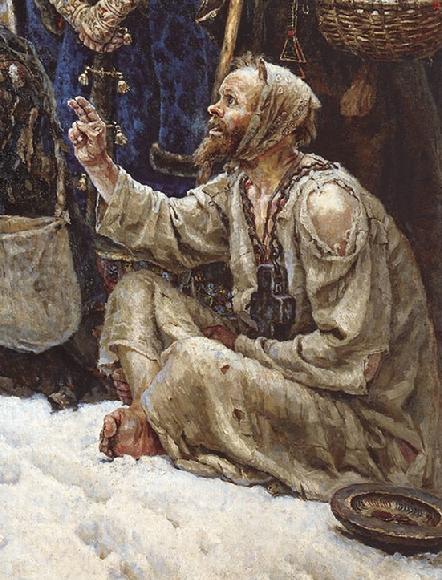
The Boyarina Morozova, Vasilij Surikov, 1887, detail 2

Vasilij Surikov, “The Boyarynya Morozova”, 1887 (detail)

 .
I am starving to death by not preaching. I search the garbage bins and pick out of dumpsters, ever eying with hungry eyes trash thrown by the wayside.

I am so wonderfully fed by Christ!

Yet I thirst a thirst of love. I long for more painful encounters that heal me so. I am a lover of the beach who roams the Sahara. Below the height of the mounting sun, among the singing dunes, I bellow with them the universal hum.

The sand is all about me. An oasis resides within my heart. I am surrounded by mirages of men whom long ago have forgotten to start.

I starve to preach. To sing of our Lord. I starve to fly high with no might of my own. Tapping toes and rocking forth, slightly bending knees, ready to spring forth from well to well.

I love our God. I love Him so. I love Him and Him alone. He tells me to love others as myself. I love Him despite myself. I love Him in others, and others because of Him. I love for I have been brought low. I love for I have learned to soar high. He is my all. My everything. Of Him, and Him alone, do I sing.

I sing of socks, and of sneakers, of old clothes and new sandals, and of wedding rings. I sing of mice, and of men, I sing of the difference that resides only in the length of whiskers. I sing of dogs and of cats, and o yes, of rats—o those ugly creatures that challenge me so.

I ask myself, are they not created by God as well?

Isn’t that dirty filthy stinkin’ rat also beautiful and also real?

Does not God shine the sun and shower the rain on disturbing rats as well?

O, if I could only love rates, then I would truly sing! Mend this heart, this rock of mine, hardened by selfish sight and by wanting what isn’t mine. Yes, boil me down, so I may drown in what the residue of life leaves to those who truly suffer.

I sing to you, O Glorious Rat. Creature of God!

I sing to you that you too shall sing with me. I see that I no longer need to sing alone. Come, accept my embrace. I forgive you. Now perhaps I too may be forgiven.

I see and smell and hear the truth. You the rat, object of everyone’s scorn. You too were once so young, before you crawled into the bin, before you journeyed down the darkened tunnel—you too—little infant rat—were brought forth from the mother’s womb.

Come young, come old! Come from your abandoned buildings, and vacant storage yards, from old ball fields well over grown. Come one, come all!

The pious pied piper now plays a gospel tune. The garbage begins to gather, the desolation takes on an evening glow. The sand all about me recedes from the stormy cloud. It slowly begins to lay low.

The desert creeps up upon a vast body of water.

I pass between walls of a held back sea, my feet tread cross a red clay bottom.

You too, brother rat, are a gift from our mighty God above. You too were loved into existence by the Lord of all.

God of all who share residence upon the earth.

God of all who sigh and sing.

God of all who snort and smile.

God of all who bellow and breathe, both fresh and soiled city air alike.

Come, then, last call, leave your dens, leave your hobbies, leave you daily work behind. Leave you rats, friends of mine, leave the muck and sewers of this world, climb the hills, and charge the mountain, dip yourselves in Carmel air, for even you reflect the glory of Zion from a peak so high.

Come and join the birds who listened so intently, who still this day patiently hear lonely troubadours sing. Yes, join us, for there is always plenty of room, room for even you, object of everyone’s scorn.

Enough for even you, you dirty rat.

A sight for sore eyes to this poor lonely thirsty preacher.

For through you I give our magnificent God mighty humble joy-felt praise.

———

.
—Howard Hain
Friday Thoughts: Walled Garden

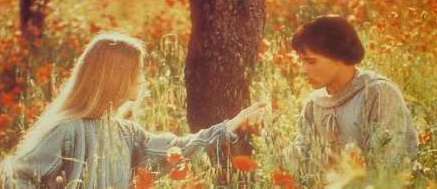
Francis and Clare from the movie Brother Sun, Sister Moon Franco Zeffirelli

Saint Francis and Saint Clare from the movie “Brother Sun, Sister Moon”, (Franco Zeffirelli) (1972)


.
A garden enclosed, my sister, my bride,
a garden enclosed, a fountain sealed!

—Song of Songs 4:12

.


.
From memory it is not easy to recall. I do have a clear image, but if it is accurate that remains to be seen. Here we go.

It was downhill. A sloping path. As I approached the stone church, a few people wandered around out front. There was somewhat of a courtyard, well not a courtyard, more like a little wall hugging into existence a welcoming space. This wall was about bench height, made also of stone, and extended outward from the building. It created what I would normally call an out-front patio space, but in Italian terms, perhaps it would be called a terrazza, or maybe even be considered a piazza, or perhaps most accurately, a piazzetta. Then again, maybe it is just a patio to Italians too.

Well, sitting on this low wall was a friar. And running around the open area was a small brown dog with a shaggy little beige beard.

I entered the church. It was small, almost cave like. A curved ceiling. Dark. Old. There was the cross, a crucifix. Not the actual one that spoke to Saint Francis—no, that one was moved up into the Basilica of Saint Clare located in the central part of the still small but no-longer medieval town of Assisi.

The reproduction spoke to me.

I’m an early companion of Francis.
.


.
I remained in the chapel for a while. I’m not sure if I was praying or not. I’m pretty sure I got on my knees. But from that day’s perspective, prayer was not known to me. So from that perspective, I wasn’t praying. But from today’s perspective, I most certainly was. For I was there. I was in Italy, in Assisi, in the Church of San Damiano. I was there intentionally. I was lost but I was found. I was looking, and I was obeying. Obeying what I didn’t know. I had no idea why, but I wanted to be there. And I felt something. It was heavy, literally. I remember feeling bent over. I remember thinking about all the prayer that must have taken place in that small space over the past thousand years. I remember thinking that all that collective belief must have an effect. It did. It does. It will. I was certain that I felt it. It bowed me down. It bent me over. And I remember liking it.

Faith is common.

I was a pilgrim and didn’t know it.
.


.

I don’t remember much about the convent itself. I do remember walking from room to room, the communal rooms where Saint Clare and her companions, her biological mother and two sisters among them, ate and prayed and cared for their sick. I remember the small warm inner garden, with it’s old well. And the spot marked as the place where Clare liked best to sit. I’ve always loved internal courtyards. The thought of being outdoors and yet enclosed. Architecturally, it best represents the beauty of true solitude. Open. Yet safe. Free. Yet sheltered. Alone. Yet surrounded by those who believe the same.

In that sense, solitude—when it’s truly interior, truly spiritual—is like love: you can never get enough of it, and once you have it, once you truly live within it, you’re never again alone.

Solitude is love. And love is never solitary.
.


.

Therefore the Lord himself shall give you a sign. Behold a virgin shall conceive, and bear a son, and his name shall be called Emmanuel.

—Isaiah 7:14

.

.

—Howard Hain

St. Paul Outside the Walls

 Paul the Apostle is buried in the Church of St. Paul Outside the Walls in Rome. His sarcophagus lies under the church’s main altar. Until 2008, when archeologists uncovered it, it was concealed underground in the same spot.

After their execution in the mid 60s, Peter was buried on the Vatican Hill and Paul was buried along the Via Ostia. Churches honoring the two apostles were built in the 4th century by the Emperor Constantine over their graves. Constantine didn’t initiate devotion to the apostles, though. Christians from Rome and elsewhere came in great numbers from earliest times to these places to honor these great heroes.

Here’s a video of the church:

St. Paul Outside the Walls, Rome

A statue of St. Paul welcomes us outside the church’s entrance. He’s an old man, clothed in a heavy traveler’s cloak, bent and tired from years on the road. Yet, the apostle holds a sword firmly in hand, not a military sword, but a symbol of a faith that won hearts and banished the powers of darkness. He has “fought the good fight” and “kept the faith,” and here in Rome his earthly journey ended. Pictures on the church doors recall Paul’s final hours, when he died decapitated by an executioner’s sword not far from this spot.

Lifting our eyes to the façade of the church, we see his dramatic journey in outline, from Jerusalem to Rome, as Paul carried the gospel of Jesus Christ announced beforehand by prophets of the Old Testament.  A more detailed description of his mission appears in the paintings around the church walls inside, from his conversion on the way to Damascus, to his death here in the capitol of the Roman world.

If we look higher before we go in, Paul appears on the church’s façade in the light of glory, his traveling days done. With Peter, a fellow disciple, he sits at the feet of Jesus Christ, the Risen Lord who taught him so well. “Who are you, Lord?” Paul once cried, thrown to the ground. Now he sees Jesus face to face.

This same scene of glory is repeated within the church itself where columns in procession lead our eyes to a triumphal arch defining the apostle’s grave below and the altar above it. On the dome of the apse, Jesus sits in triumph, surrounded by Paul and his companion apostles and evangelists. “Come, blessed of my father, receive the kingdom prepared for you,” Jesus proclaims in the book of life he holds up to them.

Today,  we can see the apostle’s tomb, recently uncovered by archeologists, under the main altar.

Outside the Walls

The description “Outside the Walls” is a reminder that this church, now in a crowded city suburb, was once outside Rome’s city walls on a desolate stretch of the Via Ostia, part of a little cemetery where the apostle was first buried. As they did over St.Peter’s grave, early Christians built a modest memorial immediately after Paul’s death to mark his grave; then in the early 4th century the Emperor Constantine erected a small church facing the Via Ostia honoring the apostle.

It did not end there, however. Later that same century, a larger church replaced the small church, as large as that of St.Peter on the Vatican. Why build an immense building like this in an out-of-the-way place, we may ask? Was it devotion or Christian pride?

Perhaps. Yet, some speculate other reasons were behind it. In the late 4th century, hordes of “barbarians” were pouring through the frontiers of the empire, and the Romans–most likely Christians among them–  saw the newcomers as pesky strangers: violent, crude and uncultured. The latin word they used for them, “barbari,” dismisses them as little less than savages, unwelcome intruders to an orderly Roman world.

St. Paul once scolded the proud Corinthians for looking down on others and forgetting how God raised them up from nothing by his grace. “The door to faith has opened to the nations,” he said; God welcomes all, no matter who they are. Wouldn’t God welcome these new immigrants?

Did the new church call Roman Christians to open their hearts to these new gentiles as the apostles Peter and Paul had done before? Early popes like Leo the Great and Gregory the Great promoted this new church. Gregory not only welcomed newcomers to the Italian peninsula but inspired by Paul reached out to peoples beyond the borders of the empire, to the misty shores of England and the dark forests of Northern Europe.

To be catholic the church had to reach out to the world.

Peter and Paul complement each other. Paul, a complex intellectual, forged beyond the boundaries of Judaism to address the whole world.  Peter, the Galilean fisherman, was a cautious captain for the ship of the church. Their gifts are different, but we gain from both of them. Paul’s sword points to an unknown future and tells us not to be afraid to embrace it. Peter, holding firmly the keys given him by Jesus, calls us to stay close to the Good Shepherd, whose wisdom and love supports us.

The Church treasures their different gifts.

Websites:

http://www.vatican.va/various/basiliche/san_paolo/index_en.html

http://news.nationalgeographic.com/news/2006/12/061211-saint-paul.html

Exploring the Land Where Jesus Lived

Map 1st cent.A group of 8 Catholics and Protestants leave on Monday from JFK to explore the land where Jesus lived. We’re staying with the Passionists in Bethany for five days and then five days with the Franciscans at the Mount of the Beatitudes on the Sea of Galilee.

Bethany, on the lower eastern slopes of the Mount of Olives is considered part of East Jerusalem; the Mount of Beatitudes on the Sea of Galilee puts us within walking distance of Capernaum, so we’re close to two places with important links to Jesus.

Some of us have media experience and one of our goals is to produce some short videos (5 minutes or so) on the various holy places that may help Protestants and Catholics alike to deepen their knowledge of Jesus and his mission.

I’ll publish blogs of our trip for the next ten days, depending on internet access and what energy I can draw on. We’ll use Jerome Murphy-O’Connor’s fine guidebook, The Holy Land: An Oxford Archeological Guide…2008, along with the gospels to help us find our way.

Pilgrimage is always an adventure. So, here we go, pray for us.

Pilgrim Places of September

September is a month for celebrating two places of pilgrimage in the Holy Land. We recall the dedication of the Church of the Holy Sepulcher in Jerusalem on September 14, the Feast of the Exaltation of the Holy Cross. On September 8th we celebrate the Feast of the Birth of Mary at the Church of St. Anne near the ancient pool of Bethesda, not far from the temple mount.

Pilgrims to these ancient sites can face a dizzying array of archeology, history, art and devotion as guides hurry them through on their way to the next holy place.

The two feasts can bring perspective to these important pilgrim places. They can remind those who have been to the Holy Land of what they experienced there and prepare those who may be going for what they may find there.

Feasts and holy places are teachers of faith. We return to them again and again to learn what they teach. Like good teachers, they never run out of the wisdom of life.

Besides these two pilgrim places, what others in the Holy Land should we remember? Certainly in Jerusalem there’s Gethsemani where Jesus prayed before his death, the Mount of Olives where he taught his disciples, Bethany where Lazarus was raised from the dead, Mount Zion where he ate with his disciples before he died.

Beyond Jerusalem, there is Bethlehem where he was born, Nazareth where he was raised, Capernaum and the Lake of Galilee where he ministered, the Jordan River where he was baptized.

I hope to offer some reflections on the two September feasts in the next few days.

A Pilgrimage to Italy

Venice

A number of us are going on a pilgrimage to Italy, October 17-27. I spoke about the trip to some of my companions a few days ago.

“When you discover the world around you, you discover the world within you.”

We’ll be soon on our pilgrimage to northern Italy and Rome. If you have access to the internet, look up the places we’ll be visiting–Venice, Padua, Siena, Florence, Lucca, Rome, Pompei. There’s a wealth of free information available,

But let me recommend some resources.  We’ll begin our pilgrimage in Venice, the ancient maritime republic on the Adriatic Sea. Like other small powerful maritime states– England, Holland and Portugal– Venice, which is now part of Italy, was once an independent global power skilled in using the sea. Even today, the region around Venice is economically better off than other regions of Italy, largely because of Venetian economic acumen.

For centuries, the Venetian republic was linked to the Byzantine and Muslim worlds through the sea and many of its treasures, like the relics of St. Mark, come from those parts of the world. Its buildings and its art are also strongly influenced by the building and art of its trading partners.

An excellent new book on the history of Venice,  (City of Fortune: How Venice Ruled the Seas,  by Robert Crowley,  2012) offers a vivid description of the part Venice played in the Crusades and its relations to the Muslim and Byzantine empires. It’s a history that can throw light on our relationship with the Middle East today.

The best commentary on the art of Venice and Padua I’ve found is John Ruskin’s, The Stones of Venice and Giotto and his Works in Padua, both available free at Apple’s iTunes on the internet. Ruskin has a beautiful description of the art in St. Mark’s Cathedral in Venice, one of the great wonders of the world. We’ll celebrate Mass in the cathedral begun in 976 after fire destroyed an earlier building.

Padua, once the capital of Venice and also its rival, is still one of Italy’s intellectual centers.  The brilliant Italian scientist Galileo Galilei, a towering figure of the scientific world, was born in the 17th century in Pisa, in Tuscany, and studied, taught and lectured in Pisa and Padua as well as in Florence, where he and his family made their home. He’s called the father of experimental science; his work in astronomy drew criticism from the church of his time and made him a symbol of the conflict between faith and science.

However, he was a deeply religious man, Catholic to the core. Two of his daughters entered the convent outside Florence and one of them, Sister Maria Celeste, carried on a long, tender correspondence with her brilliant father.

Galileo believed that nature was a teacher along with the bible, and he wanted the church to accept scientific knowledge, otherwise it could be called an enemy of truth and human progress. Like others then and now, he believed that the bible taught you how to go to heaven and not how the heavens go.

His story is beautifully and carefully told in a recent book:

(Galileo’s Daughter: A Historical Memoir of Science, Faith and Love, Dava Sobel,  New York 1999). There’s a television version:  Galileo: Battle for the Heavens, that you can find on Nova’s internet site.

I admire the author’s even-handed description of the relations between the scientist and the churchmen who condemned him for what they considered heretical ideas. “A tragic mutual incomprehension has been interpreted as the reflection of a fundamental opposition between science and faith, “ Pope John Paul said with regret   in 1992.

Galileo was a believing scientist. I think believing scientists like Galileo and artists like Giotto (+1336) are going to be important figures in our church and our society in the future. Scientists and artists help us to know God through truth and beauty. Giotto revived people’s imagination by the treasures he left in Padua, Assisi, Florence and Rome.

Saints also strengthen our hope for the future, so we’ll keep our eyes open for the saints in the cities we’re visiting. Anthony of Padua, Catherine of Siena, Fra Angelico of Florence. We’ll celebrate Mass in their shrines in Padua and Siena.

At Lucca we’ll visit the shrine of St. Gemma. (1878-1903} Lucca is a lovely old Italian city near the Mediterranean Sea. Gemma is an “Unsuccessful Saint,” a beautiful young woman of the 19th century who in one way never achieved her dreams, yet God touched her in ways deeper than she could have ever imagined. Her life contradicts so many visions of success that our society holds. We’re going to look into her world and her life. She’s a sign that God still raises up “the lowly.”

A friend of mine offered me some wonderful notes on life and times in Lucca in Gemma’s day. Among other interesting facts, Giacomo Puccini (1858-1924), the opera composer, was from Lucca. He composed “La Bohème” which premiered in 1896. “Although Puccini did not write an opera about Gemma, he was considered incomparable in delineating frail, simple heroines like her.”

Gemma seems so unlike Catherine of Siena (1347-1380), whose shrine we will visit in Siena. Named a “Doctor of the Church” in 1970, she’s the patron saint of Italy along with Francis of Assisi.  The “Black Death” claimed one third of the population of the cities of Italy during her lifetime, at the same time the church was sunk in scandals and corruption. Catherine wasn’t afraid to scold popes, bishops, priests and politicians, and by reconciling feuding Italian cities she sparked new life into the soul of Italy.

Saints have different missions and model God’s grace in different ways, and so both Catherine and Gemma exemplify how God’s grace works in us.

Here’s some material on Gemma. http://www.cptryon.org/compassion/75/gemma.html

On Catherine, there’s a fine interview with a Dominican writer at: http://www.youtube.com/watch?v=EvlA9FBAk24

In Rome we’ll visit St. Peter’s, of course, and also Pompei, where modern archeology got its start in the 18th century. There’s a novel by Paul Harris called “Pompei” that’s worth reading; a story of that city’s last days that’s carefully researched. We’ll say hello to the pope at his Wednesday audience and celebrate Mass in St. Peter’s.

We’re going to visit  the motherhouse of my community, the Passionists, while in Rome. Saints John and Paul is located in one of Rome’s oldest areas, on the Coelian Hill, not far from the Colosseum.  Nero’s gardens were here; much of the present monastery is built over the ruins of the Temple of Claudius, another Roman emperor.  Under the Church of Saints John and Paul are the remnants of a house where Christians met around the 4th century. Early Christian saints are buried here. It’s a tight squeeze to get a large group into the underground ruins, but I’ll see if we can get there. We’ll also visit the chapel that holds the remains of the founder of my own community, St. Paul of the Cross.

You get an overview on the Coelian Hill of the history of Rome and the Catholic church. Cardinal Egan, the retired archbishop of New York, is the titular head of this old Roman church.

I wrote about this place here.

https://vhoagland.wordpress.com/2008/11/24/house-church-on-the-celian-hill/

http://www.cptryon.org/compassion/sum01/index.html

The Days of Noah

I preached today at St.Margaret’s, Madison, Ct. and told the people they could follow me at Victor’s Place. From the stats it looks like a lot did. Here’s a summary of my sermon today.

I just got back from a pilgrimage to the Holy Land earlier this week.  I led 42 people from  St. Mary’s Parish in Colts Neck, NJ, to visit the holy places. After they returned, I spent over a week at Bethany, where my community, the Passionists, have a house and church, appropriately called St. Martha, built over 1st century Bethany, where Jesus stopped to visit Martha, Mary and her brother Lazarus.

The Holy Land was crowded with pilgrims when we were there. Strange as it may seem,  in spite of the political troubles, they’re having a record breaking year for visitors. The majority were from eastern Europe– Russia, Poland, Lithuania, the Ukraine– as far as I could tell.

That part of the world is often called by historians “ The Bloodlands, ” because over 14 million people were killed there in the 2nd World War, either by Stalin or by Hitler. More people died there than anywhere else in that terrible war. Certainly, most of these people I saw lost family members then. So they came here, I believe, not just as tourists, but as believers who had come to the holy places that gave them a faith for hard times.

Many of the Americans who were there were Protestants, and a good number were Fundamentalist Protestants who strongly support the State of Israel.

I think you see things a little differently when you go to the Holy Land. You read the scriptures a little differently. I’m looking at the scriptures today and two things strike me.

On this 1st Sunday of Advent, listen to those beautiful words of Isaiah: “Come, let us climb the LORD’s mountain,

to the house of the God of Jacob,

that he may instruct us in his ways,

and we may walk in his paths.”

When you go to the Holy Land  you’re doing that all the time: climbing mountains. It’s a land of hills and mountains, and even if you get around by bus, you still have to get out and climb. The Mount of Olives, the temple mount, Mount Tabor, the Mount of the Beatitudes, Mount Carmel. Even when you want to go up to Mount of Calvary in the Church of the Holy Sepulcher, you have to climb a steep staircase.

The people of Jesus’ day climbed these mountains to see where they were going, first of all. In those days people didn’t have Google Maps, so they went up  high places to see where they were going. On the mountains they got a sense of direction and perspective.

The people of Jesus’ day also climbed mountains so that they could experience God.  God was in the high places, they believed. God refreshed you when you went up to the high places.

Could I suggest that our Advent mission we begin today might be a good way to climb the mountain of the Lord and get the direction and perspective we need. We easily lose our way.

In  the  gospel, Jesus uses an interesting phrase, “the Days of Noah.” He uses it to  describe an experience to beware of. You remember how he describes the days of Noah. In those days,  he says, “people are eating and drinking, marrying and giving in marriage.” Nothing wrong with that, you say.

But even good things can become routine, causing life to become dead.  The days of Noah are “same old, same old” days, nothing’s happening, nothing’s going on, as far as we can see. Might as well “Turn on the Television,” “Have a beer,” The days of Noah are days of blinding routine. We end up sleep-walking, missing out on what life brings.

So what’s my life and your life like? Are we living  in the days of Noah?  In the days of Noah we need to be lifted up:   “When you’re down and out, lift up your head and shout, there’s gonna be a great day!”

Today the season of Advent begins. It’s a time that brings hope. It saves us from being trapped by routine. Stay awake.  Advent is a time that proclaims a Great Day?

Our church today needs an awakening. Archbishop Dolan from New York was interviewed the other day in The New York Times about the church and he offered a sobering appraisal of what it’s experiencing today. Almost half of our young Catholics getting married are not getting married in the church. Participation at Mass is down to 35%. There’s a big slippage going on in our church. We need an awakening.

What should we do? Certainly church leaders have to do something? But what about ordinary Catholics? The church has always depended on them. Like the small Advent candle we light today, the church shines one by one.

I don’t think I’ll ever forget one memorable event from my pilgrimage to the Holy Land. That was my visit to Lazarus’ tomb. As I finally got there, after traveling around the Israeli Security Wall, a large group of Russian pilgrims were entering the tomb. These were people from the “Bloodlands.” They crowded into that tight space of death and began to sing their powerful Russian songs of faith. The tomb was transformed by their singing.

Faith does that. It defies death. It transforms life. It gives hope.

Praying is like breathing

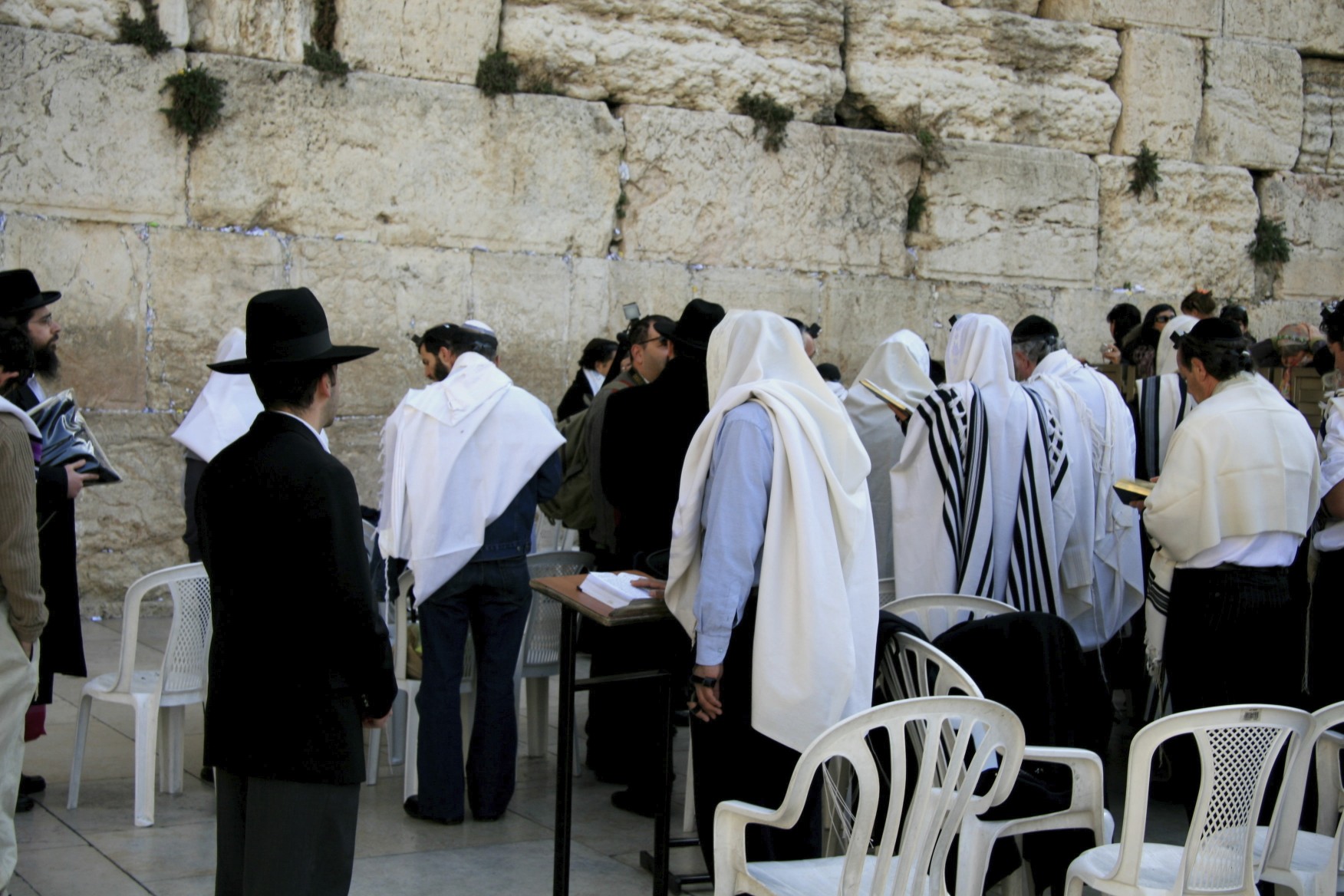
Last Sunday morning a Jewish man sitting next to me on the plane from Tel Aviv to Newark asked me, “Do you mind if I pray?” I replied, “Certainly not, I would be be happy if your prayed.”

He stood up and got something out of the overhead compartment and readied himself for prayer. I’m not quite sure all he did, but I noticed he put leather straps around his arms. Then he sat down and read from a small prayerbook he had for about 15 minutes. The drone of the engine blocked out any words he might have said that I could understand.

Praying is like breathing. We all need to do it. I used to bring out my small prayerbook on flights like that, but it got so cumbersome that I use a small rosary I keep in my pocket to pray.

Years ago, I remember on a flight from St. Louis to New York City a young Afro-American girl sat next to me. I opened my prayerbook to say my prayers, and I heard a  soft southern voice saying to me, “Sir, could I read a psalm?”

“Sure,” I replied, “Why don’t we read a psalm together.” I turned to Psalm 22 “The Lord is my Shepherd” and we read it aloud as we took off.

Afterwards, she told me that was her favorite psalm. She looked like a young teen-ager, but she told me she was married and on her way to Germany to return to her husband who was in the military. She had just lost a baby and had gone home to her mother to look for some comfort.

“I’m looking at these beautiful clouds in the sky,” she said, “and I remember one day after I lost my baby I had a dream and I saw the Lord like a Shepherd in clouds like these, holding my little baby.”

When we landed in Kennedy, I noticed she was struggling to pull out a big package from the overhead compartment and tried to  help her. ”It’s very heavy,” I said.

“It’s a computer, “ she answered, “I’m going to learn how to use it.” And she went off to the International departures.

Praying is like breathing; if we do it, we live.

Living by the Wall

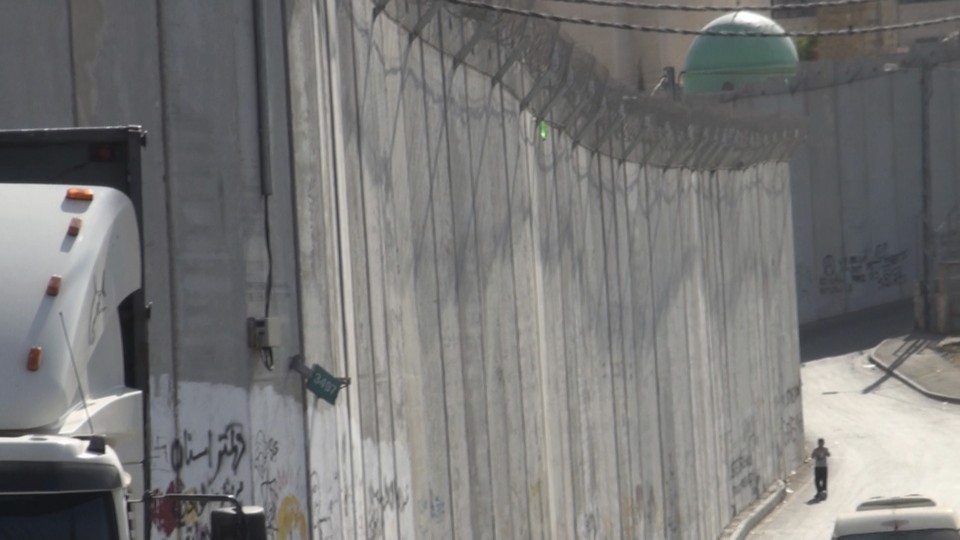
The tomb of Lazarus is only down the road from here, but unfortunately I’m blocked from getting there by the Israeli security wall at the end of our street. Instead of a few minutes walk, I can get there only by traveling a good distance around the Mount of Olives.

The security wall winds through our property and the property of the Camboni sisters, an Italian order who have a school and a hostel next to us. As they look out their back  window, it looms over them, about twenty feet away, and it goes on as far as the eye can see.

I have been celebrating morning Mass these days for the sisters–in Italian– and they told me the wall has stopped many children, all Muslim, from coming to their school.  Relations between Christians and Muslims in this neighborhood have always been good, thanks to the good works of these religious women.

If the Israelis want peace, it would be better to tear down the wall and sponsor some schools and clinics like those run by the sisters. A high barbed wire wall, patrolled by armed soldiers, blocking streets people have been using for centuries, running through the backyards of ordinary peoples’ homes, stopping the flow of business, doesn’t win you friends.

It makes enemies.

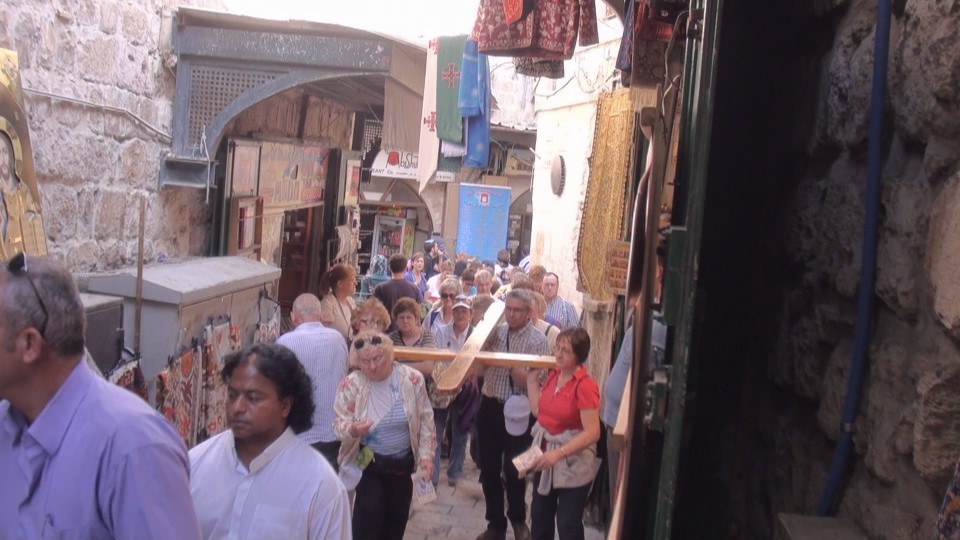
This afternoon Fr. Roberto drove me to the city where I made my way to the Via Dolorosa again, which was more crowded than ever with groups praying and groups shopping and gawking.

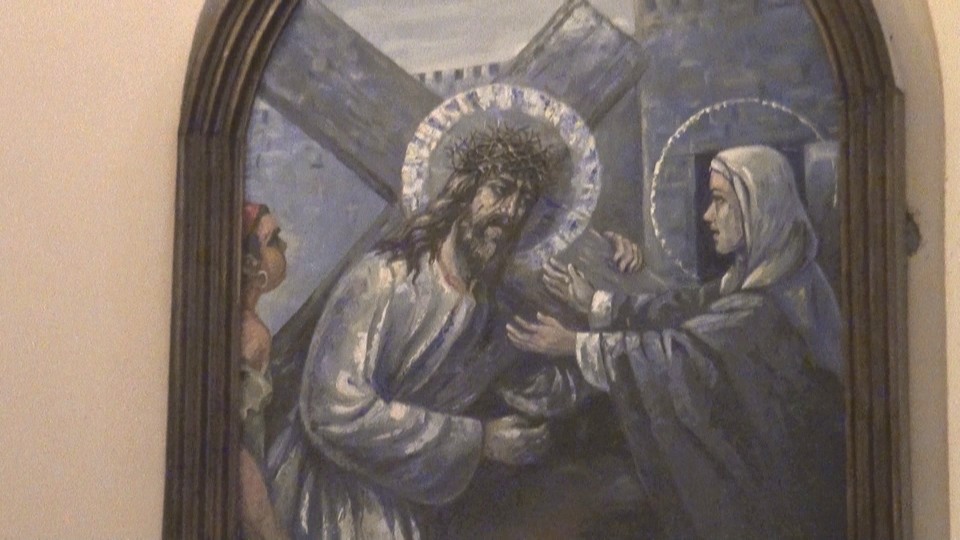
I did discover an Armenian church at the 4th Station that was an oasis in Babel. The church has some paintings of the 3rd and 4th stations. Jesus meets his mother at the 4th station. In the quiet courtyard before the church a mother was nursing her infant. In the church was a picture over the altar of Mary nursing her child.

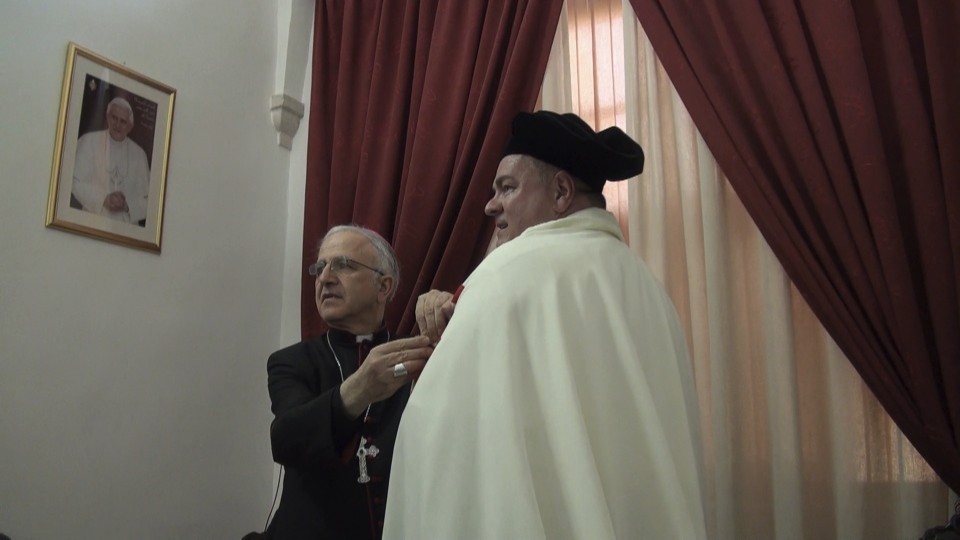
The day ended at the Latin Patriarchate where Sir Patrick Allen, Knight of the Holy Sepulcher from  Union City, NJ, met Bishop Shomali, who was born in Bethlehem, to receive an award for bringing over 100 people to the Holy Land on pilgrimage. I was a photographer and guest, and the bishop even said some nice things about the Passionists.

Bethany, November 15

I arrived at the Passionist house of St Martha in Bethany, late this morning. Here’s where I am in gospel terms: “When they drew near Jerusalem and came to Bethphage on the Mount of Olives, Jesus sent two of his disciples, saying to them, ‘Go into the village opposite you, and immediately you will find an ass tethered, and a colt with her. Untie them and bring them to me. And if anyone should say anything to you, reply, ‘ The master has need of them. Then he will send them at once.”

(Mark 21, 1-9)

The gospel continues that the disciples did this and a large crowd welcomed him, some spreading their cloaks on the road, others cutting branches to strew before him.

“The crowds preceding him and those following  kept crying out and saying: ‘Hosanna to the Son of David, blessed is he who comes in the name of the Lord.’”

So here’s where Jesus started his Palm Sunday entrance into Jerusalem.  He knew this place well,  must have been a place where they  believed in him. In Bethany he was accepted, at least as “Son of David.”

As I traveled here, courtesy of Catholic Travel, the streets to Bethphage were crowded with Muslims getting ready for their major feast of Eid-Ul_Adha, the Feast of Sacrifice, celebrated for the next several days at the conclusion of the Hajj. The sacrifice celebrated is the Sacrifice by Abraham of his first born son Ishmael. It’s a joyful feast that calls Muslims to a spiritual awakening. Cf. http://www.religioustolerance.org/isl_feast.htm

We know too little about Muslims and their spirituality. The website cited above quotes an western newspaper account some years ago warning of terrorist attacks at the conclusion of this feast. It’s like predicting Christian terror attacks after our easter celebrations. The feast actually calls for forgiveness of enemies and peace with your neighbor. Presents given out and food for everyone, especially the poor.

You could hear a special call to celebration in the muzzim’s  call this evening to this Muslim neighborhood.

Our visitors from St. Marys all got off safe from the hotel early this morning; now they are winging their way home.