Tag Archives: Passionists

Calming the Storms (Matthew 14:22-36)

Jesus storm at sea
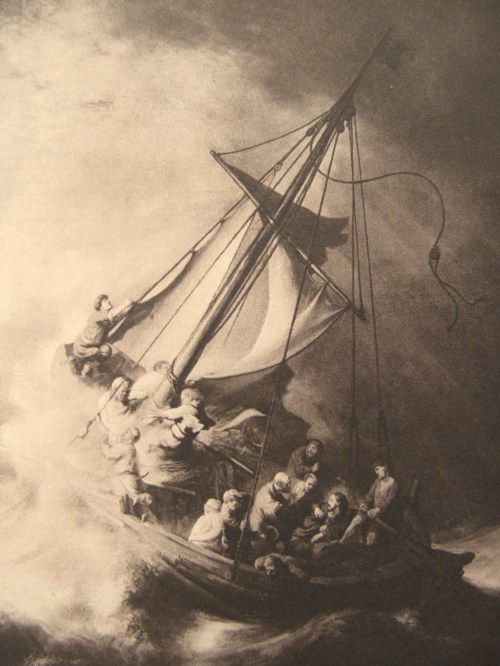
The giant waves on the Sea of Galilee in Rembrandt painting would be hard to survive, let alone walk on, but that’s what Jesus did, Matthew’s gospel today tells us. Jesus walked on the waters and tamed them. Only God does that, the psalms say.

“You uphold the mountains with your strength.
You are girded with power.
You still the roaring of the seas
And the roaring of their waves,
And the tumult of the peoples. “ Psalm 65

We usually read the stories of the disciples in the storm at sea as stories of rescue, and they are. God saves us from the storms we face on our life journey. But first, the stories testify to Jesus’ mastery over creation. On the shore his power touched human beings, like the leper, the deaf and those who could not speak; on the sea he rules creation. “Truly, you are the Son of God,” his disciples say after he gets into the boat and the wind dies down. (Matthew 14,22-36)

In his encyclical on the environment “Laudato Si” Pope Francis emphasizes the power of God over creation. As creator and savior, God gives all things their dignity and purpose. Human beings are not lords of this world, God alone is.

The story of Peter in our gospel takes on new interest in that perspective. Jesus invites him to walk on the water, giving him a share in God’s power. But Peter’s fear and lack of faith overcomes him. He begins to sink.

In our unfolding environmental crisis (storms, winds, floods) are we like Peter, called to share God’s power but turning away from our responsibility to calm the waters? Too big for us to take on. If that’s so, we sink.

MATTHEW 12:47-50: Family Values

Our readings from St. Matthew this week deal with the growing opposition to Jesus as he preaches and performs miracles in Galilee. IT foreshadows his final rejection in Jerusalem. Concluding this section, Matthew adds another source of opposition to Jesus that may surprise us. His own family from Nazareth seems to oppose him.

“While he was still speaking to the crowds, his mother and his brothers appeared outside, wishing to speak with him. [Someone told him, “Your mother and your brothers are standing outside, asking to speak with you.”]*But he said in reply to the one who told him, “Who is my mother? Who are my brothers?” And stretching out his hand toward his disciples, he said, “Here are my mother and my brothers. For whoever does the will of my heavenly Father is my brother, and sister, and mother.” (Matthew 12,47-50)

A little about family life at the time of Jesus may help us appreciate this gospel. For one thing, in Jesus’ day nuclear families– a mother, father and children living alone– were not the norm. In Jesus day families were extended families or clans, living and working together.

And so, the picture we sometimes have of the Holy Family– Mary, Joseph and the Child Jesus all by themselves in a small house in Nazareth– is not a realistic picture. Families in Nazareth, as we know from excavations in towns like Capernaum, lived in compounds, as they often do today in the Middle East, working together in the fields or in a business and offering each other support.

There were obligations to your extended family or clan. Everyone had to help in the harvest; you were expected to promote your family’s interest. The mother of James and John approaching Jesus looking for a good place for her sons in his kingdom was only doing what she was expected to do.

What we see in this gospel is the extended family of Jesus descending on him as he speaks to the crowds to remind him of his family obligations. What did they want to remind him of, we wonder? Were they off to a wedding or a funeral of a relative and were telling him to come along? Or, was the wheat harvest ready at Nazareth and they came looking for help? Or, they just wanted him for themselves for awhile? From Mark’s gospel we know some thought he was out of his mind.

Whatever it was, Jesus said that his family was those before him h meant to be with them.  “ I belong here now,” Jesus seems to be saying to them. The kingdom of God, God’s family, God’s purpose, is greater than his family’s interests.

Today, of course, individualism is our predominant value, and it often stands in the way of family interests. It’s what “I” want that counts. But even today, family interests, family pressure can be strong and can get in the way of what God wants. Sometimes those closest to us, our own family, can be hard to manage, even though they want the best for us.

Jesus experienced that too.

Abraham, The Unwavering Nomad

We reading the story of Abraham in our lectionary this week. He is called “Our father in faith” in our 1st Eucharistic Prayer. That’s because Abraham believed when God called him to leave his own land and go to a land he did not know. He believed in God’s call.

A pastoral nomad who settled down and then moving on. Abraham moved on to a permanent home. That’s us too. Abraham trusted in God rather than in himself. As an old man, he believed God who said he would have a child. His wife Sarah was old too.

The great patriarch was tested. Faith grows through testing. Abraham’s greatest test came when God asked him to sacrifice his only son Isaac.

My favorite reflection on Abraham is Jessica Power’s beautiful poem:

“I love Abraham, that old weather-beaten
unwavering nomad; when God called to him
no tender hand wedged time into his stay.
His faith erupted him into a way
far-off and strange. How many miles are there
from Ur to Haran? Where does Canaan lie,
or slow mysterious Egypt sit and wait?
How could he think his ancient thigh would bear
nations, or how consent that Isaac die,
with never an outcry nor an anguished prayer?

I think, alas, how I manipulate
dates and decisions, pull apart the dark
dally with doubts here and with counsel there,
take out old maps and stare.
Was there a call after all, my fears remark.
I cry out: Abraham, old nomad you,
are you my father? Come to me in pity.
Mine is a far and lonely journey, too.

Passionist Saints

Sign


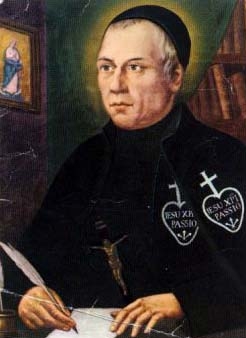
 The Passionists, are a small and relatively new community in the Roman Catholic Church, but we have a good number of canonized saints and members proposed for canonization. Beginning with our founder, St. Paul of the Cross, who died in 1774, each generation of Passionists has produced men and women recognized for their holiness.

We’re hoping Father Theodore Foley who died in 1974 may join the ranks of Passionist saints such as Paul of the Cross, Vincent Strambi, Gabriel Possenti, Dominic Barberi, Gemma GalganiCharles Houben, Isidore DeLoor and Eugene Bossilkov.

Saints are God’s answer to the poison of their times, and it’s important to see them as they oppose it. Saints are firm believers and examples of heroic virtue. They’re signs of God’s power in a sinful world and God marks them out as saints through miracles performed through their intercession.

For example, St. Paul of the Cross was an antidote to the forgetfulness of the passion of Jesus which followed the Enlightenment, a 17th century movement that denied or minimized the role of faith and religion in human life. We’re still feeling the effects of the Enlightenment today.

St. Vincent Strambi opposed the Enlightenment as it was expressed in the political schemes of Napolean Bonaparte, who tried to subordinate religion to his own dreams of European domination. Vincent was a brave Italian bishop who resisted the emperor and suffered for it.  Like him, the Bulgarian Bishop Eugene Bossilkov suffered and died under an oppressive Communist government in Bulgaria in the 20th century.

Gabriel Possenti resisted the lure of the Enlightenment in the 19th century. As a young man, he chose religious life rather than the inflated promises of success that tempted so many of his contemporaries.

Saints like Gemma, Isidore de Loor, Charles Houben seem to be people who fit St. Paul’s description of those called by God. They were not wise by human standards, they don’t have a lot of human power, they’re not of noble birth. They’re “the weak of the world God chooses to shame the strong.” (1 Corinthians 1, 23-28)

Our Passionist saints tend to be ordinary people, of no special note, easily unnoticed and misunderstood, subject to the sufferings, disappointments and failures that come in life. God chooses them to be signs that he does not abandon his people and, in fact, can do great things through them. Charles Houben was a healer. Gemma bore the signs of Jesus’ passion in her body.

It takes awhile to know saints like these. That may be because we often don’t understand our own times and the poison afflicting it.

Is This All There Is?

DSCN1720

In John’s readings from the Last Supper today and tomorrow, Jesus’ disciples , Thomas and Philip, appear unsure of the way and the power of Jesus himself. An important question raised in mystagogic catechesis.

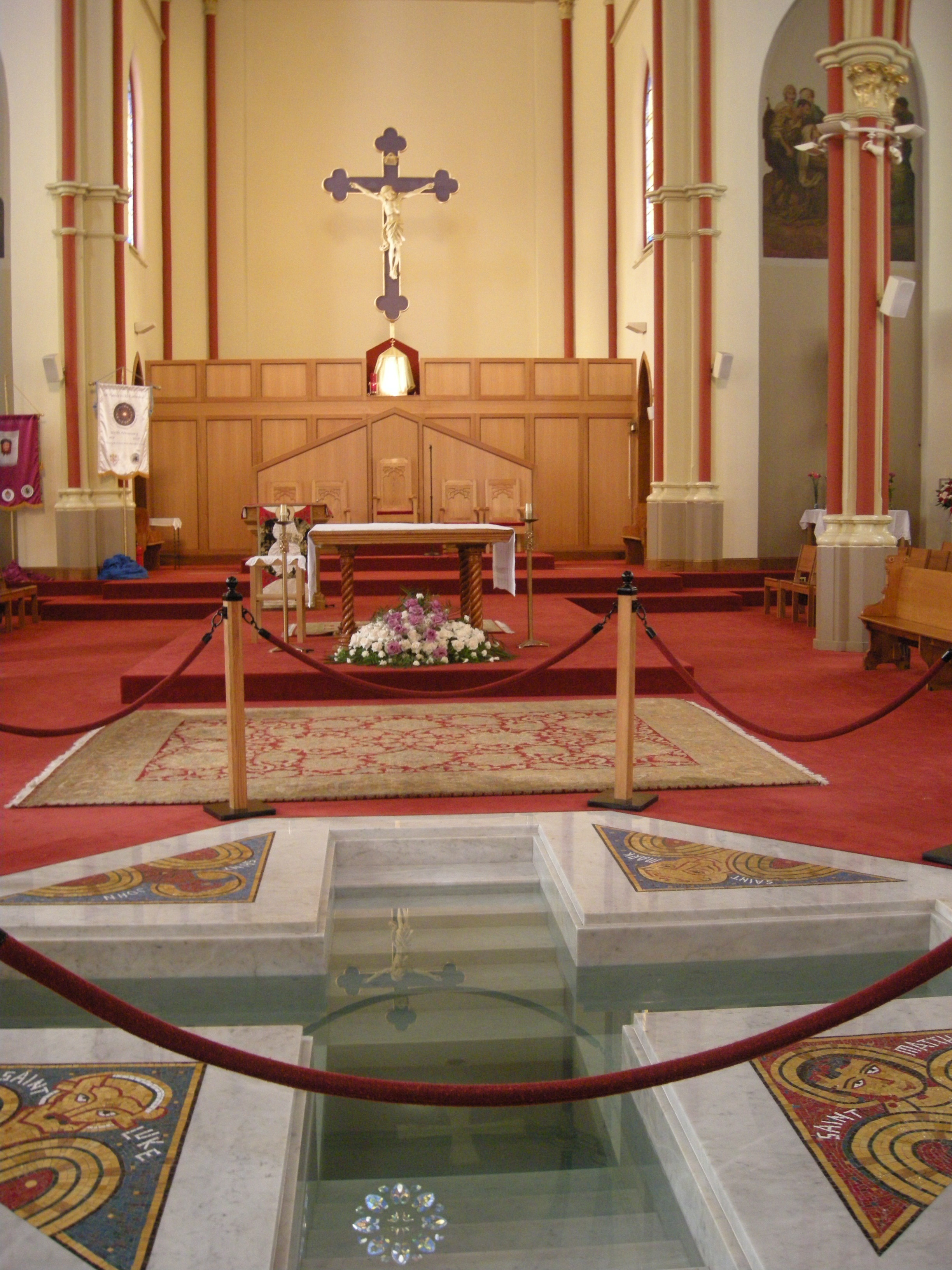
 St. Ambrose in the 4th century met the same uncertainty of signs as he spoke to the newly baptized of his time. They signify so much, but we find them hard to accept. “Is this it?” he hears them say as they approach the waters of baptism and the table of the Eucharist.

Encountering God through sacraments in weakened further today by a lack of a symbolic sense, Pope Francis writes in his letter Desiderio Desideravi . Now, more than ever, human beings, like Thomas and Philip, want to see. We want immediate experience.

Ambrose calls on stories of the Old Testament. The Israelites were saved as they flee from Egypt through the waters of the Red Sea, the cloud that guides them on their way–foreshadowing the Holy Spirit, the wood that makes the bitter waters of Marah sweet–the mystery of the Cross.

“You must not trust, then, wholly to your bodily eyes. What is not seen is in reality seen more clearly; for what we see with our eyes is temporal whereas what is eternal (and invisible to the eye) is discerned by the mind and spirit.” (On the mysteries)

The Assyrian general, Naaman, doubted as he stood before the healing waters of the Jordan, Ambrose reminds his hearers. There’s more here than you see or think.

So we’re invited into an unseen world. Still, we’re like those whom the gospel describes and the saint addresses. Is this it? Moreso now, schooled as we are in the ways of science and fact, we look for proof from what our eyes see. We live in a world that tells us what we see is all there is.

Faith is a search for what we don’t see. God desires to approach us through signs. Will he not help us approach him that way? Believe in me, Jesus says.

Readings here.

The Bread of Life

DSC00076

All four gospels say that Jesus fed a great crowd near the Sea of Galilee by multiplying a few loaves of bread and some fish. It’s an important miracle.

John’s account (John 6), read at Mass on weekdays from the Friday of the 2nd week of Easter until Saturday of the 3rd week of Easter, indicates the miracle takes place during the feast of Passover. Like the Passover feast, the miracle and the teaching that follows occur over a number of days.

The Passover feast commemorated the Manna God sent from heaven to sustain the Jews on their journey to the promised land. Jesus claims to be the “true bread,” the “living bread” that comes down from heaven.

Jesus is a commanding presence during the miracle and the days that follow in John’s account. “Where can we buy enough food for them to eat?” he asks Philip as crowds come to him. He then directs the crowd to sit down, feeds them with the bread and fish, and says what should be done with the fragments left over. Unlike the other gospel accounts that give the disciples a active role in the miracle John’s account gives them a small role. Philip and the other disciples are tested during the miracle and the teaching that follows it.

As they embark on the Sea of Galilee to return to Capernaum after the miracle, a sudden storm occurs and Jesus’ rebukes the wind and the sea, the forces of nature, so that the disciples reach the other shore. All four gospels have some version of Jesus’s power over the sea and therefore the natural world. He has divine power.

The crowds to whom Jesus speaks at Capernaum after the miracle are also tested as well as his disciples. They want to make him king after a plentiful meal and only look for a steady hand out instead of “the true bread come down from heaven.” Their faith is limited and imperfect after the miracle. They miss the meaning of the sign.

The disciples also are tested; some walk with him no more.

The miracle of the loaves and the fish remind us that Jesus is Lord and we are people of limited faith. We only see so far. The Risen Lord leads us to the other shore. He is the Bread of Life. “Master, to whom shall we go? You have the words of everlasting life,” Peter says to Jesus at the end of John’s account. And so do we.

This is the Day

cross mono

cross, 4th Century Sarcophagus, Rome

Easter’s over for many people, but it isn’t over. We celebrate Easter for 50 days, from the Easter vigil till the feast of Pentecost. It’s a long day. Over and over we say: “This is the day the Lord has made.”

The reason we celebrate the long day of Easter is because the Lord’s plan takes time to understand.  Jesus spent many days with his disciples, who were  “slow to understand.” So are we.

Cardinal Newman spoke of this long day:

“Let us rejoice in the Day that He has made… the Day of His Power. This is Easter Day. Let us say this again and again to ourselves with fear and great joy. As children say to themselves, ‘This is the spring,’ or ‘This is the sea,’ trying to grasp the thought, and not let it go; as travellers in a foreign land say, ‘This is that great city,’ or ‘This is that famous building,’ knowing it has a long history through centuries, and vexed with themselves that they know so little about it; so let us say, This is the Day of Days, the Royal Day, the Lord’s Day.

“This is the Day on which Christ arose from the dead; the Day which brought us salvation. It is a Day which has made us greater than we know. It is our Day of rest, the true Sabbath. Christ entered into His rest, and so do we. It brings us, in figure, through the grave and gate of death to our season of refreshment in Abraham’s bosom. We have had enough of weariness, and dreariness, and listlessness…

“May we grow in grace, and in the knowledge of our Lord and Saviour, season after season, year after year, till He takes to Himself, first one, then another, in the order He thinks fit, to be separated from each other for a little while, to be united together for ever, in the kingdom of His Father and our Father, His God and our God.”
John Henry Newman, “Difficulty of Realizing Sacred Privileges,”

2nd Week of Lent: Readings and Feasts

MARCH 6 Mon Lenten Weekday

Dn 9:4b-10/Lk 6:36-38 

7 Tue Lenten Weekday [Sts Perpetua and Felicity, Martyrs] Is 1:10, 16-20/Mt 23:1-12 

8 Wed Lenten Weekday [St John of God, Religious] Jer 18:18-20/Mt 20:17-28 

9 Thu Lenten Weekday [St Frances of Rome, Religious] Jer 17:5-10/Lk 16:19-31 

10 Fri Lenten Weekday Gn 37:3-4, 12-13a, 17b-28a/Mt 21:33-43, 45-46 

11 Sat Lenten Weekday Mi 7:14-15, 18-20/Lk 15:1-3, 11-32 

12 SUN 3rd SUNDAY OF LENT Ex 17:3-7/Rom 5:1-2, 5-8/Jn 4:5-42

Our readings for this week, beginning with the Old Testament reading from Isaiah, proclaim the mercy of God. The New Testament readings on Monday, Thursday and Saturday are from St. Luke– a gospel of mercy. Jesus proclaims God’s mercy, especially extended to the poor. The story of the Prodigal Son, Luke’s great parable of God’s mercy, is read on Saturday,

Matthew’s Gospel for Wednesday reminds us that temptations about power, so obvious in the story of Jesus’ temptations, also occur in his disciples, like James and John. Can we see it too in the elder brother from the Parable of the Prodigal Son?

The readings from the Old and New Testaments complement each other during Lent. Celebrations of the saints are fewer and often become optional memorials, as is the case of the saints this week. .

The mercy Jesus calls for is not just acceptable or normal;  it’s Godlike. Can any of us be as merciful as God?  But there’s no watering down the challenging, radical words we hear in our lenten readings.

Lent’s not meant to make us comfortable; it sets our sights on loving more, and it sets the bar higher than we like. Like the Olympic games, lent calls for our best, and more. A bigger prize than a gold medal is at stake.

Looking Out The Window: Llght and Darkness

FullSizeRender

Light and darkness are important in the Genesis story; they’re also important in our morning and evening prayers. Daily prayer is deeply influenced by the Genesis story .

“God saw light and said it was good.” the Book of Genesis says. God creates light, then sunlight, first. Then, holding this bright lamp, God goes about creating the world day by day out of darkness.  Each day ends in darkness, but God goes to work the next day, light in hand, and new things come to be. Like us, God works day by day.

“Send forth your light and your truth, let these be my guide.” The morning psalms each day repeatedly ask for light to continue God’s work.

“Your word is a lamp for my steps, a light for my path.” The evening psalms prepare us for the darkness of night, when we rest. But God’s work goes on. Night for us is a time for trust and leaving the world in God’s hands. “Truly I have set my soul in silence and peace, As a child in its mother’s arms. even so my soul.” (Psalm 131, Tues.3)

Before television and radio and the complex scientific weather reports we get now, I think we looked out the window more to see the dawn, the dusk, the light and darkness. Should we stop looking out the window?

I don’t think so. Maybe we should look out the window more each morning and evening and try to see the light and darkness as the Book of Genesis suggests. We learn from them. God works day by day. So, “What am I going to do today?” Whatever we do, we should do it thankfully, by the light of God’s grace.

And don’t forget how the days of Genesis end. God rests and says it’s good. Something of God’s rest and appreciation, praise and thanksgiving, should be in us as we go through our days of creation.

In the New Testament, Jesus Christ, the Word of God, is called “the true light that enlightens everyone who comes into this world.”

The everyday sun promises the Sun that enlightens everyone.

Priests and a Priestly People

Are priests a class apart, separate from the rest of humanity? The Letter to the Hebrews, our weekday reading at Mass, offers an extended reflection on the priesthood of Jesus in the light of Jewish tradition of priesthood found in the temple of Jerusalem. The Letter to the Hebrews was probably written to the Roman church where many Jewish Christians were lamenting the fall of Jerusalem and its temple in the year 70. Can it throw light on the meaning of priesthood today?.

Jesus is our new high priest, but he did not separate himself from the rest of humanity. He became fully human to bring humanity to God in sacrifice and praise. Here’s how St.Fulgensius of Ruspe explains it:

“When we speak of Christ’s priesthood, what else do we mean than the incarnation? Through this mystery, the Son of God, though himself ever remaining God, became a priest. To him along with the Father, we offer our sacrifice. Yet, through him the sacrifice we now offer is holy, living and pleasing to God. Indeed, if Christ had not sacrificed himself for us, we could not offer any sacrifice. For it is in him that our human nature becomes a redemptive offering.

When we offer our prayers through him, our priest, we confess that Christ truly possesses the flesh of our race. Clearly the Apostle refers to this when he says: Every high priest is taken from among us. He is appointed to act on our behalf in our relationship to God; he is to offer gifts and sacrifices to God.”

A priest embraces the mystery of the Incarnation, the saint says. Like Jesus, priests are called to embrace humanity in its weakness. Following him, they must embrace their own times and place, without isolating themselves from the world they live in.  Otherwise, how can they bring it to God?

All who are baptized also share in the priesthood of Christ. Every Sunday, we gather as a priestly people. The priestly call belongs to us all. “Let us give thanks to the Lord, our God,” we say at Mass. We’re a priestly people.