Tag Archives: Lent

4th Sunday of Lent B: Unbelief and Skepticism

Audio version below:

Today there’s a great deal of unbelief and skepticism about God and Jesus Christ in our society. I’m watching the CNN series on Jesus on Sunday nights during Lent called “Finding Jesus.” If the remaining segments are like the two I’ve seen so far, I think you will have to find Jesus elsewhere than on CNN. You may end up wondering whether you can find him at all or– just as unfortunate– wondering whether finding him is worthwhile.

Last Sunday’s segment was about John the Baptist. To tell you the truth, as they dramatized John’s life, I found him peculiar and unstable. I don’t think I would follow him and I certainly wouldn’t want him to dunk me into a river of water. The segment suggested that John was the teacher of Jesus, his mentor. I’m wondering what the next episodes are going to be like. Is Jesus going to be portrayed like John? If he is, I wouldn’t want to follow him either.

The mainstream media by nature is skeptical, so it keeps asking questions like: Did Jesus really exist? What did he look like? What are the facts about his birth, his life and his death? Are other gospels out there that contradict the four we know? Have the archeologists found out anything more about him? Was he married? Is there anything new about him?

Nothing wrong with most of those questions except that questions alone wont get you the truth. You can  get buried under facts. You can try to know too many facts. Knowing the facts isn’t necessary to start a friendship, get married, to begin a business, to make a medical decision, or to believe.

But we shouldn’t be surprised– there’s always been unbelief and skepticism. Our first reading this Sunday from the Old Testament tells us that:. “In those days, all the princes of Judah, the priests, and the people added infidelity to infidelity…Early and often did the LORD, the God of their fathers, send his messengers to them”… “But they mocked the messengers of God, despised his warnings, and scoffed at his prophets.” Their unbelief led to destruction and exile. (2 Chronicles, 36,14-16) Skepticism and unbelief are nothing new.

In the New Testament passage from John, Nicodemus meets Jesus, but he only comes at night. He’s someone who’s reluctant to believe. He is a Pharisee, a member of the Sanhedrin, the ruling body of Jews at the time of Jesus. He’s interested in what Jesus has to say but he’s hesitant, perhaps because he’s in the minority, so it’s not the popular thing to do. Or perhaps he can’t understand the dimensions of what Jesus reveals. Jesus speaks of a greater life, a new birth, and Nicodemus can only grasp life as he sees it and lives it.

Some today are reluctant to believe for the same reasons, so they keep asking questions, or give up seeking altogether. You might be in the minority if you believe, for example. You wont be popular with everybody if you believe. You may be confused or uncertain or wondering about the faith you are asked to hold onto.

The interesting thing is the God doesn’t give up on the unbeliever or those like Nicodemus who are uncertain or confused or questioning. God meets you in the night. So come to God with the faith you have. Why doesn’t God give up on us? Listen again to our reading from John’s gospel.

Jesus said to Nicodemus:
“Just as Moses lifted up the serpent in the desert,
so must the Son of Man be lifted up,
so that everyone who believes in him may have eternal life.”

For God so loved the world that he gave his only Son,
so that everyone who believes in him might not perish
but might have eternal life.
For God did not send his Son into the world to condemn the world,
but that the world might be saved through him.

God so loved the world. And the great sign of God’s love is the death of Jesus on the Cross. What greater sign of love could God give?

2nd Sunday of Lent B Jesus is Transfigured

To listen to today’s homily, select the audio file below:

Immediately before the account of his transfiguration on the mountain, which we read in Mark’s gospel this Sunday, Jesus and his disciples go up north to the villages around Caesarea Philippi, a major gentile city of the day. Mount Hermon, the great snow capped mountain that’s the principal water source for the Lake of Galilee and the Jordan River dominates that region. In bible, mountains are places close to God, where God reveals himself.

So here Jesus asks his disciples, “Who do people say that I am?” Some say you’re Elijah, John the Baptist come back from the dead, the disciples say. “Who do you say I am?” he said. “You are the Messiah,” Peter replied.

But as Jesus goes on to tell them he’s going to “suffer greatly, be rejected by the elders, the chief priests and the scribes and be killed and rise after three days,” Peter stops him. No, that’s not going to happen to you. That’s not the Messiah I mean. Jesus turns to him and says “Get behind me Satan, you are not thinking as God does, but as human beings do.”

‘You are not thinking as God does, but as human beings do.” Mark’s gospel, more than the others, insists that despite his teaching and the wonders Jesus works, his own disciples whom you would expect would know him best, don’t understand him that well. They think as human beings do. Of course we do too.

And so Jesus takes them up the mountain and is temporarily transfigured before them. It’s a temporary experience. A brief encounter. His clothes become a dazzling white. The great traditional figures of Moses and Elijah appear; a terrifying cloud overshadows them, a voice says “This is my beloved Son, listen to him.” That’s the way the gospels describe it.

The disciples want more. Peter wants to set up tents so they can stay there. But then it’s over. They only have a glimpse of the One who walks with them. After they come down from the mountain they still don’t understand him.

But, still, they follow him.

The mystery of the transfiguration of Jesus reminds us that God periodically reveals himself to us. Periodically,we have intimations,  glimpses of God. We can’t create that experience on our own. God makes himself known. In St. Luke’s account of the transfiguration, he seems to indicate that prayer is one way to enter God’s presence.

And so we do all we can, we wait for him like  the disciples, but we’re absorbed in our human thinking. “Thinking like human beings.”

The mystery of the transfiguration also offers the promise of something that awaits us, something that is permanent, and not temporary. “Follow me.” Jesus says. We try to get ready for him. God will come, but here in this life he comes when he wills. We wait, we watch, we listen.  Jesus saysa Kingdom is coming, where the limitation of human thoughts and actions passes away and our waiting is ended and we shall see God face to face, not for a time but for eternity.
“This is my beloved Son, listen to him.”

The first reading for today is from the Book of Genesis. It begins “God put Abraham to the test.” He’s tempted. He takes his only son up a mountain to kill him. What a test that is to our human way of thinking. His only son, his beloved son. Everything he put his hopes in.

For Abraham this was the greatest temptation he or anyone could face. Everything’s lost; nothing more to live for. But God tells him  he’s not lost everything. No, he hasn’t. Go beyond your human thinking. God is for us, not against us.

Ist Sunday of Lent: The Human Jesus


To listen to today’s homily please play the audio selection below:

Mark’s gospel gives a short, straightforward account of Jesus facing temptation after his baptism in the Jordan by John the Baptist. In just four lines he says that

“The Spirit drove Jesus out into the desert,

and he remained in the desert for forty days,

tempted by Satan. He was among wild beasts,
and the angels ministered to him.” (Mark 1, 12-13)

Matthew’s gospel (Matthew 4,1-11) gives a more extensive account of the temptations Jesus faced, as does Luke who follows Matthew rather closely. (Luke 4,1-13)

In John’s gospel we have no account of the temptation of Jesus in the desert, but in chapter 1, 10-11 he says “He was in the world, and the world came to be through him, but the world did not know him. He came to what was his own, but his own people did not accept him.” A strong indication of the opposition that Jesus, the Word of God, received when he came into this world.

He was opposed. He did not come among us as a kind of superman, immune from human hurt or human frailty. He was tempted, the gospels say, opposed by “Satan” by “the world” and even by “his own.” So strong was the opposition that it eventually put him to death.

It’s so important to see the human Jesus, his vulnerability, how like us he was. Yes, he was God’s Son, but the Word became flesh, St. John says. Equal to God, he emptied himself, St. Paul says, and took the form of a slave, and became obedient even to death on the cross.

When we look at Jesus in his humanity, we wonder, first of all, at God’s love coming to a world of weakness and frailty, our world. We can also see ourselves in his humanity, in the temptations and opposition he faces as a human being in his lifetime, and particularly as he enters his Passion.

Of all the gospels, Mark’s gospel gives us the most realistic picture of the human Jesus. Mark doesn’t describe the temptations Jesus faces in the desert at the beginning of his gospel because he will describe them as Jesus makes his way through the towns of Galilee where he gathers disciples and meets opposition from the scribes and Pharisees. The growing opposition he meets there leads to Jerusalem, where he’s put to death.

Mark’s account of the Passion of Jesus shows us Jesus fearful in the garden and crying out on the cross, “My God, my God, why have you forsaken me!”

When we see Jesus we see ourselves. We live in a world where we face temptation. When we look to him, however, we see where our wisdom and strength and courageous patience can come from. Following Jesus, we will live.

Friday after Ash Wednesday

Lent 1
Mt 9, 14-15

The 30 or so years that Jesus Christ lived on earth are brief on the timeline of human history. Hardly visible at all. But we believe Jesus, “in the fullness of time,” changed the way we look at life and time itself in those years. He’s God’s revelation to us.

His first disciples saw him, listened to his words, followed him and told us about him. They tell us very little about his birth and early years. The part of his life they tell us most about is the story of his death and resurrection. It’s the longest story in the gospels and we believe it’s the key to understandi the One “who is, who was and is to come.”

How can we understand that story best? Shall we study it academically, maybe read a popular book like Bill O”Reilly’s “Killing Jesus”? Shall we ask historians or scholars what it means?

My community, the Passionists, always begins Lent by celebrating on the day before Ash Wednesday the Feast of the Prayer of Jesus in the Garden. The feast points out the best way to share in the mystery of Jesus’ death and resurrection– enter the Garden of Gethsemane and pray there with Jesus.

Gethsemane is more than a place, it’s an experience humanity shares. Jesus came to the garden in his humanity and faced there the mystery of death, the fears and helplessness it brings, the questions about God’s care, God’s love and God’s will that humanity faces.

He shares our humanity. We enter the garden–not to fall asleep or simply observe Jesus at prayer–but to face death as he faced it, to face our fears and questions about God’s will and care that he faced then, and to draw divine support as he did.

In his spiritual diary, St. Paul of the Cross said that sharing the humanity of Christ leads to sharing his divinity; meditating on his death and resurrection leads us to new life.

“I also had knowledge of the soul united in a bond of love to the Sacred
Humanity and, at the same time, dissolved and raised to a deep, conscious, and
felt knowledge of the Divinity. For since Jesus is both God and Man, the soul
cannot be united in love to the Sacred Humanity without being at the same time
dissolved and brought to a deep, conscious, felt knowledge of the Divinity.” (Diary)

Thank you, Father, for the gift of your Son, Jesus Christ,
the Word who made the universe,
the Savior you sent to redeem us,
who came as one like us
to make us one with you.

Ash Wednesday and Mystical Death

for Swahili

A letter St. Paul of the Cross wrote about “mystical death” may help us celebrate Ash Wednesday.

“You can live as a true servant and friend of God by dying each day: ‘We die daily; for you are dead and your life is hidden with Christ in God.’ It’s a mystical death I want you to undergo. I’m confident that you will be reborn to new life in the sacred mysteries of Jesus Christ, if you die mystically in Christ more and more each day, in the depths of the Divinity. Let your life be hidden with Christ in God…

“Think about a mystical death. Dying mystically means thinking only of living a divine life, desiring only God, accepting everything God sends without worrying about it. It means ignoring everything else so that God can work in your soul, in the sanctuary of your soul, where no creature, angelic or human, can go and where you can experience God working and being born, as you mystically die.

“But I’m in a hurry, and this note is getting too mystical, so listen to it with a grain of salt, because we don’t get it.”    (Letter, Dec 28, 1758)

ashes

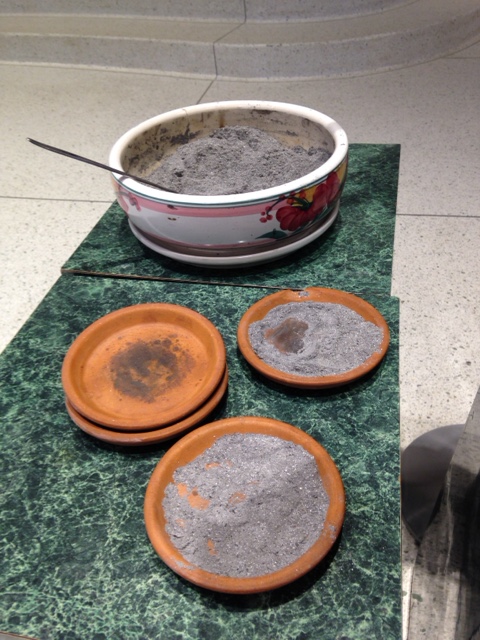
Ash Wednesday’s a good time to try to “get” what the saint is saying.  Ashes are placed on our foreheads in the form of a cross and a few simple words are said: “Remember you are dust and to dust you shall return.”

A reminder we will die. Yet, this brief symbolic act says much more. A daily mystical death is now taking place within us. Our physical life will end, the ashes tell us; the day and hour unknown. But ashes in the form of a cross say Jesus Christ changes death. “Dying, you destroyed our death. Rising, you restored our life.” Jesus Christ has made his risen life ours. His gift is hidden from us; what he promises we will experience when we enter his glory.

Meanwhile, the mystery of his death and resurrection is at work in us now. Enter this mystery mystically, St. Paul of the Cross says. Daily, deliberately, attentively accept God working within you. A new life is being born in you, though you do not see it.  Desire it, accept what God sends, without worry. God is working within you through the mystery of the Lord’s cross.

Yet, the saint says in his letter that he has to hurry off, like the rest of us, to something else. He’s going somewhere, he has something to do, someone to see, and he tells his correspondent that you can’t think about deep things too long. No, we can’t.

And so, we only glimpse the mystery of the ashes that placed on us. Still, let’s hear the Lord’s voice in today’s readings and the signs of the liturgy. Ash Wednesday is an ambassador God sends to remind us he is at work in us; he’ll send  graces through the days of Lent and Easter. Yes, all the days of our life.

Embrace his cross each day and die mystically and be born anew.

En Espanol

Una carta que San Pablo de la Cruz escribió sobre “la muerte mística” nos podría ayudar a celebrar el Miércoles de Cenizas.

“Tú puedes vivir como un verdadero ciervo y amigo de Dios si murieras cada día: ‘ Morimos diariamente; porque tú estas muerto y tú vida está oculta adentro de Cristo en Dios.’ Es una muerte mística a la que yo quiero que tú te sometas. Tengo confianza de que tú renacerás a una nueva vida dentro de los sagrados misterios de Jesús Cristo, si tú mueres misticamente en Cristo más y más cada día, en las profundidades de la Divinidad. Deja que tu vida se pierda dentro de Cristo en Dios…

“Piensa sobe la muerte mística. Morir misticamente significa pensar solamente en vivir una vida Divina, deseando solamente a Dios, aceptando todo lo que Dios manda sin preocuparse sobre ello. Significa ignorar todo lo demás para que Dios pueda obrar en tu alma, en el santuario de tu alma, donde ninguna criatura, angélica o humana, puede ir, y donde tú puedas sentir a Dios trabajando y naciendo, mientras tú mueres misticamente.

“Pero, estoy apresurado, y esta nota se está poniendo muy mística, así que escúchala pero no te obsesiones, porque esto nosotros no lo podemos captar.”( Carta,  28 de diciembre,1758)

El Miércoles de Cenizas es una buena ocasión para poder captar lo que el santo está diciendo. Cenizas son untadas sobre nuestras frentes en la forma de una cruz y unas sencillas palabras son dichas: ” Recuerda que tú eres polvo y al polvo retornarás .”

Un recuerdo de que vamos a morir. Sin embargo, este breve acto simbólico dice tanto más. Una muerte mística diaria en este momento está tomando lugar dentro de nosotros. Nuestra vida física va a terminar, nos dicen las cenizas; el día y la hora, desconocidos. Pero cenizas en la forma de una cruz nos dicen que Jesús transforma la muerte. ” Al morir Tú destruistes nuestra muerte. Resucitando, restaurastes nuestra vida.” Jesús Cristo ha convertido su vida resucitada en nuestra vida. Este regalo de Él está escondido de nuestros ojos; lo que Él promete lo experimentaremos cuando entremos en su Gloria.

Mientras tanto, el misterio de su muerte y resurreción está operando adentro de nosotros. Entra adentro de este misterio misticamente, nos dice San Pablo de la Cruz. Diariamente, deliberadamente, atentamente acepta a Dios obrando dentro de tí. Una nueva vida está naciendo en tí, aunque no lo veas. Deséalo, acepta lo que Dios te manda sin preocupación. Dios está obrando adentro de tí a través del misterio de la cruz del Señor.

Sin embargo, el santo dice en su carta que está apurado y tiene que irse, como el resto de nosotros hacia otra cosa. Va para algún lugar, tiene algo que hacer, alguien que ver, y le dice a su corresponsal , que no se puede estar pensando sobre cosas profundas por mucho tiempo. No, no podemos.

Y así, nosotros solamete vislumbramos por un segundo el misterio de las cenizas que untan sobre nosotros. De todas maneras, escuchemos la voz del Señor en las lecturas de hoy y en los signos de la liturgia. El Miércoles de Cenizas es un embajador que Dios nos manda para recordarnos que Él está operando dentro de nosotros; Él nos mandará Su gracia a través de los días de Cuaresma y de Pascua. Sí, y todos los días de nuestra vida.

Abraza su Cruz cada día y muere misticamente para poder renacer.

Swahili
Lent

Jumatano Ya Majivu
Padre Evans FwambaCp
Mt. Paulo Wa Msalaba aliandika, “Kifo ni fumbo” na kinaweza kutusaidia kusherehekea vyema Jumatano ya Majivu. Maisha kwa watumishi wa kweli ni kuwa marafiki wa mungu, kwamba tunakufa kila siku; kifo chetu na kuishi vimefichika kwa kristo na kwa mungu. Hiki ni kifo ambacho ni fumbo ambalo, nina hakika kwamba tutazaliwa katika maisha mapya kupitia mafumbo matakatifu ya Yesu Kristo, kadiri tunavyo kufa zaidi na zaidi kila siku katika fumbo la kifo cha Kristo na katika undani wa mungu. Tunatambua maisha yetu yote yamefichika ndani ya kristo na mungu.

Fikiria juu ya kifo cha fumbo. Kifo cha fumbo kinamaanisha kufikiri maisha ya kimungu, kumtamani mungu peke yake. Kupokea mapenzi ya mungu bila wasiwasi wowote. Hii inamaanisha kudharau kila kitu ili mungu afanye kazi ndani ya mioyo yetu, ambapo hakuna kiumbe chochote kinaweza kuingia wala malaika au mwanadam. Hapo tunaweza kuona kazi ya mungu ndani yetu katika kufa kwetu ambayo ni fumbo.
“Ila nina haraka, na maandishi haya yanakuwa fumbo, basi yasikilize na punje ya chumvi kwani hatuwezi kuelewa.” (Barua, Dec 28,1758)

Tunapopakwa majivu, ishara ndogo ya msalaba hafanywa kwenye paji la uso na maneno yafuatayo husemwa, “Kumbuka wewe u mavumbi na mavumbini utarudi.” Hiyo alama ya msalaba inamaana kubwa sana. Inatukumbusha kwamba tuliumbwa kutoka udongoni na humo udongoni tutarudi. Kwamba maisha ya mwanadam ni msalaba na kifo ni fumbo kwetu.

Tunakumbushwa kwamba maisha yetu ya kimwili yataisha na kwa ishara ya msalaba, kifo chake Kristo kitabadili maisha yetu kwa ufufuko wake na kuturejeshea uhai.Majivu yanatukumbusha kwamba sisi hatujui mda wala siku tutakapokufa. Mt. Paulo anasema kwamba tafakari kila siku na kupokea kwa makini kazi ya mungu inayofanyika katika maisha yako. Maisha mapya yanazaliwa ndani yako, ingawa huwezi kutambua au kuona.

Mungu anafanya kazi ndani yako kupitia fumbo la msalaba wa Yesu.
Tunapopakwa majivu tunatafakari juu ya msalaba na maisha yetu. Leo tusikilize masomo na ishara za liturijia. Jumatano ya majivu ni kama balozi aliyetumwa na mungu kwetu kutukumbusha kwamba mungu anafanya kazi maishani mwetu. Katika mfungo huu mtakatifu wa kwaresima, mungu anatutumia neema katika kipindi kizima cha kwaresima na pasaka, ndio, na katika maisha yetu yote.
Tupokee msalaba wa Kristu kila siku na tuwa tayari kufa na Kristu katika fumbo la mateso na kifo chake ili tuweze kuzaliwa upya.

2nd Sunday of Lent

Lent 1
en español
for Swahili
Matthew 17,1-9

The Transfiguration of Jesus takes place at the midpoint of Matthew’s gospel, after Jesus announces to his disciples that “he must go to Jerusalem and undergo great suffering at the hands of the elders and chief priests and scribes, and be killed, and on the third day be raised.”

Take up your cross and follow me, he tells his disciples.
“God forbid, Lord,” says Peter. who doesn’t understand this at all. We find it hard to understand too.

Six days later, Jesus takes Peter, James and John up a mountain where they experience him glorified, surrounded by Moses and Elijah. It’s a transitory experience, even though Peter, awed by the vision, asks to prolong it. After falling to the ground, the disciples looked up and “saw no one except Jesus himself alone.” But the experience strengthens them for the journey they’re called to make.

“The main purpose of the transfiguration was to remove the scandal of the cross from the hearts of Christ’s disciples,” says Pope Leo the Great. God doesn’t want us to be weighed down by suffering.

So, like Peter, James and John, Jesus takes us up a mountain throughout our lives to strengthen us as we share in his cross. What mountain do we ascend? St. Paul of the Cross and other spiritual guides say it’s the mountain of prayer, where we experience intimations of God’s glory, brief encounters, transfigurations of a lesser kind. We’re strengthened as we pray.

“Don’t think that the trials and crosses you experience turn you to go another way. Trials don’t indicate you’re straying from God. We know it’s just the opposite from the scriptures we read and the saints we honor. The way to go is the way our Savior gives us grace to go. Saint Bernard wasn’t the first to know this truth when he said: ‘The cross is the way to life, the way to glory, the way to the Kingdom, and the way to the inhabited City.’”

(Letter 1194)

Lord Jesus,
lead me to that mountain place
of stronger light and surer sound
where I may see your glory.
Strengthen me through prayer.

Light and truth,
bright as blinding snow,
whom Peter, James and John saw,
“Bring me to your holy mountain,
to your dwelling place.”
Spanish

en español
2do domingo de cuaresma (Año A)
Mateo 17.1-9

La Transfiguración de Jesús ocurre en el medio del Evangelio de Mateo, después de Jesús haber anunciado a sus discípulos que ” él tendría que ir a Jerusalén, y pasar grandes sufrimientos bajo las manos de los ancianos, los jefes de los sacerdotes y los maestros de la ley, ser matado, y al tercer día resucitar.”

Carguen con su cruz y síganme, les dice a sus apóstoles. ” Diós no lo quiera, Señor!” le dice Pedro, que no entiende esto en lo absoluto. Nosotros lo encontramos muy difícil de entender también.

Seis días después Jesús toma a Pedro, a Santiago y a Juán a una montaña donde ellos tienen la experiencia de verlo a él glorificado, rodeado por Moisés y Elías. Esta parece ser una experiencia transitoria; después de postrarse en la tierra, ellos levantaron la cabeza y ” ya no vieron a nadie, sino a Jesús solo.” Pero esta experiencia los fortalece para el resto de la jornada que les espera.

“El propósito principal de la transfiguración de Jesús es de remover el escándolo de la cruz de los corazones de los discípulos de Cristo,” dice el Papa Leo el Grande. Diós no quiere que nosotros seamos oprimidos por el sufrimiento.

Así, como a Pedro, Santiago y Juán, Jesús nos lleva arriba a una montaña durante todas nuestras vidas mientras compartimos su cruz. ¿Qué montaña es la que ascendemos ? San Pablo de la Cruz y otros guías espirituales dicen que es la montaña de la oración, donde experimentamos intimaciones de la gloria de Diós, encuentros breves, y transfiguraciones pequeñas que nos fortalecen.

Nos dice San Pablo de la Cruz ; ” No créas que las pruebas y las cruces que experimentas te viran hacia otro camino. Las pruebas no son indicaciones de que te estás descarriando de Diós. Nosotros sabemos que lo opuesto es cierto basado en las Escrituras que leemos y los santos que veneramos. La ruta que tomar es el camino por donde Diós nos da la gracia para ir. San Bernardo no fue el primero en reconocer esta verdad cuando exclamó; ‘ La cruz es el camino a la vida, el camino a la gloria, el camino al Reino, y el camino a la Ciudad Habitada.’ ” (Carta 1194)

Señor Jesús,
guíame hacia ese lugar montañoso
de fuerte luz y sonido claro
donde pueda ver tu gloria.
Fortaléceme a través de la oración.

Luz y verdad, brillante como la nieve deslumbradora,
a quién Pedro, Santiago y Juán vieron.
” Tráeme a tu monte sagrado ,
al lugar de tu morada.”
Swahili
Lent

Tafakari ya jumapili ya pili
Kugeuka sura kwa Yesu kulitokea katika kipindi muhimu cha Enjili ya Mathayo, baada ya Yesu kuwatangazia wafuasi wake kwamba “atapaswa kwenda Yerusalem na kupitia mateso makali katika mikono ya wazee wa kanisa, makuhani wakuu na mafarisayo, atauwa na siku ya tatu atafufuka.”

Chukua msalaba wako na unifuate, anawaambia wafuasi wake. “Mungu apishe mbali, Bwana, “alisema Peter, ambae hakulielewa hili hata kidogo. Inakuwa vigumu kwetu pia kulielewa.

Siku sita baadae, Yesu akamchukua Petro, Yacobo na Yohana kwenye mlima ambapo waliuona utukufu wa Yesu, kando yake wakiwepo Musa na Elia. Ilionekana kuwa kipindi cha mpito ambacho wasingerefusha zaidi. Baada ya kuanguka chini, waliinua macho, na hawakumuona yeyote ila Yesu peke yake.” Hali hiyo iliwaimarisha kwa kipindi cha safari yote waliyoifanya.

Lengo kuu la kugeuka sura ilikuwa ni kuondoa uzushi juu ya msalaba katika mioyo ya wafuasi wa Kristo,” Anasema Papa Leo Mkuu.

Ni katika mlima gani yesu anatuchukua sisi ili kutuimarisha katika safari ya kuibeba misalaba yetu? Mt. Paulo Wa Msalaba pamoja na viongozi wengine wa kiroho wanasema ni mlima wa sala ambapo tunapata ukamilifu wa utukufu wa Mungu, kwa kifupi tunakutana na utukufu wa Mungu.

Ready for Lent?

Lent 1
Communicating isn’t easy. Before the Olympics a Russian writer wrote an article in one the papers about how hard it is for Russians and Americans to understand each other. She gave as an example the simple phrase “How are you?” If you ask an American “How are you?” the answer might be “I’m great,” “Wonderful,” the writer said. But if you ask a Russian “How are you?” you’ll likely get a litany of complaints about health, the government, the neighbors, and everything else that’s going wrong.

I was with some of priests the other day, one is from Ireland the other from Argentina. If you ask the Irish priest “How are you?” his answer usually is “Not too bad.” That seems to be somewhere between the American and the Russian. The Argentinian priest told me that a friend of his was flying to America on an American carrier and he had a bad accident and had to cancel his flight. He called for a refund for his ticket, but was told it was a “non cancellation” ticket. You’re out of luck. After realizing he was getting nowhere his friend said: “OK, Goodbye.” The American agent on the line said. “Goodbye. And have a wonderful day!”

If human communication can be difficult, so is our communication with God. For the last few Sundays we’ve been reading from the Sermon on the Mount from St. Matthew’s Gospel, chapters 5-8. Jesus goes up a mountain and calls his disciples to himself and begins to teach them. He calls them “the salt of the earth,” “the light of the world.” The Sermon on the Mount is a summary of Jesus’ teaching, and what he teaches can bring flavor and light to our world.

Jesus’ words are not always easy to understand, however. So much of the Sermon on the Mount sounds beautiful, but we find ourselves asking What do you mean by that? What do you mean when you say “Don’t worry about your life, what you will eat or drink, what you will wear?” I have to pay bills, keep my job, take care of my family. I worry about them. Is that bad? What do you mean when you say, “Love your enemies, do good to those who hate you.” “Turn the other cheek… give someone your cloak…give to everyone who asks. Go the extra mile.”

The Lenten season begins this week. It’s a time to turn to God and ask what’s he saying to us and to our world? Let’s go up the mountain and listen to him.

Lent is a time to imitate the way God acts. From the mountain where he taught Jesus came down and cured a leper, according to Matthew’s Gospel. His miracles of healing and kindness reveal a God who heals and comes to the aid of the poor. Lent’s a time to imitate God’s way of acting through acts of kindness towards those in need.

Lent is a time to see how God acts towards us. He ascends another mountain at the end of Lent and dies for us. That vivid sign is something we need to look at again and again. What are you saying to me and to the world? Do you really love us that much?

Betrayal

John 13, 21-38

The Gospels for Monday to Thursday in Holy Week take us away from the crowded temple area in Jerusalem where Jesus spoke to the crowds and his avowed enemies and bring us into homes where “his own” join him to eat a meal.

In Bethany six days before Passover he eats with those he loved: Martha, Mary, and Lazarus, whom he raised from the dead. In Jerusalem on the night before he dies he eats with the twelve who followed him. During the meal in Bethany, Mary anoints his feet with precious oil in a beautiful outpouring of her love.

But the Gospels for Tuesday and Wednesday point not to love but betrayal. Friends that followed him abandon him. Judas betrays him for thirty pieces of silver and goes out into the night; Peter will deny him three times; the others flee. Jesus must face suffering and death alone. (Judas’ Betrayal, J.Tissot)

Are we unlike them? Does a troubled Jesus face us too, “his own,” to whom he gave new life in the waters of baptism and Bread at his table. Will we not betray or deny? Are we sure we will not go away? The Gospels are not just about long ago; they’re also about now.

People Who Go Back And Forth

Our gospel today (John 7, 1-2,10,25-30) recalls Jesus’ visit to Jerusalem for the feast of Tabernacles, a popular autumn feast drawing crowds of visitors to the city. News of his teaching and the wonders he worked in Galilee had already reached the center of Judaism. John describes the reaction of the Jewish leaders: “the Jews were trying to kill him.” Along with them, his coming also draws the attention of “the inhabitants of the city.”

Who are they?

“The inhabitants of the city” are not the leaders who later put him to death. They’re the ordinary public who watch the leaders, who know what’s happening in the city, who follow trends and pass gossip. They watch Jesus with curiosity as he enters the temple area and teaches.

“Do our leaders now believe he’s the Messiah?” “How can he be, because he’s from Galilee and no one will know where the Messiah is from?” They’re people who go back and forth, the undecided who wait to see who wins before taking sides. Like Pilate, they would rather wash their hands of blame, but they’re involved just the same.

Jesus does not absolve them from responsibility. In John’s gospel, though immediate blame for rejecting him and putting him to death falls on the Jewish leaders, the “inhabitants of Jerusalem” are also responsible for their blindness to the Word in their midst.

In the larger perspective, then, aren’t we all “inhabitants of Jerusalem” who bear responsibility for not recognizing Jesus and putting him to death? Our Christian tradition sees the sins of us all responsible for the Passion of Jesus.

Following Jesus through the Lenten Gospels

Don’t forget we’re following Jesus through lent and the lenten gospels are our guides. During the first weeks we read from the gospel of Matthew, a favorite of the early church, which took us to the mountain in Galilee where Jesus at the beginning of his ministry taught his followers that they are children of God, how to pray, how to forgive, how to live together.

We follow Jesus our teacher.

Today’s gospel is from Luke’s account of Jesus’ journey to Jerusalem.(Lk 11,14-23) Gathering disciples to accompany him, he teaches them through parables and performs miracles, like healing the man who is mute. Driving out the demon who holds the man makes it more than a physical healing; the miracle is a sign that the kingdom of God has come. The Evil One is powerless before Jesus.

The miracles signify that Jesus is the Messiah. When he heard about them, John the Baptist asked, “Are you he who is to come, or shall we look for another?” Jesus replied they were indeed a sign he was the expected Messiah:

“Go and tell John what you have seen and heard: the blind regain their sight, the lame walk, lepers are cleansed, the deaf hear, the dead are raised, the poor have the good news proclaimed to them.
And blessed is the one who takes no offense at me.” (Luke 7,18-23)

Jesus is the Messiah.

Next week, the 4th week of Lent, we begin the gospel of John, which take us to Jerusalem where Jesus performs great signs, like the healing of the paralytic and the raising of Lazarus from the dead, but he also engages in extensive arguments about his identity with the Jewish leaders in the temple area.

Jesus is the Son of God.

All that we learn of him leads to the mystery of his cross and resurrection.
There he is our teacher, our Messiah, our Lord.