Commentators find it hard to establish the time and place the Epistle to the Hebrews was written. Most say it was written for early Jewish Christians trying to figure out their relationship to the religion of their ancestors.
I wonder if Jewish Christians in Rome would be especially among those for whom the letter was written. Rome is one of the places commentators say it might have originated..
The Jewish Christian community of Rome was a large community attached to Jerusalem and the temple, even Jews who had embraced a new faith. They would have been onlookers as Titus marched triumphantly into the Rome carting the spoils and slaves in chains from the Jewish wars and the destruction of the temple in 70. Afterwards, they would have watched the Colosseum bring built with the gold from the temple. Less than 5 years before some were singled out as renegade Jews and blamed by Nero for the great fired that had destroyed the city.
As we read the words from the Epistle to the Hebrews today I wonder if we hear words written especially for them.
“Let us hold unwaveringly to our confession that gives us hope, for he who made the promise is trustworthy.We must consider how to rouse one another to love and good works. We should not stay away from our assembly, as is the custom of some, but encourage one another, and this all the more as you see the day drawing near.” Hebrews 10:19-25
It would be a hard time then for Jewish Christians in Rome “to put your light on a lamp stand,” as we read in today’s gospel . It was a time for laying low, “staying away from our assembly.”
Faith has to be professed in season and out of season. It’s never to be hid under a bushel.
Mark’s gospel today describes the arrival of Mary his mother and some of his relatives from Nazareth. (Mark 3: 32-35) They’re outside a house crowded with people gathered around Jesus, some looking to be cured, some to listen to what he has to say. Jesus and his disciples don’t even have time to eat, Mark says.
His family come because they want to take him home; some think he is out of his mind . (Mark 3:20-21) When people tell him ‘Your mother and your brothers and your sisters are outside asking for you.’ Jesus said to them in reply, ‘Who are my mother and my brothers?’ And looking around at those seated in the circle he said, ‘Here are my mother and my brothers. For whoever does the will of God is my brother and sister and mother.’” (Mark 3: 32-35)
Jesus sees people of faith as his family, his mother, brother and sister. He considers us who believe in him his family.
But we continue to ask: Why does his own family think he is out of his mind?
His mother Mary is with them. What does she think?
The gospels, Matthew 13:54-58, Mark 6: 1-6, Luke 4:16-30 all point to Nazareth as a place where Jesus is rejected. Luke’s gospel sees the rejection of Jesus at Nazareth in the harshest terms. They are ready to hurl him from the hill after the claims he makes in their synagogue. His visit to Nazareth is headed for violence, but a violence postponed, and no one takes his part. ( Luke 4:16-36 )
Mary lived there. What was it like for her? What was it like to be with family members who thought her son was mad? What was it like to be day after day with people who didn’t believe in her son? No one from Nazareth is among the 12 disciples Jesus chooses. The rejection of Jesus by the people of his own town, his own family and relatives, was a sword that pierced her heart.
We might say Mary’s faith was strong and kept her secure, but was it a faith that knew everything? Did it save her from questioning?
I wonder if we can see Mary’s appearance at Lourdes and Fatima in some way related to her own experience at Nazareth. She appears in places when the faith of ordinary people is severely challenged by a world increasingly hostile to belief.
She knows how to believe when everyone else does not. We welcome her today to be with us.
The Advent season closes today December 24th. The Christmas season begins with the vigil Mass this evening.
Advent is a season rich in the scriptures. Isaiah speaks strongly throughout the season, calling Jewish exiles and all nations to the holy mountain and God’s banquet with his people and all creation. “Swords will be turned into plowshares and spears will be turned into pruning hooks and they will not train for war again.”
John the Baptist and his parents Zachariah and Elizabeth have important roles in the coming of the Child born of Mary. Of course, Mary and Joseph are key figures responding to the messengers of God.
Faith and hope do not come easily, the Advent season tells us. Political unbelief appears in Ahaz who “will not tempt the Lord.” Zachariah, a priest, is struck dumb for his unbelief. John the Baptist asks if Jesus is really “the one who is to come.” Mary wonders “how can this be?”
The gospel reading today, Zachariah’s song of belief, seems to promise faith and hope conquers in the end.
“Blessed be the Lord God of Israel, he has come to his people and set them free.
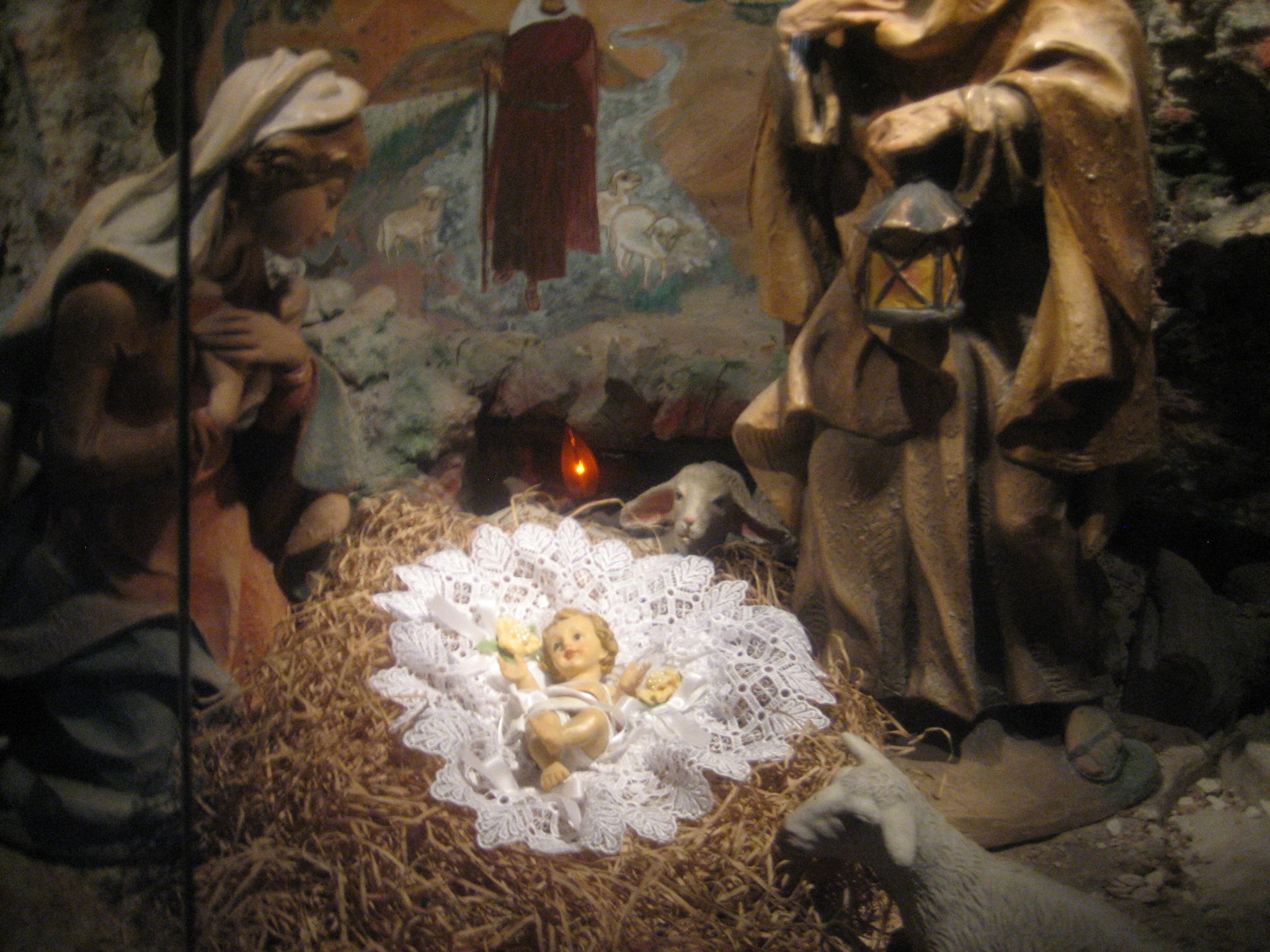
Christmas carols, more than the scriptures seem to dominate the Christmas season. They bring the shepherds from the dark hills and magi from the east to the Child. They also speak of those who not believe, like Herod who goes in search of the Child. But people of faith, like Simeon and Anna, welcome the Child in the temple and take him into their arms.
Advent and Christmas are seasons rich in the wisdom of faith. A faith that leads to great truths, as the feast of John the Apostle reminds us. A faith one should die for, as we are reminded by the feasts of the Holy Innocents and Stephen the first of many martyrs.
“Amen, I say to you, this poor widow put in more than all the other contributors to the treasury. For they have all contributed from their surplus wealth, but she, from her poverty, has contributed all she had, her whole livelihood.” Today’s gospel image of the generous widow emphasizes the attitude of biblical stewardship that is not based on surplus but on sacrifice. Most of us live this kind of stewardship. We call our offertory collection a “sacrificial offering.” Biblical stewardship goes far beyond the material because something behind that spirit of giving comes from having values, namely the values of sharing, support, and trust. Sharing is not a programmatic gift. It comes from seeing our parents and grandparents sharing a home, their love, shelter, food, and themselves with us so we could grow into generous human beings. Jesus is not advocating financial irresponsibility; he is asking for the freedom to give out of love, not out of calculation.
The early Church put a great emphasis on the care of widows and orphans. It wasn’t a safety net that gave the widow in today’s gospel the strength to give, it was the church that she knew as a family that cared with compassion for those who were in the greatest need.
I remember when I was in Jamaica, West Indies, we had a group from a parish in Pennsylvania visiting. We went to see a woman in a very rural area. She told us that some of her crops from her small plot of vegetables were stolen. We spent an hour with her and as we were leaving, she handed us a bag of beans from her garden. The visiting pastor was speechless and immediately protested knowing her garden was depleted because of a theft. But she smiled, “Father, you cannot come to my home and not receive a gift to take back to your home.” He took the beans and was shocked but said, “I just met the widow from the gospel.” He witnessed the living gospel.
May our eyes be open to those generous hearts who renew our hope in the way God provides and never tires of giving himself to us in his Son whose sacrifice is the ultimate act of generosity.
An Excerpt From Pope Francis, General Audience, Saint Peter’s Square Wednesday, 4 May 2016
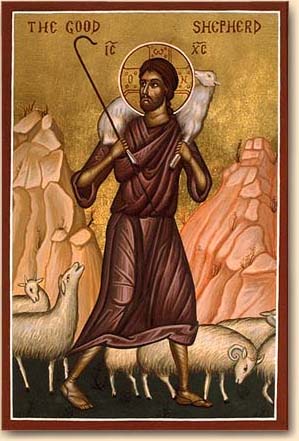
We are all familiar with the image of the Good Shepherd with the little lost lamb on his shoulders. This icon has always been an expression of Jesus’ care for sinners and of the mercy of God who never resigns himself to the loss of anyone. The parable is told by Jesus to make us understand that his closeness to sinners should not scandalize us, but on the contrary it should call us all to serious reflection on how we live our faith. The narrative sees, on the one hand, the sinners who approach Jesus in order to listen to him and, on the other, the suspicious doctors of the law and scribes who move away from him because of his behavior. They move away because Jesus approaches the sinners. These men were proud, arrogant, believed themselves to be just.
The lesson that Jesus wants us to learn is… that not a single one of us can be lost. God’s action is that of one who goes out seeking his lost children and then rejoices and celebrates with everyone at their recovery.
We are all warned: mercy to sinners is the style with which God acts and to this mercy he is absolutely faithful: nothing and no one can distract him from his saving will. God does not share our current throw-away culture… God throws no one away; God loves everyone, looks for everyone: one by one! He doesn’t know what “throwing people away” means, because he is entirely love, entirely mercy.
While he is looking for the lost sheep, he challenges the ninety-nine to participate in the reunification of the flock. Then, not only the lamb on his shoulders, but the whole flock will follow the shepherd to his home to celebrate with “friends and neighbors.”
We should reflect on this parable often, for in the Christian community there is always someone who is missing and if that person is gone, a place is left empty. Sometimes this is daunting and leads us to believe that a loss is inevitable, like an incurable disease.
In Jesus’ vision there are no sheep that are definitively lost, but only sheep that must be found again. We need to understand this well: to God no one is definitively lost. Never! To the last moment, God is searching for us. Think of the good thief; only in the eyes of Jesus no one is definitively lost. For his perspective is entirely dynamic, open, challenging and creative. It urges us to go forth in search of a path to brotherhood. No distance can keep the shepherd away; and no flock can renounce a brother. To find the one who is lost is the joy of the shepherd and of God, but it is also the joy of the flock as a whole! We are all sheep who have been retrieved and brought back by the mercy of the Lord, and we are called to gather the whole flock to the Lord!
Click here to read the full address by Pope Francis.
It’s so easy to see a world out of control these days, and to believe that nothing can be done. We’re going nowhere.
The Letter to the Ephesians, read this week at Mass, says that’s not so. It’s written, not just to the church at Ephesus, but to other churches as well, commentators says. So it’s written to our church too.
A great plan of God is at work from “the foundation of the world,” a plan for the “fulness of time,” a “mystery made known to us” in Christ Jesus, our Lord. We have this “word of truth” this gospel of our salvation, from Jesus himself. The Spirit he promised is the “first installment of our inheritance.”“First installment,” That’s what we working with now, It may not seem like much but it gets us where we’re going.
It promises more than we think or expect. “May the God of our Lord Jesus Christ, the Father of glory, give you a spirit of wisdom and revelation resulting in knowledge of him. May the eyes of [your] hearts be enlightened, that you may know what is the hope that belongs to his call, what are the riches of glory in his inheritance among the holy ones, and what is the surpassing greatness of his power for us who believe, in accord with the exercise of his great might, which he worked in Christ, raising him from the dead and seating him at his right hand in the heavens, (Ephesians 1)
Every Monday of the four week cycle of the Liturgy of the Hours we read Ephesians 1, 3-10 at evening prayer, a reminder to see the day, however small and confusing it may be, as part of the great unfolding plan of God in Christ, our Lord.
Paul, an Apostle of Christ Jesus by the will of God, to the holy ones who are in Ephesus and faithful in Christ Jesus: grace to you and peace from God our Father and the Lord Jesus Christ.
Blessed be the God and Father of our Lord Jesus Christ, who has blessed us in Christ with every spiritual blessing in the heavens, as he chose us in him, before the foundation of the world, to be holy and without blemish before him. In love he destined us for adoption to himself through Jesus Christ, in accord with the favor of his will, for the praise of the glory of his grace that he granted us in the beloved.
In Christ we have redemption by his Blood, the forgiveness of transgressions, in accord with the riches of his grace that he lavished upon us. In all wisdom and insight, he has made known to us the mystery of his will in accord with his favor that he set forth in him as a plan for the fullness of times, to sum up all things in Christ, in heaven and on earth.
As the Synod on Synodality proceeds in Rome, we can all participate as the listening Church, the Bride of Christ, sitting at Jesus’ feet like Mary of Bethany (Luke 10:38). Enveloped in his peace, we can attune our hearts and minds to the Spirit of truth sent to us from the Father by the Son (John 15:26).
In a world of distracting noise, the Lord invites us to listen to his voice in Sacred Scripture, the Holy Mass, the Liturgy of the Hours, and personal prayer. Heard in the silence of the Spirit, the ancient words resonating from centuries past speak to the present generation with striking relevance. May the Lord grant us “ears to hear” his voice amid the din of the latest buzz (Matthew 11:14).
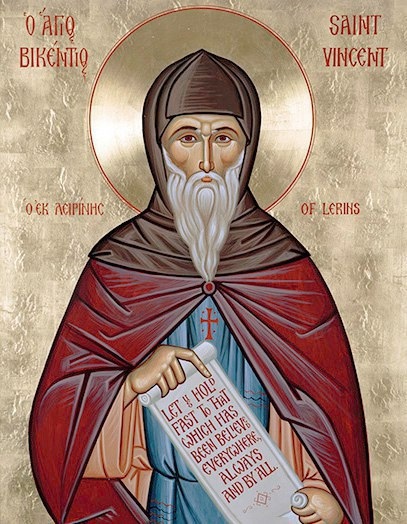
In a recent passage from the Office of Readings (October 11, 2024), St. Vincent of Lerins, a fifth-century French monk, seemed to jump out of the pages to address the Synod in Rome during its second week. In his vision, the organism of the Church grows and matures like a child to an adult, but preserves her essential form. Human skeletal structure, facial features, limbs, and organs develop with maturity but do not evolve into another species. The Body of Christ, the Church, in its heavenward journey also grows in the Holy Spirit into the perfect image of the Incarnate Son of God and not a distortion (2 Corinthians 3:18). May the Blessed Virgin Mary, Mother of the Church, guide her sons and daughters in the Spirit to her Son, who is the Way, the Truth, and the Life.
From the first instruction by Saint Vincent of Lerins, priest
The development of doctrine
Is there to be no development of religion in the Church of Christ? Certainly, there is to be development and on the largest scale.
Who can be so grudging to men, so full of hate for God, as to try to prevent it? But it must truly be development of the faith, not alteration of the faith. Development means that each thing expands to be itself, while alteration means that a thing is changed from one thing into another.
The understanding, knowledge and wisdom of one and all, of individuals as well as of the whole Church, ought then to make great and vigorous progress with the passing of the ages and the centuries, but only along its own line of development, that is, with the same doctrine, the same meaning and the same import.
The religion of souls should follow the law of development of bodies. Though bodies develop and unfold their component parts with the passing of the years, they always remain what they were. There is a great difference between the flower of childhood and the maturity of age, but those who become old are the very same people who were once young. Though the condition and appearance of one and the same individual may change, it is one and the same nature, one and the same person.
The tiny members of unweaned children and the grown members of young men are still the same members. Men have the same number of limbs as children. Whatever develops at a later age was already present in seminal form; there is nothing new in old age that was not already latent in childhood.
There is no doubt, then, that the legitimate and correct rule of development, the established and wonderful order of growth, is this: in older people the fullness of years always brings to completion those members and forms that the wisdom of the Creator fashioned beforehand in their earlier years.
If, however, the human form were to turn into some shape that did not belong to its own nature, or even if something were added to the sum of its members or subtracted from it, the whole body would necessarily perish or become grotesque or at least be enfeebled. In the same way, the doctrine of the Christian religion should properly follow these laws of development, that is, by becoming firmer over the years, more ample in the course of time, more exalted as it advances in age.
In ancient times our ancestors sowed the good seed in the harvest field of the Church. It would be very wrong and unfitting if we, their descendants, were to reap, not the genuine wheat of truth but the intrusive growth of error.
On the contrary, what is right and fitting is this: there should be no inconsistency between first and last, but we should reap true doctrine from the growth of true teaching, so that when, in the course of time, those first sowings yield an increase it may flourish and be tended in our day also.
Reference
The passage from St. Vincent of Lerins can be found in the Office of Readings for Friday of the 27th Week in Ordinary Time.
The Rosary of the Virgin Mary, which gradually took form in the second millennium under the guidance of the Spirit of God, is a prayer loved by countless Saints and encouraged by the Magisterium. Simple yet profound, it still remains, at the dawn of this third millennium, a prayer of great significance, destined to bring forth a harvest of holiness. It blends easily into the spiritual journey of the Christian life, which, after two thousand years, has lost none of the freshness of its beginnings and feels drawn by the Spirit of God to “set out into the deep” (duc in altum!) in order once more to proclaim, and even cry out, before the world that Jesus Christ is Lord and Saviour, “the way, and the truth and the life” (Jn 14:6), “the goal of human history and the point on which the desires of history and civilization turn.”
The Rosary, though clearly Marian in character, is at heart a Christocentric prayer. In the sobriety of its elements, it has all the depth of the Gospel message in its entirety, of which it can be said to be a compendium. It is an echo of the prayer of Mary, her perennial Magnificat for the work of the redemptive Incarnation which began in her virginal womb. With the Rosary, the Christian people sits at the school of Mary and is led to contemplate the beauty on the face of Christ and to experience the depths of his love. Through the Rosary the faithful receive abundant grace, as though from the very hands of the Mother of the Redeemer.”
In the Hail Mary we ask Mary to pray for us sinners, “now and at the hour of our death.” These are the two most important moments in life. We have the past and the future, for sure, but they’re far less important than now and the hour of our death.
“Now” is the time we live in, the present moment. Whether it’s a time of joy or sorrow, a time of satisfaction or disappointment, a time of sickness or health, it’s the time we have to love, to give, to endure, to act, to live.
“The hour of death” is God’s time, when God brings us from this life to the next. It may be instantaneous or prolonged, but it’s the time when God who gave us life takes this life away.
Both of those moments benefit from faith. Mary, the Mother of Jesus, was a believer who trusted in the power and presence of God through these same moments of life. They’re challenging moments.
After the angel left Mary in Nazareth, no other angel came; she walked by faith from the Child’s birth to the death and resurrection of her Son. As we face the mysteries of life, we ask her in our weakness to be with us as a believer and a mother, who knows the goodness and power of God as it is revealed in Jesus Christ her Son.
“Pray for us sinners, now and at the hour of our death.”
You can’t listen to the story of the Prophet Jeremiah, our first reading these days, without thinking about the passion of Jesus. In fact, readings from the Book of Jeremiah are common readings for Holy Week. We see Jesus in Jeremiah.
God tells Jeremiah to “hold nothing back,” but speak the truth to those in power and the false prophets of the day, no matter how unpopular it is. Jesus did the same.
Like Jeremiah, Jesus was innocent, but was framed by the powerful as guilty. They questioned his authority, but he would not deny his mission.
Only a few voices seem to stand up for Jeremiah and only a few stood up for Jesus. Neither had many faithful followers at their time of trial. Yet both were carried along by God’s power and their names vindicated.
Jeremiah, like Jesus and John the Baptist who suffered a lonely death at the hands of Herod Antipas belonged to a brave company.
Some would have us see our faith as a ticket to success, an inoculation against failure or suffering. Believe and nothing bad will happen to you. Yet, as you look at Jesus, the prophets and the saints, you see a more realistic profile of faith. We’re promised victory, yes, but only by accepting the mystery of the cross.
Keep an eye on Jeremiah and John. Keep an eye on the passion of Jesus. Follow them.




 The Victor's Place