Tag Archives: faith

Learning from Plants, Trees and Flowers

I discovered on Google books an old study of plants and trees by Richard Folkard, an English botanist. (Plant Lore, Legends and Lyrics, London 1884)  It’s a treasure of information.

Folkard says that from earliest times people saw religious meaning in plants, flowers and trees. He writes especially about how they were seen in medieval times.

“In the dark ages the Catholic monks , who cultivated with assiduity all sorts of herbs and flowers in their monastic gardens , came in time to associate them with traditions of the Church , and to look upon them as emblems of particular saints . Aware , also , of the innate love of humanity for flowers , they selected the most popular as symbols of the Church festivals , and in time every flower became connected with some saint of the Calendar , either from flowering at the time of the saint’s day , or from being connected with the saint in some old legend…

But it was more especially upon the Virgin Mary that the early Church bestowed their floral symbolism … The poetry no less than the piety of Europe has inscribed to her the whole bloom and colouring of the fields and hedges.  The choicest flowers were wrested from the classic Juno , Venus , and Diana , and from the Scandinavian Bertha and Freyja , and bestowed upon the Madonna , whilst floral offerings of every sort were laid upon her shrines . 

Her husband , Joseph , has allotted to him a white Campanula , which in Bologna is known as the little Staff of St. Joseph . In Tuscany the name of St. Joseph’s staff is given to the Oleander. A  legend recounts that the good Joseph possessed originally only an ordinary staff , but that when the angel announced to him that he was destined to be the husband of the Virgin Mary , he became so radiant with joy , that his very staff flowered in his hand…

A Catholic writer complained that at the Reformation the very names of plants were changed in order to divert men’s minds from the least recollection of ancient Christian piety A  Protestant writer of the last century , bewailing the ruthless action of the Puritans in giving to the ” Queen of Beauty ” flowers named after the ” Queen of Heaven , ” says :’Botany , which in ancient times was full of the Blessed Virgin Mary , is now as full of the heathen Venus .’ ” 

Folkard reminds us that the monks were good catechists. That work of theirs is largely ignored today. If you consult Wikipedia’s listings of trees and plants, there’s  hardly a trace of that Catholic tradition. I wonder if we shouldn’t mine that tradition again as we try to enhance our care of the earth. Clover .spearmint, foxglove, lupine,  campanula, marigolds, cowslip, Lady’s mantel, Lady’s bedstraw are more than a genus and species. They once spoke of the mysteries of God. 

Can we learn from them again?

The Easter Tree

san clemente copy

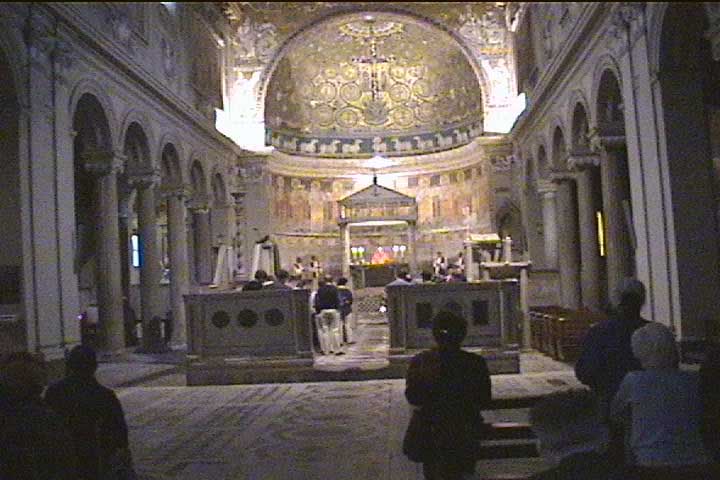
The Cross  flowers at Easter time. There’s a flowering cross brimming with life  in the great apse of the church of San Clemente in Rome. Its branches swirl with the gifts God gives. It brings life, not death. Humanity is there, signified in Mary and the disciple John. We are there in the doves resting on it. Creation itself is there, drawing new life from it. The hand of God makes it so.

The sacraments offered in this sacred place bring life-giving graces to us.

An early preacher Theodore the Studite  praises the mystery of the cross:.

“How precious the gift of the cross, how splendid to contemplate! In the cross there is no mingling of good and evil, as in the tree of paradise: it is wholly beautiful to behold and good to taste. The fruit of this tree is not death but life, not darkness but light. This tree does not cast us out of paradise, but opens the way for our return.

“This was the tree on which Christ, like a king on a chariot, destroyed the devil, the Lord of death, and freed the human race from his tyranny. This was the tree upon which the Lord, like a brave warrior wounded in his hands, feet and side, healed the wounds of sin that the evil serpent had inflicted on our nature. A tree once caused our death, but now a tree brings life. Once deceived by a tree, we have now repelled the cunning serpent by a tree.

“What an astonishing transformation! That death should become life, that decay should become immortality, that shame should become glory! Well might the holy Apostle exclaim: Far be it from me to glory except in the cross of our Lord Jesus Christ, by which the world has been crucified to me, and I to the world!”

San Clemente, Rome

See Children’s Prayers here for a children’s version of the Easter Tree.

Her Station Keeping

The candles at Tenebrae lead to another reflection. The 15 candles stand for Jesus, his twelve apostles and the two disciples from Emmaus. As 14 candles are extinquished, we remember those who left him on Good Friday and fled. 

Mary, the mother of Jesus, is not represented in the Tenebrae candles. She stood by his cross on Good Friday, but she is not among those our candles represent. Where did she go after his death and burial on Good Friday?  Where was she on Holy Saturday?

She was among the women of Galilee who came up to the feast with Jesus. It’s likely they stayed in Bethany, the traditional place pilgrims from Galilee stayed. She must have been welcomed by the friends of Jesus, Mary, Martha and Lazarus. Did Lazarus, raised from the dead, offer her hope? Still, his death was so unlike that of her Son. He died of some sickness; Jesus was brutally put to death.  

Would Mary have the same questions of God as Martha had of Jesus? Why? This was a day the piercing sword foretold by Simeon the temple struck most deeply into her heart. This was a day her faith was so fiercely tried.

In our calendars, Saturday is a day we remember Mary. We remember her today and ask her to pray that we may believe in the promises of Christ.

At the cross her station keeping,                                            stood the mournful mother weeping,                                             close to Jesus till the last. 

Wednesday, 5th Week of Lent

Lent 1


Readings
Those listening to Jesus in the temple area claim to be “descendants of Abraham.” (John 8,31-42) They’re children of Abraham. They have a splendid temple to worship in and ancient traditions to live by, and so they ask: “ Why should we listen to this man? We have Abraham.”

But “If you were the children of Abraham you would be doing the works of Abraham,” Jesus says. Abraham was a nomad who found God’s promises revealed from place to place. He discovered God’s plan in time. So must we.

John’s gospel was written well after the temple and Jerusalem itself were destroyed by the Romans in 70 AD. Jews and Jewish Christians at this time, “descendants of Abraham”, were in a time of radical transition. Many may have longed for the restoration of ancient structures now gone and the surety they found in them.

Jesus reminds them, and us, that Abraham, “our father in faith,” ventured on paths unknown.

Does their time sound like ours ? We’re called to have Abraham’s faith, a mystic faith. In our first reading today from the Book of Daniel three children thrown into the fiery furnace in Babylon, their land of exile, sing in the flames. They have Abraham’s faith.

Is God telling us to do that today? Sing in the flames and God will lead us on to the beautiful unknown.

Two centuries ago, St. Paul of the Cross urged those who sought his advice to hold on to the Unchanging One we meet “in spirit and truth.” God will be our guide..

“Jesus will teach you. I don’t want you to indulge in vain imagery over this. Freely take flight and rest in the Supreme Good, in God’s consuming fire. Rest in God’s divine perfections, especially in the Infinite Goodness which made itself so small within our humanity.” (Letter 18)

O God, you are my God,
For you I long.
My body pines for you,
Like a dry, weary land without water. (Ps 63)

You guide our steps into the unknown. Lead us on.

Saturday, 4th Week of Lent

Lent 1


Readings
The lenten readings from John’s gospel for today and the next week of lent (chapters 7-10) describe Jesus‘ activity in Jerusalem during the eight- day Feast of Tabernacles, the popular autumn feast that brought many visitors to Jerusalem to celebrate the grape harvest and pray for rain. Water was brought into the temple courtyard from the Pool of Siloam and lighted torches were ablaze during the celebration.

Arriving late for the feast, Jesus taught in the temple area and revealed who he was, using the images of water and light. His cure of the blind man, in the 9th chapter of the gospel, is a sign of the light he bestows on a blind world.

Yet, some don’t see. Those hearing him are divided; some want him arrested, some believe, some question his Galilean origins and his upbringing as a carpenter’s son. How can he be the Messiah, a teacher in Israel?

From Nazareth to Jerusalem Jesus met unbelief. Why didn’t all see and believe? People doubted him then; they  doubt him now. Even his disciples are slow to believe. “How slow you are to believe…”Jesus says to the two on the way to Emmaus.

But the Word continues to teach in our world and instruct disciples weak in faith. His mission is not ended. That’s why it’s important to stress the great miracles that dominate John’s narrative: the meeting with the Samaritan woman that brings her to faith, the cure of the paralyzed man at Bethseda, the cure of the man born blind, the raising of Lazarus. They tell us of God’s pursuit of humanity, despite its blindness and deafness.

Saints like Paul of the Cross knew that. However fierce the opposition, the Word of God, Jesus Christ, brings light and life.

“All the works of God are now attacked by the devil, now by human beings. I now have both at once. Don’t be dismayed when contrary factions and rejections arise, no matter how great they are. Be encouraged by the example of St. Teresa who said that the more she was involved in enterprises for the glory of God, the more difficulties she experienced.” (Letter 1180)

The Lord is my light and my salvation,
Whom should I fear?
The Lord is the stronghold of my life,
Of whom should I be afraid?

 Kingdom of “The Least”

     Lent is a time for us to face up to how very much our God loves us. This is who our God is. Because of this, Lent is also our time to face up to to the hurt that we give to Our Beloved One whenever we behave in unloving ways. We can begin by looking at the commandments that our Church teaches us and examining our conscience.  In the Gospel for Wednesday of the Third Week of Lent our Lord warns us: “Whoever breaks the least of these commandments and teaches others to do so will be called the least in the Kingdom of Heaven.” Ouch! I look at the Ten and see how I fall short in fulfilling them, and at times provide a bad example for those around me. I am certainly one of “the least”. Sadly I am not alone. So many of us are in the same boat. And yet Our Lord still includes us in His Kingdom. The least, but still there. Like Fr Victor says, Our Lord has not given up on us!

     How can we help God get us out of that hole? Perhaps we can begin by approaching our Creator with humility and trust. In the powerful Gospel for Saturday of this same week, we hear Jesus’ parable of the Pharisee and the tax collector. The attitude of the Pharisee immediately places him next to me as one “of the least!” He has been trying to be “good”, and he feels joy and comfort in the presence of God, especially in his House. This is good. So many of us Christians walk into Mass full of hope and gratitude. But oh! That cardinal sin of pride, the failure to love our neighbor as ourselves!

     The tax collector seems to have the better attitude, full of shame, contrite, totally surrendering to the judgement of God. He knows that he certainly is one of the “least”. I’ve always said, “I want to be like him,” in all prayer, specially during the Sacrament of Reconciliation. Today, though, Fr Victor pointed out that this tax collector so far has failed to know how incredibly great is the Love God has for him. This is what our Lord Jesus came to teach. At least the tax collector has a glimmer of belief in the mercy of God. It’s a good beginning, and God exalts him for that. 

     Sometimes at Mass I feel like the Pharisee, satisfied with my efforts and full of gratitude for God’s Love and presence in my life. The Celebration of the Mass seems like such a joyful time and I wonder why so many fellow worshippers have such long faces! I should know better, because there are times when I walk into Church with that same unhappy mood! All I know is that I am still one of “the least” and I’m not proud of it. I wonder how far down the list I am? Does God keep lists? Who is the least of the least?

     I was sitting at the Monastery Chapel thinking about these things and my eyes suddenly looked up to the crucifix up front, and I began to cry. My beloved God chose to become the Least of the least upon that Cross, taking on the pride of the Pharisee, the corruption of the tax collector, my unworthiness, the misery of of those with long faces at Church, and the viciousness and brutality of His time and mine.

     Why would God do this? The answer to his mystery is beyond all comprehension. But I do know that the main reason is the incredible love that God has for me and every person on Earth, no matter how far down the list we are.

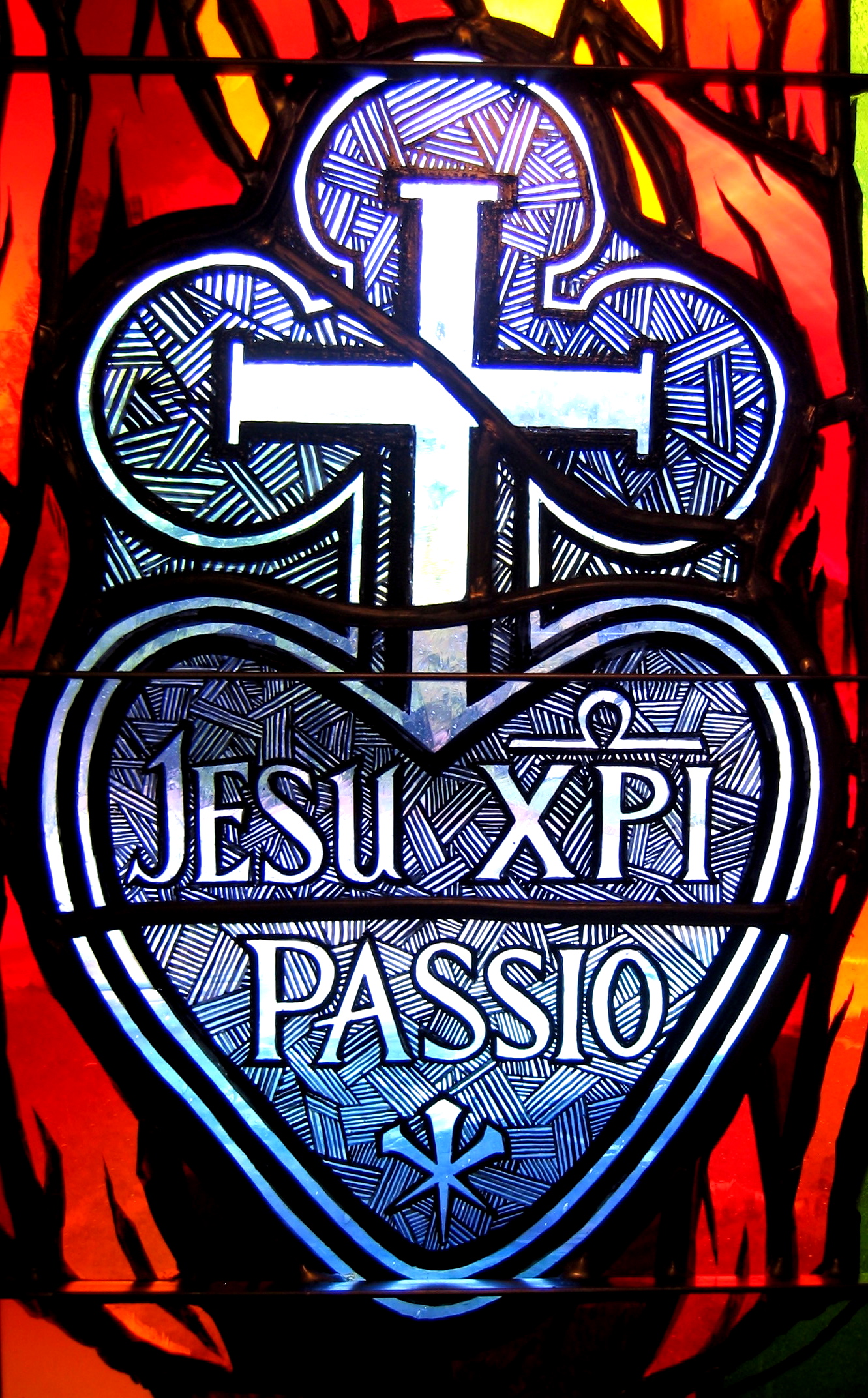
     May the Passion of Jesus Christ be always in our hearts.

Orlando Hernandez

Hold Unwaveringly to our Confession

Commentators find it hard to establish the time and place the Epistle to the Hebrews was written. Most say it was written for early Jewish Christians trying to figure out their relationship to the religion of their ancestors.

I wonder if Jewish Christians in Rome would be especially among those for whom the letter was written. Rome is one of the places commentators say it might have originated..

The Jewish Christian community of Rome was a large community attached to Jerusalem and the temple, even Jews who had embraced a new faith. They would have been onlookers as Titus marched triumphantly into the Rome carting the spoils and slaves in chains from the Jewish wars and the destruction of the temple in 70. Afterwards, they would have watched the Colosseum bring built with the gold from the temple. Less than 5 years before some were singled out as renegade Jews and blamed by Nero for the great fired that had destroyed the city.

As we read the words from the Epistle to the Hebrews today I wonder if we hear words written especially for them. 

“Let us hold unwaveringly to our confession that gives us hope, for he who made the promise is trustworthy.We must consider how to rouse one another to love and good works. We should not stay away from our assembly, as is the custom of some, but encourage one another, and this all the more as you see the day drawing near.”  Hebrews  10:19-25   

It would be a hard time then for Jewish Christians in Rome “to put your light on a lamp stand,” as we read in today’s gospel . It was a time for laying low, “staying away from our assembly.”

Faith has to be professed in season and out of season. It’s never to be hid under a bushel. 

Belief and Unbelief

Mark’s gospel today describes the arrival of Mary his mother and some of his relatives from Nazareth. (Mark 3: 32-35) They’re outside a house crowded with people gathered around Jesus, some looking to be cured, some to listen to what he has to say. Jesus and his disciples don’t even have time to eat, Mark says.

His family come because they want to take him home; some think he is out of his mind . (Mark 3:20-21) When people tell him ‘Your mother and your brothers and your sisters are outside asking for you.’ Jesus said to them in reply, ‘Who are my mother and my brothers?’ And looking around at those seated in the circle he said, ‘Here are my mother and my brothers. For whoever does the will of God is my brother and sister and mother.’” (Mark 3: 32-35)

Jesus sees people of faith as his family, his mother, brother and sister. He considers us who believe in him his family. 

But we continue to ask: Why does his own family think he is out of his mind?

His mother Mary is with them. What does she think? 

The gospels, Matthew 13:54-58, Mark 6: 1-6, Luke 4:16-30 all point to Nazareth as a place where Jesus is rejected.  Luke’s gospel sees the rejection of Jesus at Nazareth in the harshest terms. They are ready to hurl him from the hill after the claims he makes in their synagogue. His visit to Nazareth is headed for violence, but a violence postponed, and no one takes his part. ( Luke 4:16-36 )

Mary lived there. What was it like for her?  What was it like to be with family members who thought her son was mad? What was it like to be day after day with people who didn’t believe in her son? No one from Nazareth is among the 12 disciples Jesus chooses. The rejection of Jesus by the people of his own town, his own family and relatives, was a sword that pierced her heart.

We might say Mary’s faith was strong and kept her secure, but was it a faith that knew everything? Did it save her from questioning?

I wonder if we can see Mary’s appearance at Lourdes and Fatima in some way related to her own experience at Nazareth. She appears in places when the faith of ordinary people is severely challenged by a world increasingly hostile to belief. 

She knows how to believe when everyone else does not. We welcome her today to be with us.

CHRISTMAS Eve

The Advent season closes today December 24th. The Christmas season begins with the vigil Mass this evening. 

Advent is a season rich in the scriptures. Isaiah speaks strongly throughout the season, calling Jewish exiles and all nations to the holy mountain and God’s banquet with his people and all creation. “Swords will be turned into plowshares and spears will be turned into pruning hooks and they will not train for war again.” 

John the Baptist and his parents Zachariah and Elizabeth have important roles in the coming of the Child born of Mary.  Of course, Mary and Joseph are key figures responding to the messengers of God. 

Faith and hope do not come easily, the Advent season tells us. Political unbelief appears in Ahaz who “will not tempt the Lord.” Zachariah, a priest, is struck dumb for his unbelief. John the Baptist asks if Jesus is really “the one who is to come.” Mary wonders “how can this be?”

The gospel reading today, Zachariah’s song of belief, seems to promise faith and hope conquers in the end. 

“Blessed be the Lord God of Israel, he has come to his people and set them free.

Christmas carols, more than the scriptures seem to dominate the Christmas season. They bring the shepherds from the dark hills and magi from the east  to the Child. They also speak of those who not believe, like Herod who goes in search of the Child. But people of faith, like Simeon and Anna, welcome the Child in the temple and take him into their arms. 

Advent and Christmas are seasons rich in the wisdom of faith. A faith that leads to great truths, as the feast of John the Apostle reminds us. A faith one should  die for, as we are reminded by the feasts of the Holy Innocents and Stephen the first of many martyrs.  

MERRY CHRISTMAS

Stewardship as a Way of Life

By Fr. James Price, C.P.

Thirty-Second Sunday in Ordinary Time (Year B)

“Amen, I say to you, this poor widow put in more than all the other contributors to the treasury. For they have all contributed from their surplus wealth, but she, from her poverty, has contributed all she had, her whole livelihood.” Today’s gospel image of the generous widow emphasizes the attitude of biblical stewardship that is not based on surplus but on sacrifice. Most of us live this kind of stewardship. We call our offertory collection a “sacrificial offering.” Biblical stewardship goes far beyond the material because something behind that spirit of giving comes from having values, namely the values of sharing, support, and trust. Sharing is not a programmatic gift. It comes from seeing our parents and grandparents sharing a home, their love, shelter, food, and themselves with us so we could grow into generous human beings. Jesus is not advocating financial irresponsibility; he is asking for the freedom to give out of love, not out of calculation.

The early Church put a great emphasis on the care of widows and orphans. It wasn’t a safety net that gave the widow in today’s gospel the strength to give, it was the church that she knew as a family that cared with compassion for those who were in the greatest need. 

I remember when I was in Jamaica, West Indies, we had a group from a parish in Pennsylvania visiting. We went to see a woman in a very rural area. She told us that some of her crops from her small plot of vegetables were stolen. We spent an hour with her and as we were leaving, she handed us a bag of beans from her garden. The visiting pastor was speechless and immediately protested knowing her garden was depleted because of a theft. But she smiled, “Father, you cannot come to my home and not receive a gift to take back to your home.” He took the beans and was shocked but said, “I just met the widow from the gospel.” He witnessed the living gospel. 

May our eyes be open to those generous hearts who renew our hope in the way God provides and never tires of giving himself to us in his Son whose sacrifice is the ultimate act of generosity.


Fr. James Price currently serves as pastor of Immaculate Conception Church in Jamaica, NY.