Tag Archives: Eucharist

Saint Irenaeus

Tagbha carol roth

“We are all called to be holy. ‘Each in his or her own way,’” Pope Francis says in his exhortation “ Gaudete et exultate”.  We’re all different; saints are different too.

Today, the church remembers St. Irenaeus,  yesterday we remembered St. Cyril of Alexandria. Two different people, two different saints.. Cyril was a forceful, confrontative bishop of Alexandria; Irenaeus, as his name suggests, was a fair man and a peacemaker.

I learned about Irenaeus many years ago in a course on Gnosticism in Rome under Fr. Antonio Orbe, SJ, an expert on the subject. Gnosticism threatened Christianity in the 2nd century; afterwards most of its writings were destroyed. A large cache of its writings buried in the sands of Egypt had been recently unearthed and Father Orbe was just back after studying them. Until then, the Gnostic teachings  were known mostly through the writings of St. Irenaeus, whom we honor today.,

Fr. Orbe observed that as he compared the gnostic writings to Irenaeus’ reports of them he was struck how accurately and fairly Irenaeus described them,, not distorting anything they said or omitting their ideas. He was fair and respectful.  Irenaeus was fair minded and respectful to friend and foe alike. He was a peace-maker. Cyril of Alexandria was different. He would have left those writings buried in the sands of Egypt.

Irenaeus is not a bad example for today when hot words and smear attacks, distortions and lies dominate so much communication.  Peace makers like him don’t destroy, they heal and unite. That’s why they’re called blessed. He was named the 37th Doctor of the Church by Pope Francis in 2022, who said he was a “Doctor of Church Unity.”

Irenaeus also had a deep respect for creation. Some scholars today insist that the ancient gnostics were broadminded, creative people–rather like themselves–  more progressive than the plodding, conservative people of the “great church”– a term Irenaeus used..

In fact, the gnostics made the world smaller than it is, because they made much of the world evil, only some of it meant anything at all. Forget about the rest of it.

All creation is God’s, Irenaeus wrote. “With God, there is nothing without purpose, nothing without its meaning or reason.” All creation is charged with the glory of God.

Irenaeus saw the Eucharist as a sign of this. Bread and wine represent all creation. God comes to us through these earthly signs. We go to God through them.

“God keeps calling us to what is primary by what is secondary, that is, through things of time to things of eternity, through things of the flesh to things of the spirit, through earthly things to heavenly things.”

We should not demean creation, Ireneaus taught. That’s also the message of Pope Francis in “Laudato si.”

I Am The Bread of Life

Jordan satellite


The dark green around the Lake of Galilee in the upper part of this Google satellite picture of Palestine points to good farmland. It was good farmland at the time of Jesus. Herod the Great and his son Herod Antipas,  Galilee’s rulers then, appreciated the land and created a network of roads and cities – Tiberius, Sepphoris and Caesarea Maritime on the sea– for shipping goods from Galilee to the rest of the world. Here Jesus proclaims in John’s gospel: “I am the bread of life”,  

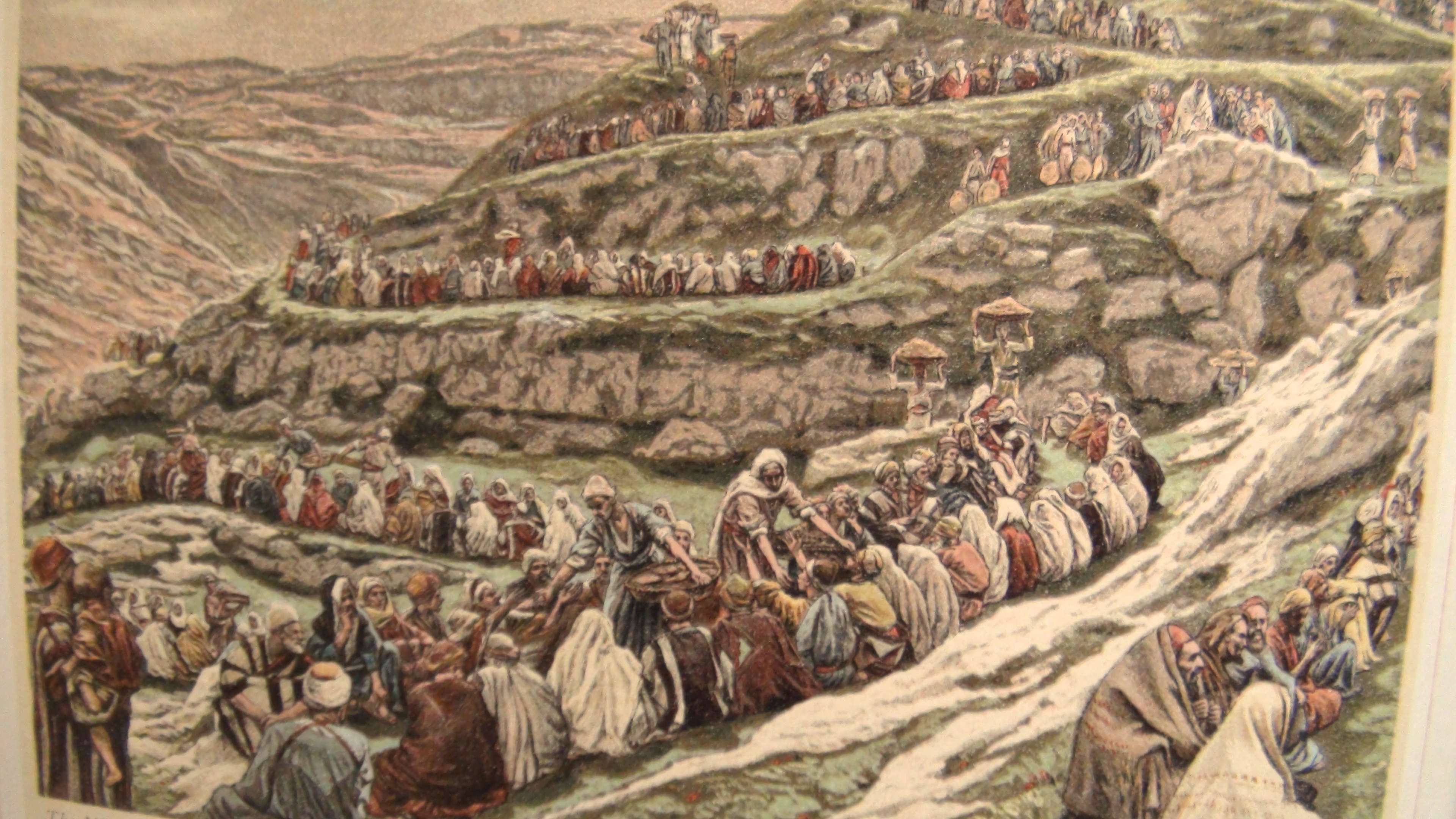
All four gospels say that Jesus fed a great crowd near the Sea of Galilee by multiplying a few loaves of bread and some fish. Like the Passover feast, the miracle and the teaching that follows occur over a number of days in the gospels. We will read .John’s account (John 6) at Mass on weekdays from the Friday of the 2nd week of Easter until Saturday of the 3rd week of Easter,

The Passover feast commemorated the Manna God sent from heaven to sustain the Jews on their journey to the promised land. Jesus claims to be the “true bread,” the “living bread” that comes down from heave

Jesus is a commanding presence during the miracle and the days that follow in John’s account. “Where can we buy enough food for them to eat?” he asks Philip as crowds come to him. Then he directs the crowd to sit down, feeds them with the bread and fish, and says what should be done with the fragments left over. The disciples have only a small role in this miracle.

A sudden storm occurs as Jesus and his disciples return to Nazareth after feeding the crowd. Jesus rebukes the wind and the sea; the forces of nature obey him. All four gospels have some version of Jesus power over the sea and the natural world occurring with this miracle. All obey him.

As Jesus reaches Capernaum after the miracle, the crowds want to make him king. Their faith is imperfect; they are limited in their understanding of this sign from heaven. The disciples are also tested; some walk with him no more.

The miracle of the loaves and the fish reminds us that Jesus is Lord and we are people of limited faith. “Master, to whom shall we go? You have the words of everlasting life,” Peter says to Jesus at the end of John’s account. We share His response.

In his commentary on Jesus as the bread of life, the early theologian Origen says that Jesus is bread because he is “nourishment of every kind.” He nourishes our minds and our souls; he also nourishes creation.  When we ask “Give us this day our daily bread,” we’re asking for all that nourishes the life of the world.

“Give us this day our daily bread.”

Listening to Prayers

DSC00500

“Speak, Lord, your servant is listening.” One of the ways we pray is to listen to God in our prayers. It’s vital to listen to the scriptures we read and the homilies we hear, but we also need to listen to the prayers we say as well. This is especially true of the Eucharistic prayer and the prayers of our liturgy.

I recorded an audio file of the 2nd Eucharistic Prayer for Various Needs and you can listen to it at the end of this blog, if you wish. Listen and reflect on the words. The Eucharistic prayers help us understand the mystery we celebrate.

Think about the words of the prayer and ask yourself what they mean. For example, take the dialogue that opens every Eucharistic prayer:

“The Lord be with you.

And with your spirit.

Lift us your hearts.

We have lifted them up to the Lord.

Let us give thanks to the Lord, our God.

It is right and just.”

The Lord is with us as we pray and and lifts up our hearts to the divine presence. That presence expands our vision of life and broadens our awareness of who we are. We’re moved to thank God.

What do we thank God for? Certainly for the blessings of our life at hand, but we don’t stop there. In God’s presence we become aware of  the blessings of creation and redemption given to us by God, our Father, through Jesus Christ.

The Eucharist calls us into a large world, infinitely larger than our own time and place. If fact, it brings us into the context of eternity. We’re in touch with the beginnings of our universe and reach out to the end of time, when God’s kingdom will come. We belong to this great world as children of God. We have been blessed with a promise far beyond our imagination.

We receive this promise through Jesus Christ whose love we recall in the gifts of bread and wine and the other signs of our prayer. He is present; remember him.

Here’s an audio of a Eucharistic Prayer
God’s Word, the Tree of Life

“God’s Word, the Tree of Life”
A reflection on Proverbs 30:5-9 and Luke 9:1-6
Wednesday of the Twenty-Fifth Week in Ordinary Time (Year II)
©️2024 Gloria M. Chang

Putting God First

Every word of God is tested;
he is a shield to those who take refuge in him.
Add nothing to his words,
lest he reprove you, and you will be exposed as a deceiver.

Two things I ask of you,
deny them not to me before I die:
Put falsehood and lying far from me,
give me neither poverty nor riches;
provide me only with the food I need;
Lest, being full, I deny you,
saying, “Who is the LORD?”
Or, being in want, I steal,
and profane the name of my God.

Proverbs 30:5-9

“Every word of God is pure (tested, refined),” like fruit from a tree of life. “He is a shield to those who take refuge in him.” Comparing divine wisdom to a tree of life (Proverbs 3:18), the Book of Proverbs guides us toward healing our broken relationship with God that occurred in the Garden of Eden. God created us for abundant life, which we reap by hearing and heeding his word. 

Ordering life around God, the sage asks for a truthful heart and for “neither poverty nor riches.” Luxury may tempt him to deny the Lord, while penury may incite him to steal and dishonor the name of God. Our heavenly Father, who knows what we need, will give us our “daily bread.” When making choices, the sage seeks the honor and glory of God above all.

Neither poverty nor riches, seek I,
But to honor God and him glorify.

God Provides


Jesus summoned the Twelve and gave them power and authority over all demons and to cure diseases, and he sent them to proclaim the kingdom of God and to heal the sick. He said to them, “Take nothing for the journey, neither walking stick, nor sack, nor food, nor money, and let no one take a second tunic. Whatever house you enter, stay there and leave from there. And as for those who do not welcome you, when you leave that town, shake the dust from your feet in testimony against them.” Then they set out and went from village to village proclaiming the good news and curing diseases everywhere.

Luke 9:1-6

Jesus sends his twelve apostles to proclaim the kingdom of God, the fulfillment of his word. The word of the Lord (dabar YHWH), which led the Israelites from Sinai to Jerusalem, has become flesh with divine authority to heal and cast out demons. Jesus, whose Father provides for his children, enjoins the Twelve to “take nothing for the journey.” 

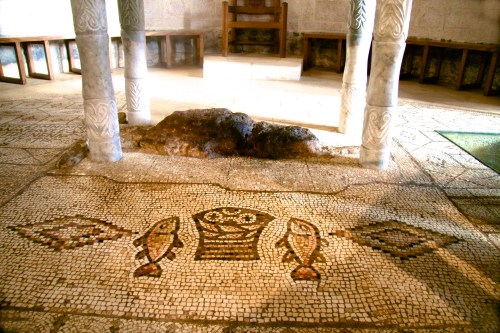
The apostle, like the sage of the Book of Proverbs, lives on and through the Word of God, who is a “shield” and refining fire. Christ, the Word of God and Tree of Life, feeds us with himself in the sanctifying Eucharist.

Your word, O Lord, is a lamp for my feet.

Psalm 119:105 (Responsory)

God’s Word protects and purifies
Apostles who evangelize.


This content by Gloria M. Chang was originally published online at Shalom Snail: Journey to Wholeness

The Bread of Life

DSC00076

All four gospels say that Jesus fed a great crowd near the Sea of Galilee by multiplying a few loaves of bread and some fish. It’s an important miracle.

John’s account (John 6), read at Mass on weekdays from the Friday of the 2nd week of Easter until Saturday of the 3rd week of Easter, indicates the miracle takes place during the feast of Passover. Like the Passover feast, the miracle and the teaching that follows occur over a number of days.

The Passover feast commemorated the Manna God sent from heaven to sustain the Jews on their journey to the promised land. Jesus claims to be the “true bread,” the “living bread” that comes down from heaven.

Jesus is a commanding presence during the miracle and the days that follow in John’s account. “Where can we buy enough food for them to eat?” he asks Philip as crowds come to him. He then directs the crowd to sit down, feeds them with the bread and fish, and says what should be done with the fragments left over. Unlike the other gospel accounts that give the disciples a active role in the miracle John’s account gives them a small role. Philip and the other disciples are tested during the miracle and the teaching that follows it.

As they embark on the Sea of Galilee to return to Capernaum after the miracle, a sudden storm occurs and Jesus’ rebukes the wind and the sea, the forces of nature, so that the disciples reach the other shore. All four gospels have some version of Jesus’s power over the sea and therefore the natural world. He has divine power.

The crowds to whom Jesus speaks at Capernaum after the miracle are also tested as well as his disciples. They want to make him king after a plentiful meal and only look for a steady hand out instead of “the true bread come down from heaven.” Their faith is limited and imperfect after the miracle. They miss the meaning of the sign.

The disciples also are tested; some walk with him no more.

The miracle of the loaves and the fish remind us that Jesus is Lord and we are people of limited faith. We only see so far. The Risen Lord leads us to the other shore. He is the Bread of Life. “Master, to whom shall we go? You have the words of everlasting life,” Peter says to Jesus at the end of John’s account. And so do we.

Friday Thoughts: Being qua Being


.

Learn from the way the wild flowers grow.

—Matthew 6:28


.

Does a flower make pronouncements? Does it define itself? Does it box itself in with titles, names, and distinctions?

And yet, “not even Solomon in all his splendor was clothed like one of these.” (Matthew 6:29)

———

A flower simply exists.

And its existence glorifies God.

There is no need for it to do more.

By its very existence it magnifies what cannot be further magnified: God’s Presence, God’s Glory, God’s Beauty…

———

“I’m a flower.”

“I’m a rose.”

“Look at me!”

Statements such as these we shall never hear.

Flowers are divinely indifferent to the world’s definitions and distinctions, to its approval and applause.

After all, it’s a person who receives the medal at an orchid show, and not the flower herself. No, her finely-placed petals would only be weighed down by such metallic-based ribbons.

What a gift it is to simply exist.

———

Flowers don’t cling to seasonal life.

When it’s time to go, they gracefully drop their heads and lose their pedals.

Never has there existed a man as poor as a flower.

Never has mankind so possessed the richness of fleeting, transitory, and momentary life.

It’s their genius to instinctively believe that death leads to new abundant life.

———

Flowers graciously receive:

Ladybugs, drops of dew. Beams of light, the relief of shade.

Flowers give and receive as if not a single thing has ever been made by man.

They welcome sun as well as rain.

They never cry over fallen fruit or a stolen piece of pollen.

They quietly applaud instead, rejoicing that their little ones have the opportunity to travel abroad—perhaps even the chance to help nurture a neighbor.

———

A flower, perhaps most of all, knows it place.

It never wishes to be bigger or thinner…greener or higher…it never dreams of being more like a tree.

A flower’s blessing is simplicity beyond you and me.

———

Christ is a flower.

He is the one true perfect eternal flower, through whom all other flowers partake, toward whom all other flowers reach.

Christ is a flower. His ways are not our own. He simply exists. Bowing His head. Dropping pedals. Feeding hungry bees. Giving and receiving. His identity is crucified—leaving nothing behind but being “qua” being.


.

If God so clothes the grass of the field, which grows today and is thrown into the oven tomorrow, will he not much more provide for you, O you of little faith?

—Matthew 6:30


.
.
—Howard Hain
.
.
(Dedicated to Brother Jim, a man who knew how to simply exist.)

.

The Greatest Gift

Lord Jesus,
once in the wilderness
your people ate heavenly manna
and they were filled.
And once in a desert place
you fed the hungry 
with blessed bread.

A simple thing, we say,
costing our mighty God
little effort.

But what if bread is
a body offered for all,
and a cup of wine
your own life-blood
given to those who hardly care?

A costly thing, we say,
Is there anything more
God could have done?
Anything more
Love could do
than lay down his life 
for his friends?

From Lent-Easter Meditations and Prayers 
by Fr. Victor Hoagland, C.P.

Bread from Heaven

The land around the Sea of Galilee where Jesus spoke told the crowds “I am the bread of life” was good farmland then, and it’s good farmland now. In Jesus’ day, Herod the Great and his son Herod Antipas, Galilee’s rulers then, appreciated this fertile land and created a network of roads and cities – Tiberius, Sepphoris and Caesarea Maritima on the sea– to export goods from Galilee to the rest of the world.

“I am the bread of life”,  Jesus says.. I am the source of your blessings and everything that is. God the creator works through me.  Moses asked for bread for his people journeying from Egypt.   “I am the bread of life” for all creation as it makes its journey in time, Jesus says.

Jesus makes a divine claim as he feeds a multitude. The crowd  wants to make him king, (John 6, 15) but the kingship they see doesn’t approach the kingship that’s his. It’s much too small; Jesus rejects their plan.

In a commentary on Jesus as the bread of life, the early theologian Origen says that Jesus calls himself bread because he is “nourishment of every kind,” not just nourishment of our bodies, but of our minds and souls and, beyond that, creation itself.

“Give us this day our daily bread.” We pray, not just for ourselves, but for creation.

“Wait for One Another”

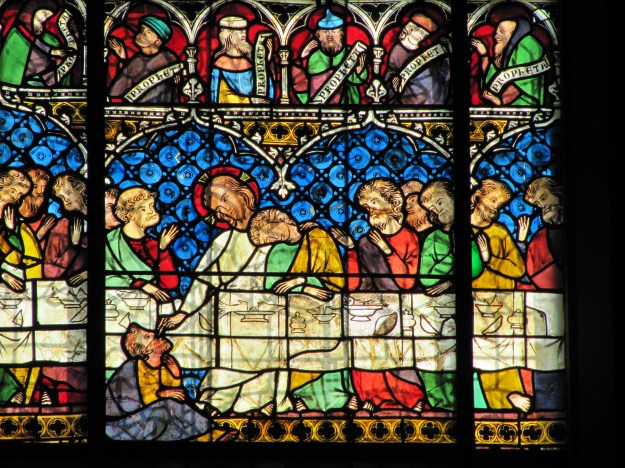
In today’s reading at Mass from 1 Corinthians ( 11, 17-26.33) we have the earliest written account of the institution of the Last Supper in the New Testament:
“For I received from the Lord what I also handed on to you,
that the Lord Jesus, on the night he was handed over,
took bread and, after he had given thanks,
broke it and said, “This is my Body that is for you.
Do this in remembrance of me.”
In the same way also the cup, after supper, saying,
“This cup is the new covenant in my Blood.
Do this, as often as you drink it, in remembrance of me.
For as often as you eat this bread and drink the cup,
you proclaim the death of the Lord until he comes.”

The simple account stresses that Jesus, taking bread and wine, gave himself, Body and Blood, “for you.” He gave himself for all. When we do this “in remembrance of me” we are called to be like him, to give ourselves for all.

Paul warns the Corinthians that by what he hears of their divisions and factions they’re failing to do what the Lord commands. Instead of imitating what Jesus d, they’re driving others away in their celebrations and thus bringing judgment on themselves.

Therefore, my brothers and sisters,
when you come together to eat, wait for one another.

A beautiful phrase Paul uses, “wait for one another.” A phrase that comes from the family meal in Paul’s time, when someone might miss the meal if the family did not wait for them. “We have to wait for them.”

So we wait for the grace Jesus offers at the Eucharist, to see all at the table of the Lord, loved by God who loves all.

“Dissolved in Flames?”

In the coming “day of God…the heavens will be dissolved in flames and the elements melted by fire.” (2 Peter 3, 12-15) That’s a strong picture of the last days in the 2nd Letter of Peter we read today at Mass. Commentators say it’s the only place in the New Testament that predicts the world ending in fire.

Some years ago, after the Newshour in the evening, I would sometimes turn to the next channel on television to watch Harold Camping, a crusty old evangelist who was predicting the world ending in fire. The world was going to be burnt to a crisp and unless you explicitly professed faith in Jesus Christ you were going to go up in flames too.

Harold even figured out when it was going to happen, 6 PM, May 21, 2011. and if you wrote in he would send you his calculations. People called in with questions, some humorous. “Should I pay my income tax this year?” Some were sad. “My little boy can’t speak yet and profess his belief in Jesus. What about him?” Harold skirted that question.

May 21 came and nothing happened. I thought I was the only one listening to Harold until I noticed advertisements in the buses weeks before for “D Day May 21.” The day after May 21 I mentioned it to some people and one of them said she called her daughter who was driving over the Brooklyn Bridge that day to get off the bridge as soon as she could.

Harold said on a later broadcast he was recalculating the date, but some time later he died.

Harold isn’t the only one predicting an end for our planet. One of our greatest scientists, Stephen Hawkins, said before he died that we should start a colony in outer space soon because the earth is headed for destruction.

There’s a lot of pessimism in our world today. There was pessimism when the 2nd Letter of Peter was written. The apostles Peter and Paul had been viciously put to death. The City of Rome was almost completely destroyed by fire in the 60s. Jerusalem and the Jewish temple were destroyed by fire in the 70s. Christians were being persecuted and killed. I’m sure a lot of them were saying “This is the end.”

In times of pessimism we need to reaffirm God’s love for humanity and creation itself. That’s why Pope Francis’ encyclical Laudato Si is so important. Care for the earth and respect it, he says. God made our world out of love and promises to renew it.

Care for creation in practical ways, the pope says, but keep creation in mind in our prayers, especially the prayer of the Eucharist.

“In the Eucharist all that has been created finds its greatest exaltation.” Jesus became human; he was made flesh and his humanity comes from the earth. In the Eucharist, he takes bread and wine, which come from the earth, to give life to the world. Through “a fragment of matter” he communes with us.

“ Joined to the incarnate Son, present in the Eucharist, the whole cosmos gives thanks to God. Indeed the Eucharist is itself an act of cosmic love: Yes, cosmic! Because even when it is celebrated on the humble altar of a country church, the Eucharist is always in some way celebrated on the altar of the world”.[166]

“Creation is projected towards divinization, towards the holy wedding feast, towards unification with the Creator himself”.[LS 167]

God won’t destroy creation. He loves it and finds it good.