Tag Archives: Environment

Praying with Creation During Lent


Lent is a time to look for God’s wisdom, our reading today from the Book of Sirach seems to say.  God’s wisdom is unknowable, Job proclaimed. “As for wisdom—where can she be found Where is the place of understanding? Mortals do not know her path, nor is she to be found in the land of the living.” (Job 28: 12-13)

But Sirach says “God has poured her forth upon all his works, upon every living thing according to his bounty; he has lavished her upon his friends”  ( Sirach 1:10)

“The sand of the seashore, the drops of rain, the days of eternity: who can number these? Heaven’s height, earth’s breadth, the depths of the abyss: who can explore these?” Yet creation is meant to be explored, because as a work of God it leads us to uncreated Wisdom.  

Lent is a time to follow the gospels that speak of Jesus, the wisdom of God. But let’s not forget creation that also reveals him. 

Father John O’Brien, a liturgist from my community, wrote an essay in 2004 entitled: “Thomas Berry, the Easter Vigil and the Greening of the Liturgy” 

“This essay”, he wrote, “ argues that the next horizon of liturgical development will require a paradigm shift in understanding and spirituality. This is a shift from a present anthropocentrism to a new role and placement for creation. Although the liturgy has used the stuff of creation to celebrate the magnalia Dei, it has emphasized that water and food, bread and wine, soil and oil, rocks and rivers are at the service of the human community. Creation exists for human use and the promotion of human redemption. If this redemptive motif prevails, humankind may flourish into the immediate future. But the earth that sustains human life will be diminished and destroyed.”

The liturgy can help us acquire this new vision, John suggested, and the Easter Vigil might be a good place to start. The play of light and darkness in the vigil, the fire in the dark, the Genesis readings, the waters of baptism and blessing are reminders of creation in the Easter story.  But in his essay John recognized that people weren’t exactly flocking to the Easter Vigil then. They’re not now.   

Better to start with our daily liturgy, our daily prayer? Should we look more closely at what our prayers say and how we pray every day? 

Daily prayer, particularly the psalms, can help us bond with creation. Isaiah says God’s word comes down from heaven like rain and snow, watering the earth and providing for the human family as well. Rain and snow are more than figures of speech, they’re messengers from God, beyond human control. Created by God they lead us to God, bestowing his gifts on us. God speaks daily through created things like these, the psalms say: 

“The heavens declare the glory of God;

the firmament proclaims the works of his hands.

Day unto day pours forth speech;

night unto night whispers knowledge.  (Psalm 19,2-4)

Morning with the rising sun, evening with the promise of new light, with a voice not heard, without speech or words, creation speaks for God and is promised a place in the new creation with us. 

The Holy Spirit, the “Lord and Giver of Life”, “God adored and glorified along with the Father and the Son” sustains creation, Elizabeth Johnson writes in her book “Ask the Beasts: Darwin and the God of Love” (2014). Key biblical images, powerful natural forces like blowing wind, flowing water, and blazing fire expand the notion of the active presence of the Spirit in the world God made.

At morning Mass candles are lit. Tongues of fire come upon us now. The fire that created the Big Bang billions of years ago is with us now, as the bread and wine, and water enter our cosmic prayer.

Can daily prayer, if we let it, give us eyes to see creation as our partner in praising God. Our readings for the 1st week of Lent are about prayer. They begin Monday with the final judgment from Matthew’s gospel. Those judged ask “when did we see you” in the “the least.”

Can we say “the least” also includes creation, which today we have reduced to the least? Can prayer be a way of seeing it?

Water:Genesis 2

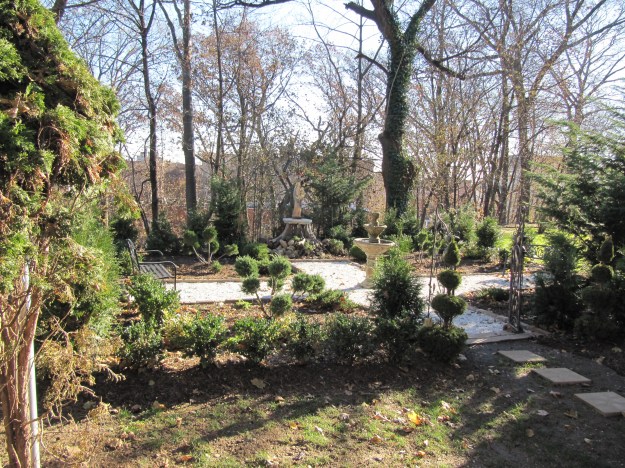
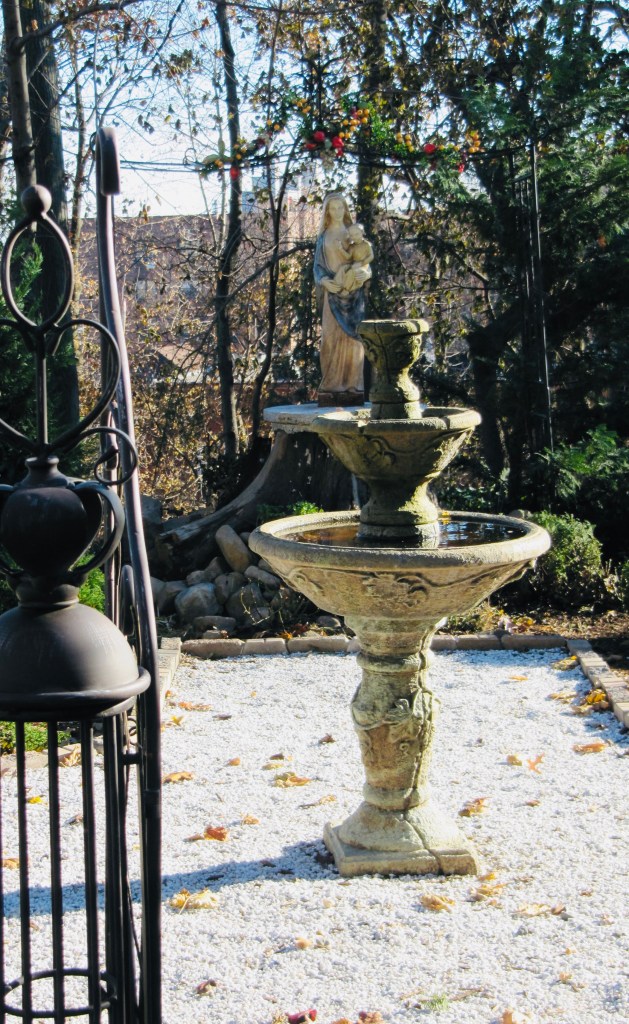
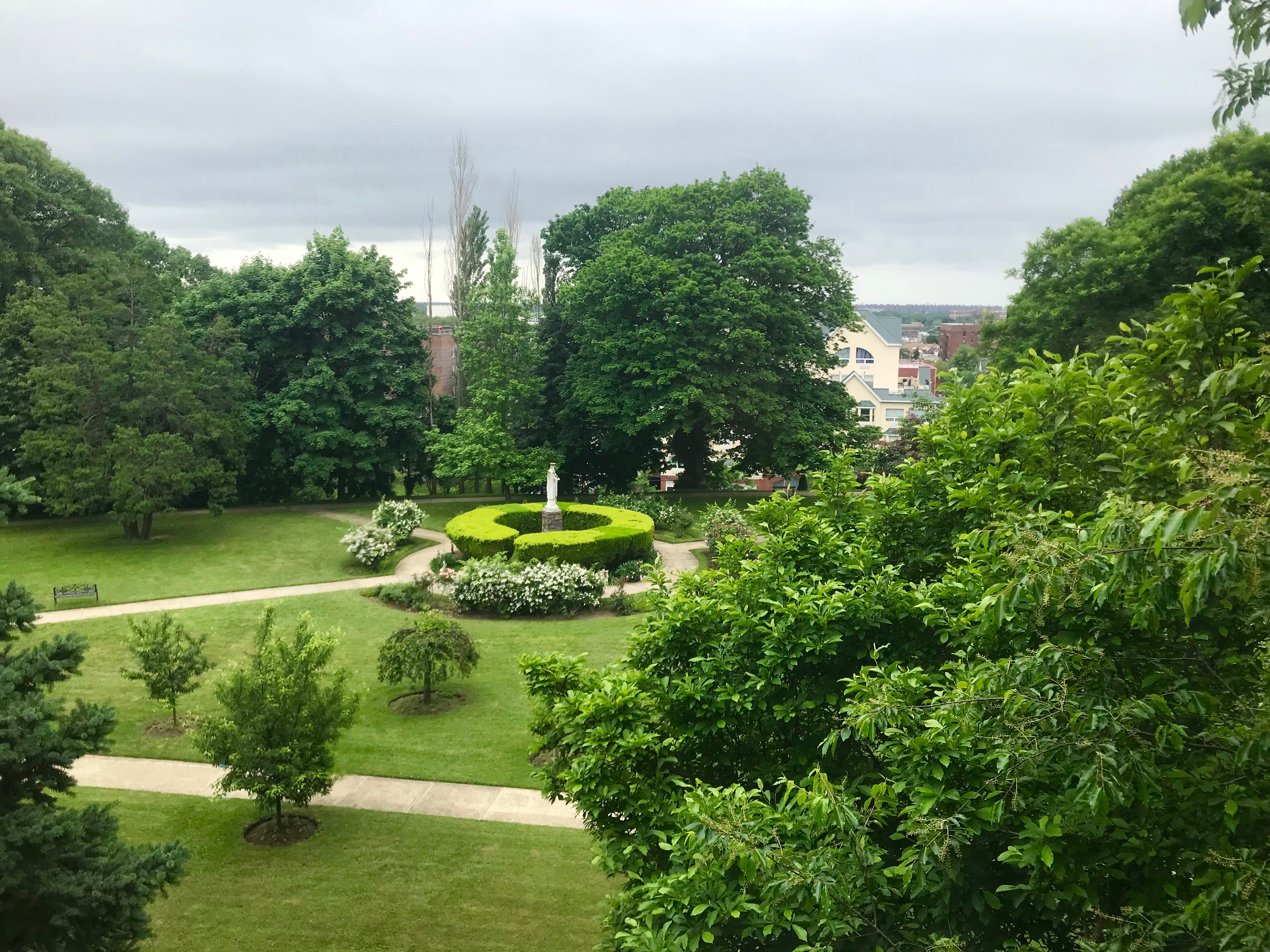
Mary Garden, Passionist Monastery, Jamaica, New York

Today’s reading from Genesis begins the second creation account (Genesis 2,4..) which pays particular attention to the creation of human beings. But it begins with water, welling up from the earth bringing life to the earth and finally the human family.

IMG_2381

Water is at the heart of the garden God provides for Adam and Eve. We have a fountain in the center of our Mary Garden signifying water’s vital role in the garden that was Eden and in the world we live in today.

Pope Francis speaks repeatedly of the role of water in our common home of creation and our need to care for it. Here are some of his reflections from his 2018 World Day of Prayer for the Care of Creation. Notice his strong objection to attempts to privatize water by commercial groups.

“On this World Day of Prayer for the Care of Creation, which the Catholic Church for several years now has celebrated in union with our Orthodox brothers and sisters and with participation of other Churches and Christian communities, I would like to draw attention to the question of water. It is a very simple and precious element, yet access to it is, sadly, for many people difficult if not impossible. Nonetheless, “access to safe drinkable water is a basic and universal human right, since it is essential to human survival and, as such, is a condition for the exercise of other human rights. Our world owes a great social debt towards the poor who lack access to drinking water, because they are denied the right to a life consistent with their inalienable dignity” (ibid., 30).
Water invites us to reflect on our origins. The human body is mostly composed of water, and many civilizations throughout history arose near great rivers that marked their identity. In an evocative image, the beginning of the book of Genesis states that, in the beginning, the spirit of the Creator “swept over the face of the waters (1:2)”.
In considering the fundamental role of water in creation and in human development, I feel the need to give thanks to God for “Sister Water”, simple and useful for life like nothing else on our planet.  Precisely for this reason, care for water sources and water basins is an urgent imperative. Today, more than ever, we need to look beyond immediate concerns (cf. Laudato Si’, 36) and beyond a purely utilitarian view of reality, “in which efficiency and productivity are entirely geared to our individual benefit” (ibid., 159). We urgently need shared projects and concrete gestures that recognize that every privatization of the natural good of water, at the expense of the human right to have access to this good, is unacceptable.
For us Christians, water represents an essential element of purification and of life.  We think immediately of baptism, the sacrament of our rebirth. Water made holy by the Spirit is the matter by which God has given us life and renewed us; it is the blessed source of undying life. For Christians of different confessions, baptism also represents the real and irreplaceable point of departure for experiencing an ever more authentic fraternity on the way to full unity. Jesus, in the course of his mission, promised a water capable of quenching human thirst for ever (cf. Jn 4:14).  He prophesied, “If any one thirst, let him come to me and drink (Jn 7:37). To drink from Jesus means to encounter him personally as the Lord, drawing from his words the meaning of life. May the words he spoke from the cross – “I thirst” (Jn 19:28) – echo constantly in our hearts. The Lord continues to ask that his thirst be quenched; he thirsts for love.  He asks us to give him to drink in all those who thirst in our own day, and to say to them, “I was thirsty and you gave me to drink” (Mt 25:35). To give to drink, in the global village, does not only entail personal gestures of charity, but also concrete choices and a constant commitment to ensure to all the primary good of water.”

https://www.vaticannews.va/en/taglist.cultura-e-societa.Diritti-umani.html

God Saw It Was Good

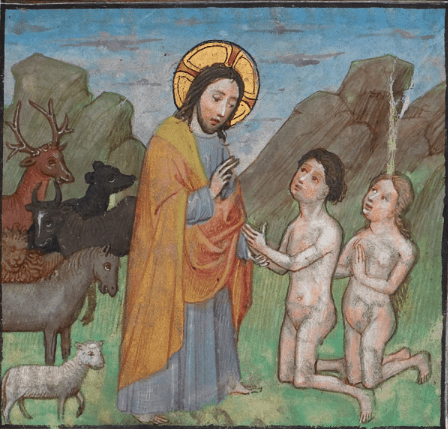
Creation story, BL

Here’s Pope Francis’ commentary on todays reading from Genesis:

“And God saw that it was good” (Gen 1:25). God’s gaze, at the beginning of the Bible, rests lovingly on his creation. From habitable land to life-giving waters, from fruit-bearing trees to animals that share our common home, everything is dear in the eyes of God, who offers creation to men and women as a precious gift to be preserved.

Tragically, the human response to this gift has been marked by sin, selfishness and a greedy desire to possess and exploit. Egoism and self-interest have turned creation, a place of encounter and sharing, into an arena of competition and conflict. In this way, the environment itself is endangered: something good in God’s eyes has become something to be exploited in human hands. 

Deterioration has increased in recent decades: constant pollution, the continued use of fossil fuels, intensive agricultural exploitation and deforestation are causing global temperatures to rise above safe levels. The increase in the intensity and frequency of extreme weather phenomena and the desertification of the soil are causing immense hardship for the most vulnerable among us. Melting of glaciers, scarcity of water, neglect of water basins and the considerable presence of plastic and microplastics in the oceans are equally troubling, and testify to the urgent need for interventions that can no longer be postponed. 

We have caused a climate emergency that gravely threatens nature and life itself, including our own.

In effect, we have forgotten who we are: creatures made in the image of God (cf. Gen 1:27) and called to dwell as brothers and sisters in a common home. 

We were created not to be tyrants, but to be at the heart of a network of life made up of millions of species lovingly joined together for us by our Creator. 

Now is the time to rediscover our vocation as children of God, brothers and sisters, and stewards of creation. Now is the time to repent, to be converted and to return to our roots. We are beloved creatures of God, who in his goodness calls us to love life and live it in communion with the rest of creation.

Pope Francis, September 1, 2019

The Season of Creation, September 1st -October 5th

1 September 2022, Pope Francis writes:

Dear brothers and sisters!

“Listen to the voice of creation” is the theme and invitation of this year’s Season of Creation.  The ecumenical phase begins on 1 September with the World Day of Prayer for the Care of Creation, and concludes on 4 October with the feast of Saint Francis.  It is a special time for all Christians to pray and work together to care for our common home.  Originally inspired by the Ecumenical Patriarchate of Constantinople, this Season is an opportunity to cultivate our “ecological conversion”, a conversion encouraged by Saint John Paul II as a response to the “ecological catastrophe” predicted by Saint Paul VI back in 1970. 

If we learn how to listen, we can hear in the voice of creation a kind of dissonance.  On the one hand, we can hear a sweet song in praise of our beloved Creator; on the other, an anguished plea, lamenting our mistreatment of this our common home.

The sweet song of creation invites us to practise an “ecological spirituality” (Laudato Si’, 216), attentive to God’s presence in the natural world.  It is a summons to base our spirituality on the “loving awareness that we are not disconnected from the rest of creatures, but joined in a splendid universal communion” (ibid., 220).  For the followers of Christ in particular, this luminous experience reinforces our awareness that “all things came into being through him, and without him not one thing came into being” (Jn 1:3).  In this Season of Creation, we pray once more in the great cathedral of creation, and revel in the “grandiose cosmic choir” made up of countless creatures, all singing the praises of God.  Let us join Saint Francis of Assisi in singing: “Praise be to you, my Lord, for all your creatures” (cf. Canticle of Brother Sun).  Let us join the psalmist in singing, “Let everything that breathes praise the Lord!” (Ps 150:6).

Tragically, that sweet song is accompanied by a cry of anguish.  Or even better: a chorus of cries of anguish.  In the first place, it is our sister, mother earth, who cries out.  Prey to our consumerist excesses, she weeps and implores us to put an end to our abuses and to her destruction.  Then too, there are all those different creatures who cry out.  At the mercy of a “tyrannical anthropocentrism” (Laudato Si’, 68), completely at odds with Christ’s centrality in the work of creation, countless species are dying out and their hymns of praise silenced.  There are also the poorest among us who are crying out.  Exposed to the climate crisis, the poor feel even more gravely the impact of the drought, flooding, hurricanes and heat waves that are becoming ever more intense and frequent.  Likewise, our brothers and sisters of the native peoples are crying out.  As a result of predatory economic interests, their ancestral lands are being invaded and devastated on all sides, “provoking a cry that rises up to heaven” (Querida Amazonia, 9).  Finally, there is the plea of our children.  Feeling menaced by shortsighted and selfish actions, today’s young people are crying out, anxiously asking us adults to do everything possible to prevent, or at least limit, the collapse of our planet’s ecosystems.

Listening to these anguished cries, we must repent and modify our lifestyles and destructive systems.  From its very first pages, the Gospel calls us to “repent, because the kingdom of heaven has come near” (Mt 3:2); it summons us to a new relationship with God, and also entails a different relationship with others and with creation.  The present state of decay of our common home merits the same attention as other global challenges such as grave health crises and wars.  “Living our vocation to be protectors of God’s handiwork is essential to a life of virtue; it is not an optional or a secondary aspect of our Christian experience” (Laudato Si’, 217).

As persons of faith, we feel ourselves even more responsible for acting each day in accordance with the summons to conversion.  Nor is that summons simply individual: “the ecological conversion needed to bring about lasting change is also a community conversion” (ibid., 219).  In this regard, commitment and action, in a spirit of maximum cooperation, is likewise demanded of the community of nations, especially in the meetings of the United Nations devoted to the environmental question.  

The COP27 conference on climate change, to be held in Egypt in November 2022 represents the next opportunity for all to join in promoting the effective implementation of the Paris Agreement.  For this reason too, I recently authorized the Holy See, in the name of and on behalf of the Vatican City State, to accede to the UN Framework Convention on Climate Change and the Paris Agreement, in the hope that the humanity of the 21st century “will be remembered for having generously shouldered its grave responsibilities” (ibid., 65).  The effort to achieve the Paris goal of limiting temperature increase to 1.5°C is quite demanding; it calls for responsible cooperation between all nations in presenting climate plans or more ambitious nationally determined contributions in order to reduce to zero, as quickly as possible, net greenhouse gas emissions.  This means “converting” models of consumption and production, as well as lifestyles, in a way more respectful of creation and the integral human development of all peoples, present and future, a development grounded in responsibility, prudence/precaution, solidarity, concern for the poor and for future generations.  Underlying all this, there is need for a covenant between human beings and the environment, which, for us believers, is a mirror reflecting “the creative love of God, from whom we come and towards whom we are journeying”.  The transition brought about by this conversion cannot neglect the demands of justice, especially for those workers who are most affected by the impact of climate change.

For its part, the COP15 summit on biodiversity, to be held in Canada in December, will offer to the goodwill of governments a significant opportunity to adopt a new multilateral agreement to halt the destruction of ecosystems and the extinction of species.  According to the ancient wisdom of the Jubilee, we need to “remember, return, rest and restore”.  In order to halt the further collapse of biodiversity, our God-given “network of life”, let us pray and urge nations to reach agreement on four key principles: 1. to construct a clear ethical basis for the changes needed to save biodiversity; 2. to combat the loss of biodiversity, to support conservation and cooperation, and to satisfy people’s needs in a sustainable way; 3. to promote global solidarity in light of the fact that biodiversity is a global common good demanding a shared commitment; and 4. to give priority to people in situations of vulnerability, including those most affected by the loss of biodiversity, such as indigenous peoples, the elderly and the young.

Let me repeat: “In the name of God, I ask the great extractive industries – mining, oil, forestry, real estate, agribusiness – to stop destroying forests, wetlands, and mountains, to stop polluting rivers and seas, to stop poisoning food and people”.

How can we fail to acknowledge the existence of an “ecological debt” (Laudato Si’, 51) incurred by the economically richer countries, who have polluted most in the last two centuries; this demands that they take more ambitious steps at COP27 and at COP15.  In addition to determined action within their borders, this means keeping their promises of financial and technical support for the economically poorer nations, which are already experiencing most of the burden of the climate crisis.  It would also be fitting to give urgent consideration to further financial support for the conservation of biodiversity.  Even the economically less wealthy countries have significant albeit “diversified” responsibilities (cf. ibid., 52) in this regard; delay on the part of others can never justify our own failure to act.  It is necessary for all of us to act decisively.  For we are reaching “a breaking point” (cf. ibid., 61).

During this Season of Creation, let us pray that COP27 and COP15 can serve to unite the human family (cf. ibid., 13) in effectively confronting the double crisis of climate change and the reduction of biodiversity.  Mindful of the exhortation of Saint Paul to rejoice with those who rejoice and to weep with those who weep (cf. Rom 12:15), let us weep with the anguished plea of creation.  Let us hear that plea and respond to it with deeds, so that we and future generations can continue to rejoice in creation’s sweet song of life and hope.

Rome, Saint John Lateran, 16 July 2022,  Memorial of Our Lady of Mount Carmel

Caring for Creation

f

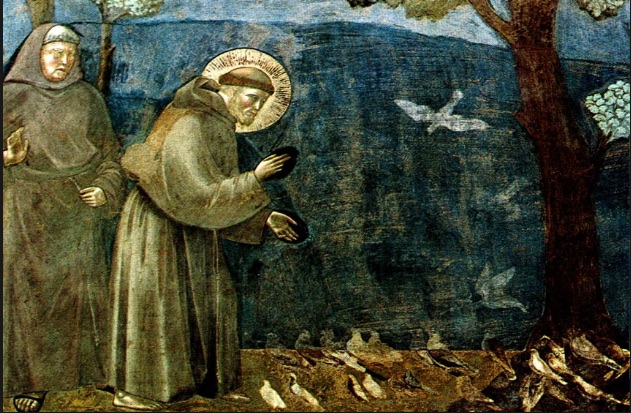
St. Francis is one of those super saints  to keep in mind, even after his feast day. I mentioned in a previous blog the statue of Francis facing St. John Lateran and Pope Innocent’s dream of a young man who, like Francis, held up the church’s walls ready to fall.  Francis helped renew the church.

In his encyclical Laudato Si, Pope Francis paints a verbal picture of Francis, holding his arms out to the created world, caring for our endangered planet:

“I believe that Saint Francis is the example par excellence of care for the vulnerable and of an integral ecology lived out joyfully and authentically. He is the patron saint of all who study and work in the area of ecology, and he is also much loved by non-Christians. He was particularly concerned for God’s creation and for the poor and outcast. He loved, and was deeply loved for his joy, his generous self-giving, his openheartedness. He was a mystic and a pilgrim who lived in simplicity and in wonderful harmony with God, with others, with nature and with himself. He shows us just how inseparable the bond is between concern for nature, justice for the poor, commitment to society, and interior peace.

“Francis helps us to see that an integral ecology calls for openness to categories which transcend the language of mathematics and biology, and take us to the heart of what it is to be human. Just as happens when we fall in love with someone, whenever he would gaze at the sun, the moon or the smallest of animals, he burst into song, drawing all other creatures into his praise. He communed with all creation, even preaching to the flowers, inviting them “to praise the Lord, just as if they were endowed with reason”.

“His response to the world around him was so much more than intellectual appreciation or economic calculus, for to him each and every creature was a sister united to him by bonds of affection. That is why he felt called to care for all that exists. His disciple Saint Bonaventure tells us that, “from a reflection on the primary source of all things, filled with even more abundant piety, he would call creatures, no matter how small, by the name of ‘brother’ or ‘sister’”. Such a conviction cannot be written off as naive romanticism, for it affects the choices which determine our behaviour.

“If we approach nature and the environment without this openness to awe and wonder, if we no longer speak the language of fraternity and beauty in our relationship with the world, our attitude will be that of masters, consumers, ruthless exploiters, unable to set limits on their immediate needs. By contrast, if we feel intimately united with all that exists, then sobriety and care will well up spontaneously. The poverty and austerity of Saint Francis were no mere veneer of asceticism, but something much more radical: a refusal to turn reality into an object simply to be used and controlled.

What is more, Saint Francis, faithful to Scripture, invites us to see nature as a magnificent book in which God speaks to us and grants us a glimpse of his infinite beauty and goodness. “Through the greatness and the beauty of creatures one comes to know by analogy their maker” (Wis 13:5); indeed, “his eternal power and divinity have been made known through his works since the creation of the world” (Rom 1:20). For this reason, Francis asked that part of the friary garden always be left untouched, so that wild flowers and herbs could grow there, and those who saw them could raise their minds to God, the Creator of such beauty. Rather than a problem to be solved, the world is a joyful mystery to be contemplated with gladness and praise.”

I like the pope’s words: “Rather than a problem to be solved, the world is a joyful mystery to be contemplated with gladness and praise.”

Ecological Conversion

The other day I was looking through our Passionist liturgical calendar for the feasts ahead and came to a section at the end that I never paid much attention to before. “Notices.”  It’s a list from the Vatican and the United Nations of important issues facing our world today,  issues to keep before us in our liturgy. Liturgy is not just feasts and readings of the day; we need to bring current issues into our prayer and reflection lest liturgy becomes an “archeological dig.”

Each month the pope asks that we reflect and pray about some important issue.  For example, all of September and until the feast of St. Francis of Assisi, we’re asked to pray and reflect on the care of creation. It’s a “Season of Creation”; the Orthodox Church began it, I believe, and Roman Catholics and other religious groups have joined in.  

A timely issue. 

All this week there were demonstrations and conferences throughout the world on climate change. About 4 million young people demonstrated in cities globally to pressure world leaders meeting at the UN to decrease the world’s dependence on fossil fuel. The UN meeting was disappointing. My own country, the United States, along with China and Russia, did nothing. 

A reporter asked leaders of the youth demonstrations why did young people  demonstrate. They said that young people are terrified of the future. Terrified. And if the young Swedish girl who has been speaking at the UN and throughout the US is any indication, the younger generation is angry at an older generation, particularly politicians,  that doesn’t want to do anything. 

My own church here in the US hasn’t responded well to the issue of climate change, which leads me to wonder if that may be a factor for so many young people finding church irrelevant. 

Pope Francis is aware of the crisis the world is facing. Besides urging action by the United Nations, (see previous blog), he’s invited leaders from the religious and educational worlds to meet at the Vatican to see how we can change our educational systems worldwide, so that we can look at the world differently. In Laudato si he speaks of an “ecological conversion”. It’s not a matter of changing technology; it’s changing our mentality.  

I’ve been reading recently an article by the Jesuit historian, John W. O Malley, “How We Were: Life in a Jesuit Novitiate, 1946-48” That’s around the time I made my own novitiate with the Passionists. O’Malley describes the day by day novitiate experience thoroughly, but he also indicates new influences affecting Jesuit formation then– a new historical sense about the past and the scriptures. a greater attention to human sciences like psychology. They were making their way slowly into religious formation structures. They were making their way into the formation structure of my community as well.

It seems to me a new cosmology is making its way into our society now. Yes, the historical sciences are important and we have to know as much as we can know about ourselves. But we have to go beyond humanity now.

We have to reflect on creation and keep it in our prayers. It’s there every day as we bring bread and wine and water to the altar in the Eucharist. It’s our home. It’s endangered. We need to care for it.

“Dissolved in Flames?”

In the coming “day of God…the heavens will be dissolved in flames and the elements melted by fire.” (2 Peter 3, 12-15) That’s a strong picture of the last days in the 2nd Letter of Peter we read today at Mass. Commentators say it’s the only place in the New Testament that predicts the world ending in fire.

Some years ago, after the Newshour in the evening, I would sometimes turn to the next channel on television to watch Harold Camping, a crusty old evangelist who was predicting the world ending in fire. The world was going to be burnt to a crisp and unless you explicitly professed faith in Jesus Christ you were going to go up in flames too.

Harold even figured out when it was going to happen, 6 PM, May 21, 2011. and if you wrote in he would send you his calculations. People called in with questions, some humorous. “Should I pay my income tax this year?” Some were sad. “My little boy can’t speak yet and profess his belief in Jesus. What about him?” Harold skirted that question.

May 21 came and nothing happened. I thought I was the only one listening to Harold until I noticed advertisements in the buses weeks before for “D Day May 21.” The day after May 21 I mentioned it to some people and one of them said she called her daughter who was driving over the Brooklyn Bridge that day to get off the bridge as soon as she could.

Harold said on a later broadcast he was recalculating the date, but some time later he died.

Harold isn’t the only one predicting an end for our planet. One of our greatest scientists, Stephen Hawkins, said before he died that we should start a colony in outer space soon because the earth is headed for destruction.

There’s a lot of pessimism in our world today. There was pessimism when the 2nd Letter of Peter was written. The apostles Peter and Paul had been viciously put to death. The City of Rome was almost completely destroyed by fire in the 60s. Jerusalem and the Jewish temple were destroyed by fire in the 70s. Christians were being persecuted and killed. I’m sure a lot of them were saying “This is the end.”

In times of pessimism we need to reaffirm God’s love for humanity and creation itself. That’s why Pope Francis’ encyclical Laudato Si is so important. Care for the earth and respect it, he says. God made our world out of love and promises to renew it.

Care for creation in practical ways, the pope says, but keep creation in mind in our prayers, especially the prayer of the Eucharist.

“In the Eucharist all that has been created finds its greatest exaltation.” Jesus became human; he was made flesh and his humanity comes from the earth. In the Eucharist, he takes bread and wine, which come from the earth, to give life to the world. Through “a fragment of matter” he communes with us.

“ Joined to the incarnate Son, present in the Eucharist, the whole cosmos gives thanks to God. Indeed the Eucharist is itself an act of cosmic love: Yes, cosmic! Because even when it is celebrated on the humble altar of a country church, the Eucharist is always in some way celebrated on the altar of the world”.[166]

“Creation is projected towards divinization, towards the holy wedding feast, towards unification with the Creator himself”.[LS 167]

God won’t destroy creation. He loves it and finds it good.

The Mary Garden

OLYMPUS DIGITAL CAMERA

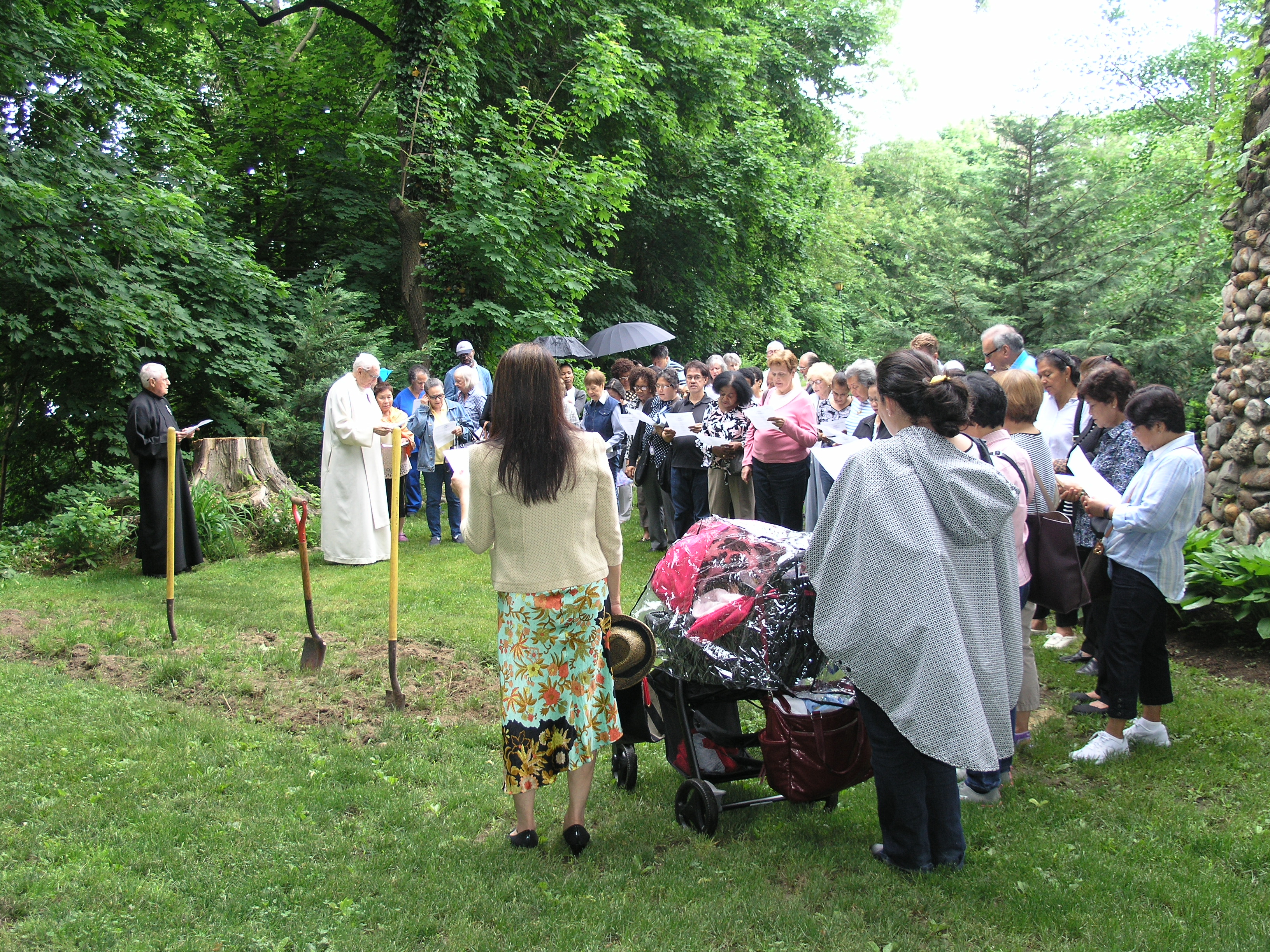
On the Feast of the Visitation of Mary to Elizabeth, May 31, we began our Mary Garden at Immaculate Conception Monastery in Jamaica, New York.

Mary Gardens, dedicated to Mary, the Mother of Jesus, appeared in 14th century Europe following the Black Death, a pandemic that caused millions to die in that part of the world. The gardens, usually found in monasteries and religious shrines, brought hope to people who feared the earth was bringing them death.

God gave Adam and Eve a garden, the Book of Genesis says. (Genesis 2, 8-28) Rising from the dead, Jesus proclaimed eternal life in a garden. (John 20,11-18) For early and medieval Christians, Mary, the Mother of Jesus, was like a garden enclosed, flowers, plants and trees surrounded her, “our life, our sweetness and our hope.” As the “Mother of the living” she brought the promise of life to our world, Jesus, her Son.

Can a Mary Garden bring hope today to our world that faces climate change and environmental degradation? Mary reminds us creation is a gift of God’s love. A Mary Garden teaches reverence for creation, for the soil, for plants that feed and bring us healing, for flowers that nourish our sense of beauty.

Yes, science and technology play their part in an environmental crisis, but faith has a part to play. We’re planting a Mary Garden!

A Reading from the Book of Genesis
This is the story of the heavens and the earth at their creation. When the LORD God made the earth and the heavens there were no plants on the earth, no grass on the fields, for the LORD God had sent no rain and there were no human beings to till the ground, but a stream was welling up out of the earth and watering all the surface of the ground and the LORD God formed a human being out of the dust of the ground and blew into his nostrils the breath of life, and he came to life.
The LORD God planted a garden in Eden, in the east,* and placed there the one whom he had formed… to cultivate and care for it. (Gen 2, 4-15)

Let us Pray

Praise the Lord who is good,
Sing to our God who is loving,
To the Lord our praise is due.

Who covers the heavens with clouds
and prepares the rain for the earth.
And makes mountains sprout with grain
and plants to serve our needs

You know the number of the stars
and call each one by name.
Bless the earth we break open today
O Lord,
to be a garden in praise of your name,
where we honor Mary, the mother of your Son.

We remember your blessings here
which you never cease to send
through Jesus Christ our Lord.

An Honest Environment

by Howard Hain

four-swifts-with-landscape-sketches-1887(1).jpg!Large

Vincent van Gogh, “Four Swifts With Landscape Sketches”, 1887


If a child is wasteful, what should the parents do?

Give them more?

More toys?

More snacks?

More disposable goodies?

Should they inflate the number and insignificance of what the child already has?

If the child’s room or backyard is full of waste, scattered remnants of “grown-bored-with” toys and doodads, what’s the answer?

Should the parents implement specific and tedious rules detailing what the child should do and not do in order to preserve the cleanliness and neatness of the home and outdoor space?

Should the parents provide the child with even greater means to continue to live so wastefully, with such little appreciation?

Or maybe, just maybe, the answer begins with the child possessing less, less toys, less privilege—especially when the family budget doesn’t allow for them in the first place—wouldn’t that be more beneficial to all involved?

Maybe if the child had only a few but well-loved toys, the child would be less wasteful, less likely to discard them and negatively affect the family environment?

Isn’t it the same with the overall environment? With the care of the earth and its resources?

If we are really serious about the environment, is the answer really man-made laws from “up high” limiting the freedom of individuals and localities? Or would it be better to begin with embracing a liberating reality that would help foster a more natural and organic conservancy?

Put it this way, if the government actually had to balance the budget, I mean really balance it on an annual basis—spending only what it brings in—and they didn’t continue to print more money (especially when the new “currency” is not based on any real asset, but instead out of “thin-air”) don’t you think that spending on the national level would change?

It would have to, period.

And don’t you think that the debate over what we do spend on would tighten up, become quite serious, efficient, and effective? And don’t you think that on the local level it would be the most freeing? For it would create an environment where individuals wouldn’t be handed false paper to purchase false products (designed to be disposable), and then maybe we’d have a commercial reality that is truly sustainable—where we have perhaps fewer items but items we cherish, are grateful to possess, and protect and care for—goods we wouldn’t just throw away.

Would that perhaps change the pollution problem?

Would it perhaps address our reckless use of natural resources?

In short, no “environmentalist” is serious about the environment (and values individual rights and freedom of local choice) if they do not deal with the biggest polluter of all: runaway debt, rising inflation (with concurrent deflation of valued consumer-driven product), and false and perpetually self-emptying currency.

Because without the false means of consumerism, consumerism would have to return whence it came: nonreality.

For imbalanced budgets, large deficit spending, and reckless printing of currency are the most non-organic, the least natural, and most non-locally-supporting factors concerning the health of our rivers, soil, trees, and, quite frankly, ourselves.

So let’s be real. Real as dirt. Let go of the hidden influences, agendas, and political prejudices, and be serious about what is truly causing waste and environmental destruction.

The truthful alternative is certainly refreshing: an unwavering allegiance to God’s most natural law of truth, beauty, and divine efficiency. For while God is certainly exuberant in His abundance and provision, He is never wasteful. He never lies. He never “cooks the books”.

The Creator of the Universe is honesty to the utmost degree. Pure harmony. Pure integrity. Pure accountability. Not a trace of fallacy or fiction.

If you doubt me, well then just ask the local bird. Ask him if he can borrow against bad credit, if he can feed his babes with worms that are printed merely on paper, and if he ever worries about his offspring buying and buying and throwing out and throwing out—or is it precisely his non-inflated natural resources that actually keep his local environment in harmonious check?

It is as long as some bureaucratic bird, puffed up with unrealistic good intentions (and other people’s money) doesn’t come along promising freebies and handing out nests that he and his other fine-feathered friends pay for with bad credit or currency based on a non-existent reality.

In their bird-brained world, thank goodness, that doesn’t happen. No, birds build their nests in reality. And continue to fly high because of it.

We on the other hand have many among us who try to sell us such false narratives and papier-mâché mansions. They also ironically tend to be the ones who “support” the “environment” the most.

For to discuss global warming, sustainability, and carbon credits without discussing the need for balanced budgets and disciplined currency policy is to be either a fool or a liar—both cases are unsustainable.


Howard Hain is a contemplative layman, husband, and father. He blogs at http://www.howardhain.com

Mary Gardens

Andrea Oliva Florenda, a professor at St. John’s University in Queens, New York, offered a day of reflection on Mary Gardens, December 1 at Bishop Molloy Retreat Center, Jamaica, New York. Professor Florenda teaches in the department of theology and religious studies at St. John’s, specializing in Marian theology. She’s also the designer and curator of the Marian Garden at the university.

Mary Gardens, dedicated to Mary, the Mother of Jesus, appeared in Europe following the Black Death, a pandemic that caused millions of deaths in that part of the world in the 14th century. The gardens, usually found in monasteries and religious shrines, brought hope to people walking “in the shadow of death.”

God placed Adam and Eve in a garden, Christian tradition says. (Genesis 2, 8-28) Rising from the dead, Jesus proclaimed eternal life in a garden. (John 20,11-18) For early and medieval Christians, Mary appeared as a garden enclosed, flowers, plants and trees surrounded her, “our life, our sweetness and our hope.” The Mary Garden, which became a favorite inspiration for medieval and renaissance artists, brought the promise of life to the “poor banished children of Eve.”

Does the Mary Garden have a role today in a world facing climate change and environmental degradation? Professor Florenda thinks it does. Besides the mysteries of faith, it teaches reverence for creation, for the soil, for plants that feed us and bring healing, for flowers that nourish our sense of beauty.

Certainly science and technology have a large part to play in the current environmental movement, but Professor Florenda notes the number of young people, from various religious tradition drawn to her Mary Garden at St. John’s, where the mysteries of seed and soil unfold, where pharmacy students study medicinal herbs and seasonal vegetables feed the poor.

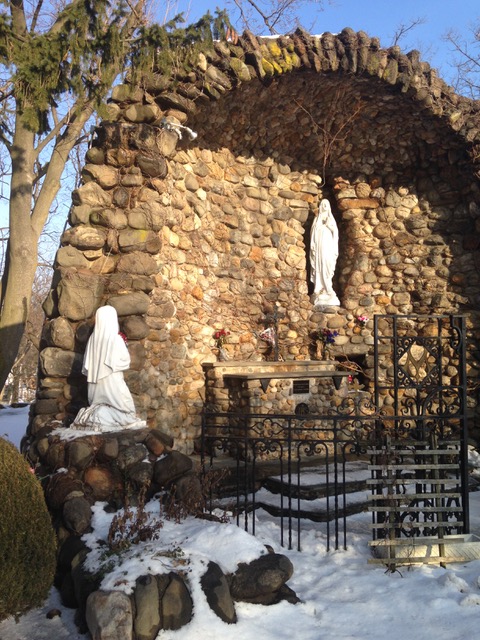
The day of reflection on Mary Gardens ended at the grotto honoring Mary in the garden of Immaculate Conception Monastery in Jamaica. There, Professor Florenda spoke about the meaning of the grotto, its structure and the plants and trees surrounding it.

“There is a language in each flower,
that opens to the eye,
A voiceless but a magic power.
A prayer in earth’s blossoms lie.” Anonymous