Tag Archives: Church

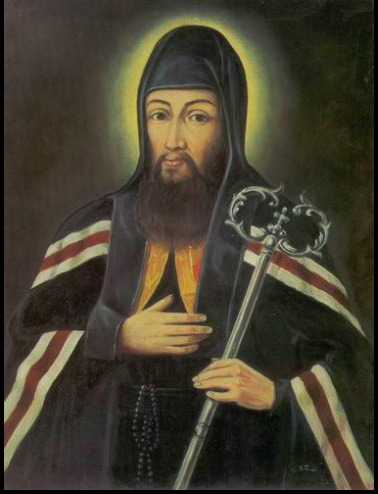
St.Josaphat: Nov. 12


The Eastern Catholic Church of the Ukraine will be celebrating the feast of St. Josaphat (1580-1683) on November 12. They’re celebrating him as a holy ecumenist who worked  tirelessly to bring unity among the Eastern Christian churches of Eastern Europe. He gave his life for it. 

Josaphat was born in Voldymyr, a Ukrainian city the Russians targeted early in their current  invasion of the country. Raised Orthodox, he joined the Ruthenian Catholic  church, became a monk, then was made archbishop of Polotsk. At the time, Polish and Lithuanian armies conquered this disputed territory – the land has been continually fought over. 

St. Sophia Cathedral, Polotsk

Religion entered the fight. Some Orthodox churches wished to be aligned to Rome after the Polish-Liithuanian conquest, so the authorities ordered some Orthodox churches be turned over to the Eastern Catholic Church. That triggered a violent reaction. Mobs sought out Josaphat in his cathedral, beat him, put him to death and threw his body in the Daugava River.

His body was retrieved and brought to his cathedral for burial. Later, it was interred in St. Peter’s Basilica in Rome.

Relations between the church of Rome and the Orthodox churches were strained then; they’re strained now. Political battles, historic feuds and rivalries have only increased tensions between the churches. For Josaphat they caused his death, at the hands of fellow Christians.

The Second Vatican Council in its document Orientalium Ecclesiarum affirmed the right of the Eastern churches to their own liturgy,  theology and organization. As we appreciate their history and spirituality more, respect needs to grow. Members of churches in communion with Rome can share in the sacraments with one another.

Josaphat’s experience points to the difficult path to Christian unity, in this case between the church of Rome and many of the Eastern Orthodox churches. Presently, there are 23 Eastern Churches and about 18 million members united to the Roman Catholic Church. The Eastern Orthodox number about 300 million. The churches originate in Middle East, Eastern Europe, North Africa and India

Efforts towards Christian unity among the churches of the east and west need a patient, steady faith that looks more on God’s grace than human skills. Jesus commands we be one. 

St.Josaphat reminds us to respect the Eastern churches and the rich liturgical and spiritual traditions they offer.  Much of Roman Catholic liturgy and spirituality, especially our feasts of Mary, comes from the churches of the east. Josaphat had a keen appreciation of the common treasure we all share. We need that appreciation today.

Our liturgical calendar, honoring Josaphat, recognizes the universal call to holiness in saints who are from every age and nation. “Holiness is not bound by time and place.” (The Roman Calendar. Text and Commentary, 1976)  We’re called to recognize the church as universal, catholic, existing everywhere..

2nd Corinthians: Suffering with Christ

gohistoric_14912_m

For the next two weeks we’re reading at Mass St. Paul’s Second Letter to the Corinthians, a Christian community in the city of Corinth around the year 50, not many years after the time of Jesus.

During the easter season we read about the spread of the Christian church from Jerusalem to Rome from the Acts of the Apostles. Now, in ordinary time we look more closely at a church Paul founded– in Corinth. What was it like? Paul’s two letters to the Corinthians tell us about an early Christian church, but they also tell us about our church today.

The Christian community at Corinth was drawn from different peoples flocking to the great Mediterranean port. It was diverse. It attracted a variety of preachers and teachers, which caused some division, noticeably as they came together to “break bread.” There’s some sexual immorality in this church on a sea port open to the world. Some were wondering about the resurrection of Jesus.

Most of its members were not Jewish Christians, though some there may have wished for the stability a Jewish synagogue might provide. There’s no bishop administering this church as yet. Paul was a minister to the world. There was no one person in charge in Corinth.

It was church  “in the works,” not complete, with glaring weaknesses, struggling to grow in faith, with plenty of loose ends, looking for answers. It was church experiencing great change, a church suffering, not from outward persecution, but from turmoil within.

Maybe a church like ours?

Addressing the Corinthians, Paul sees their suffering as “Christ’s suffering”. He feels that mystery in himself, as he says in the opening chapters of his letter and he returns to that theme over and over.

Yes, problems must be faced, corrections made, restructuring needs to take place, but Paul keeps reminding the Corinthians they’re experiencing the sufferings of Christ and with Christ’s suffering comes his encouragement.

Paul himself knew both the sufferings of Christ and his encouragement. “We were utterly weighed down beyond our strength, so that we despaired of life,” he writes from the province of Asia, but with suffering came an overflowing encouragement, which always accompanies the sufferings of Christ. “We do not trust in ourselves but in God who raises from the dead.” ( 2 Corinthians 1, 5-11)

Paul’s way is the right way, isnt’ it? We’re tempted to judge, analyze, condemn, throw up our hands and lose hope in the world around us. The first way to see it is through the sufferings of Christ, a mystery affecting us all, and the “encouragement” that always accompanies this mystery.

Listen to Paul speaking to the struggling Corinthians:

“Our hope for you is firm, for we know that as you share in the sufferings, you also share in the encouragement,”

Good letter for us to read these days.

Timothy and Titus: January 26

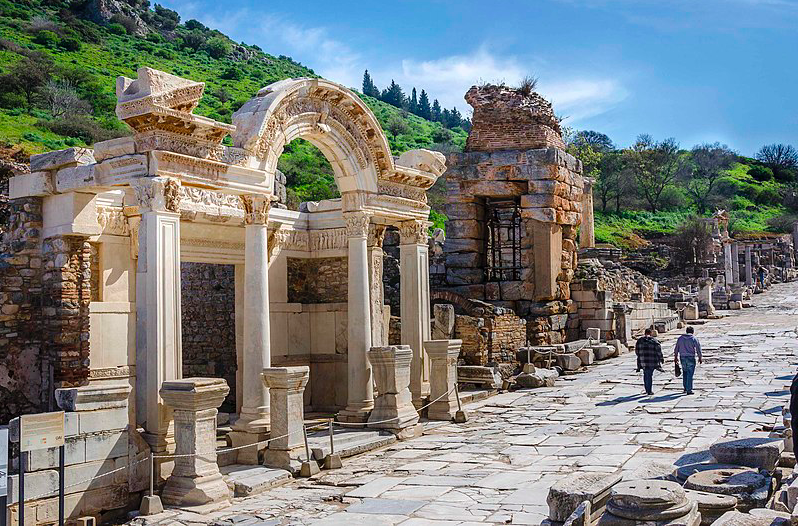
Ephesus, Main Street, Wikipedia Commons

Timothy and Titus were companions of St.Paul on his missionary journeys and continued his mission. Timothy led the church at Ephesus; Titus assumed leadership of the church in Crete. Paul wrote letters of advice to them: one letter to Titus and two letters to Timothy, most likely written from house arrest in Rome.

Like Jesus, Paul never saw himself handing on a church that was completely developed. He ministered to a church evolving from a “way”, a movement, to a church settled in places like Ephesus and Crete. He had men and women companions at his side.

Timothy and Titus were important companions who represent another stage in Paul’s ministry.  While Paul and other apostles went out to the nations, the church had to be firmly established in every place they visited. The roles of bishops, priests and other ministries evolved to fulfill that task. A local church needed to be organized. The church is missionary, global, sent by Jesus to the nations, but it’s also local, part of a town. city, neighborhood.

The feasts of the Conversion of Paul and Timothy and Titus represent those two aspects of the church.

Paul’s  advice to Timothy is especially interesting. “Stir into flame the gift of God that you have through the imposition of my hands. For God did not give us a spirit of cowardice, but rather of power and love and self-control. So do not be ashamed of your testimony to our Lord, nor of me, a prisoner for his sake; but bear your share of hardship for the Gospel with the strength that comes from God.”

Is Paul trying to bolster Timothy’s confidence as he loses a powerful mentor. Timothy needs the gift of God to make the church in Ephesus a flourishing local church. 

Timothy and Titus were given “apostolic virtues” by God to continue the work of Paul and the other apostles, the opening prayer of their feast says. And “May we merit to reach our heavenly homeland” by “living justly and devoutly in this present age.” Like them “we” also are given a task –to work for the church’s growth and development in this present age.

Let’s remember them as our mentors, mindful that God “ does not give a spirit of cowardice, but rather of power and love and self control.” Like the two followers of Paul, we have to hold on to what we’re given and continue their work: “Go into all the world, and proclaim the gospel. I am with you always, says the Lord.”

I see in the notes in the American Bible that the deacons Paul refers to in I Timothy 3, 8-13 may include women as well as men. “This (deacons) seems to refer to women deacons, but may possibly mean the wives of deacons. The former is preferred because the word is used absolutely…”

Why not today? We need women in roles of leadership. I have some in mind who would fit the role very well. I wonder if Timothy’s mother Eunice and grandmother Lois found a home and were involved there. I wonder what my mother would say.

Paul’s Conversion: January 25th

Caravaggio, Conversion of Paul

Our yearly church calendar celebrates saints from every age and place because saints are examples of God’s grace present always and everywhere. Some saints are singled out for their importance. St. Paul the Apostle, whose dramatic conversion is celebrated on January 25th, is one of them. His martyrdom, along with Peter, is celebrated June 29th and we read extensively from his writings throughout the church year.

An account of Paul’s conversion ( Acts 22: 3-13) – one of three found in the Acts of the Apostles – is read first at his feast day Mass. Mark’s gospel for the feast recalls Jesu after his resurrection telling his disciples to “Go into the whole world and proclaim the gospel to every creature.” (Mark 16: 15-18)   St. Luke devotes much of the Acts to Paul’s  missionary journeys ending in Rome. The apostle fulfilled that command of Jesus.

Paul writes to the Corinthians: 

“I am the least of the apostles; in fact, since I persecuted the Church of God, I hardly deserve the name apostle; but by God’s grace that is what I am, and the grace that he gave me has not been fruitless. On the contrary, I have worked harder than any of the others: or rather, not I but the grace of God that is with me. (  1 Corthinians 15:9-10)

St. Paul is an example of how far we can rise, from the depths to the heights, and for that reason the church celebrates his conversion.  He never forgot that God’s grace raised him from the dust to become  a powerful force in his church and in the world. He never forgot he was a Pharisee who became one of Jesus’ most loyal disciples. His conversion gave him a boldness to go fearlessly to the ends of the earth 


“Saul, Saul, why do you persecute me?”  Jesus says to him from a blinding light. He never forgot the moment he was blinded by a light that made him see.

“Paul, more than anyone else, has shown us what we really are, and in what our nobility consists, and of what virtue a human being is capable. Each day he aimed ever higher; each day he rose up with greater ardour and faced with new eagerness the dangers that threatened him. He summed up his attitude in the words: I forget what is behind me and push on to what lies ahead. When he saw death imminent, he bade others share his joy: Rejoice and be glad with me! And when danger, injustice and abuse threatened, he said: I am content with weakness, mistreatment and persecution. These he called the weapons of righteousness, thus telling us that he derived immense profit from them… ” ( St. John Chrysostom)                                                                                             

O God, who taught the whole world through the preaching of the blessed Apostle Paul, draw us, we pray, nearer to you through the example of him whose conversion we celebrate today, and so make us witnesses to your truth in the world.Through our Lord Jesus Christ, your Son, who lives and reigns with you in the unity of the Holy Spirit, God, for ever and ever. Amen.

Pope John XXIII called for a Second Vatican Council on the Feast of the Conversion of Paul, January 25, 1959. He called for the church to be converted.

The Lamp and the Lampstand

By Gloria M. Chang

You are the light of the world. A city set on a mountain cannot be hidden. Nor do they light a lamp and then put it under a bushel basket; it is set on a lampstand, where it gives light to all in the house.

Matthew 5:14-15

Jesus, the light of the world, purifies hearts and illuminates minds in the truth, restoring lost sons and daughters to the Father. Every child redeemed by the Lamb of God is a Christ-bearer and therefore, a light-bearer, but from where does the light shine? 

In a reading by St. Maximus the Confessor, he identifies the lamp of the parable with Jesus Christ and the lampstand as Holy Church. As the Head and the Body are inseparable, the lamp and the lampstand together illumine the “house, which is the world,” filling all people with divine knowledge. 

In an age of profound skepticism and disappointment in the institutional Church, St. Maximus’ vision challenges us to lift up our eyes to the mountain of the Lord (Zechariah 8:3), praying to become one with Christ collectively in the communion of saints. For it is by the virtuous lives of the saints that a world parched for mercy and truth is drawn to the Church as its Mother. 

In the old covenant, “the word was hidden under the bushel, that is, under the letter of the law,” veiling the eternal light. In the new covenant of grace in the Father, Son, and Holy Spirit, Christified saints become living letters of the law inscribed not on tablets of stone but on hearts of flesh, vivified by the Spirit (2 Corinthians 3:3).

Bereft of the lamp, the lampstand is dark and empty—a tomb of death and despair. Catholics experience the effects of the empty lampstand in the Church on Good Friday to Holy Saturday every year when the Blessed Sacrament is removed from the sanctuary. At dawn on Easter morning, with millions of candles piercing the darkness around the world, the Body of Christ rises with its Head from the empty tomb, joyfully singing “Alleluia! Christ is risen!”

From an inquiry addressed to Thalassius by Saint Maximus the Confessor, abbot

The light that illumines all men

The lamp set upon the lampstand is Jesus Christ, the true light from the Father, the light that enlightens every man who comes into the world. In taking our own flesh he has become, and is rightly called, a lamp, for he is the connatural wisdom and word of the Father. He is proclaimed in the Church of God in accordance with orthodox faith, and he is lifted up and resplendent among the nations through the lives of those who live virtuously in observance of the commandments. So he gives light to all in the house (that is, in this world), just as he himself, God the Word, says: No one lights a lamp and puts it under a bushel, but on a stand, and it gives light to all in the house. Clearly he is calling himself the lamp, he who was by nature God, and became flesh according to God’s saving purpose.

I think the great David understood this when he spoke of the Lord as a lamp, saying: Your word is a lamp to my feet and a light to my path. For God delivers us from the darkness of ignorance and sin, and hence he is greeted as a lamp in Scripture.

Lamp-like indeed, he alone dispelled the gloom of ignorance and the darkness of evil and became the way of salvation for all men. Through virtue and knowledge, he leads to the Father those who are resolved to walk by him, who is the way of righteousness, in obedience to the divine commandments. He has designated holy Church the lampstand, over which the word of God sheds light through preaching, and illumines with the rays of truth whoever is in this house which is the world, and fills the minds of all men with divine knowledge.

This word is most unwilling to be kept under a bushel; it wills to be set in a high place, upon the sublime beauty of the Church. For while the word was hidden under the bushel, that is, under the letter of the law, it deprived all men of eternal light. For then it could not give spiritual contemplation to men striving to strip themselves of a sensuality that is illusory, capable only of deceit, and able to perceive only decadent bodies like their own. But the word wills to be set upon a lampstand, the Church, where rational worship is offered in the spirit, that it may enlighten all men. For the letter, when it is not spiritually understood, bears a carnal sense only, which restricts its expression and does not allow the real force of what is written to reach the hearer’s mind.

Let us, then, not light the lamp by contemplation and action, only to put it under a bushel—that lamp, I mean, which is the enlightening word of knowledge—lest we be condemned for restricting by the letter the incomprehensible power of wisdom. Rather let us place it upon the lampstand of holy Church, on the heights of true contemplation, where it may kindle for all men the light of divine teaching.


Reference

The passage from St. Maximus the Confessor can be found in the Office of Readings for Wednesday of the 28th Week in Ordinary Time.

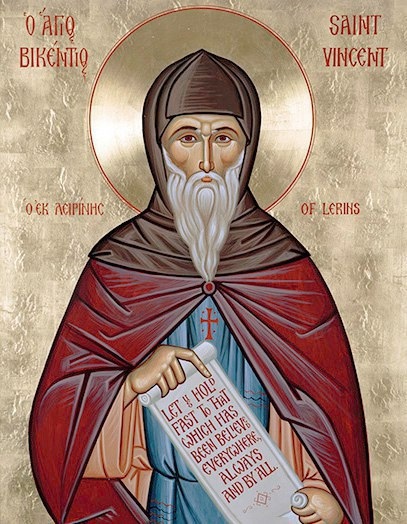
St. Vincent of Lerins Speaks to the Modern Church

By Gloria M. Chang

As the Synod on Synodality proceeds in Rome, we can all participate as the listening Church, the Bride of Christ, sitting at Jesus’ feet like Mary of Bethany (Luke 10:38). Enveloped in his peace, we can attune our hearts and minds to the Spirit of truth sent to us from the Father by the Son (John 15:26). 

In a world of distracting noise, the Lord invites us to listen to his voice in Sacred Scripture, the Holy Mass, the Liturgy of the Hours, and personal prayer. Heard in the silence of the Spirit, the ancient words resonating from centuries past speak to the present generation with striking relevance. May the Lord grant us “ears to hear” his voice amid the din of the latest buzz (Matthew 11:14).

In a recent passage from the Office of Readings (October 11, 2024), St. Vincent of Lerins, a fifth-century French monk, seemed to jump out of the pages to address the Synod in Rome during its second week. In his vision, the organism of the Church grows and matures like a child to an adult, but preserves her essential form. Human skeletal structure, facial features, limbs, and organs develop with maturity but do not evolve into another species. The Body of Christ, the Church, in its heavenward journey also grows in the Holy Spirit into the perfect image of the Incarnate Son of God and not a distortion (2 Corinthians 3:18). May the Blessed Virgin Mary, Mother of the Church, guide her sons and daughters in the Spirit to her Son, who is the Way, the Truth, and the Life.

From the first instruction by Saint Vincent of Lerins, priest

The development of doctrine

Is there to be no development of religion in the Church of Christ? Certainly, there is to be development and on the largest scale.

Who can be so grudging to men, so full of hate for God, as to try to prevent it? But it must truly be development of the faith, not alteration of the faith. Development means that each thing expands to be itself, while alteration means that a thing is changed from one thing into another.

The understanding, knowledge and wisdom of one and all, of individuals as well as of the whole Church, ought then to make great and vigorous progress with the passing of the ages and the centuries, but only along its own line of development, that is, with the same doctrine, the same meaning and the same import.

The religion of souls should follow the law of development of bodies. Though bodies develop and unfold their component parts with the passing of the years, they always remain what they were. There is a great difference between the flower of childhood and the maturity of age, but those who become old are the very same people who were once young. Though the condition and appearance of one and the same individual may change, it is one and the same nature, one and the same person.

The tiny members of unweaned children and the grown members of young men are still the same members. Men have the same number of limbs as children. Whatever develops at a later age was already present in seminal form; there is nothing new in old age that was not already latent in childhood.

There is no doubt, then, that the legitimate and correct rule of development, the established and wonderful order of growth, is this: in older people the fullness of years always brings to completion those members and forms that the wisdom of the Creator fashioned beforehand in their earlier years.

If, however, the human form were to turn into some shape that did not belong to its own nature, or even if something were added to the sum of its members or subtracted from it, the whole body would necessarily perish or become grotesque or at least be enfeebled. In the same way, the doctrine of the Christian religion should properly follow these laws of development, that is, by becoming firmer over the years, more ample in the course of time, more exalted as it advances in age.

In ancient times our ancestors sowed the good seed in the harvest field of the Church. It would be very wrong and unfitting if we, their descendants, were to reap, not the genuine wheat of truth but the intrusive growth of error.

On the contrary, what is right and fitting is this: there should be no inconsistency between first and last, but we should reap true doctrine from the growth of true teaching, so that when, in the course of time, those first sowings yield an increase it may flourish and be tended in our day also.


Reference

The passage from St. Vincent of Lerins can be found in the Office of Readings for Friday of the 27th Week in Ordinary Time.

The United Nations: Channeled Waters in God’s Hand

UN. General Assembly

The United Nation’s General Assembly begins this week in New York City. World leaders are here at the UN and already there’s talk that nothing good will come of it. It’s easy to blame leaders, and we do it all the time. Some are easy targets.

“Like a stream is the king’s heart in the hand of the LORD;
wherever it pleases him, he directs it.” (Proverbs 21,1)

Interesting that we hear that reading from the Book of Proverbs as the UN meeting, ” The stream is called “channeled water” , a water for fertilizing arid land. ” It takes great skill to direct water, whether water to fertilize fields or cosmic floods harnessed at creation, for water is powerful and seems to have a mind of its own. It also requires great skill to direct the heart of a king, for it is inscrutable and beyond ordinary human control.” (Commentary NAB)

So God is there directing the “channeled water” of the nations and their rulers, seemingly with a mind of their own, but in God’s firm hand.

St. Augustine in our liturgy recently had a sermon on the Good Shepherd in which he warns church leaders not to lead the sheep astray but to be like Jesus.  When they are like him they are “like the one Shepherd, and in that sense they are not many but one. When they feed the sheep it is Christ who is doing the feeding.”

Pray for good leaders for our church, Augustine continues:  “May it never happen that we truly lack good shepherds! May it never happen to us! May God’s loving kindness never fail to provide them!”

But the saint goes on . We must do something more than pray, we ourselves must be “good sheep,”  because “if there are good sheep then it follows there will be good shepherds, since a good sheep will naturally make a good shepherd.”

Is that something that applies to us as citizens of the world and of the United States? Are our leaders mirrors of ourselves? Are we getting the leaders we deserve? So add to a prayer for good leaders, then, a prayer for good citizens. God make us good citizens, and good leaders will come.

“A king’s heart is channeled water in the hand of the LORD;

God directs it where he pleases. (Proverbs 21,1)

Mystagogic Catechesis: Learning from Signs

This week we’re coming to the end of the Easter season and the time devoted especially to Mystagogic Catechesis. Mystagogic Catechesis is an old term inspired by the time that Jesus after his resurrection began to wean his followers away from knowing him physically to knowing him through signs, like water, bread and wine, like gathering together to remember him in the scriptures, like seeing him in the poor and suffering who are wounded like him, also seeing his plan in the signs of the times they were living in. Mystagogic Catechesis is a catechesis for recognizing Jesus Christ in signs.

 Even though “they rejoiced at the sight of the Lord” the disciples of Jesus found this new way hard to understand. They saw Jesus physically less and less. We see their uneasiness, their questioning, in the gospel narratives read in the Easter season. He taught the patiently, but still they found it hard to see him in another way, through signs.

The Old Testament scriptures were important signs Jesus offered his disciples after rising from the dead. (Luke24L13-27) During the Easter season the scriptures are important signs offered to us. The resurrection appearances of Jesus from the four gospels, especially from the Gospel of John, are gospels we read in the early weeks of Easter. The meeting of Jesus with Nicodemus, the miracle of the loaves and fish, and the Last Supper Discourse of Jesus– all from John’s Gospel– are read on the following weeks. The Acts of the Apostles, describing the surprising growth of the church after the resurrection, is read all through the Easter season.

Those who follow Jesus share the experience of his disciples as they face the mystery of his death and resurrection.

In their catechetical sermons after easter, saints like Ambrose and Cyril of Jerusalem saw the unease in the newly baptized they taught.  “Is this it?” St. Ambrose begins one his catechetical sermons to newly baptized Christians.  “Is this it? You’re saying to yourself.” The Christian life is not Paradise, the saint reminds them.  The Christian life here on earth is not seeing completely or knowing everything clearly. The Christian life is a life of signs, signs that come with the sign of the cross.

Following the Second Vatican Council, the church gives Mystagogic Catechesis a more prominent place in her liturgy. In the past, Mystagogic Catechesis took place in the one week after Easter and was focused on the newly baptized.  In the church’s liturgy now Mystagogic Catechesis takes place, not for just one week, but for all the Easter season, and beyond the Easter season to every Sunday celebration. It is meant, not just for the newly baptized, but for the whole Christian community.

Mystagogic Catechesis is not limited to the seven sacraments, but is sacramental in the broad sense the early church understood the term. For example, it sees the church as a sacrament.  That’s why we read the Acts of the Apostles all through the Easter season, to understand the mystery of the  church. 

The church’s promotion of Mystagogic Catechesis also brings a shift in catechesis and preaching.  Mystagogic Catechesis is based on the scriptures, rites and prayers of the liturgy, not the catechism. It moves us into another way of teaching and praying. Not a new way, but a way found in the early church and in the church up to the Council of Trent. 

Mystagogic Catechesis puts an emphasis on the liturgy, its prayers, readings and signs, as the preeminent place where we learn and pray. “Christ is always present in His Church, especially in her liturgical celebrations…The liturgy is the summit toward which the activity of the Church is directed; at the same time it is the font from which all her power flows. (SC 7, 10)

A Mother’s Plans for James and John

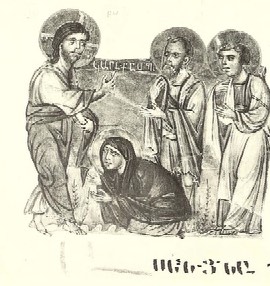
On today’s feast of St. James, the apostle,  Matthew’s gospel describes Salome, the mother of James and John, asking Jesus to give her sons privileged places in his kingdom. “Command that these two sons of mine sit, one at your right and the other at your left, in your kingdom.”

I’m not sure Salome would have fallen at Jesus’ feet as she’s pictured in the illustration above. They were related, after all, and she was a senior relative of his. She probably reminded Jesus that James and John were his cousins, and remember, I know your mother. Family ties always help people get ahead.

Jesus doesn’t dismiss her altogether, but he reminds her that his followers are to serve and not be served. It’s a service that will cost them, even their lives. Following him doesn’t mean that they and their family would gain. Like the Son of Man James and John will  have to give their lives “for many.”

They’re called by God to reach out, and reaching out can be hard, sometimes painful. It means going beyond those we call our own, our families and friends. It means reaching out to those we don’t know, even to those we don’t like. It means going beyond what we’re used to.

Later stories say that James and John went to places far beyond the Sea of Galilee where they fished with their father Zebedee and were cared for by a mother who had their interests at heart. Our church is a missionary church. It reaches out to the whole world. That’s what  Jesus last words in Matthew’s gospel says to do:  “Go out to the whole world, baptizing and teaching.”

That’s still his word today. Go out to the whole world, even if the world is changing and the future is uncertain. “I am with you all days,” Jesus says.

James, brother of John, is also known as  James the Greater, to distinguish him from James the Less, the other disciple mentioned in the New Testament. James was the first of the apostles to die for Christ; he was beheaded in Jerusalem by King Herod Agrippa in 42 AD.

Later Traditions About James

Some 4th century Christian writers say that one of the apostles went to Spain and a 6th century source identifies the apostle as James, who preached briefly in Spain and converted only a few before returning to Jerusalem and his death.

Modern scholars are divided about the truth of the tradition. Relics said to be of St. James were discovered in Compostela in Galicia in northwestern Spain in the 9th century, a major event in Spanish history. His shrine at Compostella became a major pilgrimage center for the people of Spain and Europe, rivaling even Rome and Jerusalem in its popularity.

From the 9th century onward, James was patron of the Spanish peoples and a rallying cry in their fight to free their land from the Moors. At four battles – Clavijo (9th c.), Simancas (10th c.), Coimbra (11th c.) and Las Navas de Tolosa (1212) – legends say he appeared as a warrior astride a great white horse with a sword in his hand. Throughout the Middle Ages, soldiers and knights  came as pilgrims to Compostela to seek the saint’s protection.

In 1492, when Spain was finally free of Moorish domination, King Ferdinand and Queen Isabella came to Compostela to give thanks to St.James in the name of the Spanish people.

How old are the relics of St.James? Pilgrims from Galicia were frequent visitors to the Holy Land as early as the 4th century and may have brought the relics back to their native land. Colorful legends from medieval times, however, brought the story back further to the time of the apostle himself, saying that disciples of James fled with his body after he was beheaded and, escaping by boat, drifted to the coast of Spain where, after many adventures they buried him. These legends about James appear frequently in medieval art and in numerous churches built in his honor in France, England, and later in the Spanish colonies of the New World. Cities such as Santiago, Chile, Santiago, Cuba,San Diego, California, are named after him. The feast of St.James is July 25.

The End is Only a Beginning

.
We begin reading the Farewell Discourse from John’s gospel along with the Acts of the Apostles this 4th week of Easter. Facing their loss of Jesus the disciples seem helpless as he says farewell. “I have a lot to say to you, but you cannot bear it now,” he says. The Lord recognizes their paralysis.

In our reading from the Acts of the Apostles, on the other hand, Paul and his companions are not helpless at all. They’re boldly on their way to places that may not seem impressive to us now, but were impressive places then: Psidian Antioch, Philippi, Athens, Corinth. Three were important Roman colonies, strategic cities on the Roman grid, steps on the road to Rome itself. Athens, of course, was a key intellectual center of the empire, though maybe a little down-trodden when Paul got there.

Paul welcomed people into his growing ministry. Meeting Lydia, the trader in purple dyes at the river, he baptizes her and her household. How many did she bring to the gospel? Priscilla and Acquila, the two Jews that Claudius expelled from Rome during the Jewish riots of AD 42, became his trusted partners.

Maybe it’s good that we read these two scriptures together.

The Acts of the Apostles tell of a church confidently on its way to the ends of the earth to fulfill its mission.

The Farewell Discourse, on the other hand, says that sometimes a church can be paralyzed in its thinking and acting. But the Lord is the shepherd of both. What seems like the end can be only a beginning.