Tag Archives: Advent

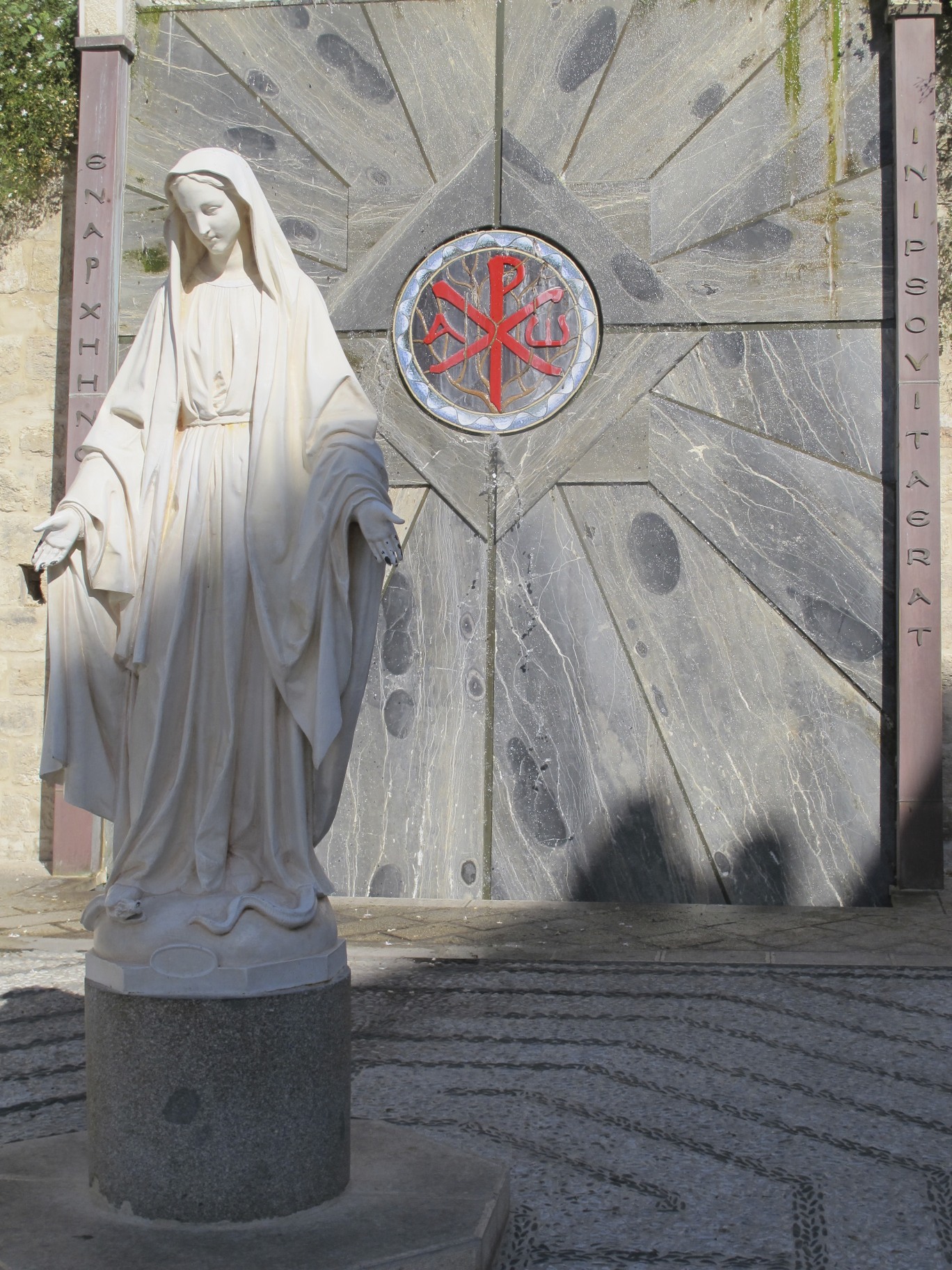
Feast of the Immaculate Conception

We tend to see the mystery of the Immaculate Conception, which says that Mary was preserved from original sin from conception, as a gift just for her and not affecting us at all,  a gift that makes her unlike us.

St. Anselm, the 12th century monk, later archbishop of Canterbury, sees it differently. Mary shows us what being human and being part of God’s creation was meant to be. She’s the first to be blessed by Jesus Christ, her son. All of us, yes creation itself,  benefit from the gift:

“Blessed Lady, sky and stars, earth and rivers, day and night – everything that is subject to our power or use – rejoice that through you they are in some sense restored to their lost beauty and are endowed with inexpressible new grace. All creatures were dead, as it were, useless to us or for the praise of God, who made them. The world, contrary to its true destiny, was corrupted and tainted by human acts of idolatry. Now all creation has been restored to life and rejoices.

“The universe rejoices with new and indefinable loveliness. Not only does it feel the unseen presence of God, its Creator, it sees God openly, working and making it holy. These great blessings spring from the blessed fruit of Mary’s womb.

“Through the fullness of the grace given you, dead things rejoice in their freedom, and those in heaven are glad to be made new. Through the Son who was the glorious fruit of your virgin womb, just souls who died before his life-giving death rejoice as they are freed from captivity, and the angels are glad at the restoration of their shattered domain.

“Lady, full and overflowing with grace, all creation receives new life from your abundance. Virgin, blessed above all creatures, through your blessing all creation is blessed, not only creation from its Creator, but the Creator himself has been blessed by creation.”
2nd Sunday of Advent: “Go with Joy”

In the time of Jesus pilgrims from Galilee came up to Jerusalem a number of ways. Many came down the Jordan Valley, a journey of 90 miles. When they reached the city of Jericho they turned eastward onto a steep, winding road that ascended for 3500 feet and 15 miles to the city of Jerusalem. A picture taken from an airplane in the 1930s shows that winding, climbing road through the desert. It had to be the hardest part of their journey.Jericho Rd  3
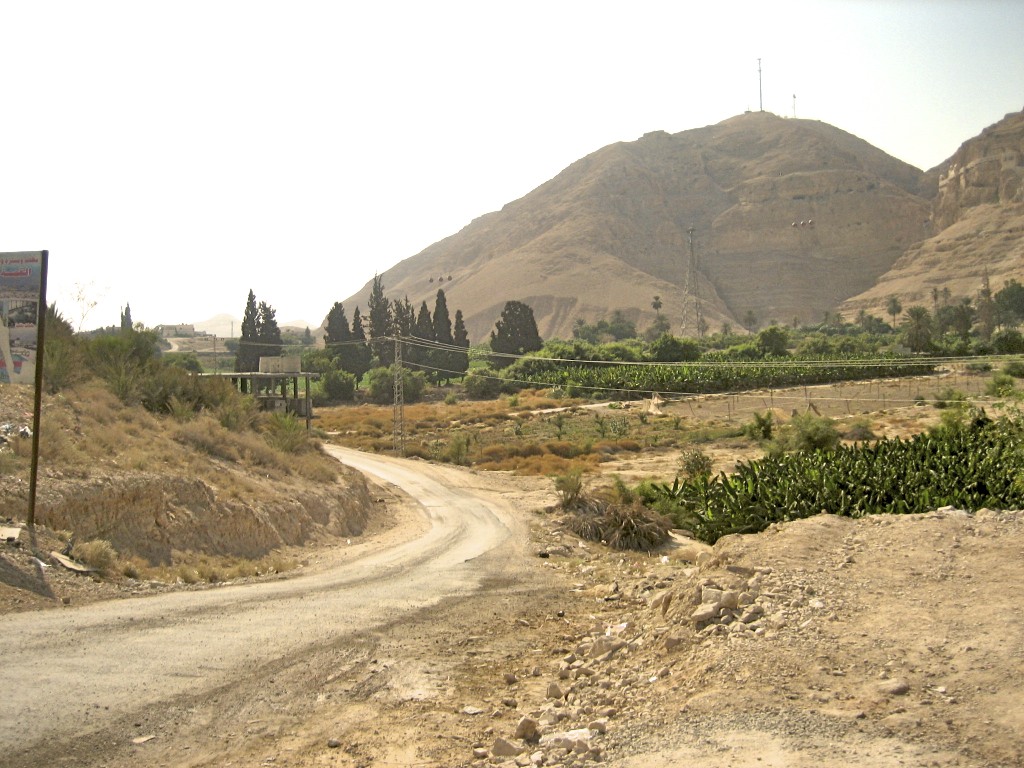
Jericho road modern

Now travelers go that route in air-conditioned buses. It took ancient travelers four days. Not it’s a few hours.

The bible sees the journey to Jerusalem, especially the last part up that steep winding desert road as a symbol of our journey to God. We’re pilgrims on our way, The way’s still hard, even with air-conditioned buses.

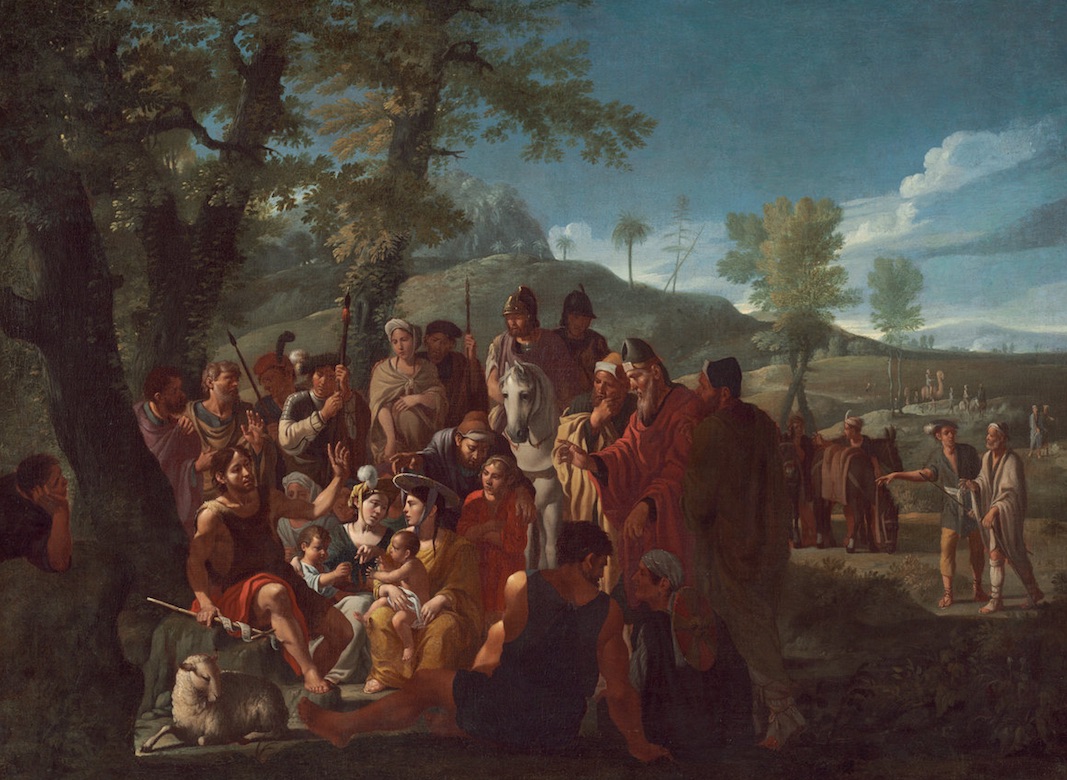
John the Baptist preached where that winding, climbing road began. His father, Zachariah, a priest in the temple in Jerusalem, told him at his birth: “You, my child shall be called a prophet of the most high, for you will go before the Lord to prepare his way.” (Luke 1)

John invited weary pilgrims into the refreshing waters of the Jordan river, that they might be strengthened for the journey.

John Baptist preaching

Last week readings warned about falling asleep through complacency and laziness. This week readings remind us the day by day journey can tire us,  Life can wear us out, even a life doing good.

Then, unexpected things, like sickness, failures and disappointments, come along, robbing our energy. The parable of the Good Samaritan happened on this road to Jerusalem. Unexpected things happen.

John the Baptist, and the Prophet Isaiah before him, spoke to weary pilgrims. “‘Comfort, give comfort to my people,’ says the Lord…They spoke words of hope to those on the way:

With God’s help, the winding, climbing, wearying road becomes a highway; every valley  filled in, every mountain and hill made low, the rugged land  made plain, the crooked way straight.

The Lord is ” a shepherd feeding his flock, in his arms he gathers the lambs, carrying them in his bosom and leading the ewes with care.” (Isaiah 40: 1-5,9-11) So don’t be afraid.

Advent is a beautiful season. “Go up with joy to the house of the Lord.”

What You Find in the First Week of Advent

The daily Advent readings at Mass for the first week of Advent are beautifully arranged..

In the Old Testament readings,  the Prophet Isaiah speaks as a fierce Assyrian army heads towards Jerusalem. Bad times ahead, but the prophet sees something else. All nations are streaming to God’s mountain.

The nations will come to God’s mountain, Jerusalem, where the temple stands, the prophet says.  They’ll be fed a rich banquet (Wednesday),  the poor will triumph (Thursday),  the blind will see (Friday). Safe on this rock, children play around the cobra’s den, and the lion and the lamb lie down together (Tuesday). The prophet  challenges us to see our world in another way.

In the gospels  Jesus Christ fulfills the Isaian prophecies. The Roman centurion, humbly approaching Jesus in Capernaum, represents all nations approaching him. (Monday)  Jesus praises the childlike;  they will enter the kingdom of heaven.(Tuesday)  He feeds a multitude on the mountain.(Wednesday) His kingdom is built on rock.(Thursday)  He gives sight to the blind to find their way.  (Friday)

Many Advent readings in these early weeks of Advent are from the gospel of Matthew, who portrays Jesus teaching on a mountain (Isaiah’s favorite symbol). His miracles affect all. Jesus is the new temple, the Presence of God, Emmanuel, God with us. He brings hope beyond human hope.

Lord, help us see what you and the prophets see.

Little Drummer Boys and Girls

by Howard Hain

Yesterday I witnessed a “dress” rehearsal for a live nativity. The cast was made up of first and second graders, and the audience was mostly composed of residents of a retirement home for religious sisters, Franciscans. It was spectacular.

Last week I was at Radio City Music Hall to watch the Rockettes in their “Christmas Spectacular”. It was quite a production.

Sitting in the dark this morning I cannot help but contrast the two.

I also cannot help but relate to the seven-year old who played the part of The Little Drummer Boy.

As that child walked so slowly toward the foot of the altar, where the rehearsal was being staged, I saw my vocation in an entirely different light.

The children were all singing their hearts out, and many of the eighty and ninety year-old sisters were mouthing the words. The boy with the drum didn’t utter a sound. He just kept walking, slowly, extremely slowly toward the altar, every once in a while ever so slightly pretending to tap two tiny sticks upon a toy drum. He was beautifully awkward.

There was no greater spectacle on earth at that very moment. Shall I dare to say, no greater event that heaven or earth has ever known?

For a child was born. We were all being born.

———

Come they told me, pa rum pum pum pum
A new born King to see, pa rum pum pum pum
Our finest gifts we bring, pa rum pum pum pum
To lay before the King, pa rum pum pum pum,
rum pum pum pum, rum pum pum pum,

So to honor Him, pa rum pum pum pum,
When we come.

Little Baby, pa rum pum pum pum
I am a poor boy too, pa rum pum pum pum
I have no gift to bring, pa rum pum pum pum
That’s fit to give the King, pa rum pum pum pum,
rum pum pum pum, rum pum pum pum,

Shall I play for you, pa rum pum pum pum,
On my drum?

Mary nodded, pa rum pum pum pum
The ox and lamb kept time, pa rum pum pum pum
I played my drum for Him, pa rum pum pum pum
I played my best for Him, pa rum pum pum pum,
rum pum pum pum, rum pum pum pum,

Then He smiled at me, pa rum pum pum pum
Me and my drum.*


Little Drummer Boy was composed by Katherine K. Davis, Henry Onorati and Harry Simeone in 1958.


Howard Hain is a contemplative layman, husband, and father. He blogs at http://www.howardhain.com


Advent Readings: Week 2

Advent_heading copy 2To reach God’s holy mountain there’s a journey to make, Isaiah says, but guides will show the way. “Behold, I send my messenger ahead of you, to prepare your way.” Mark 1, 1. John the Baptist appears in the desert promising forgiveness  to those washing in the waters of the Jordan River. We have been baptized in the waters of baptism.

The Old Testament readings this Advent week, mostly from Isaiah, describe a desert journey,  but the desert will bloom and a highway will be there, the prophet promises. (Monday) God will speak tender, comforting words to his people on the way. (Tuesday) Those who hope in him will renew their strength, soaring on eagle’s wings. (Wednesday) Though we are as insignificant as a worm, God holds us in his hands and says:“Fear not; I am with you.” (Thursday) God is our teacher and shows us the way  to go. (Friday) On the way, prophets like Elijah accompany us. (Saturday)

Jesus is our way, the gospel readings say. He healed and forgave the paralyzed man– symbol of a paralyzed humanity– who was lowered through the roof into the house in Capernaum. (Monday) Like a good shepherd he searches for and finds the stray sheep. (Tuesday) “Come to me all who are weary, ” he says. (Wednesday) He sends us prophets and guides like John the Baptist and Elijah.( Thursday) Though rejected like John the Baptist, Jesus still teaches. (Friday)

He will save us, even though unrecognized like John and Elijah. (Saturday)

List of Readings

Monday: Isaiah 30, 1-10 The desert will bloom and a highway will be there, a holy way.Luke 5,17-26 The paralyzed man, lowered through the roof, is healed and forgiven.

Tuesday: Isaiah 40,1-11 The desert is a way to the Lord. Comfort my people. Mattthew 18, 12-14 The shepherd searches for the stray sheep.

Wednesday: Isaiah 30,25-31 God is the strength of his people. Matthew 11,28-30   “Come to me all who are weary…”

Thursday: Isaiah 41,13-20   God says, “I will grasp you by the hand. Fear not.”Matthew 11,11-15   John the Baptist is sent like Elijah.

Friday: Isaiah 48-17-19 I teach you what’s for your good and lead you on the way to go. Matthew 11,1-19   John and Jesus rejected as teachers.

Saturday: Sirach 48,1-4; 9-11 Elijah, precursor of John. Matthew 17, 9-13   Elijah and John not recognized.

1st Sunday of Advent: Wake Up!

For this week’s homily, please play the video file below:

Morning Thoughts: Home Sick

.

I wonder. Did God ever catch a cold?

Did Mary look at Him while He slept, watching carefully His chest rise and fall?

Did Joseph pace around their small home, looking upward, his right hand touching his brow?

I wonder. Did they wince in sync when Jesus coughed from the bottom of His soul?

Was there a day, a single hour, from the moment Jesus was conceived that Joseph and Mary weren’t concerned?

Concerning all this there’s not much to wonder.

Jesus is human.

Of course He experienced “cold” in all its forms.

Of course Joseph and Mary felt they’d rather die than see their child in pain.

And Jesus is divine.

Of course He was homesick.

Of course He longed to return.

Between Mary’s womb and heaven the desert is awfully dry.

He climbed up high, seeking out mountain views.

He returned to the sea, seeking out salt air.

He stopped to hang out with the little ones, seeking out angels.

Jesus is just like you and me.

Only He allows Himself to be loved.

And that led Him to love to the utter extreme.

All flowed from and toward a family reunion.

His pain, His grief, His hope, His love were perfectly ordered.

Even when He coughed or sneezed or tossed and turned, Jesus did so while in the company of a promise.

And He’s extremely contagious.

Joseph and Mary became homesick too.

There’s only one place they could want to be.

With their only child.

Clinging to Him, to their God with all their might.


.

—Howard Hain

.

Friday Thoughts: The Yet Empty Stable

.

There’s a little stable not too far from here.

It sits in a church that has seen better days.

The parish is poor and the people seem to disappear.

But a few persistent peasants wont stay away.

I love it there.

The priest is wonderfully uncertain.

He is afraid of God.

He instinctively bows his head at the mention of the name.

He knows how little he is in front of the great star.

I imagine he was involved in setting the stable.

It is a good size, on the relative little-stable scale.

It is surrounded by ever-green branches.

Probably snipped from the few Douglas Firs placed around the altar and yet to be trimmed.

The stable itself is composed of wood.

A little wooden railing crosses half the front.

A single string of clear lights threads through the branches laid upon the miniature roof.

They are yet to be lit.

I love it there.

I kneel before the empty scene.

For as of yet, not a creature or prop is present.

Not an ox or a goat, not a piece of hay or plank of fencing.

Not even a feeding trough that is to be turned into a crib.

No visible sign of Joseph and Mary, nor a distant “hee-haw” of a very tired donkey.

I wonder if I could get involved.

Perhaps I could slip into the scene.

There’s a darkened corner on the lower left.

In the back, against the wall.

I could hide myself within the stable.

Before anyone else arrives.

I don’t think they would mind.

I’d only be there to adore.

To pay homage to the new born king.

I might even help keep the animals in line.

Yes, a stagehand, that’s what I can be!

I know there’s no curtain to pull.

That’s to be torn in a much later scene.

But to watch the Incarnation unfold from within!

That’s what I dream.

To see each player take his and her place.

To see the great light locate the babe.

To watch the kings and shepherds stumble onto the scene.

Hark! To hear the herald angels sing!

O the joy of being a simple farmhand.

Of being in the right place at always the right time.

Of course though I wouldn’t be alone.

In that darkened corner, also awaiting the entire affair, there are many others.

Most I don’t know by name.

Too many in fact to even count.

But a few I know for sure.

For certain, present are those few persistent peasants who wont stay away.

And of course there’s that wonderful anonymous parish priest.

The one who helped set into place this yet empty but very expectant stable.

The one whose fear of God is so clearly the beginning of wisdom.


.

—Howard Hain

.

Wednesday, 2nd Week of Advent

The words from Isaiah  today, scholars say, are not the words of Isaiah but the words of an unknown prophet writing centuries later to Jewish exiles in Babylon. He urges them to return to Jerusalem, but many have settled in the new land and have no taste for returning.

The journey’s long and hard, some say. Nothing to go back to.  Forget Jerusalem and the One who called, others say. Our God has let us down, so we’ll sing the songs of this land.

Confronting them, the writer uses Isaiah’s name, a prophet long dead,  lest the Babylonians charge him with treason for suggesting the Jews return. Still, the unknown prophet confronts them with God’s words:

“To whom can you liken me as an equal? says the Holy One.”

God knows every one of you and calls you all by name. Come back where you belong; you can make the journey.

“He gives strength to the fainting;

for the weak he makes vigor abound.

Though young men faint and grow weary,

and youths stagger and fall,

They that hope in the LORD will renew their strength,

they will soar as with eagles’ wings;

They will run and not grow weary,

walk and not grow faint.” (Isaiah 40)

Is it still the same, a people estranged from God, unaware of God’s call, unwilling to consider a return? Why believe in the promise? Why return to a city or a world or a church in ruins? But Advent call. In Advent we pray for “us, poor banished children of Eve.”.

1st Sunday of Advent: C Waiting for the Birth of a Child

Audio homily here:

We’re beginning the season of Advent, a season to get ready for the feast of Christmas and the birth of a Child. For four weeks we will light a candle reminding us of the Light to come. We will hear the Old Testament prophets who spoke of his coming, and John the Baptist and his mother Mary who welcomed him when he came.

But today’s readings seem to be getting us ready for the end of the world. And they are. How else can we read what Jesus says in Luke’s gospel?

“There will be signs in the sun, the moon, and the stars,
and on earth nations will be in dismay,
perplexed by the roaring of the sea and the waves.
People will die of fright
in anticipation of what is coming upon the world,
for the powers of the heavens will be shaken.”

Sounds like a nightmare. And it is.

Now, a nightmare’s the last thing we want as we prepare for Christmas and the birth of a Child.
Why read scary things today that seem to echo today’s grim headlines about terrorism, planes shot down, people killed for no reason at all, climate change? We want normal lives. Like the people from the days of Noah whom Jesus describes, we’re looking for good, safe lives “eating, drinking, buying, selling, planting, building” (Luke 17, 26-30) and seeing the birth of children. We’re looking for a peaceful world.

How shall we understand these readings that seem to describe, not only the reality of our world today, but a world in turmoil and falling apart? Is Jesus telling us, as we listen to them, that God is with us, not only when life is ordinary and good, but also when life holds wars, earthquakes, famines, plagues, and persecutions. God’s with us at all times, no matter what. God’s kingdom will come, no matter what. So don’t be afraid when you see signs like these, Jesus says. “Stand erect and raise your heads because your redemption is at hand.” (Luke 21,28)

Not a hair of our heads will be harmed; we will have the strength to endure whatever happens, we will have the wisdom to keep going, Jesus says.

At the same time, we’re told in the gospel not to live lives of denial or lives of escape. We can’t live unthinking lives, lives of “carousing and drunkenness.” Lives swallowed up by “the anxieties of daily life.“

In Luke’s gospel Jesus tells us to live each day as best we can and take up the cross we have to bear each day as best we can. He gives himself to us as an example. As a Child born in Bethlehem, he lived under threats of death and eventually faced death; he lived most of his days in ordinary Nazareth and brief days when he was recognized for powerful deeds. Live each day as it comes, he says, not swallowed up by “the anxieties of daily life,” trapped by small concerns. Live each day as you’re given it; God is there in the ordinary day.

We’re in Advent, getting reading for the birth of a Child, a powerful Child who holds in his hands our future and the future of our world. This same Child is with us each day. We welcome him as the Lord who lives with us each day. The Child we welcome at Christmas is also the Son of Man who will come on the clouds of heaven on the last day, bringing God’s kingdom and judging the living and the dead. He is our Savior and Lord.