In the Hail Mary we ask Mary to pray for us sinners, “now and at the hour of our death.” These are the two most important moments in life. We have the past and the future, for sure, but they’re far less important than now and the hour of our death.
“Now” is the time we live in, the present moment. Whether it’s a time of joy or sorrow, a time of satisfaction or disappointment, a time of sickness or health, it’s the time we have to love, to give, to endure, to act, to live.
“The hour of death” is God’s time, when God brings us from this life to the next. It may be instantaneous or prolonged, but it’s the time when God who gave us life takes this life away.
Both of those moments benefit from faith. Mary, the Mother of Jesus, was a believer who trusted in the power and presence of God through these same moments of life. They’re challenging moments.
After the angel left Mary in Nazareth, no other angel came; she walked by faith from the Child’s birth to the death and resurrection of her Son. As we face the mysteries of life, we ask her in our weakness to be with us as a believer and a mother, who knows the goodness and power of God as it is revealed in Jesus Christ her Son.
“Pray for us sinners, now and at the hour of our death.”
The desire Augustine saw in himself he also saw in all of us, a desire that brings a restlessness and thirst only satisfied at the fountain of true wisdom and everlasting love – Jesus Christ.
“‘If anyone is thirsty, let him come to me and drink.’
“The Lord himself, our God Jesus Christ, is the fountain of life; and he calls us to himself so that we may drink from him. Who will drink? Whoever loves; whoever is filled with the word of God; whoever adores enough, whoever desires enough; whoever is on fire with the love of wisdom.
See the source from which that fountain flows. It comes from the same place that the manna came from in the wilderness – for the same person is both bread and fountain, Christ our Lord and God, for whom we should always hunger. Even if we eat him, the bread, with love, even if we devour him with desire, let us still hunger for him like starving people. So when we drink him, the fountain, let us always drink him with overflowing love, filled with longing and delighting in the gentle taste of his sweetness.
For the Lord is gentleness and delight. We may eat and drink of him but still we will be hungry and thirst for more; for he is our food and drink that can never be entirely consumed. He can be eaten but there will always be more left. He can be drunk but he can never be drained dry. Our bread is eternal; our fountain lasts for ever, our fountain is sweet.
So Isaiah says: come to the water all you who are thirsty – the fountain is for the thirsty, not for the surfeited. He calls the hungry and the thirsty to himself, and they can never drink enough: the more they drink, the more they desire to drink.
Spiritual writers after Augustine took up the Augustine’s insights:
If you are thirsty, drink from the fountain of life; if you are hungry, eat the bread of life. Blessed are they who hunger for that bread and thirst for that fountain; they eat and drink for ever and still they desire to eat and drink. For it is lovely above all things, that which is always eaten and drunk, always hungered and thirsted for. ‘Taste and see that the Lord is good.’” St.Columbanus
The Church repeats his teaching in the prayer for his feast:
Renew in your Church, we pray, O Lord, the spirit with which you endowed your Bishop Saint Augustine
that, filled with the same spirit, we may thirst for you, the sole fount of true wisdom,and seek you, the author of heavenly love.
Through our Lord Jesus Christ, your Son, who lives and reigns with you in the unity of the Holy Spirit, God, for ever and ever. Amen
This week at Mass we’re reading Paul’s 1st Letter to the Thessalonians, which may be the earliest writing of the New Testament. On Friday, we leave Matthew’s gospel and Monday we start Luke’s Gospel weekdays.
We repeat these gospel readings every year. Every other year we repeat the same Old Testament or New Testament readings. Why keep reading them?
Because God reveals himself to us gradually, day by day. The scriptures are a privileged place where God speaks St. Paul says today to the Thessalonians: “We thank God unceasingly, that, in receiving the word of God from hearing us, you received it not as the word of men, but as it truly is, the word of God, which is now at work in you who believe.”
God is at work in our readings. “They make the voice of the Holy Spirit sound again and again in the words of the prophets and apostles…The Father who is in heaven comes lovingly to meet his children and talk with them,” the Constitution on Divine Revelation says. (DV 21,22) “The Lord be with you,” we say, announcing the gospel. Jesus is with us now, speaking to us here and now in our readings..
How should we hear and read God’s word? Some say by reading and listening deeply. Deep listening, deep reading is more than listening and reading for facts. “Give us 20 minutes we’ll give you the world,” one news stations says. and for 20 minutes we hear facts. We browse online, looking for facts, for news, for entertainment. The worldwide web is awash with facts. That kind of reading and listening, some say, endangers our capacity for deep listening and deep reading, for contemplation.
We need to listen deeply and read the scriptures deeply. Prophets like Ezechiel say they devoured God’s word. They ate it, chewed on it, digested it. That’s because God feeds us little by little. We learn little by little. We absorb little by little. We are slow learners.
Deep reading not only applies to the scriptures we read, it applies also to the prayers we say and saints, like St. Augustine, St. John the Baptist, we celebrate. September 1st, Pope Francis asked that we celebrate a Day of Creation, and from September 1st to October 4, the Feast of Francis of Assisi, to celebrate with other Christians a Season of Creation. We need to see creation and other issues prayerfully in a deeper way than a scientific way.
Our prayerful deep reading and listening leads to more than facts. It leads to what God wishes to say, and we never know what that will be. “When you open your sails to the Holy Spirit, you never know on what shores you will land,” St. Jerome said.
“The word of God is now at work in you who believe.”
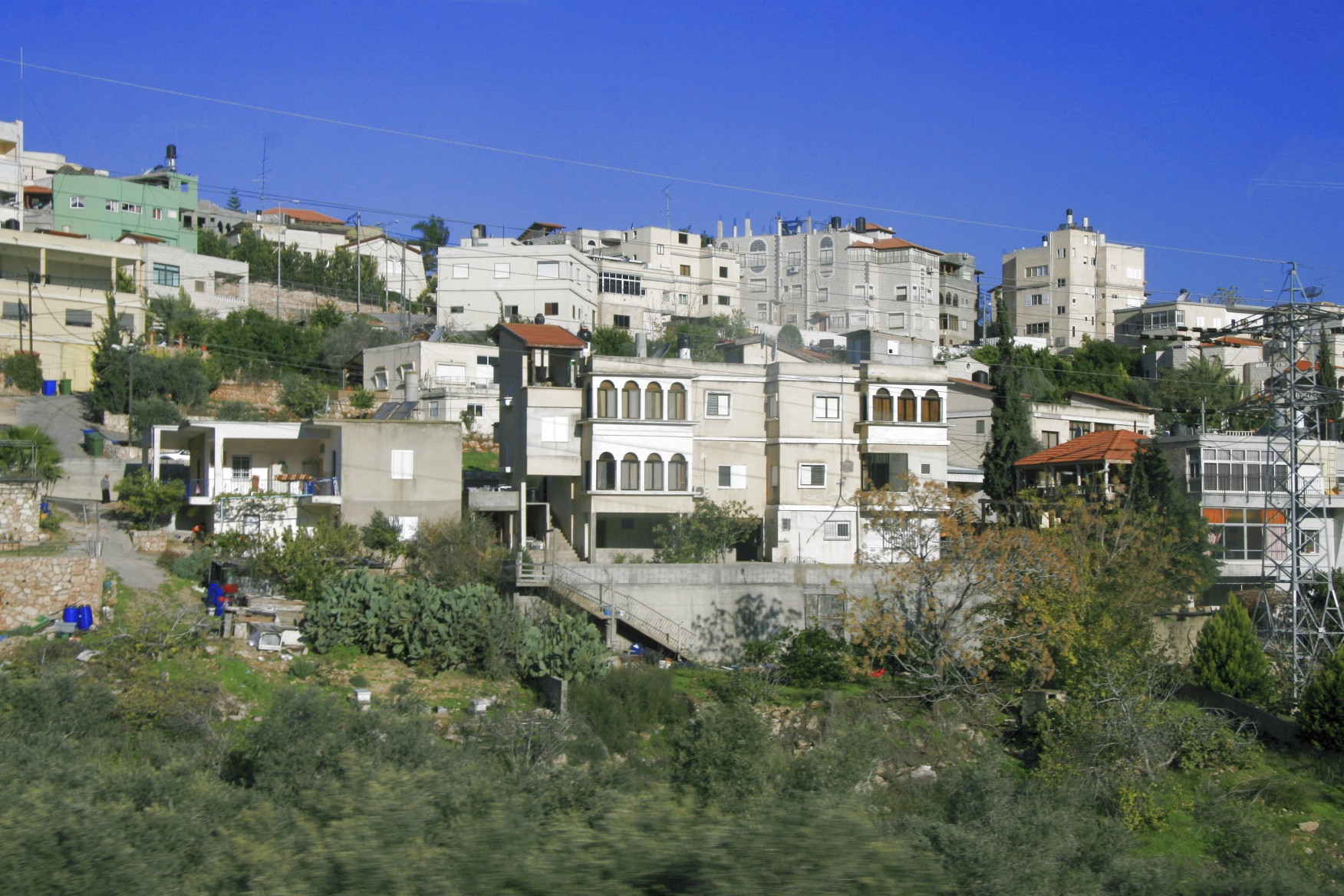
August 24th is the feast of the apostle Bartholomew, also identified as Nathaniel, from Cana in Galilee, only a few miles from Nazareth. Like Nazareth, Cana attracted little interest in Jesus’ time, yet it played a major role in Jesus’ early life and mission.
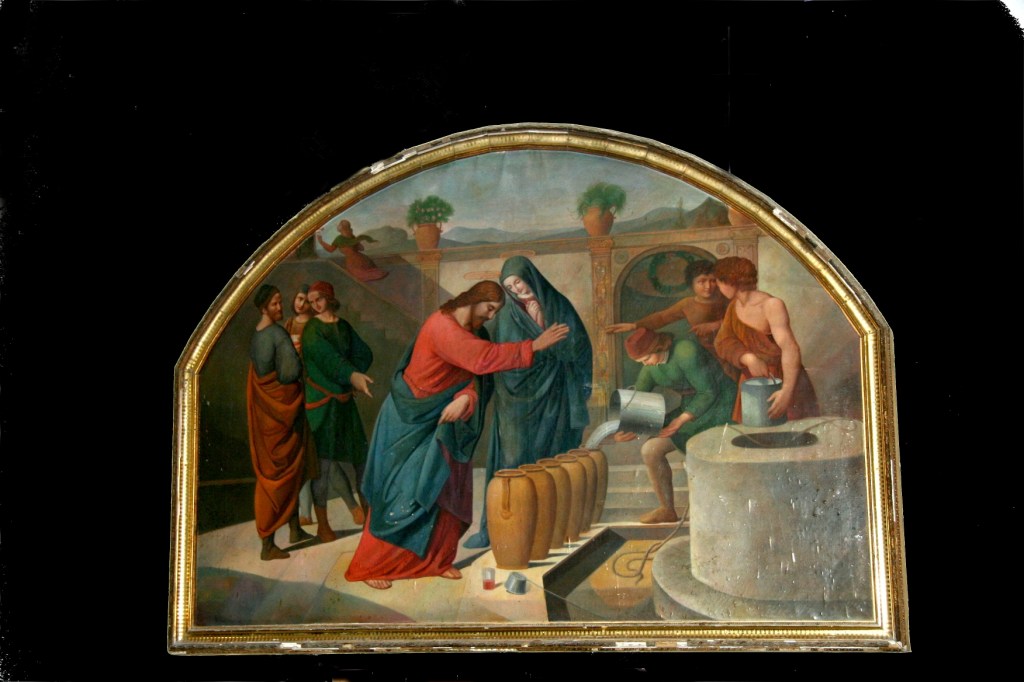
In John’s gospel, Jesus turns water into wine at a wedding in Cana, his first “sign” that God’s kingdom would come. (Jn 2, 1-12) The family faced a wedding nightmare: the wine was running out and embarrassment was sure to come.
Catholic Church, Cana
Was the family related to Jesus? Or Bartholomew? At least they were close. Why else would Jesus, his mother and his disciples be at the celebration?
The miracle was special,. More than saving a family from embarrassment, it’s a sign in John’s gospel of God’s great love for ordinary people in ordinary towns everywhere. God delights in them, says the Prophet Isaiah, whose words often accompany the Cana miracle, Cana signifies poor Israel, whom God loves with all the ardor of a “young man marrying a virgin,” God’s love, bountiful, restoring, overflowing with delight, goes out to this poor place, as well as poor places everywhere.
Jesus performed another miracle at Cana, John’s gospel says, another sign of the coming kingdom. Besides the miracle at the wedding, Jesus cured the dying son of a government official from Capernaum, whose ” father came to Cana because he heard that Jesus was there. (John 4.46-54) Jesus saved his son from death.
Through the centuries Cana hasn’t prospered much. It’s not much to look at today. In the late 19th century, a visiting English vicar described it this way:
“ (Kefr Kenna) lies on high ground, but not on a hill…A broad prickly pear led to the group of houses which perhaps represents the New Testament Cana. Loose stones were scattered around the slope. There may be, possibly, 150 inhabitants, but one cannot envy them their huts of mud and stone, with dunghills at every corner. Huge mud ovens, like great beehives, stood at the sides of some of the houses.
“ In one house a worthy Moslem was squatting on the ground with a number of children, all with slates on which verses of the Koran had been written, which they repeated together. It was the village school, perhaps like that at Nazareth eighteen hundred years ago.
“ A small Franciscan church of white stone with a nice railed wall, with a beautiful garden at the side, had over its doorway these startling words in Latin: ‘Here Jesus Christ from water made wine.’ Some large water jars are shown inside as actually those used in the miracle, but such mock relics, however believed in by simple monks, do the faith of other people more harm than good.”
Cana’s still a poor town. Like other poor places in the world it’s waiting to be raised up to share in the splendor of the heavenly Jerusalem. God loves poor places like this, the Cana miracle says. Bartholomew came from here.
In our first readings for yesterday and today at Mass, the Prophet Ezekiel ( 24,1-11) has some wise but hard words for secular and religious leaders. St. Matthew’s gospel today about the workers in the vineyard (Matthew 20,1-16) has some lessons for ordinary people too.
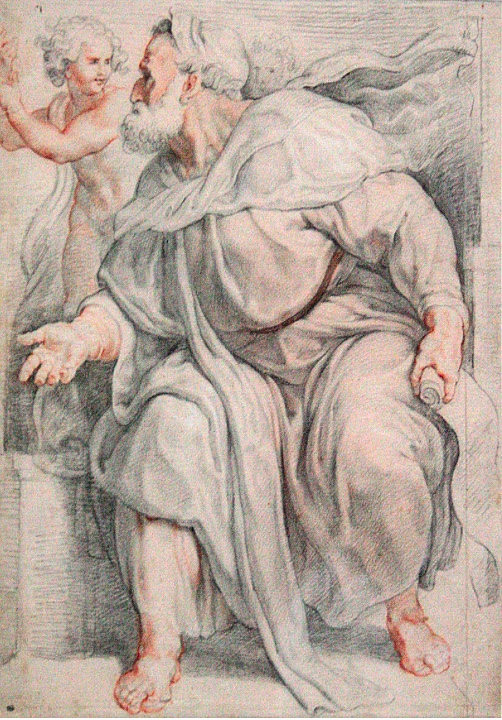
Yesterday Ezekiel spoke against the King of Tyre for making himself a god. Clever, successful, sure of himself, the King of Tyre sits on the throne that belongs to God alone. He will be pulled from his throne and put to a violent death.
Remember, though, Ezekiel is a Jewish exile in Babylon. He’s really speaking, not about the ruler in Tyre, but about the ruler in Babylon. Leaders like him shouldn’t make themselves gods. Only God is king over all. That’s true today as well as then.
Today, Ezekiel excoriates the shepherds of Israel, the Jewish religious leaders, who gouge their sheep for their own benefit. Woe to these shepherds, the Lord says.
Notice that God doesn’t say he will replace the shepherds with other shepherds. God himself will be their shepherd.
“Thus says the Lord GOD: I swear I am coming against these shepherds. I will claim my sheep from them and put a stop to their shepherding my sheep …I will save my sheep… I myself will look after and tend my sheep.”
There’s no sign that God gives up on his people in our reading. In fact, God becomes more engaged than ever. He comes when times are bad. “I myself will look after and tend my sheep.” The Lord is our shepherd.
The gospel reading from Matthew about the workers in the vineyard may also say something to us today. First, it says the owner of the vineyard is looking for a harvest. He wants it, it’s close to his heart, and so he calls laborers, as many as he can get, at any time he can get them.
God wills a kingdom to come.
The laborers ( they’re us) have their own ideas how it will come. They want to control the way things are done. They have fixed ideas and dispute the owner of the vineyard. He’s not fair, they say. Actually, he’s far more generous than their ideas make him to be.
Keep looking at the Word of God. Far wiser that what you hear and see on CNN, Fox, CBS, the New York Times, ABC. or Facebook, or Twitter…..
We usually look to the New Testament for wisdom day by day. The Old Testament readings in our lectionary don’t seem as relevant as the New; the words themselves– “Old,” “New”– suggest that. The Fathers of the Church, though, preached and reflected on the Old Testament a lot, more than we do. For one thing, they saw in the Old Testament their mission to be involved in the world of their day.
During his ministry Jesus was cautious about saying anything the Romans and those occupying Palestine might see as meant for them. He’s careful about social or political statements that could end his ministry quickly. Look what happened to John the Baptist, for example. In today’s gospel reading (Matthew 19,23-30) Jesus tells his disciples, with Peter as their head, that the rich will find it hard to enter the kingdom of heaven. He’s cautious about indicating who the rich are.
The Prophet Ezechiel (Ez. 28,1-10) in our Old Testament reading today, however, speaks out against the rich and powerful of his time by name. He inveighs against the Prince of Tyre, a small Phoenician kingdom entrenched along the Mediterranean Sea, where Lebanon is today. Smart traders and skillful politicians, they saw themselves as a model society for that part of the world.
Ezechiel like so many of the prophets was a social critic. He’s warning the Jewish ruling class in exile in Babylon then about seeing Tyre as their model for rebuilding Jerusalem. He sees too much of Tyre’s unjust ways and arrogance to buy into becoming a nation like them.
In our own time and place, we shouldn’t lose our voice for criticizing social issues, prophets like Ezekiel seems to say. While we struggle with our own personal sins and failures, we need to keep promoting a just society throughout the world. God calls us to work for issues of social justice, like immigration and poverty, for example.
For this week’s homily please watch the video below.
20th Sunday b: Bread of Life
Our first reading this Sunday is from the Book of Proverbs. I think of this reading from the Old Testament as a collection of common sense advice that a Jewish grandfather might give to his grandchildren as they get ready to go on the journey of life.
He invites them into a house of wisdom where there’s plenty to eat and to drink. It’s a house filled with common sense wisdom, where you learn what to do and what not to do in life.
The Book of Proverbs is filled with short little sayings centuries old but never out of date. It’s advice about how to live and what to stay away from. It’s based on human experience that doesn’t change over the years.
Let me give you some examples:
An idle hand makes poor,
A busy hand brings riches.
A son who gathers in summer is a credit;
a son who sleeps during harvest, a disgrace.
A wise heart accepts advice,
but a know it all will trip and fall.
Judaism accepted human experience; Christianity accepts human experience too. If you don’t do anything, you won’t get anything done. Take advantage of what’s there, don’t let the opportunities of life slip by. If you think you know it all, you don’t.
The Book of Proverbs is a beautiful introduction to our gospel. Jesus, the Wisdom of God, tells the crowd that he is bread from heaven. He has come with a wisdom that doesn’t come from human reason or human experience. He doesn’t deny human reason or human experience, but he goes beyond human wisdom. He brings us the wisdom of faith.
Those he spoke to in the gospel were descendants of a people who believed that God could free them from the slavery of Egypt and then lead them through a desert to a promised land. They believed a power beyond human power could do this, but then they murmured in disbelief. Now, Jesus said to them, you murmur in disbelief when I say, “Whoever eats my flesh and drinks my blood has eternal life, and I will raise him on the last day…Whoever remains in me, and I in him, I will raise him up on the last day. I am the Bread of life. “
Jesus claims he is beyond the manna their ancestors ate in the desert and died. He’s the “true Bread from heaven.” So “taste and see the goodness of the Lord.”
Our religion welcomes human wisdom. We don’t deny science or what real human experience teaches us. But faith brings us beyond what science or human reason can tell. In the Eucharist the Risen Jesus speaks to us. He is more than flesh as we know it. He comes with a promise of life beyond what we know or can conceive. He promises to be food for our journey from this life till eternal life. He is a friend at our side.
‘Lord, I am not worthy
that you should enter under my roof,
but only say the word and my soul shall be healed.’“
That’s our prayer preparing for communion at Mass. The words were first spoken to Jesus by a Roman centurion who came to him in Capernaum asking that his servant be cured. “I will come and cure him”, Jesus told him. The centurion replied, “Lord, I am not worthy that you should come under my roof, only say the word and my servant will be healed.” (Matthew 8:5-13)
We make his prayer of faith our own as we approach the Lord in the Eucharist. He comes to make our souls a place of wisdom.
Come and stay with us. Let us taste your goodness, the goodness of the Lord.”
We‘re reading the Prophet Ezekiel at Mass these days. Early Jewish scholars considered him hard to read; only those over 30 should read him, some said. We have the same difficultly. The lectionary for today, Friday in the 19th week of the year, offers a gruesome story of infanticide. A infant girl is thrown out to die. Not a pretty story to look at.
It’s a story harsh to hear and hard to understand. Infanticide, a form of abortion. child abuse, gender discrimination, prostitution, ingratitude, forgetfulness of God. Ezechiel describes his own society in dark terms. Yet, all the while God is there. We’re offered a shorter version in our lectionary to spare us from the ugly details.
But don’t miss God’s intervention:
“You became mine, says the Lord GOD.Then I bathed you with water, washed away your blood, and anointed you with oil. I clothed you with an embroidered gown, put sandals of fine leather on your feet; I gave you a fine linen sash and silk robes to wear. I adorned you with jewelry… You were exceedingly beautiful, with the dignity of a queen.”
“But you were captivated by your own beauty, you used your renown to make yourself a harlot, and you lavished your harlotry on every passer-by, whose own you became.”
“Yet I will remember the covenant I made with you when you were a girl, and I will set up an everlasting covenant with you, that you may remember and be covered with confusion, and that you may be utterly silenced for shame when I pardon you for all you have done, says the Lord GOD.” {Ezechiel 16, 1-69)
Ezeckiel’ story of the abandoned girl is a story of sin and redemption. All the while God is there.
Look at the hard times, don’t ignore or hide from them, but see them with the eyes of God, the prophet says. “Thus says the Lord GOD,” I swear I am coming… I will claim my sheep…I will save my sheep…I myself will look after and tend my sheep.” (Ezekiel 34,1-11)




 The Victor's Place