Kingdom of “The Least”

     Lent is a time for us to face up to how very much our God loves us. This is who our God is. Because of this, Lent is also our time to face up to to the hurt that we give to Our Beloved One whenever we behave in unloving ways. We can begin by looking at the commandments that our Church teaches us and examining our conscience.  In the Gospel for Wednesday of the Third Week of Lent our Lord warns us: “Whoever breaks the least of these commandments and teaches others to do so will be called the least in the Kingdom of Heaven.” Ouch! I look at the Ten and see how I fall short in fulfilling them, and at times provide a bad example for those around me. I am certainly one of “the least”. Sadly I am not alone. So many of us are in the same boat. And yet Our Lord still includes us in His Kingdom. The least, but still there. Like Fr Victor says, Our Lord has not given up on us!

     How can we help God get us out of that hole? Perhaps we can begin by approaching our Creator with humility and trust. In the powerful Gospel for Saturday of this same week, we hear Jesus’ parable of the Pharisee and the tax collector. The attitude of the Pharisee immediately places him next to me as one “of the least!” He has been trying to be “good”, and he feels joy and comfort in the presence of God, especially in his House. This is good. So many of us Christians walk into Mass full of hope and gratitude. But oh! That cardinal sin of pride, the failure to love our neighbor as ourselves!

     The tax collector seems to have the better attitude, full of shame, contrite, totally surrendering to the judgement of God. He knows that he certainly is one of the “least”. I’ve always said, “I want to be like him,” in all prayer, specially during the Sacrament of Reconciliation. Today, though, Fr Victor pointed out that this tax collector so far has failed to know how incredibly great is the Love God has for him. This is what our Lord Jesus came to teach. At least the tax collector has a glimmer of belief in the mercy of God. It’s a good beginning, and God exalts him for that. 

     Sometimes at Mass I feel like the Pharisee, satisfied with my efforts and full of gratitude for God’s Love and presence in my life. The Celebration of the Mass seems like such a joyful time and I wonder why so many fellow worshippers have such long faces! I should know better, because there are times when I walk into Church with that same unhappy mood! All I know is that I am still one of “the least” and I’m not proud of it. I wonder how far down the list I am? Does God keep lists? Who is the least of the least?

     I was sitting at the Monastery Chapel thinking about these things and my eyes suddenly looked up to the crucifix up front, and I began to cry. My beloved God chose to become the Least of the least upon that Cross, taking on the pride of the Pharisee, the corruption of the tax collector, my unworthiness, the misery of of those with long faces at Church, and the viciousness and brutality of His time and mine.

     Why would God do this? The answer to his mystery is beyond all comprehension. But I do know that the main reason is the incredible love that God has for me and every person on Earth, no matter how far down the list we are.

     May the Passion of Jesus Christ be always in our hearts.

Orlando Hernandez

The Annunciation of the Lord: March 25

Readings here.

Morning and Evening Prayers here.

Children’s Prayers here.

The feast of the Annunciation of the Lord, March 25th, celebrates the mystery of Word of God made flesh, who dwelt among us. Jesus Christ was conceived by the Holy Spirit and born of the Virgin Mary. Though Mary has a key role in this  feast of the Incarnation, this is primarily a feast of Jesus, not of Mary.

The feast originated in the 5th century, probably in Jerusalem. Gradually it was adopted by other churches of the Christian world. To appreciate the rich symbolism of this feast, it is important to recognize the role of the Church of Jerusalem in its creation. That church had a hand in creating many of our ancient  feasts.

Established by Constantine in the 4th century, the great churches and shrines of the Jerusalem Church, especially the Church of the Holy Sepulcher, became a center for pilgrims to the Holy Land. The Church of the Holy Sepulcher, built next to the ruins of the Temple Mount, never abandoned the rich symbolism found in Jewish tradition.

The date of our feast of the Annuciation, March 25, offers an example. The spring equinox, when light began to conquer darkness, was associated in Jewish tradition with the  Exodus from Egypt, but also the creation of the world, the creation and fall of Adam, and Abraham’s offering of his Son to God. 

This early Christian feast in Jerusalem embraced the same ancient saving events and saw them completed in the mysteries of Christ. On this day Mary accepted the invitation of the angel and nine months later, December 25th,Jesus Christ, the Light of the world was born. He is the New Adam. His death and resurrection bring to Israel and to the world the promise of a land flowing in milk and honey.

The Letter to e Hebrews, read on our feast today, proclaims the role of Jesus, who said “a body you prepared for me…behold, I come to do your will, O God.’” God’s will was that his Son take a body in the womb of Mary.

Most of our readings in the liturgy for the last few weeks of Lent are from St. John’s Gospel, which presents Jesus as a divine teacher and worker of wonders.

This feast reminds us of the humanity of Jesus, silent and unknown in Mary’s womb. He lived unrecognized among the people of Nazareth. He was human all his life.

Our first reading for this feast cautions us in the figure of Ahaz about misreading

the presence of God among us. “ The Word was made flesh and dwelt among us.”

3rd Sunday of Lent c: Why Suffering?

3rd Sunday of Lent c

In Luke’s gospel Jesus answers two stories that asks about responsibility.

Who’s responsible for the Roman Procurator Pilate killing innocent people

at some religious event. Who’s responsible for a building in Siloam

collapsing killing 18 people?

Was God punishing these people? No, Jesus answers. God doesn’t punish

people through the cruelty that comes from wars or from accidents like a

building collapse. We face tragedies like these because we are human

beings. God will get us through them.

Let me talk about two stories from our time similar to our gospel stories.

Last March a large container ship crashed into Francis Scott Key Bridge in

Baltimore, Md, destroying the bridge, killing 6 construction workers and

causing thousands of people and companies a loss of income. The tragedy

caused massive damage to our economy. Who’s responsible for that

accident?

Are the people who built the large container ship? The people and

agencies who monitor bridge safety? Businesses and labor unions who

want to keep our economy going no matter what? Is God responsible?

They say this case will be in courts for years. But is the responsibility out of

our hands? Have we not responsibility for how justice is done and how

government performs?

The story about the Roman Procurator Pilate killing innocent people is a

story about war and its consequences. St. Augustine said that of all the

creatures God created human beings are the most destructive. They go

beyond lions and tigers and other savage animals, who only seem to go so

far in the way they kill. Human beings are the most savage of God’s

creatures.

We see that in the way we are waging our wars. We’re now in an arms race

to create weapons of war that are more destructive than ever. A recent

article from the Vatican began: “We are creating more and more weaponsof destruction, and do you think they won’t be used?” More than ever we

need to find ways to control war and make peace.

The questions Jesus raises in the gospel are unsettling questions and his

answer may not altogether satisfy us. Tragedies are part of life, he says, so

we should repent. Repent means we face these questions and do all we

can to deal responsibly with them. Repentance involves more than facing

personal issues. Repentance also means facing public issues in our world

and doing something about them.

But remember we are not alone. Listen to the story of God speaking to

Moses in our first reading for today from the Book of Exodus. Moses is all

alone, caring for a flock of sheep in the desert and God tells him to back to

the imperfect world of Egypt. Go back to his people.

But the LORD said,

“I have witnessed the affliction of my people in Egypt

and have heard their cry of complaint against their slave drivers,

so I know well what they are suffering.

Therefore I have come down to rescue them

from the hands of the Egyptians

and lead them out of that land into a good and spacious land,

a land flowing with milk and honey.”

We’re not facing a world where we can do nothing. God sent his Son,

Jesus Christ, into our world, our world of here and now. We ask him to be

with us and to lead us. We are not alone.

Cyril of Jerusalem: The Power of the Cross

St. Cyril of Jerusalem (313-386) was bishop of Jerusalem when that city was a popular center of Christian pilgrimage.  Ordinary Christians, as well as scholars like St. Jerome and St. Paula, came to the Holy Land at the time to visit the places where Jesus was born, died and rose again. “The whole world is going to an empty tomb,” St. John Chrysostom remarked. 

The church in Jerusalem influenced the liturgical, catechetical and devotional life of Christian churches throughout the world.. Visiting Christians, hearing Cyril’s sermons and masterful catechesis brought devotional and liturgical practices,, like the Stations of the Cross,  to their own churches back home. 

Cyril preached and celebrated the liturgy in the Church of the Holy Sepulcher, built by the Emperor Constantine  and his mother, Helena, over the tomb of Jesus and the place where  he died. The church still stands in Jerusalem today. 

St, Cyril and the church of Jerusalem are remembered, appropriately on March 18, usually during Lent.  

Here’s an excerpt from one of Cyril’s catechetical sermons, preached in the Church of the Holy Sepulcher, where the relic of the cross and the tomb of Jesus were honored. Siloam, the pool where the blind man was cured, Bethany where Lazarus was raised, the precious relic of the cross were not far away, they were nearly, easily seen and visited.

“The Catholic Church glories in every deed of Christ. Her supreme glory, however, is the cross. Well aware of this, Paul says: God forbid that I glory in anything but the cross of our Lord Jesus Christ!

“At Siloam, there was a sense of wonder, and rightly so: a man born blind recovered his sight. But of what importance is this, when there are so many blind people in the world? Lazarus rose from the dead, but even this affected only Lazarus: what of those countless numbers who have died because of their sins? Those miraculous loaves fed five thousand people; yet this is a small number compared to those all over the world who were starved by ignorance. After eighteen years a woman was freed from the bondage of Satan; but are we not all shackled by the chains of our own sins?

For us all, however, the cross is the crown of victory. It has brought light to those blinded by ignorance. It has released those enslaved by sin. Indeed, it has redeemed the whole of mankind!”

The relic of the cross, rescued from the refuse of Calvary, honored by Cyril in the Jerusalem church. was not just a grim reminder of the suffering of Jesus; Encased in gold, it was bathed in the glorious memory  of Jesus’ resurrection celebrated close by in his empty tomb.

Church of the Holy Sepulcher, Jerusalem

For Morning and Evening Prayers today, 4th week.

St. Patrick: March 17th

National Gallery of Ireland

With the parades, the soda bread and the rest, let’s not forget the saint at the heart of celebrations today:

From the Confession of Saint Patrick, bishop

Through me many peoples have been reborn in God

I give unceasing thanks to my God, who kept me faithful in the day of my testing. Today I can offer him sacrifice with confidence, giving myself as a living victim to Christ, my Lord, who kept me safe through all my trials. I can say now: Who am I, Lord, and what is my calling, that you worked through me with such divine power? You did all this so that today among the Gentiles I might constantly rejoice and glorify your name wherever I may be, both in prosperity and in adversity.

You did it so that, whatever happened to me, I might accept good and evil equally, always giving thanks to God. God showed me how to have faith in him for ever, as one who is never to be doubted. He answered my prayer in such a way that in the last days, ignorant though I am, I might be bold enough to take up so holy and so wonderful a task, and imitate in some degree those whom the Lord had so long ago foretold as heralds of his Gospel, bearing witness to all nations.  How did I get this wisdom, that was not mine before? I did not know the number of my days, or have knowledge of God. How did so great and salutary a gift come to me, the gift of knowing and loving God, though at the cost of homeland and family? I came to the Irish peoples to preach the Gospel and endure the taunts of unbelievers, putting up with reproaches about my earthly pilgrimage, suffering many persecutions, even bondage, and losing my birthright of freedom for the benefit of others.  

If I am worthy, I am ready also to give up my life, without hesitation and most willingly, for his name. I want to spend myself in that country, even in death, if the Lord should grant me this favour. I am deeply in his debt, for he gave me the great grace that through me many peoples should be reborn in God, and then made perfect by confirmation and everywhere among them clergy ordained for a people so recently coming to believe, one people gathered by the Lord from the ends of the earth.

As God had prophesied of old through the prophets: The nations shall come to you from the ends of the earth, and say: “How false are the idols made by our fathers: they are useless.” In another prophecy he said: I have set you as a light among the nations, to bring salvation to the ends of the earth.  It is among that people that I want to wait for the promise made by him, who assuredly never tells a lie. He makes this promise in the Gospel: They shall come from the east and west, and sit down with Abraham, Isaac and Jacob. This is our faith: believers are to come from the whole world.

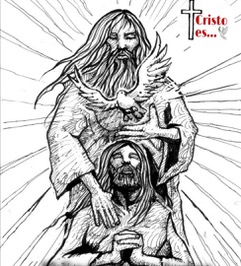
This Is My Beloved Son


 On Wednesday March 12, Father Lionel Pacheco CP gave a talk at Thomas Berry Place in Jamaica, NY.  He reflected on the Charism of St Paul of the Cross and how remembrance and prayer on the Passion of our Lord Jesus Christ has the supernatural effect of “softening” our hearts wich may have been hardened and become stony and cold in reaction to so many negative things all around and within our personal lives. I really need this gift from God in order to love those whom I see as my enemies and enemies of humanity. I need the peace of mind that only God can give. Meditation on the Passion is helping me so much this Lent, yet it is not an easy road. 

     Father Lionel spoke of the mysticism of St Paul of  the Cross, but he also said something that moved my heart: all Christian mysticism comes from our “Mystic par excellence”, Our Lord Jesus Christ. Two great examples of this mysticism are found in the Gospels of the Baptism of Jesus in the Jordan, and of The Transfiguration. Father Lionel said something that I had never thought about. According to him, in those holy moments the human Jesus “saw” that His Heavenly Father “delighted” in His Son’s humanity. Our Father loves the people that He has created, specially because Jesus has made us His brethren. So Jesus was further inspired to respect and love and heal us, and even die for us.  We should be be inspired to try and do the same.

     And yet, I wonder, when these beloved children commit unspeakable acts of cruelty and destruction, how does our Heavenly Father feel?  Angry (“wrathful”), disappointed, sad, still forgiving, or something Holy and vast beyond our understanding?

     When His Son cried on the Cross, “My God, my God, why have You abandoned me?” How did our Father feel then, certainly not delight? How did our Lord feel? How did they feel about each other, and about us? I lose my mind within this vortex of emotions, trying to stay afloat, not to drown in confusion, or sorrow, or hopelessness. I feel with all my soul that at the very core of this whirlpool is LOVE, Love beyond my comprehension. I rest within this mystery and feel my heart of stone becoming just a little softer.

     Lord help us. Teach us to love and forgive. Thank You for the gift of Your Passion. May it be always in our hearts. 

Orlando Hernández

2nd Sunday of Lent: Transfiguration of Jesus

For this week’s homily please watch the video below.

The glorious transfiguration of Jesus before his disciples on the mountain came after he predicted his suffering and death. He told them then that they must follow him.
” If anyone wishes to come after me he must renounce self, take up his cross and follow me.”

They found those words hard to hear, as we do. Peter, reacting for the others, protested “Heaven forbid! No, Lord, this shall never happen to you.” Most likely he was also thinking: “Nor should it happen to me, either.”

In answer to their fears, Jesus took Peter, James and John up a high mountain and was transfigured before them. They saw his face shining like the sun and his garments brilliant white. Moses and Elijah. were at his side. A voice from heaven confirmed that “He is my chosen Son.”

Luke notes in his gospel that the disciples Jesus took up the mountain with him were at first unaware of the vision. They were asleep and had to be awakened, but even awake they can hardly take it in. They were filled with awe.

How hard it is to realize the promise made in the mystery of the Transfiguration, a promise we hear in Paul’s Letter to the Philippians.

Our citizenship is in heaven,
and from it we also await a savior, the Lord Jesus Christ.
He will change our lowly body
to conform with his glorified body
by the power that enables him also
to bring all things into subjection to himself.

The glorious promises of God are as hard to understand as the mystery of the Cross.

Thursday, 1st Week of Lent

Lent 1

Matthew 7,7-12

Does God answer prayers? A question often asked. Some say God–if there is a God-doesn’t pay attention to us at all. We’re on our own. No one’s listening and no one cares.

Jesus certainly believed his Father listens and cares. He trusted God and asked God for things. He taught us to pray as he did. His prayer in the Garden of Gethsemane reveals a trust that’s unfailing. Over and over he asks that his life be spared. “Father, let this cup pass from me.” He knocked and the door opened; the answer came, yet not as he willed, but as His Father willed. “An angel came to strengthen him,” to accept that answer.

His experience is a model for us. Yes, God gives good gifts to his children, but according to his will. He knows what we need. He gave his only Son the gift of new life, yet he had to first pass through death.

St. Paul of the Cross recognized the mystery surrounding petitionary prayer. Ultimately our prayer is answered, but often enough in mysterious ways that’s hard to understand. Our faith is tested when we pray for things.

“I thank the Father of Mercies that you are improved in health, and you say well that the Lord seems to be playing games. That’s what Scripture says: “God plays on the earth,” and “My delights are to be with the children of men.” How fortunate is the soul that silently in faith allows the games of love the Sovereign Good plays and abandons itself to his good pleasure, whether in health or sickness, in life or in death!”
(Letter 920)

The first reading today from the Book of Esther is an example of someone who comes late to praying. We might call Esther a non-practicing Jew, who prays when things get worse. Is Lent a time for non-practicing Christians to consider praying again? Faith grows through prayer.

“God of Abraham, God of Isaac, and God of Jacob, blessed are you. 
Help me, who am alone and have no help but you,
for I am taking my life in my hand.
As a child I used to hear from the books of my forefathers
that you, O LORD, always free those who are pleasing to you.
Now help me, who am alone and have no one but you,
O LORD, my God. And now, come to help me, an orphan.” (Esther 12:14-16)

Lord,
I ask, I seek, I knock.
Let me never tire of prayer.
“In the day I called you answered me.”                                                                                 So attentive, so quickly you turn when I call.                                                                   Hear me
and let it be done
according to your will.

For more: http://www.PassiionistPray.org

1st Week of Lent: What to Look for.

Our readings for the 1st week of Lent are wonderful teachings on prayer. .Prayer is a conversation with God, who made heaven and earth. We can come into God’s presence. Monday’s readings this week remind us of God’s care for everything in heaven and earth. As his children, we’re to share his care for all things.

.In Matthew’s Gospel , Tuesday, Jesus tells us God is “Our Father”.We can come to God as his children. He gives us daily bread, what we need each day. He gives us forgiveness and strength to come to him, no matter what trials we meet. God gives us the gift of prayer to know him. Like the snow and rain that falls constantly on the earth, that gift always falls on us. We can pray to him.

Wednesday’s readings tells us that prayer is about more than ourselves and our own needs. The story of Jonah says we’re part of a world bigger than our own. Like Jonah in Nineveh, we belong to a larger world we must care for, God’s world.

Never lose confidence in prayer and what it makes possible, Jesus tells us in Thursday’s readings. “Ask and you will receive, seek and you will find. Knock and the door with open” .

In Friday’s readings Jesus says we must approach the altar of God’s presence with hearts free from resentment, harsh judgment and anger. Otherwise, our prayer become weak and blind. We cannot see.  (Friday)

We must pray even for our enemies, we hear on Saturday, this week, for our Father in heaven makes the sun shine on the just and the unjust and the rain to fall on saints and sinners.

Lent is an important time to appreciate the gift of prayer. It’s a time for all of us, young or old, even those who don’t pray, to grow in prayer,

1st Sunday of Lent c: Temptation

For this week’s homily please play the video below.