October 25-30: Readings and Feasts

OCTOBER 25 Mon Weekday Rom 8:12-17/Lk 13:10-17 

26 Tue Weekday Rom 8:18-25/Lk 13:18-21 

27 Wed Weekday Rom 8:26-30/Lk 13:22-30 

28 Thu Saints Simon and Jude, Apostles Feast Eph 2:19-22/Lk 6:12-16

29 Fri Weekday Rom 9:1-5/Lk 14:1-6 

30 Sat Weekday Rom 11:1-2a, 11-12, 25-29/Lk 14:1, 7-11 

31 SUN THIRTY-FIRST SUNDAY IN ORDINARY TIME

Dt 6:2-6/Heb 7:23-28/Mk 12:28b-34

We continue reading this week from St. Paul’s important Letter to the Romans. On Tuesday we read his timely teaching on creation. I wonder if St. Paul were writing to the Americans, or Chinese or Europeans today if, instead of the question of the law, which was bothering the Roman church then, he would devote his whole epistle to the importance of creation.

Saints Simon and Jude are the apostles we’re remember this month, on Thursday.

We’re reading from the Gospel of Luke along with Paul’s Letter to the Romans. Luke was a disciple of Paul, so he will emphasize some of Paul’s teachings in his gospel. For instance, the gospel is meant for everyone, the whole world. No one’s left out.

Creation’s Expectation

Paul’s Letter to the Romans, which we read for almost four weeks at Mass, is considered his most important letter, but it can be hard to follow. Paul writes to a Jewish-Christian community in Rome to establish his credentials as an apostle of Christ and to enlist their help in a journey he wants to make to Spain. He knows also that this community of Jewish and Roman converts is trying to reconcile Jewish law and tradition with faith in Christ, so his letter takes on that question at length. 

It’s helpful to remember the letter is based on Paul’s basic teaching, the common creed of the church he shares with the other apostles. For example, today’s reading (Romans 8: 12-17) is a beautiful reflection on the mission of the Holy Spirit, who leads us to become children of God. The Spirit leads us to call God, the creator of heaven and earth, “Abba, Father!” We are God’s adopted children. We are “joint heirs with Christ” called to share in his glory, “if only we suffer with him.” 

Tomorrow’s reading continues this teaching as it applies to creation. “Creation awaits with eager expectation the revelation of the children of God.” It “groans in labor pains” until that day comes when there will be a “new heaven and a new earth.” Just as we are awaiting the fruit of our adoption, creation waits to share in our adoption in “the redemption of our bodies.” 

All creation groans in labor pains, shares a common suffering,  is waiting for the Spirit to fulfill his promise. Creation has a share in the resurrection of Christ. 

This teaching about creation you won’t get from science. We have it from faith. It’s an important teaching for us today. It’s important, too, to recognize this is not just Paul’s personal teaching. He’s preaching from the basic teaching of the church.

Paul also speaks about creation as he begins his Letter to the Romans.  “Ever since the creation of the world, God’s invisible attributes of eternal power and divinity have been able to be understood and perceived in what he has made.” Creation reveals God to us, yet human beings turn from the God of creation, creating gods of their own, St. Paul says.

Paul’s words are a timely commentary on our own response to climate change today as we continue to put our national and personal interests, our oil fields and coal mines and life-styles above the well being of our earth. His teaching on creation is a basic teaching of our faith. That teaching needs to be heard.

30th Sunday: B. God’s Mercy

Most Sundays this year we’re reading from the Gospel of Mark.  Mark’s Gospel is a wonderful work of art. By that I mean it’s not just a series of stories or sayings of Jesus put together historically as a  account of Jesus’ life. No, Mark’s Gospel is skillfully arranged to teach us who Jesus is and what it means to follow him.

For the last five Sundays or so, Mark is taking us on the journey of Jesus and his disciples from Galilee in the north, where he began his ministry, to Jerusalem in the south where he will die and rise from the dead. Mark’s not interested in the places he passes day by day. He’s telling us what Jesus is revealing about himself, and how people react to him.

On the journey Jesus tells his disciples he will be betrayed and crucified and die on the cross and rise again. He also tells them if they want to follow him, they have to take up their own cross. But over and over they can’t see what he’s telling them. Over and over, Mark says, “They did not understand him.”

Now, those following Jesus are good, normal people, as far as we can judge. Peter and the other fishermen from Galilee, James and John, for example, are good, solid reasonable people. The rich young man who approached Jesus in our gospel reading a few weeks ago– a good, solid individual. But they did not understand him.

“You think like human beings think,” Jesus says to Peter earlier in Mark’s Gospel. Peter had told him to put any thought of suffering and dying from his mind. James and John thought they could become big players in Jesus’ earthly kingdom. He would be a ticket to success when they reached Jerusalem. The rich young man was afraid of losing what he had. They’re all examples of the way human beings think. They did not understand him.

Of course, Mark’s gospel is pointing out this is the way we think too. We’re so limited,  so self-serving, so afraid to trust in the wisdom and promises of God. We think like human beings. At one point in Mark’s gospel, the disciples throw up their hands, seemingly in desperation, and say among themselves, “Then who can be saved?”

Today’s gospel answers to that question. “As Jesus was leaving Jericho with his disciples and a sizable crowd, Bartimaeus, a blind man, the son of Timaeus, sat by the roadside begging.” They’ve reached Jericho where the road turns up to Jerusalem. The blind beggar is sitting on the road. He can’t see. He had nothing to recommend him, it seems. Nobody wants him near them, but Jesus calls him and gives him his sight.

Not only does Jesus give him his sight, but Bartimaeus, the son of Timaeus, gets up and follows Jesus on the way, up to Jerusalem. In a simple, beautiful way, Mark’s Gospels tells us a powerful story of God’s mercy. The blind man is a symbol of humanity,  blind to so much. But God’s mercy is stronger than human thinking, human weakness, even human sin. It reaches out  and helps us . God’s mercy helps us to see, to get up and with Jesus enter Jerusalem.

30th Sunday b: The People Jesus Calls

For this week’s homily, please watch the video below.

October 18-24: Readings and Feasts

OCTOBER 18 Mon Saint Luke, Evangelist Feast 2 Tm 4:10-17b/Lk 10:1-9 

19 Tue USA: Saints John de Brébeuf and Isaac Jogues, Priests,

and Companions, Martyrs Memorial Rom 5:12, 15b, 17-19, 20b-21/Lk 12:35-38 

20 Wed Weekday Saint Paul of the Cross, Priest Rom 6:12-18/Lk 12:39-48 

21 Thu Weekday Rom 6:19-23/Lk 12:49-53 

22 Fri Weekday [Saint John Paul II, Pope] Rom 7:18-25a/Lk 12:54-59 

23 Sat Weekday [Saint John of Capistrano, Priest;] Rom 8:1-11/Lk 13:1-9 

24 SUN THIRTIETH SUNDAY IN ORDINARY TIME Jer 31:7-9/Heb 5:1-6/Mk 10:46-52 

Wednesday is the Feast of St. Paul of the Cross, founder of the Passionists. This year the Passionists celebrate their 300th anniversary.You can find his biography here. 

Readings for his feast here.https://bible.usccb.org/bible/readings/1020-memorial-paul-cross.cfm

The Jesuit North American Martyrs are remembered on Tuesday.

29th Sunday b: The Gospel of Success

For this week’s homily please watch the video below.

OCTOBER 11-17: Readings and Feasts

October 11 Mon Weekday [Saint John XXIII, Pope Rom 1:1-7/Lk 11:29-32 

12 Tue Weekday Rom 1:16-25/Lk 11:37-41 

13 Wed Weekday Rom 2:1-11/Lk 11:42-46 

14 Thu Weekday [Saint Callistus I, Pope and Martyr] Rom 3:21-30/Lk 11:47-54 

15 Fri Saint Teresa of Jesus, Doctor of the Church Memorial Rom 4:1-8/Lk 12:1-7 

16 Sat Weekday

[Saint Hedwig, Religious; Saint Margaret Mary Alacoque, Virgin;] Rom 4:13, 16-18/Lk 12:8-12 

17 SUN TWENTY-NINTH SUNDAY IN ORDINARY TIME

Is 53:10-11/Heb 4:14-16/Mk 10:35-45 or 10:42-45 

For the next 4 weeks our first weekday reading will be from Paul’s Letter to the Romans, considered the most important statement of his teaching. Appropriately, the responsorial psalm  for Monday proclaims: “The Lord has made known his salvation. All the ends of the earth have seen the salvation by our God.”

In Luke’s gospel, also on Monday, Jesus recalls the mission of Jonah and the conversion of Nineveh, a reminder of God’s saving plan for the world, which Paul the Apostle will forcefully proclaim.

Saint John XXIII, whom I was privileged to meet one memorable day in Rome, is remembered this Monday. Callistus, a slave who became an early pope is Thursday’s saint. St. Theresa of Avila, and women saints like Hedwig and Margaret Mary Alacoque are remembered later this week.  

The readings can be found at this site.

Morning and evening prayers here.

28th Sunday b: Who is the Rich Young Man?

For this week’s homily wath the video below.

Caring for Creation

f

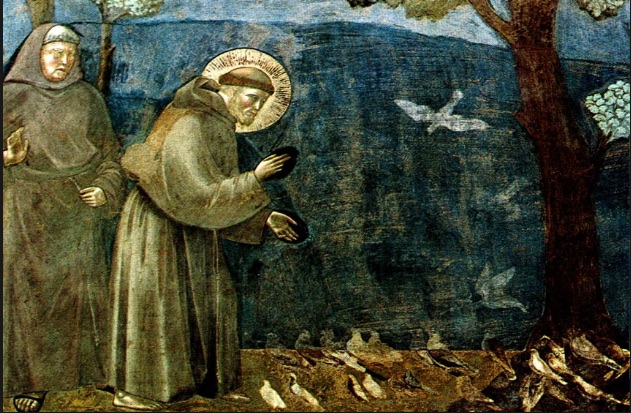
St. Francis is one of those super saints  to keep in mind, even after his feast day. I mentioned in a previous blog the statue of Francis facing St. John Lateran and Pope Innocent’s dream of a young man who, like Francis, held up the church’s walls ready to fall.  Francis helped renew the church.

In his encyclical Laudato Si, Pope Francis paints a verbal picture of Francis, holding his arms out to the created world, caring for our endangered planet:

“I believe that Saint Francis is the example par excellence of care for the vulnerable and of an integral ecology lived out joyfully and authentically. He is the patron saint of all who study and work in the area of ecology, and he is also much loved by non-Christians. He was particularly concerned for God’s creation and for the poor and outcast. He loved, and was deeply loved for his joy, his generous self-giving, his openheartedness. He was a mystic and a pilgrim who lived in simplicity and in wonderful harmony with God, with others, with nature and with himself. He shows us just how inseparable the bond is between concern for nature, justice for the poor, commitment to society, and interior peace.

“Francis helps us to see that an integral ecology calls for openness to categories which transcend the language of mathematics and biology, and take us to the heart of what it is to be human. Just as happens when we fall in love with someone, whenever he would gaze at the sun, the moon or the smallest of animals, he burst into song, drawing all other creatures into his praise. He communed with all creation, even preaching to the flowers, inviting them “to praise the Lord, just as if they were endowed with reason”.

“His response to the world around him was so much more than intellectual appreciation or economic calculus, for to him each and every creature was a sister united to him by bonds of affection. That is why he felt called to care for all that exists. His disciple Saint Bonaventure tells us that, “from a reflection on the primary source of all things, filled with even more abundant piety, he would call creatures, no matter how small, by the name of ‘brother’ or ‘sister’”. Such a conviction cannot be written off as naive romanticism, for it affects the choices which determine our behaviour.

“If we approach nature and the environment without this openness to awe and wonder, if we no longer speak the language of fraternity and beauty in our relationship with the world, our attitude will be that of masters, consumers, ruthless exploiters, unable to set limits on their immediate needs. By contrast, if we feel intimately united with all that exists, then sobriety and care will well up spontaneously. The poverty and austerity of Saint Francis were no mere veneer of asceticism, but something much more radical: a refusal to turn reality into an object simply to be used and controlled.

What is more, Saint Francis, faithful to Scripture, invites us to see nature as a magnificent book in which God speaks to us and grants us a glimpse of his infinite beauty and goodness. “Through the greatness and the beauty of creatures one comes to know by analogy their maker” (Wis 13:5); indeed, “his eternal power and divinity have been made known through his works since the creation of the world” (Rom 1:20). For this reason, Francis asked that part of the friary garden always be left untouched, so that wild flowers and herbs could grow there, and those who saw them could raise their minds to God, the Creator of such beauty. Rather than a problem to be solved, the world is a joyful mystery to be contemplated with gladness and praise.”

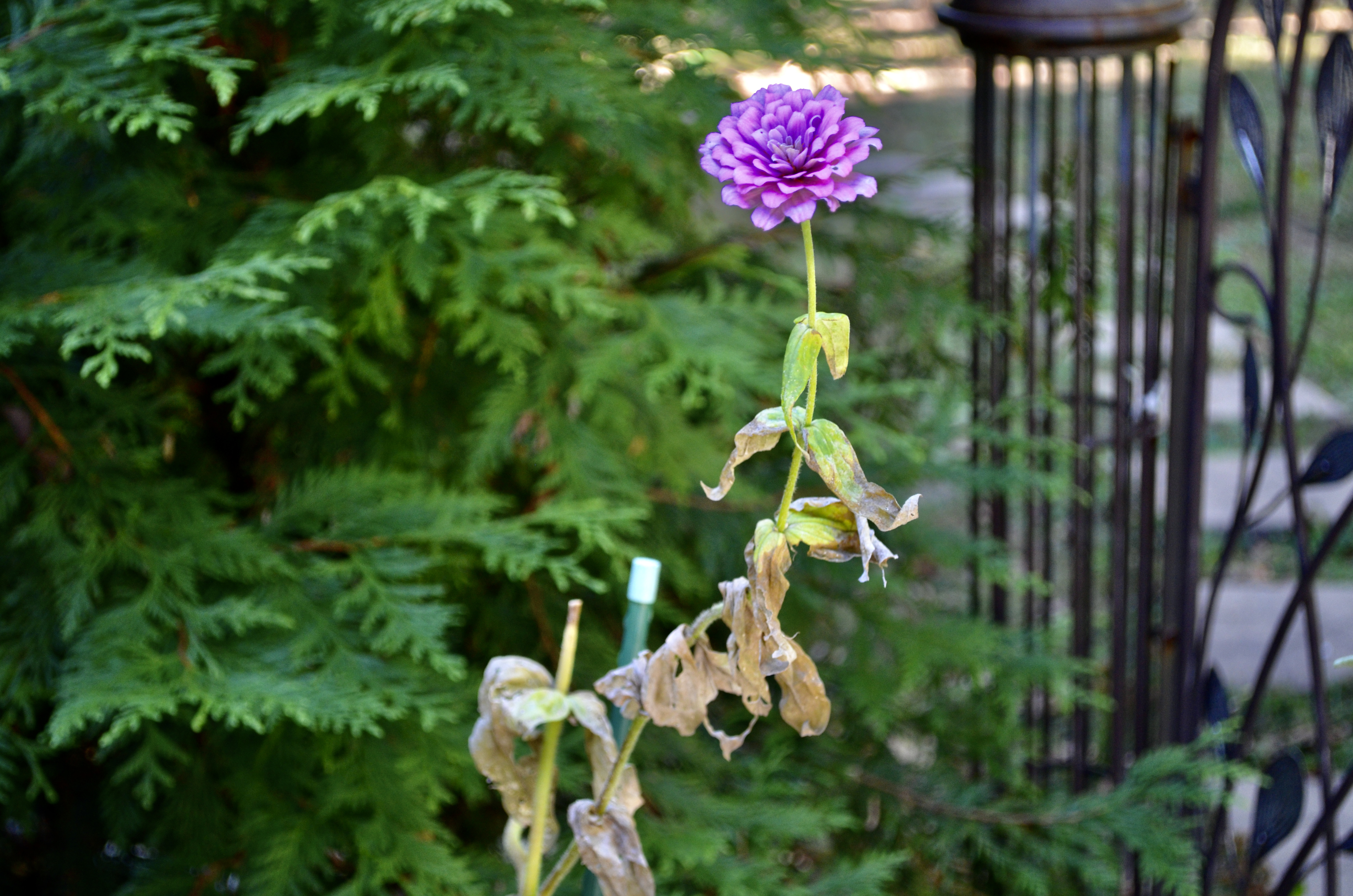
I like the pope’s words: “Rather than a problem to be solved, the world is a joyful mystery to be contemplated with gladness and praise.”

October 4-10: Readings and Feasts

OCTOBER 4 Mon Saint Francis of Assisi Memorial Jon 1:1—2:2, 11/Lk 10:25-37 

5 Tue Weekday [Saint Faustina Kowalska, Virgin; USA: Blessed Francis Xavier Seelos, Priest]

Jon 3:1-10/Lk 10:38-42 

6 Wed Weekday [Saint Bruno, Priest; USA: Blessed Marie Rose Durocher, Virgin]

Jon 4:1-11/Lk 11:1-4 

7 Thu Our Lady of the Rosary Memorial Mal 3:13-20b/Lk 11:5-13 

8 Fri Weekday Jl 1:13-15; 2:1-2/Lk 11:15-26 

9 Sat Weekday [Saint Denis, Bishop, and Companions, Martyrs; Saint John Leonardi, Priest; 

Jl 4:12-21/Lk 11:27-28 

10 SUN TWENTY-EIGHTH SUNDAY IN ORDINARY TIME

Wis 7:7-11/Heb 4:12-13/Mk 10:17-30 or 10:17-27 

Readings from Jonah, Malachi and Joel are from post exilic times, the commentators say, when the Jews returned from exile may see Judaism as exclusive and turn inward. God sends Jonah to Nineveh, representative of the outside world, and converts that great city. God’s plans are greater than ours.

Francis of Assisi had his arms open to the world.

Morning and evening prayers here.