Light and darkness are important in the Genesis story; they’re also important in our morning and evening prayers. Daily prayer is deeply influenced by the Genesis story .
“God saw light and said it was good.” the Book of Genesis says. God creates light, then sunlight, first. Then, holding this bright lamp, God goes about creating the world day by day out of darkness. Each day ends in darkness, but God goes to work the next day, light in hand, and new things come to be. Like us, God works day by day.
“Send forth your light and your truth, let these be my guide.” The morning psalms each day repeatedly ask for light to continue God’s work.
“Your word is a lamp for my steps, a light for my path.” The evening psalms prepare us for the darkness of night, when we rest. But God’s work goes on. Night for us is a time for trust and leaving the world in God’s hands. “Truly I have set my soul in silence and peace, As a child in its mother’s arms. even so my soul.” (Psalm 131, Tues.3)
Before television and radio and the complex scientific weather reports we get now, I think we looked out the window more to see the dawn, the dusk, the light and darkness. Should we stop looking out the window?
I don’t think so. Maybe we should look out the window more each morning and evening and try to see the light and darkness as the Book of Genesis suggests. We learn from them. God works day by day. So, “What am I going to do today?” Whatever we do, we should do it thankfully, by the light of God’s grace.
And don’t forget how the days of Genesis end. God rests and says it’s good. Something of God’s rest and appreciation, praise and thanksgiving, should be in us as we go through our days of creation.
In the New Testament, Jesus Christ, the Word of God, is called “the true light that enlightens everyone who comes into this world.”
The everyday sun promises the Sun that enlightens everyone.
14 Tue Sts Cyril, Monk, Methodius, Bishop Memorial Gn 6:5-8; 7:1-5, 10/Mk 8:14-21
15 Wed Weekday Gn 8:6-13, 20-22/Mk 8:22-26
16 Thu Weekday Gn 9:1-13/Mk 8:27-33
17 Fri Weekday [Seven Holy Founders of the Servite Order] Gn 11:1-9/Mk 8:34—9:1
18 Sat Weekday [BVM] Heb 11:1-7/Mk 9:2-13
19 SUN 7 SUNDAY IN ORDINARY TIME Lv 19:1-2, 17-18/1 Cor 3:16-23/Mt 5:38-48
The readings from the Book of Genesis this week take us out of the Garden of Eden as Adam and Eve begin life anew with their two children, Cain and Abel. A tough world gets worse as time goes by as brother kills brother. Finally, only Noah is left as rain comes down, but God’s promise remains. A rainbow spreads across the sky.
The readings from chapter 8 in Mark’s gospel center on the identity of Jesus. The Pharisees and scribes dispute his claims. His disciples believe he is the Messiah, but Peter in Mark 8, 33 calls him to turn away from his mission to Jerusalem.
In readings from the 8th and 9th chapters of Mark this week we hear of the growing opposition to Jesus from the pharisees who ask for a sign and questions from his own disciples. The readings mark the time when Jesus will head toward Jerusalem with his disciples.
Saints Cyril and Methodius. apostles to the slavic peoples, are remembered this Tuesday. Their work can throw some light on our current church debates about the language we should use in our liturgy and also the current situation in the Ukraine.
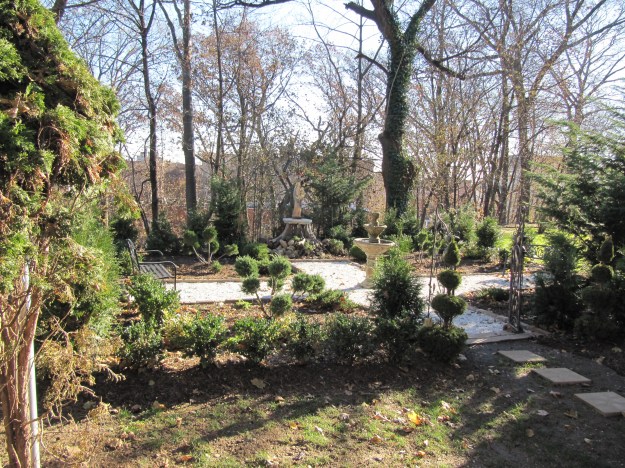
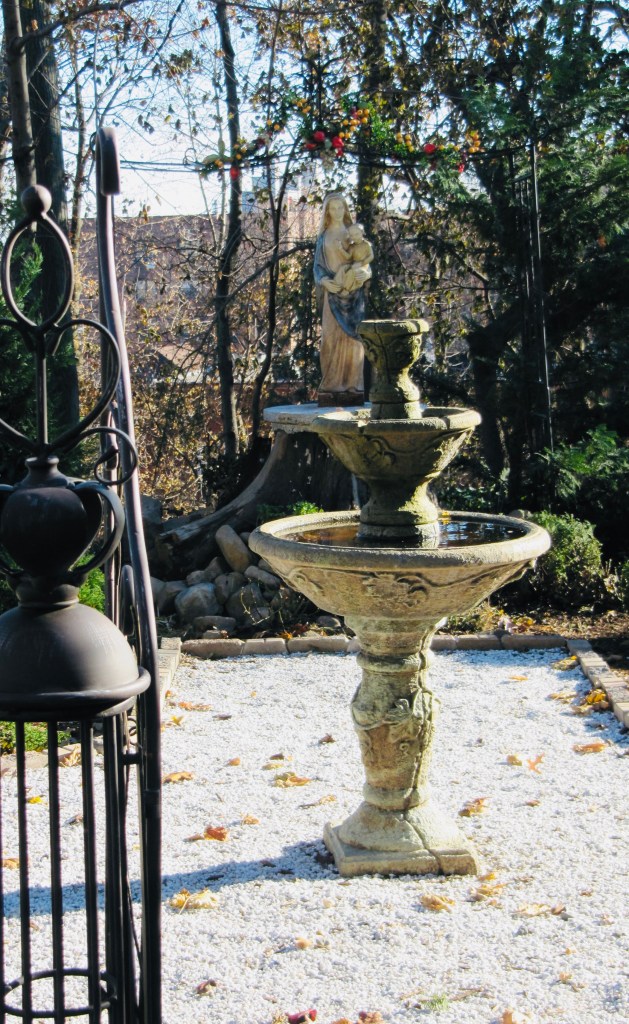
Mary Garden, Passionist Monastery, Jamaica, New York
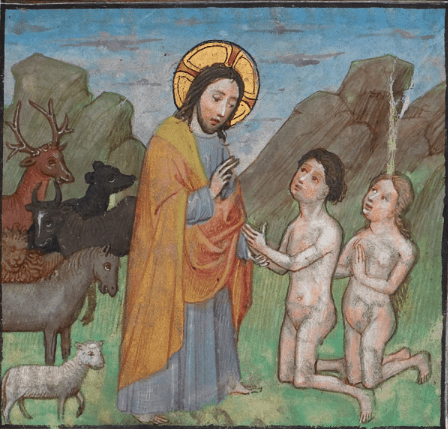
Today’s reading from Genesis begins the second creation account (Genesis 2,4..) which pays particular attention to the creation of human beings. But it begins with water, welling up from the earth bringing life to the earth and finally the human family.
Water is at the heart of the garden God provides for Adam and Eve. We have a fountain in the center of our Mary Garden signifying water’s vital role in the garden that was Eden and in the world we live in today.
Pope Francis speaks repeatedly of the role of water in our common home of creation and our need to care for it. Here are some of his reflections from his 2018 World Day of Prayer for the Care of Creation. Notice his strong objection to attempts to privatize water by commercial groups.
“On this World Day of Prayer for the Care of Creation, which the Catholic Church for several years now has celebrated in union with our Orthodox brothers and sisters and with participation of other Churches and Christian communities, I would like to draw attention to the question of water. It is a very simple and precious element, yet access to it is, sadly, for many people difficult if not impossible. Nonetheless, “access to safe drinkable water is a basic and universal human right, since it is essential to human survival and, as such, is a condition for the exercise of other human rights. Our world owes a great social debt towards the poor who lack access to drinking water, because they are denied the right to a life consistent with their inalienable dignity” (ibid., 30). Water invites us to reflect on our origins. The human body is mostly composed of water, and many civilizations throughout history arose near great rivers that marked their identity. In an evocative image, the beginning of the book of Genesis states that, in the beginning, the spirit of the Creator “swept over the face of the waters (1:2)”. In considering the fundamental role of water in creation and in human development, I feel the need to give thanks to God for “Sister Water”, simple and useful for life like nothing else on our planet. Precisely for this reason, care for water sources and water basins is an urgent imperative. Today, more than ever, we need to look beyond immediate concerns (cf. Laudato Si’, 36) and beyond a purely utilitarian view of reality, “in which efficiency and productivity are entirely geared to our individual benefit” (ibid., 159). We urgently need shared projects and concrete gestures that recognize that every privatization of the natural good of water, at the expense of the human right to have access to this good, is unacceptable. For us Christians, water represents an essential element of purification and of life. We think immediately of baptism, the sacrament of our rebirth. Water made holy by the Spirit is the matter by which God has given us life and renewed us; it is the blessed source of undying life. For Christians of different confessions, baptism also represents the real and irreplaceable point of departure for experiencing an ever more authentic fraternity on the way to full unity. Jesus, in the course of his mission, promised a water capable of quenching human thirst for ever (cf. Jn 4:14). He prophesied, “If any one thirst, let him come to me and drink (Jn 7:37). To drink from Jesus means to encounter him personally as the Lord, drawing from his words the meaning of life. May the words he spoke from the cross – “I thirst” (Jn 19:28) – echo constantly in our hearts. The Lord continues to ask that his thirst be quenched; he thirsts for love. He asks us to give him to drink in all those who thirst in our own day, and to say to them, “I was thirsty and you gave me to drink” (Mt 25:35). To give to drink, in the global village, does not only entail personal gestures of charity, but also concrete choices and a constant commitment to ensure to all the primary good of water.”
Here’s Pope Francis’ commentary on todays reading from Genesis:
“And God saw that it was good” (Gen 1:25). God’s gaze, at the beginning of the Bible, rests lovingly on his creation. From habitable land to life-giving waters, from fruit-bearing trees to animals that share our common home, everything is dear in the eyes of God, who offers creation to men and women as a precious gift to be preserved.
Tragically, the human response to this gift has been marked by sin, selfishness and a greedy desire to possess and exploit. Egoism and self-interest have turned creation, a place of encounter and sharing, into an arena of competition and conflict. In this way, the environment itself is endangered: something good in God’s eyes has become something to be exploited in human hands.
Deterioration has increased in recent decades: constant pollution, the continued use of fossil fuels, intensive agricultural exploitation and deforestation are causing global temperatures to rise above safe levels. The increase in the intensity and frequency of extreme weather phenomena and the desertification of the soil are causing immense hardship for the most vulnerable among us. Melting of glaciers, scarcity of water, neglect of water basins and the considerable presence of plastic and microplastics in the oceans are equally troubling, and testify to the urgent need for interventions that can no longer be postponed.
We have caused a climate emergency that gravely threatens nature and life itself, including our own.
In effect, we have forgotten who we are: creatures made in the image of God (cf. Gen 1:27) and called to dwell as brothers and sisters in a common home.
We were created not to be tyrants, but to be at the heart of a network of life made up of millions of species lovingly joined together for us by our Creator.
Now is the time to rediscover our vocation as children of God, brothers and sisters, and stewards of creation. Now is the time to repent, to be converted and to return to our roots. We are beloved creatures of God, who in his goodness calls us to love life and live it in communion with the rest of creation.
6 Mon St Paul Miki and Companions, Martyrs Memorial Gn 1:1-19/Mk 6:53-56
7 Tue Weekday Gn 1:20—2:4a/Mk 7:1-13
8 Wed Weekday [St Jerome Emiliani; St Josephine Bakhita, Virgin]
Gn 2:4b-9, 15-17/Mk 7:14-23
9 Thu Weekday Gn 2:18-25/Mk 7:24-30
10 Fri St Scholastica, Virgin Memorial Gn 3:1-8/Mk 7:31-37
11 Sat Weekday [Our Lady of Lourdes; BVM] Gn 3:9-24/Mk 8:1-10
12 SUN SIXTH SUNDAY IN ORDINARY TIME
Sir 15:15-20/1 Cor 2:6-10/Mt 5:17-37 or 5:20-22a, 27-28, 33-34a, 37
In our readings from Mark’s Gospel this week Jesus goes into gentile territory. Jesus’ parable dismissing the prohibition against unclean food and other strictures (Wednesday ) prepares for his journey into gentile territory and his missionary outreach there. (Thursday and Friday)
The readings from Genesis this week give us an opportunity to reflect on the environment with Laudato Si’.
The feast of the martyrs of Japan, Paul Miki and Companions (February 6) recalls the suffering that marks the beginning of Christianity in Japan. Remember the church in Japan.
St. Josephine Bakhita (Wednesday), like St. Agnes and St Agatha, offers an heroic story of an abused woman sustained by God’s grace. Pope Francis called attention to abused women in the Congo and Sudan a few days ago on his visits there. St. Scholastica (February 10) is a woman who brought about a storm. (Thursday)
Friday we remember Our Lady of Lourdes, a day of prayer for the sick.
For readings and scriptural commentary cf. www.usccb.org
31 Tue Saint John Bosco, Priest Memorial Heb 12:1-4/Mk 5:21-43
FEBRUARY 1 Wed Weekday Heb 12:4-7, 11-15/Mk 6:1-6
2 Th Presentation of the Lord Feast Mal 3:1-4/Heb 2:14-18/Lk 2:22-40 or 2:22-32
3 Fri Weekday [St Blaise, Bishop Martyr; St Ansgar, Bishop] Heb 13:1-8/Mk 6:14-29
4 Sat Weekday [BVM] Heb 13:15-17, 20-21/Mk 6:30-34
5 SUN 5 SUNDAY IN ORDINARY TIME Is 58:7-10/1 Cor 2:1-5/Mt 5:13-16
Our readings this week from chapters 5 and 6 of Mark’s gospel begin: “They came to the other side of the sea, to the territory of the Gerasenes.” That’s pagan territory. He begins chapter 6: ”He departed from there and came to his native place, accompanied by his disciples.”
Two important destinations for us, as well. Our native place, where we usually live, and the world beyond. The readings this week show two worlds. The Letter to the Hebrews tells us to lift our eyes to heaven. Another world awaits us.
January 1 is the celebration of St. John Bosco, founder of the Salesians, one of the largest religious communities in the Catholic Church.
February 2 is the Feast of the Presentation of Jesus in the Temple, one of the final events of Luke’s Infancy Narrative and a major feast of our calendar. The feast is also called Candlemass Day because candles are blessed this day. Jesus Christ brought light to Simeon and Anna who were waiting in the temple, representatives of all who wait for the light of Christ.
February 3 is the Feast of St. Ansgar, apostle to Scandinavia. We celebrate apostles to various part of the world in our yearly calendar. Ansgar (801-856) experienced only small success in his efforts, but missionary efforts are not judged by complete success. Rather they succeed by planting the see.




 The Victor's Place