The Cry of the Earth

Today we marked the 8th anniversary of Laudato Si’ , Pope Francis’ major encyclical on the environment, by an ecumenical prayer service in our garden, where we blessed our new solar panels. Children from Immaculate Conception Academy sang and offered reflections on the “Cry of the Earth” . Faith Leaders, Fr. James O’Shea, Sr. Teresa Fitzpatrick, Pandit Yoganand Ramnarain, and Fr. Luis Daniel Guivas offered prayers. Our local Congressman James Gennaro was also present and commented on our garden’s privileged place in the geologic development of this area of New York City.

Dan Misleh, from Catholic Climate Covenant and Page Gravely from Mission Energy led the blessing of our solar panels.

The Passionists, responding to Pope Francis’ call, have repositioned our retreat center here in Jamaica, New York – Thomas Berry Place, named for Passionist Thomas Berry, a leading figure in understanding the new story of our environment.

Appropriately, most of those who participated in the event today were young people, who inherit a world now crying out from wars and our poor care of creation and its most vulnerable members. I could not help but think that the trees surrounding us, the fresh green earth, the sparkling sun today was offering the promise of something better and beautiful.

Come, Holy Spirit

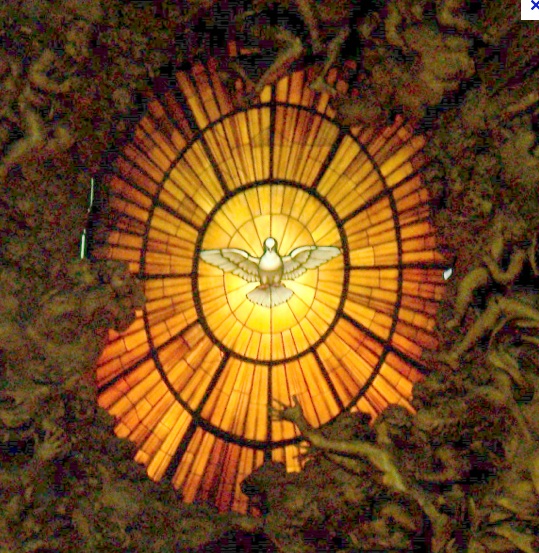
St. Peter’s Basilica

Jesus ascends into heaven and sends the Holy Spirit. Even as we try to grasp who Jesus is and what he has done, we are told the Spirit comes.

God is a mystery and we must respect the mystery of God as it is revealed: Father, Son and Holy Spirit. Jesus himself promises that the Holy Spirit will remain with us to “complete his work on earth and bring us the fullness of grace.”

How describe the Holy Spirit? I like this description of the Holy Spirit St. Cyril of Jerusalem gives in his catechetical homilies. Masterful catechist that he is, he adopts concrete language to approach mystery. Like Jesus, he uses two things we know: water and light.

 “The water I shall give will become a fountain of living water, welling up into eternal life. This is a new kind of water, a living, leaping water, welling up for those who are worthy.

But why did Christ call the grace of the Spirit water? Because all things depend on water; plants and animals originate in water. Water comes down from heaven as rain, and always the same, it produces many different effects, one in the palm tree, another in the vine, and so on through all of creation. It does not come down, now as one thing, now as another, but  remaining essentially the same, it adapts itself to the needs of every creature that receives it.

In the same way the Holy Spirit, whose nature is always the same, simple and indivisible, apportions grace to each one as he wills. Like a dry tree which puts forth shoots when watered, the soul bears the fruit of holiness when repentance makes it worthy of receiving the Holy Spirit. Although the Spirit never changes, its effects, by the will of God and in the name of Christ, are many and marvellous.

The Spirit makes one a teacher of divine truth, inspires another to prophesy, gives another the power of casting out devils, enables another to interpret holy Scripture. The Spirit strengthens one’s self-control, shows another how to help the poor, teaches another to fast and lead a life of asceticism, makes another oblivious to the needs of the body, trains another for martyrdom. The Spirit’s action is different in different people, but the Spirit is always the same. In each person, Scripture says, the Spirit reveals his presence in a particular way for the common good.

 The Spirit comes gently, known by his fragrance, not a burden, but light, very light. Rays of light and knowledge mark his approach. With the tenderness of a true friend, the Spirit comes, and as a protector saves, heals, teaches, counsels, strengthens, and consoles. The Spirit comes first to enlighten the mind of one who receives him, and then, through him, the minds of others as well.

As light strikes the eyes of those coming out of darkness into sunlight enabling them to see what they could not see before, so light floods the soul of those called worthy of receiving the Holy Spirit and enables them to see things beyond human vision, things hitherto undreamed of.”

Come, Holy Spirit.

A Pentecost Novena

I know it’s not 9 days of a novena, but the gospel readings and other prayers for the 7th week of Easter prepare us for the feast of Pentecost very well. From Monday to Thursday they bring us to the Supper Room where Jesus spoke to his disciples. We can hear his promises to them made to us too.

Friday and Saturday they take us to the Sea of Galilee where Jesus, after his resurrection, forgave Peter for his denial and called him to “feed my sheep.” All the disciples shared Peter’s forgiveness and call. Now, we do too.  

Monday the disciples say confidently, “Now you are talking plainly, and not in any figure of speech. Now we realize that you know everything and that you do not need to have anyone question you. Because of this we believe that you came from God.”

Now they know the full plan of God, now they see without “figures of speech.” “Do you believe now?” Jesus says, “Behold, the hour is coming and has arrived when each of you will be scattered to his own home and you will leave me alone.”

They don’t see or know, and we are like them. They needed the Holy Spirit to come. We have that same need. “Come, Holy Spirit, teach us the ways of God and be our Guide.”

In the Supper Room, Jesus promised his disciples peace in a troubled world and told them “take courage, I have conquered the world. “ (John 16:29-32) “Lord, you promise us too.”

Jesus prayed for this apostles in the Supper Room, the readings for Tuesday, Wednesday and Thursday tell us. He prays for us too. He will always pray for his own who are in the world, and we are his own. Prayer is one of the ways we hear his voice and know his promises. “Lord, teach us to pray.” ( John 17:1-19)

Friday and Saturday, we join the disciples at the Sea of Galilee where they went fishing, yet caught nothing. It was after they had scattered in the hour of his Passion and saw him risen from the dead, but now they had gone home, wondering, cautiously wondering, what was yet to come.

“Do you love me, Simon, son of John,” Jesus said to Peter. “Yes, Lord, you know I love you,” Peter answered. “Feed my lambs, tend my sheep,” Jesus said.  (John 21: 1-19)

Jesus gave him forgiveness and called him to follow him. The others received the same gracious gift. We do too. He gave them the Holy Spirit, to renew them and renew the face of the earth.

Come, Holy Spirit, fill the hearts of your faithful and renew the face of the earth.

A devotional church before Vatican II depended on novenas, tridua and other prayers to celebrate the great church feasts. The renewed liturgy of Vatican 11 provides a richer preparation for the feast in the days that precede and follow them. It’s our novena for Pentecost.

7th Week of Easter: Readings and Feasts

May 22 Mon Easter Weekday [St Rita of Cascia,] Acts 19:1-8/Jn 16:29-33 

23 Tue Easter Weekday Acts 20:17-27/Jn 17:1-11a 

24 Wed Easter Weekday Acts 20:28-38/Jn 17:11b-19 

25 Thu Easter Weekday [St Bede Venerable, St Gregory VII; St.t Mary Magdalene de’ Pazzi, Virgin] Acts 22:30; 23:6-11/Jn 17:20-26 

26 Fri St Philip Neri, Acts 25:13b-21/Jn 21:15-19 

27 Sat Easter Weekday [St Augustine of Canterbury,]

28 SUN PENTECOST SUNDAY Acts 2:1-11/1 Cor 12:3b-7, 12-13/Jn 20:19-23 

The readings and feasts of this week are a wonderful preparation for the Feast of Pentecost on Sunday.

Luke in the Acts of the Apostles describes Paul hurrying through the Roman world in answer to the command of Jesus:  “Go out into the whole world and preach the gospel. ”  He’s inspired by the Spirit, like Jesus.

Like Jesus, Paul bids farewell to his followers, the elders from Ephesus, and urges them to continue the ministry given to them by the Spirit. ( Tuesday and Wednesday) “I know that after my departure savage wolves will come among you, and they will not spare the flock. And from your own group, men will come forward perverting the truth to draw the disciples away after them. So be vigilant.”

Like Jesus, Paul must go up to Jerusalem (then to Rome). “ Compelled by the Spirit, I am going to Jerusalem. What will happen to me there I do not know, except that in one city after another the Holy Spirit has been warning me that imprisonment and hardships await me. Yet I consider life of no importance to me, if only I may finish my course.

Paul experiences the passion of Jesus as he clashes with the Jewish leadership and appears before the Roman tribunal where Festus, judging him innocent yet in a quandary over the religious issues that are raised, sends Paul, at his own request, to be judged by the Emperor in Rome. (Thursday and Friday)

In the gospel readings through the week  from John,  Jesus bids farewell to his disciples and promises to be with them, no matter what. “In the world you will have trouble, but take courage, I have overcome the world.” (Monday) He will send them his Spirit.

“I pray for them,” Jesus says.  “I do not ask that you take them out of the world, but that you preserve them from the Evil One.” (Wednesday) “I pray not only for these, but also for those who will believe in me through their word, so that they may all be one, as you, Father, are in me and I in you, that they also may be in us, that the world may believe that you sent me.” (Thursday)

Friday and Saturday’s gospel readings from John takes us to the Lake of Galilee where Jesus commissions his apostle Peter to feed his sheep. Peter will stretch out his hands and be led where he did not want to go–“signifying by what kind of death he would glorify God.” Paul too will be led to death like Peter. He will follow Jesus.


   “Behold Your King” (John 19:14)

by   Berta Hernández

     Looking at Jesus, our King! I used to feel all kinds of sad and negative feelings when I gazed upon our King on the Cross, but this past Lent I meditated intently on Jesus  and found some things that had been hidden from me.

     Jesus, Our Humble King:

— suffers in silence

—although falsely accused never responds in anger to His tormentors

— He offers His “back to those who beat Him; He does not hide His face from insults and spitting.” (Isaiah 50:6)

—extends His hands to those who crucify Him

— gives Himself freely for those who have rejected Him; including me!

— endures mocking and cruelty of sinful men for sins not committed!

     Jesus, Our Merciful King:

— instead of a crown of gold; wears a crown of thorns

—His precious blood flows down from His head, hands, back, feet!

—suffers unjustly, but forgives and prays : “Father, forgive them, they know not what they do.” (Luke 23:34)

—takes away sins of the world, including mine

— forgives even though we do not deserve it.

     Jesus, Our Triumphant King:

—faithful to the end

— no one takes His Life; He gives it freely

—gives us Mary, His Mother, as our own, from the Cross

—proclaims His victory: “It is finished.” (John 19:30), and hands over His Spirit, trusting His Father to raise Him up

—gives up His own life so we might live

—returns in triumph in three days. Our Lord. Our Love. Our Savior.

— He makes it possible for us to become sons and daughters of the Father.

— we become His brothers or sisters. He gives us His Spirit to guide us and He promises never to abandon us!!!

     As I have continued meditating on Jesus on the Cross I have had a sort of epiphany. The Cross used by the Romans was for torture and death, but because of who Jesus is, the Cross has now become a throne for  the King of Kings!  Now as I pass a crucifix all I can see is what all leaders should be like. Our leaders should all have Jesus as their guide. They should be sacrificial, caring, generous, kind, compassionate . They should each be an example, a teacher, a healer, and a lover of his or her people. 

     I hurt when I see a cross because  I know what it was originally used for. Now I see Jesus triumphant! I see Him as the King this world needs. I see Him as a Savior! I see Him as my King!

     Jesus , Son of the Father, I trust in You!

This meditation was inspired by the reflection for Good Friday 2023 in the magazine The Word Among Us.

Passionist Saints

Sign


 The Passionists, are a small and relatively new community in the Roman Catholic Church, but we have a good number of canonized saints and members proposed for canonization. Beginning with our founder, St. Paul of the Cross, who died in 1774, each generation of Passionists has produced men and women recognized for their holiness.

We’re hoping Father Theodore Foley who died in 1974 may join the ranks of Passionist saints such as Paul of the Cross, Vincent Strambi, Gabriel Possenti, Dominic Barberi, Gemma GalganiCharles Houben, Isidore DeLoor and Eugene Bossilkov.

Saints are God’s answer to the poison of their times, and it’s important to see them as they oppose it. Saints are firm believers and examples of heroic virtue. They’re signs of God’s power in a sinful world and God marks them out as saints through miracles performed through their intercession.

For example, St. Paul of the Cross was an antidote to the forgetfulness of the passion of Jesus which followed the Enlightenment, a 17th century movement that denied or minimized the role of faith and religion in human life. We’re still feeling the effects of the Enlightenment today.

St. Vincent Strambi opposed the Enlightenment as it was expressed in the political schemes of Napolean Bonaparte, who tried to subordinate religion to his own dreams of European domination. Vincent was a brave Italian bishop who resisted the emperor and suffered for it.  Like him, the Bulgarian Bishop Eugene Bossilkov suffered and died under an oppressive Communist government in Bulgaria in the 20th century.

Gabriel Possenti resisted the lure of the Enlightenment in the 19th century. As a young man, he chose religious life rather than the inflated promises of success that tempted so many of his contemporaries.

Saints like Gemma, Isidore de Loor, Charles Houben seem to be people who fit St. Paul’s description of those called by God. They were not wise by human standards, they don’t have a lot of human power, they’re not of noble birth. They’re “the weak of the world God chooses to shame the strong.” (1 Corinthians 1, 23-28)

Our Passionist saints tend to be ordinary people, of no special note, easily unnoticed and misunderstood, subject to the sufferings, disappointments and failures that come in life. God chooses them to be signs that he does not abandon his people and, in fact, can do great things through them. Charles Houben was a healer. Gemma bore the signs of Jesus’ passion in her body.

It takes awhile to know saints like these. That may be because we often don’t understand our own times and the poison afflicting it.

Pray for us to God, O Queen of Heaven!

Photo art by Fr. Victor Hoagland, C.P. and Gloria M. Chang

The Regina Caeli is a 12th century antiphon in honor of the Blessed Virgin Mary that is prayed during the Easter season in place of the Angelus. A legend records that during a pestilence in Rome, while the Regina Caeli was being prayed in procession with her image, angels were heard singing along and an end was put to the plague. Let us pray to our Queen with the angels to bring healing to our world.

Is This All There Is?

DSCN1720

In John’s readings from the Last Supper today and tomorrow, Jesus’ disciples , Thomas and Philip, appear unsure of the way and the power of Jesus himself. An important question raised in mystagogic catechesis.

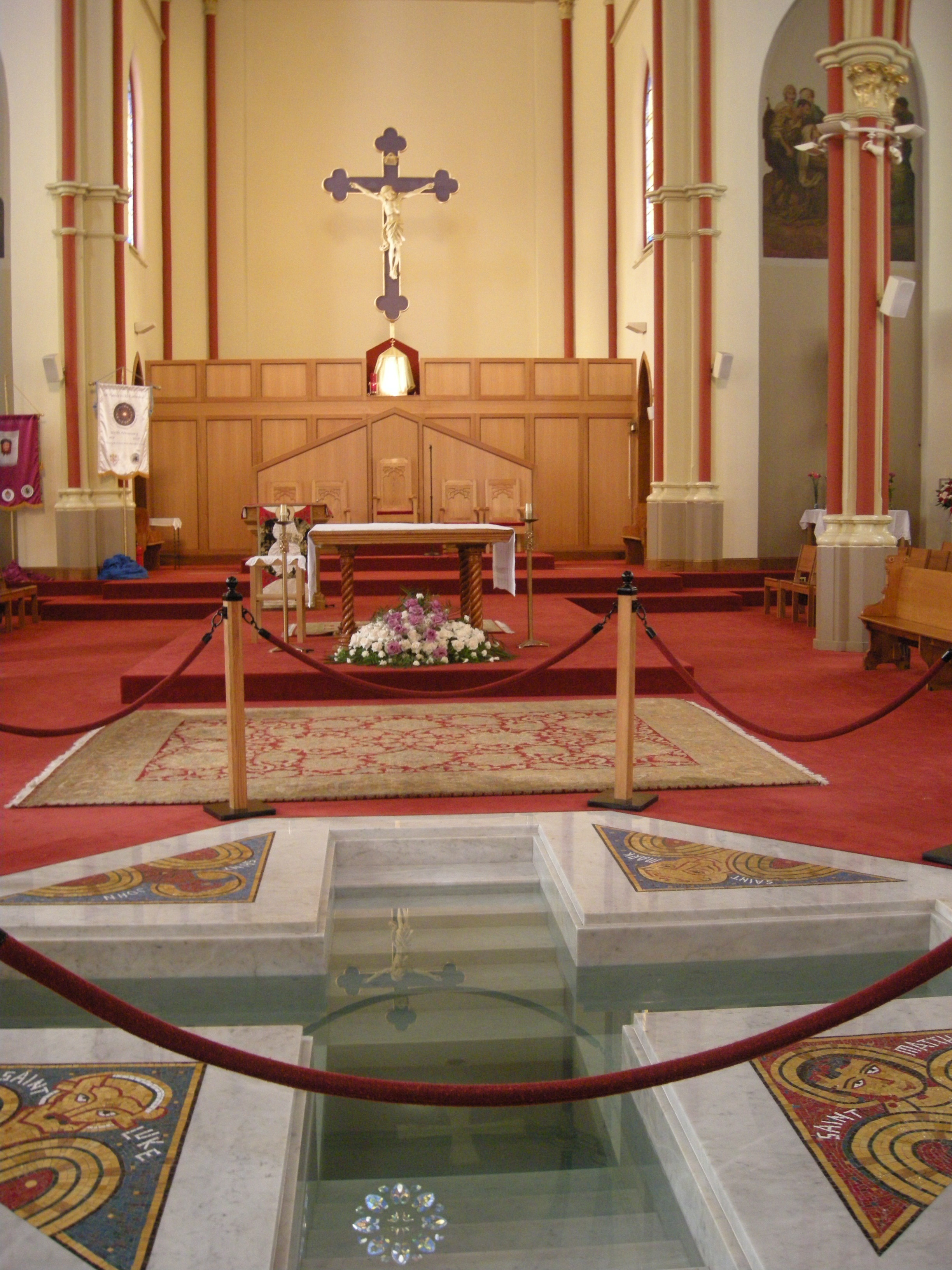
 St. Ambrose in the 4th century met the same uncertainty of signs as he spoke to the newly baptized of his time. They signify so much, but we find them hard to accept. “Is this it?” he hears them say as they approach the waters of baptism and the table of the Eucharist.

Encountering God through sacraments in weakened further today by a lack of a symbolic sense, Pope Francis writes in his letter Desiderio Desideravi . Now, more than ever, human beings, like Thomas and Philip, want to see. We want immediate experience.

Ambrose calls on stories of the Old Testament. The Israelites were saved as they flee from Egypt through the waters of the Red Sea, the cloud that guides them on their way–foreshadowing the Holy Spirit, the wood that makes the bitter waters of Marah sweet–the mystery of the Cross.

“You must not trust, then, wholly to your bodily eyes. What is not seen is in reality seen more clearly; for what we see with our eyes is temporal whereas what is eternal (and invisible to the eye) is discerned by the mind and spirit.” (On the mysteries)

The Assyrian general, Naaman, doubted as he stood before the healing waters of the Jordan, Ambrose reminds his hearers. There’s more here than you see or think.

So we’re invited into an unseen world. Still, we’re like those whom the gospel describes and the saint addresses. Is this it? Moreso now, schooled as we are in the ways of science and fact, we look for proof from what our eyes see. We live in a world that tells us what we see is all there is.

Faith is a search for what we don’t see. God desires to approach us through signs. Will he not help us approach him that way? Believe in me, Jesus says.

Readings here.