
Category Archives: spirituality

Walled Garden

by Howard Hain
francis-and-clare-from-the-movie-brother-sun-sister-moon-franco-zeffirelli

Saint Francis and Saint Clare from the movie “Brother Sun, Sister Moon”, (Franco Zeffirelli) (1972)


A garden enclosed, my sister, my bride,
a garden enclosed, a fountain sealed!

—Song of Songs 4:12


From memory it is not easy to recall. I do have a clear image, but if it is accurate that remains to be seen. Here we go.

It was downhill. A sloping path. As I approached the stone church, a few people wandered around out front. There was somewhat of a courtyard, well not a courtyard, more like a little wall hugging into existence a welcoming space. This wall was about bench height, made also of stone, and extended outward from the building. It created what I would normally call an out-front patio space, but in Italian terms, perhaps it would be called a terrazza, or maybe even be considered a piazza, or perhaps most accurately, a piazzetta. Then again, maybe it is just a patio to Italians too.

Well, sitting on this low wall was a friar. And running around the open area was a small brown dog with a shaggy little beige beard.

I entered the church. It was small, almost cave like. A curved ceiling. Dark. Old. There was the cross, a crucifix. Not the actual one that spoke to Saint Francis—no, that one was moved up into the Basilica of Saint Clare located in the central part of the still small but no-longer medieval town of Assisi.

The reproduction spoke to me.

I’m an early companion of Francis.


I remained in the chapel for a while. I’m not sure if I was praying or not. I’m pretty sure I got on my knees. But from that day’s perspective, prayer was not known to me. So from that perspective, I wasn’t praying. But from today’s perspective, I most certainly was. For I was there. I was in Italy, in Assisi, in the Church of San Damiano. I was there intentionally. I was lost but I was found. I was looking, and I was obeying. Obeying what I didn’t know. I had no idea why, but I wanted to be there. And I felt something. It was heavy, literally. I remember feeling bent over. I remember thinking about all the prayer that must have taken place in that small space over the past thousand years. I remember thinking that all that collective belief must have an effect. It did. It does. It will. I was certain that I felt it. It bowed me down. It bent me over. And I remember liking it.

Faith is common.

I was a pilgrim and didn’t know it.


I don’t remember much about the convent itself. I do remember walking from room to room, the communal rooms where Saint Clare and her companions, her biological mother and two sisters among them, ate and prayed and cared for their sick. I remember the small warm inner garden, with it’s old well. And the spot marked as the place where Clare liked best to sit. I’ve always loved internal courtyards. The thought of being outdoors and yet enclosed. Architecturally, it best represents the beauty of true solitude. Open. Yet safe. Free. Yet sheltered. Alone. Yet surrounded by those who believe the same.

In that sense, solitude—when it’s truly interior, truly spiritual—is like love: you can never get enough of it, and once you have it, once you truly live within it, you’re never again alone.

Solitude is love. And love is never solitary.


Therefore the Lord himself shall give you a sign. Behold a virgin shall conceive, and bear a son, and his name shall be called Emmanuel.

—Isaiah 7:14


Howard Hain is a contemplative layman, husband, and father. He blogs at http://www.howardhain.com

Follow Howard on Twitter @HowardDHain

twitter.com/HowardDHain

If you enjoyed this post, please consider “liking” it, adding a comment, becoming an email subscriber (drop-down menu at top of page), or passing it along via the social-media links below. Your support is greatly appreciated. Step by step. All for God’s glory.
Arriving in Hope

by Howard Hain


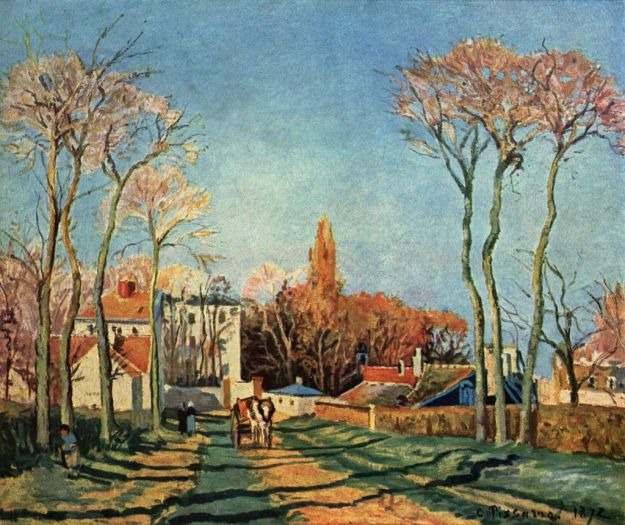
camille-pissarro-entree-du-village-de-voisins-1872.jpg

Camille Pissarro, “Entrée du village de Voisins”, 1872 (Musée d’Orsay)


Waiting and waiting, for exactly what I’m not sure.

The sun to rise.

The day to end.

The water to boil.

Mass to begin.

The cock to crow.

Christ to return.

———

A new day is here.

———

Father, thank You.

Jesus, I love You.

Holy Spirit, have Your way.


Howard Hain is a contemplative layman, husband, and father. He blogs at http://www.howardhain.com

Follow Howard on Twitter @HowardDHain

twitter.com/HowardDHain

If you enjoyed this post, please consider “liking” it, adding a comment, becoming an email subscriber, or passing it along via the social-media links below. Your support is greatly appreciated. Step by step. All for God’s glory.
Where I Want To Be

by Howard Hain


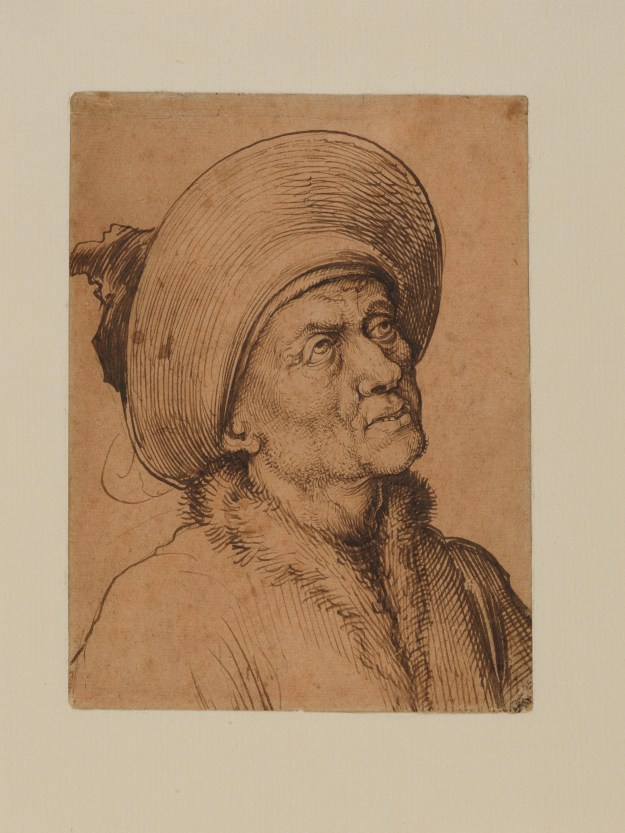
Martin Schongauer Bust of a Man in a Hat Gazing Upward ca 1480-90 The Met

Martin Schongauer, “Bust of a Man in a Hat Gazing Upward”, ca. 1480-90 (The Met)


J.M.J.


There’s only one place I want to be.

On the Cross with my good Christ.

Strange. Odd. Uncomfortable to admit.

The Cross is where I want to be.

The Cross is where I feel free.


The thought of being lifted up high.

The chance to be in pain.

With Him Whom I still don’t know.

To want it to never stop.

To not understand a single thing.

To be burned alive.

I can only call it love.


Yes. So be it. It’s Your command.


The Cross is where I want to be.

The Cross is where I am free.

The Cross is where I encounter love.


Yes, Lord Jesus.

Let me hang with You.

If only for a while.

My sins and those of all the world.

Added to the funeral pile.


Howard Hain is a contemplative layman, husband, and father. He blogs at http://www.howardhain.com

Follow Howard on Twitter @HowardDHain

twitter.com/HowardDHain

If you enjoyed this post, please consider “liking” it, adding a comment, becoming an email subscriber, or passing it along via the social-media links below. Your support is greatly appreciated. Step by step. All for God’s glory.

Web Link: The Metropolitan Museum of Art. Martin Schongauer, “Bust of a Man in a Hat Gazing Upward”, ca. 1480-90

Saint John Lateran

To listen to the audio of today’s homily please select file below:

Some years ago I went to Rome to visit churches. One was the Church of Saint John Lateran.

Churches have stories, which is especially true of  St. John Lateran. It’s the first of the great Christian churches built by the Emperor Constantine after coming to power early in the 4th century. He gave Christians freedom to practice their religion throughout the Roman empire. He also built them churches and St. John Lateran was the first of the many he built.  At its entrance is an inscription, “The mother of churches”; it’s been there for 1500 years.

The church, holding 10,000 people, was dedicated around  320 AD. Rome’s Christians must have been thrilled as they entered it.. Many were persecuted or has seen relatives, friends or other believers jailed or put to death during the reign of Diocletian, before Constantine.

Now, a new emperor honored them by building a church, a great Christian church, that everyone in Rome could see. He built it on property belonging to enemies of his, the Laterani family, which is why it’s called St. John Lateran. It’s situated on the southeastern edge of the city, away from the Roman Forum,  because Constantine didn’t want to antagonize followers of the  traditional religions. Still,  the Lateran church was a sign that Christianity had arrived.

Before this, throughout the Roman empire, Christians had no churches but met  in ordinary homes or small buildings. In Rome itself there were about 25 homes  where they met and worshipped.

That in itself made people wonder about them. Why didn’t Christians  participate in public rites and religious sacrifices conducted for the good of the empire, as good Romans did? What kind of religion was this anyway, people said? They’re godless, atheists. The 2nd century pagan writer Celsus saw them plotting rebellion, these “ people who cut themselves off and isolate themselves from others.” (Origen, Contra Celsum,8,2)

So, the building of the church of St. John Lateran was a signal of changing times. After centuries meeting apart in homes and small community settings, Christians now gathered as one great family.

That’s what churches do; they bring people together as one body, one family, one people. That’s how Paul described the church in his Letter to the Romans: “As in one body we have many members, and all the members do not have the same function, so we, though many, are one body in Christ, and individually members one of another.” (Romans12, 4-5)

An important part of the church of Saint John Lateran is its baptistery,  a large building connected to the church itself,  worn and patched, as you would expect from a building over 1500 years old. You can still see bricks from Constantine’s time. This is where for centuries Romans have been baptized. Conveniently, it’s built over a Roman bath, for a good supply of water for baptism. The church is called St. John Lateran because St. John the Baptist is one of its patrons, along with St. John the Evangelist. A beautiful Latin inscription is over the big baptismal basin and fount.

Those bound for heaven are born here,

born from holy seed by the Spirit moving on these waters.

Sinners enter this sacred stream and receive new life.

No differences among those born here,

they’re one, sharing one Spirit and one faith.

The Spirit gives children to our Mother, the Church, in these waters.

So be washed from your own sins and those of your ancestors.

Christ’s wounds are a life-giving fountain washing the whole world.

The kingdom of heaven is coming, eternal life is coming.

Don’t be afraid to come and be born a Christian.

One last thing about St. John Lateran, which many people don’t know. It’s the pope’s church. From the time of Constantine till the 15th century, the popes as leaders of the Church of Rome resided next to this church. Then, they moved to the Vatican, where they live today.

Celebrating the dedication of a church, as we are doing today, reminds us  how important church buildings are for teaching us our faith. God speaks to us in our churches, God comes to us in our churches.

“Do you not know that you are the temple of God,

and that the Spirit of God dwells in you?” St. Paul says.

“If anyone destroys God’s temple,

God will destroy that person;

for the temple of God, which you are, is holy.”

Morning Thoughts: True Nobility

by Howard Hain


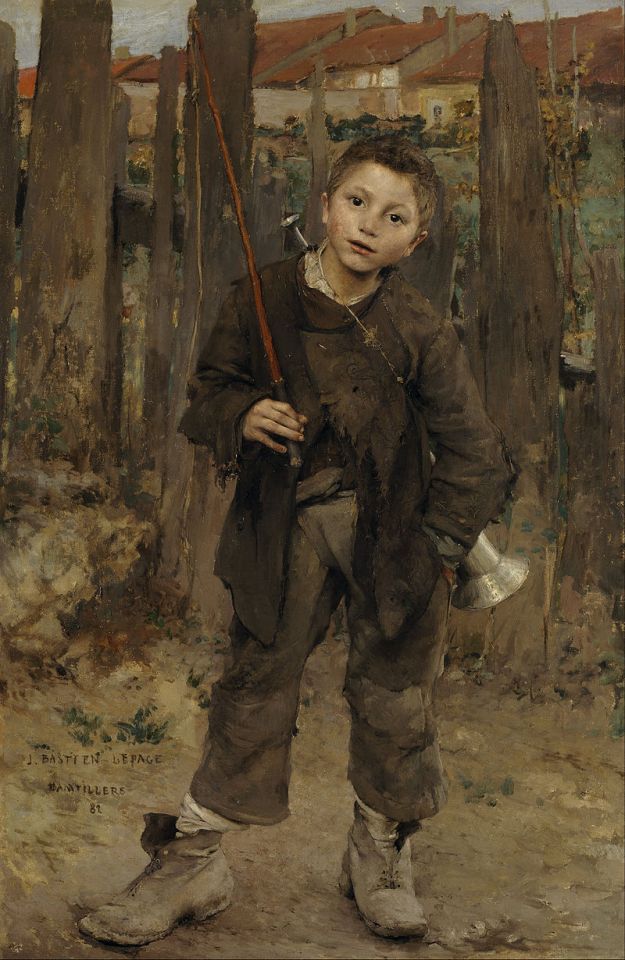
Jules Bastien-Lepage Pas Mèche (Nothing Doing) 1882 Scottish National Gallery

Jules Bastien-Lepage, “Pas Mèche (Nothing Doing)”, 1882 (Scottish National Gallery)


Stand your ground.

Be clear. Be strong.

Be kind.

Your dignity is Mine.

I planted within you “riches and honor and life.” *

Speak as heir.

Protect what’s Mine.

Truth. Beauty. Love.

These only I possess.

Handle with care.

Worry not what others say.

Listen carefully to what’s left unsaid.

My grace fills the gaps.

I send you not to give an answer.

I send you to be My Dignity.


Howard Hain is a contemplative layman, husband, and father. He blogs at www.howardhain.com

Follow Howard on Twitter @HowardDHain

twitter.com/HowardDHain

If you enjoyed this post, please consider “liking” it, adding a comment, becoming an email subscriber (drop-down menu at top of page), or passing it along via the social-media links below. Your support is greatly appreciated. Step by step. All for God’s glory.

Web Link: National Galleries Scotland. Jules Bastien-Lepage, “Pas Mèche (Nothing Doing)”, 1882


* Proverbs 22:4

The Listening Heart

by Father Theodore Walsh, CP

A spiritual writer beautifully described a listening heart at prayer. “Here I am, Lord. I hear your knocking at my door, as each person or event comes across my life”. How may we grow into this listening person.

A listening heart, first of all, is a heart that is open; namely, open to the heart of God, open to the heart of another person, open to the heart of our world. As someone put it: “When you listen, check your worries at the door”.

Secondly, when we deeply listen, we are also touched by the other. We weep with those who weep, we rejoice with those who rejoice. We are listening not just to their words but also to their feelings.

Finally, a listener responds to the other. Listening is not passive but active. Sometime ago there was a middle age gentleman, who was single and had his own business. He was invited by friends on a pilgrimage. The first evening there was the rosary. During the service, a thought came to him which he never had before: “Be a Priest”. When he returned home, the thought remained with him. He sought the counsel of a priest. The priest encouraged the gentleman. In time he sold his business, his home and entered the seminary. Today he is a Passionist Priest. He had a listening heart. He was open to the word, he was touched by that word, and he responded fully to the word.

The art of listening can have many faces. For example it can be a way of ministry. How often a person might say to us: ‘Thank you for listening’.

Listening can also be a way of being ministered to. We are blessed to have a confidant or friend who is there for us.

Finally, listening is a way of prayer. How often we might see an elderly couple sitting quietly with each other. A beautiful image of the soul with God.

Speaking of prayer, we end the way we began. “Here I am, Lord. I hear your knocking at my door, as each person or event comes across my life”.

Fr. Theodore Walsh, C.P.

Daily Grind

by Howard Hain


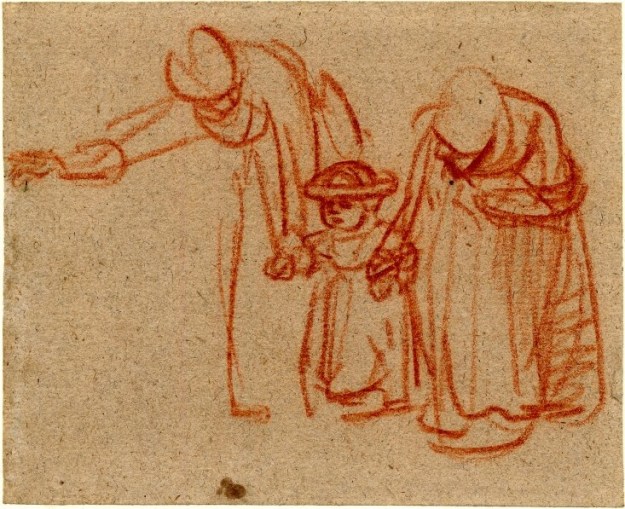
rembrandt-two-women-teaching-a-child-to-walk-ca-1635-37-red-chalk-on-gray-paper.jpg

Rembrandt, “Two Women Teaching a Child to Walk”, ca. 1635-37 (red chalk on gray paper)


This day might perhaps be the most boring day of our life.

It might look a lot like yesterday.

A lot like last Friday.

A lot like last November.

Routine.

Monotony.

The daily grind.

Another peppercorn held in the mill.

Waiting its turn to be ground into dust.

Sprinkled on a paper plate.

Consumed by a ravenous world.

Never to be seen again.

Never to see the light of day.

Or perhaps we’re wrong.

Perhaps we’re chunks of crystal.

Salt from a dead sea.

Clear.

A tinge of pink.

When the light hits right.

To be sprinkled.

To preserve what’s sacred.

To give life.

Perhaps we are the salt of the earth.

Perhaps this day we shall meet some pepper.

Perhaps we’ll let God have His way.

Giving taste to what seems to so many just another day.


Howard Hain is a contemplative layman, husband, and father. He blogs at http://www.howardhain.com

Follow Howard on Twitter @HowardDHain

twitter.com/HowardDHain

If you enjoyed this post, please consider “liking” it, adding a comment, becoming an email subscriber, or passing it along via the social-media links below. Your support is greatly appreciated. Step by step. All for God’s glory.

Morning Thoughts: Rip Tide

by Howard Hain


Matisse Bather 1909 MoMA

Henri Matisse, “Bather”, Cavalière, summer 1909 (MoMA)


What are we to do when the mighty ocean sucks us out to sea?

We are told that we shouldn’t resist, that we should let it take us into the deep—trusting in the bigger force at hand—trusting that the immutable current will win the day, that the overarching tide will eventually send us back to shore.

And in the meantime?

Tread water. Conserve energy. Keep eyes on heaven above.


Howard Hain is a contemplative layman, husband, and father. He blogs at http://www.howardhain.com

Follow Howard on Twitter @HowardDHain

twitter.com/HowardDHain

If you enjoyed this post, please consider “liking” it, adding a comment, becoming an email subscriber (drop-down menu at top of page), or passing it along via the social-media links below. Your support is greatly appreciated. Step by step. All for God’s glory.


Web Link: Museum of Modern Art (MoMA). Henri Matisse, “Bather”, Cavalière, summer 1909


Young Mother Sewing

by Howard Hain

DP139632

Mary Cassatte, “Young Mother Sewing” 1900, (The Met)


A living faith works. It is always active, especially when we are docile to the Spirit.

When we walk by faith we see, we hear, we speak what God intends, especially when we are blind to the cares and anxieties of the world.

Small children are wonderfully active, superbly passive, and at times they seem completely blind, fantastically blind. They are alive. They see. They hear. They speak. They watch. They feel.

Mother Church calls all of us home, even when she is silent. She is always at work. She watches us even when her eyes are busy with the business of the day.

She sews. We just need to obey. To trust. To allow ourselves the freedom to lay across her lap.

In the short description upon the little museum card hanging beneath the painting shown above, God has planted great instruction. The work is by American impressionist Mary Cassatt.

According to the card, about the year 1890 “Cassatt redirected her art toward women caring for children and children alone—themes that reflected her affection for her nieces and nephews and the prevailing cultural interest in child rearing.” And then, after informing us that for this particular painting Cassatt “enlisted two unrelated models to enact the roles of mother and child”, the card completes its little catechesis by blessing us with a precious little anecdote and quote:

Louisine Havemeyer, who purchased it in 1901, remarked on its truthfulness: “Look at that little child that has just thrown herself against her mother’s knee, regardless of the result and oblivious to the fact that she could disturb ‘her mamma.’ And she is quite right, she does not disturb her mother. Mamma simply draws back a bit and continues to sew.”

God are we blessed. So blessed to have such a mother. All of us. Maybe give her a call today. Better yet, perhaps even stop by. She’d love that. She’d love to see your face. You’re always on her mind and in her heart. She lives in the closest church you can find, any building that truly houses her Son.

If she seems a little occupied with the “cooking and cleaning”, with all “the business of life”, don’t let that stop you or cut your visit short. No, throw yourself against your “mother’s knee regardless of the result and oblivious to the fact” that you could disturb your “mamma.”

It most certainly does not.

“Mamma simply draws back a bit and continues to sew.”


Howard Hain is a contemplative layman, husband, and father. He blogs at http://www.howardhain.com

Follow Howard on Twitter @HowardDHain

www.twitter.com/HowardDHain

If you enjoyed this post, please consider “liking” it, adding a comment, becoming an email subscriber, or passing it along via the social-media links below. Your support is greatly appreciated. Step by step. All for God’s glory.


Web Link: The Met Museum. Mary Cassatt, “Young Mother Sewing”, 1900


Friday Thoughts: Be Still

by Howard Hain


We don’t enter the Heart of Jesus to hide, we enter to encounter the totality of all creation all at once. God be praised.

Be Still, and know that I am God.

—Psalm 46:10


Howard Hain is a contemplative layman, husband, and father. He blogs at www.howardhain.com  

Follow Howard on Twitter @HowardDHain

www.twitter.com/HowardDHain

If you enjoyed this post, please consider “liking” it, adding a comment, becoming an email subscriber (drop-down menu at top of page), or passing it along via the social-media links below. Your support is greatly appreciated. Step by step. All for God’s glory.