Category Archives: Religion

St. Benedict, July 11

St. Benedict, Perugino, Vatican Museum

St. Benedict, brother of St. Scolastica, was born into a wealthy family in Nursia, Italy, in 480. He went to Rome to be educated at a time when invading barbarian tribes were creating panic in the city. Leaving Rome he withdrew to the village of Enfide in search of another way of learning,

About the year 500, Benedict went to the remote area of Subiaco, south of Rome, where he came under the influence of a monk named Romanus. Benedict became a monk himself and spent the next three years in a cave, living a life of prayer and solitude.

Others wished to join him and by 525 Benedict had established a number of monastic communities. In 529, Benedict, along with some followers went to Monte Cassino about 80 miles south of Rome and founded the great monastery that became a center of western monasticism. 

A wise spiritual leader and worker of miracles, Benedict is considered a key figure in the rise of European civilization because of his rule and the monastic foundations he inspired. As “schools of the Lord’s service,” his monastic communities became centers of learning and spirituality throughout Europe, and later in the Americas.

Pope Gregory the Great (540-612), in the turbulent years of the barbarian invasions of the Roman Empire, recognized the monastic ideal himself and saw monasticism as a way to spread the gospel and influence society. He saw Benedict as a new evangelist and monastic settlements new bridgeheads for evangelizing the world. In our own time Pope Paul VI named Benedict the patron of Europe. 

Benedict died at Monte Cassino March 21, 547.

“Whatever work you begin to do, ask God in earnest prayer to make it perfect…We are going to establish a school for the Lord’s service. Nothing harsh or burdensome will enter there, we hope… as we go forward in faith our hearts will expand, and we will run in the way of God’s commands with unspeakable joy.”  (Rule of St. Benedict) 

Monasticism, solitary or in community, is still a powerful force in the church. It began in Egypt and Syria among Christians discontented with a society that rejected their values. It continued through the centuries in various forms. We should study it today for the possibilities it offers for communities for today.

Our lectionary honors saints like Anthony of Egypt, Basil the Great, Martin of Tours, Boniface and Bernard who were engaged in the monastic life through the centuries. As we celebrate their feasts through the year they not only impart lessons from the past but also prospects for the church now.
What Shall I Say?: Matthew 10: 19-20

Jesus said to his Apostles:
“Behold, I am sending you like sheep in the midst of wolves;
so be shrewd as serpents and simple as doves.
But beware of men, 
for they will hand you over to courts
and scourge you in their synagogues,
and you will be led before governors and kings for my sake
as a witness before them and the pagans.
When they hand you over,
do not worry about how you are to speak
or what you are to say.
You will be given at that moment what you are to say.
For it will not be you who speak
but the Spirit of your Father speaking through you.
Brother will hand over brother to death,
and the father his child;
children will rise up against parents and have them put to death.
You will be hated by all because of my name,
but whoever endures to the end will be saved.
When they persecute you in one town, flee to another.
Amen, I say to you, you will not finish the towns of Israel
before the Son of Man comes.”

A writer in the NYT  wrote a column awhile ago describing  her efforts towards daily mindfulness.  She ends the day asking if she said the right thing or did anything to advance her life; how did she manage this situation, how could she have done it better? It’s not an examination of conscience she engages in but a search for a more successful self. It’s all up to you.

Jesus describes life so differently in today’s gospel. You’re like sheep sent out among wolves, he says, and you’re not safe even in your own home. You’re ok, though. You’re not on a journey alone. “ Don’t worry about how you are to speak or what you are to say. You will be given at that moment what you are to say. For it will not be you who speak but the Spirit of your Father speaking through you.” 

How different that is from trying to do it all yourself.

That’s not telling us to forget what we say or do or think. We shouldn’t live unexamined lives. Mindfulness is all right, as far as it goes. We’re also told to be as shrewd as serpents and as simple as doves. Yet, at the same time we’re sheep among wolves, we’re branches on the vine. We’re promised a wisdom and a voice stronger than our own.

We don’t have to do it all by ourselves. At the end of the day we’re not alone.

Stories of Jacob, Joseph and Their Families

We are reading stories of Jacob, his wives and his sons these days. I notices some call it the story of our ancestors, instead of patriarchs, to give it a wider net of actors.

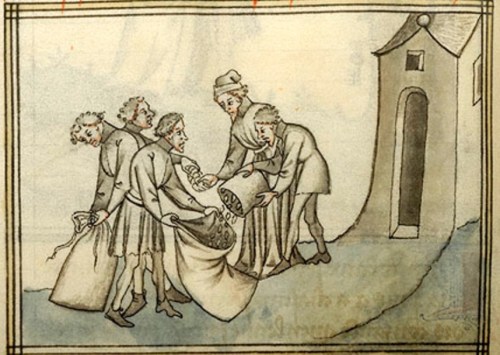
They/ve inherited God’s promise to Abraham, and they continue his search for a land of their own. It seems a never-ending search. God occasionally appears on the way affirming them, but there’s famine to contend with, as we see in the illustration above, and human weakness is always part of their story.

But God will get them through. They are examples of faith and trust in God as they face an unknown future. Faith and trust kept them going;; faith and trust keeps all humanity going. Faith and trust keeps the Church going as she makes her pilgrim way.

We can learn from our ancestors, the men and their wives, their children, their friends, their servants and their enemies. They’re far from perfect. They live in a world of cruel wars and famine, stubborn enemies, political instability and unpredictable events. There are family fights, jealous brothers and sisters and sneaky deals at every step.

We can learn important human as well as spiritual lessons from them. For example, Joseph’s brothers entered Egypt at a time of widespread famine. “In fact, all the world came to Joseph to obtain rations of grain, for famine had gripped the whole world.” (Genesis 41,57)

Egypt wisely opened its food supply to eveybody. Was it just kindness, or was it good politics too? I remember reading that the Byzantine Empire fell so quickly to the armies of Mohammed because the Byzantines neglected to care for the Bedouin tribes at their borders and along their trade routes.

In a time of climate change with shortages of food inevitable, we have to be generous to one another. Ancient Egypt knew that if you take care of others in bad times you take care of yourself. We’re all bound together, whether we know it or not.

The early Christian writer Marcion wanted to do away with the Old Testament because it wasn’t spiritual enough. But there’s reality in these stories. “The Word was made flesh and dwelt among us.” He was made flesh and dwelt among sinful humanity. He didn’t come to save the saved.

Knowing our ancestors and their times helps us to know ourselves and our times. In them we see the hand of God at work.

Matthew 10: 1-7: The Call of the Disciples

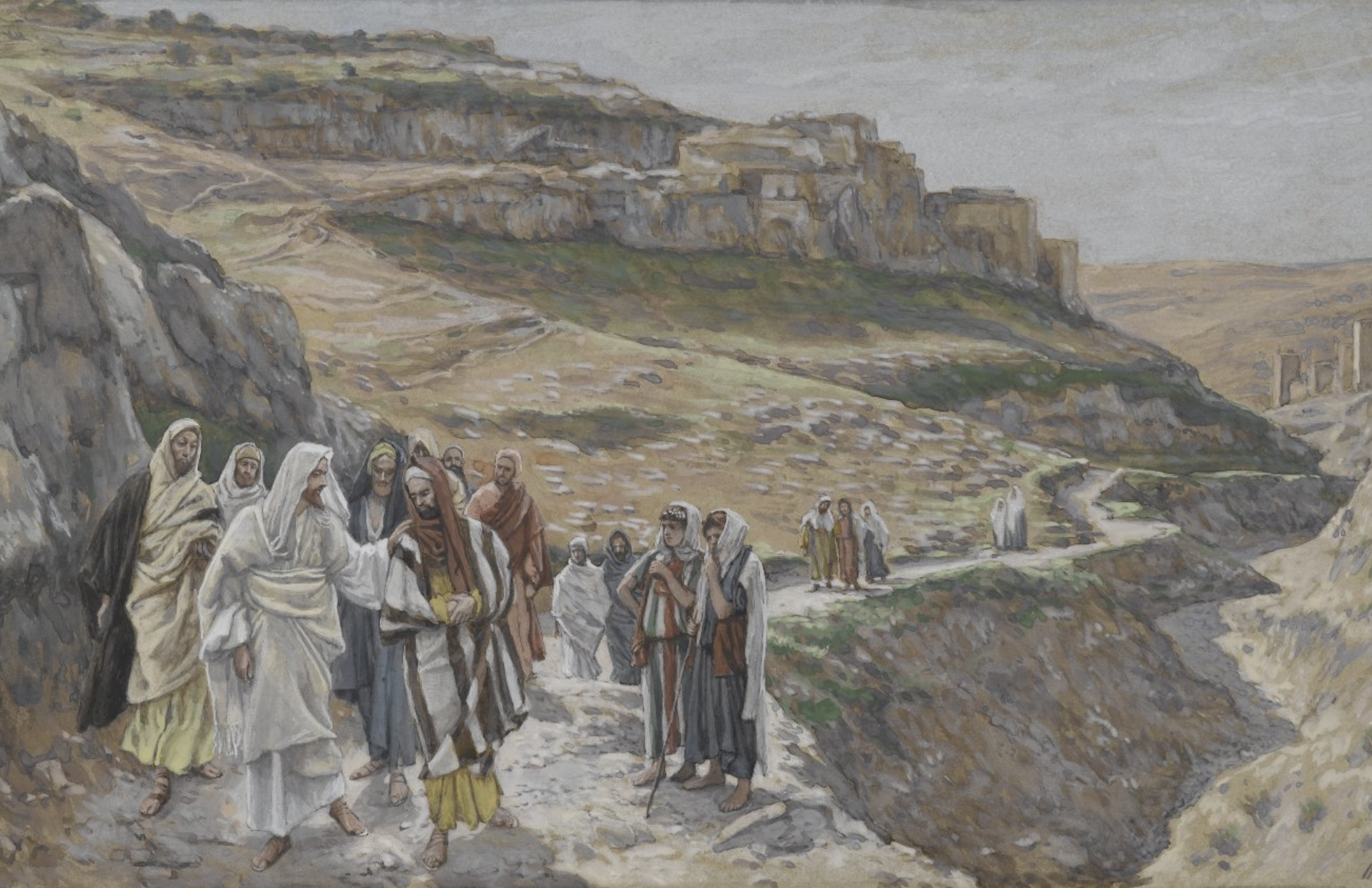
Jesus and his Disciples. James Tissot

Jesus summoned his Twelve disciples
and gave them authority over unclean spirits to drive them out
and to cure every disease and every illness.
The names of the Twelve Apostles are these:
first, Simon called Peter, and his brother Andrew;
James, the son of Zebedee, and his brother John;
Philip and Bartholomew,
Thomas and Matthew the tax collector;
James, the son of Alphaeus, and Thaddeus;
Simon the Cananean, and Judas Iscariot
who betrayed Jesus.

In Matthew’s gospel read today,  Jesus calls twelve disciples– also called twelve apostles– because he has compassion for the crowds. They are like sheep without a shepherd,  a field waiting for the harvest.  His disciples will extend Jesus’ ministry of teaching and healing revealed in previous sections of the gospel. 

Matthew’s gospel consistently notes Jesus’ compassion for the crowds. As they flock to the mountain from everywhere, where they have been scattered and abandoned,  Jesus  teaches them. Matthew follows the Sermon on the Mount with ten stories of healing that Jesus performs as he descends from the mountain. They also reveal his compassion for them.

As he calls twelve to follow him, teaching and healing,  does he not also call them to be compassionate as he was?

We should not limit the call of Jesus to teach and to heal to the twelve named in our gospel today. The twelve represent the twelve tribes of Israel who are called as a holy people to follow  God as his covenanted people. In the call of the twelve disciples we hear our own call.

Some like Simon called Peter, and his brother Andrew; James, the son of Zebedee, and his brother John, will have positions of leadership among his followers, but all his disciples have gifts from teaching and healing. 

What are the gifts we have? Another question. Have we compassion for the world we live in?

Our Lady of Holy Hope

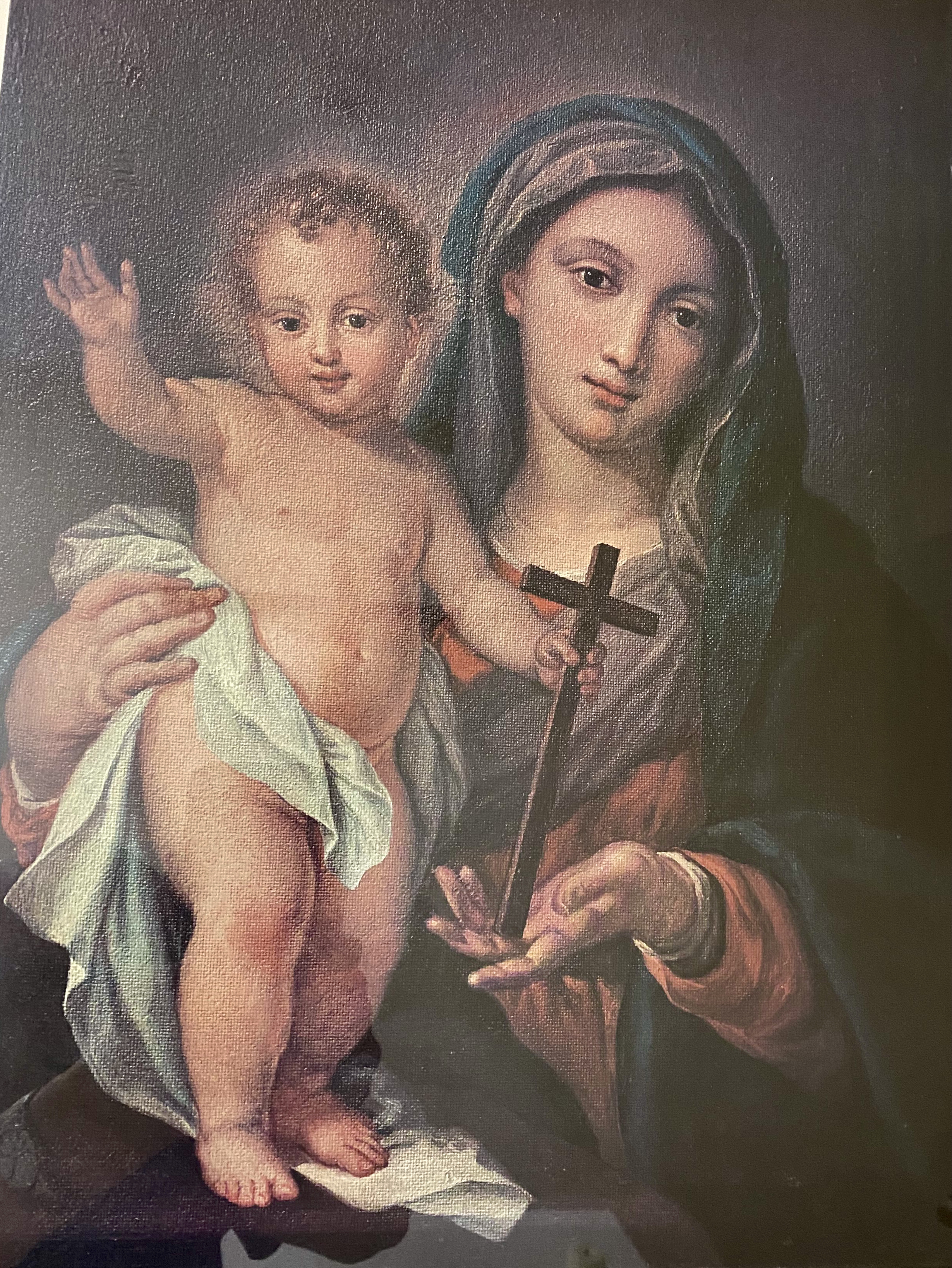
July 9th the Passionists honor Mary, the Mother of Jesus, under the title of Mother of Holy Hope. The devotion was promoted by the great missionary, Father Thomas Struzzieri, who later became a bishop. He carried a picture of our Mother of Holy Hope with him on missions, and we honor the same picture as a reminder that Mary helps us in our needs.

 Mary supports our hope. Here’s what Blessed Dominic Barberi, CP wrote:

 “One title that belongs rightly to Mary is that of Mother of Holy Hope.  Hope is that virtue that anchors the ship of our soul in the stormy sea of this troubled world. It is a comfort left to us after the fall of Adam, a support in our weakness encouraging us to practice all the virtues.

 Theologians say hope is a virtue planted in us by God enabling us to confidently expect eternal life and all that leads to it. Since Mary was hopeful to an heroic degree, she is appropriately called Mother of Holy Hope.

Though endowed with extraordinary graces and unstained by original sin, Mary never counted on any resource of her own. Rather, she knew God is the author of every good thing and the source of everything. She confided in God fleeing from persecution from her own country. She hoped in God even when she saw her divine Son die on cross and his disciples left him.

She stayed firm in what seemed like disaster, and strengthened those discouraged who turned to her as to a mother. She encouraged the weak, lifted up the fallen and urged the strong to ever greater trust.

We must not think Mary is not our mother now.  No! Even now, enthroned in glory, she reaches with a mother’s hand to those who go to her. She is always a mother of holy hope.”

Lord God, you have given us the Blessed Virgin Mary as mother of our hope.

Under her protection, may we pass through this uncertain world with our hopes fixed on heaven and so enter into your kingdom.

We ask this through our Lord Jesus Christ, your Son, who lives and reigns with you and the Holy Spirit, one God, for ever and ever.

Saint Augustine Zhao Rong, Priest, and Companions, Martyrs, July 9

A global church celebrates saints from everywhere, and that’s why saints from Africa and Asia have been added to our church calendar after the Second Vatican Council. In them we see fulfilled the command of Jesus to his disciples to go “to all nations.” We are a Catholic Church.

On July 9th, we remember Saint Augustine Zhao Rong, Priest, and Companions, Martyrs from the church in China, who were canonized in October 2000. On November 24th we remember Saint Andrew Dung– Lac and 117 other Vietnamese martyrs killed in the 18th century in a cruel persecution of Christians They were canonized by Pope John Paul II in  June 1988.  On September 20th, we remember the martyrs of Korea. Saints Andrew Kim Tae-gŏn, Priest, and Paul Chŏng Ha-sang, and Companions, Martyrs. All together, 103 martyrs were canonized by Pope John Paul II on 6 May 1984 in Seoul, Korea. 

These churches have remarkable histories. Take a look at the history of the church in China. 

The recent feasts of Asian churches celebrate, not only individual missionaries from elsewhere who brought the faith to these lands, but natives who accepted the gospel and died for their belief in it. The feasts recall centuries of missionary work that sowed the seeds of faith in these countries and the strong faith that blesses these churches now.

 As numbers decline in places like Europe and North America we should recognize the growth of our church elsewhere. “The harvest is great, “ Jesus told his first disciples. He tells us that today.  

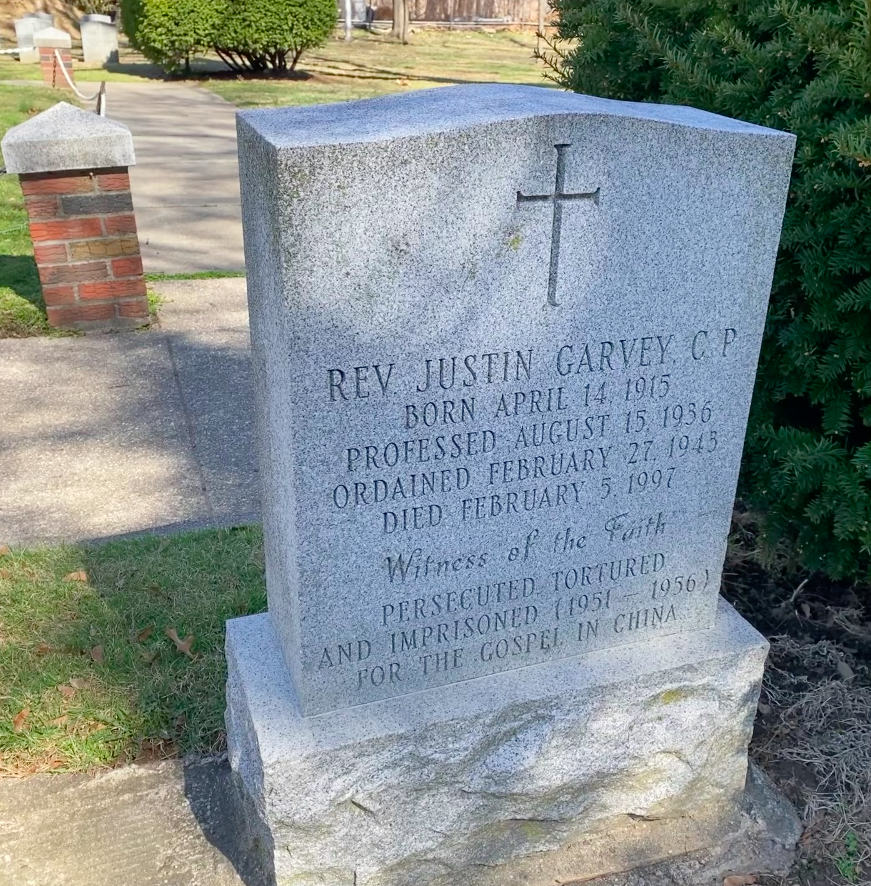
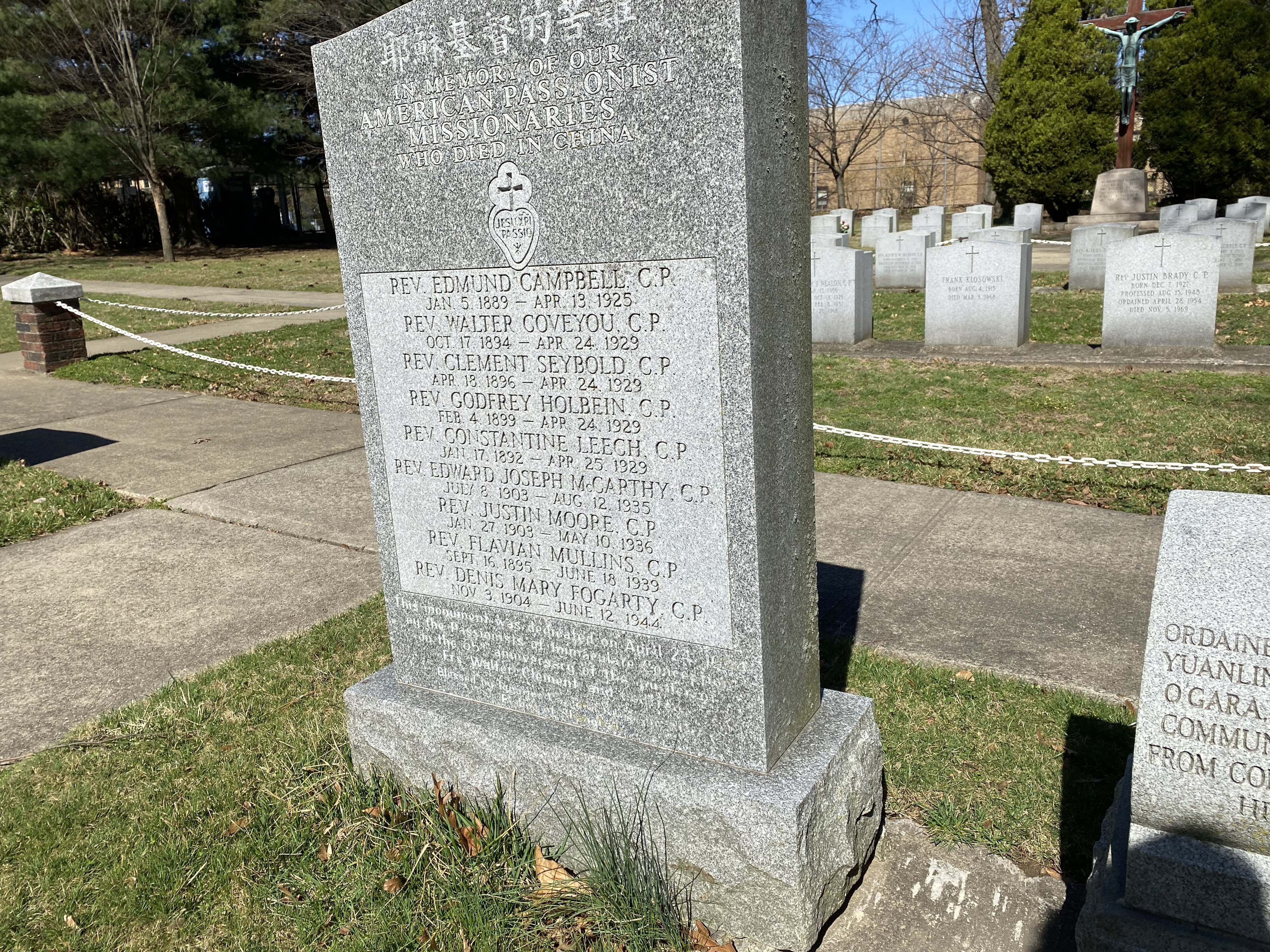
In our cemetery here in Jamaica, New York, we have a monument to a young Chinese priest, Fr. John Nien, who died in the Communist persecution of the church in the 1950s and graves of Passionist missionaries who served in Hunan China during that time.  I put Fr. Nien’s monument at the beginning of this entry because he belongs among the martyrs of China. I put the graves and monuments to the Passionist missionaries below because they worked for a harvest that is now here and still to come.

God’s plan is mysterious, but the church will be blessed by the church in China. 

The Troubled Crowds: Matthew 9:34-38

“At the sight of the crowds, Jesus’ heart was moved with pity for them because they were troubled and abandoned, like sheep without a shepherd.Then he said to his disciples, “The harvest is abundant but the laborers are few; so ask the master of the harvest to send out laborers for his harvest.” (Matthew 9, 34-38)

In every age, Jesus calls his disciples to speak to the troubled and abandoned crowds. In this 14th week of the year we have Matthew’s account of that first time Jesus called disciples to preach and enter his ministry. How should laborers in the harvest approach the troubled crowds today ?

In his 1977 novel “Lancelot” Walker Percy tells the story of Lancelot, a man confined to a prison hospital after setting fire to his beautiful ancestral home in Louisiana and murdering his wife and her lover. The man’s fed up with today’s world and turned against it, but he’s still trying to figure out what life’s all about. He’s on to something, one of Percy’s phrases.

An old priest visits him frequently in the prison hospital– his only visitor, it seems– and listens to him, but hardly says a word. That’s partially because Lancelot doesn’t think much anymore of the faith the priest represents.

Yet, the priest listens. Lancelot occasionally asks him if he understands. “Perhaps I talk to you because of your silence. Your silence is the only conversation I can listen to,” Lancelot remarks. Only as the book ends does he say to the priest: “Very well, I’ve finished. Is there anything you wish to tell me?”

In Pope Francis’ exhortation, “Gaudete et exultate”, there’s a wonderful exploration of holiness today. At one point, the pope says “Nor can we claim to say where God is not, because God is mysteriously present in the life of every person, in a way that he himself chooses, and we cannot exclude this by our presumed certainties. Even when someone’s life appears completely wrecked, even when we see it devastated by vices or addictions, God is present there. If we let ourselves be guided by the Spirit rather than our own preconceptions, we can and must try to find the Lord in every human life.”
(42)

We’re sent as laborers for today’s harvest, but words may not be the only tools we have to use. Is silence, along with a persevering concern, ways to engage the troubled crowd today? The way of silence doesn’t mean we don’t have to search for the words to say today. We need to find out how the mysteries of the gospel speak in “new wineskins.”

Silence and new words?

Today’s readings here.

Jacob Wrestling with God

Jacob wrestling

( Genesis 23, 33-43)

Our lectionary leaves out a number of the stories about Jacob and his wife Rachel, her brother Laban and his sons, that are far from edifying. They are hardly honest. They strike deals and, by hook or by crook, try to get the best deal they can. They’re not people you want for neighbors or do business with.

Yet, God promises Jacob what he promised Abraham:

“I, the LORD, am the God of your forefather Abraham and the God of Isaac; the land on which you are lying I will give to you and your descendants. These shall be as plentiful as the dust of the earth, and through them you shall spread out east and west, north and south. In you and your descendants all the nations of the earth shall find blessing. Know that I am with you; I will protect you wherever you go, and bring you back to this land. I will never leave you until I have done what I promised you.” (Genesis 22,1 8-28)

Even with those sublime words ringing in his ears, Jacob never seems to abandon his wheeling and dealing. It’s as if the most important thing in the world is the extra sheep he’s going to wheedle out of his father in law.

The Old Testament certainly portrays real life. The early Christian scholar Marcion wanted to throw out the Old Testament altogether, because he claimed it wasn’t spiritual enough. God wouldn’t promise such great things to people like Abraham, Isaac and Jacob and their wives and relations and slaves.

I suppose that’s one reason for us to keep reading the Old Testament:  God works in real life. “God is a Potter; he works in mud,” the Greek writer Nikos Kazantzakis entitled a chapter in one of his books.

Two things commentators note about the stories of Jacob. First, he doesn’t recognize the presence of God until afterwards. “When Jacob awoke from his sleep, he exclaimed, ‘Truly, the LORD is in this spot, although I did not know it!’” That’s an interesting discovery we all can make. God was there and we didn’t know he was there.–except afterwards.

Second, the commentator for the New American Bible says this about the story of Jacob wrestling in the dark at the river edge with the unknown figure: “The point of the tale seems to be that the ever-striving, ever-grasping Jacob must eventually strive with God to attain full possession of the blessing.”

God engages us and wrestles with us, “ever striving, ever grasping”, whether we like it or not, and we will have scars to prove it.

Jacob, His Wives and His Sons

Jacob blessing Isaac, Isaac blessing Jacob, by Govert Flinck, 1638

The Old Testament readings about Jacob, his wives and sons in our lectionary from Genesis begin on Saturday of the 13th week and continue through the 14th week. Saturday’s reading explains how Jacob, with the help of his mother Rebekah, stole Isaac’s blessing from Esau. (above)

Through the 14th week the stories of Jacob include his dream of God showing him a stairway to heaven at Bethel, his struggle in the dark wrestling with a mysterious stranger, and his son Joseph’s rise to power in Egypt after being betrayed by his brothers. We learn of Jacob’s entry into Egypt with his sons and finally, on this coming Saturday, his death and burial. 

We only read a few sections from the longer biblical account. They tend to be somewhat edifying. But looking at the whole biblical account of Jacob and his wives and his sons you wonder. Should we admire and imitate them? So many of these stories are complicated and unedifying–like real life.

A recent commentary on Genesis by Robert Alter approaches the story from the Jewish tradition. I like his approach to Jacob and his wives and his sons.

His name, Jacob, “can be construed as meaning ‘he who acts crookedly.’” Alter writes. “He’s willing to lie and cheat to get what he wants. He’s a suspicious bargainer, even with God. He’s a sharp dealer with others, like his father-in -law Labon. He’s leery of people. Wrestling with the mysterious stranger on his journey mirrors the way he wrestles with life. He doesn’t measure up to someone like Abraham. Yet “God is the God of Abraham, Isaac and Jacob.” 

Can the Jewish scriptures help us face our own complicated and usedifying times? I think they can. God engages humanity, sinful as it is, and mercifully guides it towards the Promised Land. “In you and your descendants all the nations of the earth shall find blessing. Know that I am with you; I will protect you wherever you go, and bring you back to this land. I will never leave you until I have done what I promised you.”

Those short, significant stories from the Jewish scriptures are what we need to hear. A merciful God is with us. Otherwise, life becomes a grim story, meaning nothing.