July 4th we celebrate our Independence Day in the USA. Parades, fireworks, speeches, hot dogs. What else? How about the meaning of it all? Today many wonder about the direction our country is taking.
Then there’s this beautiful prayer for the day.
Father of all nations and ages, we recall the day when our country claimed its place among the family of nations; for what has been achieved we give you thanks, for the work that still remains we ask your help, and as you have called us from many peoples to be one nation, grant that, under your providence, our country may share your blessings with all the peoples of the earth. Through our Lord Jesus Christ, your Son, who lives and reigns with you in the unity of the Holy Spirit, one God, for ever and ever.
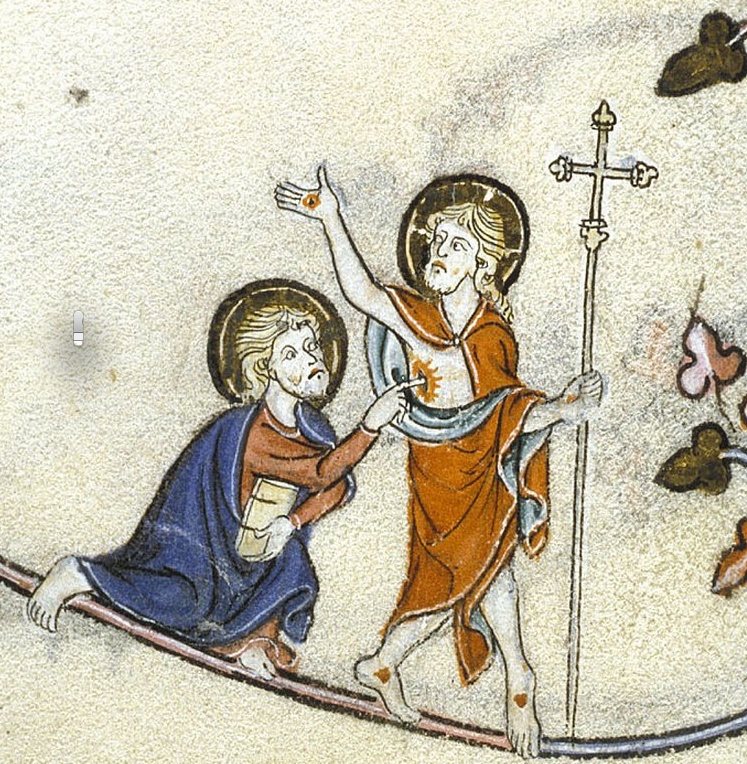
Today, July 3rd, we remember Thomas the apostle. We’re tempted to think that belief does away with troublesome questions and shelters us from unbelief, making our way to God smooth and undisturbed. Not so, Thomas reminds us; he found faith through his questions and by placing his finger into the wounds of Christ.
Gregory the Great reminds us today of the importance of Thomas the Apostle.
“In a marvellous way God’s mercy arranged that the disbelieving disciple, in touching the wounds of his master’s body, should heal our wounds of disbelief. The disbelief of Thomas has done more for our faith than the faith of the other disciples. As he touches Christ and is won over to belief, every doubt is cast aside and our faith is strengthened. So the disciple who doubted, then felt Christ’s wounds, becomes a witness to the reality of the resurrection.”
That’s an interesting statement, isn’t it? “The disbelief of Thomas has done more for our faith than the faith of the other disciples.” Is an unbelieving world strengthening our faith now?
We go to God through questions, and some troubles too. We’re healed by touching the wounds of Christ. How do we touch the wounds of Christ? Is it by touching those who are wounded like him?
Grant, Almighty God, that we may glory in the Feast of the blessed apostle Thomas, so that we may always be sustained by his intercession and, believing, may have life in the name of Jesus Christ your son, whom Thomas acknowledged as the Lord. Who lives and reigns with you in the unity of the Holy Spirit, one God, for ever and ever.
We’re reading the biographies of Jewish Saints these days– stories of the patriarchs, their wives and times, from the Book of Genesis. The story we read today about Abraham, Sarah and Hagar is not the story you think of when you think of saints.
It’s a shocking story. After arranging for Hagar to become the concubine of Abraham and Hagar bearing him a son, (Genesis 16) Sarah turns on Hagar and demands that Abraham drive her away. She wants Isaac, her son, to be without a rival.
Sarah noticed the son whom Hagar the Egyptian had borne to Abraham playing with her son Isaac; so she demanded of Abraham: “Drive out that slave and her son! No son of that slave is going to share the inheritance with my son Isaac!” Abraham was greatly distressed, especially on account of his son Ishmael. But God said to Abraham: “Do not be distressed about the boy or about your slave woman. Heed the demands of Sarah, no matter what she is asking of you; for it is through Isaac that descendants shall bear your name. As for the son of the slave woman, I will make a great nation of him also, since he too is your offspring.”
Early the next morning Abraham got some bread and a skin of water and gave them to Hagar. Then, placing the child on her back, he sent her away. As she roamed aimlessly in the wilderness of Beer-sheba, the water in the skin was used up. So she put the child down under a shrub, and then went and sat down opposite him, about a bowshot away; for she said to herself, “Let me not watch to see the child die.” As she sat opposite Ishmael, he began to cry. God heard the boy’s cry, and God’s messenger called to Hagar from heaven: “What is the matter, Hagar? Don’t be afraid; God has heard the boy’s cry in this plight of his. Arise, lift up the boy and hold him by the hand; for I will make of him a great nation.” Then God opened her eyes, and she saw a well of water. She went and filled the skin with water, and then let the boy drink.
God was with the boy as he grew up.(Genesis 21:8-20)
No one looks good in this story.
The Jewish biographies of saints don’t hesitate to tell their dark sides in the scriptures.. Even God’s words and actions are puzzling here..
Pope Francis offers a caution in “Gaudete et exultate”: “Not everything a saint says is completely faithful to the Gospel; not everything he or she does is authentic or perfect. What we need to contemplate is the totality of their life, their entire journey of growth in holiness, the reflection of Jesus Christ that emerges when we grasp their overall meaning as a person.” (22)
Saints are imperfect people; the world is imperfect. God is a potter who works in mud.
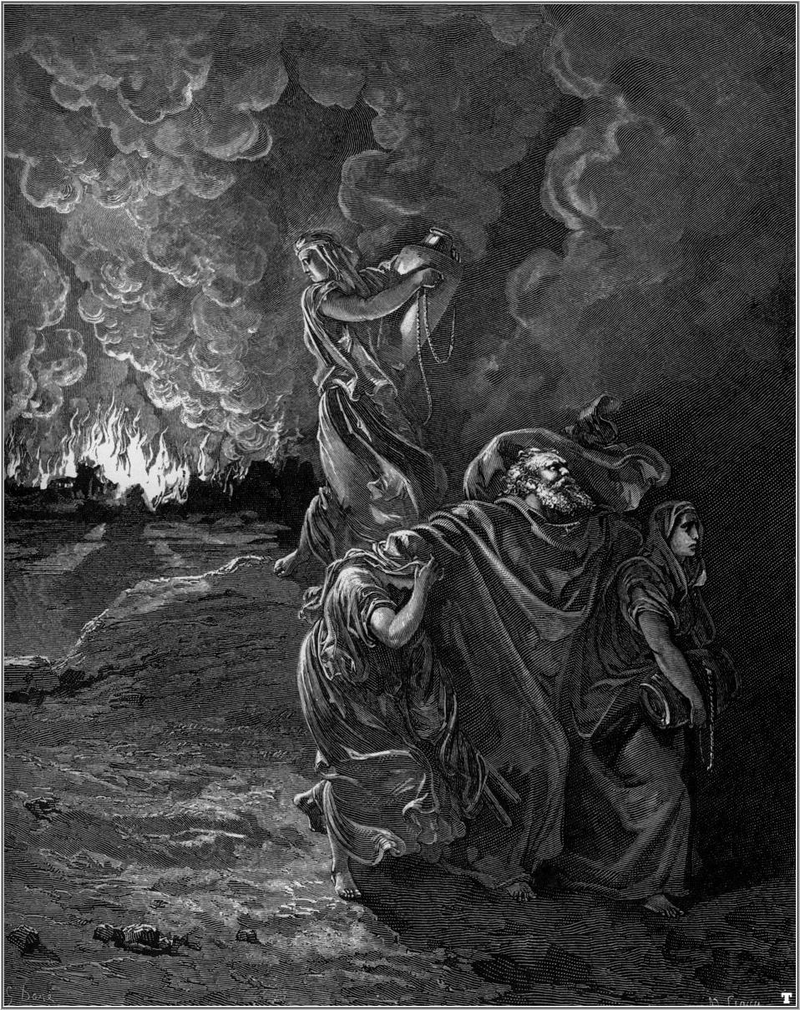
The readings from the Old Testament these weeks at Mass are made for questions. For example, today’s reading from Genesis 19,15-29. Why was Lot’s wife turned to a pillar of salt when she looked back at the destruction of Sodom and Gomorra? Was she overly curious, or overly regretful? Jesus has some harsh things to say about people who look back. Or maybe it’s just a piece of human caution– watch out where you’re going when you’re in a hurry.
Lot himself is slow to leave the place he’s chosen for his own. He asks to go to a town close by. Is he hoping to get back soon to the place he wants to be? Then why isn’t he turned to a pillar of salt?
In these Genesis stories God often seems to be on the side watching it all like everyone else. Isn’t that what we think at times? God is a spectator as human events unfold, watching it all like everyone else. But that’s not true, is it?
Questions like these have kept Jewish commentators busy for centuries. We tend to pass them by for stories more easily understood. Or, we’re convinced the answers are there in some book we haven’t read,, and so we don’t give them much thought.
But the scriptures are meant to raise questions. We go to God through questions.
Today’s reading, about the destruction of Sodom and Gomorrah and the cities of the Plain, tells us that not only are individuals meant to follow God’s law, but cities and nations are too. There’s a public morality as well as a private morality. God holds cities and countries and communities accountable.
Lot seems to be the only one open to help strangers in Sodom. The whole city is against him. Commentators say that Lot is the first example in the Bible of the lone person seeking justice pitted against a whole city and community
The cities of Sodom, Gomorrah, the cities on the Plain existed south of the Dead Sea and were destroyed by a major earthquake, archeologists say. The Bible sees them destroyed because they ignored God’s law. Not even ten people can be found in them who can be called just.
Lot, his wife and two daughters escape, thanks to an angel and the prayers of Abraham. Lot chose to live in Sodom because it presented good economic possibilities, it seems. Lot’s wife, who looks back, is turned into a pillar of salt. Why did she look back? Like so many other scripture stories, we are left to answer that question ourselves.
There are no signs of repentance in Sodom and Gomorrah, unlike in Nineveh, the city Jonas preached to.
Yet, God does not condemn cities, or human plans or human achievements. We are living in a time when cities face enormous challenge. In so many parts of the world today people are moving to the cities. They’re meant to be places of justice and mercy and human flourishing, not destruction. They are called to be cities of God.
July 1 is the Feast of the Precious Blood of Jesus in the Passionist calendar. It was a feast dear to St. Vincent Strambi, an Italian Passionist who lived in the 19th century when Europe was convulsed by Napoleon’s dreams of world conquest. Over 4 million people, military and civilian, were killed in the Napoleonic wars that stretched out for decades after Napoleon came to power. Bent on victory, Napoleon saw war and the blood shed in mass warfare as the price of empire.
I suppose we can say Napoleon began the armaments race that we see still in progress today. And empire building, or preserving, still goes on today.We are watching a brutal war today between Russia and Ukraine. So much blood spilled. Then there’s. Gaza and the Sudan and so many places today.
Strambi had great devotion to the Precious Blood of Jesus and often preached about it. He saw a new crucifixion in blood shed by soldiers in fierce battles raging then through Europe and the suffering of those caught in “collateral damage” . Their blood mingled with the blood of Jesus, a precious blood God mourned and judged holy.
The Feast of the Precious Blood turns our eyes not only to the blood flowing from Jesus’ side as he died on the cross but also to the blood shed in today’s vicious wars. So much money and resources spent on guns, as we cut down on the needs of the poor.
Painters like Durer (above) pictured angels holding cups catching blood from Jesus’ wounds. Don’t let his blood fall to the ground unnoticed, he tells us. It’s precious. All human life is precious.
In today’s gospel reading Jesus reminds the scribe and another disciple as they prepare to cross the sea ( Matthew 8 18-22 ) that following him comes at a cost. The storm they encounter is a sign of things to come. Matthew’s gospel waits till Chapter 10 to name the Twelve in the boat with him.
The apostles carry on his work in a special way. That’s why we celebrate a feast of an apostle each month in our church calendar. They handed on through “their preaching, by the example they gave, by the institutions they established, what they themselves had received–whether from the lips of Christ, from his way of life and his works, or whether they had learned it at the promptings of the Holy Spirit.” (Catechism of the Catholic Faith 76)
July 3rd, we honor the Apostle Thomas. He reminds us that the witnesses chosen by Jesus were both weak and strong. Everyone in the Upper Room the night of Jesus’ resurrection believed that he had risen. The absent Thomas doesn’t. “Unless I see the mark of the nails in his hands and put my finger into the nailmarks and put my hand into his side, I will not believe.” Only when Jesus patiently appears to him a week later and has him touch the wounds in his hands and his side, does he believe. “My Lord and my God.”
Is Thomas unique in his weakness of faith? Were the others Jesus chose as foundation stones of the church unlike him? From the slight information the gospels provide, all the other apostles are both weak and strong–Peter, their leader, is a prime example.
Were the apostles changed completely by the Holy Spirit at Pentecost? Perhaps not as completely as we may believe. The story of the two disciples on the way to Emmaus in St. Luke’s gospel may better describe the post-resurrection church and its leaders.
Hardly a triumphalist church and hardly perfect leaders. Their strength and their guide was the patient Jesus. The Risen Jesus was with them then and he is with us now.
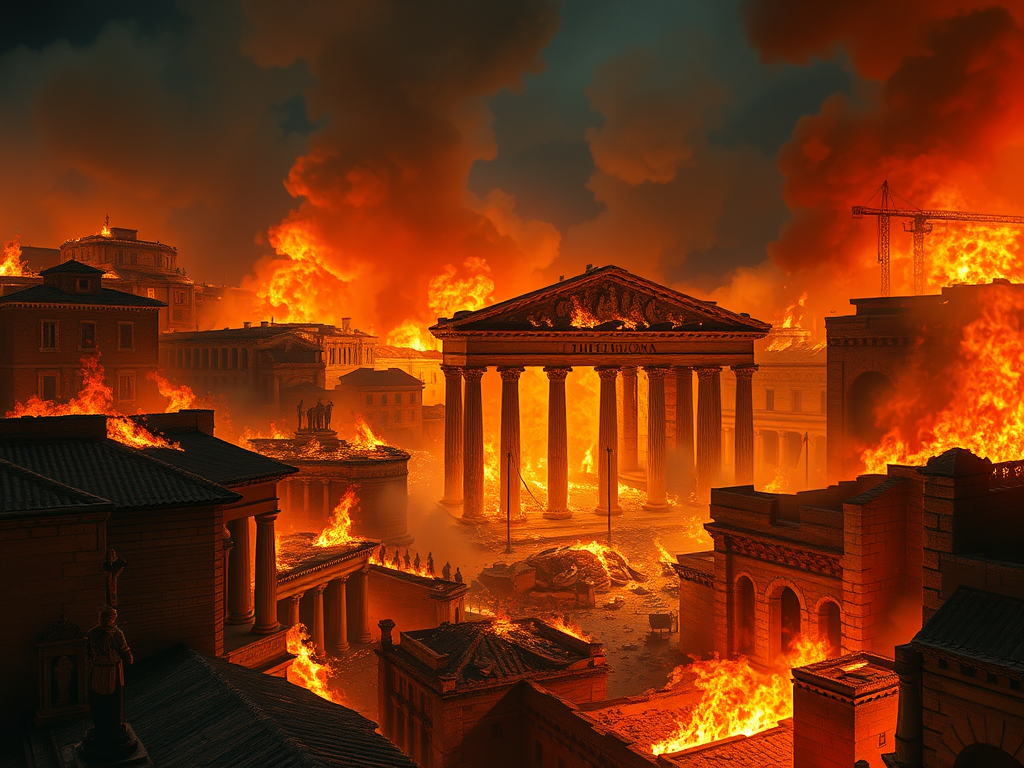
Today is the feast of the early Roman martyrs who suffered in Nero’s persecution along with the apostles Peter and Paul. The persecution began with an early morning fire on July 19, 64, that broke out in a small shop by the Circus Maximus and spread rapidly to other regions of Rome, raging for nine days through the city’s narrow streets and alleyways, where more than a million people lived in apartment blocks of wooden construction.
Only two areas escaped the fire; Trastevere, across the Tiber River, which had large Jewish population, was one.
Nero was at his seaside villa in Anzio when the blaze began, but he delayed returning to the city. They say that when he heard the news, he began composing an ode comparing Rome to the burning city of Troy. His absence caused resentment among the people. Rumors began that Nero himself set the fire in order to rebuild the city from his own plans.
To quell the rumors, Nero decided to blame someone else, and he chose a group of renegade Jews called Christians, who had caused trouble before, and had a bad reputation in the city. Earlier, about the year 49, the Emperor Claudius had banished some of them from Rome for starting upheavals in the city’s Jewish synagogues with their disputes about Christ.
“Nero was the first to rage with Caesar’s sword against this sect,” wrote the early-Christian writer, Tertullian. “To suppress the rumor,” the Roman historian Tacitus says, “Nero created scapegoats. He punished with every kind of cruelty the notoriously depraved group known as Christians.” Just how long the process went on and how many were killed, the Roman historian does not say.
The early Roman Christians came mostly from the 60,000 Jewish merchants and slaves with strong ties to Jerusalem. Even before Peter and Paul arrived in Rome, Jewish-Christians, clearly identified as followers of Jesus Christ, were counted among the city’s Jews.
At the time of the fire Jewish Christians had become alienated from the larger Jewish community and began separating from it. Where they lived and met was well known. The authorities, following the usual procedure, seized some of them, brought them to the Prefecture and forced them by torture to give the names of others.
“First, Nero had some of the members of this sect arrested. Then, on their information, large numbers were condemned — not so much for arson, but for their hatred of the human race. Their deaths were made a farce.” (Tacitus)
Instead of executing the Christians immediately at the usual place, Nero executed them publicly in his gardens and in the circus on Vatican hill. “Mockery of every sort accompanied their deaths. Covered with the skins of beasts, they were torn by dogs and perished, or were nailed to crosses, or were doomed to the flames and burnt, to serve as a nightly illumination, when daylight had expired.” (Tacitus)
Most thought Nero went too far. “There arose in the people a sense of pity. For it was felt that they (the Christians) were being sacrificed for one man’s brutality rather than to the public interest.” (Tacitus)
We celebrate the memory of the victims of Nero’s persecution, our ancestors in faith, on June 30th, following the feast of Saints Peter and Paul.
Further Reading
It would be good to have two New Testament writings in mind as we celebrate this feast– the Gospel of Mark and the First Letter of Peter.
Many scholars believe the Gospel of Mark was written in Rome following Nero’s persecution and before the destruction of Jerusalem in 70. Roman Christians, reeling from persecution and fearing troubles ahead, learned from this gospel.
Most belonged to a Jewish community that enjoyed extensive privileges under Rome’s emperors; they felt safe and secure– until Nero’s reign. There were brave martyrs, but there were others who betrayed their fellow Christians.
Mark’s Gospel presents the Passion of Jesus as a stark, brutal martyrdom that can’t be explained. How appropriate for Christians facing absurd, unmerited suffering meted out by a capricious emperor. At the same time, more than other gospels, Mark portrays Peter as a disciple who fails his Master and then receives mercy. He seems to remind Rome’s Christians that not only the strong, but the weak are part of their church.
Mark’s Gospel is meant for hard times. Jesus Crucified calls his disciples to follow him to the Cross.
First Letter of Peter
Another New Testament writing offered a similar message to the Roman community and Christians beyond the city. Like Mark’s Gospel, the First Letter of Peter, written in Rome, calls for courage in suffering, even unjust, absurd suffering.
“Christ suffered for you, leaving you an example that you should follow in his footsteps. He committed no sin and no deceit was found in his mouth. When he suffered he did not threaten; instead he handed himself over to the one who judges justly.” (1 Peter 2, 21-23)
The followers of Jesus should stay the course when suffering comes, Peter says. Stay where you are, the letter says, and “maintain good conduct among the Gentiles,” (1 Peter 2:12) “give honor to all, love the community, honor the king.”(1 Peter 2:17)
Following the Neronian persecution, many Jewish Christianss fled Jerusalem before Titus’ advancing legions. Seeing a sign of the last times, they prepared for the end. Rome’s Christians stayed where they were, it seems, and with their neighbors rebuilt their burnt city, waiting in hope for God’s kingdom to come.
They must have wondered whether to stay in this city, an evil city like Babylon. Should they go to a safer, better place? The Christians remained in the city. I wonder if the “Quo Vadis?” story was a story prompted by questions like these ?
The martyrs of Rome strengthen us to stand where we are and do God’s will, inspired by the Passion of Christ.
The Vatican Basilica where Peter the Apostle is buried is a prime destination for pilgrims to Rome today, but another important place dedicated to the memory of the apostle is the Church of St. Peter in Chains. It was built in the 5th century by the Empress Eudoxia on the western slope of the Esquiline Hill, next to the site of the early Roman Prefecture, not far from the Colosseum and the Roman Forum.
Justice was still being dispensed at the Roman Prefecture in Eudoxia’s day. Rome’s main prison was also nearby, where suspected criminals were tortured, questioned and judged. Not far away, just outside the city, those condemned were beheaded or strangled.
I would guess that Eudoxia was inspired to build this church next to the Roman Prefecture by the dramatic story we read today from the Acts of the Apostles of Peter being freed from his chains from a Jerusalem prison. (Acts 12:1-11) I imagine she saw the Prefecture as the place where judgment was carried out for so many Christians, even Peter and Paul.
Eudoxia gathered chains from the prisons in Jerusalem and Rome and placed them under the altar of this church she built, according to reports. Modern visitors usually turn to Michelangelo’s famous statue of Moses, located in the same church, but they should keep the chains in mind. They represent the imprisonment of Christian martyrs like Peter and Paul, and so many others.
A strong tradition among early Christian communities — affirmed today by many historians and archeologists — says that Peter met his death at Nero’s circus on the Vatican and Paul was beheaded along the Via Ostia near the place where Constantine later built a church in his honor. The apostles Peter and Paul, were martyred late in the persecution. Many details of their martyrdom are unknown, but like others they must have been arrested, put in chains, questioned, and sentenced before being executed.
Were Peter and Paul and many of the Christian martyrs who died in Nero’s persecution arrested, enchained and sentenced here?
There are later legends, of course. One says Peter and Paul were imprisoned in the Mamertime Prison, near the Capitoline Hill, where they converted and baptized their jailers. Peter, freed from his chains, escaped and fled along the Via Appia until he reached the place where the chapel, Domine, Quo Vadis? now stands. There he met Jesus coming into the city. “Where are you going, Lord?” Peter asked. When Jesus told him he was going to join those suffering, the apostle turned to embrace the same fate.
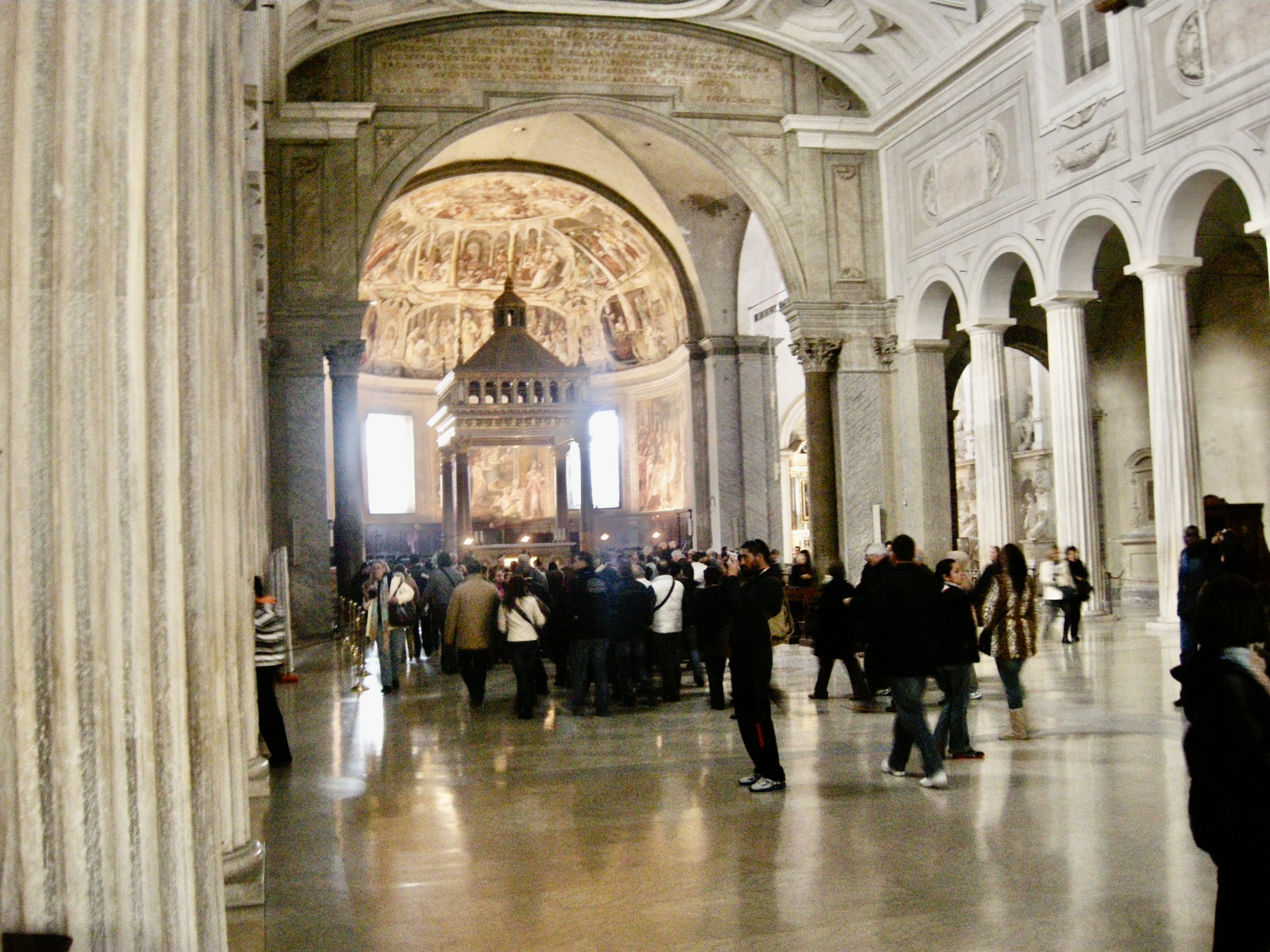
In the apse of the church of St Peter in Chains there’s a 16th century painting of Eudoxia presenting the chains to the pope. According to some 8th century homilies, one is from a Jerusalem prison. The other is from a Roman prison, possibly the one nearby? Eudoxia was a woman who listened to the scriptures with her imagination and saw connections. Good example for us who listen to the scriptures today.
Basilica di s.pietro in vincoli, A.P.Frutaz, Rome ?
The Roman Catacombs and Their Martyrs, l. Hertling SJ and E.Kirschbaum,SJ, Milwaukee, USA 1956






 The Victor's Place