Category Archives: Environment

5th Sunday of Easter: I Am the Vine

For this week’s homily, please play the video below:

An Honest Environment

by Howard Hain
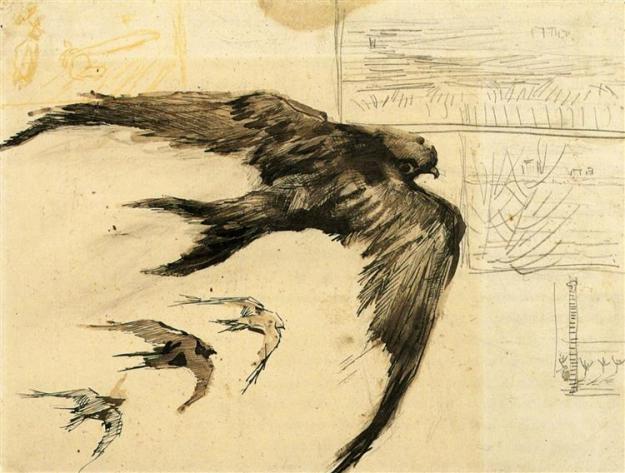
four-swifts-with-landscape-sketches-1887(1).jpg!Large

Vincent van Gogh, “Four Swifts With Landscape Sketches”, 1887


If a child is wasteful, what should the parents do?

Give them more?

More toys?

More snacks?

More disposable goodies?

Should they inflate the number and insignificance of what the child already has?

If the child’s room or backyard is full of waste, scattered remnants of “grown-bored-with” toys and doodads, what’s the answer?

Should the parents implement specific and tedious rules detailing what the child should do and not do in order to preserve the cleanliness and neatness of the home and outdoor space?

Should the parents provide the child with even greater means to continue to live so wastefully, with such little appreciation?

Or maybe, just maybe, the answer begins with the child possessing less, less toys, less privilege—especially when the family budget doesn’t allow for them in the first place—wouldn’t that be more beneficial to all involved?

Maybe if the child had only a few but well-loved toys, the child would be less wasteful, less likely to discard them and negatively affect the family environment?

Isn’t it the same with the overall environment? With the care of the earth and its resources?

If we are really serious about the environment, is the answer really man-made laws from “up high” limiting the freedom of individuals and localities? Or would it be better to begin with embracing a liberating reality that would help foster a more natural and organic conservancy?

Put it this way, if the government actually had to balance the budget, I mean really balance it on an annual basis—spending only what it brings in—and they didn’t continue to print more money (especially when the new “currency” is not based on any real asset, but instead out of “thin-air”) don’t you think that spending on the national level would change?

It would have to, period.

And don’t you think that the debate over what we do spend on would tighten up, become quite serious, efficient, and effective? And don’t you think that on the local level it would be the most freeing? For it would create an environment where individuals wouldn’t be handed false paper to purchase false products (designed to be disposable), and then maybe we’d have a commercial reality that is truly sustainable—where we have perhaps fewer items but items we cherish, are grateful to possess, and protect and care for—goods we wouldn’t just throw away.

Would that perhaps change the pollution problem?

Would it perhaps address our reckless use of natural resources?

In short, no “environmentalist” is serious about the environment (and values individual rights and freedom of local choice) if they do not deal with the biggest polluter of all: runaway debt, rising inflation (with concurrent deflation of valued consumer-driven product), and false and perpetually self-emptying currency.

Because without the false means of consumerism, consumerism would have to return whence it came: nonreality.

For imbalanced budgets, large deficit spending, and reckless printing of currency are the most non-organic, the least natural, and most non-locally-supporting factors concerning the health of our rivers, soil, trees, and, quite frankly, ourselves.

So let’s be real. Real as dirt. Let go of the hidden influences, agendas, and political prejudices, and be serious about what is truly causing waste and environmental destruction.

The truthful alternative is certainly refreshing: an unwavering allegiance to God’s most natural law of truth, beauty, and divine efficiency. For while God is certainly exuberant in His abundance and provision, He is never wasteful. He never lies. He never “cooks the books”.

The Creator of the Universe is honesty to the utmost degree. Pure harmony. Pure integrity. Pure accountability. Not a trace of fallacy or fiction.

If you doubt me, well then just ask the local bird. Ask him if he can borrow against bad credit, if he can feed his babes with worms that are printed merely on paper, and if he ever worries about his offspring buying and buying and throwing out and throwing out—or is it precisely his non-inflated natural resources that actually keep his local environment in harmonious check?

It is as long as some bureaucratic bird, puffed up with unrealistic good intentions (and other people’s money) doesn’t come along promising freebies and handing out nests that he and his other fine-feathered friends pay for with bad credit or currency based on a non-existent reality.

In their bird-brained world, thank goodness, that doesn’t happen. No, birds build their nests in reality. And continue to fly high because of it.

We on the other hand have many among us who try to sell us such false narratives and papier-mâché mansions. They also ironically tend to be the ones who “support” the “environment” the most.

For to discuss global warming, sustainability, and carbon credits without discussing the need for balanced budgets and disciplined currency policy is to be either a fool or a liar—both cases are unsustainable.


Howard Hain is a contemplative layman, husband, and father. He blogs at http://www.howardhain.com
Mary Gardens

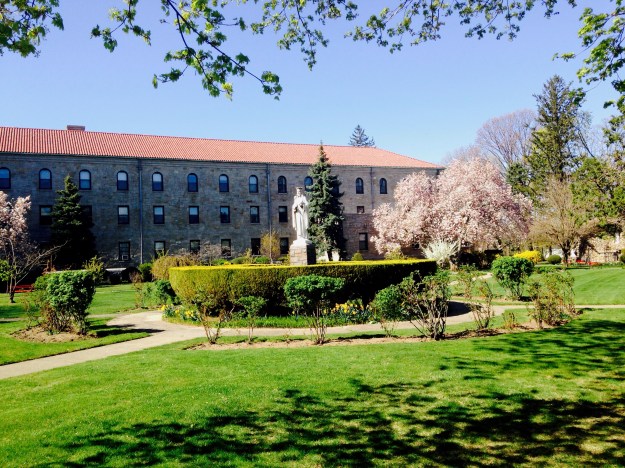
Andrea Oliva Florenda, a professor at St. John’s University in Queens, New York, offered a day of reflection on Mary Gardens, December 1 at Bishop Molloy Retreat Center, Jamaica, New York. Professor Florenda teaches in the department of theology and religious studies at St. John’s, specializing in Marian theology. She’s also the designer and curator of the Marian Garden at the university.

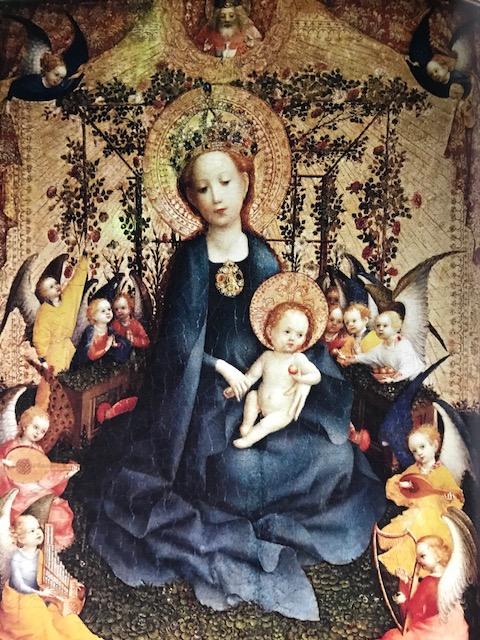
Mary Gardens, dedicated to Mary, the Mother of Jesus, appeared in Europe following the Black Death, a pandemic that caused millions of deaths in that part of the world in the 14th century. The gardens, usually found in monasteries and religious shrines, brought hope to people walking “in the shadow of death.”

God placed Adam and Eve in a garden, Christian tradition says. (Genesis 2, 8-28) Rising from the dead, Jesus proclaimed eternal life in a garden. (John 20,11-18) For early and medieval Christians, Mary appeared as a garden enclosed, flowers, plants and trees surrounded her, “our life, our sweetness and our hope.” The Mary Garden, which became a favorite inspiration for medieval and renaissance artists, brought the promise of life to the “poor banished children of Eve.”

Does the Mary Garden have a role today in a world facing climate change and environmental degradation? Professor Florenda thinks it does. Besides the mysteries of faith, it teaches reverence for creation, for the soil, for plants that feed us and bring healing, for flowers that nourish our sense of beauty.

Certainly science and technology have a large part to play in the current environmental movement, but Professor Florenda notes the number of young people, from various religious tradition drawn to her Mary Garden at St. John’s, where the mysteries of seed and soil unfold, where pharmacy students study medicinal herbs and seasonal vegetables feed the poor.

The day of reflection on Mary Gardens ended at the grotto honoring Mary in the garden of Immaculate Conception Monastery in Jamaica. There, Professor Florenda spoke about the meaning of the grotto, its structure and the plants and trees surrounding it.

“There is a language in each flower,
that opens to the eye,
A voiceless but a magic power.
A prayer in earth’s blossoms lie.” Anonymous

To Preach

by Howard Hain


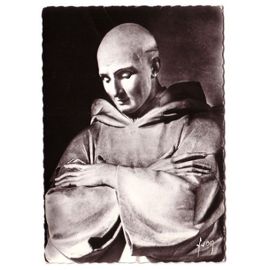
Saint Bruno, Houdon

Saint Bruno (c. 1033-1101), Founder of the Carthusians, Statue by Jean-Antoine Houdon (1767)


.

“It is not for you to know the times or dates the Father has set by his own authority…”

—Acts 1:7


.

If the Lord returns this very second, well then, are not “…the ends of the earth” where we currently stand?

May we pray for the mercy and grace that we ourselves be truly converted to Christ, for if all the world were to focus on that, then all the world would be set “on fire”.

To truly “preach” the Gospel is to be truly transfigured. For it is the power of His glory, in us, around us, despite us, that brings others to Christ.

A single man standing absolutely still—but who has Christ truly within him—brings more healing and peace to all the world than an army of men continually running around the globe glorifying themselves in His Most Sacred Name.

For redemption is always by His power, for His glory, and within His Kingdom. It is HIS Church.

May we approach Him in our absolute nothingness, for that is all we truly possess.

Men come and go, keep your eyes on Christ.

The world turns, the Cross stands still.


.

Howard Hain is a contemplative layman, husband, and father. He blogs at http://www.howardhain.com

Follow Howard on Twitter @HowardDHain   http://www.twitter.com/HowardDHain

If you enjoyed this post, please consider “liking” it, adding a comment, becoming an email subscriber, or passing it along via the social-media links below. Your support is greatly appreciated. Step by step. All for God’s glory.

Living in a Dirty Home

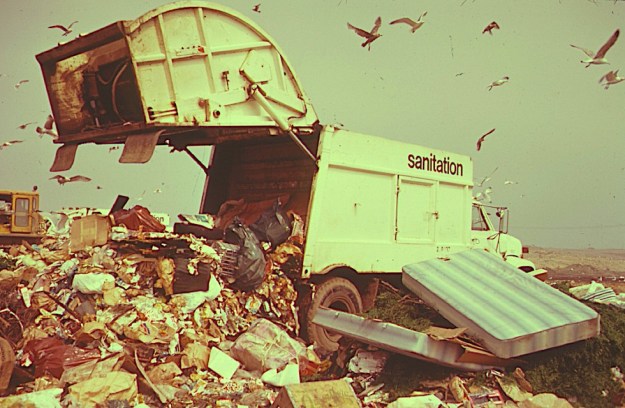
Garbage

Account must also be taken of the pollution produced by residue, including dangerous waste present in different areas. Each year hundreds of millions of tons of waste are generated, much of it non-biodegradable, highly toxic and radioactive, from homes and businesses, from construction and demolition sites, from clinical, electronic and industrial sources. The earth, our home, is beginning to look more and more like an immense pile of filth. In many parts of the planet, the elderly lament that once beautiful landscapes are now covered with rubbish. Industrial waste and chemical products utilized in cities and agricultural areas can lead to bioaccumulation in the organisms of the local population, even when levels of toxins in those places are low. Frequently no measures are taken until after people’s health has been irreversibly affected.
Pope Francis, Laudato SI, 21

Change and Automation


17. Theological and philosophical reflections on the situation of humanity and the world can sound tiresome and abstract, unless they are grounded in a fresh analysis of our present situation, which is in many ways unprecedented in the history of humanity. So, before considering how faith brings new incentives and requirements with regard to the world of which we are a part, I will briefly turn to what is happening to our common home.

18. The continued acceleration of changes affecting humanity and the planet is coupled today with a more intensified pace of life and work which might be called “rapidification”. Although change is part of the working of complex systems, the speed with which human activity has developed contrasts with the naturally slow pace of biological evolution. Moreover, the goals of this rapid and constant change are not necessarily geared to the common good or to integral and sustainable human development. Change is something desirable, yet it becomes a source of anxiety when it causes harm to the world and to the quality of life of much of humanity.

19. Following a period of irrational confidence in progress and human abilities, some sectors of society are now adopting a more critical approach. We see increasing sensitivity to the environment and the need to protect nature, along with a growing concern, both genuine and distressing, for what is happening to our planet.
Pope Francis, Laudato SI, 17-19

Avoiding an “irrational confidence in progress and human abilities”, we need to make “a fresh analysis of our present situation,” the pope says. He speaks of the “rapidification” of life– a fast changing world that cares little for nature or sustainable human development.

Like automation, smart cars, or whatever else puts people out of work and removes them from involvement in society or having a hand in the progress of our created world?

Crimes Against the Natural World


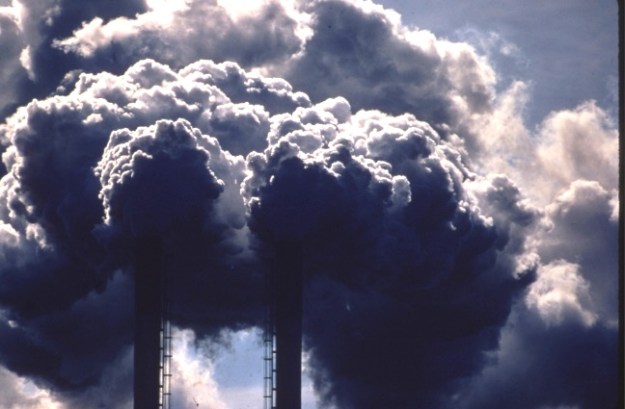
“Patriarch Bartholomew has spoken in particular of the need for each of us to repent of the ways we have harmed the planet, for “inasmuch as we all generate small ecological damage”, we are called to acknowledge “our contribution, smaller or greater, to the disfigurement and destruction of creation” He has repeatedly stated this firmly and persuasively, challenging us to acknowledge our sins against creation:

“’For human beings… to destroy the biological diversity of God’s creation; for human beings to degrade the integrity of the earth by causing changes in its climate, by stripping the earth of its natural forests or destroying its wetlands; for human beings to contaminate the earth’s waters, its land, its air, and its life – these are sins” For “to commit a crime against the natural world is a sin against ourselves and a sin against God.’

“At the same time, Bartholomew has drawn attention to the ethical and spiritual roots of environmental problems, which require that we look for solutions not only in technology but in a change of humanity; otherwise we would be dealing merely with symptoms. He asks us to replace consumption with sacrifice, greed with generosity, wastefulness with a spirit of sharing, an asceticism which “entails learning to give, and not simply to give up. It is a way of loving, of moving gradually away from what I want to what God’s world needs. It is liberation from fear, greed and compulsion” As Christians, we are also called “to accept the world as a sacrament of communion, as a way of sharing with God and our neighbours on a global scale. It is our humble conviction that the divine and the human meet in the slightest detail in the seamless garment of God’s creation, in the last speck of dust of our planet”.

Pope Francis ,Laudato SI, 8-9

A Lot of Things We Don’t Know


Vacations take you away from home to somewhere else. My somewhere else for the last few days was Cape May, New Jersey, a small old town along the Jersey shore at the tip of the state.

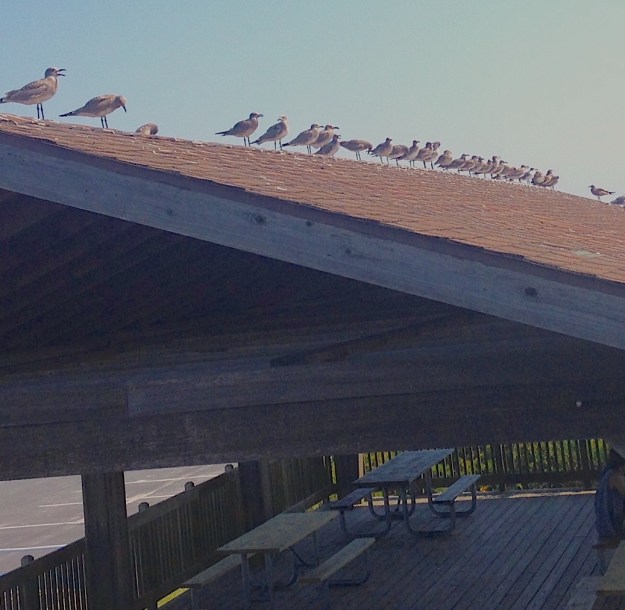
I went fishing but caught no fish. I went bird-watching at a good spot off the beach, but saw few local or migrating birds –except for the line of gulls perched on a shelter roof looking out to the sea. (Above)

Patient, they were. Why? I wondered. Were they expecting a feast from the nearby waters. Schools of baby blue fish had moved towards the shore, some fishermen said. Was that why no other fish were to be caught?

Were bigger fish on the way to feast on the baby blues? Who knows?

Something mysterious about the gulls perched patiently on the rooftop, though. Were they just taking a break, or did they know a feast was on the way and were gitting ready to swoop down on leftovers on the shore?

There are a lot of things we don’t know. You don’t have to go far from home to find that out.

Why Read the Old Testament?

Some people complain about the selections from the Old Testament we’re reading at weekday Mass these past few weeks. Too long, they say, they don’t tell us anything. They’d rather hear what Jesus is saying and doing.

Why do we read from the Old Testament? Reading from the Old Testament is a lot like reading from the New York Times or the Daily News, or following David Muir on ABC each evening. You’re not going to hear much about Jesus there either. The media gives us the news of the day as it happens and, especially these days, it’s not encouraging.

Not much encouraging news in our Old Testament reading today from the Book of Numbers either. (Numbers 13-14) Giants are out there blocking the way to the promised land. Israel’s scouts face giants as they reconnoiter the world ahead. There’s no way ahead.

Our media tells us the same: giants are blocking our way– North Korea, the Middle East, storms from climate change, political giants who seem to get in the way of a world of justice and peace. And we don’t have answers what to do.

But the Old Testament tells us more than the media. It’s salvation history. More than the story of the Jews, the Old Testament is the story of the human race and all creation on a journey, from the beginning of time to its end. Human sinfulness, tragedies and delays are there, but the story begins and ends in hope. God is there.

That makes the Old Testament stories so different from the stories the media serves up everyday. God is there from the beginning. That’s the way our selection today from the Book of Numbers begins: “The LORD said to Moses [in the desert of Paran,]‘Send men to reconnoiter the land of Canaan,
which I am giving the children of Israel.’” And God is there as his people experience the consequences of their foolishness and lack of faith.

The columnist David Brooks in the Times yesterday said he has to think less about Donald Trump or he’s going to go crazy. He needs to think more about the deeper shifts taking place in society, he says.

I wonder if thinking about the deeper shifts is enough to stop you from going crazy these days. We need hope from another source. That’s where the Old Testament and the rest of the scriptures comes in. Some prefer calling it the “First Testament.” It testifies that the first thing to keep in mind about time is that God is there, from beginning to the end. God is our Savior.

17th Sunday a: Finding Life’s Treasures

For today’s homily, please play the video below: