Category Archives: Environment

Laudato Si and the Passion of Jesus Christ


The temptation when reading Pope Francis’ encyclical Laudato Si, on creation and our common home–one of our principal guides today– is to see it as a series of political or economic or social recommendations. It’s deeper than that.

“Our goal is not to amass information or to satisfy curiosity, but rather to become painfully aware, to dare to turn what is happening to the world into our own personal suffering and thus to discover what each of us can do about it. (19)

Our present Covid crisis has created another range of personal and global suffering. We need to change the way we see things and do things. The danger is we lose the sense beauty and the good in life as we cover our faces and distance ourselves from the world around us..

I wish I could remember the name a book written years ago by a biologist pointing out the basic health and goodness of our life forms, from the smallest to the greatest. We live in a world where life thrives and not dies.

The mysticism of the Passion of Jesus offers a way to see our new painful situation as a way to life and not death. The Cross is always of tree that brings life;; a garden tomb offers the promise of new harvest. The mysticism of the Passion doesn’t end in suffering and death, but in life and resurrection.

Mystics usually see the connection of things. Are we being called to embrace a passion mysticism now?

I like Francis’ quotation of the Sufi spiritual writer Ali al-Khawas who “stresses that we not put too much distance between creatures of the world and the interior experience of God.” We have to see this present situation as part of the plan of God, a mystery of death and resurrection.

“Prejudice should not have us criticize those who seek ecstasy in music or poetry. There is a subtle mystery in each of the movements and sounds of this world. The initiate will capture what is being said when the wind blows, the trees sway, water flows, flies buzz, doors creak, birds sing, or in the sound of strings or flutes, the sighs of the sick, the groans of the afflicted…” (EVA DE VITRAY-MEYEROVITCH [ed.], Anthologie du soufisme, Paris 1978, 200).

As we put on face masks and practice social distancing, let’s not lose sight of the beauty of creation, a sign of God’s presence.

Morning Prayer: A Genesis Prayer

img_0325

We may think morning prayer is a few mumbled words or the Sign of the Cross quickly made, but morning prayer is meant to be an important part of our experience as we wake from darkness and sleep.

“Let there be light and there was light; and God said it was good.” (Genesis 1, 3-4) Light was the first thing God made. True Light, which enlightens everyone, came into our world, John’s gospel says. ( John 1, 9)

I sit on the porch for a few minutes in the early morning and watch the sun come through the tall trees lining our garden to the east. In winter it takes awhile. In summer, the sparrows and the doves and sometimes a pair of cardinals gather at the bird feeder to begin the day. Before I do a thing, the world gradually is bathed in light and comes awake.

Before I do a thing.

Morning prayer is a Genesis Prayer, an assurance we shouldn’t miss. Light comes to our world today, True Light, as it was from the beginning. Darkness is a sign of the world that’s chaotic. The psalms and hymns of morning prayer say light comes, and we pray our eyes be open to see.

The images in morning prayer are important. In the beginning God created a garden, a symbol of the world ordered and in harmony, beautiful and fruitful. God is the great Gardener, a king enthroned over creation, and all is God’s garden, the morning psalms say.

“Shout to the Lord all the earth, ring out your joy…Let the sea and all within it thunder praise, the world and all its peoples. Let the rivers clap their hands, and the hills ring out their joy. Rejoice at the presence of the Lord, for he comes to rule the earth.” (Psalm 98, Wednesday Morning 111)

The world, however chaotic it seems, is cared for by the One who made it.

Sometimes God is a Shepherd, a Great Shepherd bestriding the world: “Here comes with power the Lord God…Like a shepherd he feeds his flock, in his arms he gathers his lambs, carrying them in his bosom and leading the ewes with care.” (Isaiah 40, Thursday Morning 111)

Sometimes we’re asked to see the world as a city, God’s holy city. “On the holy mountain is his city, cherished by the Lord…a holy city.” (Psalm 87 Thursday Morning III) We’re asked to see our world as holy, yet still to be built.

“Sing a new song to the Lord; sing to the Lord, all the earth; sing to the Lord and bless his name.” we’re told as we begin the day. (Psalm 96. Monday Morning, 111)

“Serve the Lord with gladness, come into his presence singing for joy.”

Document on Human Fraternity for World Peace and Living Together


Screen Shot 2019-02-06 at 8.49.53 AM

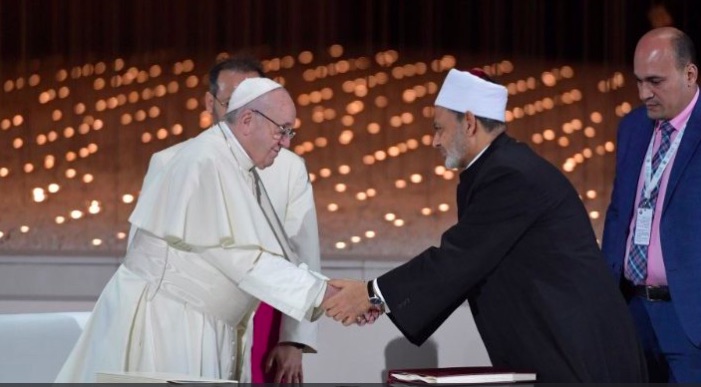
Pope Francis and the Grand Imama of Al-Azhar, Ahmad el-Tayeb,

“Something is happening.” That’s the way the great reading for our Holy Saturday liturgy, taken from an ancient homily, begins. We don’t see clearly yet, but something is happening.

And that’s the way I felt yesterday watching on YouTube a Mass at Abu Dhabi in the United Arab Emirates where more than one hundred thousand Christian migrant workers in the Middle East celebrated their faith with Pope Francis. Christianity is alive in the Middle East.

In the “Document on Human Fraternity for World Peace and Living Together” signed on Monday afternoon in Abu Dhabi by Pope Francis and the Grand Imama of Al-Azhar, Ahmad el-Tayeb, a path for the two religions and the world itself opened. Something is happening.

The document from leaders of these two great religious traditions, Christian and Muslim, is worth reflecting on.

It begins:
“In the name of God who has created all human beings equal in rights, duties and dignity, and who has called them to live together as brothers and sisters, to fill the earth and make known the values of goodness, love and peace,”

The document speaks for innocent human life, the poor, the destitute and the marginalized, the victims of destruction, calamities and war. It invokes the name of freedom, fraternity, peace and justice, the name of all people everywhere:

“In the name of God and of everything stated thus far; Al-Azhar al-Sharif and the Muslims of the East and West, together with the Catholic Church and the Catholics of the East and West, declare the adoption of a culture of dialogue as the path; mutual cooperation as the code of conduct; reciprocal understanding as the method and standard.”

“We, who believe in God and in the final meeting with Him and His judgment, on the basis of our religious and moral responsibility, and through this Document, call upon ourselves, upon the leaders of the world as well as the architects of international policy and world economy, to work strenuously to spread the culture of tolerance and of living together in peace; to intervene at the earliest opportunity to stop the shedding of innocent blood and bring an end to wars, conflicts, environmental decay and the moral and cultural decline that the world is presently experiencing.”

One commentator Tuesday said a meeting like this takes time for its meaning to be felt. “Something is happening.”

The Epiphany Feast Isn’t Over!

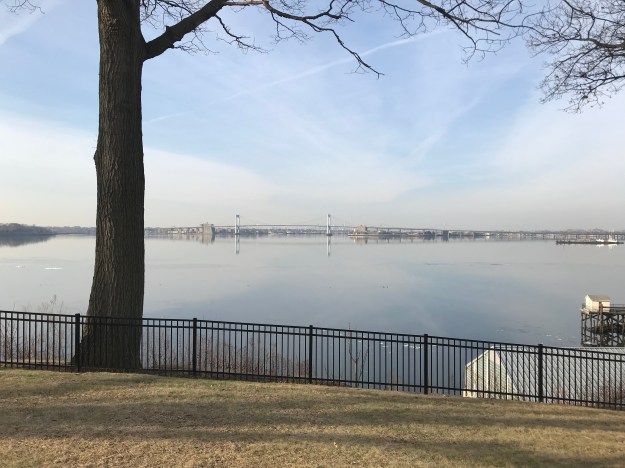
Kings Point, New York

Like the Christmas feast, we can pass over the Feast of the Epiphany too easily. It can become a quaint story of no significance.

I spoke about the meaning of the Epiphany on Sunday at the Maritime Academy in Kings Point, New York, where young men and women are being trained for service on the ships that sail our seas and waterways. This feast should mean something to them.

The only gospel that records this story is the Gospel of Matthew, so why is it there?

Matthew’s gospel was written for Jewish Christians in Galilee and Syria some time after the temple in Jerusalem was destroyed by the Romans in the year 70. We can’t imagine how shocked they were by the complete destruction of the temple and the city itself. These were places where God’s promises would be fulfilled, they thought. The Messiah would appear there. This was where Jesus would come again. All nations would stream to Jerusalem, prophets like Isaiah foretold. Now they were gone.

Matthew’s gospel reminds his hearers–and us too–that Jesus must be known by all nations before he comes again. “Go and make disciples of all nations,” Jesus says in his final words in Matthew’s gospel, “baptizing them in the name of the Father and of the Son and of the Holy Spirit, teaching them to observe all that I have commanded you. And behold, I am with you always, until the end of the age.” (Matthew 28, 18-20)

Matthew’s story of the Magi is a reminder that even as Jesus is born, messengers, strangers, wise men from afar, want to know and acknowledge him as their king and God.

Jesus Christ came, our gospel says, not for only one people or nation, but for all. Though his ministry was first to the Jews, Jesus wishes to make the world one. God doesn’t wish to save a few. He wants to save all– all the world.

The Magi came, our story says, from the east. Could that be from Iran or Yemen; two places we hardly view positively today in our country? More and more, as we look at the world only through the lens of politics and economics; we fear the stranger, we reject the immigrant, we create enemies, we reject people not like us. We’re becoming tribal instead of global. We’re falling into individualism. As the old song said, we’re looking for “perfect peace, where joys never cease, and let the rest of the world go by.”

But we can’t let the rest of the world go by and we won’t be safe behind walls. We’re living in a big world that God wants to be one. That’s what the story of the magi tells us. We’re all commissioned on this Feast of the Epiphany, which is followed next Sunday by the Feast of the Baptism of Jesus, to go out into the whole world, “ baptizing them in the name of the Father, and of the Son, and of the Holy Spirit,” teaching them to observe all that Jesus commands. And he will be with us, even to the end of time.

I told the young men and women at Kings Point on Sunday that they’re commissioned as people of the sea. The oceans and waterways are highways uniting this world of ours. They shouldn’t be looked at only through the eyes of economics or politics. They’re meant to connect peoples, they’re bridges that make us one.

As I left the chapel, I met some people who are “furloughed” by the current government shut-down. We don’t have to look far to see how dangerous it is to see the world only through the eyes of politics and economics. We need a brighter star.

Hurricane Florence is Coming

We not preparing for the disasters brought by climate change, an article in USAToday by Rick Hampson says. “Will repeated exposures to vivid scenes of natural disaster–Western wildfires, a global heat wave, Hawaiian volcano eruptions, the 2017’s hurricane’s anniversary and a suddenly active 2018 season” prepare us to do something? “Experience counsels skepticism. So does human nature.”

“Experts say people aren’t really motivated by disaster until it come to, or through, their door.” Hampson writes.

We forget that “America, the Beautiful” is vulnerable to climate change as other parts of the world are, and our political system doesn’t help us face the change either. The earth doesn’t get to vote.

“Democracies are creatures of the present, because the public focuses on the here and now, not some future hypothetical problem… Our political system makes us vulnerable to distant crises, because we don’t try to anticipate or diffuse them.” (Robert J. Samuelson)

In a previous blog Pope Francis asks us to hear in the changing climate cries of “Our  Sister, the earth” groaning from the abandonment and mistreatment received at our hands. Is Hurricane Florence a cry of creation?

“Save us, Lord, from becoming simply ‘creatures of the present.’ looking after ourselves. Let us hear our earth and sky and sea when they cry out from our abuse and lack of care. We ourselves are dust from the earth, we breathe her air and are refreshed by her waters. May we hear the cries of our Sister, the earth,  and care for her.”


Praise be to You, My Lord.

DSC00154


“LAUDATO SI’, mi’ Signore” – “Praise be to you, my Lord”. In the words of this beautiful canticle, Saint Francis of Assisi reminds us that our common home is like a sister with whom we share our life and a beautiful mother who opens her arms to embrace us. “Praise be to you, my Lord, through our Sister, Mother Earth, who sustains and governs us, and who produces various fruit with coloured flowers and herbs”.

This sister now cries out to us because of the harm we have inflicted on her by our irresponsible use and abuse of the goods with which God has endowed her. We have come to see ourselves as her lords and masters, entitled to plunder her at will. The violence present in our hearts, wounded by sin, is also reflected in the symptoms of sickness evident in the soil, in the water, in the air and in all forms of life. This is why the earth herself, burdened and laid waste, is among the most abandoned and maltreated of our poor; she “groans in travail” (Rom 8:22). We have forgotten that we ourselves are dust of the earth (cf. Gen 2:7); our very bodies are made up of her elements, we breathe her air and we receive life and refreshment from her waters. Pope Francis, Laudato Si, 1-2

16th Sunday of the Year. b: Rest Awhile

For this week’s homily, please play the video below:

“Dissolved in Flames?”

In the coming “day of God…the heavens will be dissolved in flames and the elements melted by fire.” (2 Peter 3, 12-15) That’s a strong picture of the last days in the 2nd Letter of Peter we read today at Mass. Commentators say it’s the only place in the New Testament that predicts the world ending in fire.

Some years ago, after the Newshour in the evening, I would sometimes turn to the next channel on television to watch Harold Camping, a crusty old evangelist who was predicting the world ending in fire. The world was going to be burnt to a crisp and unless you explicitly professed faith in Jesus Christ you were going to go up in flames too.

Harold even figured out when it was going to happen, 6 PM, May 21, 2011. and if you wrote in he would send you his calculations. People called in with questions, some humorous. “Should I pay my income tax this year?” Some were sad. “My little boy can’t speak yet and profess his belief in Jesus. What about him?” Harold skirted that question.

May 21 came and nothing happened. I thought I was the only one listening to Harold until I noticed advertisements in the buses weeks before for “D Day May 21.” The day after May 21 I mentioned it to some people and one of them said she called her daughter who was driving over the Brooklyn Bridge that day to get off the bridge as soon as she could.

Harold said on a later broadcast he was recalculating the date, but some time later he died.

Harold isn’t the only one predicting an end for our planet. One of our greatest scientists, Stephen Hawkins, said before he died that we should start a colony in outer space soon because the earth is headed for destruction.

There’s a lot of pessimism in our world today. There was pessimism when the 2nd Letter of Peter was written. The apostles Peter and Paul had been viciously put to death. The City of Rome was almost completely destroyed by fire in the 60s. Jerusalem and the Jewish temple were destroyed by fire in the 70s. Christians were being persecuted and killed. I’m sure a lot of them were saying “This is the end.”

In times of pessimism we need to reaffirm God’s love for humanity and creation itself. That’s why Pope Francis’ encyclical Laudato Si is so important. Care for the earth and respect it, he says. God made our world out of love and promises to renew it.

Care for creation in practical ways, the pope says, but keep creation in mind in our prayers, especially the prayer of the Eucharist.

“In the Eucharist all that has been created finds its greatest exaltation.” Jesus became human; he was made flesh and his humanity comes from the earth. In the Eucharist, he takes bread and wine, which come from the earth, to give life to the world. Through “a fragment of matter” he communes with us.

“ Joined to the incarnate Son, present in the Eucharist, the whole cosmos gives thanks to God. Indeed the Eucharist is itself an act of cosmic love: Yes, cosmic! Because even when it is celebrated on the humble altar of a country church, the Eucharist is always in some way celebrated on the altar of the world”.[166]

“Creation is projected towards divinization, towards the holy wedding feast, towards unification with the Creator himself”.[LS 167]

God won’t destroy creation. He loves it and finds it good.

Feast of Corpus Christi

For this week’s homily, please play the video below:

The Mary Garden

OLYMPUS DIGITAL CAMERA

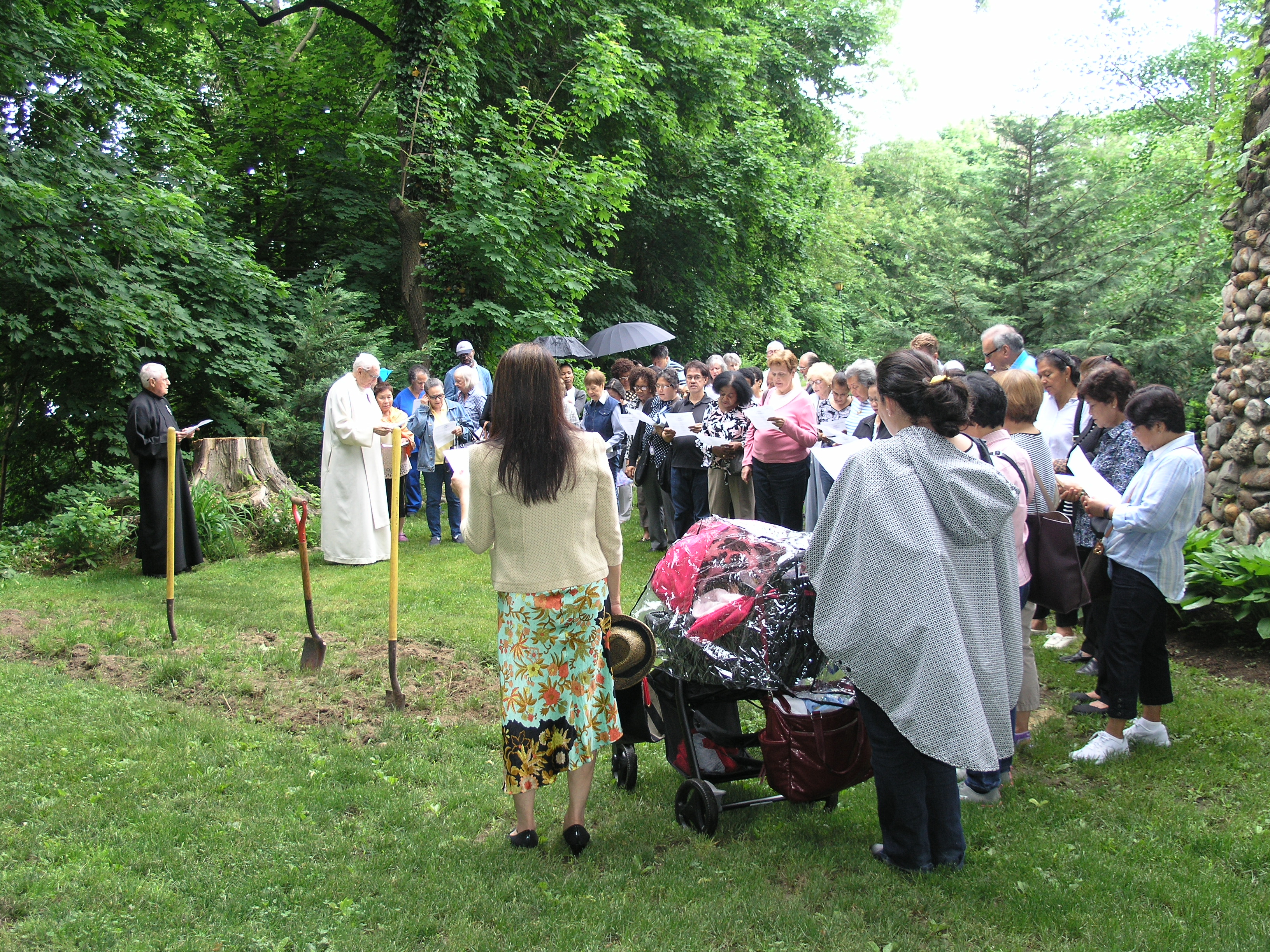
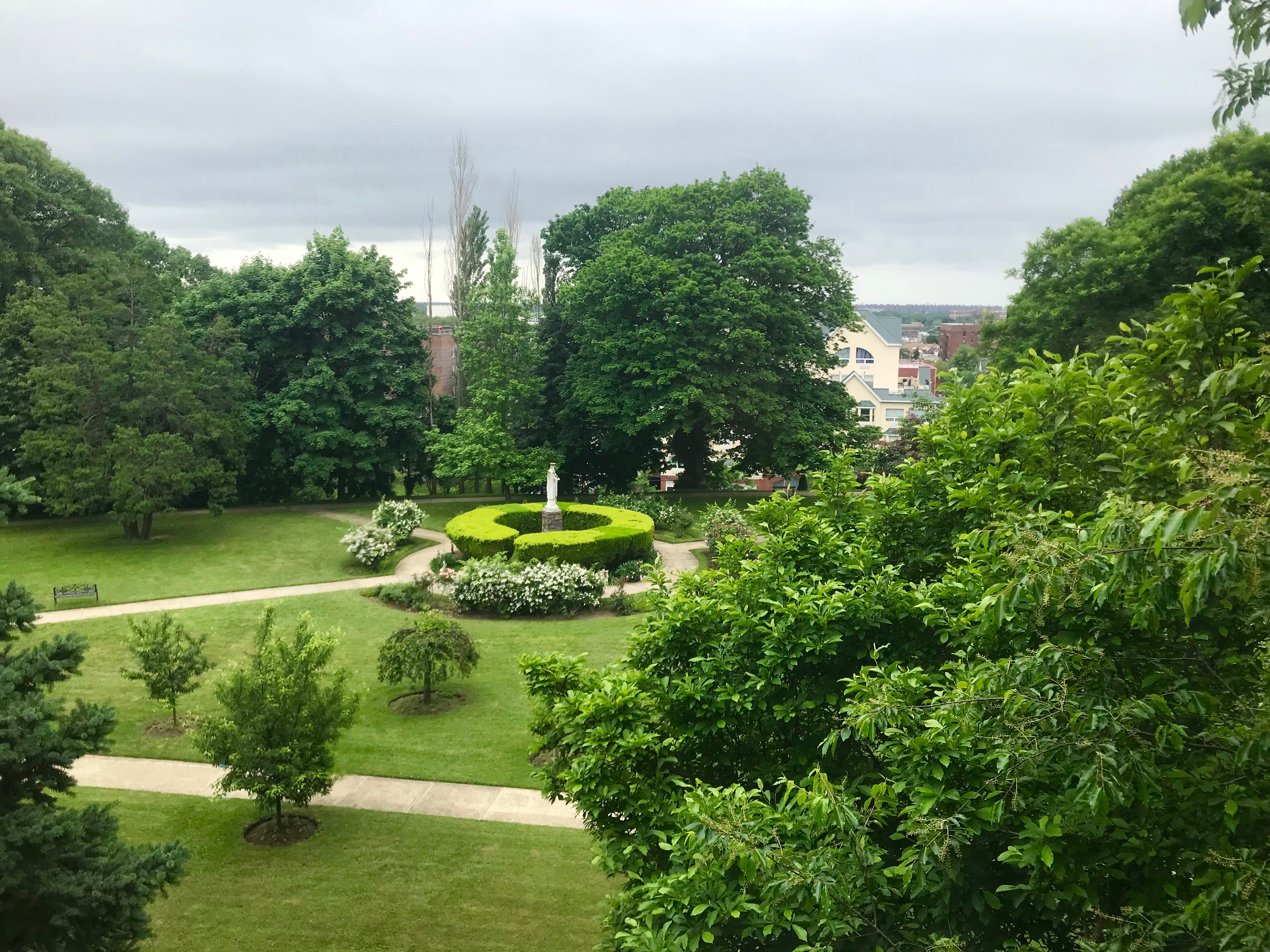
On the Feast of the Visitation of Mary to Elizabeth, May 31, we began our Mary Garden at Immaculate Conception Monastery in Jamaica, New York.

Mary Gardens, dedicated to Mary, the Mother of Jesus, appeared in 14th century Europe following the Black Death, a pandemic that caused millions to die in that part of the world. The gardens, usually found in monasteries and religious shrines, brought hope to people who feared the earth was bringing them death.

God gave Adam and Eve a garden, the Book of Genesis says. (Genesis 2, 8-28) Rising from the dead, Jesus proclaimed eternal life in a garden. (John 20,11-18) For early and medieval Christians, Mary, the Mother of Jesus, was like a garden enclosed, flowers, plants and trees surrounded her, “our life, our sweetness and our hope.” As the “Mother of the living” she brought the promise of life to our world, Jesus, her Son.

Can a Mary Garden bring hope today to our world that faces climate change and environmental degradation? Mary reminds us creation is a gift of God’s love. A Mary Garden teaches reverence for creation, for the soil, for plants that feed and bring us healing, for flowers that nourish our sense of beauty.

Yes, science and technology play their part in an environmental crisis, but faith has a part to play. We’re planting a Mary Garden!

A Reading from the Book of Genesis
This is the story of the heavens and the earth at their creation. When the LORD God made the earth and the heavens there were no plants on the earth, no grass on the fields, for the LORD God had sent no rain and there were no human beings to till the ground, but a stream was welling up out of the earth and watering all the surface of the ground and the LORD God formed a human being out of the dust of the ground and blew into his nostrils the breath of life, and he came to life.
The LORD God planted a garden in Eden, in the east,* and placed there the one whom he had formed… to cultivate and care for it. (Gen 2, 4-15)

Let us Pray

Praise the Lord who is good,
Sing to our God who is loving,
To the Lord our praise is due.

Who covers the heavens with clouds
and prepares the rain for the earth.
And makes mountains sprout with grain
and plants to serve our needs

You know the number of the stars
and call each one by name.
Bless the earth we break open today
O Lord,
to be a garden in praise of your name,
where we honor Mary, the mother of your Son.

We remember your blessings here
which you never cease to send
through Jesus Christ our Lord.