Category Archives: Environment

Catholic Scholars Visit the Mary Garden

Photos: Gloria M. Chang

“What is theology?” asked Professor Andrea Florendo to a group of young Catholic Scholars in the Passionist Monastery Chapel.

“The study of God,” responded a sophomore brightly in the front row. 

“Yes, and where does theology begin?” Professor Florendo continued. Looking at each of the young faces, she exclaimed, “In a garden!” Following the creation account in Genesis, the story of God and humankind unfolds in the Garden of Eden. Flowers, trees, rocks, soil, animals, sun, moon, sky, water, humans—the whole natural world—declare the glory of God. Prayer and liturgy burst forth among flowering plants and birdsong in God’s garden of paradise. 

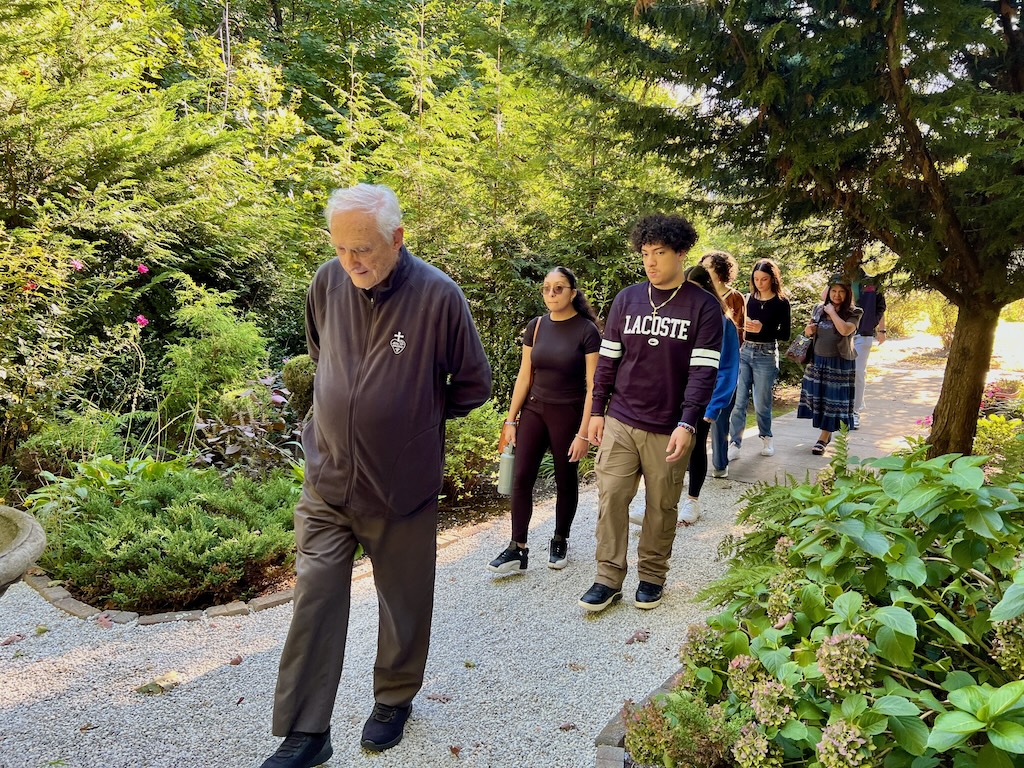
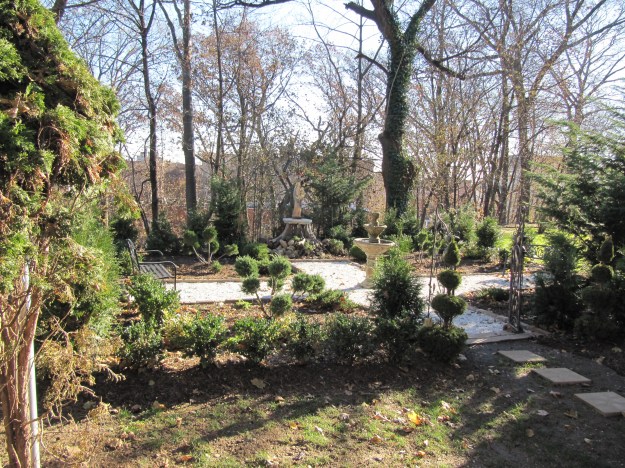
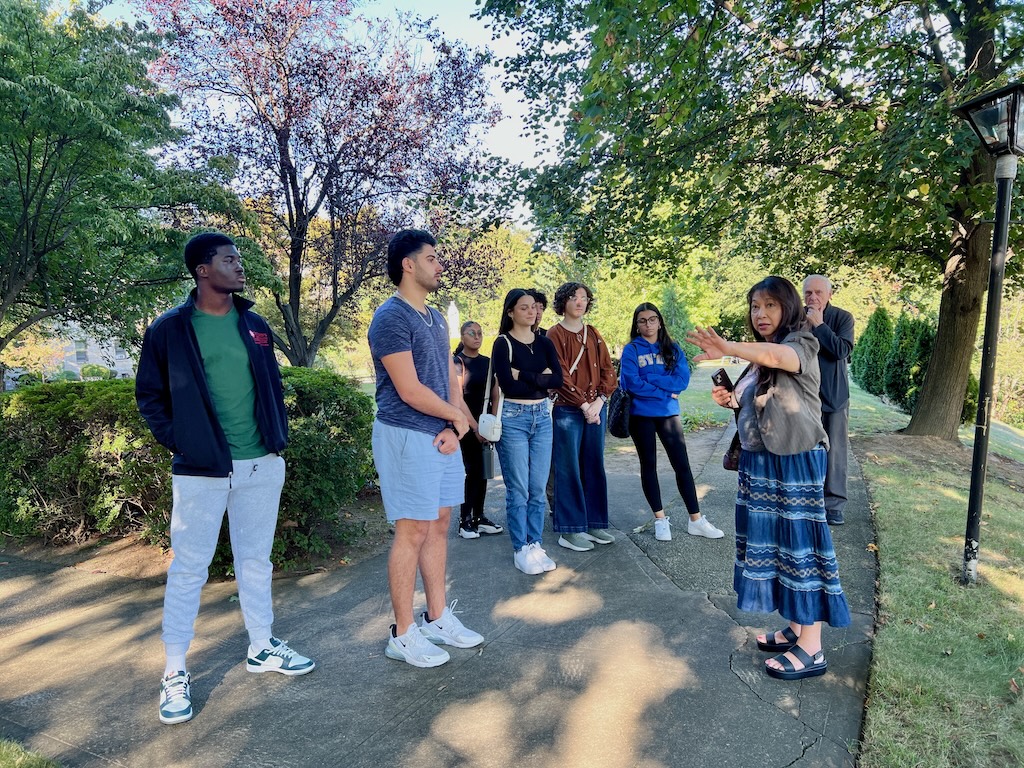
On Sunday, October 6, 2024, seven Catholic Scholars from St. John’s University visited the Mary Garden at the Passionist Monastery in Jamaica, NY. Fr. Victor Hoagland, C.P., Professor Andrea Florendo, and Gloria Chang, founders of the Mary Garden Guild at the Passionist Monastery, welcomed the students warmly. 

Fr. Victor, who has traveled extensively throughout the world on pilgrimages and missions, shared the global Passionist charism with the Catholic Scholars, who are preparing for a life of faith-inspired leadership. The Passionists, who received their mission from St. Paul of the Cross to keep alive in the world the love of Jesus Crucified as seen in His Sacred Passion, have expanded their charism to include the care of creation as taught by Pope Francis in his encyclical Laudato Si. Inspired also by Fr. Thomas Berry, C.P. (1914-2009), a pioneer in ecology, the Passionists have redesigned their retreat center in Jamaica, NY, in his name. 

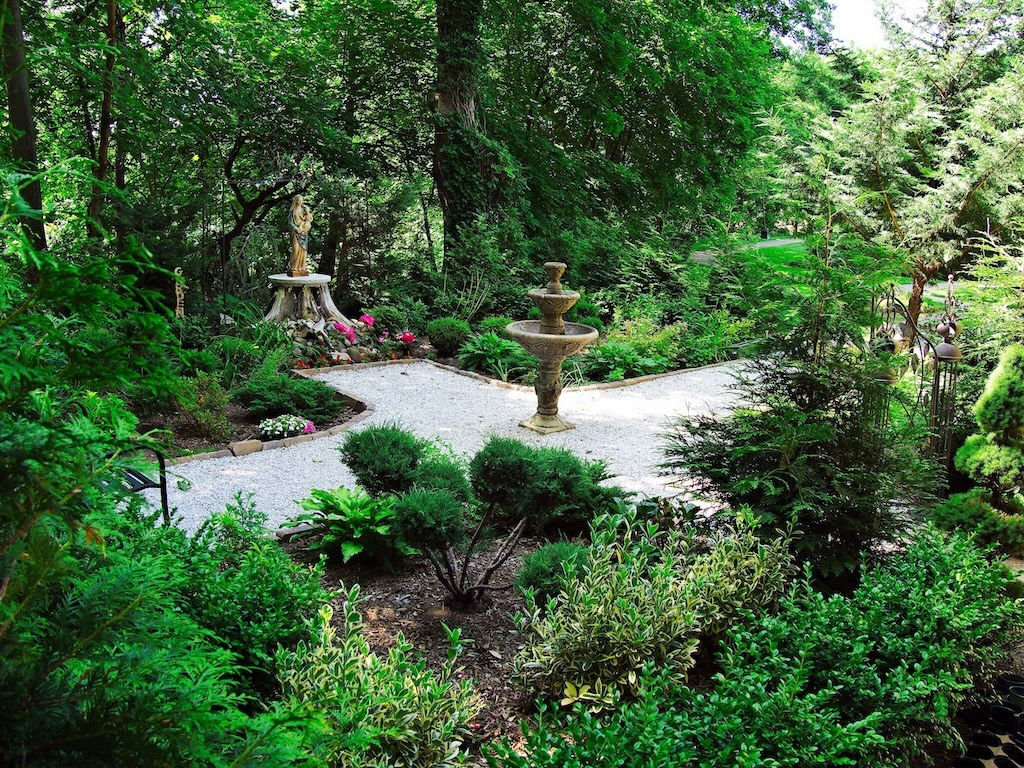
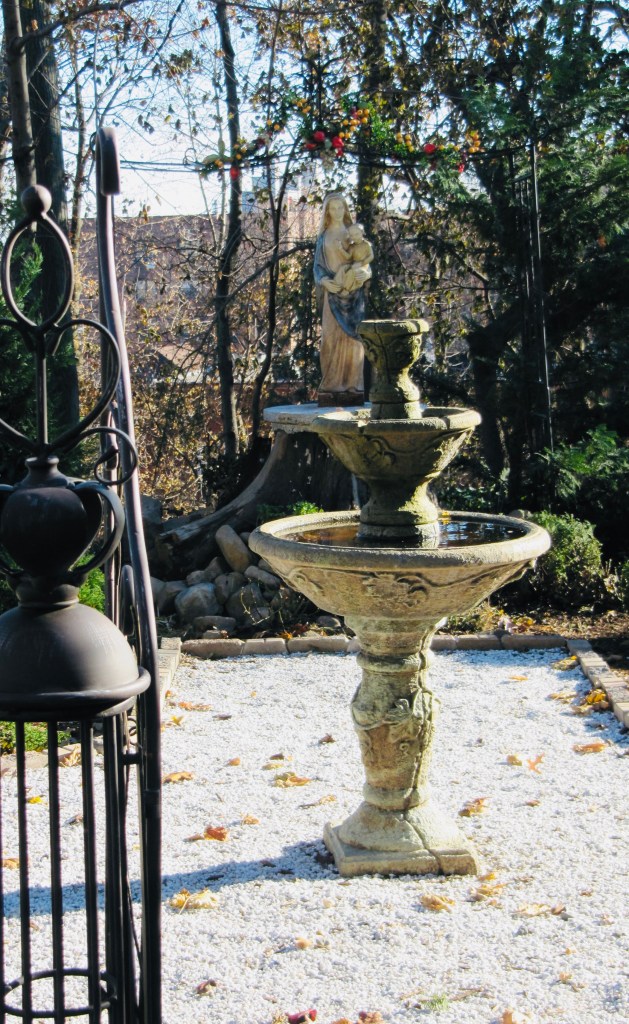
Andrea Florendo, a retired theology professor at St. John’s University and designer of the Mary Garden, gave a tour, pointing out the significance of the enclosed garden as a symbol of Mary’s virginal womb, the fountain as Christ’s “fountain of living waters,” and the cross path as the four rivers in the Garden of Eden. 


Photo: Gloria M. Chang

Our visit in the Mary Garden ended in praise and thanksgiving to God with prayers from Scripture and a reading from the Book of Genesis. May the Lord bless our Catholic Scholars abundantly with faith and grace as they continue their studies and formation at St. John’s University.

How great is your name, O Lord our God,
through all the earth!

Psalm 8:1

The Spring Rains Come

 April showers. Spring rains. A bowl of Easter Water stands near our altar during the Easter season.

Cyril of Jerusalem has a wonderful sermon on water that he preached to catechumens centuries ago. Here are a couple of lines:

“Water comes down from heaven as rain, and although it is always the same itself, it produces many different effects, one in the palm tree, another in the vine, and so on throughout the whole of creation. It does not come down, now as one thing, now as another, but while remaining essentially the same, it adapts itself to the needs of every creature that receives it.”

The saint goes on to say that just as water adapts itself to every creature, the Holy Spirit gives life to each one according to its needs and to benefit the common good. The Spirit’s coming is gentle, not felt as a burden, with tenderness, as a true friend, to save, heal, counsel, strengthen and console.

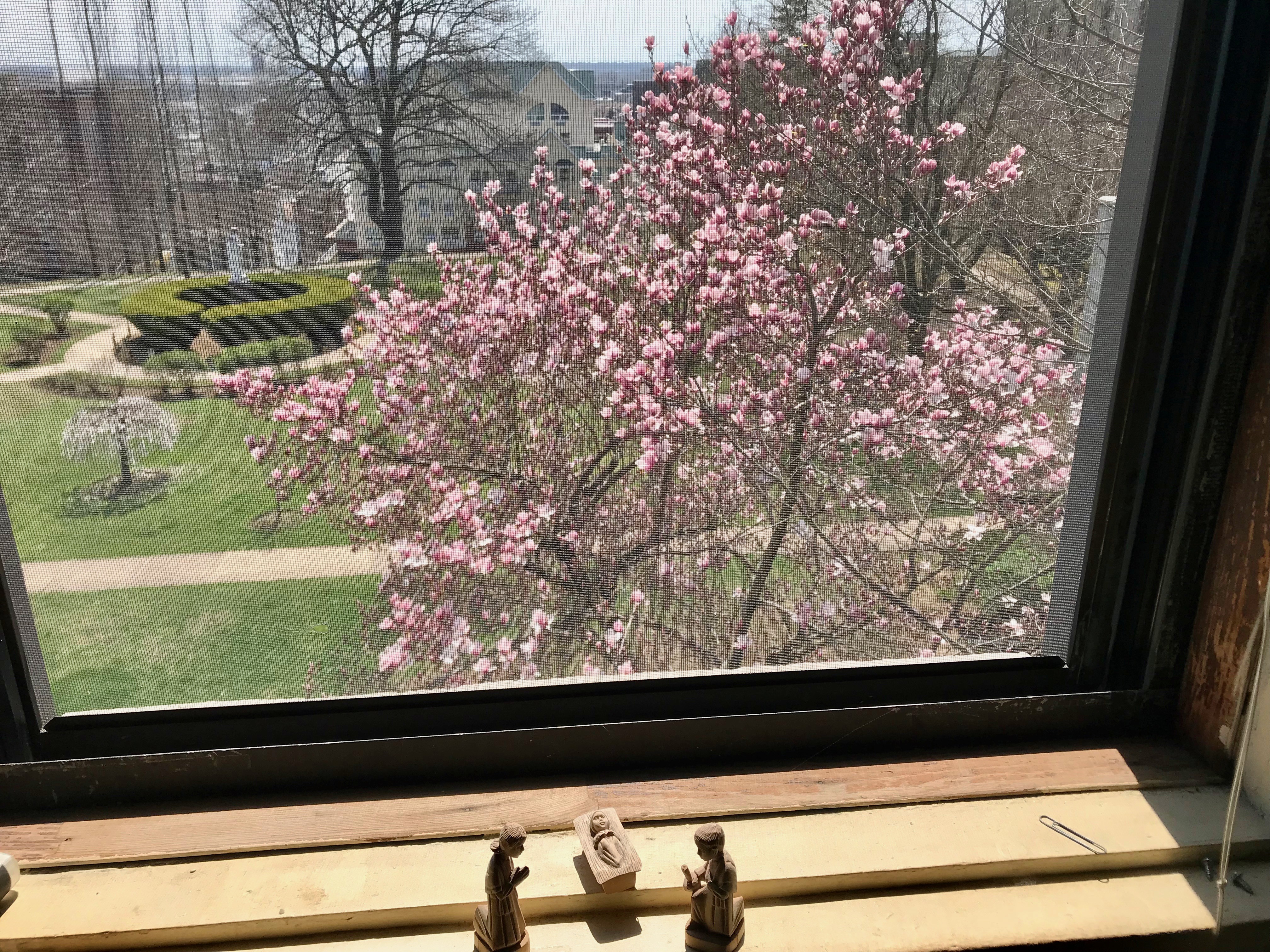
So back to spring rains. They have come this year.  The magnolia trees outside my room testify they’ve come, and the other trees and plants in our garden testify too. The rain falling on the earth does what it always does. Like the Spirit of God, water brings life.

Might we learn from the spring rains bringing life to all the varied plants, all shapes, all sizes, even some we might think useless or of no account?. Might we learn from the spring rains?

Send the spring rains, Lord, on our varied earth and human family.

The Bird of Good Hope

I found this Christmas story called “Aidan of the Cows” in an old book.

A young woman named Aidan had a herd of  choice cows producing the best milk and cheese anywhere in the village of St.Koatsven in a distant land near the shore of a distant sea.

Unfortunately, Aidan fell on bad times because the young man she loved spent her fortune and all her cows had to be sold  to moneylenders.

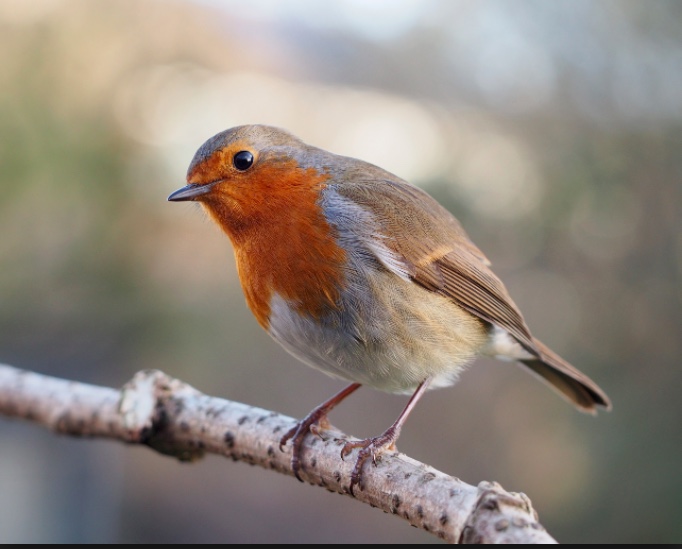
Christmas morning Aidan wandered sadly down a meadow near the sea and  heard a robin singing:

She listened with amazement, with fear and trembling,  with a fearful joy, because the bird sang in human speech.
“I am Robin Redbreast,” he sang, ” the Bird of Good Hope, much admired among birds. For in ancient times when He was toiling up the heavy hill bearing the bitter Cross, I was moved by Heaven to alight on His head, and I plucked from out His bleeding brow one thorn from the cruel crown that bound His temples. One drop of His blood bedewed my throat as I stooped to the blessed task and dyed my breast in a hue of glorious beauty for ever.”

Aidan listened with all the ears of her heart.
“In remembrance of what I did, a blessing was given me—that once  every year, on Christmas-eve, I can give a good gift to the first maiden, good but unhappy, who should put her foot upon the herb Marie, as you, Aidan, have done.”

The girl looked down. Her foot was lightly- pressing the pretty little yellow trefoil plantret, an herb called Marie. “As you have done, Aidan of the Cows,” the robin repeated with a confident chirrup.

Of course, Aidan got her cows back and even got her repentant young man, whom she married, and they live happily ever after. All this took place in a Distant Land where things like this take place.

May the Bird of Good Hope speak to you today.

Unfortunately, we’ve lost this wonderful imaginative tradition that sees divine mysteries allied to the ordinary plants and creatures of creation. Science has taken over our Christian imagination. May we get it back some day; maybe the Christmas mystery so closely allied to a simple stable and donkeys and cattle and camels and straw may help us.

Creator of Heaven and Earth

God reveals himself in creation, Paul the Apostle reminds us as he begins his Letter to the Romans. “Ever since the creation of the world, his invisible attributes of eternal power and divinity have been able to be understood and perceived in what he has made.” (Romans 1:16-25)  God reveals himself in creation, not just to one people, the Jews, but to all people.

“The heavens declare the glory of God,” our psalm response for Tuesday declares. Yet human beings, blind to the God of creation, turn from this revelation and create gods of their own, and they lose sight of the One who made all things.

As an apostle sent by God into a world blinded by this sin, Paul announces a message of recreation and grace. God sends Jesus Christ, his Son, as our Savior and Lord.

Paul’s message takes on added meaning in a world failing to care for creation itself.

In his letter Laudato sí , on caring for the earth our common home, Pope Francis notes that certain times in history provoke a spiritual crisis which leads to a deeper faith in God. The Babylonian captivity when the Jewish people went into exile in the 6th century before Christ and the fierce Roman persecution of Christians at the beginning of the 4th century AD are examples he cites.  

These crises led to  “a growing trust in the all-powerful God: ‘Great and wonderful are your deeds, O Lord God the Almighty! Just and true are your ways ‘ (Rev 15:3). The God who created the universe out of nothing can also intervene in this world and overcome every form of evil.” (74) 

Our world now is paralyzed and will not be the same. Are we at one of those crucial moments? Will God intervene?  God, the Father, Creator of heaven and earth, God who is surprisingly creative? 

Don’t forget God, the Creator, the pope says. If we do ” we end up worshipping earthly powers, or ourselves usurping the place of God, even to the point of claiming an unlimited right to trample his creation underfoot. The best way to restore men and women to their rightful place, putting an end to their claim to absolute dominion over the earth, is to speak once more of the figure of a Father who creates and who alone owns the world. Otherwise, human beings will always try to impose their own laws and interests on reality.” (75)

Important as it is, science alone is not enough, the pope says. We need to look also to our own tradition for hope and inspiration. Our prayers, our sacraments, currents of our spirituality waiting to be recognized and developed can guide us now to what God has planned from eternity.

Paul’s Letter to the Romans speaks for today as well as yesterday.

If sacred history tells us anything, God the Creator never stops fashioning a beautiful unknown.

Paul’s Letter to the Romans, a basic statement of faith, is timely. We need to follow the path that leads to creation.

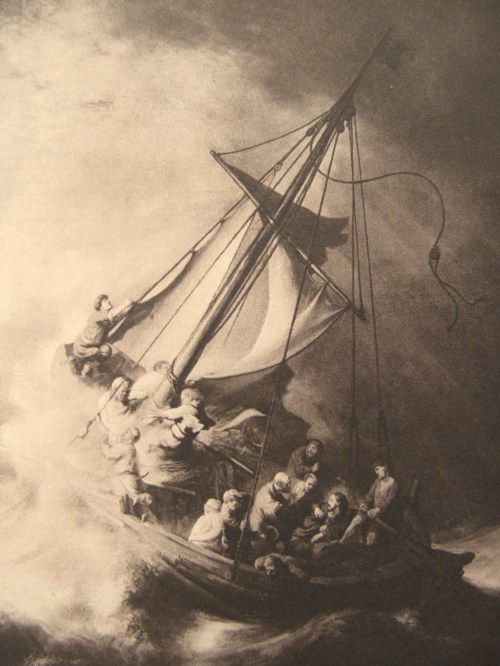
Calming the Storms (Matthew 14:22-36)

Jesus storm at sea
The giant waves on the Sea of Galilee in Rembrandt painting would be hard to survive, let alone walk on, but that’s what Jesus did, Matthew’s gospel today tells us. Jesus walked on the waters and tamed them. Only God does that, the psalms say.

“You uphold the mountains with your strength.
You are girded with power.
You still the roaring of the seas
And the roaring of their waves,
And the tumult of the peoples. “ Psalm 65

We usually read the stories of the disciples in the storm at sea as stories of rescue, and they are. God saves us from the storms we face on our life journey. But first, the stories testify to Jesus’ mastery over creation. On the shore his power touched human beings, like the leper, the deaf and those who could not speak; on the sea he rules creation. “Truly, you are the Son of God,” his disciples say after he gets into the boat and the wind dies down. (Matthew 14,22-36)

In his encyclical on the environment “Laudato Si” Pope Francis emphasizes the power of God over creation. As creator and savior, God gives all things their dignity and purpose. Human beings are not lords of this world, God alone is.

The story of Peter in our gospel takes on new interest in that perspective. Jesus invites him to walk on the water, giving him a share in God’s power. But Peter’s fear and lack of faith overcomes him. He begins to sink.

In our unfolding environmental crisis (storms, winds, floods) are we like Peter, called to share God’s power but turning away from our responsibility to calm the waters? Too big for us to take on. If that’s so, we sink.

Sustainable Development Goals:2023


In September 2015 world leaders at the United Nations agreed to work for 17 Sustainable Development Goals by 2030. The goals aim to “eliminate poverty, fight inequality and tackle climate change, while ensuring no one is left behind. They recognize that ending poverty must go hand-in-hand with strategies that build economic growth and address a range of social needs including education, health, social protection, and job opportunities, while also tackling climate change and environmental protection.” https://www.un.org/sustainabledevelopment/development-agenda/

The United Nations will convene a summit on the Sustainable Development GoalsDG 18-19 September 2023 at its Headquarters in New York, during the General Assembly high-level week. The goals at this point “are in deep peril. For the first time in decades, development progress is reversing under the combined impacts of climate disasters, conflict, economic downturn and lingering COVID-19 effects. The SDG Summit serves as a rallying cry to recharge momentum, for world leaders to come together, to reflect on where we stand and resolve to do more. It is a moment to recommit to a vision of the future that ensures no one is left behind. Fundamental shifts in commitment, solidarity, financing and action must put us back on track to end poverty, realize just societies and reset a balanced relationship with the natural world.” (UN report)

Cities are still an important focus for Sustainable Development, because today more than half the world’s population lives in cities and that number is expected to reach two-thirds by the year 2060. In cities “the battle for sustainability will be won or lost,” one UN expert remarked. https://www.un.org/sustainabledevelopment/blog/2018/07/un-forum-spotlights-cities-struggle-sustainability-will-won-lost/

The 11th goal of Sustainable Development is “making cities safe, inclusive, resilient and sustainable by 2030. Sustainability differs from city to city, but quality of life means among other things, adequate housing, work and employment, clean water and air, access to public transportation.

Today many countries are at war, building walls and wondering only about themselves. Why not think big? What can we do? The USA ranks 39th in fulfilling the goals. Our church, at least here in the US doesn’t seem active enough. Maybe better said: we’re not active enough. Yesterday’s blog was on the Israelites grumbling in the desert. Could be us.

Here’s the current report on the goals: https://sdgs.un.org/gsdr/gsdr2023

Water:Genesis 2

Mary Garden, Passionist Monastery, Jamaica, New York

Today’s reading from Genesis begins the second creation account (Genesis 2,4..) which pays particular attention to the creation of human beings. But it begins with water, welling up from the earth bringing life to the earth and finally the human family.

IMG_2381

Water is at the heart of the garden God provides for Adam and Eve. We have a fountain in the center of our Mary Garden signifying water’s vital role in the garden that was Eden and in the world we live in today.

Pope Francis speaks repeatedly of the role of water in our common home of creation and our need to care for it. Here are some of his reflections from his 2018 World Day of Prayer for the Care of Creation. Notice his strong objection to attempts to privatize water by commercial groups.

“On this World Day of Prayer for the Care of Creation, which the Catholic Church for several years now has celebrated in union with our Orthodox brothers and sisters and with participation of other Churches and Christian communities, I would like to draw attention to the question of water. It is a very simple and precious element, yet access to it is, sadly, for many people difficult if not impossible. Nonetheless, “access to safe drinkable water is a basic and universal human right, since it is essential to human survival and, as such, is a condition for the exercise of other human rights. Our world owes a great social debt towards the poor who lack access to drinking water, because they are denied the right to a life consistent with their inalienable dignity” (ibid., 30).
Water invites us to reflect on our origins. The human body is mostly composed of water, and many civilizations throughout history arose near great rivers that marked their identity. In an evocative image, the beginning of the book of Genesis states that, in the beginning, the spirit of the Creator “swept over the face of the waters (1:2)”.
In considering the fundamental role of water in creation and in human development, I feel the need to give thanks to God for “Sister Water”, simple and useful for life like nothing else on our planet.  Precisely for this reason, care for water sources and water basins is an urgent imperative. Today, more than ever, we need to look beyond immediate concerns (cf. Laudato Si’, 36) and beyond a purely utilitarian view of reality, “in which efficiency and productivity are entirely geared to our individual benefit” (ibid., 159). We urgently need shared projects and concrete gestures that recognize that every privatization of the natural good of water, at the expense of the human right to have access to this good, is unacceptable.
For us Christians, water represents an essential element of purification and of life.  We think immediately of baptism, the sacrament of our rebirth. Water made holy by the Spirit is the matter by which God has given us life and renewed us; it is the blessed source of undying life. For Christians of different confessions, baptism also represents the real and irreplaceable point of departure for experiencing an ever more authentic fraternity on the way to full unity. Jesus, in the course of his mission, promised a water capable of quenching human thirst for ever (cf. Jn 4:14).  He prophesied, “If any one thirst, let him come to me and drink (Jn 7:37). To drink from Jesus means to encounter him personally as the Lord, drawing from his words the meaning of life. May the words he spoke from the cross – “I thirst” (Jn 19:28) – echo constantly in our hearts. The Lord continues to ask that his thirst be quenched; he thirsts for love.  He asks us to give him to drink in all those who thirst in our own day, and to say to them, “I was thirsty and you gave me to drink” (Mt 25:35). To give to drink, in the global village, does not only entail personal gestures of charity, but also concrete choices and a constant commitment to ensure to all the primary good of water.”

https://www.vaticannews.va/en/taglist.cultura-e-societa.Diritti-umani.html

The Season of Creation, September 1st -October 5th

1 September 2022, Pope Francis writes:

Dear brothers and sisters!

“Listen to the voice of creation” is the theme and invitation of this year’s Season of Creation.  The ecumenical phase begins on 1 September with the World Day of Prayer for the Care of Creation, and concludes on 4 October with the feast of Saint Francis.  It is a special time for all Christians to pray and work together to care for our common home.  Originally inspired by the Ecumenical Patriarchate of Constantinople, this Season is an opportunity to cultivate our “ecological conversion”, a conversion encouraged by Saint John Paul II as a response to the “ecological catastrophe” predicted by Saint Paul VI back in 1970. 

If we learn how to listen, we can hear in the voice of creation a kind of dissonance.  On the one hand, we can hear a sweet song in praise of our beloved Creator; on the other, an anguished plea, lamenting our mistreatment of this our common home.

The sweet song of creation invites us to practise an “ecological spirituality” (Laudato Si’, 216), attentive to God’s presence in the natural world.  It is a summons to base our spirituality on the “loving awareness that we are not disconnected from the rest of creatures, but joined in a splendid universal communion” (ibid., 220).  For the followers of Christ in particular, this luminous experience reinforces our awareness that “all things came into being through him, and without him not one thing came into being” (Jn 1:3).  In this Season of Creation, we pray once more in the great cathedral of creation, and revel in the “grandiose cosmic choir” made up of countless creatures, all singing the praises of God.  Let us join Saint Francis of Assisi in singing: “Praise be to you, my Lord, for all your creatures” (cf. Canticle of Brother Sun).  Let us join the psalmist in singing, “Let everything that breathes praise the Lord!” (Ps 150:6).

Tragically, that sweet song is accompanied by a cry of anguish.  Or even better: a chorus of cries of anguish.  In the first place, it is our sister, mother earth, who cries out.  Prey to our consumerist excesses, she weeps and implores us to put an end to our abuses and to her destruction.  Then too, there are all those different creatures who cry out.  At the mercy of a “tyrannical anthropocentrism” (Laudato Si’, 68), completely at odds with Christ’s centrality in the work of creation, countless species are dying out and their hymns of praise silenced.  There are also the poorest among us who are crying out.  Exposed to the climate crisis, the poor feel even more gravely the impact of the drought, flooding, hurricanes and heat waves that are becoming ever more intense and frequent.  Likewise, our brothers and sisters of the native peoples are crying out.  As a result of predatory economic interests, their ancestral lands are being invaded and devastated on all sides, “provoking a cry that rises up to heaven” (Querida Amazonia, 9).  Finally, there is the plea of our children.  Feeling menaced by shortsighted and selfish actions, today’s young people are crying out, anxiously asking us adults to do everything possible to prevent, or at least limit, the collapse of our planet’s ecosystems.

Listening to these anguished cries, we must repent and modify our lifestyles and destructive systems.  From its very first pages, the Gospel calls us to “repent, because the kingdom of heaven has come near” (Mt 3:2); it summons us to a new relationship with God, and also entails a different relationship with others and with creation.  The present state of decay of our common home merits the same attention as other global challenges such as grave health crises and wars.  “Living our vocation to be protectors of God’s handiwork is essential to a life of virtue; it is not an optional or a secondary aspect of our Christian experience” (Laudato Si’, 217).

As persons of faith, we feel ourselves even more responsible for acting each day in accordance with the summons to conversion.  Nor is that summons simply individual: “the ecological conversion needed to bring about lasting change is also a community conversion” (ibid., 219).  In this regard, commitment and action, in a spirit of maximum cooperation, is likewise demanded of the community of nations, especially in the meetings of the United Nations devoted to the environmental question.  

The COP27 conference on climate change, to be held in Egypt in November 2022 represents the next opportunity for all to join in promoting the effective implementation of the Paris Agreement.  For this reason too, I recently authorized the Holy See, in the name of and on behalf of the Vatican City State, to accede to the UN Framework Convention on Climate Change and the Paris Agreement, in the hope that the humanity of the 21st century “will be remembered for having generously shouldered its grave responsibilities” (ibid., 65).  The effort to achieve the Paris goal of limiting temperature increase to 1.5°C is quite demanding; it calls for responsible cooperation between all nations in presenting climate plans or more ambitious nationally determined contributions in order to reduce to zero, as quickly as possible, net greenhouse gas emissions.  This means “converting” models of consumption and production, as well as lifestyles, in a way more respectful of creation and the integral human development of all peoples, present and future, a development grounded in responsibility, prudence/precaution, solidarity, concern for the poor and for future generations.  Underlying all this, there is need for a covenant between human beings and the environment, which, for us believers, is a mirror reflecting “the creative love of God, from whom we come and towards whom we are journeying”.  The transition brought about by this conversion cannot neglect the demands of justice, especially for those workers who are most affected by the impact of climate change.

For its part, the COP15 summit on biodiversity, to be held in Canada in December, will offer to the goodwill of governments a significant opportunity to adopt a new multilateral agreement to halt the destruction of ecosystems and the extinction of species.  According to the ancient wisdom of the Jubilee, we need to “remember, return, rest and restore”.  In order to halt the further collapse of biodiversity, our God-given “network of life”, let us pray and urge nations to reach agreement on four key principles: 1. to construct a clear ethical basis for the changes needed to save biodiversity; 2. to combat the loss of biodiversity, to support conservation and cooperation, and to satisfy people’s needs in a sustainable way; 3. to promote global solidarity in light of the fact that biodiversity is a global common good demanding a shared commitment; and 4. to give priority to people in situations of vulnerability, including those most affected by the loss of biodiversity, such as indigenous peoples, the elderly and the young.

Let me repeat: “In the name of God, I ask the great extractive industries – mining, oil, forestry, real estate, agribusiness – to stop destroying forests, wetlands, and mountains, to stop polluting rivers and seas, to stop poisoning food and people”.

How can we fail to acknowledge the existence of an “ecological debt” (Laudato Si’, 51) incurred by the economically richer countries, who have polluted most in the last two centuries; this demands that they take more ambitious steps at COP27 and at COP15.  In addition to determined action within their borders, this means keeping their promises of financial and technical support for the economically poorer nations, which are already experiencing most of the burden of the climate crisis.  It would also be fitting to give urgent consideration to further financial support for the conservation of biodiversity.  Even the economically less wealthy countries have significant albeit “diversified” responsibilities (cf. ibid., 52) in this regard; delay on the part of others can never justify our own failure to act.  It is necessary for all of us to act decisively.  For we are reaching “a breaking point” (cf. ibid., 61).

During this Season of Creation, let us pray that COP27 and COP15 can serve to unite the human family (cf. ibid., 13) in effectively confronting the double crisis of climate change and the reduction of biodiversity.  Mindful of the exhortation of Saint Paul to rejoice with those who rejoice and to weep with those who weep (cf. Rom 12:15), let us weep with the anguished plea of creation.  Let us hear that plea and respond to it with deeds, so that we and future generations can continue to rejoice in creation’s sweet song of life and hope.

Rome, Saint John Lateran, 16 July 2022,  Memorial of Our Lady of Mount Carmel
Caring for Creation

f

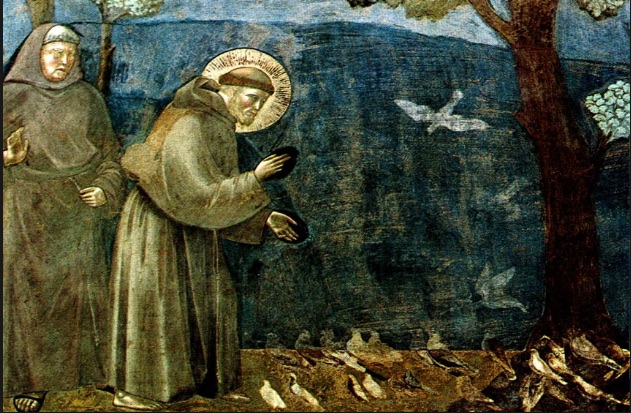
St. Francis is one of those super saints  to keep in mind, even after his feast day. I mentioned in a previous blog the statue of Francis facing St. John Lateran and Pope Innocent’s dream of a young man who, like Francis, held up the church’s walls ready to fall.  Francis helped renew the church.

In his encyclical Laudato Si, Pope Francis paints a verbal picture of Francis, holding his arms out to the created world, caring for our endangered planet:

“I believe that Saint Francis is the example par excellence of care for the vulnerable and of an integral ecology lived out joyfully and authentically. He is the patron saint of all who study and work in the area of ecology, and he is also much loved by non-Christians. He was particularly concerned for God’s creation and for the poor and outcast. He loved, and was deeply loved for his joy, his generous self-giving, his openheartedness. He was a mystic and a pilgrim who lived in simplicity and in wonderful harmony with God, with others, with nature and with himself. He shows us just how inseparable the bond is between concern for nature, justice for the poor, commitment to society, and interior peace.

“Francis helps us to see that an integral ecology calls for openness to categories which transcend the language of mathematics and biology, and take us to the heart of what it is to be human. Just as happens when we fall in love with someone, whenever he would gaze at the sun, the moon or the smallest of animals, he burst into song, drawing all other creatures into his praise. He communed with all creation, even preaching to the flowers, inviting them “to praise the Lord, just as if they were endowed with reason”.

“His response to the world around him was so much more than intellectual appreciation or economic calculus, for to him each and every creature was a sister united to him by bonds of affection. That is why he felt called to care for all that exists. His disciple Saint Bonaventure tells us that, “from a reflection on the primary source of all things, filled with even more abundant piety, he would call creatures, no matter how small, by the name of ‘brother’ or ‘sister’”. Such a conviction cannot be written off as naive romanticism, for it affects the choices which determine our behaviour.

“If we approach nature and the environment without this openness to awe and wonder, if we no longer speak the language of fraternity and beauty in our relationship with the world, our attitude will be that of masters, consumers, ruthless exploiters, unable to set limits on their immediate needs. By contrast, if we feel intimately united with all that exists, then sobriety and care will well up spontaneously. The poverty and austerity of Saint Francis were no mere veneer of asceticism, but something much more radical: a refusal to turn reality into an object simply to be used and controlled.

What is more, Saint Francis, faithful to Scripture, invites us to see nature as a magnificent book in which God speaks to us and grants us a glimpse of his infinite beauty and goodness. “Through the greatness and the beauty of creatures one comes to know by analogy their maker” (Wis 13:5); indeed, “his eternal power and divinity have been made known through his works since the creation of the world” (Rom 1:20). For this reason, Francis asked that part of the friary garden always be left untouched, so that wild flowers and herbs could grow there, and those who saw them could raise their minds to God, the Creator of such beauty. Rather than a problem to be solved, the world is a joyful mystery to be contemplated with gladness and praise.”

I like the pope’s words: “Rather than a problem to be solved, the world is a joyful mystery to be contemplated with gladness and praise.”

Friday Thoughts: Being qua Being


.

Learn from the way the wild flowers grow.

—Matthew 6:28


.

Does a flower make pronouncements? Does it define itself? Does it box itself in with titles, names, and distinctions?

And yet, “not even Solomon in all his splendor was clothed like one of these.” (Matthew 6:29)

———

A flower simply exists.

And its existence glorifies God.

There is no need for it to do more.

By its very existence it magnifies what cannot be further magnified: God’s Presence, God’s Glory, God’s Beauty…

———

“I’m a flower.”

“I’m a rose.”

“Look at me!”

Statements such as these we shall never hear.

Flowers are divinely indifferent to the world’s definitions and distinctions, to its approval and applause.

After all, it’s a person who receives the medal at an orchid show, and not the flower herself. No, her finely-placed petals would only be weighed down by such metallic-based ribbons.

What a gift it is to simply exist.

———

Flowers don’t cling to seasonal life.

When it’s time to go, they gracefully drop their heads and lose their pedals.

Never has there existed a man as poor as a flower.

Never has mankind so possessed the richness of fleeting, transitory, and momentary life.

It’s their genius to instinctively believe that death leads to new abundant life.

———

Flowers graciously receive:

Ladybugs, drops of dew. Beams of light, the relief of shade.

Flowers give and receive as if not a single thing has ever been made by man.

They welcome sun as well as rain.

They never cry over fallen fruit or a stolen piece of pollen.

They quietly applaud instead, rejoicing that their little ones have the opportunity to travel abroad—perhaps even the chance to help nurture a neighbor.

———

A flower, perhaps most of all, knows it place.

It never wishes to be bigger or thinner…greener or higher…it never dreams of being more like a tree.

A flower’s blessing is simplicity beyond you and me.

———

Christ is a flower.

He is the one true perfect eternal flower, through whom all other flowers partake, toward whom all other flowers reach.

Christ is a flower. His ways are not our own. He simply exists. Bowing His head. Dropping pedals. Feeding hungry bees. Giving and receiving. His identity is crucified—leaving nothing behind but being “qua” being.


.

If God so clothes the grass of the field, which grows today and is thrown into the oven tomorrow, will he not much more provide for you, O you of little faith?

—Matthew 6:30


.
.
—Howard Hain
.
.
(Dedicated to Brother Jim, a man who knew how to simply exist.)

.