Category Archives: contemplation

God’s Word, the Tree of Life

“God’s Word, the Tree of Life”
A reflection on Proverbs 30:5-9 and Luke 9:1-6
Wednesday of the Twenty-Fifth Week in Ordinary Time (Year II)
©️2024 Gloria M. Chang

Putting God First

Every word of God is tested;
he is a shield to those who take refuge in him.
Add nothing to his words,
lest he reprove you, and you will be exposed as a deceiver.

Two things I ask of you,
deny them not to me before I die:
Put falsehood and lying far from me,
give me neither poverty nor riches;
provide me only with the food I need;
Lest, being full, I deny you,
saying, “Who is the LORD?”
Or, being in want, I steal,
and profane the name of my God.

Proverbs 30:5-9

“Every word of God is pure (tested, refined),” like fruit from a tree of life. “He is a shield to those who take refuge in him.” Comparing divine wisdom to a tree of life (Proverbs 3:18), the Book of Proverbs guides us toward healing our broken relationship with God that occurred in the Garden of Eden. God created us for abundant life, which we reap by hearing and heeding his word. 

Ordering life around God, the sage asks for a truthful heart and for “neither poverty nor riches.” Luxury may tempt him to deny the Lord, while penury may incite him to steal and dishonor the name of God. Our heavenly Father, who knows what we need, will give us our “daily bread.” When making choices, the sage seeks the honor and glory of God above all.

Neither poverty nor riches, seek I,
But to honor God and him glorify.

God Provides


Jesus summoned the Twelve and gave them power and authority over all demons and to cure diseases, and he sent them to proclaim the kingdom of God and to heal the sick. He said to them, “Take nothing for the journey, neither walking stick, nor sack, nor food, nor money, and let no one take a second tunic. Whatever house you enter, stay there and leave from there. And as for those who do not welcome you, when you leave that town, shake the dust from your feet in testimony against them.” Then they set out and went from village to village proclaiming the good news and curing diseases everywhere.

Luke 9:1-6

Jesus sends his twelve apostles to proclaim the kingdom of God, the fulfillment of his word. The word of the Lord (dabar YHWH), which led the Israelites from Sinai to Jerusalem, has become flesh with divine authority to heal and cast out demons. Jesus, whose Father provides for his children, enjoins the Twelve to “take nothing for the journey.” 

The apostle, like the sage of the Book of Proverbs, lives on and through the Word of God, who is a “shield” and refining fire. Christ, the Word of God and Tree of Life, feeds us with himself in the sanctifying Eucharist.

Your word, O Lord, is a lamp for my feet.

Psalm 119:105 (Responsory)

God’s Word protects and purifies
Apostles who evangelize.


This content by Gloria M. Chang was originally published online at Shalom Snail: Journey to Wholeness

The Kingly Child and Flower

“The Kingly Child and Flower”
Mark 9:30-37, Matthew 6:28-29, Luke 12:27 in a couplet
Sunday of the Twenty-Fifth Week in Ordinary Time (Year B)
©️2021 Gloria M. Chang

They left from there and began a journey through Galilee, but he did not wish anyone to know about it. He was teaching his disciples and telling them, “The Son of Man is to be handed over to men and they will kill him, and three days after his death he will rise.” But they did not understand the saying, and they were afraid to question him.

They came to Capernaum and, once inside the house, he began to ask them, “What were you arguing about on the way?” But they remained silent. They had been discussing among themselves on the way who was the greatest. Then he sat down, called the Twelve, and said to them, “If anyone wishes to be first, he shall be the last of all and the servant of all.” Taking a child he placed it in their midst, and putting his arms around it he said to them, “Whoever receives one child such as this in my name, receives me; and whoever receives me, receives not me but the One who sent me.”

Mark 9:30-37

Who is the Greatest?

Walking through Galilee, Jesus’ thoughts and that of his disciples diametrically clashed. A brooding Judas heard his master’s prediction of his betrayal and death. Did the omen disquiet the lone treasurer? Each man heard Jesus uniquely and darkly. The matter of his rising after three days sounded meaningless and opaque. 

Filtering out ideas that conflicted with their image of an earthly Messianic kingdom, the Twelve heatedly argued about their relative positions of power. When questioned by Jesus, no one dared answer. Their squabble, in his presence, vanished as vain and arrogant chatter.

Sitting down to teach in the rabbinic manner, Jesus settled their debate: the greatest of all will be the least of all, like a little child. “If anyone wishes to be first, he shall be the last of all and the servant of all.” Jesus’ whole life from his birth in a manger, wrapped in swaddling clothes, to his burial in a tomb, wrapped in grave clothes, bespoke a complete stripping of earthly pride and power. 

Jesus felt more at home among the lilies of the field than in the palaces of kings. Like the lowly child, the colorful, fragile flowers in the wild express the splendor of God, the true King of Israel. 

Learn from the way the wild flowers grow. They do not work or spin. But I tell you that not even Solomon in all his splendor was clothed like one of them.

Matthew 6:28-29; cf. Luke 12:27

As the Cross loomed, the Twelve vied for power.
Jesus bent down to the child and flower.


This content by Gloria M. Chang was originally published online at Shalom Snail: Journey to Wholeness

The Gospel of Luke and First Corinthians Go Together

We’re reading Paul’s 1st Letter to the Corinthians and the Gospel of Luke together these days at Mass. The two may be more closely connected than we suspect. Luke wrote some years later than Paul, but his audience would be much like those found in the church of Corinth.

Theophilus, to whom Luke dedicates his gospel, could easily be one of Corinth’s better-off Christians, who surely  would recognize  the lack of concern for the poor that Jesus condemns in Luke’s gospel as present in his own community as well. That unconcern appeared at table, in the celebration of the Eucharist in the Corinthian church, and Paul condemns it. (1 Corinthians 11, 17-22) Luke presents Jesus, over and over, at table, condemning the same unconcern for the poor as well.

Luke begins Jesus’ ministry in Galilee with his visit to Nazareth (Luke 4, 16-30) where he’s not recognized by his own who know him too well and are ready to throw him to his death over the hill.

The Corinthians–how many we are unsure– fail to recognize the humble Savior whom Paul preaches. “I did not come with sublimity of words or of wisdom. For I resolved to know nothing while I was with you except Jesus Christ, and him crucified.” (1 Corinthians 2, 1-5)

In Luke’s gospel, Jesus is the teacher and Lord bringing God’s word to the towns of Galilee. He brings God’s word to Corinth as well, but the Corinthians are attracted to the various disciples of Jesus, causing “jealousy and rivalry among you…Whenever someone says, ‘I belong to Paul,’ and another,’I belong to Apollos,’ are you not merely men? What is Apollos, after all, and what is Paul? Ministers through whom you became believers, just as the Lord assigned each one.”

God plants and waters the growth of his church; the disciples are disciples, only disciples, who must have “the mind of Christ.” (1 Corinthians, 3, 1-9)

Luke has a church like Corinth in mind when he writes his gospel. How about our church too, as we take  sides. “I belong to…” Good to read these two readings together now.

Readings.

The Spring Rains Come

 April showers. Spring rains. A bowl of Easter Water stands near our altar during the Easter season.

Cyril of Jerusalem has a wonderful sermon on water that he preached to catechumens centuries ago. Here are a couple of lines:

“Water comes down from heaven as rain, and although it is always the same itself, it produces many different effects, one in the palm tree, another in the vine, and so on throughout the whole of creation. It does not come down, now as one thing, now as another, but while remaining essentially the same, it adapts itself to the needs of every creature that receives it.”

The saint goes on to say that just as water adapts itself to every creature, the Holy Spirit gives life to each one according to its needs and to benefit the common good. The Spirit’s coming is gentle, not felt as a burden, with tenderness, as a true friend, to save, heal, counsel, strengthen and console.

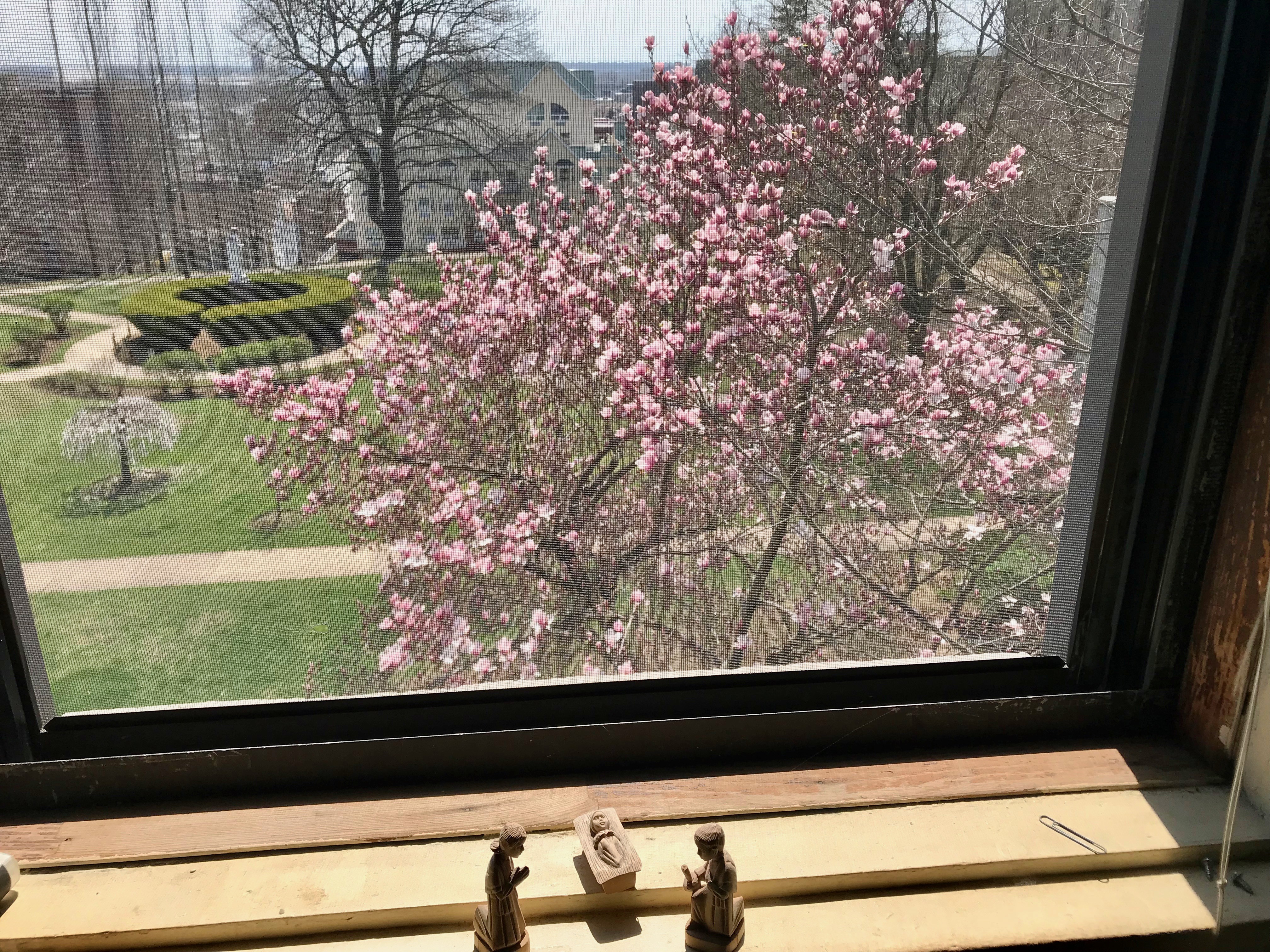
So back to spring rains. They have come this year.  The magnolia trees outside my room testify they’ve come, and the other trees and plants in our garden testify too. The rain falling on the earth does what it always does. Like the Spirit of God, water brings life.

Might we learn from the spring rains bringing life to all the varied plants, all shapes, all sizes, even some we might think useless or of no account?. Might we learn from the spring rains?

Send the spring rains, Lord, on our varied earth and human family.

The Bird of Good Hope

I found this Christmas story called “Aidan of the Cows” in an old book.

A young woman named Aidan had a herd of  choice cows producing the best milk and cheese anywhere in the village of St.Koatsven in a distant land near the shore of a distant sea.

Unfortunately, Aidan fell on bad times because the young man she loved spent her fortune and all her cows had to be sold  to moneylenders.

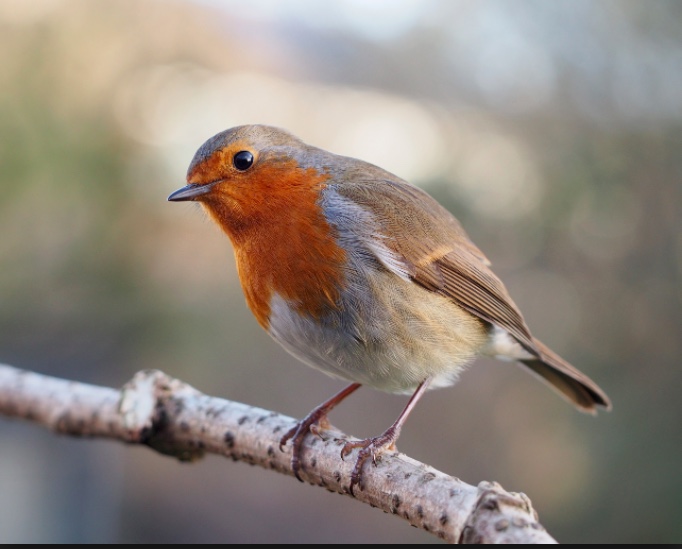
Christmas morning Aidan wandered sadly down a meadow near the sea and  heard a robin singing:

She listened with amazement, with fear and trembling,  with a fearful joy, because the bird sang in human speech.
“I am Robin Redbreast,” he sang, ” the Bird of Good Hope, much admired among birds. For in ancient times when He was toiling up the heavy hill bearing the bitter Cross, I was moved by Heaven to alight on His head, and I plucked from out His bleeding brow one thorn from the cruel crown that bound His temples. One drop of His blood bedewed my throat as I stooped to the blessed task and dyed my breast in a hue of glorious beauty for ever.”

Aidan listened with all the ears of her heart.
“In remembrance of what I did, a blessing was given me—that once  every year, on Christmas-eve, I can give a good gift to the first maiden, good but unhappy, who should put her foot upon the herb Marie, as you, Aidan, have done.”

The girl looked down. Her foot was lightly- pressing the pretty little yellow trefoil plantret, an herb called Marie. “As you have done, Aidan of the Cows,” the robin repeated with a confident chirrup.

Of course, Aidan got her cows back and even got her repentant young man, whom she married, and they live happily ever after. All this took place in a Distant Land where things like this take place.

May the Bird of Good Hope speak to you today.

Unfortunately, we’ve lost this wonderful imaginative tradition that sees divine mysteries allied to the ordinary plants and creatures of creation. Science has taken over our Christian imagination. May we get it back some day; maybe the Christmas mystery so closely allied to a simple stable and donkeys and cattle and camels and straw may help us.

Sustainable Development Goals:2023


In September 2015 world leaders at the United Nations agreed to work for 17 Sustainable Development Goals by 2030. The goals aim to “eliminate poverty, fight inequality and tackle climate change, while ensuring no one is left behind. They recognize that ending poverty must go hand-in-hand with strategies that build economic growth and address a range of social needs including education, health, social protection, and job opportunities, while also tackling climate change and environmental protection.” https://www.un.org/sustainabledevelopment/development-agenda/

The United Nations will convene a summit on the Sustainable Development GoalsDG 18-19 September 2023 at its Headquarters in New York, during the General Assembly high-level week. The goals at this point “are in deep peril. For the first time in decades, development progress is reversing under the combined impacts of climate disasters, conflict, economic downturn and lingering COVID-19 effects. The SDG Summit serves as a rallying cry to recharge momentum, for world leaders to come together, to reflect on where we stand and resolve to do more. It is a moment to recommit to a vision of the future that ensures no one is left behind. Fundamental shifts in commitment, solidarity, financing and action must put us back on track to end poverty, realize just societies and reset a balanced relationship with the natural world.” (UN report)

Cities are still an important focus for Sustainable Development, because today more than half the world’s population lives in cities and that number is expected to reach two-thirds by the year 2060. In cities “the battle for sustainability will be won or lost,” one UN expert remarked. https://www.un.org/sustainabledevelopment/blog/2018/07/un-forum-spotlights-cities-struggle-sustainability-will-won-lost/

The 11th goal of Sustainable Development is “making cities safe, inclusive, resilient and sustainable by 2030. Sustainability differs from city to city, but quality of life means among other things, adequate housing, work and employment, clean water and air, access to public transportation.

Today many countries are at war, building walls and wondering only about themselves. Why not think big? What can we do? The USA ranks 39th in fulfilling the goals. Our church, at least here in the US doesn’t seem active enough. Maybe better said: we’re not active enough. Yesterday’s blog was on the Israelites grumbling in the desert. Could be us.

Here’s the current report on the goals: https://sdgs.un.org/gsdr/gsdr2023

Pray for us to God, O Queen of Heaven!

Photo art by Fr. Victor Hoagland, C.P. and Gloria M. Chang

The Regina Caeli is a 12th century antiphon in honor of the Blessed Virgin Mary that is prayed during the Easter season in place of the Angelus. A legend records that during a pestilence in Rome, while the Regina Caeli was being prayed in procession with her image, angels were heard singing along and an end was put to the plague. Let us pray to our Queen with the angels to bring healing to our world.

Tenebrae

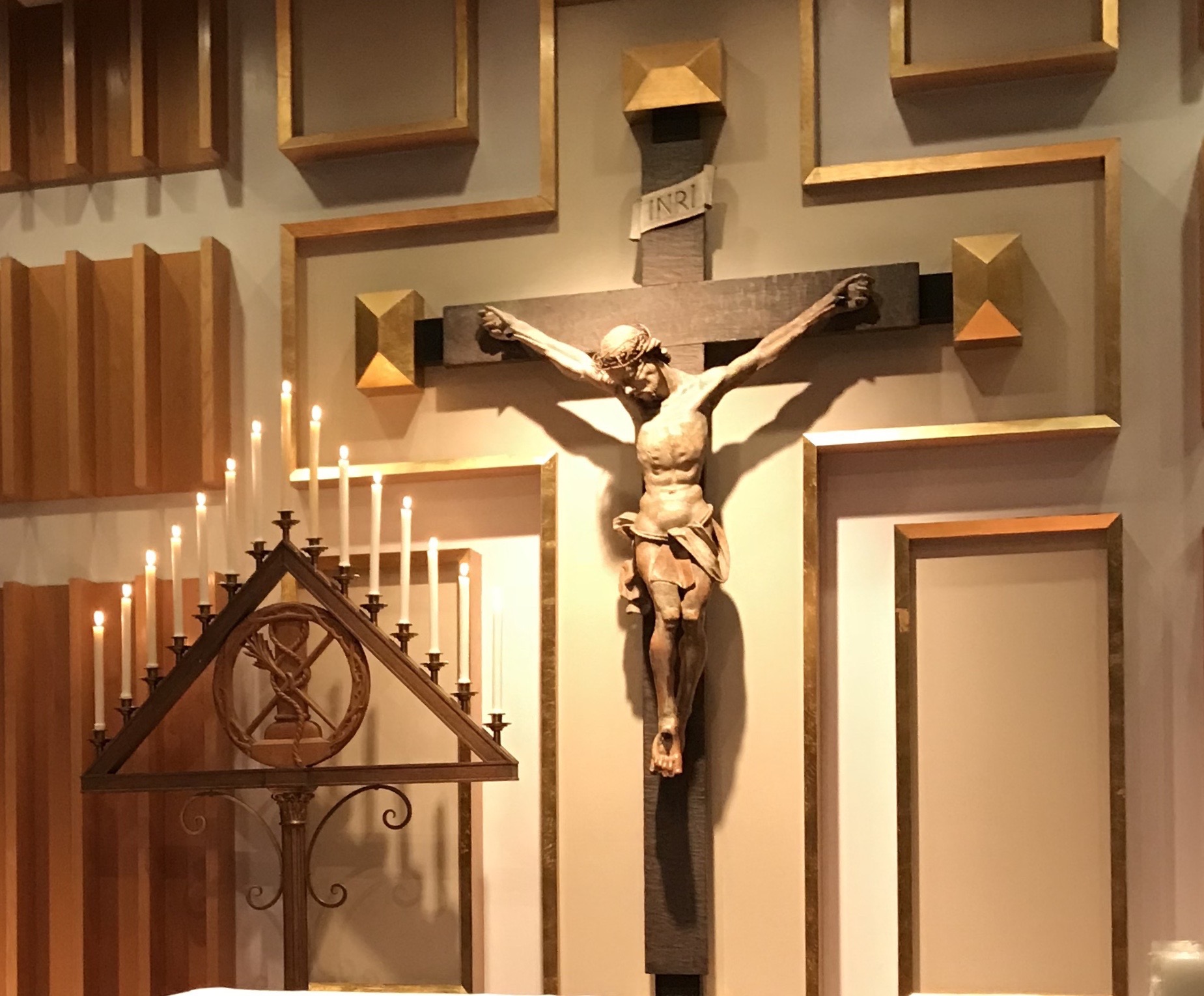
Tenebrae is an ancient Holy Week service celebrated on Holy Thursday, Good Friday and Holy Saturday. Tenebrae, a latin word, means darkness, but the 15 lighted candles at the heart of this service say that darkness never has its way. The 15 candles stand for Jesus, his twelve disciples and the two disciples who leave Jerusalem for Emmaus after Jesus’ death, having lost all hope.

In the Tenebrae service, the candles are extinguished one by one, as the scriptures are read. His disciples leave him, one betrays him. Jesus goes to death alone, but his light remains burning.

Psalm 69 is read at Tenebrae on Holy Thursday:

“I have become an outcast to my brothers,
a stranger to my mother’s sons,
because zeal for your house consumes me,
and the insults of those who blaspheme you fall upon me.”

On Holy Thursday Jesus leaves Bethany with his disciples to celebrate the Passover feast in the evening in an upper room in Jerusalem near the temple. At the table he tells them their faith will be shaken and they will leave him.

The Tenebrae readings tell us  Jesus is our great high priest whose love never fails:

“We have a great high priest who has passed through the heavens, Jesus, the Son of God, let us hold fast to our confession. For we do not have a high priest who is unable to sympathize with our weaknesses, but one who has similarly been tested in every way, yet without sin. So let us confidently approach the throne of grace to receive mercy and to find grace for timely help.”
(Hebrews 4, 14-16)

These days of Holy Week we approach “the throne of grace to receive mercy and find grace for timely help.”

A final reading on Holy Thursday from an Easter homily by St. Melito of Sardis reminds us: “He is the one who brought us out of darkness into light, out of slavery into freedom, out of death into life, and made us a people chosen to be his own. He is the Passover which is our salvation.”

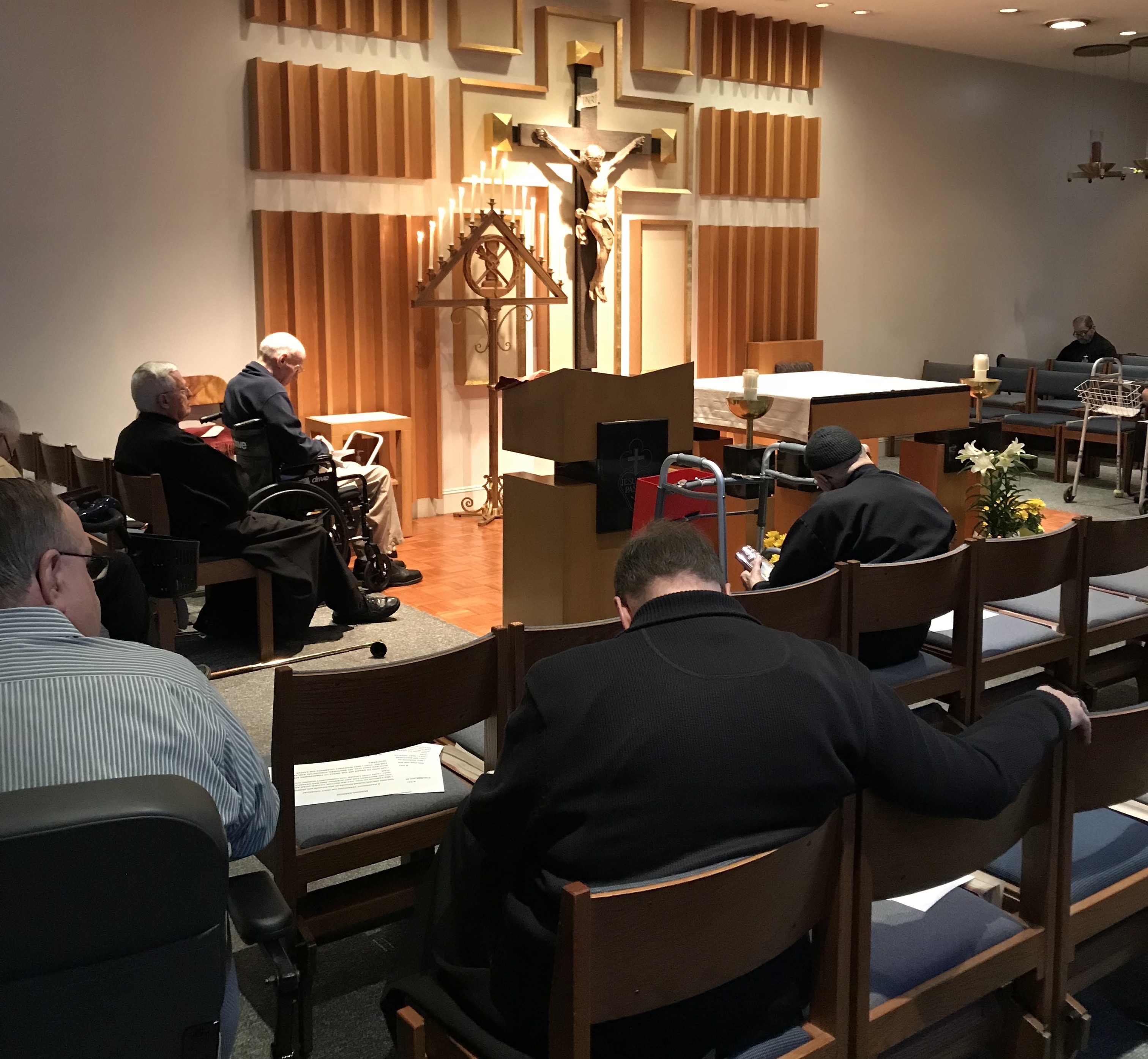
We celebrated Tenebrae  Holy Thursday, Good Friday and Holy Saturday at Immaculate Conception Monastery in Jamaica, New York.

I haven’t found much on the history of Tenebrae, except indications that the prayer began in monastic circles early on. My guess is that it developed from a pastoral need. During the days of Holy Week more people must have come to monasteries to pray as  work was somewhat lessened–unlike our time when we work, feast days or not. Did the monks decide to make some accomodation to their daily office for their visitors?  

The celebration has candles, extinguished as the psalms and other scriptures are read. Everyone understands candles. The psalms are favored sources for understanding the mystery of the passion and resurrection of Jesus in monastic prayer, but they’re not easily appreciated. 

The psalm prayers and captions from St. Augustine and other saints in the church’s morning and evening prayer today are meant to help people appreciate their Christian meaning. 

So can Tenebrae still be a creative prayer form during Holy Week?  I think so. 

Water:Genesis 2

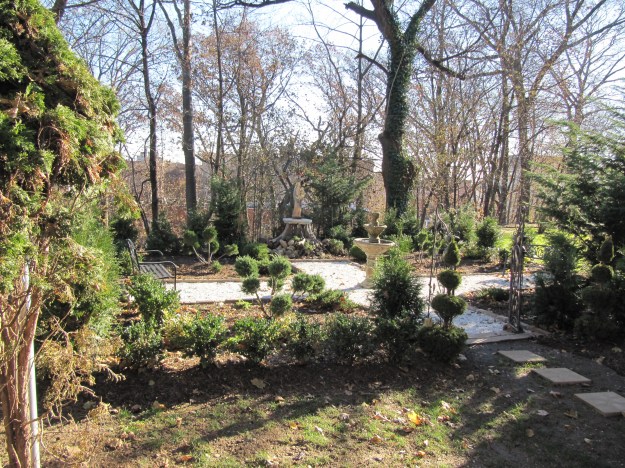
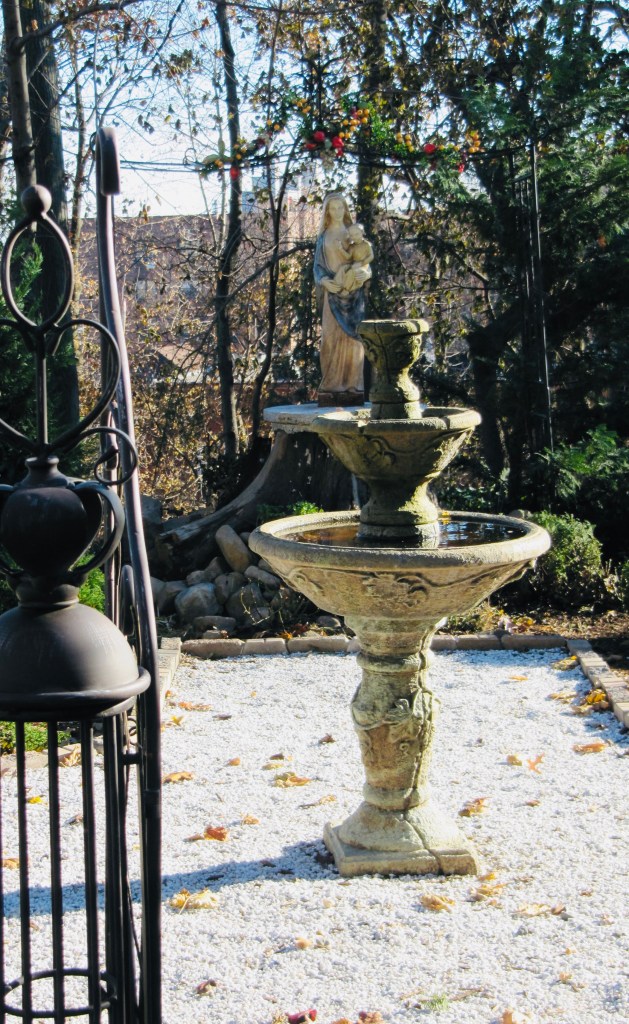
Mary Garden, Passionist Monastery, Jamaica, New York

Today’s reading from Genesis begins the second creation account (Genesis 2,4..) which pays particular attention to the creation of human beings. But it begins with water, welling up from the earth bringing life to the earth and finally the human family.

IMG_2381

Water is at the heart of the garden God provides for Adam and Eve. We have a fountain in the center of our Mary Garden signifying water’s vital role in the garden that was Eden and in the world we live in today.

Pope Francis speaks repeatedly of the role of water in our common home of creation and our need to care for it. Here are some of his reflections from his 2018 World Day of Prayer for the Care of Creation. Notice his strong objection to attempts to privatize water by commercial groups.

“On this World Day of Prayer for the Care of Creation, which the Catholic Church for several years now has celebrated in union with our Orthodox brothers and sisters and with participation of other Churches and Christian communities, I would like to draw attention to the question of water. It is a very simple and precious element, yet access to it is, sadly, for many people difficult if not impossible. Nonetheless, “access to safe drinkable water is a basic and universal human right, since it is essential to human survival and, as such, is a condition for the exercise of other human rights. Our world owes a great social debt towards the poor who lack access to drinking water, because they are denied the right to a life consistent with their inalienable dignity” (ibid., 30).
Water invites us to reflect on our origins. The human body is mostly composed of water, and many civilizations throughout history arose near great rivers that marked their identity. In an evocative image, the beginning of the book of Genesis states that, in the beginning, the spirit of the Creator “swept over the face of the waters (1:2)”.
In considering the fundamental role of water in creation and in human development, I feel the need to give thanks to God for “Sister Water”, simple and useful for life like nothing else on our planet.  Precisely for this reason, care for water sources and water basins is an urgent imperative. Today, more than ever, we need to look beyond immediate concerns (cf. Laudato Si’, 36) and beyond a purely utilitarian view of reality, “in which efficiency and productivity are entirely geared to our individual benefit” (ibid., 159). We urgently need shared projects and concrete gestures that recognize that every privatization of the natural good of water, at the expense of the human right to have access to this good, is unacceptable.
For us Christians, water represents an essential element of purification and of life.  We think immediately of baptism, the sacrament of our rebirth. Water made holy by the Spirit is the matter by which God has given us life and renewed us; it is the blessed source of undying life. For Christians of different confessions, baptism also represents the real and irreplaceable point of departure for experiencing an ever more authentic fraternity on the way to full unity. Jesus, in the course of his mission, promised a water capable of quenching human thirst for ever (cf. Jn 4:14).  He prophesied, “If any one thirst, let him come to me and drink (Jn 7:37). To drink from Jesus means to encounter him personally as the Lord, drawing from his words the meaning of life. May the words he spoke from the cross – “I thirst” (Jn 19:28) – echo constantly in our hearts. The Lord continues to ask that his thirst be quenched; he thirsts for love.  He asks us to give him to drink in all those who thirst in our own day, and to say to them, “I was thirsty and you gave me to drink” (Mt 25:35). To give to drink, in the global village, does not only entail personal gestures of charity, but also concrete choices and a constant commitment to ensure to all the primary good of water.”

https://www.vaticannews.va/en/taglist.cultura-e-societa.Diritti-umani.html

A Message From Shalom Snail

Dear Readers,

Thank you for following Shalom Snail, which made its debut at The Victor’s Place in May 2020. With Fr. Victor’s blessing, Shalom Snail: Journey to Wholeness, was launched on October 7, 2021. Due to technical challenges, the site underwent a change of hosting in July 2022. With stable WordPress hosting now, all Shalom Snail posts will be permanently accessible on its home site. A link to Shalom Snail can be found on the sidebar of The Victor’s Place. Our blog posts have always been complementary as we follow the daily Scripture readings and saints, so may they continue to be a blessing to you.

Shalom,
Gloria M. Chang