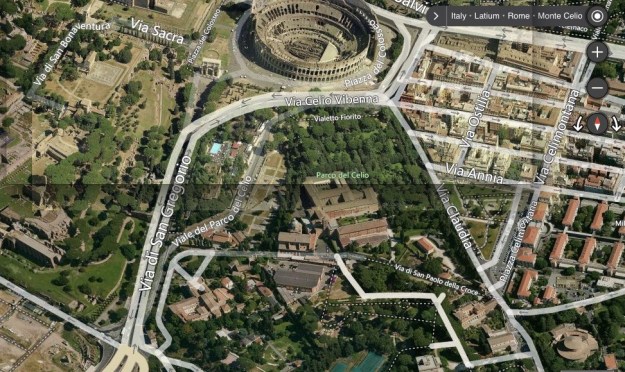
Church of St. Gregory the Great, lower left, off Via di San Gregorio (google maps)
Church of St. Gregory the Great, lower left, off Via di San Gregorio (google maps)

Many of us learned our faith from catechisms and sermons and pictures on the windows and walls of our churches. Xavier Leon-Dufour begins his classic work (Resurrection and the Message of Easter, New York, 1971) remembering trying to reconcile images he saw on the church windows of his youth with the gospel accounts he studied later. In art Jesus often appears as a revived corpse, his body and clothing brighter than before..
The church window above, based on Matthew’s Gospel, changes the way the gospel tells the resurrection story. Similar images appear often, especially in the Easter season. Jesus risen from the dead appears like Lazarus raised from the tomb. But resurrection is different from resuscitation.
“After the sabbath, as the first day of the week was dawning, Mary Magdalene and the other Mary came to see the tomb. And behold, there was a great earthquake; for an angel of the Lord descended from heaven, approached, rolled back the stone, and sat upon it. His appearance was like lightning and his clothing was white as snow. The guards were shaken with fear of him and became like dead men.” Mt 28,1-5
According to Matthew, an angel descends from heaven, rolls back the stone and strikes fear in the guards at the tomb. Our stained glass window depicts Jesus Christ stepping from the tomb striking fear into the guards. The angel becomes an onlooker wearing green, the color of hope. Jesus looks rather like he did before he died and he would be recognized immediately.
The gospels, however, indicate he was changed. Mary Magdalene and the others have difficulty recognizing him– he’s changed. The disciples on the way to Emmaus recognize him after he quotes the scriptures and, finally, breaks bread with them. The disciples at the lakeshore in Galilee are not sure who is he, until they eat with him.
The Risen Lord has entered another realm of existence. He is risen. He remains with us mysteriously. He does not blind us with light, as he did Paul the Apostle. He does not appear in bodily form, as he was before his death. He comes to us risen, risen indeed. Now, we meet him in the scriptures and the “breaking of the bread.” Also, just as mysteriously, we see him in the least. “When did we see you?” is the question raised at judgment.
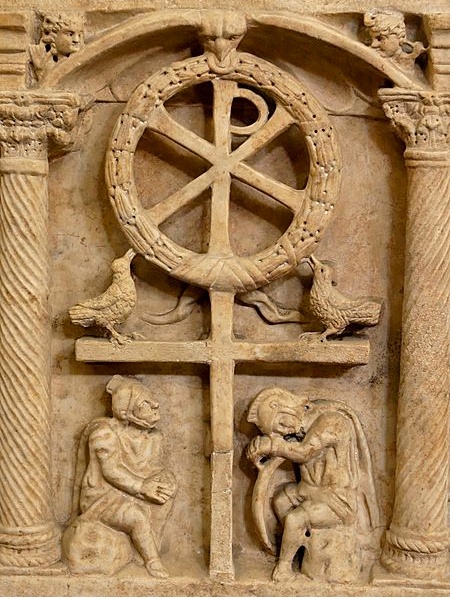
Early Christian art as seen in the 4th century portrayal from catacombs below, recognizing the mystery of the Resurrection, used symbolism to represent the Risen Christ. Jesus entered a new existence in his resurrection. It’s hard for artists and for us to depict that existence.
I mentioned Xavier Leon-Dufour earlier. Here’s what he said about the Risen Jesus:
“To speak of the resurrection of Jesus is to affirm that death has been conquered in one man at least: and to say that he lives forever is boldly to locate oneself at the end of time. It is a challenge for the unbeliever to revise his idea of life: for if one man is alive forever after his death, why not should the same be so for all men at the end of time? Why should there not be after death an existence called heaven?” In that existence “life is changed, not ended.”
Jesus begins to set out for Jerusalem in today’s reading at Mass from the 10th chapter of Mark’s gospel. Matthew offers a similar account in the 19th and 20th chapters of his gospel.
Jesus doesn’t go to Jerusalem alone, he invites others to go with him. It’s a journey to resurrection and life and more than a couple of days, but as they hear Jesus describe the way to Jerusalem, people react like people do,
You can’t miss human weakness in the journey stories of Mark’s and Matthew’s gospel, beginning with the Pharisees. I suppose they represent human doubt and questioning that’s always there. The disciples rebuked the women bringing their children forJesus’ blessing, and Jesus rebukes them. Be like children to make the journey, Jesus tells them.
The rich young man wants to hold on to what he has, so he goes away sad. Peter says proudly he’ s given up everything to follow Jesus, but we know how inconstant he is. The story of the brothers, James and John, is obviously a story of human ambition.
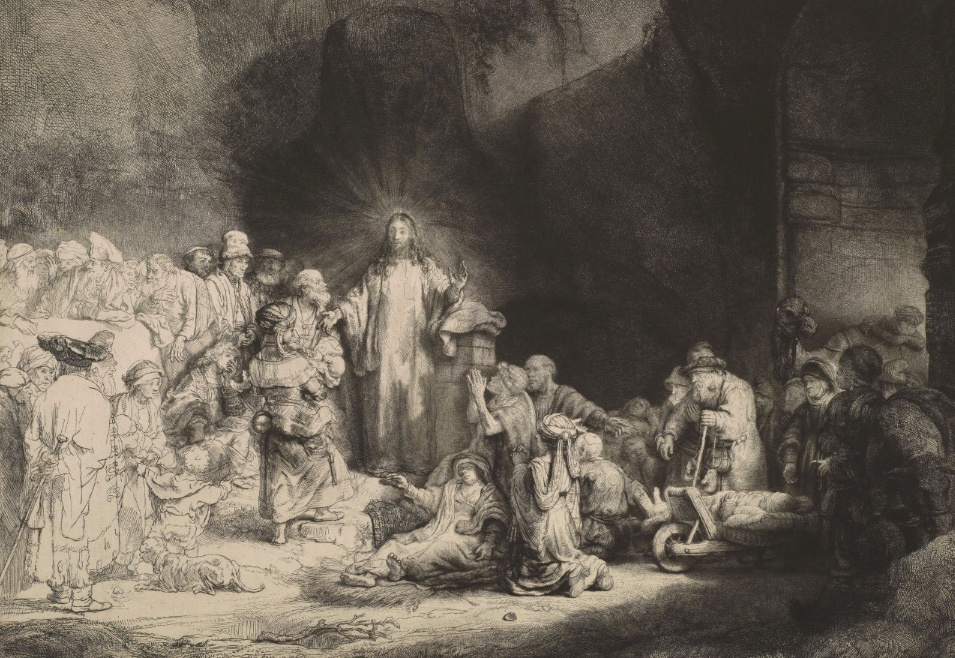
Matthew offers Mark’s stories in chapter 19 and 20 of his gospel. The artist Rembrandt drew a remarkable picture of the 19th and 20th chapter of Matthew called the Hundred Guilder Print.
Jesus stands at the center of Rembrandt’s work, bathed in light, his hands outstretched to the crowds before him.
Peter stands at Jesus right, close by. Other disciples, probably James and John, are next to him. Women and their children, whom the disciples told to go away, are next to them. The rich young man is also there in the crowd. Is he reconsidering?
Some of the enemies of Jesus who plotted against him and argued with him are also there, talking among themselves, but they’re still in the picture. Rembrandt even pictures the camel, back by the city gates.
Jesus sheds his light on them all. His arms are open to them all. Rembrandt has it right. Grace is more powerful than human weakness. It’s everywhere.
For this week’s homily please watch the video below.
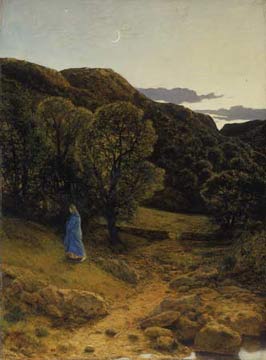
William Dyce, “The Garden of Gethsemane”, 1860*
To your eyes a thousand years are like yesterday, come and gone, no more than a watch in the night.
—Psalm 90:4
.One good olive.
There are so many factors.
The altitude. The light. The soil. The temperature. The rainfall. The wind. The dew point and humidity. The age of the tree.
Then there are those factors that we can control: pruning, watering, fertilizing, fanning, netting, and wrapping chilly trees with burlap or fleece.
And of course there are those other factors, those that fall somewhere in-between, between our control and our complete lack thereof: most of these relate to the sneaky work of numerous little thieves—animals, birds, insects, and perhaps even fellow farmers or other hungry travelers who just happen to pass by.
But when all is said and done—when all the factors are poured into the olive equation, mixed-up well, and left to unify or settle out—the fruit that’s produced by the world’s most nostalgic, symbolic, and romantic of trees means very little (at least in digestive terms) if it’s simply left to shrivel up and fall to the ground.
———
Picking an olive is perhaps the highest part of the art.
———
When to do so? And toward what end?
If too early, great potential is squandered.
If too late, great taste is lost.
If indecisive, we might as well let nature enjoy it for the time being—for one way or another—God’s process will eventually return it to the earth.
———
And yet, we’re still not done, for even if the olive is picked at just the right time, from just the right tree—the one that has grown in all the right circumstances—when it comes to the culmination of olive production, all is moot if the precious fruit of the womb is never squeezed.
For no matter how good the olive, without applied pressure, there’s nothing left to be labeled “pure extra virgin”.
.But when the fullness of time had come, God sent his Son, born of a women…
—Galatians 4:4
(Dec/23/2016)
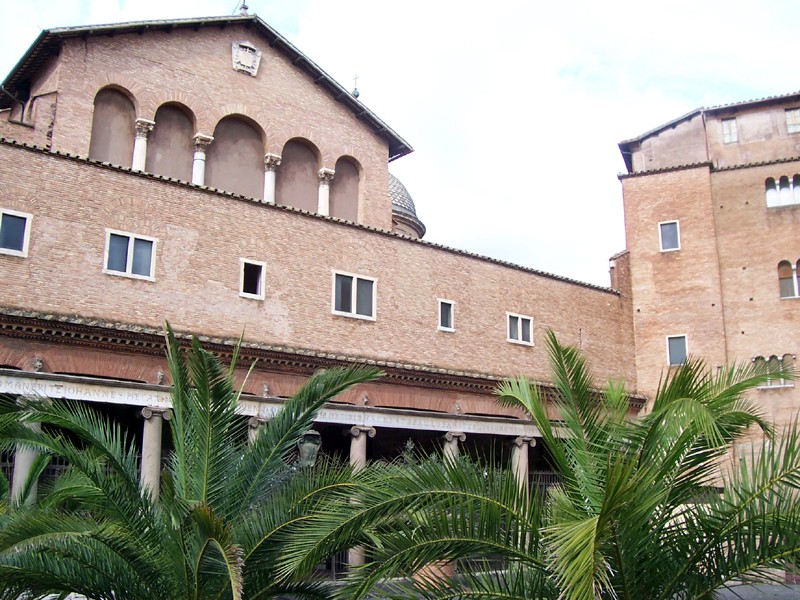
Ss. Giovanni e Paolo
A few days ago we celebrated the feast of St. Jerome, the great 4th century scripture scholar and controversialist. I’ll be staying through October in a place well known to him in Rome– the Caelian Hill and the church of Saints John and Paul.
In Jerome’s day Rome’s rich and powerful lived on the Caelian Hill, across from the Palatine Hill and the Roman forum. Jerome had prominent friends among them. Pammachius, the ex- Roman senator who built Saints John and Paul, the noblewoman Paula and her daughter Eutochium, who later joined Jerome in his venture in Bethlehem to study the scriptures, her other daughter Blaesilla and others.
Interest in the scriptures ran high among well-off Caelian Christians then, but they also were keen for gossip and religious controversies. Jerome loved the scriptures, but he also loved the fight. His relationship with Paula and her family was part of the gossip that probably figured among the reasons he left Rome for the Holy Land. Following him there, Paula created a monastic community in Bethlehem and she and her daughter undoubtedly played a bigger part in Jerome’s scriptural achievements than they’re credited for.
Jerome’s a saint, but I appreciate why so many artists picture him doing penance for his sins. He needed God’s mercy.
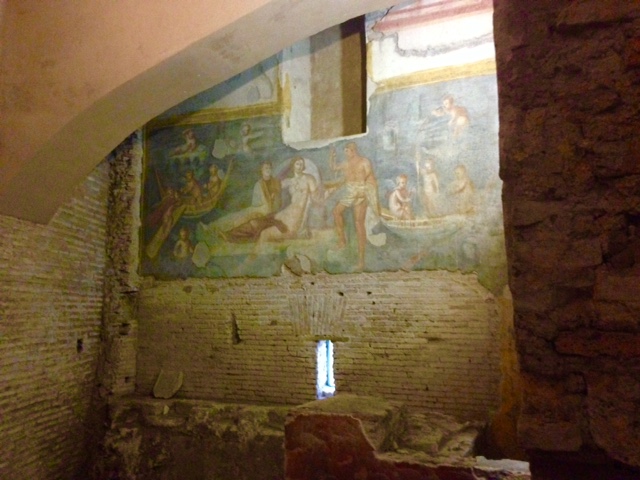
Excavations, Saints John and Paul
Underneath Pammachius’ Church of Saints John and Paul are remains of Roman apartments going back to the 2nd-4th centuries, probably the best preserved of their kind in the city and a favorite for tourists.
Years ago, when I studied here, one of the rooms in the excavations was pointed out as part of a house church with Christian inscriptions , now archeologists are not so sure.. That doesn’t mean Christians didn’t meet or worship in these buildings, only they didn’t create a special liturgical space for meeting or worship. Christian evidence, however, says a “house church” was here early on.
Why then did Pammachius in the fourth century build the imposing basilica of Saints John and Paul here on the edge of the Coelian Hill facing the Palatine Hill and the Roman forum ? Many retired soldiers settled on the Caelian Hill then. Did he wish to win them to Christianity through the example of two soldier saints, John and Paul, who were honored in this church? Their remains are still found under the church’s main altar today.
Is there another reason? According to Richard Krautheimer, an expert on Rome’s early Christian churches, the emperor Constantine built St. John Lateran, St. Peter, St. Paul, St. Lawrence, the first Christian churches, on the edge of the city most likely in deference to the sensibilities of the followers of Rome’s traditional religions. He didn’t want any Christian church in the “show areas” of the city, near the Roman forum or the Palatine hill.

Saints John and Paul, Interior
By Pammachius’ time Christianity was more assertive. Was Pammachius’ church a statement to the city that Christianity had arrived and wished to speak its wisdom here at the heart of traditional Roman religion, near the Palatine Hill and the Roman forum? Jerome’s new translations and commentaries, along with the works of St. Augustine and others, gave them something to say.
So was this a church with a mission? A lesson for the church of today? Speak to the world of your time.
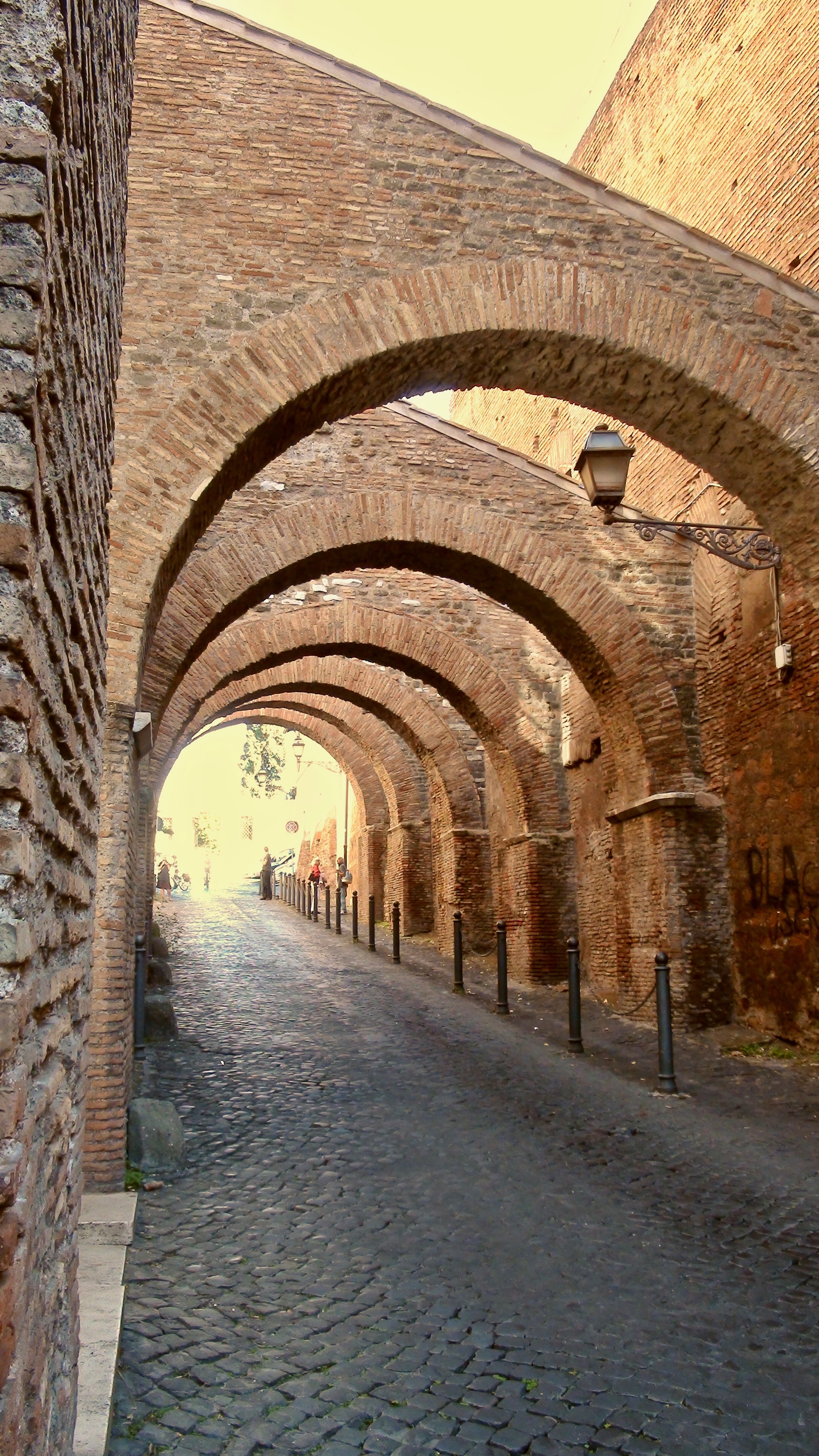
Clivo di Scauri
For this week’s homily, please watch the video below.
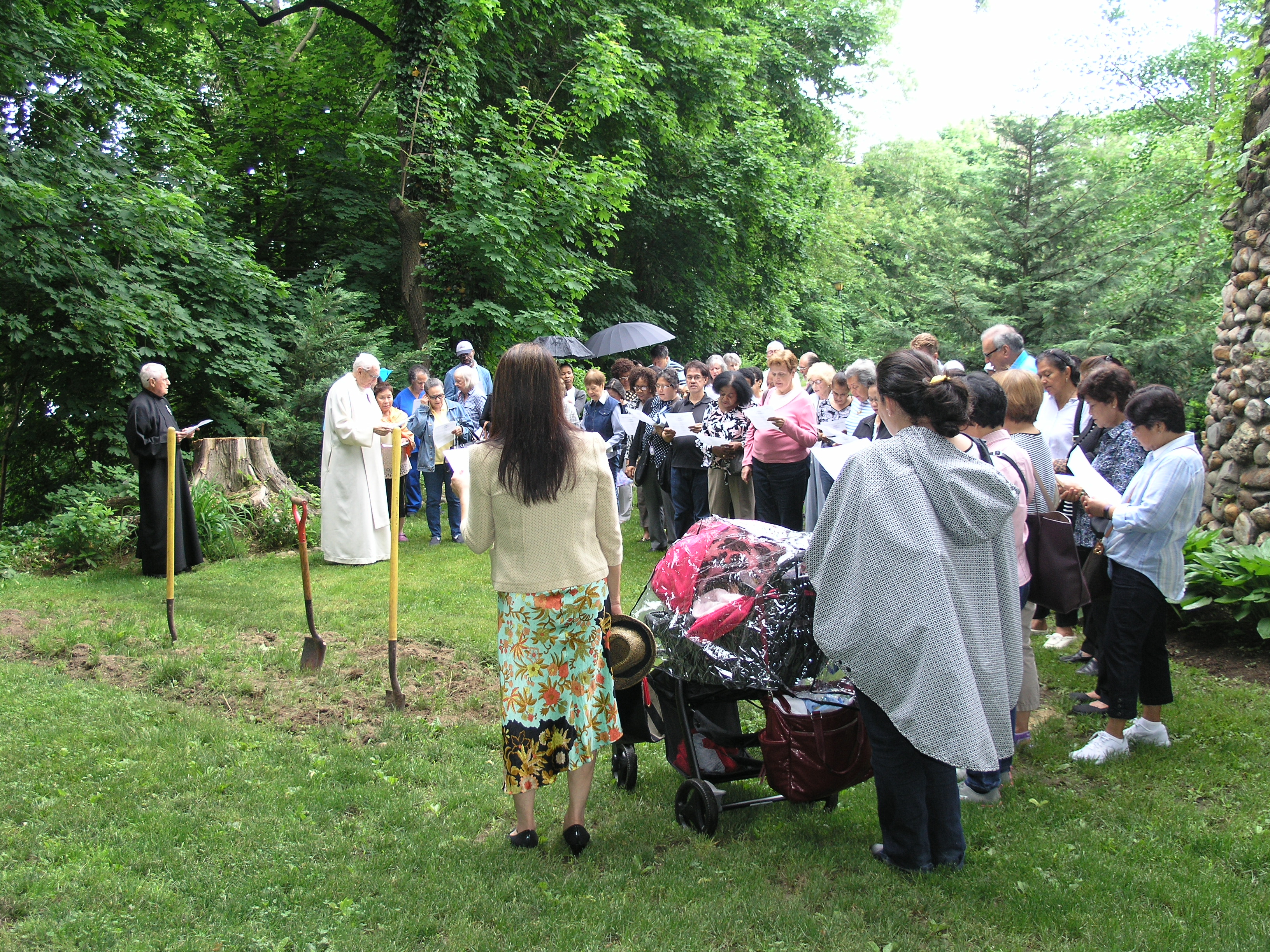
OLYMPUS DIGITAL CAMERA
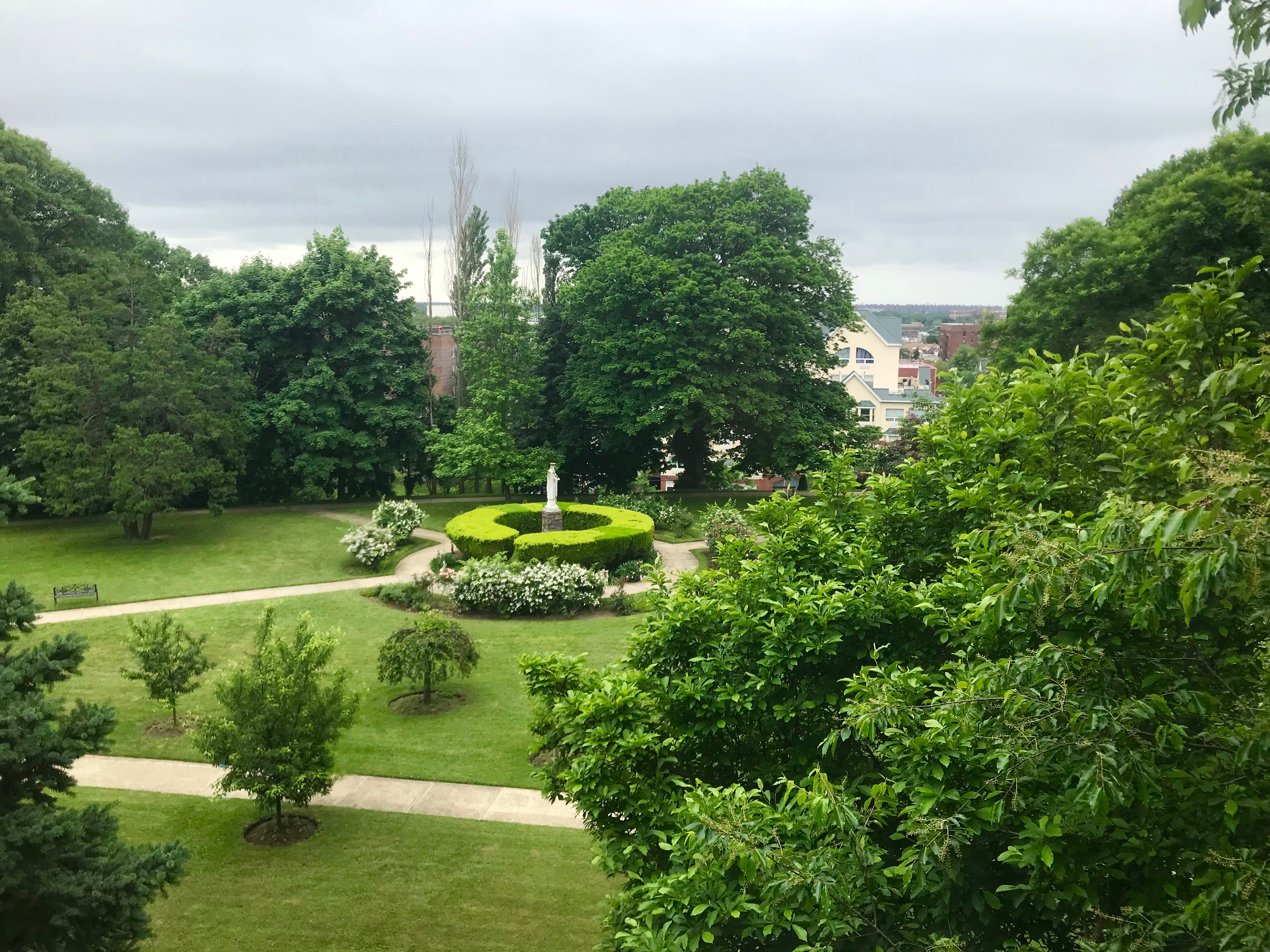
On the Feast of the Visitation of Mary to Elizabeth, May 31, we began our Mary Garden at Immaculate Conception Monastery in Jamaica, New York.
Mary Gardens, dedicated to Mary, the Mother of Jesus, appeared in 14th century Europe following the Black Death, a pandemic that caused millions to die in that part of the world. The gardens, usually found in monasteries and religious shrines, brought hope to people who feared the earth was bringing them death.
God gave Adam and Eve a garden, the Book of Genesis says. (Genesis 2, 8-28) Rising from the dead, Jesus proclaimed eternal life in a garden. (John 20,11-18) For early and medieval Christians, Mary, the Mother of Jesus, was like a garden enclosed, flowers, plants and trees surrounded her, “our life, our sweetness and our hope.” As the “Mother of the living” she brought the promise of life to our world, Jesus, her Son.
Can a Mary Garden bring hope today to our world that faces climate change and environmental degradation? Mary reminds us creation is a gift of God’s love. A Mary Garden teaches reverence for creation, for the soil, for plants that feed and bring us healing, for flowers that nourish our sense of beauty.
Yes, science and technology play their part in an environmental crisis, but faith has a part to play. We’re planting a Mary Garden!
A Reading from the Book of Genesis
This is the story of the heavens and the earth at their creation. When the LORD God made the earth and the heavens there were no plants on the earth, no grass on the fields, for the LORD God had sent no rain and there were no human beings to till the ground, but a stream was welling up out of the earth and watering all the surface of the ground and the LORD God formed a human being out of the dust of the ground and blew into his nostrils the breath of life, and he came to life.
The LORD God planted a garden in Eden, in the east,* and placed there the one whom he had formed… to cultivate and care for it. (Gen 2, 4-15)
Let us Pray
Praise the Lord who is good,
Sing to our God who is loving,
To the Lord our praise is due.
Who covers the heavens with clouds
and prepares the rain for the earth.
And makes mountains sprout with grain
and plants to serve our needs
You know the number of the stars
and call each one by name.
Bless the earth we break open today
O Lord,
to be a garden in praise of your name,
where we honor Mary, the mother of your Son.
We remember your blessings here
which you never cease to send
through Jesus Christ our Lord.
For this week’s homily please play the video file below:
 The Victor's Place