Tag Archives: unbelief

Wednesday, 2nd Week of Advent

Isaiah


In yesterday’s first reading for Advent, Second Isaiah repeats to the exiles in Babylon words he hears from God: “Comfort, give comfort to my people, says your God.” In today’s gospel reading Jesus says:“Come to me, all you who labor and are burdened, and I will refresh you.” A favorite reading for so many of us.

Notice Jesus speaks to the “crowds” in Matthew’s gospel, not just to the disciples who know him, or the Jewish Christian church Matthew wrote for at the end of the first century.  God’s love and God’s promises reach far beyond the circle of disciples or the church.  Jesus Christ came to refresh the world that labors and is burdened, even if it doesn’t know him.

 Second Isaiah in today’s readings appeals to Jewish exiles to remember the eternal God, creator of the ends of the earth. Do not to abandon God for the Babylon’s gods who are too small, he tells them and us all.  

“To whom can you liken me as an equal?
says the Holy One…
Do you not know
or have you not heard?
The LORD is the eternal God,
creator of the ends of the earth.
He does not faint nor grow weary,
and his knowledge is beyond scrutiny.”

God still holds us in his hands, sustains and comforts us, even if we do not know him or seem to care. God’s Spirit does not faint or grow weary
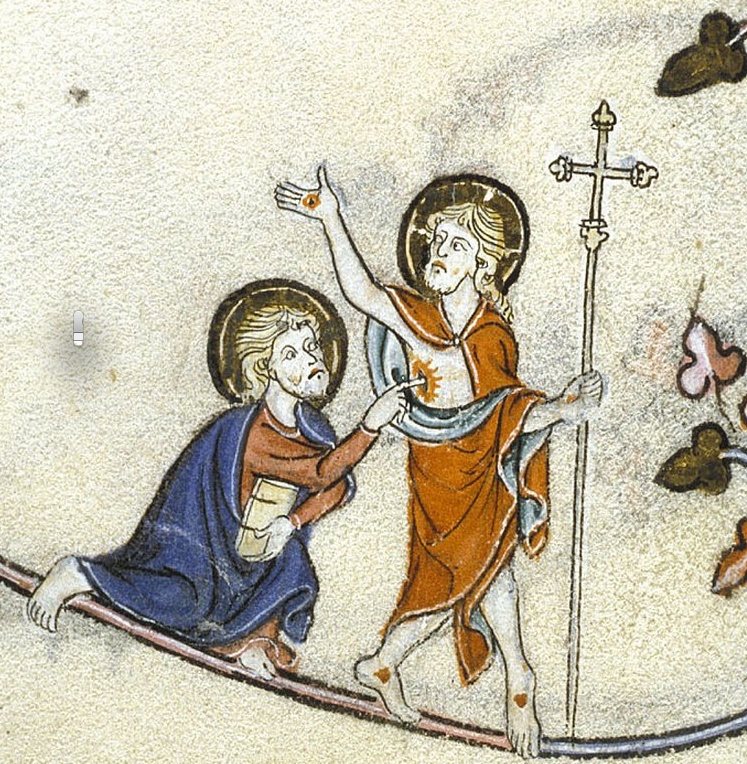
St. Thomas: Going to God through Questions

Thomas

Today, July 3rd, we remember Thomas the apostle. We’re tempted to think that belief does away with troublesome questions and shelters us from unbelief, making our way to God smooth and undisturbed. Not so, Thomas reminds us; he found faith through his questions and by placing his finger into the wounds of Christ.

Gregory the Great reminds us today of the importance of Thomas the Apostle.

“In a marvellous way God’s mercy arranged that the disbelieving disciple, in touching the wounds of his master’s body, should heal our wounds of disbelief. The disbelief of Thomas has done more for our faith than the faith of the other disciples. As he touches Christ and is won over to belief, every doubt is cast aside and our faith is strengthened. So the disciple who doubted, then felt Christ’s wounds, becomes a witness to the reality of the resurrection.”

That’s an interesting statement, isn’t it? “The disbelief of Thomas has done more for our faith than the faith of the other disciples.” Is an unbelieving world strengthening our faith now?

We go to God through questions, and some troubles too. We’re healed by touching the wounds of Christ. How do we touch the wounds of Christ? Is it by touching those who are wounded like him?

Grant, Almighty God,
that we may glory in the Feast of the blessed apostle Thomas, so that we may always be sustained by his intercession
and, believing, may have life
in the name of Jesus Christ your son,
whom Thomas acknowledged as the Lord.
Who lives and reigns with you in the unity of the Holy Spirit, one God, for ever and ever.

Belief and Unbelief

Mark’s gospel today describes the arrival of Mary his mother and some of his relatives from Nazareth. (Mark 3: 32-35) They’re outside a house crowded with people gathered around Jesus, some looking to be cured, some to listen to what he has to say. Jesus and his disciples don’t even have time to eat, Mark says.

His family come because they want to take him home; some think he is out of his mind . (Mark 3:20-21) When people tell him ‘Your mother and your brothers and your sisters are outside asking for you.’ Jesus said to them in reply, ‘Who are my mother and my brothers?’ And looking around at those seated in the circle he said, ‘Here are my mother and my brothers. For whoever does the will of God is my brother and sister and mother.’” (Mark 3: 32-35)

Jesus sees people of faith as his family, his mother, brother and sister. He considers us who believe in him his family. 

But we continue to ask: Why does his own family think he is out of his mind?

His mother Mary is with them. What does she think? 

The gospels, Matthew 13:54-58, Mark 6: 1-6, Luke 4:16-30 all point to Nazareth as a place where Jesus is rejected.  Luke’s gospel sees the rejection of Jesus at Nazareth in the harshest terms. They are ready to hurl him from the hill after the claims he makes in their synagogue. His visit to Nazareth is headed for violence, but a violence postponed, and no one takes his part. ( Luke 4:16-36 )

Mary lived there. What was it like for her?  What was it like to be with family members who thought her son was mad? What was it like to be day after day with people who didn’t believe in her son? No one from Nazareth is among the 12 disciples Jesus chooses. The rejection of Jesus by the people of his own town, his own family and relatives, was a sword that pierced her heart.

We might say Mary’s faith was strong and kept her secure, but was it a faith that knew everything? Did it save her from questioning?

I wonder if we can see Mary’s appearance at Lourdes and Fatima in some way related to her own experience at Nazareth. She appears in places when the faith of ordinary people is severely challenged by a world increasingly hostile to belief. 

She knows how to believe when everyone else does not. We welcome her today to be with us.

Rejected By His Own: Luke 10: 13-16

“And as for you, Capernaum, ‘Will you be exalted to heaven?

You will go down to the netherworld.” Luke 10,13-16

The mystery of unbelief is hard to understand. Why was he rejected by the people of Capernaum who received him so enthusiastically when he began his ministry there? They saw him expel a demon in their synagogue. They marveled at his teaching. He cured Peter’s mother in law and made a paralyzed man walk. People came to the town from everywhere with their sick to have him cure them. They flocked around the door of the house where he stay. 

I’m sure some of Luke’s gentile readers (He wrote with them in mind) also wondered what happened in the land where Jesus was born and taught and died and rose again. Why was Jesus rejected in  Capernaum, Nazareth, Bethsaida– centers of Jesus’ life and ministry?

 “He came to his own and his own received him not,’ John’s gospel says. The mystery of unbelief was there from the beginning. Paul writes extensively about this mystery in the 9th chapter of this Letter to the Romans. Hope in the mystery of God’s mercy, Paul writes, Israel will have its day of belief.

The rejection of Jesus by his own people was a mystery  Christians could not understand then. We cannot understand it nows  as we see people abandoning Christianity and its churches. We wonder about the future of Christianity, especially among the young.

The mystery of unbelief is a mystery which calls us, not to believe less, but to believe more strongly. Believe in him with all your strength, preach him as well as you know how, Luke’s gospel says. Believing in a world of unbelief is one of the ways we enter into the mystery of the cross and resurrection.

The Thomas in us all

Thomas

Some things — like telling time or tying your shoes — you learn once, but we know Jesus Christ gradually, day by day. Human and divine, he makes himself known to us as he promises and as we are ready to receive him.

That’s why Thomas, the apostle, whose feast is today, is such an important figure. Far from being a lonely skeptic, an isolated dissenter, he represents the slowness of heart and mind, the recurrent skepticism, that affects us all.

Yet, Thomas is a sign of hope. He reminds us that the Risen Jesus offers, even to the most unconvinced, the power to believe.

Lord Jesus,
the Thomas in us all
needs the wounds in your hands and side,
to call us to believe
you are our Lord and God.

Risen, present everywhere,
bless those who have not seen,
blind with doubts
or weakened faith, or no faith at all.

Bless us, Lord,
from your wounded hands and side,
strengthen our faith
to believe in you.

The Blind Believe

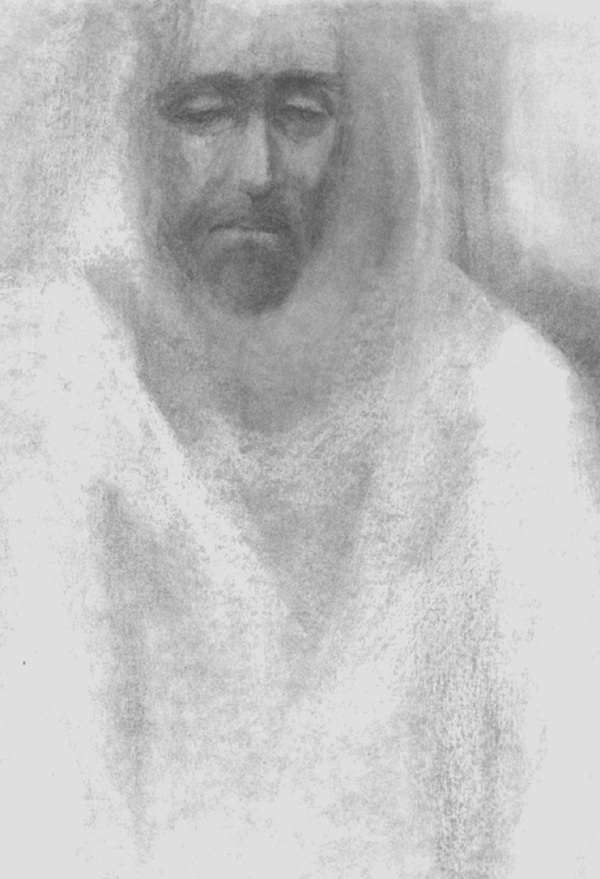
Jesus sorrowing

Rejected by your own,
By those who know so much
yet know so little.

This week in Jerusalem,
the city that knows so much
yet knows so little,
you walk its streets where a blind man begs
and give him sight that he never had before,
but they don’t believe
you’re God’s Son,
his only Son, equal to him.

“Who is he, sir, that I may believe in him?”
the blind man said with new sight.
“You have seen him,
the one speaking with you is he,”
you said to the man with new sight.

He worshiped you,
“I do believe, Lord.”

Give us his sight.

art: Duk Soon Fwang

The Apostles

Jesus Christ told his apostles to bring the Good News revealed by God in him to all people. They handed on through “their preaching, by the example they gave, by the institutions they established, what they themselves had received–whether from the lips of Christ, from his way of life and his works, or whether they had learned it at the promptings of the Holy Spirit.”  (Catechism of the Catholic Faith 76)

The apostles and others associated with them, “under the inspiration of the same Holy Spirit committed the message of salvation to writing.” (Catechism 76)

We acknowledge the apostles’ role in bringing the Good News when we read the gospels and recite the Apostles’ Creed. We remember them in our liturgy, and each month we celebrate one of the apostles in our calendar of feasts.  July 3rd, we honor the Apostle Thomas.

Thomas reminds us that the witnesses chosen by Jesus were both weak and strong. Everyone in the Upper Room the night of Jesus’ resurrection believed that he had risen. The absent Thomas doesn’t.  “Unless I see the mark of the nails in his hands and put my finger into the nailmarks and put my hand into his side, I will not believe.”

Only when Jesus patiently appears to him a week later and has him touch the wounds in his hands and his side, does he believe. “My Lord and my God.”

Is Thomas unique in his weakness of faith? Were the others chosen by Jesus as foundations of his church unlike him? From the slight information the gospels provide, all the other apostles are both weak and strong–Peter, their leader, is a prime example.

Did the Holy Spirit change the apostles completely at Pentecost? We may think they were, but I don’t think they were so completely transformed as we like to believe. The story in St. Luke’s gospel of the two disciples on the way to Emmaus may better describe the post-resurrection church and its leaders.

Hardly a triumphalist church and hardly perfect leaders. Their strength and their guide was the patient Jesus. The Risen Jesus was with them then and he is with us now.

A Rejected Prophet

Usually celebrities are welcomed to their hometowns by proud family members and neighbors,  but when Jesus returns to his native place, a rising star in Galilee, he’s driven out of the synagogue and almost killed by the people of Nazareth. He claims to be anointed by the Spirit of God and he’s been acclaimed elsewhere, but they see him only as the son of Joseph, the carpenter, and reject him. (Luke 4,21-30)

They stay unconvinced, it seems, because some of his family appear later at Capernaum, the base for most of his ministry, and want to take him home because he’s out of his mind,they say.

Why are they against his extraordinary claim? Is it because they know him too well? Or really, not enough? They’ve watched him grow; he’s worked on their homes and in their fields. He built some of the tables they’ve used for their meals. They know his father, his mother, his relatives. An unassuming young man whom they’ve known since infancy.

Where does he get all this?

We have to be careful that, like them, we get used to Jesus Christ, whom we may have known from our infancy. They took him for granted. His silence through the years made them blind to his power and they did not believe in him.

We know his silence too in faith and sacraments. He may act somewhere else, we may think, but not in us. We can mistake his silence for powerlessness too.

Give us faith in you, Lord.

(4th Sunday of the Year)