Tag Archives: Thomas Berry

Catholic Scholars Visit the Mary Garden

Photos: Gloria M. Chang

“What is theology?” asked Professor Andrea Florendo to a group of young Catholic Scholars in the Passionist Monastery Chapel.

“The study of God,” responded a sophomore brightly in the front row. 

“Yes, and where does theology begin?” Professor Florendo continued. Looking at each of the young faces, she exclaimed, “In a garden!” Following the creation account in Genesis, the story of God and humankind unfolds in the Garden of Eden. Flowers, trees, rocks, soil, animals, sun, moon, sky, water, humans—the whole natural world—declare the glory of God. Prayer and liturgy burst forth among flowering plants and birdsong in God’s garden of paradise. 

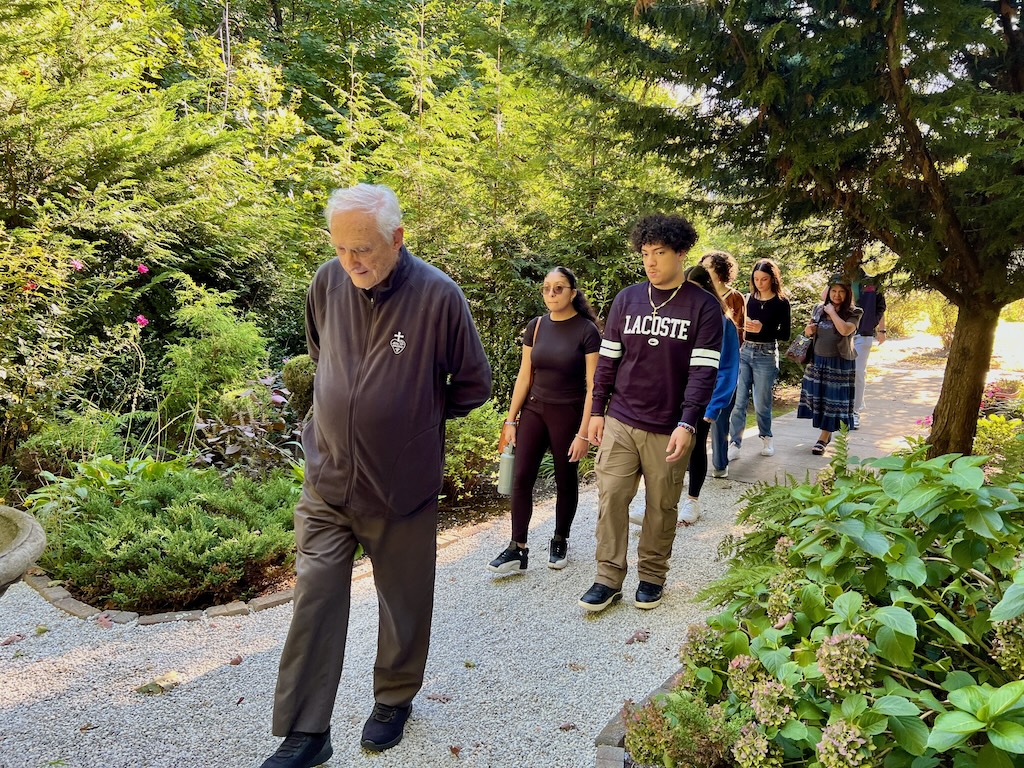
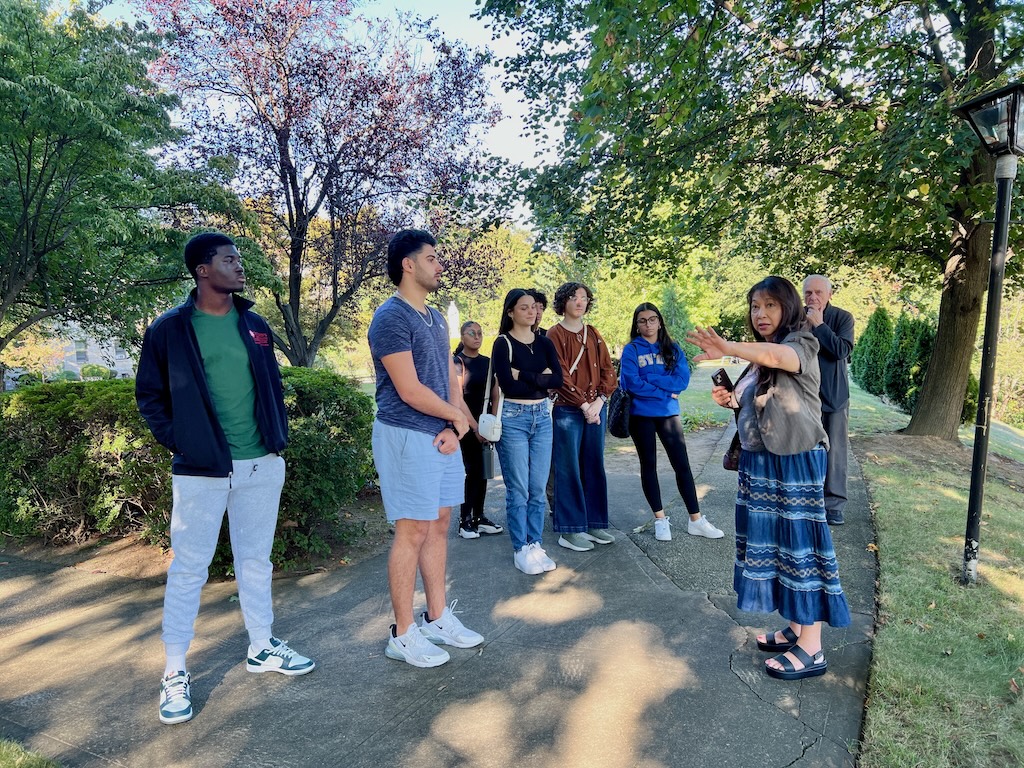
On Sunday, October 6, 2024, seven Catholic Scholars from St. John’s University visited the Mary Garden at the Passionist Monastery in Jamaica, NY. Fr. Victor Hoagland, C.P., Professor Andrea Florendo, and Gloria Chang, founders of the Mary Garden Guild at the Passionist Monastery, welcomed the students warmly. 

Fr. Victor, who has traveled extensively throughout the world on pilgrimages and missions, shared the global Passionist charism with the Catholic Scholars, who are preparing for a life of faith-inspired leadership. The Passionists, who received their mission from St. Paul of the Cross to keep alive in the world the love of Jesus Crucified as seen in His Sacred Passion, have expanded their charism to include the care of creation as taught by Pope Francis in his encyclical Laudato Si. Inspired also by Fr. Thomas Berry, C.P. (1914-2009), a pioneer in ecology, the Passionists have redesigned their retreat center in Jamaica, NY, in his name. 

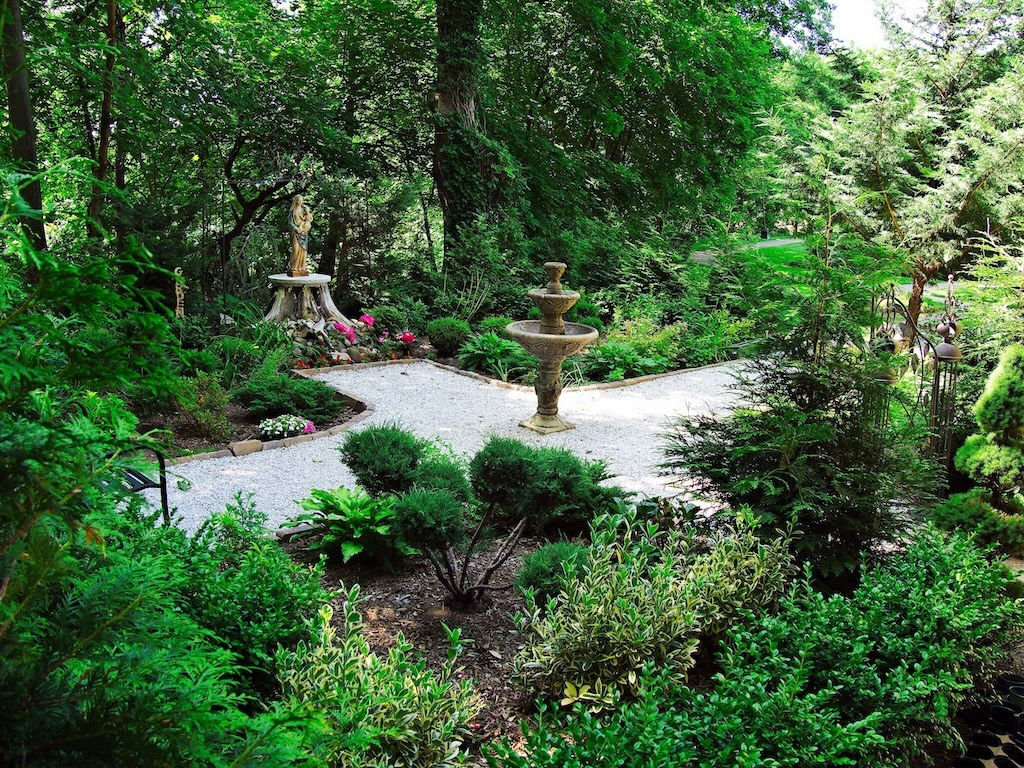
Andrea Florendo, a retired theology professor at St. John’s University and designer of the Mary Garden, gave a tour, pointing out the significance of the enclosed garden as a symbol of Mary’s virginal womb, the fountain as Christ’s “fountain of living waters,” and the cross path as the four rivers in the Garden of Eden. 


Photo: Gloria M. Chang

Our visit in the Mary Garden ended in praise and thanksgiving to God with prayers from Scripture and a reading from the Book of Genesis. May the Lord bless our Catholic Scholars abundantly with faith and grace as they continue their studies and formation at St. John’s University.

How great is your name, O Lord our God,
through all the earth!

Psalm 8:1

Praying with Creation During Lent


Lent is a time to look for God’s wisdom, our reading today from the Book of Sirach seems to say.  God’s wisdom is unknowable, Job proclaimed. “As for wisdom—where can she be found Where is the place of understanding? Mortals do not know her path, nor is she to be found in the land of the living.” (Job 28: 12-13)

But Sirach says “God has poured her forth upon all his works, upon every living thing according to his bounty; he has lavished her upon his friends”  ( Sirach 1:10)

“The sand of the seashore, the drops of rain, the days of eternity: who can number these? Heaven’s height, earth’s breadth, the depths of the abyss: who can explore these?” Yet creation is meant to be explored, because as a work of God it leads us to uncreated Wisdom.  

Lent is a time to follow the gospels that speak of Jesus, the wisdom of God. But let’s not forget creation that also reveals him. 

Father John O’Brien, a liturgist from my community, wrote an essay in 2004 entitled: “Thomas Berry, the Easter Vigil and the Greening of the Liturgy” 

“This essay”, he wrote, “ argues that the next horizon of liturgical development will require a paradigm shift in understanding and spirituality. This is a shift from a present anthropocentrism to a new role and placement for creation. Although the liturgy has used the stuff of creation to celebrate the magnalia Dei, it has emphasized that water and food, bread and wine, soil and oil, rocks and rivers are at the service of the human community. Creation exists for human use and the promotion of human redemption. If this redemptive motif prevails, humankind may flourish into the immediate future. But the earth that sustains human life will be diminished and destroyed.”

The liturgy can help us acquire this new vision, John suggested, and the Easter Vigil might be a good place to start. The play of light and darkness in the vigil, the fire in the dark, the Genesis readings, the waters of baptism and blessing are reminders of creation in the Easter story.  But in his essay John recognized that people weren’t exactly flocking to the Easter Vigil then. They’re not now.   

Better to start with our daily liturgy, our daily prayer? Should we look more closely at what our prayers say and how we pray every day? 

Daily prayer, particularly the psalms, can help us bond with creation. Isaiah says God’s word comes down from heaven like rain and snow, watering the earth and providing for the human family as well. Rain and snow are more than figures of speech, they’re messengers from God, beyond human control. Created by God they lead us to God, bestowing his gifts on us. God speaks daily through created things like these, the psalms say: 

“The heavens declare the glory of God;

the firmament proclaims the works of his hands.

Day unto day pours forth speech;

night unto night whispers knowledge.  (Psalm 19,2-4)

Morning with the rising sun, evening with the promise of new light, with a voice not heard, without speech or words, creation speaks for God and is promised a place in the new creation with us. 

The Holy Spirit, the “Lord and Giver of Life”, “God adored and glorified along with the Father and the Son” sustains creation, Elizabeth Johnson writes in her book “Ask the Beasts: Darwin and the God of Love” (2014). Key biblical images, powerful natural forces like blowing wind, flowing water, and blazing fire expand the notion of the active presence of the Spirit in the world God made.

At morning Mass candles are lit. Tongues of fire come upon us now. The fire that created the Big Bang billions of years ago is with us now, as the bread and wine, and water enter our cosmic prayer.

Can daily prayer, if we let it, give us eyes to see creation as our partner in praising God. Our readings for the 1st week of Lent are about prayer. They begin Monday with the final judgment from Matthew’s gospel. Those judged ask “when did we see you” in the “the least.”

Can we say “the least” also includes creation, which today we have reduced to the least? Can prayer be a way of seeing it?

25th Sunday C: The Lord Hears the Cry of the Poor

Listen to the homily here:

As our young people begin school we pray for them, but let’s not forget to pray for good teachers for them. When I entered my community, The Passionists, in 1950, I was fortunate to have a teacher who went on to become one of the leading figures in the environmental movement. His name was Father Thomas Berry. You can find information about him on Wikipedia. He died in 2009.

I remember the first day he came into class with a stack of booklets in his hands. “We have to know what’s going on today in the world,” he said, “and so we’re going to study The Communist Manifesto.”

Now remember, this was 1950. Senator Joe McCarthy had begun a witch-hunt to root out Communist sympathizers and I think The Communist Manifesto was on the church’s list of forbidden books. We studied it.

Fr. Tom never mentioned Joe Mc Carthy or the threats of a Communist takeover in Europe or what was happening then in China. No, he was interested in where the Communist Manifesto came from. Beyond Karl Marx and Lenin, he traced it back to the Jewish prophets and their demands for justice for the poor and human rights. Probably the prophet with the strongest voice against injustice to the poor was the prophet we hear in our first reading today: the Prophet Amos.

Amos was sheepbreeder, he bred sheep in northern Israel about 700 years before Christ. In those days Israel prospering and so were the countries around her, Syria, Phoenicia, Egypt, yet prosperity came at a cost. They were getting everything they wanted–at least, the elite of those societies were getting everything they wanted– and more often than not it was at the expense of the poor.

You can hear Amos’ indictment, not only the people of Israel, but her neighbors as well, for trampling on the needy and destroying the poor of the land.

“When will the new moon be over,” you ask,
“that we may sell our grain,
and the sabbath, that we may display the wheat?
We will diminish the ephah,
add to the shekel,
and fix our scales for cheating!
We will buy the lowly for silver,
and the poor for a pair of sandals;
even the refuse of the wheat we will sell!”

Amos was an ordinary sheep herder, but he knew what was going on, and he wasn’t afraid to say what he saw. A prophet calls out everyone, kings, rulers, political people, priests, religious leaders, business people, anyone who’s cashing in on the needy and the poor of the land.

The Lord won’t forget what you have done, he tells them.

God won’t forget what you have done. Notice, the prophet doesn’t appeal to economics and say it’s not good economics to neglect the poor and have a society of “have’s and have nots.” The prophet doesn’t appeal to politics and say a fractured society isn’t good for a community; it will lead to or to violence, riots, internal instability. The prophet doesn’t appeal to human good feeling and say that being good to the poor will help you feel better about yourself. No.

A prophet like Amos sees the world through God’s eyes and God’s values. “Your kingdom come. Your will be done.” Saints like Mother Theresa do the same thing. They see the world through God’s eyes and God’s values.

That’s why we need to listen to prophets and saints. They help us see things, even the complicated things, right.

Laudato Si and Thomas Berry

fullsizerender

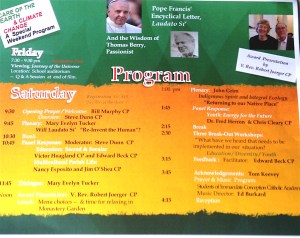
This weekend we had a program at our monastery in Jamaica, New York, entitled Pope Francis’ Encyclical Laudato Si and the Wisdom of Thomas Berry, Passionist. The main presenters were Mary Evelyn Tucker and John Grim, senior lecturers and research scholars at Yale University.

The program began Friday evening with the award-winning film “Journey of the Universe” produced by Tucker and Grim along with Brian Swimme, which brilliantly portrays the story of our universe as science today explains it. On Saturday Mary Evelyn and John lectured on the pope’s encyclical, the influence of Thomas Berry and the contribution of native peoples to the critical question of the environment. I was among the commentators responding to their presentations:

I was one of Fr. Thomas Berry’s first students. It was at Holy Cross Preparatory Seminary in Dunkirk, NY in 1950. It’s usually not noted in biographical material about him, but Tom taught history to seminarians that year and I was in his class.

I remember the first day he came into class with a stack of booklets in his hands. “We have to know what’s going on today in the world,” he said, “and so we’re going to study The Communist Manifesto.”

Now remember, this was 1950. Senator Joe McCarthy had begun a witch-hunt to root out Communist sympathizers and I think The Communist Manifesto was on the church’s list of forbidden books. We studied it.

Yet, Tom never mentioned Joe Mc Carthy or the threats of a Communist takeover in Europe or what was happening then in China. No, he was interested in where the Communist Manifesto came from. Beyond Karl Marx and Lenin, he traced it back to the Jewish prophets and their demands for justice for the poor and human rights. The long view of history was what interested him.

After the Communist Manifesto, we studied St. Augustine’s City of God. Two loves are building two cities, Augustine said. Again, Tom didn’t dwell much on the historical events used by Augustine to illustrate his theory of history. It was the overall dynamic of the two loves in conflict over time that interested him.

From Augustine, we studied Christopher Dawson and his book The Making of Europe. Dawson, one of the 20th century’s “meta-historians,” wasn’t interested only in Europe; he was interested in the whole panorama of civilizations that came before it. That was Tom’s interest too.

As far as I remember, Tom didn’t speak of the universe and its evolution, his focus in later years, yet you could see him heading that way. He had a mind for the long view of things.

Pope Francis in Laudato Si also has a mind for the long view of things, it seems. The pope doesn’t quote from The Communist Manifesto, but he insists, more strongly than the manifesto, on the rights of the poor, to which he joins a strong insistence on the rights of the earth.

Can we also hear echoes of Augustine’s City of God in Laudato Si? I think so. The pope speaks of two loves in conflict. There’s the love that builds the city of man. How describe it today? How about blind consumerism; we love things too much. We love our vision of material progress too much. We love our technology too much. We love our control over the earth too much. We love ourselves too much. The result is “global indifference” to an environment falling apart. (Laudato Si, 9,14)

Opposing that love is a love the pope sees in Francis of Assisi, “who was particularly concerned for God’s creation, for the poor and the outcast…he would call all creatures, no matter how small, by the name of ‘brother’ or ‘sister’… If we approach nature and the environment without this openness to awe and wonder, if we no longer speak the language of fraternity and beauty in our relationship with the world, our attitude will be that of masters, consumers, ruthless exploiters, unable to set limits on their immediate needs.” (LS, 13)

Berry, like the pope in Laudato Si, accepted science’s view of our environment, yet also like the pope he distanced himself from a major trait of the era of the Enlightenment which unfortunately causes us in the western world “to see ourselves as lords and masters of our environment, entitled to plunder her at will.” (LS, 2)

Science teaches us a lot about our environment and its perilous condition today, but knowledge is one thing and love is another. Two loves are at work. Love doesn’t always follow what we know, especially if our hearts are fixed on something else. Love is hard to change.

I heard the preachers and teachers and ordinary folk in the workshops that followed our workshop presentations bemoan the poor reception the pope’s encyclical has received so far. Why isn’t the environment a critical issue in our parishes, in the media and in the political world? Why aren’t we undergoing what the pope calls “an ecological conversion?”

There are many reasons, I suppose, but one thing seems sure. It’s not going to happen overnight through some quick fix. We need to get ready for the long haul. And what does that mean? We need wise teachers and leaders to guide us, like Thomas Berry and Pope Francis.

“The present time is not a time for desperation, but for hopeful activity.” Thomas Berry, CP

Victor Hoagland.CP


Bread and Wine

photo

The German theologian Romano Guardini years ago recommended in a little book “Sacred Signs” that we let the signs and the words of the liturgy guide our prayer. He was a key figure in initiating recent liturgical reforms in the Catholic Church, which made the signs and prayers of the liturgy better able to communicate the mysteries we celebrate.

I suspect, though, that in our liturgical prayer today the words of the liturgy–the scripture readings and the homily–get more of our attention than the signs.

Maybe we need to pay more attention to signs like bread and wine. They’re sacred signs we can take for granted.

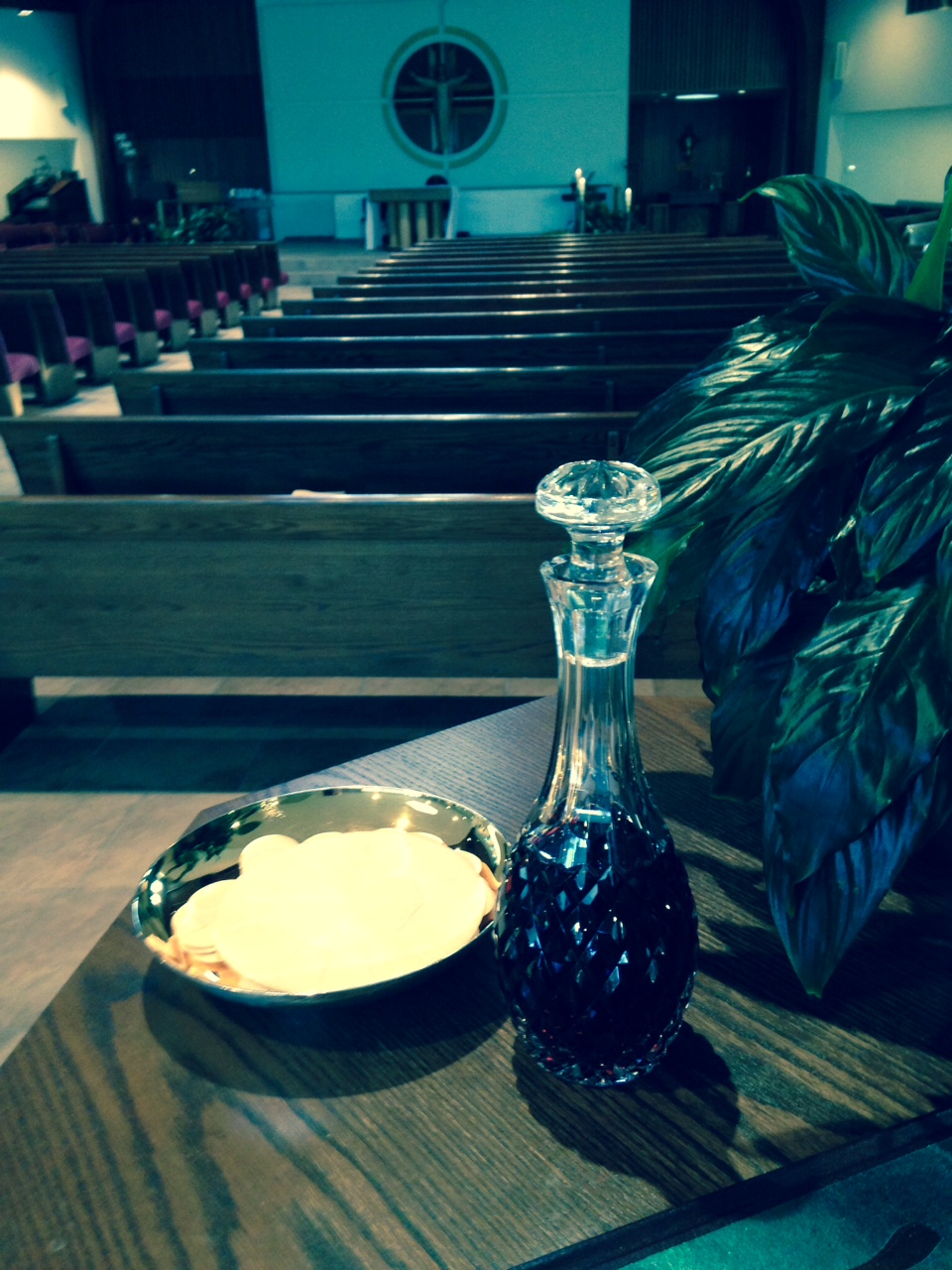
In our prayer over the bread at Mass we say: “Blessed are you, Lord God of all creation, for through your goodness we received the bread we offer you, fruit of the earth and work of human hands, it will become for us the bread of life.” The bread we offer is the fruit of the earth and work of human hands. It’s a sign of all creation, of everything that the “God of all creation” gives us, of everything our hands have fashioned.

“The word bread stands for everything,” Augustine said in one of his commentaries on the Lord’s Prayer. (Epistle to Proba) Early commentators like Tertullian, Cyprian and Origen wrestled with that petition, “Give us this day our daily bread.” Does it mean just the food we eat, or does it mean the wisdom we need? Is Jesus Christ our daily bread? I like Augustine’s explanation because it’s so open-ended.

Scientists say that our universe came into existence about 15 billion years ago. About 3.5 billion years ago life began on our planet. Bread and wine represent that universe; they’re brought to the altar to tell its story.

About 200,000 years ago human life emerged on our planet. 200,000 years of human life are represented in the bread and wine, and our lives are part of the human story represented in bread and wine.

We believe that God created our world and it’s good, according to the Book of Genesis. There’s a plan for this universe, a plan conceived in God’s wisdom and love. In its opening chapters, Genesis poetically describes the beginning of our universe, but then turns quickly to the journey of the human family from its beginnings .

God’s plan, however, involves, not just the human family, but also the universe itself. All creation is waiting for the kingdom of God to be revealed. The bread and wine are signs of it.

Certainly human beings have an important role in the coming of God’s kingdom, as the incarnation of Jesus Christ makes clear. We’re not slaves, cogs in the wheel, as life grinds on. We represent God here in the universe and have to exercise a godlike care of this world. Each of us has a part to play that God’s kingdom come. We share in the promise.

We know too that the mystery of evil is at work in our world, a mystery also represented in the bread and wine. When Jesus took bread into his hands at the Last Supper, he saw a sinful world ready to put him to death, but he still took the bread in his hands. His blood would be poured out, but he still took the chalice to drink from it.

How magnificent is his response. He takes all created reality, all human existence, the goodness and evil of life in his hands, embracing them all with God’s love and care. From his hands he gives them to us, blessed by his presence.

“This is my body.” “This is my blood.” Incarnate in this great universe he gives life to it and to us.

In communion, Jesus gives himself to us in bread and wine, the signs of the world in which we live. We’re to live in that great world and have a role in it to fulfill. The Word made flesh is our bread of life, our food and drink, who gives wisdom and power to us.

Father Thomas Berry, a Passionist priest who taught me long ago, had a passionate love of the universe and a concern that the universe story enrich our way of looking at life. In one of his writings he saw the universe story enriching our understanding of the sacraments. It does.

St. Gabriels, Toronto

I’m spending a few days in Toronto with our Canadian Passionists, who minister at St. Gabriel Church, a new church built in 2006 which reflects the eco-theology of Fr. Thomas Berry, a Passionist who died a few years ago. He believed we need to foster a life enhancing relationship with the earth and the whole cosmos.

The church is located in a booming area along Sheppard Avenue in North York where high-rise condos and a new subway line are recent additions to this growing prosperous Canadian city. It’s a showplace for human technology and building skills. What better place for a  reminder of things beyond the human?

The church and its surroundings are almost swallowed up by the great buildings around it; a modest sign along busy Sheppard Avenus beckons you into St. Gabriels.

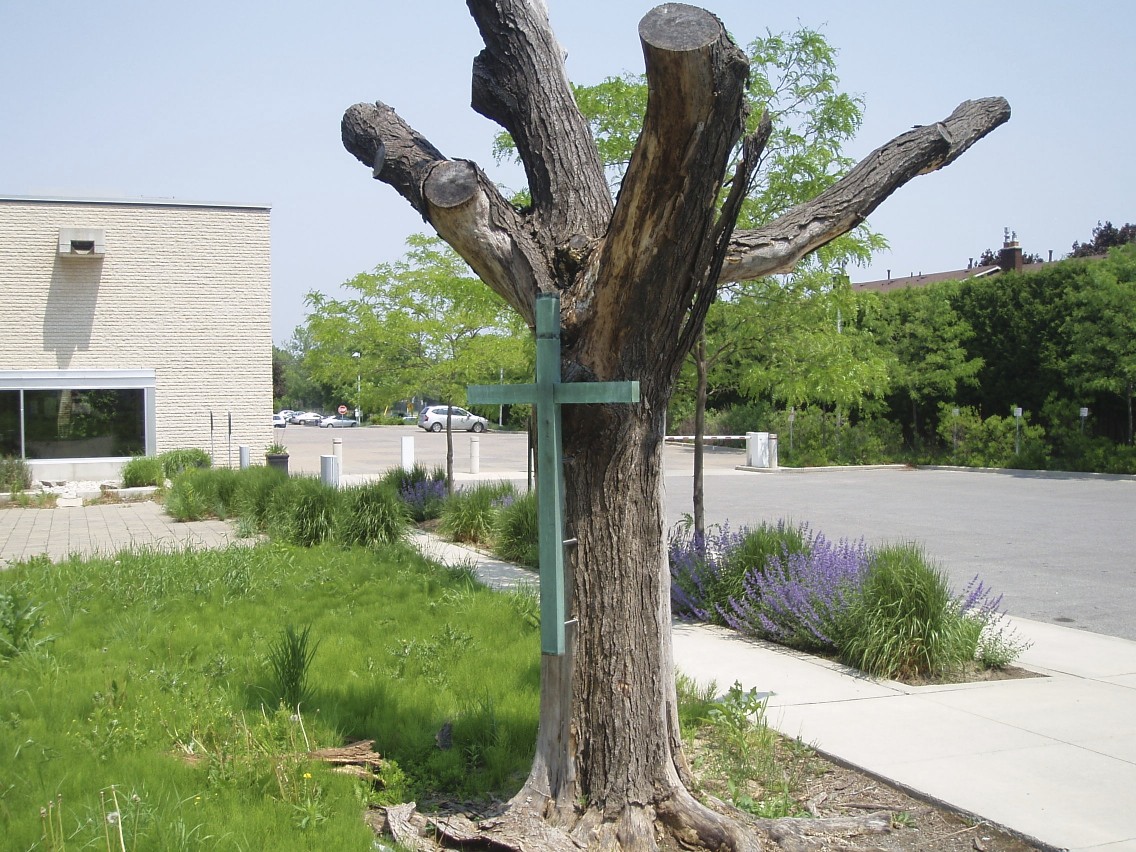
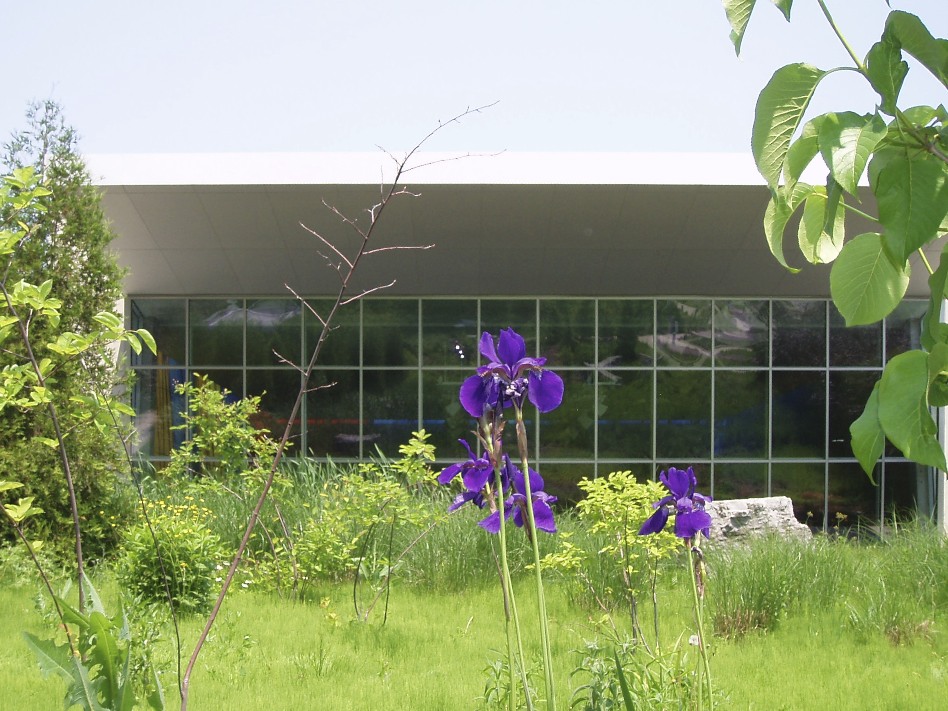
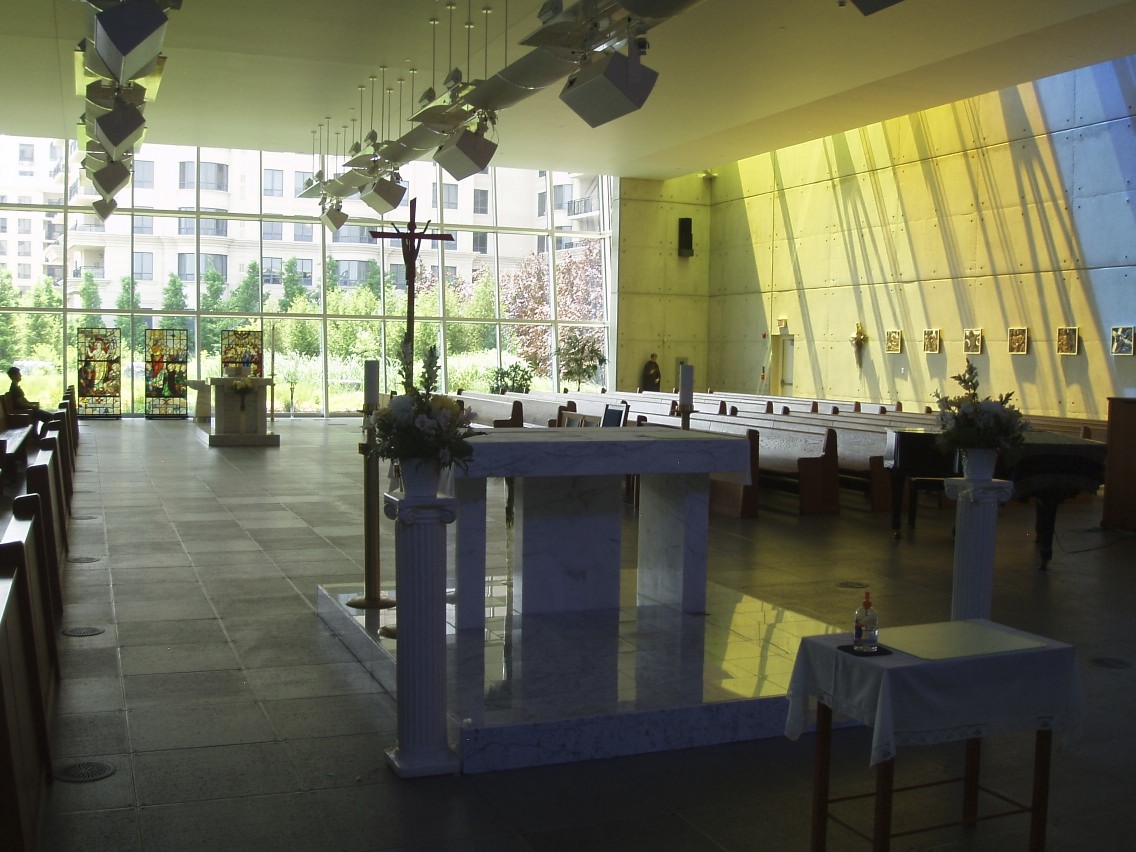
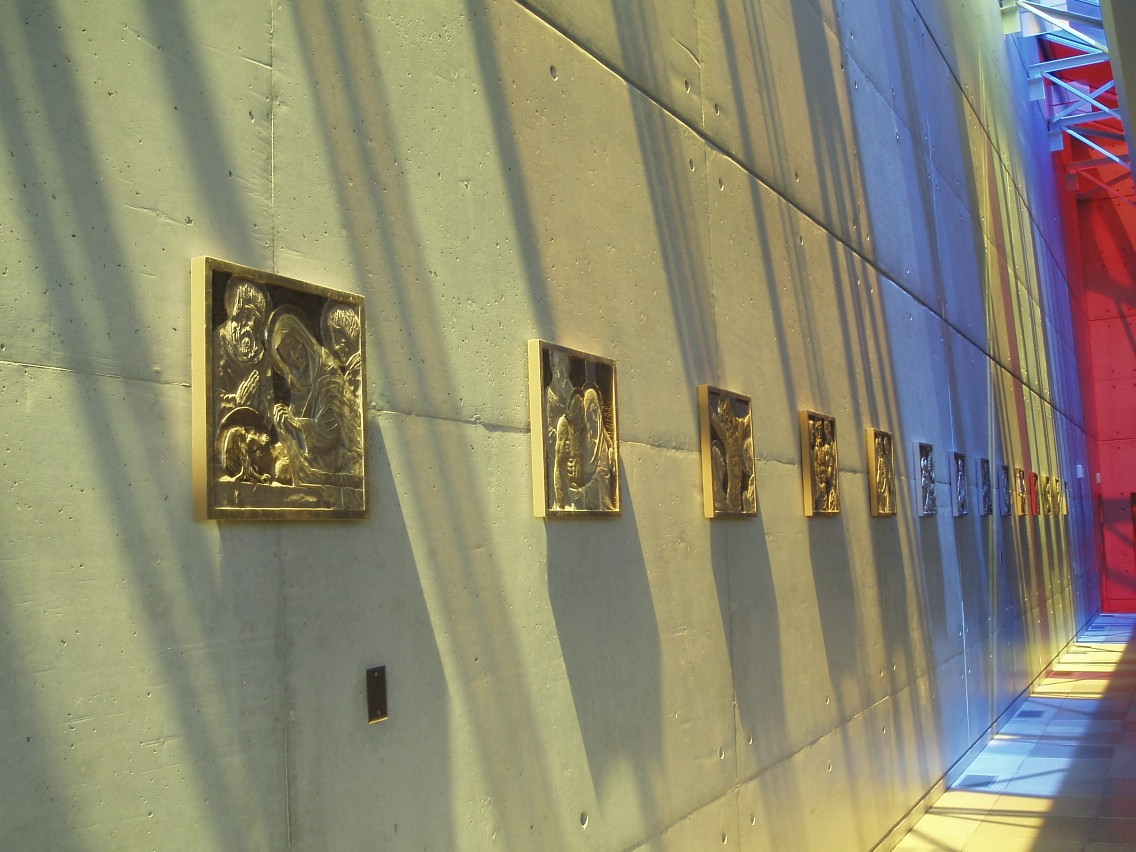
It’s not a church you would expect. No steeple skyward, no shrines of saints outside. A solitary statue of Christ stands on the roadway toward it. The entire south facade of the church is clear glass welcoming sunlight into the worship space within and a garden where the story of creation is retold from its beginning. Rocks, flowers, trees and grasses face the glass wall that dominates the new building,  A large tree trunk cut from a land development nearby stands at the edge of the outdoor garden, signed with a green cross. It signifies the Passion of the Earth, which the human community, recklessly exploiting the earth’s resources, has inflicted on the natural world.

Looming beyond the garden are the tall buildings of our modern human world.

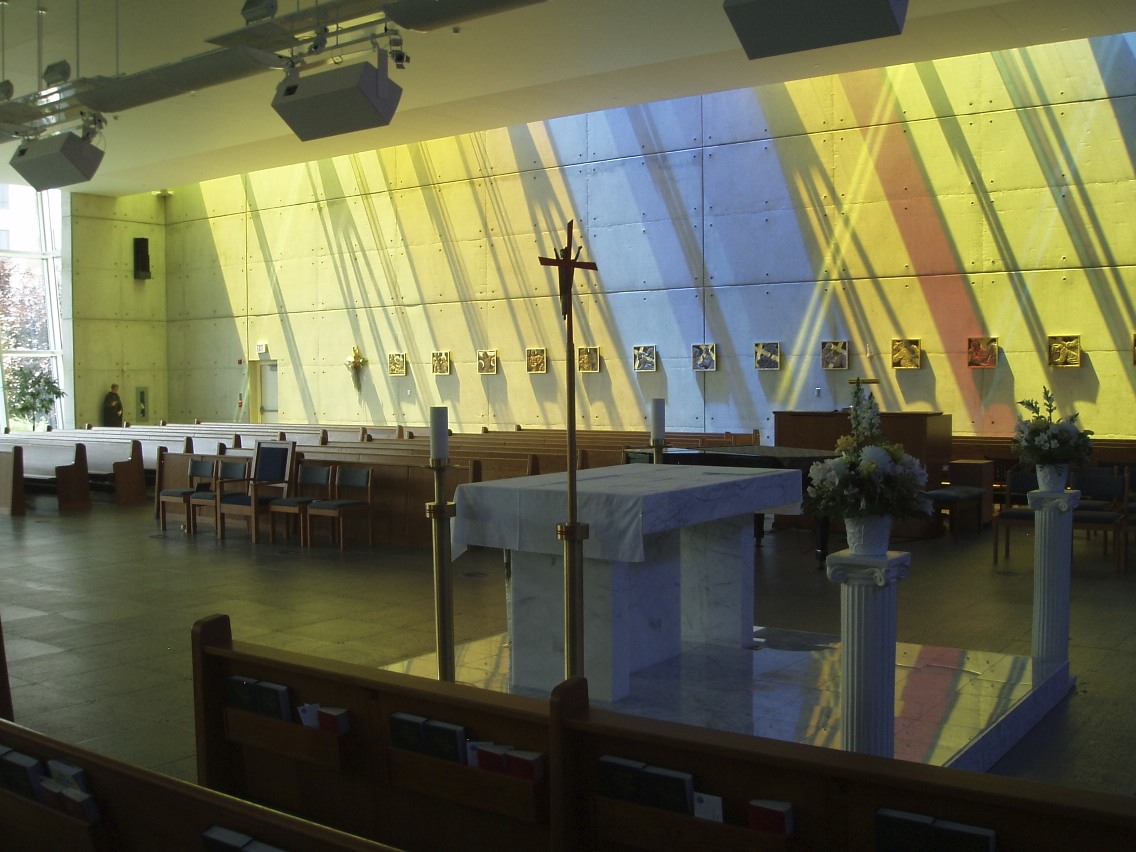
Sunlight through its expansive southern window and upper windows plays through the interior space of the church by day and over the seasons. This is not a church cut off from the world outside but in harmony with it.

The church pews, salvaged from an earlier church, are arranged antiphonally facing the baptismal fount near the southern glass wall, the ambo where the gospel is proclaimed, and the altar where the Eucharist is celebrated. A chapel where the Blessed Sacrament is reserved is situated in the northern part of the worship space. The Word who made the universe; the Savior sent to redeem us is present here in this church.

The baptismal fount, also from the earlier church, has water flowing from it; a rainspout on the outside southern wall delivers rainwater to a simple river bed below. The two remind us of our dependence on water as well as light.

The church seats 750 people; the present parish membership comes from all the continents and many nations. A parallel narthex provides a meeting place for these “living stones” who form the church today.

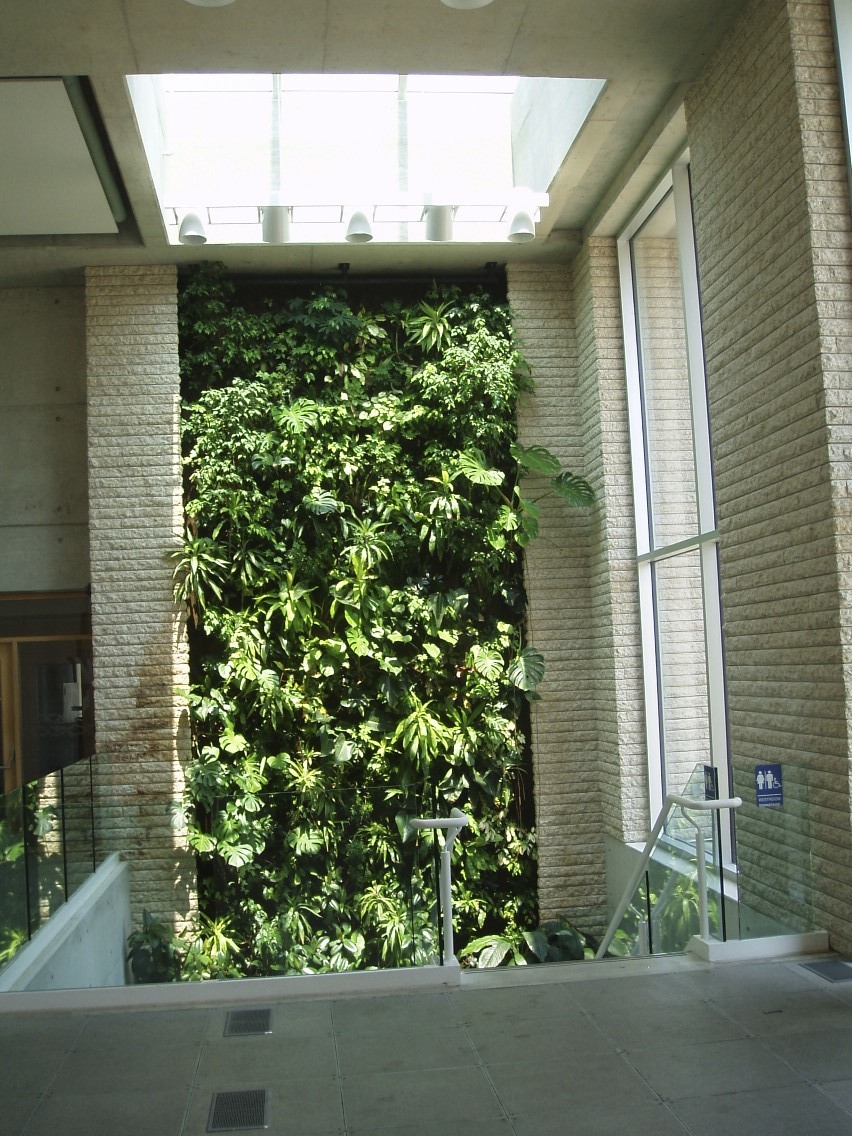
The church was built to be energy efficient. Most of its parking area is located beneath the church. Parishioners ascending from the underground parking face a large bank of plants, which serve to purify the air as well as remind them of the importance of the rain forests for the earth.

”Imaginative and creative,” Aloysius Cardinal Ambrozic, Archbishop of Toronto, Canada, called the new Passionist church of St. Gabriel, when he dedicated it on Sunday, November 19, 2006. The Jesuit magazine AMERICA featured the church in a recent issue on church architecture.

The parish website is http://stgabrielsparish.ca/

A Youtube video is here: http://www.youtube.com/watch?v=GasOYiK1l68

Thomas Berry, CP, died June 1,2009

The Passionists will remember him at a liturgy at Immaculate Conception Monastery in Jamaica, New York on Saturday, June 6, 2009. You can find information about this extraordinary priest and scholar at http://www.thepassionists.org

But here are two wonderful videos that captures his contribution as a thinker and scholar: