Tag Archives: prayer

Friday after Ash Wednesday

Lent 1
Mt 9, 14-15

The 30 or so years that Jesus Christ lived on earth are brief on the timeline of human history. Hardly visible at all. But we believe Jesus, “in the fullness of time,” changed the way we look at life and time itself in those years. He’s God’s revelation to us.

His first disciples saw him, listened to his words, followed him and told us about him. They tell us very little about his birth and early years. The part of his life they tell us most about is the story of his death and resurrection. It’s the longest story in the gospels and we believe it’s the key to understandi the One “who is, who was and is to come.”

How can we understand that story best? Shall we study it academically, maybe read a popular book like Bill O”Reilly’s “Killing Jesus”? Shall we ask historians or scholars what it means?

My community, the Passionists, always begins Lent by celebrating on the day before Ash Wednesday the Feast of the Prayer of Jesus in the Garden. The feast points out the best way to share in the mystery of Jesus’ death and resurrection– enter the Garden of Gethsemane and pray there with Jesus.

Gethsemane is more than a place, it’s an experience humanity shares. Jesus came to the garden in his humanity and faced there the mystery of death, the fears and helplessness it brings, the questions about God’s care, God’s love and God’s will that humanity faces.

He shares our humanity. We enter the garden–not to fall asleep or simply observe Jesus at prayer–but to face death as he faced it, to face our fears and questions about God’s will and care that he faced then, and to draw divine support as he did.

In his spiritual diary, St. Paul of the Cross said that sharing the humanity of Christ leads to sharing his divinity; meditating on his death and resurrection leads us to new life.

“I also had knowledge of the soul united in a bond of love to the Sacred
Humanity and, at the same time, dissolved and raised to a deep, conscious, and
felt knowledge of the Divinity. For since Jesus is both God and Man, the soul
cannot be united in love to the Sacred Humanity without being at the same time
dissolved and brought to a deep, conscious, felt knowledge of the Divinity.” (Diary)

Thank you, Father, for the gift of your Son, Jesus Christ,
the Word who made the universe,
the Savior you sent to redeem us,
who came as one like us
to make us one with you.

We’re Called: 2nd Sunday B

Audio below

We may think our relationship to God is something just between the two of us, but it isn’t. Others help us on our way to God. So, in this Sunday’s gospel John the Baptist tells some of his disciples to follow Jesus and in that same reading, Andrew brings his brother Simon to the Lord. More than we know, we’re led to God by others and we lead others to God too.

We go to God together. Another way of saying it is that we belong to one body, a church. We’re not lonely believers. We know and are called to God together.

Our first reading from the Book of Samuel is about the young boy Samuel whom God has chosen for a special mission among the Israelites. His mother is the first to sense this, and she sends him to the temple where she hopes the priests there will help him understand what his calling is. Parents are the first guides for their children; they know them and they’re their most important teachers.

Young Samuel hears God calling in the night but it’s a very indistinct call; he’s a young boy and he doesn’t know what to make of it. The old priest Eli doesn’t help much at first. He tells the young man there’ s no one calling, go back to sleep.

Finally, the old man recognizes that God’s calling the young boy. You wonder if this isn’t an early example of “the generation gap,’ someone from an older generation not understanding someone from a younger generation? The story is not just about a young boy finding what God wants him to do; it’s also about someone from an older generation helping him find out. What was the old priest thinking? Was he too concerned with himself perhaps and couldn’t be bothered with this young boy? Or had he lost hope in the youth of his day?

After awhile, the old priest gives Samuel the right advice: “Go to sleep, and if you are called say ‘Speak, Lord, your servant is listening.’”

Very wise advice. The old priest is telling him, first of all, believe that God speaks to you. Believe, even in the night. Listen humbly like a servant. Don’t let your own ideas intrude. Be a listener; hear what God wants to tell you. Pray.

We published a little prayer some years ago “Be With Me Today, O Lord” asking for God’s guidance each day. There’s an elderly man from California who calls me every few months asking for copies of the prayer which he distributes in schools and churches in his area. I’m reminded of him and the prayer as we listen to the story of Samuel.

Be with me today, O Lord,

May all I do today begin with you, O Lord.

Plant dreams and hopes within my soul, revive my tired spirit, be with me today.

May all I do today continue with your help, O Lord.

Be at my side and walk with me. Be my support today.

May all I do today reach far and wide, O Lord.

My thoughts, my work, my life: Make them blessings for your kingdom;

Let them go beyond today.

Today is new, unlike any other day, for God makes each day different.

Today God’s everyday grace falls on my soul like abundant seed,

Though I may hardly see it.

Today is one of those days Jesus promised to be with me, a companion on my journey.

And my life today, if I trust him, has consequences.

My life has a purpose…

“ I have a mission…I am a link in a chain, a bond of connection between persons. God has not created me for naught…Therefore I will trust him. What ever, where ever I am, I can never be thrown away. God does nothing in vain. He knows what he is about.” (John Henry Newman)

20th Sunday A: Scraps from the Table

 For an audio of the homily:

My mother (God rest her) used to sneak food under the table regularly to her beloved cocker spaniel, Buffy. Sometimes, when I visited home after becoming a priest I’d say to her–in a losing attempt to keep Buffy’s weight down– “Mom, you shouldn’t feed that dog scraps from the table.”

She’d reply, “You don’t live here. Besides, I’m not feeding him scraps from the table. He’s eating the same food we eat.”

I could never understand the logic of her answer, but I gradually gave up trying to stop her. And I remember her every time I hear this gospel,

Jews and gentiles didn’t mix in Jesus’ time and as an observant Jew from Nazareth, Jesus usually avoided eating with them and entering their homes. After his baptism in the Jordan he saw himself sent first “to the lost sheep of the house of Israel.” But then, gentiles like the Roman centurion from Capernaum and this Canaanite woman from Tyre and Sidon came to him.

Matthew’s gospel says the woman was “calling out” to him from a distance, asking him to cure her daughter, but Jesus doesn’t answer. She keeps calling out in spite of his silence. “Send her away,” his disciples say, but the woman persists and even draws nearer.

“It’s not right to take the food of children and throw it to the dogs,” Jesus finally says. But the woman’s answer has a logic of its own. “Please Lord, even the dogs eat the scraps that come from their master’s table.” “ Let it be done for you as you wish,” he says and God fed her from the table.

Jesus’ answer to the woman sounds hard, doesn’t it? But sometimes doesn’t the silence of God seem just like that? A daughter’s sick, a wife is dying of cancer, a child is taken away so young. Is the woman calling out to Jesus an example that persistent prayer is always heard, even if God seems silent, even when God seems not to care?

The Gift of Prayer


Do you pray? Often or just occasionally? Is prayer important to you?

These are essential questions for our life of faith. Like breath in the human body, prayer makes our spirits live. Without it, they die. Prayer helps us live and grow spiritually.

Why pray?

     Prayer is God’s Gift

Prayer is a gift of God. “Gift” is a good word to describe prayer, because praying is not something we can do ourselves. ” We do not know how to pray as we ought,” scripture says. (Romans 8,26) God gives this gift to us.

Why? Because God loves us and wants to draw near to us as a friend. How strange that sounds! God all-sufficient, all-powerful, all-knowing, wants to draw close to be our friend. God calls us his friends and looks for our company and hears our prayer. What seems unbelievable is true.

At the same time, prayer fulfills a desire we have as human beings to know God. We’re made in God’s image, and something in our being thirsts for the One who made us. It’s a thirst described in the psalms:

“O God, you are my God, for you I long. For you my soul is thirsting. Like a dry weary land without water… so my soul longs for you, my God.”

We can’t be satisfied unless we are draw near to God. “Our hearts are restless,” St. Augustine says, “until they rest in you.” When we pray, we rest in God.

God gives that gift generously, without considering our worthiness or unworthiness. Sinners as well as saints can pray. People of every religious tradition, or no religious tradition at all, receive the gift. It’s given to every human being. We’re all called to pray.

(cf. The Catholic Catechism: The Universal Call to Prayer. 2566-2567)

All are called to pray

“All” are called to pray. Surprisingly, some who think they are unworthy or ungifted may pray best and be graciously heard. That’s what Jesus taught in his parable about the Pharisee and the Publican who together went up to the temple to pray. The Publican, an outsider who thought himself unworthy of approaching God in prayer, was found more pleasing by God than the Pharisee, a professionally religious person, who seemed to pray so effortlessly. (Luke 18,9-14)

Prayer is God’s gift to the strong and the weak, to the smallest child and frailest of the old. It’s given to those who say, ” I’m not really religious; prayer is beyond me.” It’s given to you, no matter who you are.

That’s not to say we can’t refuse to pray or neglect it. Like any gift, prayer has to be received and, as we know, we can throw gifts away. “If you knew the gift of God,” Jesus said to the Samaritan woman at the well. A Gift was there before her eyes. At first she was blind to it, then she enthusiastically received it.

Don’t go through life leaving the gift of prayer unused. Thankfully, it’s always there to be taken up!

In the prayers of the church, you often find an acknowledgment that prayer is God’s gift and a request that God give and strengthen that gift in us. At the beginning of her daily prayers, the liturgy of the hours, the church prays two verses of the psalms.

O Lord, open my lips
and my mouth shall proclaim your praise.

O God, come to my assistance.
O Lord, make haste to help me.

Simple, truthful words. I cannot open my lips in prayer unless God give me the gift. O God, come and assist me; help me approach you.

God graciously gives us this beautiful gift, hastening to help us open our lips and our hearts. Delighting to give us the gift of prayer, God welcomes us into his presence to share his life with ours, his love with our love.

Prayer’s God’s precious gift; cherish it always.


The Sign of the Cross

The parable of the mustard seed tells us to watch for small things. Small gestures, small acts of kindness, small prayers. Life comes from small things.

I was thinking of the Sign of the Cross, a small prayer.

We pray as Jesus did. How did he pray? He prayed from the heart, yet Jesus used words and signs– sometimes even cries– to pray. Like him, we also use words and signs in prayer.

One prayer we pray frequently is the Sign of the Cross.

The Sign of the Cross goes back to the earliest days of Christianity. It’s made on us at baptism, when we become members of the church and it’s the last sign made over us as we pass to our future life. The Sign of the Cross is used in liturgical prayer and celebrating the sacraments. We begin and end our prayers with it.

When we “bless ourselves” we trace with our hand the figure of the cross on our forehead, our heart, our shoulders, and say:

In the name of the Father,
and of the Son, and of the Holy Spirit. 
Amen.

The Sign of the Cross is a prayer of blessing because it symbolizes God embracing us and blessing us. For the Jews God is always One who blesses.  God blessed Noah and saved the world from the flood. God blessed Abraham and Sara with blessings more than the stars in the sky. God blessed the Jewish people, redeeming them from the slavery of Egypt. Life itself and all creation are blessings from God. And God’s blessings, beyond measure, continue, always and everywhere.

Since God blesses us continuously, we bless God in return. “I will bless the Lord at all times,” the psalmist says.

As Christians we bless God who is Father, Son and Holy Spirit.  As Father, God offers us the blessings of creation and also gives us his Son. “Blessed be God, the Father of our Lord Jesus Christ, who has bestowed on us in Christ every spiritual blessing.” ( Ephesians1,3 )  Jesus Christ is our God, our Friend, our Brother, our Savior. With the Father he sends the Holy Spirit  “to complete his work on earth and bring us the fullness of grace.”

When we bless ourselves, we remember God “from whom all blessings flow,” Father, Son and Holy Spirit.

Blessed by the Cross

As Christians we believe the Cross of Jesus Christ is the greatest blessing given to us. Why is it our greatest blessing? Because God expresses his love for us above all in Jesus Christ who died on the Cross for us and rose again.  The Sign of the Cross is a reminder that Jesus’ love never ends. His blessings are ours forever.

We express our daily relationship to God in this simple prayer. We have God’s blessings each day, in good times and bad, in danger and sorrow.  God’s blessings and love are always there. Before we take one step, we receive blessings from his hands.


2nd Sunday of Lent

Lent 1
en español
for Swahili
Matthew 17,1-9

The Transfiguration of Jesus takes place at the midpoint of Matthew’s gospel, after Jesus announces to his disciples that “he must go to Jerusalem and undergo great suffering at the hands of the elders and chief priests and scribes, and be killed, and on the third day be raised.”

Take up your cross and follow me, he tells his disciples.
“God forbid, Lord,” says Peter. who doesn’t understand this at all. We find it hard to understand too.

Six days later, Jesus takes Peter, James and John up a mountain where they experience him glorified, surrounded by Moses and Elijah. It’s a transitory experience, even though Peter, awed by the vision, asks to prolong it. After falling to the ground, the disciples looked up and “saw no one except Jesus himself alone.” But the experience strengthens them for the journey they’re called to make.

“The main purpose of the transfiguration was to remove the scandal of the cross from the hearts of Christ’s disciples,” says Pope Leo the Great. God doesn’t want us to be weighed down by suffering.

So, like Peter, James and John, Jesus takes us up a mountain throughout our lives to strengthen us as we share in his cross. What mountain do we ascend? St. Paul of the Cross and other spiritual guides say it’s the mountain of prayer, where we experience intimations of God’s glory, brief encounters, transfigurations of a lesser kind. We’re strengthened as we pray.

“Don’t think that the trials and crosses you experience turn you to go another way. Trials don’t indicate you’re straying from God. We know it’s just the opposite from the scriptures we read and the saints we honor. The way to go is the way our Savior gives us grace to go. Saint Bernard wasn’t the first to know this truth when he said: ‘The cross is the way to life, the way to glory, the way to the Kingdom, and the way to the inhabited City.’”

(Letter 1194)

Lord Jesus,
lead me to that mountain place
of stronger light and surer sound
where I may see your glory.
Strengthen me through prayer.

Light and truth,
bright as blinding snow,
whom Peter, James and John saw,
“Bring me to your holy mountain,
to your dwelling place.”
Spanish

en español
2do domingo de cuaresma (Año A)
Mateo 17.1-9

La Transfiguración de Jesús ocurre en el medio del Evangelio de Mateo, después de Jesús haber anunciado a sus discípulos que ” él tendría que ir a Jerusalén, y pasar grandes sufrimientos bajo las manos de los ancianos, los jefes de los sacerdotes y los maestros de la ley, ser matado, y al tercer día resucitar.”

Carguen con su cruz y síganme, les dice a sus apóstoles. ” Diós no lo quiera, Señor!” le dice Pedro, que no entiende esto en lo absoluto. Nosotros lo encontramos muy difícil de entender también.

Seis días después Jesús toma a Pedro, a Santiago y a Juán a una montaña donde ellos tienen la experiencia de verlo a él glorificado, rodeado por Moisés y Elías. Esta parece ser una experiencia transitoria; después de postrarse en la tierra, ellos levantaron la cabeza y ” ya no vieron a nadie, sino a Jesús solo.” Pero esta experiencia los fortalece para el resto de la jornada que les espera.

“El propósito principal de la transfiguración de Jesús es de remover el escándolo de la cruz de los corazones de los discípulos de Cristo,” dice el Papa Leo el Grande. Diós no quiere que nosotros seamos oprimidos por el sufrimiento.

Así, como a Pedro, Santiago y Juán, Jesús nos lleva arriba a una montaña durante todas nuestras vidas mientras compartimos su cruz. ¿Qué montaña es la que ascendemos ? San Pablo de la Cruz y otros guías espirituales dicen que es la montaña de la oración, donde experimentamos intimaciones de la gloria de Diós, encuentros breves, y transfiguraciones pequeñas que nos fortalecen.

Nos dice San Pablo de la Cruz ; ” No créas que las pruebas y las cruces que experimentas te viran hacia otro camino. Las pruebas no son indicaciones de que te estás descarriando de Diós. Nosotros sabemos que lo opuesto es cierto basado en las Escrituras que leemos y los santos que veneramos. La ruta que tomar es el camino por donde Diós nos da la gracia para ir. San Bernardo no fue el primero en reconocer esta verdad cuando exclamó; ‘ La cruz es el camino a la vida, el camino a la gloria, el camino al Reino, y el camino a la Ciudad Habitada.’ ” (Carta 1194)

Señor Jesús,
guíame hacia ese lugar montañoso
de fuerte luz y sonido claro
donde pueda ver tu gloria.
Fortaléceme a través de la oración.

Luz y verdad, brillante como la nieve deslumbradora,
a quién Pedro, Santiago y Juán vieron.
” Tráeme a tu monte sagrado ,
al lugar de tu morada.”
Swahili
Lent

Tafakari ya jumapili ya pili
Kugeuka sura kwa Yesu kulitokea katika kipindi muhimu cha Enjili ya Mathayo, baada ya Yesu kuwatangazia wafuasi wake kwamba “atapaswa kwenda Yerusalem na kupitia mateso makali katika mikono ya wazee wa kanisa, makuhani wakuu na mafarisayo, atauwa na siku ya tatu atafufuka.”

Chukua msalaba wako na unifuate, anawaambia wafuasi wake. “Mungu apishe mbali, Bwana, “alisema Peter, ambae hakulielewa hili hata kidogo. Inakuwa vigumu kwetu pia kulielewa.

Siku sita baadae, Yesu akamchukua Petro, Yacobo na Yohana kwenye mlima ambapo waliuona utukufu wa Yesu, kando yake wakiwepo Musa na Elia. Ilionekana kuwa kipindi cha mpito ambacho wasingerefusha zaidi. Baada ya kuanguka chini, waliinua macho, na hawakumuona yeyote ila Yesu peke yake.” Hali hiyo iliwaimarisha kwa kipindi cha safari yote waliyoifanya.

Lengo kuu la kugeuka sura ilikuwa ni kuondoa uzushi juu ya msalaba katika mioyo ya wafuasi wa Kristo,” Anasema Papa Leo Mkuu.

Ni katika mlima gani yesu anatuchukua sisi ili kutuimarisha katika safari ya kuibeba misalaba yetu? Mt. Paulo Wa Msalaba pamoja na viongozi wengine wa kiroho wanasema ni mlima wa sala ambapo tunapata ukamilifu wa utukufu wa Mungu, kwa kifupi tunakutana na utukufu wa Mungu.

Ann and Her Daughter Mary

ann
A few years ago on pilgrimage to Jerusalem I visited the western wall that once supported the ancient Jewish temple where Jesus worshipped and taught. He announced that he would replace this temple through the mysteries of his death and resurrection. Some years later, in AD 70, the temple was destroyed.

The day I visited this holy place, Jewish mothers and their daughters were fervently praying at one section of the battered wall, all that’s left of the glorious buildings that once filled pilgrims with awe and pride. I wondered what they were praying for at this majestic ruin.

Tradition says that the parents of Mary, Ann and Joachim, whose feast we celebrate today, were closely connected to the temple of Jerusalem and may have lived near it or in a town close by. Joachim had a role in providing for the temple, tradition says. Like the Jewish women I saw, Ann and her daughter Mary must have prayed often in this holy place.

What did they pray for; what did they believe? God is here, the Prophet Isaiah said; all the peoples of the earth will stream toward this place when the Messiah comes. Pray even when dreams seem gone. God raises up the poorest to do great things. God’s kingdom will come, no matter how dim the present seems. God works even in ruins.

Ann was old when she conceived Mary, tradition says. Too old to conceive. “Nothing is impossible with God,” the angel said to her daughter when she conceived her Son.

We ask the grace to believe and pray as these two women did. I can’t help thinking that the Jewish mothers and their daughters I saw that day praying at the wall are their descendants too.

The Tax-Collector’s Prayer

In Luke’s gospel Jesus often sides with those who are so let down by life that they hardly dream of anything better– tax collectors, widows, sinners like the prodigal son. He was criticized frequently by others for associating with people like that, so he must have done it often enough.
The tax collector in the parable we read today, who’s praying in the back of the temple, is an example. Luke recalls earlier in his gospel that Jesus sat down at table with Matthew and some of his tax collector friends in Capernaum. Was he telling their story in this parable?
Staying at a distance, eyes down, the tax collector says only a few words:“O God, be merciful to me a sinner.”
The Pharisee’s prayer is so different, so full of himself; he seems to ask only for applause and approval. The tax collector asks only for mercy.
His prayer is heard so shouldn’t we make it our own? Tax-collectors,  widows and sinners stand closest to where all humanity stands. We all need God’s mercy. We come to God empty-handed.
“O God come to my assistance. O Lord make haste to help me.”

“O God, be merciful to me, a sinner.”

The “Real Reason” the Pope’s Resigning

If we see the pope’s resignation only through the eyes of CNN or The New York Times we’ll miss so much. The pope himself chose to explain his action to the crowd in St. Peter’s square today in the context of the gospel story of the Transfiguration of Jesus and his  journey to Jerusalem.

He saw his own decision as a choice to ascend the mountain of prayer, which is not a way of escaping life, but of understanding it. He wants to serve the church, not  leave it, and so he embraces a life of prayer.

“We can draw a very important lesson from meditating on this passage of the Gospel. First, the primacy of prayer, without which all the work of the apostolate and of charity is reduced to activism. In Lent we learn to give proper time to prayer, both personal and communal, which gives breath to our spiritual life. In addition, to pray is not to isolate oneself from the world and its contradictions, as Peter wanted on Tabor, instead prayer leads us back to the path, to action. “The Christian life – I wrote in my Message for Lent – consists in continuously scaling the mountain to meet God and then coming back down, bearing the love and strength drawn from him, so as to serve our brothers and sisters with God’s own love “(n. 3).

Luke’s account of the Transfiguration sees this mystery pointing to the primacy of prayer in the life of Jesus and his disciples. Why not take the pope at his word? He intends to pray.

“Dear brothers and sisters, I feel that this Word of God is particularly directed at me, at this point in my life. The Lord is calling me to “climb the mountain”, to devote myself even more to prayer and meditation. But this does not mean abandoning the Church, indeed, if God is asking me to do this it is so that I can continue to serve the Church with the same dedication and the same love with which I have done thus far, but in a way that is better suited to my age and my strength. Let us invoke the intercession of the Virgin Mary: may she always help us all to follow the Lord Jesus in prayer and works of charity.”

The Weather of God’s Blessings

sower

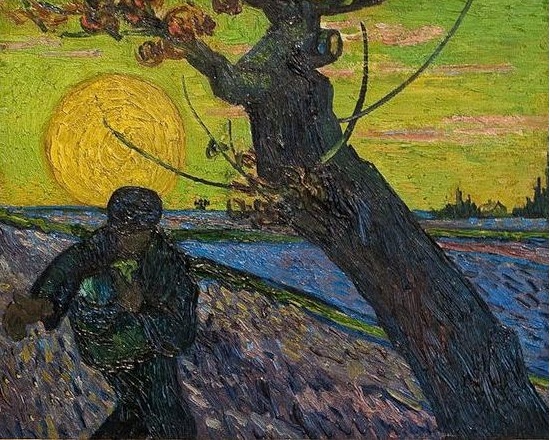
The first reading from today’s Lenten Mass describes God’s blessings in terms of the weather.

“Just as from the heavens

the rain and snow come down, and do not return there

till they have watered the earth,

making it fertile and fruitful,

Giving seed to the one who sows

and bread to the one who eats,

So shall my word be

that goes forth from my mouth;

It shall not return to me void,

but shall do my will,

achieving the end for which I sent it. (Isaiah 55,10)

Can this reading help us understand how God blesses us?  Like rain or snow God’s blessings come, making our lives fruitful. Yes, they will surely come, but how about the times we have to wait, when no rain or snow comes at all?

God’s blessings are like the weather.

Or think of God’s blessings through the Sign of the Cross. We say “we bless ourselves” when we make this sign. Sometimes God’s blessing comes through the cross of glory and we receive blessings never imagined through his tender mercy.

Sometimes his blessings takes another form of his cross; disappointment, suffering, failure, sickness, death. There God’s blessings are mostly hidden and hard to see.

In Matthew’s gospel today Jesus offers us a way of praying. Does this blessing also follow the weather. Prayer is a gift, but it’s a gift like the rain and snow. It’s one of God’s greatest gifts to us, yet sometimes we find it hard to pray while at other times it wells up within us.

The blessings of God are like the weather.