Tag Archives: Passionists

Receiving a Prophet

In today’s Gospel we read about Jesus’ return to “His native place,” and the reception He got from His peers when He began to teach them. They found it hard to take Him seriously, asking,

    “Is he not the carpenter, the son of Mary, and the brother of James and Joseph and Judas  and Simon?  And are not his sisters here with us?” And they took offense at him.  Jesus said  to them, “A prophet is not without honor except in his native place and among his own kin and in his own house.”

    Why such a reaction?  Why were they not proud of their hometown boy?  We’re they jealous of Him? Did they believe that a humble carpenter’s son had no right to teach about the divine?  Were they startled because He no longer acted like a “regular guy”, one of them?

    When I started testifying about my newfound faith at men’s retreats and at prayer groups, some people would come up to me and thank me for helping them in their search for healing, and for God, while others treated me like I was just some upstart who didn’t know anything! Well, I guess one of the lessons of this Gospel is that you just can’t please everybody, especially if they’re your friends and relatives .

    After my conversion, many of them could not believe that I was for real. One of my drinking buddies winked at me and said, ” You gotta be kidding! Common, have fun. You only live once.” Another said, “Hey, don’t turn into a religious fanatic! That’s not the guy I know! What about that temper?”

    A nice cousin of mine said, “You’re dedicating your life to God now that you’re retired? That’s a nice hobby. I guess you gotta do something with your free time.”

     A very intelligent, cynical, clever friend would use her language skills to prove me wrong, and justify her way of thinking and acting towards others.  I was no match for her smart talk. But another fiercely atheist friend synthesized the feelings of all the others:” Don’t come preaching to me! I don’t want to hear anything about God! If you’re my friend,  let’s talk about anything but that!”

    Like Jesus, I was ” amazed at their lack of faith!” I certainly wasn’t able to perform any “mighty deeds” there, except perhaps keep my composure, shake my head, and smile. I really love these persons. I guess the best I can do is show them this, knowing how much greater than mine is the love that our Lord Jesus has for them.

    If they ask me I will tell them about the peace I feel in my heart. Maybe I’ll be able to show them how I have changed, even if a little, perhaps reflect the words of the scholar of mythology, Joseph Campbell: ” Preachers err by trying to talk people into belief, better they reveal the radiance of their own discoveries.”

    My spiritual director, Fr John Powers C.P., once wrote, ” I begin the telling of my tale with the assumption that my story is, in some measure, everyone’s story.”

Orlando Hernandez

The Holy Family


Luke 2,41-52

For most people, Christmas is over– the music’s stopped; Santa Claus is gone from the malls. The decorations are down and put away. It’s over.

But in church Christmas isn’t over. We’re still singing  carols and continue to celebrate as we think  about what it means when we say “our God was made visible.”

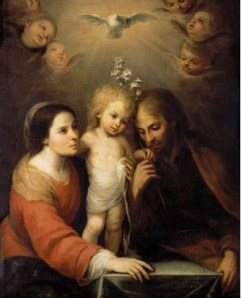
Today’s the feast of the Holy Family. The Word was made flesh, and as the child of Mary and Joseph Jesus was part of a family in the small town of Nazareth in  hills of  Galilee.

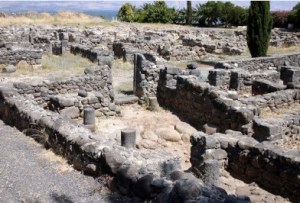
For one thing, families then were extended families or clans, living close together and working side by side. Archeological excavations in Nazareth and Capernaum (pictures below) make that clear. Families worked together in the fields or in  business, they ate together and moved together, as they still do in parts of the Middle East and elsewhere today.

holy familyCapernaumruinsDSC00062

It’s safe to say that nuclear families didn’t exist then. A nuclear family– mother, father and children– is a modern form of family life. Mary, Joseph and the Child Jesus were not all by themselves in a small house in Nazareth. Rather, Jesus was raised in an extended family where  grandfathers and grandmothers, uncles, aunts and cousins lived together and were involved in bringing him up.

That doesn’t take away the part Mary and Joseph played in his upbringing, of course. They weren’t props, standing by while angels brought him up. Some of the apocryphal gospels – early stories about Jesus which the church rejected  – seem to say that.  One  story describes the Child Jesus forming  the figure of a bird from clay, then breathing on it, and instantly it becomes a living bird and flies away. Stories like that presented him exercising  miraculous powers as a child.

The church rejected those stories because they gave a  false picture of Jesus growing up. He “was subject” to Mary and Joseph, the gospel of Luke says. He grew up in their care as an ordinary child would.

Like mothers and fathers everywhere, they saw to his needs, they held him in their arms,  fed him, clothed him,  stayed up at night when he was sick. They taught him his first words,  guided his first steps,  nudged him along this way and that.

They  brought him to church–the synagogue, the temple–as we see in today’s gospel from Luke. They instructed him in his tradition. They taught him to pray,  interpreted events for him,  listened to his questions,  encouraged him over and over. They had their misunderstandings, as today’s gospel  indicates. In fact, they  influenced his life.

Yes, angels were there, but at a distance.  Mary and Joseph and that larger family and village around him raised the Child.

Today’s  feast of the Holy Family takes in the years of Jesus’ childhood and early adult life called his “Hidden Life.” His  years in that nondescript town among those ordinary people were truly hidden, yet were they less important than his Public Life, the few years he taught and did great miracles,  suffered and died and rose from the dead? In those hidden years “he humbled himself.”  A hidden life is important; it’s what mostly characterizes life in a family.

We need to think about family life today, because it’s in trouble.  For one thing, the nuclear family– father, mother, children– is  in trouble. I read some disturbing statistics recently. In every state in our country, families where children have two parents have declined significantly in the last 10 years. One of three children live in a home without a father. Almost 5 million children live in a home without a mother. A single mother may have an income of $24,000. Two parents are likely to have an income significantly greater.

What can we do? How can we help? Feasts  like the Holy Family focus our attention on important things.  They remind us what’s important in God’s eyes. The feast of the Holy Family focuses on the family. It’s important, it says.  At the same time, it tells us God’s grace will be ours when we work to make families go and when we support them all we can.  God points to family life today. It’s vitally important in our world.

The Wonder of Christmas

To listen to today’s homily, please select the audio file below:

“I wonder as I wander out under the sky,

why Jesus, our Savior, was born for to die,

for poor, orn’ry people like you and like I

I wonder as I wander out under the sky.”

Wonder is a Christmas word;  we hear it in the carols we sing and in the words we hear and in the prayers we say.  Wonder is our reaction to something  beyond what we expect, beyond our experience and our understanding,  so big it leaves us lost for words.

We need wonder these days to lift up our minds and hearts.

Listen to the gospel story from St. Luke:

‘In those days a decree went out from Caesar Augustus that the whole world should be enrolled.” Caesar Augustus, the ruler of the world gives an order. “Quirinius was governor of Syria.” Quirinius , Caesar’s enforcer for Palestine, orders his jurisdiction to be counted. The mighty and the powerful of this world have spoken.

But the high and mighty, the politicians, the generals, the money people don’t impress Luke. Rather, his eyes are drawn to a couple in the multitude being enrolled,  a couple from an insignificant town in Galilee called Nazareth– Joseph and  his betrothed wife Mary, who was with child. They’re  on their way to Bethlehem.

“While they were there, the time came for her to have her child, and she gave birth to her firstborn son. She wrapped him in swaddling clothes and laid him in a manger,because there was no room for them in the inn.”

Luke goes on in his gospel to tell about this child born in Bethlehem, who grows up in Nazareth, who begins to preach and work marvels in Galilee, who gathers excited followers and then goes up to Jerusalem where he’s arrested, sentenced to death, crucified, then  raised from the dead. Luke goes on to describe the followers of Jesus who take his message to the ends of the earth and to us today.

That marvelous story begins in Bethlehem,  where a Child in swaddling clothes is laid in a manger, because there’s no room in the inn. That marvelous story goes on. It changes the way we look at ourselves and the world in which we live. God is quietly at work in our world, unnoticed, unacknowledges, God is with us.

There’s wonder in this story, a wondrous love’s behind it. This Child is God become like us, like “poor, orn’ry creatures like you and like I.” So unexpected, so beyond our experience and understanding, beyond words.

Today’s a day that calls us to wonder. Let’s not lose that gift that takes us beyond where we are. Begin with the world in which we live, the world around us as we “wander out under the sky.”  However difficult and dark this world can be, there’s a wonder to it. We’ve been gifted with the wonderful gift of life, which we carry in the flesh and blood that is ours, the gift of life we have in our families and our friends and all of those around us. Let’s not take them for granted.

Then, there’s the gift of God we remember today, a God not distant but close, a God not removed from our experience but sharing it, a God who loves us so much that he wishes to become one with us, a God who would die for us and bring us the promise of life that never ends. Let’s not take God for granted.

“I wonder as I wander out under the sky, why Jesus our Savior was born for to  die, for poor orn’ry people like you and like I. I wonder as I wander out under the sky.”

The Angels are Coming!

img_2318-2

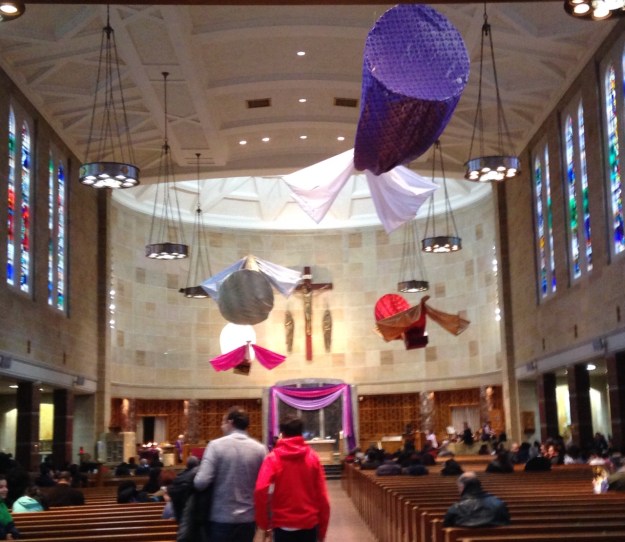
I saw them in  church this morning, hovering over the people getting ready for Mass.

The angels. All colors, carrying all kinds of things. It looks like the world above is coming.. All we have to do is look up, and then look at the Crib.

fullsizerender-2 fullsizerender-3

Father Alban Harmon, CP (1930-2016)


I preached this homily today at the funeral of Father Alban Harmon, a good friend, in the chapel of Immaculate Conception Monastery, Jamaica, New York. He suffered from dementia the last years of his life.

fullsizerender

Years ago, when my mother sat down to read The Bayonne Times, our local newspaper, she always turned first to the obituaries. They were the most important part of the paper for her. What your mother does, you do, and so I read the obituaries too.

In big papers like the New York Times you have to be important to get mentioned when you die. Other papers, besides necessary dates and facts, usually dwell on some accomplishments or honors the deceased has achieved. We like remembering people at their best when their strength was strongest, their minds were sharpest, and their words quickest. We don’t like thinking about any physical or social diminishment they’ve experienced.

Yet, as Christians we’re called to see all life as important, from the beginning to the end. Life is important even when it seems diminished.

We’re preparing now for Christmas, remembering that Jesus Christ, the Son of God, came among us. The Word was made flesh. We remember the short time of his ministry, when he preached and worked miracles and died and rose from the dead. But for a longer time Jesus was unknown. For a few brief moments at his birth he was recognized, but then for most of his life he did nothing remarkable. He went unnoticed. He dwelt among us, walking through life in an unassuming way. Yet, by his presence we believe he blessed all human life, from birth to death.

“How beautiful on the mountains are the feet of those who come to announce peace.”

I think Father Alban Harmon shared that gift of Jesus. He was an unassuming presence among us who blessed our lives and the lives of those who knew him. For all the years I’ve known him–and I think his family would say the same thing–Alban was always someone easy to be with. He was never a demanding presence, never a competitive presence, never an excluding presence; he was an easy welcoming presence, always more interested in listening to you than in you listening to him.

He was a refreshing presence, a humble man who brought the gift that Jesus brought when he said “Come to me, all you who labor and find life burdensome, and I will refresh you.” Alban was a gift of God among us.

I don’t want to exclude Alban’s accomplishments from his long life of 86 years. He was a missionary for 17 years in the Philippine Islands, he was a pastor, a teacher, a canon lawyer, but above all most of us appreciated his quiet, humble presence. That’s a gift we unfortunately forget. That’s not a small gift. That’s a great gift. We need to appreciate it and acknowledge it today.

Even when he was failing, Alban brought that gift to us. In his last years, when words didn’t come and his mind was not what it once was and his walking was slowed, Alban was always there, wherever the community was, he was there. He spoke mostly through his hands and his eyes and the limited strength that he had. But he spoke just the same.

When people came to our chapel or dining room or recreation, Alban met them with his warm hands and warm eyes. As he struggled at Mass with the words, he would stretch out his hands. “This is my body. This is my blood.” On his way from the chapel, as he passed the statue of Mary, he would reach out his hand to touch hers. With his hands and eyes and limited strength he expressed himself. We’ll miss him in the chapel, and the dining room, and the recreation, watching the evening news. He was a presence among us.

How beautiful on the mountains was this man who announced peace.

It’s important to notice the gift of life God gives, from the beginning to the end. We can forget so easily that life is at the beginning and at the end. “Life is changed, not ended,” we say in our prayers at Mass. Whatever change we experience, life doesn’t end.

For that reason, we’re so thankful here for so many wonderful people, our aides, our nurses, our health care workers, who appreciate that. We thank you for the life you saw in Father Alban and the care you gave him.

Life changes, it doesn’t end. Jesus Christ who came and dwelt among us and shared our life and our death promises more than this life. Listen to the way we say it in our prayers: “In him the hope of blessed resurrection has dawned, that those saddened by the certainty of dying might be consoled by the promise of immortality to come.

Indeed for your faithful, Lord, life is changed not ended, and, when this earthly dwelling turns to dust, an eternal dwelling is made ready for them in heaven.”

Alban, your life is changed, not ended.

Victor Hoagland, CP


32nd Sunday C: Thinking About Death

Audio Homily here:

How do we want to die? I think we’ll be hearing that question more frequently after our current elections are over. “End of life” decisions are going to be part of the political agenda in the future. In our society we’ll be facing a range of questions about death and dying.. 

Let’s think about the term “end of life” first. If we listen to our first reading from the Book of Maccabees, the seven brothers who are put to death for defying their Greek conquerors and keeping their Jewish faith don’t see death as an end of life. “You are depriving us of this present life,” one of the brothers says, “but the King of the world will raise us up to live again forever.”

The seven brothers see this life as given to them by God, who is master of life and death. Life doesn’t end. We are in God’s hands from the beginning. It’s for God to decide when we die, but God promises life beyond death. It’s for us to remain faithful as long as we live.

We hear in today’s gospel people denying that there’s life after death and trying to bait Jesus with what they think are absurd circumstances. Jesus tells the Sadducees  that life beyond this life is not the same as here on earth. A heavenly life is beyond what we can imagine.

So denying life beyond death isn’t new. Today we can hear the same denial of eternal life, the life that Jesus promises and shows us in his resurrection. One of the signs of that denial may be, I think, the increasing number of suicides, even among young people. We can see this life as our only life, and when circumstances become seemingly intolerable and seemingly hopeless, some unfortunately end their earthly lives. But we leave them to God’s mercy.

Today death often goes unmentioned. We don’t want to talk about it. We just want to think about life. But death is an important part of life.

There was a passage in a popular book some years ago by Carlos Castenada about an old Indian, Don Juan, and a young sophisticated scientist from the northeast, walking together in the desert in the southwest. The two are world’s apart in the way they think. 

As I recall it, the old Indian says to the young man, “Did you see the White Eagle circling over your shoulder?”

“ Yes, I see it,” the young man replies.

“That’s your death, keep an eye on it.”

“That’s a morbid thought,” the young man says, “We don’t think about that any more.”

“You should,” Don Juan says, “Keep an eye on your death. It will keep you from being small-minded.”

The young man’s describing the way a lot of people look at life today. We don’t want to think about death. We’re thinking more about extending life here on earth, through better diet, better heath care, better exercise;  we don’t like to think of a life ending in death.

But we should keep death in mind. Death is the door to another life. By ignoring it we can limit ourselves to a life too small, too self-centered, too brief. We need to see life as God sees it.   Life is not ended in death, it’s changed.

So death  is not something to be ignored; it is one of the two most important moments in life. That’s why we say in the Hail Mary. “Pray for us sinners, now and at the hour of our death. Amen.”

Monday Night at the Mission

img_2227

Last night at St. Theresa’s Church in Woodside, Queens, New York City, I spoke about the gift of prayer and the simple prayers we know, like the Sign of the Cross and the Our Father, which can be our teachers of prayer. God gives us, saint and sinner alike, the gift of prayer.

Tonight, I spoke about the saints as our teachers. What can we learn from St. Theresa of Lisieux, the patroness of this parish? A doctor of the church who was 24 years old when she died, one of three women who have that honor. St. Theresa of Avila and St. Catherine of Siena are the others.

Theresa added two titles to her name after she entered the Carmel. She was Theresa of the Child Jesus and the Holy Face. I spoke about her spirituality of childhood this evening. She received a grace on Christmas night when she was 13 years old:

“Jesus, the gentle little child of one hour, changed the night of my soul into rays of light…On that night of light began the third period of my life, the most beautiful and filled with graces from heaven. What I had been unable to do in ten years, Jesus did in one instant, contenting himself with my good will, which was always there. I could say to him as his apostles did, ‘Master, I fished all night and have caught nothing. More merciful to me than he was to them, Jesus took the net himself, cast it, and drew it in filled with fish. He made me a fisher of souls. I greatly desired to work for the conversion of sinners, a desire I hadn’t experienced before. I felt love enter my heart, and the need to forget myself and pleasing others. Since then I’ve been happy.” Chapter 5, Story of a Soul.

In the gospels, Jesus told us to become like little children to enter the kingdom of heaven. I reflected on a definition of spiritual childhood given by St. Leo the Great. To be a child means to be free from crippling anxieties, to be forgetful of injuries, to be sociable and to live wondering before all things.


Haiti: Best of Times, Worst of Times

W received word from Fr. Rich Frechette, CP:

“Since the day after hurricane Matthew, we have been scrambling to respond to many pleas for help, mostly from friends.

One of those pleas has been a pretty continuous call from Fr David Fontaine, a brother priest who was begging for help for three cut off and isolated areas: D’Asile, Grand Boucan and Baraderes.

While traveling to Abricot (Jeremy)  and Dame Marie in the days right after Matthew to reach our staffs there, (even cutting our way through the fallen trees to get there), I was on the email constantly trying to get a helicopter to reach Fr David and his flock in these three places. 

Three days ago, after one aborted effort to get to D’Asile by land, we were finally able to get there with food and water- after two blown truck tires and getting stuck in the mud in two different river crossings.

Yesterday I decided that since I still cannot get a helicopter, we would try to reach Grand Boucan and Baraderes by boat.

We have already lost one of our caravans to brigands, who robbed us at gunpoint at Carrefour Charles at Corail, as we headed to Pestel. 

When Charles Dickens started his Tale of Two Cities with the warning: “It was the best of times, it was the worst of times,” he sure knew what he was talking about.

In the extremes of times, both the best and the worse are very much present. You can see around you saints and angels, demons and hell, and also the usual herd of apathetics.

Interestingly enough, of these three groups, God seems to like the apathetics least.  He says:

“15 I know your deeds, that you are neither cold nor hot. I wish you were either one or the other! 16 So, because you are lukewarm—neither hot nor cold—I am about to vomit you out of my mouth.” (Rev 3:15-16)

I think the logic of God’s opinion on this, is that because people who make choices for evil still have passion, (which apathetic people lack), and passion at least has the possibility of becoming passionate for Good. 

When push comes to shove, God prefers bad people to apathetic ones. They can still be redeemed.

So yesterday we loaded up 500 sacks of rice and 500 sacks of water (with 60 small bags/sack) and headed toward Petit Trou de Nippes, where we would sleep at the parish house and head off in boats this morning.

At 10pm last night, we were nearly at the parish house when, in front of a very small village, two tires of the heavy truck exploded. The village people were first scared, and then smiled, thinking what luck that this truck destined for somewhere else was now their bounty.

They first came and stood around in large numbers. This truck was contracted just for this trip, and the driver did not have a lug wrench or a jack. We had to send some of our team on motorcycle to find some “tire men” who might have the right size gear.

In the middle of nowhere, this took about 2 hours. During that time, some armed young people came to make their claim.

We were completely in their hands.

And then two things happened. 

A little girl names Guerlande, who has been at our children’s hospital for heart disease, recognized Fr Enzo and called out to him. 

The armed men saw the sick girl approach and embrace the priest. 

At the same time, Raphael recognized one of the bandits as being from his old neighborhood. Raphael took out a little rum, shared it, and then stories of childhood flowed.

We were delivered.

Finally reaching the parish house, itself a victim of Matthew, Fr Luckson gave us small mattresses, so we could lay down and try to sleep (and get chewed up by mosquitos). 

Before I got my mat, i was invited by Lukson into the church. He said he wanted to show me something. 

He explained the church was built in the 1600’s, pretty much by accident. Ships passing this area to build the Cathedral in Jeremy became grounded there, and so they decided to build a midpoint warehouse on the spot. The place later became a little town, graced by a Church. The Church of the Nativity.

And there over the altar, an original painting of Leonardo Da Vinci, of the babe in swaddling clothes with his mother and father. 

The painting has become so weathered and worn, if a museum procurator were to see it, she would have a heart attack on the spot. (And as I am sure you suspect, there are no defibrillators in Petit Trou de Nippes.)

A beautiful baby, born in darkness and starkness. 

We set out early in the morning for the boats we rented by phone contact. We had no idea of their size, age, or seaworthiness.

We soon saw the leaks could be easily bailed by bucket, and that two trips using three boats a trip would do it for all that rice and water.

We started loading the boats. The first began to tilt and rock. It looked like it would tip over. All the people watching cheered.

This was a second group to think that the voyage was not possible, and so the bounty theirs.

After a while we went sputtering across the bay to Grand Boucan, to deliver the food to isolated victims of Matthew.

As soon as the boat launched, the small crew took condoms out of their pockets.

Good God. What now?

The opened them, rolled them over their cell phones and tied them at the bottom, to keep them safe from the splashing water.

Finally, a use of condoms that does not provoke moral debate! 

We also covered our phones. As they say, any port in a storm.

We made it easily to Grand Boucan, but we could not make the second trip to Baraderes. The priest of Baraderes, Fr Jean Philippe, called and said he could not control the thieves at his wharf.

When I heard this I thought, if only he had grown up with one of the thieves. 

If only he had held one of their children in his arms when she was sick.

If only he would open a small bottle of rum to share.

The truth is, the world is as much saved by what we have done, as it is by what we do. The best way to go through life is building bridges, forging bonds, and cuddling children in our arms.

I am back to looking for a helicopter for Baraderes.

The best of times, the worst of times. A hurricane and a DaVinci original meet up in a tiny Haitian town.

The cycnics around us will scoff. The apathetics in our company will yawn. 

But those open to new life, like a baby born in a darkness and starkness of a  hurricane-ravaged country, will look eagerly forward to the work of building a future in hope.”

Some of you have asked where to send contributions you have collected for the Haiti Rebuilding Effort. Please mail all donations to the Passionist Development Office, 111 South Ridge St, Ste 300, Rye Brook, NY 10573.
28th Sunday C: The Gift of Life


To listen to this week’s homily, please select the audio file below:

Some years ago, I visited the Vietnam Memorial in Washington, DC with a cousin of mine who fought in that war. We were passing along the wall where names of those who were killed in that war were inscribed, when he stopped and pointed to a name.

One day, he said, his artillery unit was ordered to a forward position; he was the officer in charge. Just as he was ready to get into the helicopter, word came that he was wanted for a meeting at headquarters, so he got out of the helicopter and told a junior officer to take over; he would join them as soon as he could.

That day the unit took heavy fire; the name he pointed to on the wall was the officer who took his place.

“Why am I living and he’s not?” That’s a question he keeps asking, he told me. “Why am I alive?”

That’s really the ultimate question in today’s readings. The lepers who were cured by Jesus were facing death. There was no cure for their disease. Leprosy was so frightening then that those affected by it were driven from their homes and families to live in isolated places and forbidden to go near anyone. Jesus gave them the miracle of life.

It didn’t matter if you were rich or poor. Namaan, the Syrian general, whom we read about in our first reading, was one of the most powerful people in the world, but he had leprosy; it was a death sentence. In desperation he went down to Israel looking for a cure, a miracle. Washing in the Jordan River, he received the miracle of life.

The ten lepers were cured, our gospel reading says, but only one was truly thankful. The other nine seem to take the life they were given for granted. Do those nine represent most of us? The one who was thankful was a Samaritan.

Namaan, the Syrian, was also thankful. He went to the prophet Elisha after being cured and offered him gifts. No, the prophet said, life is God’s gift, not mine, and he wouldn’t take anything from the Syrian.

“Then at least let me take some dirt from this place, ‘two mule loads of earth,’” Namaan says, “so that I can take it back with me and  stand on it and remember and give thanks to God for what I have received here. “ He won’t forget the gift of life and how to use it.

That’s the great challenge we all face–not to forget that life is a gift and it’s been given to us by God to live well every moment, each day, as long as God gives it to us.

Our church is a place of thanksgiving. Above all, our church is a place where we give thanks. Our Mass is also called Eucharist, an act of thanksgiving. “Let us give thanks to the Lord our God.” “It’s truly right and just” that we do this. In this place we remember the God of Life who gives us life. Here too we receive a promise of life beyond this, greater than this, through Jesus Christ.

We have been given the gift of life, a precious gift. Don’t take it for granted. We thank God for it and try with all our strength to live it as we should.

27th Sunday C: Faith Like A Mustard Seed

For an audio homily:

Faith like a mustard seed

Like the apostles, we would like a stronger faith. “Increase our faith,” they ask Jesus. Give us faith that understands everything immediately and sees everything clearly–right away! We can hear ourselves asking for faith like that too.

In response, Jesus offers the image of a mustard seed. Look at this tiny seed, he says. With faith like this, you can accomplish the most impossible things. What does he mean?

A mustard seed is so small that you hardly can see it in the palm of your hand, Yet once in the ground it grows into a full sized tree, through cold and heat, nights and days, all kinds of weather. But it takes time.

Faith is like that. It grows, but its growth takes place over time, day by day, through the common experiences that come our way. God dwells in the ground of daily life and it’s there we meet him most of all. That’s why the psalm for today’s Mass insists: “If today you hear his voice, harden not your hearts.”

Today in countless little things, in unassuming moments, God speaks to us. God acts. And even as the moments slip by, God’s plan unfolds. We need a daily faith, a patient faith, a faith like the mustard seed, to wait until it reaches its completion. “The vision still has its time, presses on to fulfillment, and will not disappoint. If it delays, wait for it, it will surely come, it will not be late.”

A daily faith that watches God’s plan unfold in the course of things.