Tag Archives: Passionists

The Martyrs of Daimiel


Wars, especially civil wars, can bring unspeakable violence. The Spanish Civil War in the 1930s is a good example. There were atrocities on both sides. Innocent people were among its victims, and suffered for no reason at all.

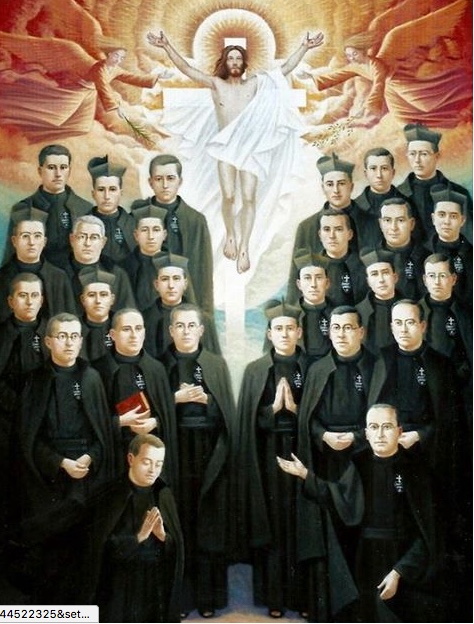
The Martyrs of Daimiel, Spanish Passionists from my own community, most of them young students for the priesthood preparing for missionary work in Cuba and Mexico, were killed in 1936. It’s a tragic story, but also a story of God’s grace shining through human evil..

Between July 22nd and October 24th, 1936, twenty-six religious from the Passionist house of studies, Christ of the Light, outside the city of Daimiel, about eighty miles south of Madrid, died at the hands of anti-religious militiamen at the outbreak of the Spanish Civil War. They were: Niceforo Diez Tejerina, 43, provincial superior, who previously served as a missionary in Mexico and Cuba after being ordained in Chicago, Illinois.; Ildefonso García Nozal, 38; Pedro Largo Redondo, 29; Justiniano Cuestra Redondo, 26; Eufrasio de Celis Santos, 21; Maurilio Macho Rodríguez, 21; Jose EstalayoGarcia, 21; Julio Mediavilla Concejero, 21; Fulgencio Calv Sánchez, 19; Honorino Carraced Ramos, 19; Laurino Proáno Cuestra, 20; Epifanio Sierra Conde, 20; Abilio Ramos Ramos, 19; Anacario Benito Nozal, 30; Felipe Ruiz Fraile, 21; Jose Osés Sainz, 21; Felix Ugalde Irurzun, 21; Jose Maria Ruiz Martinez, 20; Zacarias Fernández Crespo, 19; Pablo Maria Lopez Portillo, 54; Benito Solano Ruiz, 38; Tomas Cuartero Gascón, 21; Jose Maria Cuartero Gascón, 18; German Perez Jiménez, 38; Juan Pedro Bengoa Aranguren, 46; Felipe Valcobado Granado, 62.

Most of those killed were young religious studying for ordination and destined for missionary work in Mexico and Cuba. Others were priests who taught them and brothers who served in the community. Father Niceforo, the provincial, was visiting the community at the time. Militiamen entered the Passionist house on the night of July 21st and ordered the thirty-one religious to leave in one hour. Father Niceforo gathered them in the chapel, gave them absolution, opened the tabernacle and said: “We face our Gethsemane. . . all of us are weak and frightened,but Jesus is with us; he is the strength of the weak. In Gethsemane an angel comforted Jesus; now he himself comforts and strengthens us. . .Very soon we will be with him. . .To die for him is really to live. . . Have courage and help me by your example.”
He then distributed the sacramental hosts to them.

The militiamen ordered the group to the cemetery and told them to flee. At the same time, they alerted companions in the surrounding areas to shoot the religious on sight. The Passionists split into five groups. The first group of nine was captured and shot outside the train station of Carabanchel in Madrid on July 22, 1936 at 11pm. The second group of twelve, Father Niceforo among them, was taken at the station at Manzanares and shot by a firing squad. Father Niceforo and four others died immediately. Seven were taken to a hospital where one later died. Six of them recovered, only to be shot to death later on October 23, 1936.

Three other religious, traveling together, were executed at the train station of Urda (Toledo) on July 25th. Two gave their lives at Carrion de Calatrave on September 25th. Only five of the thirty-one religious were spared.

Numerous eye-witnesses testified afterwards to the brave faith and courage shown by the Daimiel Community in their final moments, especially the signs of forgiveness they gave their executioners. They were beatified by Pope John Paul II on October 1, 1989, who said of them: “None of the religious of the community of Daimiel was involved in political matters. Nonetheless, within the climate of the historical period in which they lived, they were arrested because of the tempest of religious persecution, generously shedding their blood, faithful to their religious way of life, and emulating, in the twentieth century, the heroism of the Church’s first martyrs.” (Homily: October 1, 1989) Today their bodies are interred in the Passionist house at Daimiel.

Their feastday is July 24th. They’re remembered still at their shrine in Daimiel, Spain.
13th Sunday A

For today’s homily, please play the video below:

Welcome to Ordinary Time

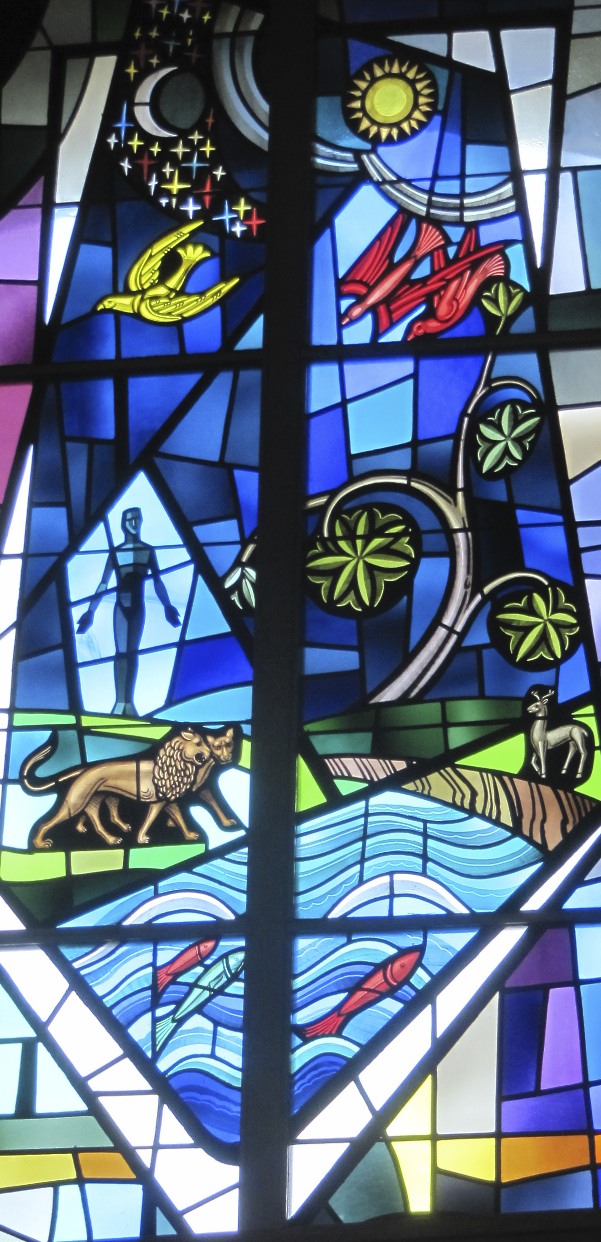
Creation
The Easter season ends with the Feast of Pentecost and we’re into ordinary time in the church year. Unlike other feasts, Pentecost has no octave; ordinary time is its octave. Most of the church year is ordinary time; most of life is ordinary too, but the Spirit is there just the same.

“Their message goes out to all the earth.” We read the Acts of the Apostles during the Easter season as Jesus’ apostles, led by Peter and Paul, ventured on their way from Jerusalem to Asia Minor and to Rome, empowered by strong winds and tongues of fire, Yes, the Spirit can bring us to the ends of the earth, but the Spirit is also there in the few steps we take every day, though we’re hardly aware.

We tend to minimize ordinary life. Just ordinary, nothing’s happening, we say. Yet, day by day in ordinary time the Risen Lord offers his peace and shows us his wounds. Every day he breathes the Spirit on us. No day goes by without the Spirit’s quiet blessing.


5th Sunday of Easter

Immaculate Conception Church, Irvington on the Hudson

The Archdiocese of New York has a renewal program called Revive taking place in its parishes this year. The program comprises a reading from scripture, a sermon on the purpose of life, a witness talk, prayers and hymns.

This week, Monday, Tuesday and Wednesday evenings at 7:00 PM, I’m taking part in the Revive program at Immaculate Conception Parish, Irvington on the Hudson, NY. Besides Immaculate Conception, Sacred Heart, Our Lady of Pompeii, St. Matthew, and Our Lady of Perpetual Help Parishes are taking part in Revive.  I’m giving the sermon and will be offering some of the prayers.

Here’s the way I opened our mission this evening:

It’s the Lord!

sinful man
John 21, 1-18

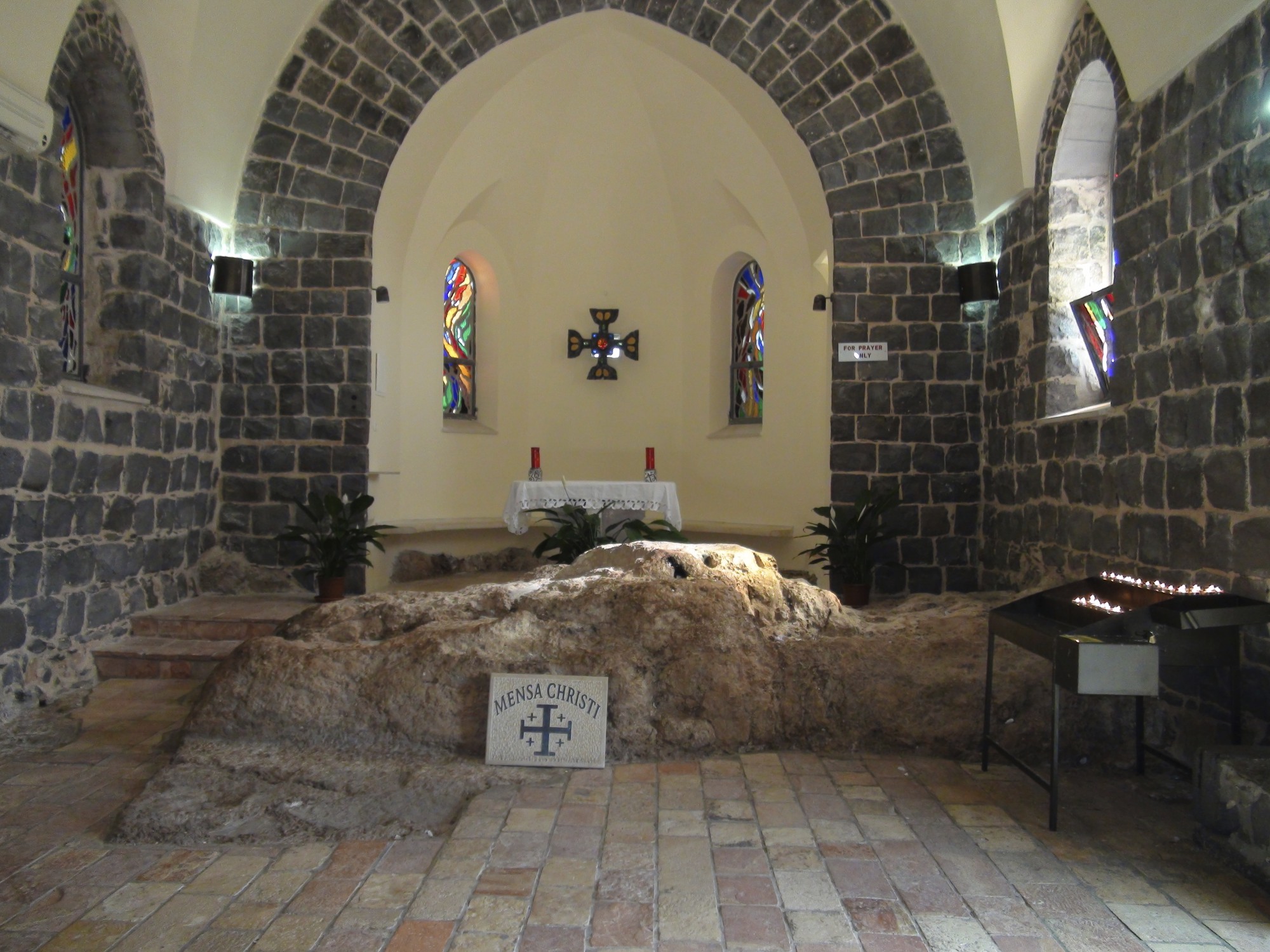
I think I know where this gospel took place– Tabgha, a quiet, wooded area on the Lake of Galilee just south of the ancient town of Capernaum. Easy walking distance from the town that was the center of Jesus’ ministry.

The name Tabgha comes from the seven springs of water flowing into the lake there. When I visited some years ago, flocks of birds were singing in the trees and drinking from the streams of water.

For centuries fishermen must have pulled for fresh water from the springs, and perhaps fry some fish over a fire on the beach. It’s a likely place where Jesus would come to pray. Tradition– two centuries-old churches are on the site–says he met his disciples here after his resurrection.

DSC00042

John’s gospel says that Peter and other disciples of Jesus came to Galilee after the Lord’s death and resurrection and went fishing. Through the night they caught nothing, but at dawn they heard a call from the shore to cast their nets out again.
“… Jesus was standing on the shore; but the disciples did not realize that it was Jesus.”

They caught of large catch of 153 fish. Jesus then called from the shore to come eat some fish at a fire he had started and he gave them bread and some fish to eat and revealed himself to them.

Peter has a leading role in this story. He jumped into the water to get to the shore. Then after they have eaten, Jesus takes him aside and three times asks the disciple who denied him three times, “Do you love me?” A beautiful statue  (above) marks that moment.

Three times the apostle who cursed and swore in the courtyard of the High Priest that he did not even know Jesus answers “Yes, I do. I love you.” And Jesus tells him “Feed my lambs. Feed my sheep.”

A great example of forgiveness . No scolding words or recriminations. No “I told you so.” No warning, “You do that again and …” No demotion, no putting on parole. Rather, Jesus gives Peter new responsibility. “Feed my lambs” as I do. A beautiful picture of God’s mercy.

Instead of punishing him, God calls Peter to new things. The mercy of God always calls us to something new, some new life.

Tabgha, along the Lake of Galilee where Jesus met his disciples, is a wonderful place to visit. I wonder if Jesus prayed here during his days in Capernaum and called his disciples to rest awhile. Here he communed with God his Father; here he prayed and forgave. His memory lingers at this lovely place besides the Sea of Galilee.

Prayer and forgiveness go together Jesus taught. “Forgive us our trespasses as we forgive those who trespass against us.” Today’s gospel tells us to pray and forgive. Maybe  someone  has hurt us, maybe there’s some situation we’re facing now. A job we don’t like, a home situation we’re angry about, something in society that upsets us.

Pray and forgive.

Sunday: 4th Sunday of Lent

Watch this week’s homily by selecting the video below:

https://player.vimeo.com/video/209957636

Monday: 3rd Week of Lent

Readings here

https://player.vimeo.com/video/208847784

Sunday: 3rd Week of Lent


For this week’s homily, please play the video below:

https://player.vimeo.com/video/208840331

7th Sunday: Does Might Make Right?

For today’s homily, please play the video below: