Tag Archives: Passionists

Who are you?

Baptism jpg

In today’s reading at Mass from John’s gospel,  Jewish officials and Pharisees from Jerusalem send representatives to John the Baptist as he’s baptizing in the Jordan River near Jericho asking “Who are you?” “Are you the Messiah, Elijah, the Prophet?” “Why are you baptizing?”

“I’m not the Messiah, or Elijah, or the Prophet,” John answers. “I am the voice crying out in the desert, ‘Prepare the way of the Lord. ’” John knew who he was and who he was not, and he wasn’t afraid to be the one God wanted him to be.

John could have followed his father,  Zechariah, as a priest in the temple at Jerusalem,  a role passed on from father to son. But John chose a different course. God led him another way.

We don’t know when, but John went down to the Jordan Valley where the road ascended to Jerusalem, and preached to and baptized the crowds going up to Jerusalem to the temple of the Lord. The clothes he wore, his style of life set him apart from everyone else.

John didn’t care how he looked or what people thought of him. He certainly didn’t choose an easy place to be, a desert place. Later, Jesus praised his strength and determination.

To know who you are, you need to listen to God’s call,  and evidently John did that. To speak the truth courageously, you need to depend on God’s strength, and evidently John did that too.  He became a voice for God, even if he sounds at times like a drill sergeant readying people for the battle of the last days. He said unpopular things to powerful people and faced the consequences. Herod Antipas, who ruled Galilee and Perea, arrested him and put him to death.

We’re like John whenever we ask God, “Who am I?” and listen for an answer. We’re like him whenever we use bravely the voice God gives us.

We’re God’s Children Now

The First Letter of John, read this week at the end of the Christmas season, counters the claim of some early Christians that the Word did not become flesh, that Jesus did not become human like us. They thought it unworthy of God to assume our lowly humanity.

The dissidents were either Docetists, people who rejected the belief that God could become human, and so Jesus would seem to be human but was not, or they were Gnostics who believed that Jesus pointed to a greater power still to be revealed.

They turned away from a belief that “the Word was made flesh.” God was not born, nor live hidden for years, nor teach and do mighty deeds in Jesus Christ. God did not experience death and rise again in Jesus, his Son. The all-powerful God would reveal himself in a better way than this, they believed.

Invoking the authority of the Apostle John, who saw Jesus and believed, the letter condemns that opinion and those who express it. Keep away from them, it says. The Word became flesh and we see his glory reflected in his humanity. The gospels this week, from the Gospel of John, show John the Baptist pointing Jesus out to his disciples as the One who is to come.

Rejecting the Incarnation affects the way we think about ourselves, the letter continues. If humanity can’t be united to the divinity, then we can’t be called “children of God.” But we are God’s children, John says, even now in the flesh.

“Beloved, we are God’s children now;

what we shall be has not yet been revealed.

We do know that when it is revealed we shall be like him,

for we shall see him as he is.”

Jesus Christ was finally revealed in his resurrection. We wait for that moment ourselves, when we hope to share that mystery “through him, with him, and in him.” Not only shall we see him as he is, but we shall see our flesh, our lowly humanity, graced by his resurrection.

Let’s not forget: “we are God’s children now.


Still Wondering


We don’t stop wondering at the Christmas crib. Christmas is over for most people today. The tree’s taken down, decorations put away. But the Christmas mystery is too big for a one day celebration; that’s why the church prepares for this celebration through the four weeks of Advent and continues through the days of the Christmas season till the Feast of the Epiphany. Christmas Day may be over, but our celebration and reflection on the Christmas mystery is not over.

This mystery raises questions and has consequences, which the feasts that follow Christmas Day explore. Since ancient times churches of the east and west have celebrated the feast of Stephen, one of the first disciples of Jesus and the first to die giving witness to him. (Acts 6,8 ff) on December 26.

When Jesus was born “all who heard it were amazed by what had been told them by the shepherds.” (Luke 2,18) But Stephen would be stoned to death when he told about the One who was sent. The message will not always be heard, yet still must be told. 

“The love that brought Christ from heaven to earth raised Stephen from earth to heaven,” St. Fulgentius says of the martyr Stephen.

December 28th is the feast of the Holy Innocents;  little children from Bethlehem put to death by Herod the Great so no rivals would challenge his power and throne. (Matthew 2, 13-18) When Jesus was born “all who heard it were amazed by what had been told them by the shepherds.” (Luke 2,18) Yet Herod the Great heard the message and tried to end it. The birth of Jesus does not bring an end to evil in the world. The Child is born “for to die for poor orn’ry creatures like you and like I.”  

December 27th is the feast of St. John, the apostle. This is another feast celebrated along with the Christmas feast by all the churches of the east and west from earliest times. It explores the great question: Who is this Child born of Mary? Writings identified with John the Apostle– the 4th Gospel and letters–  are read at Mass on Christmas Day and days that follow the feast. 

Jesus Christ, born of the Virgin Mary, is true God and true man, “the Word made flesh, the Word of God who made all things, dwells among us.”

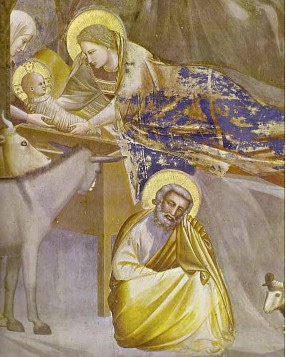
Like the shepherds who watched in the darkness we need to keep our eyes on this sign of light:  “the infant wrapped in swaddling clothes and lying in a manger.” Like Mary, we need to keep reflecting on this mystery in our heart to appreciate what it means for the world and for us. Like Joseph we don’t stop wondering.


mary 10


December 24: The Dawn from On High

IMG_1623

The birth of John the Baptist. Luke’s gospel says, is closed connected to the birth of Jesus. today. We celebrate the two births as we draw near to Christmas.  Struck dumb by doubt,  John’s father Zechariah speaks again as he agrees to the child’s name. “John is his name.”

John Baptist birth

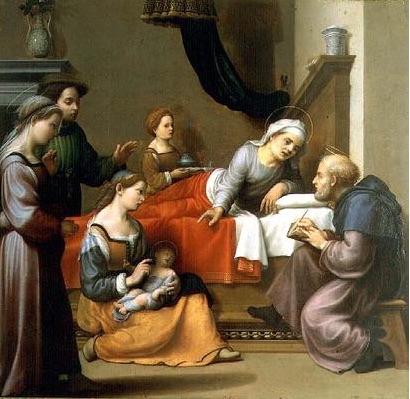
Artists often portray the birth of John in a room with midwives attending Elizabeth at his birth, but Luke’s gospel portrays Zechariah his father singing a song at his birth.. “In the tender compassion of our God, the dawn from on high shall break upon us. For you, my child,  shall go before the Lord to prepare his way, by the forgiveness of sins”  He sees the birth of John in a larger perspective.

“The dawn from on high shall break upon us.” A new day can dawn in a spectacular way at times. I saw daybreak over New York City a few years ago from our house in Union City. Shortly before, the city was dark, then the day broke to bathe it in gold.  What promise daybreak holds!

These days, darkened by political unrest worldwide, poverty,  terrorism, racial problems and homelessness, we need grace from on high. Christmas comes at a good time.

Readings here.

O King of all nations and keystone of the church,  come and save us whom you formed from the dust.

St. Paul of the Cross

OLYMPUS DIGITAL CAMERA

October 20th, we celebrate the feast of  St. Paul of the Cross in the United States.

A saint leaves a legacy, a blessing for the church and especially for members of communities he founded or inspired. What legacy did the saintly founder of the Passionists leave?

Paul of the Cross died October 18, 1775, a year before our American Revolution and fourteen years before the French Revolution. Twenty three years after his death, the French revolution spilled over into neighboring Italy and the Papal States. Napoleon imprisoned the pope, Pope Pius VI, religious houses and church resources were taken over by French forces; the Catholic Church in Italy, like the Catholic Church in France, was seemingly crushed by the French general and his powerful army.

In May of 1810 the situation got worse. Napoleon declared an end to the Papal States and ordered the new pope Pius VII to be imprisoned in Savona, Italy. His police led thousands of religious from their religious houses back to their homes and told to start another life. Among them were 242 Passionists, the community Paul of the Cross founded in the previous century.

The old church was dead, the emperor said. He would replace it by a new one of his own. In that thinking, the Passionists too were dead; they would hardly have a role in Napoleon’s church. Of course, the church didn’t die and neither did the Passionists.

Historians usually credit the brilliant diplomacy of Cardinal Consalvi, the pope’s secretary of state, for keeping the church alive and getting it on its feet again after Napoleon’s defeat in 1814. But diplomats weren’t the only ones responsible for the church’s restoration. Most of the credit belonged to ordinary believers who kept the faith and remained loyal.

The same was true for the Passionists. We certainly gave the church an inspirational figure at the time, St. Vincent Strambi, the Passionist bishop and first biographer of Paul of the Cross. Before Napoleon’s troops invaded Rome in 1798 Pius VI asked Vincent to preach in the city’s four major basilicas to strengthen the Roman people. After Napoleon’s defeat, Pius VII called Strambi to Rome again to preach a 9 day retreat of reconciliation–not everybody stood up to the French invaders.

But besides Strambi, what kept the Passionists alive were certainly those ordinary religious who were driven from their monasteries and came back to continue the work that St. Paul of the Cross envisioned a century before. They were the faithful ones, faithful to what they learned from him.

Paul of the Cross not only preached the mystery of the Passion of Jesus; he lived it. He held on to his dreams through hard times. Humanly speaking, the Passionists, the community he founded, should have gone out of existence many times, from its tenuous beginnings to the years it waited for acceptance by the church. The mystery of the Cross was present in its birth, its growth and its life.

Now as then, the Passion of Jesus brings life, not death.

A Church with a Mission

241SsGiovanniPaolo

Ss. Giovanni e Paolo 

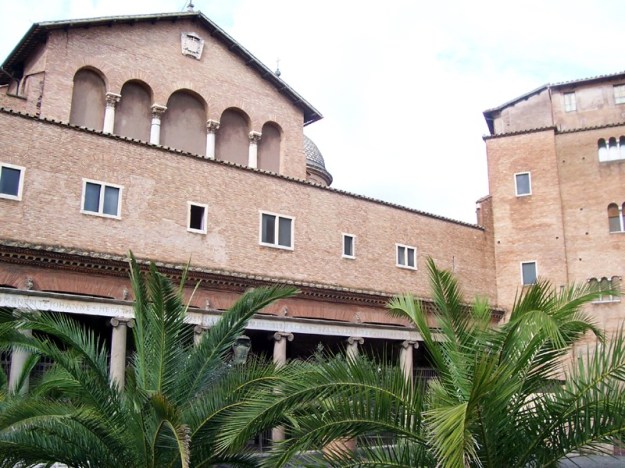
A few days ago we celebrated the feast of St. Jerome, the great 4th century scripture scholar and controversialist. I’ll be staying through October in a place well known to him in Rome– the Caelian Hill and the church of Saints John and Paul.

In Jerome’s day Rome’s rich and powerful lived on the Caelian Hill, across from the Palatine Hill and the Roman forum. Jerome had prominent friends among them. Pammachius, the ex- Roman senator who built Saints John and Paul, the noblewoman Paula and her daughter Eutochium, who later joined Jerome in his venture in Bethlehem to study the scriptures, her other daughter Blaesilla and others.

Interest in the scriptures ran high among well-off Caelian Christians then, but they also were keen for gossip and religious controversies. Jerome loved the scriptures, but he also loved the fight. His relationship with Paula and her family was part of the gossip that  probably figured among the reasons he left Rome for the Holy Land. Following him there, Paula created a monastic community in Bethlehem and she and her daughter undoubtedly played  a bigger part in Jerome’s scriptural achievements than they’re credited for.

Jerome’s a saint, but I appreciate why so many artists picture him doing penance for his sins. He needed God’s mercy.

FullSizeRender

Excavations, Saints John and Paul

Underneath Pammachius’ Church of Saints John and Paul are remains of Roman apartments going back to the 2nd-4th centuries, probably the best preserved of their kind in the city and a favorite for tourists.

Years ago, when I studied here, one of the rooms in the excavations was pointed out as part of a house church with Christian inscriptions , now archeologists are not so sure.. That doesn’t mean Christians didn’t meet or worship in these buildings, only they didn’t create a special liturgical space for meeting or worship.  Christian evidence, however, says a “house church” was here early on.

Why then did Pammachius in the fourth century build the imposing basilica of Saints John and Paul here on the edge of the Coelian Hill facing the Palatine Hill and the Roman forum ? Many retired soldiers settled on the Caelian Hill then. Did he wish to win them to Christianity through the example of two soldier saints, John and Paul, who were honored in this church? Their remains are still found under the church’s main altar today.

Is there another reason? According to Richard Krautheimer, an expert on Rome’s early Christian churches, the emperor Constantine built St. John Lateran, St. Peter, St. Paul, St. Lawrence, the first Christian churches, on the edge of the city most likely in deference to the sensibilities of the followers of Rome’s traditional religions. He didn’t want any Christian church in the “show areas” of the city, near the Roman forum or the Palatine hill.

Saints John and Paul, Interior


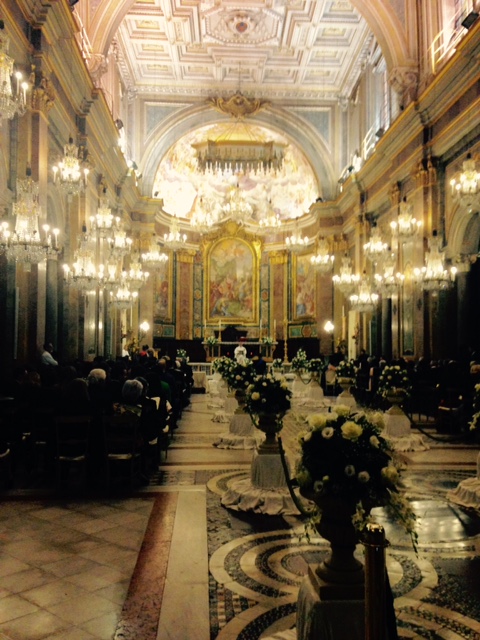
By Pammachius’ time Christianity was more assertive. Was Pammachius’ church a statement to the city that Christianity had arrived and wished to speak its wisdom here at the heart of traditional Roman religion, near the Palatine Hill and the Roman forum? Jerome’s new translations and commentaries, along with the works of St. Augustine and others, gave them something to say.

So was this a church with a mission? A lesson for the church of today? Speak to the world of your time.

DSC01053

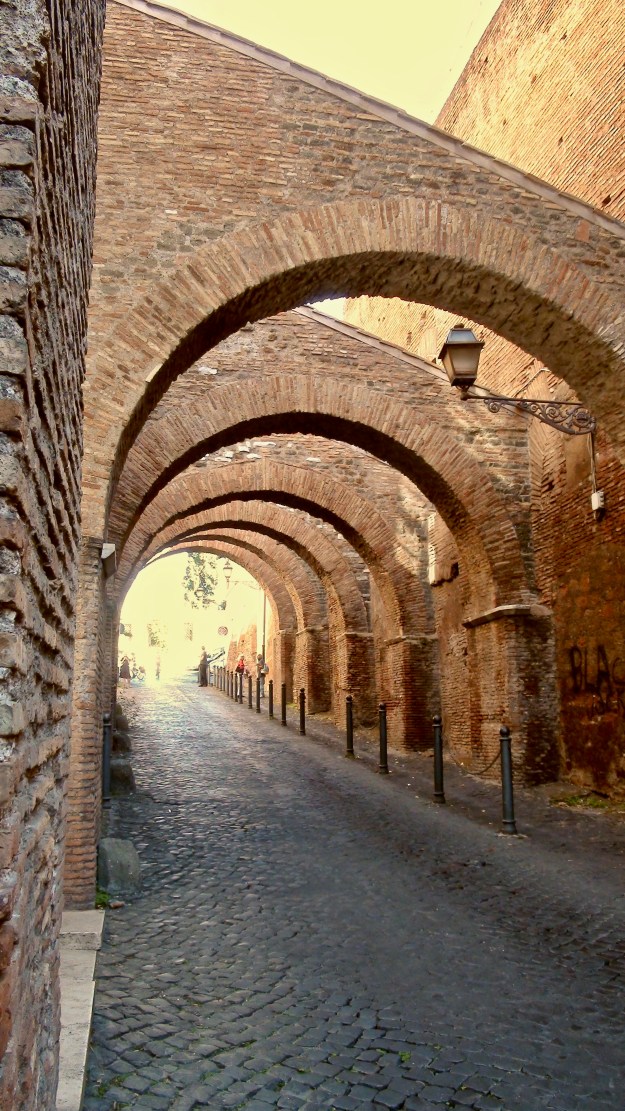
Clivo di Scauri

Assumption, Dormition

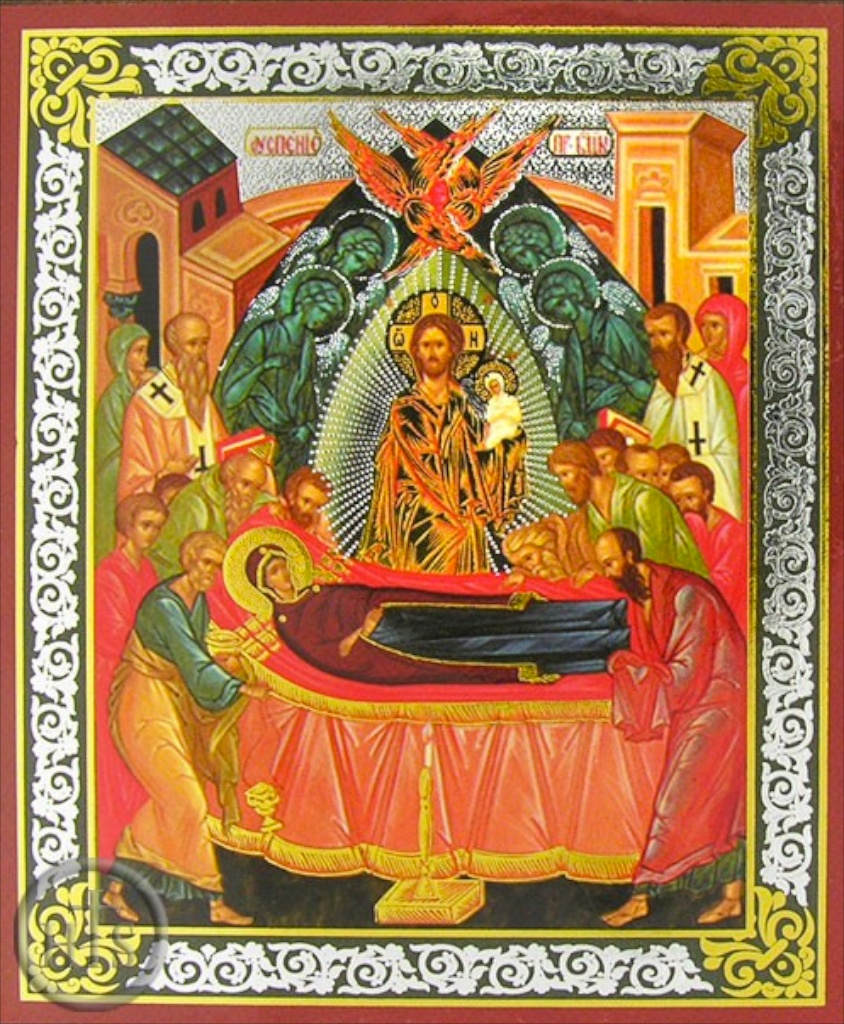
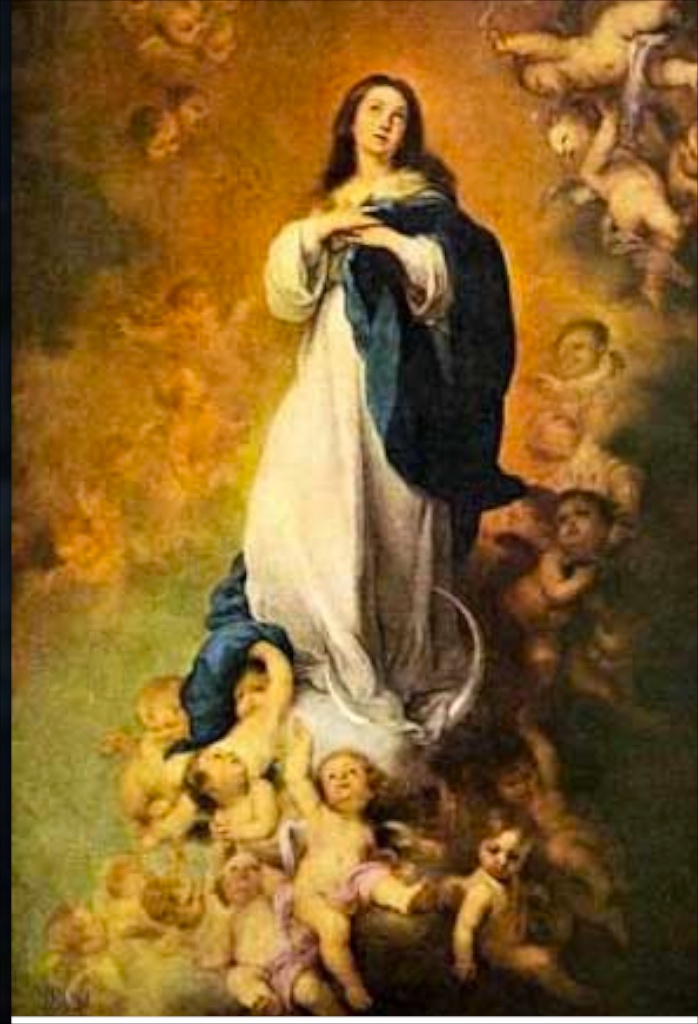
The Feast of the Assumption, August 15th in the Roman Church, and the Feast of the Dormition in the Eastern Church celebrate the belief that Mary, the Mother of Jesus, was taken body and soul into heaven by her welcoming Son.

The Eastern Church year begins with the Great Feast of the Birth of Mary, September 8 and ends with Great Feast of the Dormition. The mysteries of Jesus take place within these two feasts.

The two churches express the mystery differently in art. In the Western Church Mary, radiantly dressed, often surrounded by angels, turns her face to heaven,

The Eastern Church invariably has Jesus standing over his mother’s body, carrying her soul in his arms as a little child. How else would she be at death? Didn’t Jesus say we cannot enter the kingdom of heaven unless we become a little child. She became one.

Her Son brings her body and soul to heaven. She bore him in her womb through grace, now she enters heaven through grace. The apostles, surrounding her body, have been summoned from the ends of the earth to be witnesses to her death and resurrection. She is the “first fruits” of her Son’s redemption. Angels cry out for heaven’s gates to be opened.

“Open your gates and welcome the One who gave birth to the Creator of Heaven and earth; let us celebrate with hymns of glory her holy and venerable body which housed the Lord who is unseen by us. We also cry out: O worthy of all praise, lift up our heads and save our souls”. (Troparion, Feast of the Dormition)

“Today, the Virgin Mother of God

was assumed into heaven

as the beginning and image

of your church’s coming to perfection

and a sign of sure hope and comfort

to your pilgrim people.” (Preface of the Assumption)

God took Mary, the lowly one, and “raised her up to this grace, that your Only-Begotten Son was born to her according to the flesh and that she was crowned this day with surpassing glory. Grant through her prayers that, saved by the mysteries of your redemption, we may merit to be exalted by you on high.” (Collect, Feast of the Assumption)

Because Mary shares in her Son’s resurrection, she also shares his desire that “all be saved and come to the knowledge of the truth.” She joins her voice to his and intercedes for us.

“In falling asleep, you did not forsake the world, O Mother of God,

You were translated to life, O Mother of Life.

And by your prayers you deliver our souls from death.” (Troparion)

Complaining in the Desert


The Israelites were not at their best in the desert. The food was certainly better in Egypt, but complaints about food was just one of their gripes. They also complained about Moses, who led them, and Moses complained to God about the grumbling people he’s called to lead:

‘“Why do you treat your servant so badly?” Moses asked the LORD.
“Why are you so displeased with me that you burden me with all this people?
Was it I who conceived all this people? Or was it I who gave them birth,
that you tell me to carry them at my bosom, like a foster father carrying an infant,
to the land you have promised under oath to their fathers?
Where can I get meat to give to all this people? For they are crying to me,
‘Give us meat for our food.’
I cannot carry all this people by myself, for they are too heavy for me.
If this is the way you will deal with me, then please do me the favor of killing me at once, so that I need no longer face this distress.”’ (Leviticus 11, 11-15)

You can’t speak more “face to face” to God than that. That’s one thing we learn from the Old Testament: you can complain to God. The Jews did it in the desert, we can do it too.

I forget the ratio, but I think the psalms of lament (complaints) in the Old Testament are only slightly less than psalms of thanksgiving. God doesn’t mind complaints.

Feast of the Sacred Heart

IMG_0291

The Feast of the Sacred Heart of Jesus falls on the Friday after the Feast of Corpus Christi because  the Eucharist comes from the loving heart of Jesus.

Devotion to the Sacred Heart has influenced generations of Catholics. I think today of the beautiful church of the Sacred Heart in Springfield, Mass, where Father Theodore Foley, the saintly Passionist whose cause for canonization was recently introduced, grew up. That church surely had a profound influence on him.

The devotion was strong in the pre-Vatican II church, but is it as strong today? I ask that question because as I listened on the internet to a short segment on church music from Vatican Radio featuring popular hymns to the Sacred Heart I realized you don’t hear them much in church today.

The devotion, however, has a long history and is deep significance. Here’s an excerpt from St. Bonaventure for today’s Office of Readings  on the heart of Jesus:

“Take thought now, you who are redeemed, and consider how great and worthy is he who hangs on the cross for you. His death brings the dead to life, but at his passing heaven and earth are plunged into mourning and hard rocks are split asunder.

By divine decree, one of the soldiers opened his sacred side with a lance. This was done so that the Church might be formed from the side of Christ as he slept the sleep of death on the cross, and so that the Scripture might be fulfilled: ‘They shall look on him whom they pierced’.
“The blood and water which poured out at that moment were the price of our salvation. Flowing from the secret abyss of our Lord’s heart as from a fountain, this stream gave the sacraments of the Church the power to confer the life of grace, while for those already living in Christ it became a spring of living water welling up to life everlasting.”

“Sweet Savior, bless us ere we go
thy words into our minds instill
and make our lukewarm hearts aglow
with lowly love and fervent will.
Through life’s long day and death’s dark night,
O gentle Jesus be our light.”

The Wisdom of Ordinary Time

DSC00804
The readings in today’s Mass point to the wisdom of ordinary time. “Whoever is not against us is for us,” Jesus says to his disciples who complain there are others “who do not follow us” driving out demons. (Mark 9,38-40) Wisdom is not just in our tradition; it’s there everywhere in ordinary time.

I like the hand in the picture above of Bernini’s famous window in St.Peter’s. Who’s hand is it, anyway? A believer’s hand. Yes, for sure. But also the hand of all who walk this earth searching for truth.

“Wisdom breathes life into her children” (Sirach 4,11 ) Like much of the wisdom literature in the bible (Proverbs, Ecclesiastes, Wisdom, Psalms) the Book of Sirach, one of the readings at the beginning of ordinary time, draws much of its content from the culture of the middle east which influenced the Jews at home and in their exile in other lands.

As the gift of God breathed into ordinary time, the Holy Spirit “renews the face of the earth.” The Spirit’s wisdom is everywhere.