The Christmas Season closes after the Baptism of Jesus, which we celebrate this Sunday. The Christmas celebrations are over. Ordinary time begins. Does that mean there’s nothing to do till Lent and the Easter season?
Sure there is. Ordinary Time is a time for daily prayer, and daily prayer is never over. The Second Vatican Council’s Constitution on the Liturgy says that daily prayer is at the heart of the Christian life and created a daily lectionary of scripture readings so “ the treasures of the bible be opened more lavishly for the faithful at the table of God’s word.” (SC 51)
The daily lectionary is a treasure for praying with the scriptures, but don’t take it for granted. Treasures, Jesus said, are usually hidden and you have to dig for them. That’s what we do in daily prayer. The liturgy is always a “work”, our daily work, an important work, a daily prayer. It’s the “summit” of the Christian life. We’re always at the beginning, not at the end.
We begin Monday to read the Letter to the Hebrews and the Gospel of Mark from our lectionary. There are feasts of the Lord and his saints to celebrate in the days ahead. It’s a lifelong learning we’re into, a school God provides,and we learn day by day.
A monastery is a house of prayer to pursue the “happy” or blessed life. Our Passionist priests and brothers in Jamaica, NY faithfully pray the Liturgy of the Hours every morning and evening, which prepares them to give the bread of the Word and the Eucharist at Mass and to serve in various ministries. Prayer and the Eucharist, the daily bread of apostles, fuel works of mercy.
In a letter to a Roman noblewoman named Proba, St. Augustine offers valuable insights on prayer. The bishop of Hippo, whose rule of life continues to guide monastic communities today, understood the value of “prayer at appointed hours.” Although he was an extremely busy bishop, St. Augustine kindled his desire for God throughout the day by lifting his heart in prayer from sunrise to sunset. Forgetfulness of God in the midst of constant work makes the heart “lukewarm” and “chill” over time.
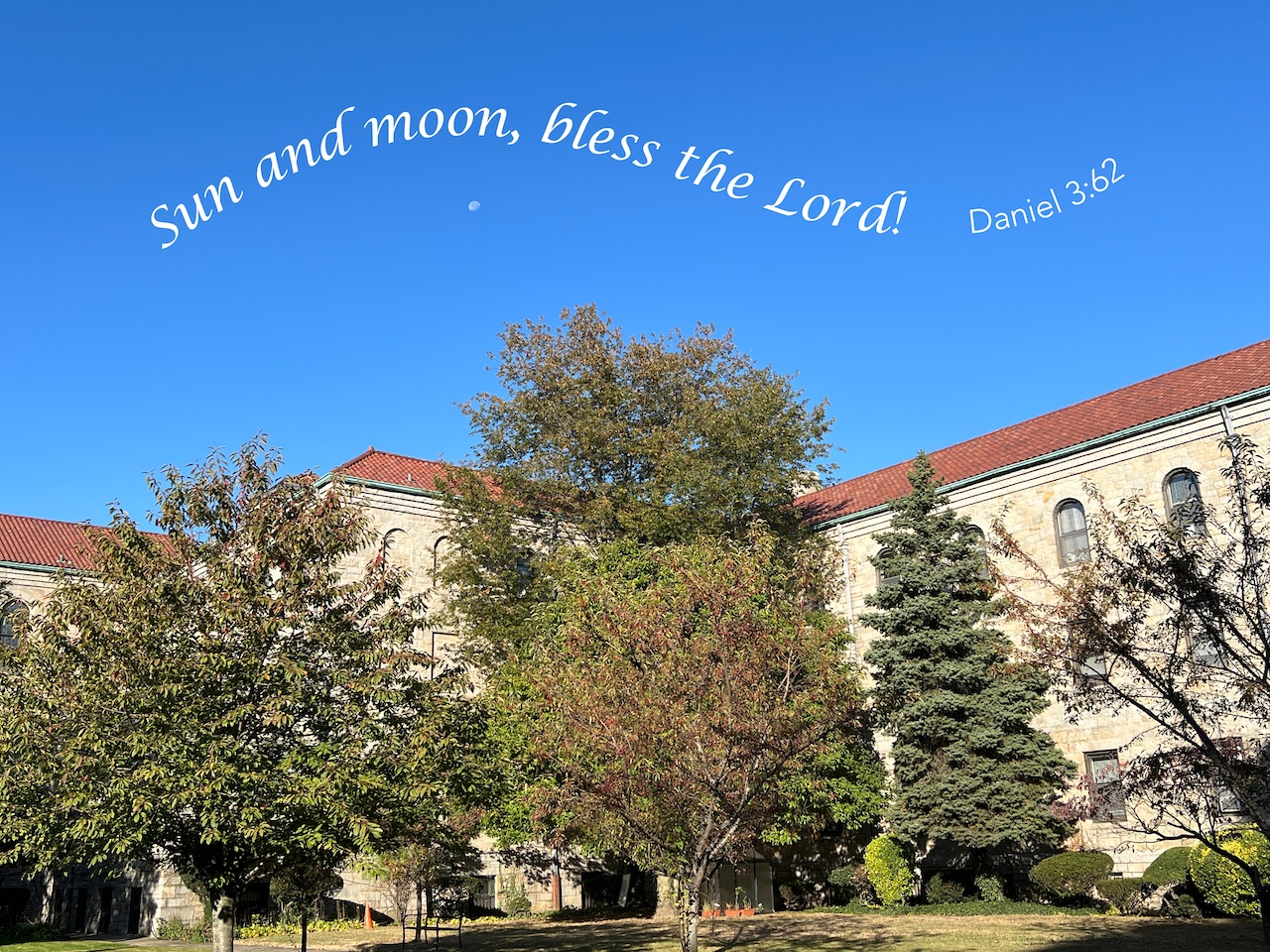
Thankfully, we can redeem the time. As the earth revolves around the sun, children of God revolve in the orbit of the Blessed Trinity. Space and time, the materials of our journey from birth to eternity, belong to the Father, Creator of all things through his Word and Spirit. Jesus, who frequently spent the night in prayer, models our way home to the Father.
Can one pray during a busy schedule? St. Augustine teaches that “even in these actions” (work responsibilities), we pray by continually longing for God. Many words are unnecessary. The desert monks discovered that short but frequent prayers, “hurled like swift javelins,” keep the heart and mind fixed on the Lord.
“Ask and it will be given to you; seek and you will find; knock and the door will be opened to you” (Matthew 7:7). Persistence in prayer with sighs and tears unite us with the ineffable God, “for he has established all things through his Word and does not seek human words.” As a monastery is a house of prayer, so are all of us “temples” of prayer in the Holy Spirit (Romans 8:26-27).
The Passionists Pray website offers resources for daily prayer, which can be accessed here.
From a letter to Proba by Saint Augustine, bishop
Let us turn our mind to the task of prayer at appointed hours
Let us always desire the happy life from the Lord God and always pray for it. But for this very reason we turn our mind to the task of prayer at appointed hours, since that desire grows lukewarm, so to speak, from our involvement in other concerns and occupations. We remind ourselves through the words of prayer to focus our attention on the object of our desire; otherwise, the desire that began to grow lukewarm may grow chill altogether and may be totally extinguished unless it is repeatedly stirred into flame.
Therefore, when the Apostle says: Let your petitions become known before God, this should not be taken in the sense that they are in fact becoming known to God who certainly knew them even before they were made, but that they are becoming known before men through boasting.
Since this is the case, it is not wrong or useless to pray even for a long time when there is the opportunity. I mean when it does not keep us from performing the other good and necessary actions we are obliged to do. But even in these actions, as I have said, we must always pray with that desire. To pray for a longer time is not the same as to pray by multiplying words, as some people suppose. Lengthy talk is one thing, a prayerful disposition which lasts a long time is another. For it is even written in reference to the Lord himself that he spent the night in prayer and that he prayed at great length. Was he not giving us an example by this? In time, he prays when it is appropriate; and in eternity, he hears our prayers with the Father.
The monks in Egypt are said to offer frequent prayers, but these are very short and hurled like swift javelins. Otherwise their watchful attention, a very necessary quality for anyone at prayer, could be dulled and could disappear through protracted delays. They also clearly demonstrate through this practice that a person must not quickly divert such attention if it lasts, just as one must not allow it to be blunted if it cannot last.
Excessive talking should be kept out of prayer but that does not mean that one should not spend much time in prayer so long as a fervent attitude continues to accompany his prayer. To talk at length in prayer is to perform a necessary action with an excess of words. To spend much time in prayer is to knock with a persistent and holy fervor at the door of the one whom we beseech. This task is generally accomplished more through sighs than words, more through weeping than speech. He places our tears in his sight, and our sighs are not hidden from him, for he has established all things through his Word and does not seek human words.
Reference
The passage from St. Augustine can be found in the Office of Readings for Monday of the 29th Week in Ordinary Time.
7 Tue Lenten Weekday [Sts Perpetua and Felicity, Martyrs] Is 1:10, 16-20/Mt 23:1-12
8 Wed Lenten Weekday [St John of God, Religious] Jer 18:18-20/Mt 20:17-28
9 Thu Lenten Weekday [St Frances of Rome, Religious] Jer 17:5-10/Lk 16:19-31
10 Fri Lenten Weekday Gn 37:3-4, 12-13a, 17b-28a/Mt 21:33-43, 45-46
11 Sat Lenten Weekday Mi 7:14-15, 18-20/Lk 15:1-3, 11-32
12 SUN 3rd SUNDAY OF LENT Ex 17:3-7/Rom 5:1-2, 5-8/Jn 4:5-42
Our readings for this week, beginning with the Old Testament reading from Isaiah, proclaim the mercy of God. The New Testament readings on Monday, Thursday and Saturday are from St. Luke– a gospel of mercy. Jesus proclaims God’s mercy, especially extended to the poor. The story of the Prodigal Son, Luke’s great parable of God’s mercy, is read on Saturday,
Matthew’s Gospel for Wednesday reminds us that temptations about power, so obvious in the story of Jesus’ temptations, also occur in his disciples, like James and John. Can we see it too in the elder brother from the Parable of the Prodigal Son?
The readings from the Old and New Testaments complement each other during Lent. Celebrations of the saints are fewer and often become optional memorials, as is the case of the saints this week. .
The mercy Jesus calls for is not just acceptable or normal; it’s Godlike. Can any of us be as merciful as God? But there’s no watering down the challenging, radical words we hear in our lenten readings.
Lent’s not meant to make us comfortable; it sets our sights on loving more, and it sets the bar higher than we like. Like the Olympic games, lent calls for our best, and more. A bigger prize than a gold medal is at stake.
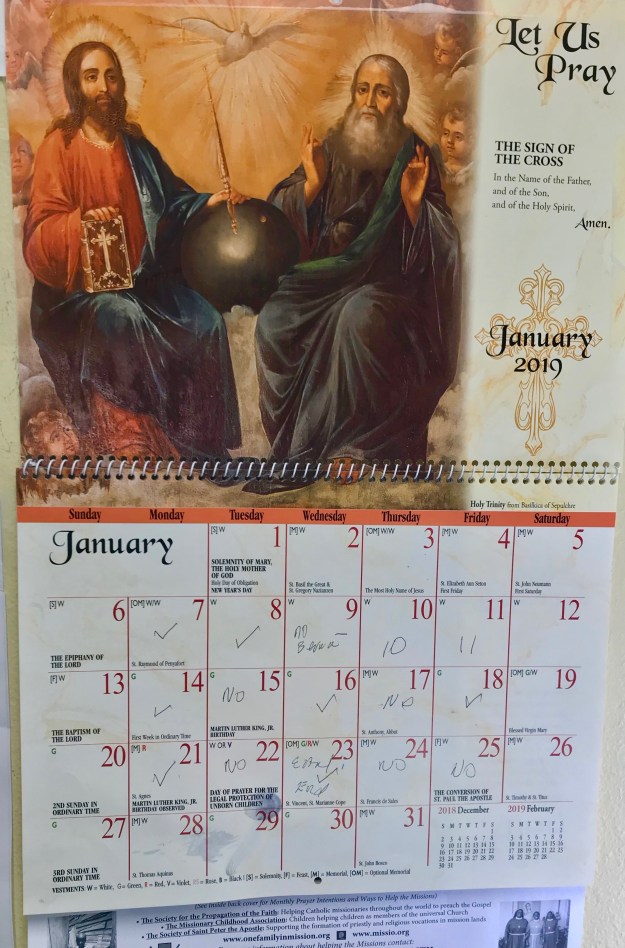
About this time every year when I was a boy, my mother would put up on the kitchen door the calendar we got from church. She marked down the anniversaries of family deaths and birthdays and other celebrations coming along, and she added other dates as the days passed. The pictures on the calendar interested me most then. When we put up the calendar, we were ready for the days ahead.
The calendar’s still a good way to get ready for the days ahead. “Teach us to number our days aright, that we may gain wisdom of heart,” one of the psalms says.
Our calendars today may be on our computers instead of the kitchen door. They’ve also changed in a number of ways since the Second Vatican Council. For one thing, our church calendars today list the scripture readings read at Mass for the weekdays and Sundays throughout the year. They open the treasures of our faith for us.
Our calendars alert us to the main feasts and seasons, Christmas and Easter, advent and lent, celebrated by the whole church throughout the year. The general calendar also lists the days for celebrating saints honored the world over, such as Mary, the Mother of Jesus, the apostles, St. Francis of Assisi, St. Theresa of Avila and others.
The council left countries and regions to decide on some celebrations of their own. In our particular calendar here in the United States, for example, we celebrate Thanksgiving Day and American saints like St. Elizabeth Seton, St. Elizabeth Cabrini and St. John Neumann.
The calendar’s still a good way to keep our lives in order, not only doctors’ and social appointments, birthdays and anniversaries, but our spiritual lives as well. They go together. We’re meant to live from day to day, from feast to feast, and be formed by the mysteries of Christ, his saints and the scriptures.
It’s my kitchen door. Through the week I reflect on the feasts and seasons and saints on that blog. The calendar’s a teacher helping us to “number our days aright.” It’s our daily catechism.
Does a flower make pronouncements? Does it define itself? Does it box itself in with titles, names, and distinctions?
And yet, “not even Solomon in all his splendor was clothed like one of these.” (Matthew 6:29)
———
A flower simply exists.
And its existence glorifies God.
There is no need for it to do more.
By its very existence it magnifies what cannot be further magnified: God’s Presence, God’s Glory, God’s Beauty…
———
“I’m a flower.”
“I’m a rose.”
“Look at me!”
Statements such as these we shall never hear.
Flowers are divinely indifferent to the world’s definitions and distinctions, to its approval and applause.
After all, it’s a person who receives the medal at an orchid show, and not the flower herself. No, her finely-placed petals would only be weighed down by such metallic-based ribbons.
What a gift it is to simply exist.
———
Flowers don’t cling to seasonal life.
When it’s time to go, they gracefully drop their heads and lose their pedals.
Never has there existed a man as poor as a flower.
Never has mankind so possessed the richness of fleeting, transitory, and momentary life.
It’s their genius to instinctively believe that death leads to new abundant life.
———
Flowers graciously receive:
Ladybugs, drops of dew. Beams of light, the relief of shade.
Flowers give and receive as if not a single thing has ever been made by man.
They welcome sun as well as rain.
They never cry over fallen fruit or a stolen piece of pollen.
They quietly applaud instead, rejoicing that their little ones have the opportunity to travel abroad—perhaps even the chance to help nurture a neighbor.
———
A flower, perhaps most of all, knows it place.
It never wishes to be bigger or thinner…greener or higher…it never dreams of being more like a tree.
A flower’s blessing is simplicity beyond you and me.
———
Christ is a flower.
He is the one true perfect eternal flower, through whom all other flowers partake, toward whom all other flowers reach.
Christ is a flower. His ways are not our own. He simply exists. Bowing His head. Dropping pedals. Feeding hungry bees. Giving and receiving. His identity is crucified—leaving nothing behind but being “qua” being.
.
If God so clothes the grass of the field, which grows today and is thrown into the oven tomorrow, will he not much more provide for you, O you of little faith?
—Matthew 6:30
. .
—Howard Hain . . (Dedicated to Brother Jim, a man who knew how to simply exist.)
I find myself turning away from the news on television these days. I don’t think I’m the only one. The pandemic only seems to be getting worse, and we’re getting worse with it.
So we turn to the Good News.
I’m finding the Gospel of Matthew, which we’re reading these weekdays and on Sundays, helpful. It was written for people struggling with bad times.
The bad times were around the year AD 90 when the followers of Jesus in Galilee were reeling from the attacks of a resurgent Judaism. Those attacks are described in Chapters 10-12 of Matthew’s gospel.
Instead of closing their eyes and hanging on tight, Jesus tells his disciples to open their eyes and their ears, because there’s something for them to learn. “Blessed are your eyes, because they see and your ears because they hear. Many prophets and righteous people longed to see what you see but did not see it and hear what you hear and did not hear it” (Matthew 13:16-17). He says that as he teaches them in parables.
Bad times can be the best times to learn. Some of the best things we know; some of the best insights we have; some of the most creative thoughts may come in bad times. God doesn’t stop speaking or teaching in bad times; God sows seeds and opens new avenues. New treasures, new pearls are there to be discovered in the ground we walk over and the jumble of things that seem to overwhelm us.
We will be reading soon the parables of the treasure hidden in the field and the pearl of great price and the net that pulls up a bewildering variety of things from the sea. It’s a message continued in the mystery of the Passion of Jesus. The disciples saw only death and failure there at first, but then they saw treasures in the wounds, the blood and water that flowed from his side, the words he said.
We don’t have to turn away from bad times. They’re times to keep your eyes and ears open, Jesus says. Like his first disciples, we should pray, not for blinders, but for “understanding hearts.”
The daily Mass readings for Eastertime, from the Acts of the Apostles and the Gospel of John, are so different in tone. The Acts of the Apostles is a fast-moving account of a developing church spreading rapidly through the world through people like Paul of Tarsus and his companions. Blazing new trails and visiting new places, they’d be frequent flyers today, always on the go.
The supper-room discourse of Jesus from the Gospel of John, on the other hand, seem to move slowly, repeating, lingering over the words of Jesus to his disciples. Listen, be quiet, sit still, they say. Don’t go anywhere at all.
St. Paul of the Cross, the founder of the Passionists, was inspired by St. Paul, the Apostle, to preach and to teach. Many of his letters end telling readers he has to go, he’s off to preach somewhere. He was a “frequent flyer.”
But the Gospel of John also inspired him; it was the basis for his teaching on prayer. Keep in God’s presence, in pure faith, he often said. Enter that inner room and remain there. Don’t go anywhere.
“It’s not important for you to feel the Divine Presence, but very important to continue in pure faith, without comfort, loving God who satisfies our longings. Remain like a child resting on the bosom of God in faithful silence and holy love. Remain there in the higher part of your soul paying no attention to the noise of the enemy outside. Stay in that room with your Divine Spouse…Be what Saint John Chrysostom says to be: silent clay offered to the potter. Give yourself to your Maker. What a beautiful saying! What the clay gives to the potter, give to your Creator. The clay is silent; the potter does with it what he wills. If he breaks it or throws away, it is silent and content, because it knows it’s in the king’s royal gallery.” (Letter 1515)
The Presentation of Jesus in the temple, forty days after his birth, is a Christmas feast, even though our Christmas decorations are put away. It’s part of Luke’s Infancy Narrative.
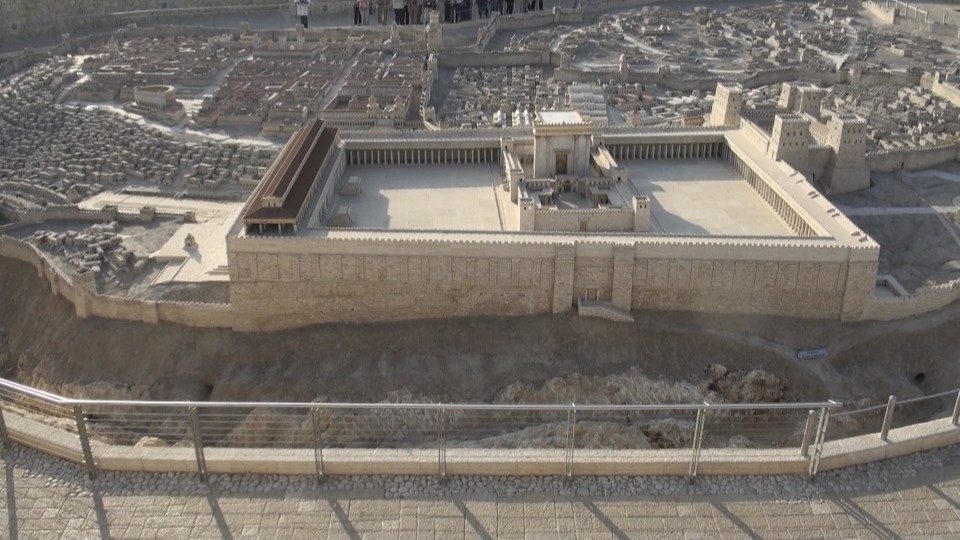
The temple of Jerusalem– a reproduction is pictured above– plays a big part in Luke’s Infancy Narrative, even more important than the stable to which the shepherds came. The angel announced John’s birth to Zachary in the temple, and there Jesus is presented after his birth. Later, he will come to the temple as a young boy and impresses its teachers, as he listens to them and asks them questions.
Luke doesn’t dwell on the rituals or appearance of the temple– he may not know much about them–but the temple for him is where God is present, and so it’s the place where Jesus would be recognized. Forty days after his birth, two elderly Jews, Simeon and Anna, recognize him. They’re faithful believers who represent the generations waiting for the Messiah.
Old Simeon takes the child in his arms:
“Now, Master, you may let your servant go
in peace, according to your word,
for my eyes have seen your salvation,
which you prepared in the sight of all the peoples:
a light for revelation to the Gentiles,
and glory for your people Israel.” (Luke 2,22-40)
Afterwards in his gospel Luke describes the rejection of Jesus by his neighbors in the synagogue at Nazareth– neighbors who saw him so frequently but don’t recognize him. Here in the temple two faithful Jews, Simeon and Anna, waiting for years, receive him. The long wai in the temple has not dulled their eyes. In fact, it has made them sharper. They see salvation in this little child, ” a light of revelation to the gentiles, and the glory of your people Israel.”
So true, isn’t it, waiting can dull our eyes? Year by year can diminish what we expect and hope for. Day after day, faith can get tired. Prayers can become rote, sacraments can become routine. A holy place can become just another place.
It wasn’t so for these two elderly Jews. Their steady presence in the temple made them sharper, quicker to recognize the light that came to that place. We bless candles today, to burn in our church this year, and we pray that our church may never be dark but a place where we see the light of Christ and recognize his will for us and for our world.
“Outwardly Jesus was fulfilling the law, but in reality he was coming to meet his believing people. Prompted by the Holy Spirit Simeon and Anna came to the temple. Enlightened by the same Spirit, they recognized the Lord, so let us also gathered by the Holy Spirit, enter the house of the Lord and encounter Christ and recognize him in the breaking of the bread until he comes again, revealed in glory.” (Feast of the Presentation)
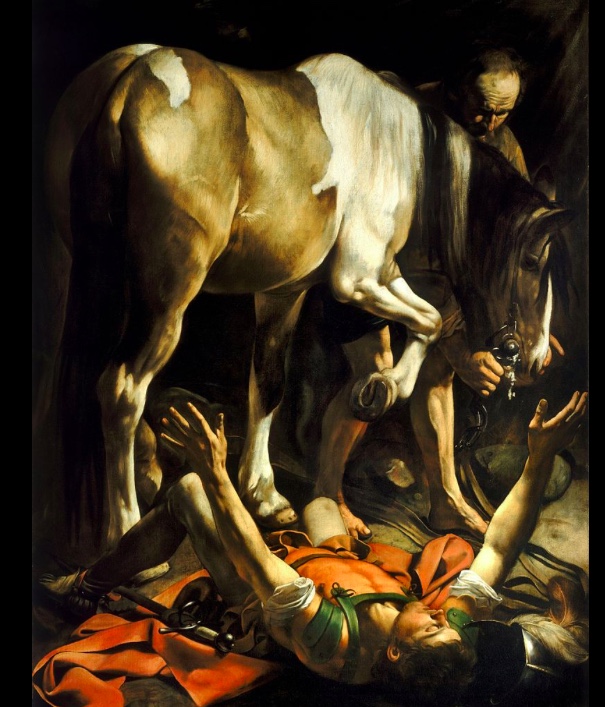
January 25th is the Feast of the Conversion of St. Paul. It came in a blinding moment, so different than the call of Jesus’ other apostles.
Caravaggio’s dramatic painting of Paul on the flat of his back, arms outstretched, helplessly blind is a vivid picture of humanity before God.
Conversion is God’s work; God alone gives the gift of faith.
The first reading for his feast tell the dramatic story of his conversion. (Acts 22, 3-16) In the gospel of Matthew,Jesus announces why he was called – to preach the gospel to all nations.(Matthew 16,15-18)
“May the Spirit fill us with that light of faith.”
For St. John Chrysostom “Paul, more than anyone else, has shown us what we really are, and in what our nobility consists, and of what virtue a human being is capable. Each day he aimed ever higher; each day he rose up with greater ardour and faced with new eagerness the dangers that threatened him. He summed up his attitude in the words: I forget what is behind me and push on to what lies ahead.
“When he saw death imminent, he bade others share his joy: Rejoice and be glad with me! And when danger, injustice and abuse threatened, he said: I am content with weakness, mistreatment and persecution. These he called the weapons of righteousness, thus telling us that he derived immense profit from them…
The most important thing of all to Paul was that he knew himself to be loved by Christ.”
May God give us that grace .
Today ends the Week of Prayer for Christian Unity.
Goodness and kindness
join us as we stand around
the dinner table.
Three generations of two families
join hands to give you thanks –
for this special day,
for your gifts of food,
for your many blessings.
We pray for loved ones who are absent
due to time and distance,
or who have gone before us to be with you.
We pray for those who are alone,
without family or friends on this special day,
on many days, or perhaps every day.
And we pray for those who will serve them
with good food, kindness, love and friendship
on this Thanksgiving Day.
We pray for peace, the peace only you can give.
We thank you and we love you.
Amen.



 The Victor's Place