The candles at Tenebrae lead to another reflection. The 15 candles stand for Jesus, his twelve apostles and the two disciples from Emmaus. As 14 candles are extinquished, we remember those who left him on Good Friday and fled.
Mary, the mother of Jesus, is not represented in the Tenebrae candles. She stood by his cross on Good Friday, but she is not among those our candles represent. Where did she go after his death and burial on Good Friday? Where was she on Holy Saturday?
She was among the women of Galilee who came up to the feast with Jesus. It’s likely they stayed in Bethany, the traditional place pilgrims from Galilee stayed. She must have been welcomed by the friends of Jesus, Mary, Martha and Lazarus. Did Lazarus, raised from the dead, offer her hope? Still, his death was so unlike that of her Son. He died of some sickness; Jesus was brutally put to death.
Would Mary have the same questions of God as Martha had of Jesus? Why? This was a day the piercing sword foretold by Simeon the temple struck most deeply into her heart. This was a day her faith was so fiercely tried.
In our calendars, Saturday is a day we remember Mary. We remember her today and ask her to pray that we may believe in the promises of Christ.
At the cross her station keeping, stood the mournful mother weeping, close to Jesus till the last.
Lent is a time for us to face up to how very much our God loves us. This is who our God is. Because of this, Lent is also our time to face up to to the hurt that we give to Our Beloved One whenever we behave in unloving ways. We can begin by looking at the commandments that our Church teaches us and examining our conscience. In the Gospel for Wednesday of the Third Week of Lent our Lord warns us: “Whoever breaks the least of these commandments and teaches others to do so will be called the least in the Kingdom of Heaven.” Ouch! I look at the Ten and see how I fall short in fulfilling them, and at times provide a bad example for those around me. I am certainly one of “the least”. Sadly I am not alone. So many of us are in the same boat. And yet Our Lord still includes us in His Kingdom. The least, but still there. Like Fr Victor says, Our Lord has not given up on us!
How can we help God get us out of that hole? Perhaps we can begin by approaching our Creator with humility and trust. In the powerful Gospel for Saturday of this same week, we hear Jesus’ parable of the Pharisee and the tax collector. The attitude of the Pharisee immediately places him next to me as one “of the least!” He has been trying to be “good”, and he feels joy and comfort in the presence of God, especially in his House. This is good. So many of us Christians walk into Mass full of hope and gratitude. But oh! That cardinal sin of pride, the failure to love our neighbor as ourselves!
The tax collector seems to have the better attitude, full of shame, contrite, totally surrendering to the judgement of God. He knows that he certainly is one of the “least”. I’ve always said, “I want to be like him,” in all prayer, specially during the Sacrament of Reconciliation. Today, though, Fr Victor pointed out that this tax collector so far has failed to know how incredibly great is the Love God has for him. This is what our Lord Jesus came to teach. At least the tax collector has a glimmer of belief in the mercy of God. It’s a good beginning, and God exalts him for that.
Sometimes at Mass I feel like the Pharisee, satisfied with my efforts and full of gratitude for God’s Love and presence in my life. The Celebration of the Mass seems like such a joyful time and I wonder why so many fellow worshippers have such long faces! I should know better, because there are times when I walk into Church with that same unhappy mood! All I know is that I am still one of “the least” and I’m not proud of it. I wonder how far down the list I am? Does God keep lists? Who is the least of the least?
I was sitting at the Monastery Chapel thinking about these things and my eyes suddenly looked up to the crucifix up front, and I began to cry. My beloved God chose to become the Least of the least upon that Cross, taking on the pride of the Pharisee, the corruption of the tax collector, my unworthiness, the misery of of those with long faces at Church, and the viciousness and brutality of His time and mine.
Why would God do this? The answer to his mystery is beyond all comprehension. But I do know that the main reason is the incredible love that God has for me and every person on Earth, no matter how far down the list we are.
May the Passion of Jesus Christ be always in our hearts.
Commentators find it hard to establish the time and place the Epistle to the Hebrews was written. Most say it was written for early Jewish Christians trying to figure out their relationship to the religion of their ancestors.
I wonder if Jewish Christians in Rome would be especially among those for whom the letter was written. Rome is one of the places commentators say it might have originated..
The Jewish Christian community of Rome was a large community attached to Jerusalem and the temple, even Jews who had embraced a new faith. They would have been onlookers as Titus marched triumphantly into the Rome carting the spoils and slaves in chains from the Jewish wars and the destruction of the temple in 70. Afterwards, they would have watched the Colosseum bring built with the gold from the temple. Less than 5 years before some were singled out as renegade Jews and blamed by Nero for the great fired that had destroyed the city.
As we read the words from the Epistle to the Hebrews today I wonder if we hear words written especially for them.
“Let us hold unwaveringly to our confession that gives us hope, for he who made the promise is trustworthy.We must consider how to rouse one another to love and good works. We should not stay away from our assembly, as is the custom of some, but encourage one another, and this all the more as you see the day drawing near.” Hebrews 10:19-25
It would be a hard time then for Jewish Christians in Rome “to put your light on a lamp stand,” as we read in today’s gospel . It was a time for laying low, “staying away from our assembly.”
Faith has to be professed in season and out of season. It’s never to be hid under a bushel.
Mark’s gospel today describes the arrival of Mary his mother and some of his relatives from Nazareth. (Mark 3: 32-35) They’re outside a house crowded with people gathered around Jesus, some looking to be cured, some to listen to what he has to say. Jesus and his disciples don’t even have time to eat, Mark says.
His family come because they want to take him home; some think he is out of his mind . (Mark 3:20-21) When people tell him ‘Your mother and your brothers and your sisters are outside asking for you.’ Jesus said to them in reply, ‘Who are my mother and my brothers?’ And looking around at those seated in the circle he said, ‘Here are my mother and my brothers. For whoever does the will of God is my brother and sister and mother.’” (Mark 3: 32-35)
Jesus sees people of faith as his family, his mother, brother and sister. He considers us who believe in him his family.
But we continue to ask: Why does his own family think he is out of his mind?
His mother Mary is with them. What does she think?
The gospels, Matthew 13:54-58, Mark 6: 1-6, Luke 4:16-30 all point to Nazareth as a place where Jesus is rejected. Luke’s gospel sees the rejection of Jesus at Nazareth in the harshest terms. They are ready to hurl him from the hill after the claims he makes in their synagogue. His visit to Nazareth is headed for violence, but a violence postponed, and no one takes his part. ( Luke 4:16-36 )
Mary lived there. What was it like for her? What was it like to be with family members who thought her son was mad? What was it like to be day after day with people who didn’t believe in her son? No one from Nazareth is among the 12 disciples Jesus chooses. The rejection of Jesus by the people of his own town, his own family and relatives, was a sword that pierced her heart.
We might say Mary’s faith was strong and kept her secure, but was it a faith that knew everything? Did it save her from questioning?
I wonder if we can see Mary’s appearance at Lourdes and Fatima in some way related to her own experience at Nazareth. She appears in places when the faith of ordinary people is severely challenged by a world increasingly hostile to belief.
She knows how to believe when everyone else does not. We welcome her today to be with us.
The Advent season closes today December 24th. The Christmas season begins with the vigil Mass this evening.
Advent is a season rich in the scriptures. Isaiah speaks strongly throughout the season, calling Jewish exiles and all nations to the holy mountain and God’s banquet with his people and all creation. “Swords will be turned into plowshares and spears will be turned into pruning hooks and they will not train for war again.”
John the Baptist and his parents Zachariah and Elizabeth have important roles in the coming of the Child born of Mary. Of course, Mary and Joseph are key figures responding to the messengers of God.
Faith and hope do not come easily, the Advent season tells us. Political unbelief appears in Ahaz who “will not tempt the Lord.” Zachariah, a priest, is struck dumb for his unbelief. John the Baptist asks if Jesus is really “the one who is to come.” Mary wonders “how can this be?”
The gospel reading today, Zachariah’s song of belief, seems to promise faith and hope conquers in the end.
“Blessed be the Lord God of Israel, he has come to his people and set them free.
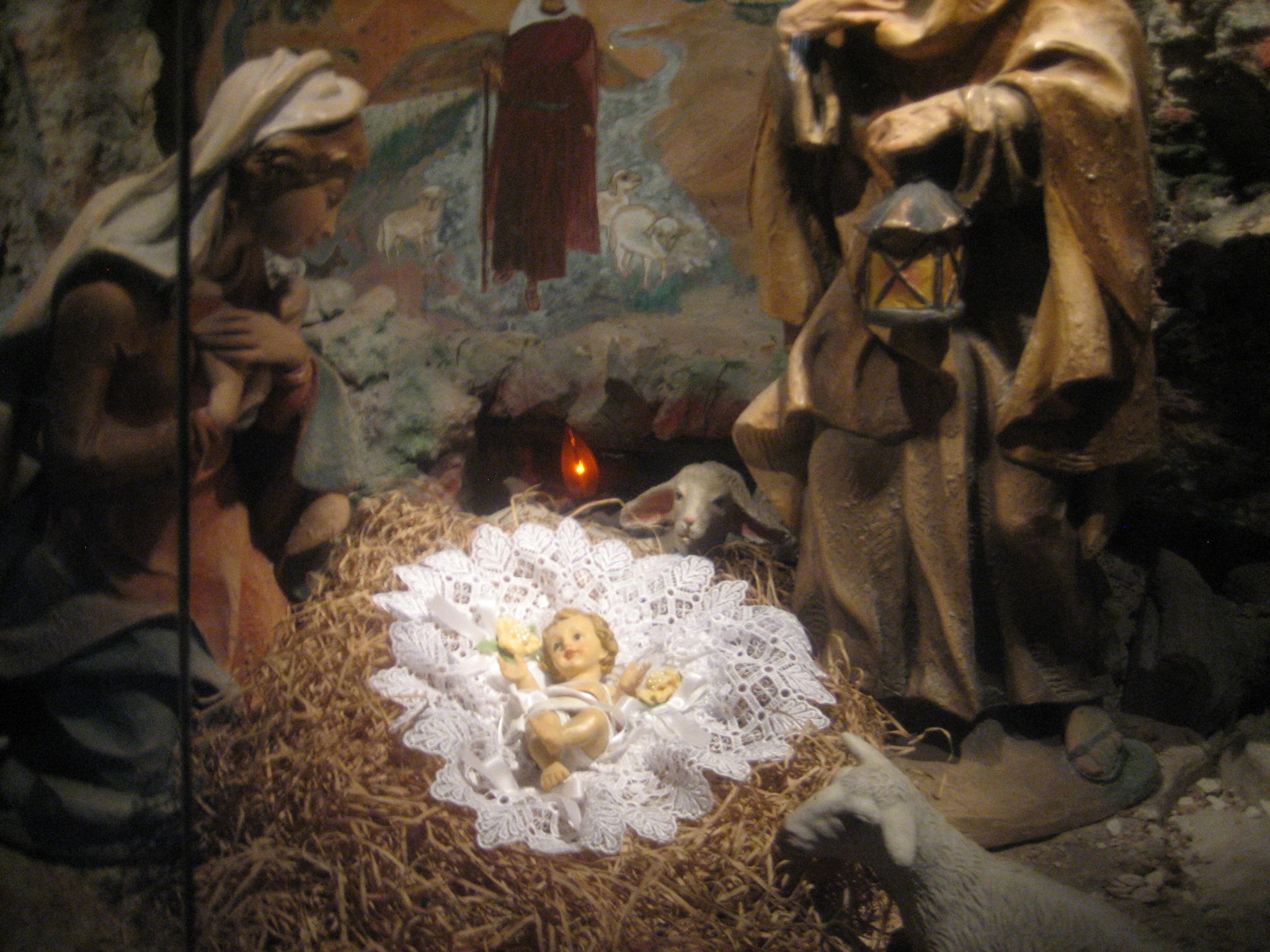
Christmas carols, more than the scriptures seem to dominate the Christmas season. They bring the shepherds from the dark hills and magi from the east to the Child. They also speak of those who not believe, like Herod who goes in search of the Child. But people of faith, like Simeon and Anna, welcome the Child in the temple and take him into their arms.
Advent and Christmas are seasons rich in the wisdom of faith. A faith that leads to great truths, as the feast of John the Apostle reminds us. A faith one should die for, as we are reminded by the feasts of the Holy Innocents and Stephen the first of many martyrs.
The Book of Revelation has an important place in the church’s evening prayer. A selection occurs every Sunday, Tuesday, Thursday and Friday evening through the four week cycle of the Liturgy of the Hours. It’s the last prayer of the evening.
The selections are not grim passages about battles fought against Babylon and the enemies of God, but rather invitations to share in the heavenly triumph of Christ. They bring us before God’s throne and the Lamb who was slain to offer praise with all the saints who have gone before us. From this world, which can be so small and constricted, so frightening and dangerous, where we can become so self-absorbed and unsure, we come into the welcoming presence of God, who calms the fear of darkness and death.
O Lord our God, you are worthy to receive glory and honor and power. For you have created all things; by your will they came to be and were made. Worthy are you, O Lord to receive the scroll and break open its seals. For you were slain; with your blood you purchased for God men of every race and tongue, of every people and nation. You made them a kingdom, and priests to serve our God, and they shall reign on earth. Worthy is the Lamb that was slain to receive power and riches, wisdom and strength, honor and glory and praise. Glory to the Father and to the Son, and to the Holy Spirit:as it was in the beginning, is now, and will be for ever. Amen. ( Tuesday Evening)
At the end of the day, we visit heaven; we go into the night listening to the songs sung there. Prayers from Revelation offer the promise of future life.
“Amen, I say to you, this poor widow put in more than all the other contributors to the treasury. For they have all contributed from their surplus wealth, but she, from her poverty, has contributed all she had, her whole livelihood.” Today’s gospel image of the generous widow emphasizes the attitude of biblical stewardship that is not based on surplus but on sacrifice. Most of us live this kind of stewardship. We call our offertory collection a “sacrificial offering.” Biblical stewardship goes far beyond the material because something behind that spirit of giving comes from having values, namely the values of sharing, support, and trust. Sharing is not a programmatic gift. It comes from seeing our parents and grandparents sharing a home, their love, shelter, food, and themselves with us so we could grow into generous human beings. Jesus is not advocating financial irresponsibility; he is asking for the freedom to give out of love, not out of calculation.
The early Church put a great emphasis on the care of widows and orphans. It wasn’t a safety net that gave the widow in today’s gospel the strength to give, it was the church that she knew as a family that cared with compassion for those who were in the greatest need.
I remember when I was in Jamaica, West Indies, we had a group from a parish in Pennsylvania visiting. We went to see a woman in a very rural area. She told us that some of her crops from her small plot of vegetables were stolen. We spent an hour with her and as we were leaving, she handed us a bag of beans from her garden. The visiting pastor was speechless and immediately protested knowing her garden was depleted because of a theft. But she smiled, “Father, you cannot come to my home and not receive a gift to take back to your home.” He took the beans and was shocked but said, “I just met the widow from the gospel.” He witnessed the living gospel.
May our eyes be open to those generous hearts who renew our hope in the way God provides and never tires of giving himself to us in his Son whose sacrifice is the ultimate act of generosity.
It’s good to be reminded in these days following our contentious election on Tuesday that “ our citizenship is in heaven.” Paul tells that to the Philippians in today’s reading, but we should hear it too.
But our citizenship is in heaven, and from it we also await a savior, the Lord Jesus Christ. He will change our lowly body to conform with his glorified Body by the power that enables him also to bring all things into subjection to himself.
Therefore, my brothers and sisters, whom I love and long for, my joy and crown, in this way stand firm in the Lord, beloved.
We ‘re citizens of heaven; we belong somewhere else. We’re temporary, not permanent residents here. In that place “ the Lord Jesus Christ will change our lowly bodies to conform to his glorified Body by the power that enables him also to bring all things into subjection to himself.” (Philippians 3:17-4:1)
The responsorial psalm today tells us that even now we’re standing within the gates of a heavenly Jerusalem, the destiny of the tribes of the Lord. Our destiny.
St. Augustine wrote “The City of God” as barbarian armies sacked Rome and were invading North Africa. The world is coming to an end, some were saying, and they blamed Christianity for the critical times. But God is at work beyond human time and events, Augustine wrote.
Go rejoicing to the city of God and the house of the Lord, we hear today. There is something beyond the politics of today at work.
An Excerpt From Pope Francis, General Audience, Saint Peter’s Square Wednesday, 4 May 2016
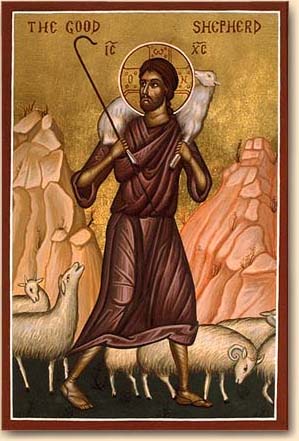
We are all familiar with the image of the Good Shepherd with the little lost lamb on his shoulders. This icon has always been an expression of Jesus’ care for sinners and of the mercy of God who never resigns himself to the loss of anyone. The parable is told by Jesus to make us understand that his closeness to sinners should not scandalize us, but on the contrary it should call us all to serious reflection on how we live our faith. The narrative sees, on the one hand, the sinners who approach Jesus in order to listen to him and, on the other, the suspicious doctors of the law and scribes who move away from him because of his behavior. They move away because Jesus approaches the sinners. These men were proud, arrogant, believed themselves to be just.
The lesson that Jesus wants us to learn is… that not a single one of us can be lost. God’s action is that of one who goes out seeking his lost children and then rejoices and celebrates with everyone at their recovery.
We are all warned: mercy to sinners is the style with which God acts and to this mercy he is absolutely faithful: nothing and no one can distract him from his saving will. God does not share our current throw-away culture… God throws no one away; God loves everyone, looks for everyone: one by one! He doesn’t know what “throwing people away” means, because he is entirely love, entirely mercy.
While he is looking for the lost sheep, he challenges the ninety-nine to participate in the reunification of the flock. Then, not only the lamb on his shoulders, but the whole flock will follow the shepherd to his home to celebrate with “friends and neighbors.”
We should reflect on this parable often, for in the Christian community there is always someone who is missing and if that person is gone, a place is left empty. Sometimes this is daunting and leads us to believe that a loss is inevitable, like an incurable disease.
In Jesus’ vision there are no sheep that are definitively lost, but only sheep that must be found again. We need to understand this well: to God no one is definitively lost. Never! To the last moment, God is searching for us. Think of the good thief; only in the eyes of Jesus no one is definitively lost. For his perspective is entirely dynamic, open, challenging and creative. It urges us to go forth in search of a path to brotherhood. No distance can keep the shepherd away; and no flock can renounce a brother. To find the one who is lost is the joy of the shepherd and of God, but it is also the joy of the flock as a whole! We are all sheep who have been retrieved and brought back by the mercy of the Lord, and we are called to gather the whole flock to the Lord!
Click here to read the full address by Pope Francis.
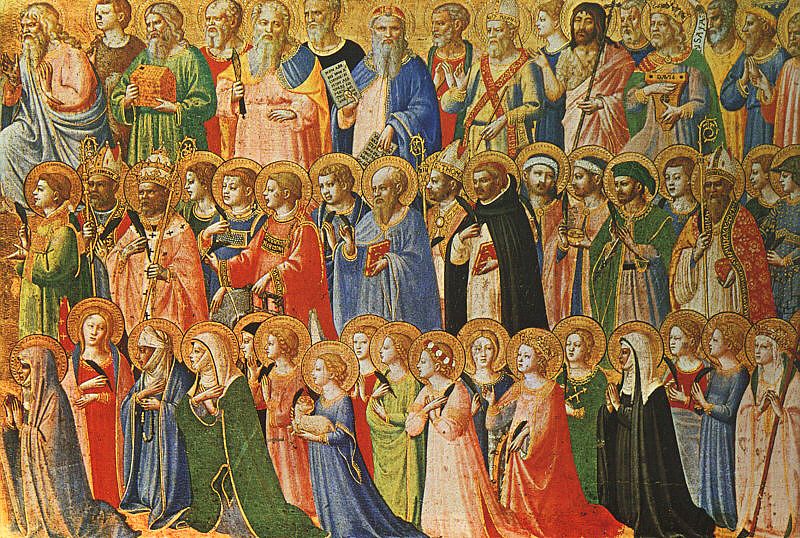
Hubble Ultra Deep FieldFra Angelico, The Forerunners of Christ with Saints and Martyrs
By Gloria M. Chang
From eternity the Lord God designed humanity and the cosmos in his image, envisioning the constellation of saints bursting with Christic Light in the heavens. Formed from the dust of the earth, Adam evolves through the eons to completion in Jesus Christ, his descendant and Lord—the Potter’s masterpiece (Isaiah 64:8).
Kindling the treasure of Christ’s flame in “jars of clay,” we grow day by day into the image of the Blessed Trinity as one Mystical Body (1 Corinthians 15:41). The dazzling kaleidoscope of saints, reflecting the unity and diversity of the Father, Son, and Holy Spirit radiates the infinite rays of divinity. Each saint refined in God’s furnace of Love emerges as an original from the hands of the Divine Artist, for “star differs from star in glory” (1 Corinthians 15:41).
Form me with your hands, Lord, day by day. You are the Potter; I am the clay. From soil you shaped sparkling saints like stars, Blazing your glory from earthen jars.
Just as we have borne the image of the man of dust, we shall also bear the image of the man of heaven.




 The Victor's Place