Tag Archives: Jerusalem

The Exaltation of the Cross: September 14

Holy sepul

Pilgims enteing the Church of the Holy Sepulcher, Jerusalem

This ancient ecumenical feast,  celebrated by Christian churches throughout the world, commemorates the dedication of a great church in Jerusalem at the place where Jesus died and rose again. Called the Anastasis ( Resurrection) or the Church of the Holy Sepulcher, it was built by the Emperor Constantine and dedicated on September 13, 325. It’s  one of Christianity’s holiest places.

Liturgies celebrated in this church, especially its Holy Week liturgy, influenced churches throughout the world. Devotional practices like the Stations of the Cross grew up around this church. Christian pilgrims brought relics and memories from here to every part of the world. Christian mystics were drawn to this church and this feast.

Holy Sepulcher - 28

Tomb of Jesus

Calvary

Calvary

Pilgrims still visit the church and the tomb of Jesus, recently renovated  after sixteen centuries of wars, earthquakes, fires and natural disasters. They venerate the rock of Calvary where Jesus died on a cross. The building today is smaller and shabbier than the resplendent church Constantine built, because the original structure was largely destroyed in the 1009 by the mad Moslem caliph al-Hakim. Half of the church was hastily rebuilt by the Crusaders; the present building still bears the scars of time.

Scars of a divided Christendom can also be seen here. Various Christian groups, representing churches of the east and the west, claim age-old rights and warily guard their separate domains. One understands here why Jesus prayed that ” All may be one.”

Holy Sepulcher - 04

Egyptian Coptic Christians

Seventeenth century Enlightenment scholars  expressed doubts about the authenticity of Jesus’ tomb and the place where he died, Calvary. Is this really it? Alternative spots were proposed, but scientific opinion today favors this site as the place where Jesus suffered, died and was buried.

For more on its history, see here.

And a video here.

Readings for the Triumph of the Cross

DSC00234
Via Dolorosa - 17

“Do not forget the works of the Lord!” (Psalm 78, Responsorial Psalm) We remember his great works here. How can we forget them.

Feast of the Birth of Mary (September 8)

st.ann basilica

After consulting local traditions, the Emperor Constantine and his successors built churches over important biblical sites in Jerusalem and the Holy Land in the 4th century. One of the churches, built near the ancient pool of Bethesda, just north of the Jewish temple in Jerusalem, was associated with Mary, the mother of Jesus.

It was built on a spot pointed out in John’s gospel:  “Now there was in Jerusalem at the Sheep Gate, a pool in Hebrew Bethesda, with five porticoes. In these lay a large number of the blind, lame and crippled,”  (John 5,2) Jesus healed a paralyzed man at this healing place, where pagan gods  like Asclepius and Serapis were honored.

Third century traditions concerning Mary, the Mother of Jesus, were associated with the church built over the ancient healing site. The traditions claimed that Mary’s birth and early life took place in this area. By the 5th century, Mary’s birth was celebrated here September 8. Christian pilgrims, returning home, began ti celebrate the feast of her birth on this day.

Barnett - 771
Ruins of Bethesda and ancient church
Paralytic

In the last century archeologists uncovered the ancient healing pool with its porticoes, parts of an ancient church and ruins of a temple of Asclepius (2nd-4th century) ..

Jerusaelm streets
Ruins of the Temple of Serapis

The early traditions said that Mary’s mother was Anne and her father Joachim. He provided sheep for the temple sacrifices. They were looked down upon as old and childless, but angels came and told them they were to conceive a daughter. Like Abraham and Sarah, their faith was rewarded.

Stories of Mary’s birth and her childhood strongly influenced the spirituality and devotional life of the early Christian churches of east and west. The feast of her birth is still celebrated by all the ancient churches on September 8 . Her parents are honored September 9 by the Greek Church. The Roman Church celebrates their feast July 26th.

When the Crusaders conquered the Holy Land in the 11th century they rebuilt the small church over the healing pool, which had fallen into ruins, and also built a new, larger church honoring St. Anne, the mother of Mary, southeast of the pool.

The present Church of St. Anne is one of the most beautiful of Jerusalem’s churches today. A favorite destination for pilgrims, it stands overlooking the remains of the old church and the ancient healing pool.

Readings for today’s feast see Mary’s birth awaited by all her ancestors. The gospel, St.Matthew’s genealogy of Jesus, begins with Abraham whose hopes and the hopes of generations before him were fulfilled when Mary brought Jesus Christ into the world. “We commemorate the birth of the blessed Virgin Mary, a descendant of Abraham, born of the tribe of Judah and of David’s seed,” (Antiphon, 1st Vespers, Roman rite)

“This feast of the birth of the Mother of God is the prelude, while the final act is the foreordained union of the Word with flesh. Today, the Virgin is born, tended and formed and prepared for her role as Mother of God, who is the universal King of the ages…
Today the created world is raised to the dignity of a holy place for him who made all things. The creature is newly prepared to be a divine dwelling place for the Creator.”
(St. Andrew of Crete, bishop, Office of Readings, Roman rite)

The Birth of Mary is the first great feast in the Orthodox Church calendar which begins in September. Their calendar ends with the feast of Mary’s Dormition, on August 15th.

The Orthodox liturgy sees Mary as the mysterious ladder that Jacob saw in a dream reaching from earth to heaven. (Genesis 28,10-17) She is the way the Word came down to earth’s lowest point, death itself, and returns to heaven having redeemed humanity. The Orthodox liturgy also associates  Mary with the miracle of the paralyzed man at the Pool of Bethesda. She has a role in healing our paralyzed humanity.

May your Church rejoice, O Lord, for you have renewed her with these sacred mysteries, as she rejoices in the Nativity of the Blessed Virgin Mary, the hope and the daybreak of salvation for all the world. Through Christ our Lord.

Praying with Mary and Ann

IMG (554)
Western Wall, Jerusalem

A novena preparing for the  Feast of Saints Ann and Joachim, the parents of Mary, the mother of Jesus, July 26 has begun, reminding us of the role parents and grandparents play in raising children.  Some years ago I visited the ancient temple ruins in Jerusalem where  Jewish women were fervently praying with their daughters before the temple’s western wall.

Ann and her daughter Mary must have prayed here too.

Temple

The picture above is a model of the temple from Jesus’ time at the Israel Museum. Tradition says Ann and Joachim were closely associated with the temple and may have lived nearby.  An ancient church honoring St. Ann stands today near the Pool of Bethesda, near the temple. There, a paralyzed man was healed by Jesus. (John 5, 1-18) That’s the church in the ruins below.

st.ann basilica
Church of St. Ann, Jerusalem

A statue of Ann and her daughter Mary is in the Jerusalem church. Ann is teaching her daughter at her side.

IMG_0600

What is she teaching her? Some statues show her teaching Mary the scriptures, but I’ve seen a statue, like the one below, showing Ann teaching her the ABCs and numbers. That’s what parents and grandparents do, isn’t it? They teach children life’s basics: how to live and how to pray.

IMG_0865
Cathedral, Tegucigalpa, Honduras

Still true today. We put the little statue below of the two of them under our chapel altar for the novena. Parents and grandparents, the next generation is at your side. Ann and Joachim pray for us; show us the way.

St. James, Son of Zebedee. July 25

James the greater

The mother of the sons of Zebedee approached Jesus with her sons
and did him homage, wishing to ask him for something.
He said to her,
“What do you wish?”
She answered him,
“Command that these two sons of mine sit,
one at your right and the other at your left, in your Kingdom.”
Jesus said in reply,
“You do not know what you are asking.
Can you drink the chalice that I am going to drink?”
They said to him, “We can.”
He replied,
“My chalice you will indeed drink,
but to sit at my right and at my left, this is not mine to give
but is for those for whom it has been prepared by my Father.”
When the ten heard this,
they became indignant at the two brothers.
But Jesus summoned them and said,
“You know that the rulers of the Gentiles lord it over them,
and the great ones make their authority over them felt.
But it shall not be so among you.
Rather, whoever wishes to be great among you shall be your servant;
whoever wishes to be first among you shall be your slave.
Just so, the Son of Man did not come to be served
but to serve and to give his life as a ransom for many.” (Matthew 20:20-28)

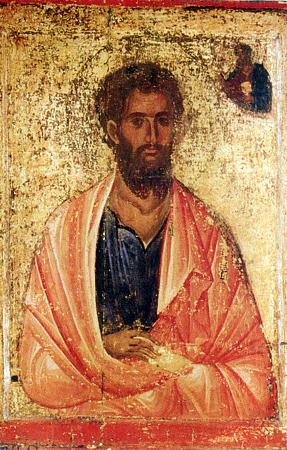
James and John were sons of Salome and Zebedee, the gospels say, and at the Sea of Galilee Jesus called them to follow him. They were fishermen, relatives of Jesus. The gospels mention James first; he may have been the oldest.

The two brothers are described as quick-tempered and ambitious about restoring Jewish independence. They became part of the innermost circle of Jesus’ companions. They heard him teach, saw him transfigured in glory, then shaking with fear in the garden of Gethsemane before his death.

Our first reading at Mass for the Feast of St. James is a good description of James and John. “We hold this treasure in earthen vessels, that the surpassing power may be of God and not from us.” (2 Corinthians, 4,7) James and John were earthen vessels indeed, as our gospel describes them, using their mother Salome as their intermediary, looking for a big place in the kingdom they hope Jesus will bring. Earthen vessels break easily.

Jesus asks them if they can drink from the chalice that he will drink from, the chalice of serving others, no matter what the cost. “We can,” they say.

His brother John and his mother Salome stood near the cross of Jesus, but James must have fled immediately when Jesus was seized in the garden. Yet, God’s “surpassing power” filled him with treasures of faith, and James drank from the cup he asked to drink.

According to the Acts of the Apostles, James spoke bravely about Jesus risen from the dead to the people of Jerusalem and to the Jews visiting the Holy City from all parts of the world at Pentecost. He became a leader of the Jerusalem church but probably still clung to dreams of Jewish independence. Long held dreams don’t easily disappear.

In the year 41, Herod Agrippa, the grandson of Herod the Great, became king of Judea and ruled in Jerusalem. Educated in Rome, he knew how to favor the emperors of his time and he also knew how to please the powerful Jewish ruling class that had a key role in his kingdom. Were they also concerned about James’ continued political hopes for a Jewish kingdom?

When the Jewish Sanhedrin accused Christians of threatening the peace of Jerusalem, Herod sent his soldiers to seize James, the son of Salome and Zebedee, and had him executed by the sword. Strike the shepherd, Herod reasoned, and the sheep will scatter.

James, son of Zebedee, was the first of the apostles to die a martyr’s death. “My cup indeed you will drink,” Jesus promised, and his promise came true.

On the list of apostles there is another James, son of Alphaeus, commonly called James the Less. He is thought to be the son of Mary of Clopas, a sister of Mary, the mother of Jesus, who stood beneath the cross of Jesus with Mary Magdalen. (John 19: 25) His feast, along with the Apostle Philip is May 3. He was head of the church in Jerusalem and was martyred there in 62.  

Friday, 4th Week of Lent

Lent 1


Readings
Jesus went from Galilee up to Jerusalem for another Jewish feast, the feast of Tabernacles and “the Jews were trying to kill him” , says John’s Gospel, our reading for today. (John 7, 1-39) Tabernacles was a popular Autumn feast, one of three Jewish feasts drawing crowds of visitors to the city. The celebration of this feast provides the background for chapters 7:1-10:21 of John’s Gospel.

As a pious Jew, Jesus came to Jerusalem regularly to celebrate the Jewish feasts, John’s Gospel recalls. He did not come as an anonymous pilgrim. During the feasts he was recognized for the miracles he performed; he taught in the temple and disputed with the Jewish leaders, who opposed him. There were frequent attempts on his life from “the Jews”, John’ s term for those who finally put him to death.

The “inhabitants of the city” notice him, John notes. Who are they?

They’re not the leaders who will later put him to death. They’re the ordinary people who watch the leaders, who know what’s happening in the city, who follow the trends and pass the gossip. They watch Jesus with curiosity as he enters the temple area and begins to teach.

“Do our leaders now believe he’s the Messiah?” “How can he be, because he’s from Galilee and no one will know where the Messiah is from?” They go back and forth– they’re the undecided who wait to see who wins before they take sides.

Jesus cried out against them, because they think they know what’s going on but know nothing. They are not like the crowds in Capernaum that lined up around the door of Peter’s house when Jesus began his ministry. They stay at a distance and watch.

When we think about those responsible for the death of Jesus, we shouldn’t leave out “the inhabitants of the city.” Terrible things happen because  the undecided choose to stay on the sidelines and watch.

The reading from the Book of Wisdom for today talks about people like that–the people who wait and see. “Let us see whether his words be true; let us find out what will happen to him.” (Wisdom 2,12-24)

Prayer helps us to see what is real, the spiritual masters teach. To see what is real we have to put aside the ordinary ways we see and judge and act. The way we think often blinds us to the truth. Then, we have to act. Whether we’re learned theologians, practiced priests, informed church-goers, or “inhabitants of Jerusalem” we need to humble ourselves before God.

We are the inhabitants of the city,

Lord, have mercy.
Christ, have mercy.
Lord, have mercy.
Tuesday, 4th Week of Lent

Lent 1


READINGS
Jesus healed a paralyzed man at the pool at Bethesda, John’s gospel says, on a Sabbath day, on a feast. (John 5,1-18)

The paralyzed man is so different than the official in our previous story who came from Capernaum to Cana looking for a cure for his son. The official was obviously an important man who knew how to get things done. He came to get Jesus to heal his son. He’s resourceful.

The paralytic at Bethesda, on the other hand, is utterly resourceless. For 38 years he’s come to a healing pool– archeologists identify its location near the present church of St. Anne in Jerusalem– and he can’t find a way into the water when it’s stirring. Paralyzed, too slow, he can’t even get anybody to help him. He doesn’t approach Jesus; Jesus approaches him, asking: “Do you want to be well?”

Instead of lowering him into the water, Jesus cures the paralyzed man directly and tells him to take up the mat he was lying on and walk. The man has no idea who cured him until Jesus tells him later in the temple area. He’s slow in more ways than one.

“God chose what is weak in the world to shame the strong; God chose what is low and despised in this world, things that are not, to reduce to nothing things that are, so that no one might boast in the presence of God,” St. Paul tells the Corinthians.

Here’s one of the weak, the lowly, the nobodies God chooses, and he wont be the last. The mystics saw weakness differently that most do. It’s a time God acts, St. Paul of the Cross says:

“Be of good heart, my good friend, for the time has come for you to be cured. Night will be as illumined as day. As his night, so is his day. A great difference takes place in the Presence of God; rejoice in this Divine Presence. Have nothing, my dear one; allow yourself to be deprived of all pleasure. Do not look your sufferings in the face, but accept them with resignation and satisfaction in the higher part of your soul as if they were jewels, and so they truly are. Ah! let your loving soul be freed from all that is created and pay no attention to suffering or to enjoyment, but give your attention to your beloved Good. (Letter 41)

Lord Jesus,
like the paralytic I wait for you,
not knowing when or how you will come.
But I wait, O Lord,
however long you may be.

Cyril of Jerusalem: The Power of the Cross

St. Cyril of Jerusalem (313-386) was bishop of Jerusalem when that city was a popular center of Christian pilgrimage.  Ordinary Christians, as well as scholars like St. Jerome and St. Paula, came to the Holy Land at the time to visit the places where Jesus was born, died and rose again. “The whole world is going to an empty tomb,” St. John Chrysostom remarked. 

The church in Jerusalem influenced the liturgical, catechetical and devotional life of Christian churches throughout the world.. Visiting Christians, hearing Cyril’s sermons and masterful catechesis brought devotional and liturgical practices,, like the Stations of the Cross,  to their own churches back home. 

Cyril preached and celebrated the liturgy in the Church of the Holy Sepulcher, built by the Emperor Constantine  and his mother, Helena, over the tomb of Jesus and the place where  he died. The church still stands in Jerusalem today. 

St, Cyril and the church of Jerusalem are remembered, appropriately on March 18, usually during Lent.  

Here’s an excerpt from one of Cyril’s catechetical sermons, preached in the Church of the Holy Sepulcher, where the relic of the cross and the tomb of Jesus were honored. Siloam, the pool where the blind man was cured, Bethany where Lazarus was raised, the precious relic of the cross were not far away, they were nearly, easily seen and visited.

“The Catholic Church glories in every deed of Christ. Her supreme glory, however, is the cross. Well aware of this, Paul says: God forbid that I glory in anything but the cross of our Lord Jesus Christ!

“At Siloam, there was a sense of wonder, and rightly so: a man born blind recovered his sight. But of what importance is this, when there are so many blind people in the world? Lazarus rose from the dead, but even this affected only Lazarus: what of those countless numbers who have died because of their sins? Those miraculous loaves fed five thousand people; yet this is a small number compared to those all over the world who were starved by ignorance. After eighteen years a woman was freed from the bondage of Satan; but are we not all shackled by the chains of our own sins?

For us all, however, the cross is the crown of victory. It has brought light to those blinded by ignorance. It has released those enslaved by sin. Indeed, it has redeemed the whole of mankind!”

The relic of the cross, rescued from the refuse of Calvary, honored by Cyril in the Jerusalem church. was not just a grim reminder of the suffering of Jesus; Encased in gold, it was bathed in the glorious memory  of Jesus’ resurrection celebrated close by in his empty tomb.

Church of the Holy Sepulcher, Jerusalem

For Morning and Evening Prayers today, 4th week.

Stations of the Cross, A Lenten Devotion


STATIONS OF THE CROSS FOR CHILDREN

The Stations of the Cross, one of the most popular devotions to the Passion of Christ, follows the final earthly journey of Jesus. His journey begins at the Garden of Gethsemane and ends at Calvary where he was crucified. Then, he was placed in a new tomb in the garden. The Stations are found everywhere in the Catholic world in churches, shrines and country pathways.

The devotion grew in the high middle ages and became especially popular in the 18th century inspired by the preaching of St. Leonard of Port Maurice (+1771). St. Paul of the Cross and the Passionists encouraged the devotion.

The devotion is a journey, a pilgrimage, and promise of a passage from this life to a risen life. The Passion of Jesus is a book of life that reveals the wisdom and power of the Cross. 

Like other devotions, the Stations of the Cross is not limited to set words or actions. It’s a meditational prayer. Like the four gospels it opens our minds to see the Passion of Jesus in different ways.

The Stations of the Cross offer a message of hope in Jesus who died and rose again. It’s a prayer for children and for all ages. It leads to the mystery of the Risen Jesus who conquered death and brings life.

The first video above describes the history of the devotion. The video for children can also be found on the internet.

For further information on the Passion of Jesus Christ, see www.passionofchrist.us in PassionistPray.org

The Land Where Jesus Lived

photo
Bethany, outside Jerusalem

“To what shall we compare the Kingdom of God,
or what parable can we use for it?”  ( Mark 4, 30)  Jesus turned to the land where he lived and the life around him to answer that question.

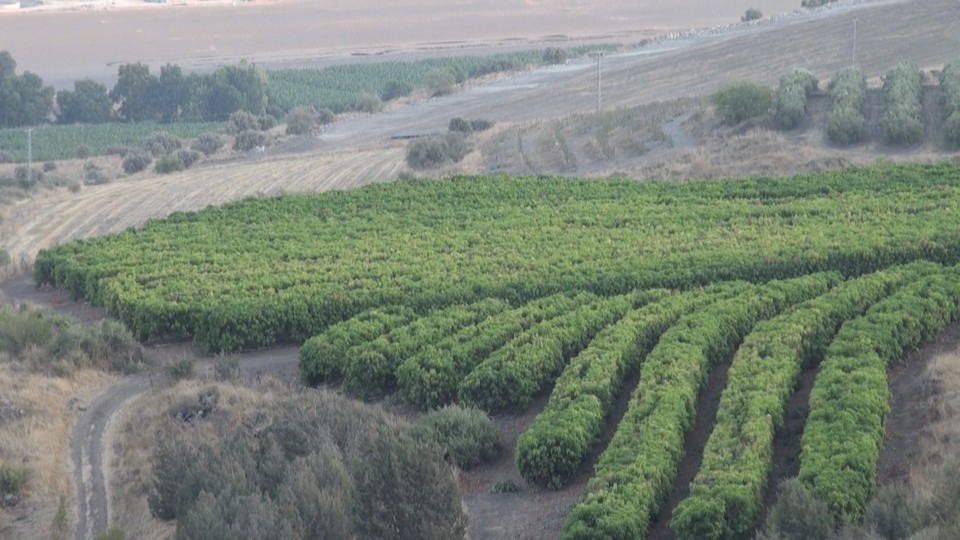
So what was the land where he lived like? It was a land of olive trees near Bethany outside Jerusalem, but if you went eastward to Jericho and the Dead Sea, it was mostly a barren desert. Then, from Jericho to Galilee the land turns from desert to lush farmland. A changing land.

IMG_0467
Jordan Valley

Jesus experienced a changing land from Nazareth to the Jordan River and then the Sea of Galilee. Like us, he was influenced by the place and life around him.

In a book written in the 1930s Gustaf Dalman, an expert on the geography and environment of Palestine, observed that when Jesus went from the  highlands of Nazareth, 1,100 feet above sea level to the fishing towns along the Sea of Galilee, 680 feet below sea level, he entered a different world.

For one thing, he ate better – more fish and nuts and fruits were available than in the hill town where he grew up. He looked out at the Sea of Galilee from the towns he visited. Instead of the hills and valleys around the mountain village of Nazareth, he saw a great variety of birds, like the white pelicans and black cormorants challenging the fishermen on the lake. He saw trees and plants and flowers that grew abundantly around the lake, but not around Nazareth.

Instead of the chalky limestone of Nazareth, Jesus walked on hard black basalt, which provided building material for houses and synagogues in the lake region. They were sturdy structures, but they were dark and drab inside. They needed light. Light on a lampstand became one of his parables. (Mark 4,21)

Basalt also made for a rich soil where everything could grow. “… here plants shoot up more exuberantly than in the limestone district. Where there are fields, they yield a produce greater than anyone has any notion of in the highlands.” (Dalman, p123)

DSC00027
Farmland in Galilee

The volcanic soil on the land around the lake produced a rich harvest. The Jewish historian, Josephus, praised that part of Galilee for its fruitfulness, its palm trees, fruit trees, walnut trees, vines, wheat. But thistles, wild mustard, wild fennel grew quickly too and could choke anything else that was sown. The land around the Sea of Galilee was fertile then; even today it has some of the best farmland in Palestine.

fields
Soil near the Sea of Galilee

The weather in the Lake District was not the same as in the mountains, warmer in winter, much hotter and humid in summer, which begins in May. “It is difficult for anyone used to living in the mountains to work by day and sleep by night…Out of doors one misses the refreshing breeze, which the mountains along the lake cut off…one is tempted to think that Jesus, who had settled there, must often have made occasion to escape from this pitiless climate to his beloved mountains.” (Dalman, p. 124)

You won’t find these observations  in the gospels, of course, but they help us appreciate the world in which Jesus lived and the parables he drew from it.  He was influenced by where he lived, as we are.

And what about us? What wisdom do we draw from the world we live in? What do we see day by day? What’s life like around us? We’re experiencing climate change now, aren’t we? It’s going to influence our spirituality, how we see, how we live, how we react to life.

May we gain wisdom from our time and place.

Letter to the Hebrews: Holding on to the Past

Temple
Temple of Jerusalem: Model Israel Museum

We’re reading from the Epistle to the Hebrews these days at Mass until February 8th. In his “Introduction to the New Testament’ Raymond Brown calls the work “a conundrum”. Who wrote it, where and when it was written, to whom, why?  Hard to figure out.

Indications are the letter was written most likely in Rome after the destruction of the Jewish temple in Jerusalem in 70, to Jewish Christians there. The early Roman church, composed mainly of Jewish converts, was strongly attached to Jerusalem and its worship and wanted to reconstruct the temple and renew its worship.   Martin Goodman’s “Rome and Jerusalem” (New York 2008)  offers an interesting picture of the longing Jews and Jewish Christians had afterwards to rebuild the temple and revive its rites.

Our letter sees Christ fulfilling the Jewish past and creating something new. He is the new Temple and High Priest:

Brothers and sisters:
In times past, God spoke in partial and various ways 
to our ancestors through the prophets; 
in these last days, he spoke to us through the Son,     
whom he made heir of all things
and through whom he created the universe,    who is the refulgence of his glory, 
        the very imprint of his being,
    and who sustains all things by his mighty word.
    When he had accomplished purification from sins,
    he took his seat at the right hand of the Majesty on high,
    as far superior to the angels
    as the name he has inherited is more excellent than theirs.

For to which of the angels did God ever say: You are my Son; this day I have begotten you? Or again: I will be a father to him, and he shall be a Son to me? And again, when he leads the first born into the world, he says  Let all the angels of God worship him. (Hebrews 1)

Do we face something like this today, a yearning to recreate the world and the church of the past we loved. We can’t recreate what has been, something new lies before us.

The Letter to the Hebrews tells us to face the future bravely, and keep before us the One who holds the key to what’s to come. In his lifetime, Jesus struggled with his own times; in his hands are the kingdom to come:

“Keep your eye fixed on Jesus, the leader and perfecter of faith, For the sake of the joy put before him, he endured the cross, despising the shame, and has taken his place at the right hand of the Father. Consider how he faced such opposition from sinners, in order that you may not grow weary and lose heart.”

The Gospel of Mark which follows the Letter to the Hebrews in our readings reveals the One who faced such opposition and endured the cross.