Tag Archives: Isaiah

Thursday: 1st Week of Advent

OLYMPUS DIGITAL CAMERA

Readings:

Isaiah 26:1-6:  On the day of the Lord those who depend on God will enter God’s city.

Matthew 7: 21-24-27:  Build your house on rock.

Ancient peoples built their cities on rocky heights because they promised safety. With water, food and strong defenses they were less likely to be invaded. That’s why the Jews chose Jerusalem. Built high on a rocky mountain, it was safe.

There’s a city on God’s holy mountain, Isaiah says in today’s reading, where all peoples will dwell. Yet even now, our cities and places where we live are meant to be an image of the Holy City. Don’t depend on natural resources or human skills or human planning alone to build your earthly cities, the prophets warn. Don’t rely on them; they can’t save you. The strongest city becomes “a city of chaos” without God.

God builds the strong city, the prophet says; he is our Rock, our strong city: he admits through its gates “ a nation that is just; one that keeps faith.”

Build your lives on rock, Jesus says in the gospel. Don’t rely on a token faith (Lord, Lord) or be like fools who build on sand .

“Everyone who listens to these words of mine and acts on them will be like a wise person who built a house on rock.”

That’s true for our homes and the cities and places where we live.

A secular society like ours often sees religion as a destructive force or a brake on progress or something to be dispensed of. It turns to  “human reason” alone.

So how do we see our cities and countries today? Should be turn away from them and wait for the City on the Mountain? Time to wait for the right politician or a better economy, and take care of yourself?

I don’t think that’s the answer we get in this Season of Advent which proclaims the coming of Jesus Christ in the flesh to an earthly city.

“It is better to take refuge in the LORD, than to trust in man.                                                          It is better to take refuge in the LORD than to trust in princes.” 
(Psalm 118)

Advent: Monday, 2nd Week

Today’s readings from the Old and New Testament complement one another, as the readings all through Advent do. Isaiah 35:1-10 speaks to Jewish exiles in Babylon, calling them to take a “holy way” through the wilderness to Jerusalem’s “holy mountain. Yet not just exiles in Babylon are called, God calls all nations to take the journey. All people, even the frailest, the weakest, are called to take it: the blind, the deaf, the lame, the fearful will take it, for God will strengthen them. The lame will leap “like a stag” and the “tongue of the mute will sing.”

The paralyzed man brought to Jesus in the gospel and sent away singing and dancing, (Luke 5:17-26), is a symbol of a paralyzed world that Jesus invites to take this journey, and humanity’s hopes are fulfilled as well as the hopes of prophets and peoples of the Old Testament are fulfilled. Our hopes as well. God wishes to heal our paralyzed world. Isaiah’s vision isn’t small.

Our vision shouldn’t be small either. When we hear ourselves saying “They’re not going anywhere.” “They’ll never change.” “The world’s never going to change.” we need to listen to ourselves. We’re living in a cynical world. We shouldn’t let our hope become too small.

Let’s not forget those in the gospel who lowered the paralyzed man from the roof down to where Jesus was. They were people of hope, willing to chance it with someone who looked like he would never move his limbs again. We need more of their kind today.

“They will see the glory of the LORD, the splendor of our God. Strengthen the hands that are feeble, make firm the knees that are weak, Say to those whose hearts are frightened: Be strong, fear not! Here is your God, he comes to save you.Then will the eyes of the blind be opened, the ears of the deaf be cleared; Then will the lame leap like a stag,then the tongue of the mute will sing… A highway will be there, called the holy way;
No one unclean may pass over it,
 nor fools go astray on it.
 No lion will be there,
  nor beast of prey go up to be met upon it.   It is for those with a journey to make,
 and on it the redeemed will walk.”

Advent Weekday Readings: 1st Week

The Old Testament readings for the 1st week of Advent– all from Isaiah–  are a message of universal salvation. Isaiah 2:1-5 (Monday) is the prophet’s classic announcement that all nations will stream to God’s mountain and listen for God’s instruction. “They will beat their swords into plowshares and their spears into pruning hooks.” Wars are over; the fragmentation destroying humanity comes to an end.  

For Isaiah, the mountain of the Lord– site of the Jewish temple in Jerusalem– has a central place in God’s promise. All nations will come there; they will be fed a rich banquet (Wednesday), there the poor will triumph (Thursday), the blind will see (Friday); it’s the rock where people dwell in safety, where children play around the cobra’s den, and the lion and the lamb lie down together (Tuesday). The prophet’s poetic imagery in the readings for the 1st week of Advent is strikingly beautiful. 

The gospels in the 1st week point to the Isaian prophecies fulfilled in Jesus Christ. The Roman centurion humbly approaching Jesus in Capernaum represents all the nations coming to him. Jesus feeds a multitude on the mountain. He gives sight to blind humanity, he affirms that his kingdom will be built on rock. He praises the childlike, who will enter the kingdom of heaven.

Matthew’s gospel, source of many of our Advent readings, portrays Jesus teaching on a mountain (Isaiah’s favorite symbol) and working great miracles there that benefit all who come.  He is also the new temple, the new Presence of God, Emmanuel, God with us.

Friday, 3rd Week of Advent


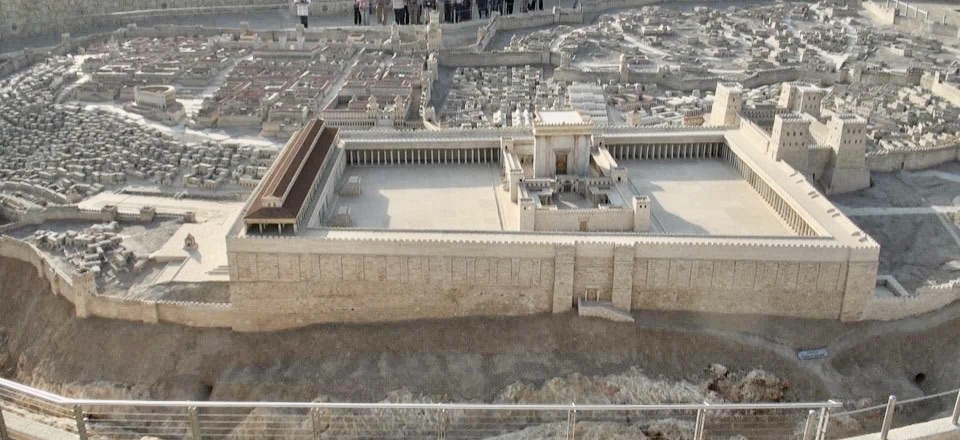
Prophets like Isaiah promised that all nations would come to Jerusalem, to the house of the Lord. And so the temple in Jerusalem provided a Court of the Gentiles, an extensive place surrounding the Holy of Holies (above) where foreigners as well as Jews could come to hear the word of God,

Them I will bring to my holy mountain
and make joyful in my house of prayer;
Their burnt offerings and sacrifices
will be acceptable on my altar,
For my house shall be called
a house of prayer for all peoples.
Thus says the Lord GOD,
who gathers the dispersed of Israel:
Others will I gather to him
besides those already gathered. (Isaiah 56)

It’s significant that Jesus in a symbolic act when he arrives in Jerusalem at the end of his public life cleanses the temple as a sign that that time had come. The Gentiles are called; he calls them to himself. In John’s gospel, read today, Jesus speaks from the temple, most likely from the Court of the Gentiles. He’s the One whom John the Baptist has pointed out and his mission will be confirmed by his Father who will glorify him in his Kingdom.

The Advent and Christmas seasons are not only celebrations for believers, confined to a church or the homes of believers. They take place in the “Court of the Gentiles”, they bring light to the world beyond Christianity. We may not realize it, but the world listens and sees, however dimly that may be. The light of our celebrations shine in a dark world that needs hope.

In the Advent and Christmas seasons, Jesus speaks in the “Court of the Gentiles”.

Readings here.

2nd Sunday of Advent b: God’s Comfort: I Am With You

For this week’s homily, please play the video below:

2nd Sunday of Advent: “Go with Joy”

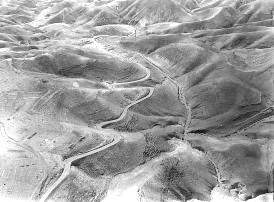
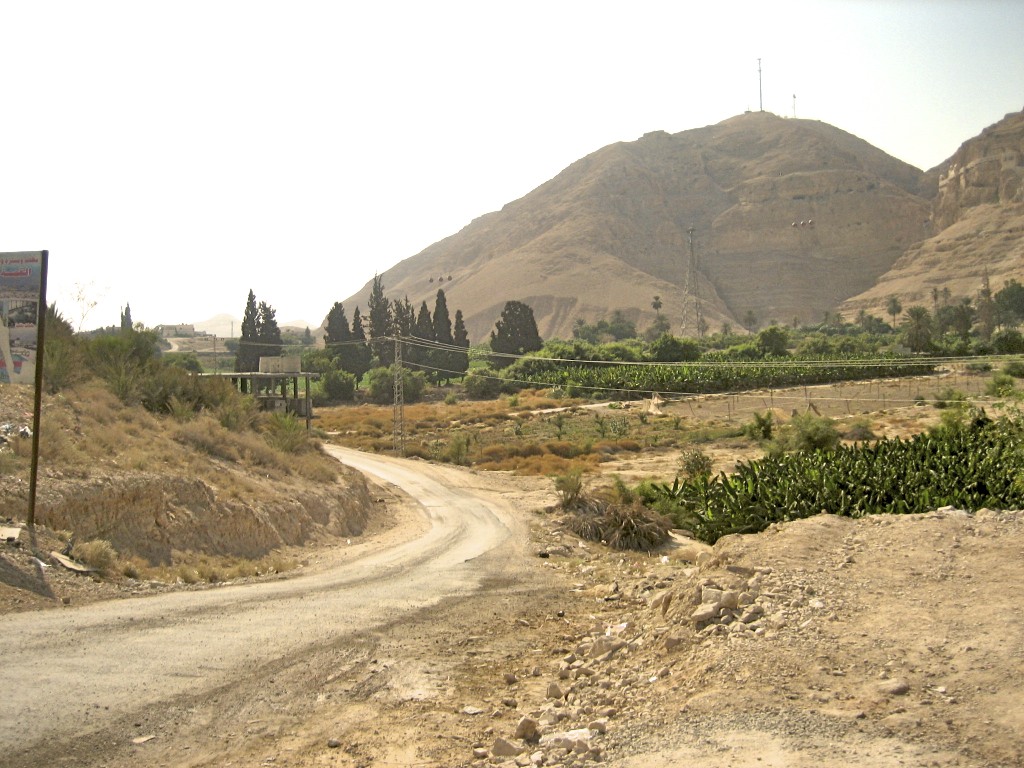
In the time of Jesus pilgrims from Galilee came up to Jerusalem a number of ways. Many came down the Jordan Valley, a journey of 90 miles. When they reached the city of Jericho they turned eastward onto a steep, winding road that ascended for 3500 feet and 15 miles to the city of Jerusalem. A picture taken from an airplane in the 1930s shows that winding, climbing road through the desert. It had to be the hardest part of their journey.Jericho Rd  3
Jericho road modern

Now travelers go that route in air-conditioned buses. It took ancient travelers four days. Not it’s a few hours.

The bible sees the journey to Jerusalem, especially the last part up that steep winding desert road as a symbol of our journey to God. We’re pilgrims on our way, The way’s still hard, even with air-conditioned buses.

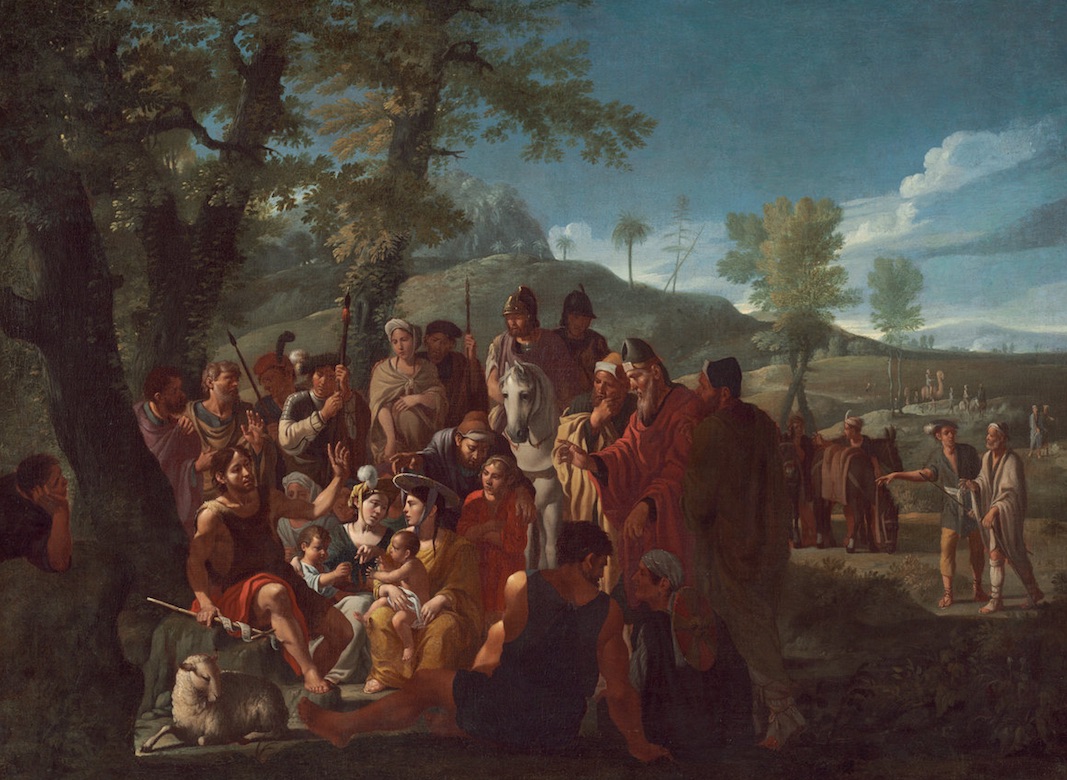
John the Baptist preached where that winding, climbing road began. His father, Zachariah, a priest in the temple in Jerusalem, told him at his birth: “You, my child shall be called a prophet of the most high, for you will go before the Lord to prepare his way.” (Luke 1)

John invited weary pilgrims into the refreshing waters of the Jordan river, that they might be strengthened for the journey.

John Baptist preaching

Last week readings warned about falling asleep through complacency and laziness. This week readings remind us the day by day journey can tire us,  Life can wear us out, even a life doing good.

Then, unexpected things, like sickness, failures and disappointments, come along, robbing our energy. The parable of the Good Samaritan happened on this road to Jerusalem. Unexpected things happen.

John the Baptist, and the Prophet Isaiah before him, spoke to weary pilgrims. “‘Comfort, give comfort to my people,’ says the Lord…They spoke words of hope to those on the way:

With God’s help, the winding, climbing, wearying road becomes a highway; every valley  filled in, every mountain and hill made low, the rugged land  made plain, the crooked way straight.

The Lord is ” a shepherd feeding his flock, in his arms he gathers the lambs, carrying them in his bosom and leading the ewes with care.” (Isaiah 40: 1-5,9-11) So don’t be afraid.

Advent is a beautiful season. “Go up with joy to the house of the Lord.”

What You Find in the First Week of Advent

The daily Advent readings at Mass for the first week of Advent are beautifully arranged..

In the Old Testament readings,  the Prophet Isaiah speaks as a fierce Assyrian army heads towards Jerusalem. Bad times ahead, but the prophet sees something else. All nations are streaming to God’s mountain.

The nations will come to God’s mountain, Jerusalem, where the temple stands, the prophet says.  They’ll be fed a rich banquet (Wednesday),  the poor will triumph (Thursday),  the blind will see (Friday). Safe on this rock, children play around the cobra’s den, and the lion and the lamb lie down together (Tuesday). The prophet  challenges us to see our world in another way.

In the gospels  Jesus Christ fulfills the Isaian prophecies. The Roman centurion, humbly approaching Jesus in Capernaum, represents all nations approaching him. (Monday)  Jesus praises the childlike;  they will enter the kingdom of heaven.(Tuesday)  He feeds a multitude on the mountain.(Wednesday) His kingdom is built on rock.(Thursday)  He gives sight to the blind to find their way.  (Friday)

Many Advent readings in these early weeks of Advent are from the gospel of Matthew, who portrays Jesus teaching on a mountain (Isaiah’s favorite symbol). His miracles affect all. Jesus is the new temple, the Presence of God, Emmanuel, God with us. He brings hope beyond human hope.

Lord, help us see what you and the prophets see.

Advent Readings: Week 2

Advent_heading copy 2To reach God’s holy mountain there’s a journey to make, Isaiah says, but guides will show the way. “Behold, I send my messenger ahead of you, to prepare your way.” Mark 1, 1. John the Baptist appears in the desert promising forgiveness  to those washing in the waters of the Jordan River. We have been baptized in the waters of baptism.

The Old Testament readings this Advent week, mostly from Isaiah, describe a desert journey,  but the desert will bloom and a highway will be there, the prophet promises. (Monday) God will speak tender, comforting words to his people on the way. (Tuesday) Those who hope in him will renew their strength, soaring on eagle’s wings. (Wednesday) Though we are as insignificant as a worm, God holds us in his hands and says:“Fear not; I am with you.” (Thursday) God is our teacher and shows us the way  to go. (Friday) On the way, prophets like Elijah accompany us. (Saturday)

Jesus is our way, the gospel readings say. He healed and forgave the paralyzed man– symbol of a paralyzed humanity– who was lowered through the roof into the house in Capernaum. (Monday) Like a good shepherd he searches for and finds the stray sheep. (Tuesday) “Come to me all who are weary, ” he says. (Wednesday) He sends us prophets and guides like John the Baptist and Elijah.( Thursday) Though rejected like John the Baptist, Jesus still teaches. (Friday)

He will save us, even though unrecognized like John and Elijah. (Saturday)

List of Readings

Monday: Isaiah 30, 1-10 The desert will bloom and a highway will be there, a holy way.Luke 5,17-26 The paralyzed man, lowered through the roof, is healed and forgiven.

Tuesday: Isaiah 40,1-11 The desert is a way to the Lord. Comfort my people. Mattthew 18, 12-14 The shepherd searches for the stray sheep.

Wednesday: Isaiah 30,25-31 God is the strength of his people. Matthew 11,28-30   “Come to me all who are weary…”

Thursday: Isaiah 41,13-20   God says, “I will grasp you by the hand. Fear not.”Matthew 11,11-15   John the Baptist is sent like Elijah.

Friday: Isaiah 48-17-19 I teach you what’s for your good and lead you on the way to go. Matthew 11,1-19   John and Jesus rejected as teachers.

Saturday: Sirach 48,1-4; 9-11 Elijah, precursor of John. Matthew 17, 9-13   Elijah and John not recognized.

Monday: 1st Week of Advent

Readings:

Isaiah 2,1-5  All nations will come to this mountain

Matthew 8:5-11:  The Roman centurion at Capernaum.

In 8th century Jerusalem Isaiah makes glowing promises about the holy mountain, Jerusalem– all people will come there. At the same time,  Assyrian armies rumble into Palestine. “What are you talking about?” people say, “Can’t you see what’s at the door?”. But the prophet insists they will beat their swords into plowshares, their spears into pruning hooks and there will be no wars any more.

The prophet continues making outrageous promises. There will be a cloud by day and a fire by night over this holy mountain. The mountain’s moving, on an exodus of its own. Wonderful imagery for solid institutions, like churches and nations, that have been around for centuries. You’re still on the move, and God will guide you.

The Assyrians must have had the equivalent of the Roman centurions as the backbone of their armies. If you can get to them, you’ve got the army, military analysts would say. Powerful men, loyal soldiers. They could  tell their troops: “Lay down your swords and spears,” and it would be done.

The Roman centurion in today’s gospel comes humbly before Jesus. “Lord, I am not worthy that you come under my roof, but say the word and my servant will be healed.” He comes with a faith not found in Israel.

The Messiah will touch the proud and the strong. The centurion is one of them.


1st Sunday of Advent: Wake Up!

For this week’s homily, please play the video file below: