Tag Archives: gospel of Mark

8th Week of the Year


Graphic Pentecost

May 27 SUN THE MOST HOLY TRINITY
Solemnity
Dt 4:32-34, 39-40/Rom 8:14-17/Mt 28:16-20 (165)

28 Mon Weekday (Eighth Week in Ordinary Time)
1 Pt 1:3-9/Mk 10:17-27 (347)

29 Tue Weekday
1 Pt 1:10-16/Mk 10:28-31 (348)

30 Wed Weekday
1 Pt 1:18-25/Mk 10:32-45 (349)

31 Thu The Visitation of the Blessed Virgin Mary
Feast
Zep 3:14-18a or Rom 12:9-16/Lk 1:39-56 (572)

June 1 Fri Saint Justin, Martyr
Memorial
1 Pt 4:7-13/Mk 11:11-26 (351)

2 Sat Weekday
[Saints Marcellinus and Peter, Martyrs; BVM]
Jude 17, 20b-25/Mk 11:27-33 (352)

The First Letter of Peter, read this week, was written from Rome by Peter, the apostle, to Christians threatened by persecution, ancient tradition says. Some modern scholars question if Peter himself wrote it and suggest a later author wrote using his name. You can hear in the readings early baptismal teaching which the author uses to remind his listeners who they are.

In chapters 10 and 11 of Mark’s gospel, Jesus begins his journey to Jerusalem, a journey many do not understand and, like the rich young man, they decide not to join him. James and John also thought his journey would bring power and prestige, but it was not to be. We hear in these readings lessons for the Roman church of the 70s, but the lessons are also meant for us..

A feast of Mary occurs every month in the calendar. This month it’s the Visitation (May 31), placed in the calendar between the Feast of the Annunciation (March 15) and the Birth of John the Baptist (June 24) We’re reminded of Mary’s role as a bearer of good news to her older cousin Elizabeth, who will give birth to John. Mary always brings her Son to us too.

The Wisdom of Ordinary Time

DSC00804
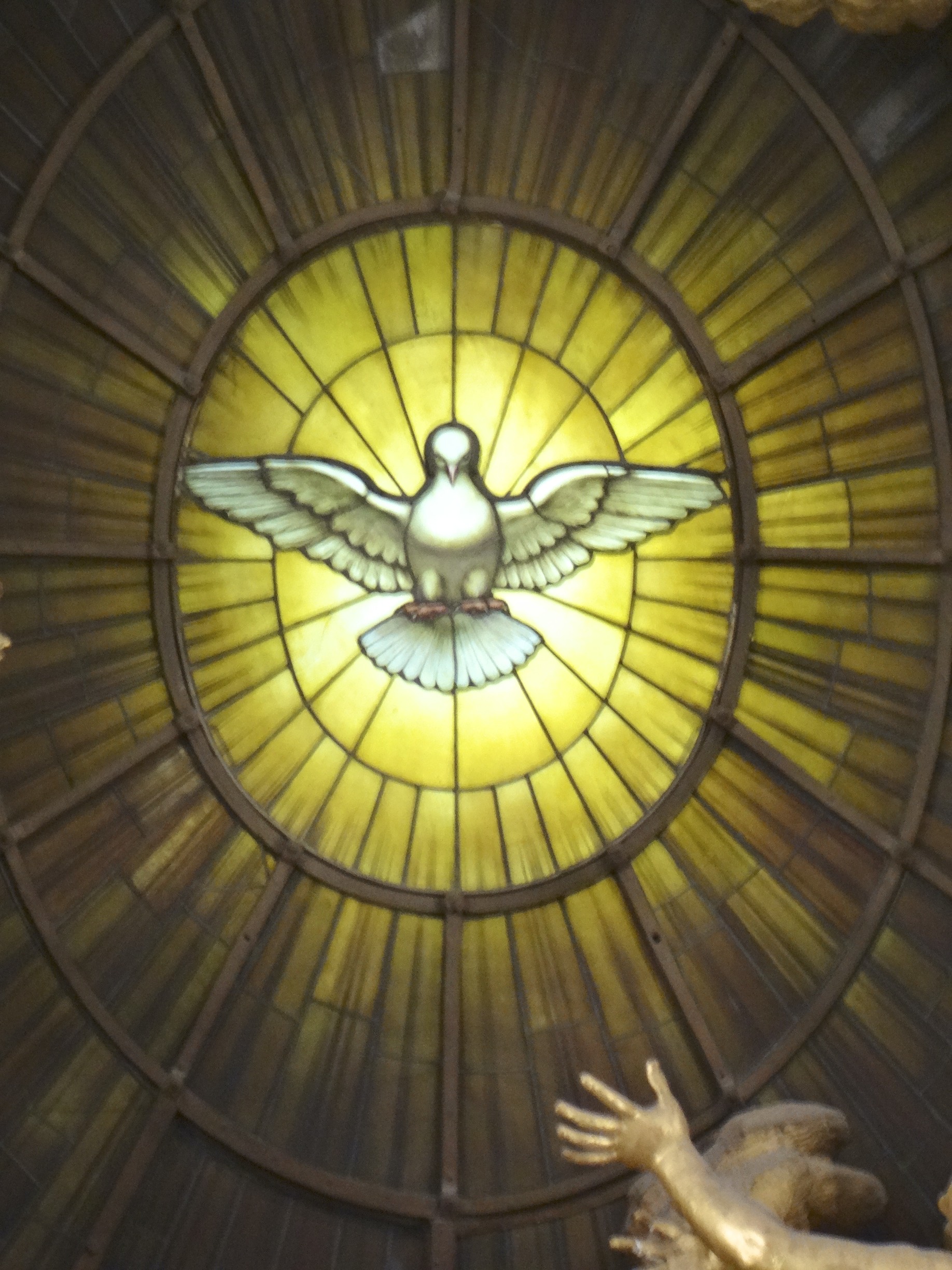
The readings in today’s Mass point to the wisdom of ordinary time. “Whoever is not against us is for us,” Jesus says to his disciples who complain there are others “who do not follow us” driving out demons. (Mark 9,38-40) Wisdom is not just in our tradition; it’s there everywhere in ordinary time.

I like the hand in the picture above of Bernini’s famous window in St.Peter’s. Who’s hand is it, anyway? A believer’s hand. Yes, for sure. But also the hand of all who walk this earth searching for truth.

“Wisdom breathes life into her children” (Sirach 4,11 ) Like much of the wisdom literature in the bible (Proverbs, Ecclesiastes, Wisdom, Psalms) the Book of Sirach, one of the readings at the beginning of ordinary time, draws much of its content from the culture of the middle east which influenced the Jews at home and in their exile in other lands.

As the gift of God breathed into ordinary time, the Holy Spirit “renews the face of the earth.” The Spirit’s wisdom is everywhere.

 Eternally Yours

    In this Wednesday’s Gospel (Mk 12: 18-27) a group of Sadducees (a powerful priestly party that denies the resurrection of the dead) tries to confound Jesus by getting Him to comment on a hypothetical situation that would make resurrection from the dead ridiculous. They cite a situation similar to the one in today’s first reading from the Book of Tobit, where Sara, the daughter of Raguel has had the misfortune of being widowed seven times. They ask Jesus, “ At the resurrection when they arise whose wife will she be? For all seven had been married to her. “ Jesus answers them :

    “ Are you not misled because you do not know the Scriptures or the power of God? When they rise from the dead, they neither marry nor are given in marriage, but they are like the angels in heaven. As for the dead being raised, have you not read in the Book of Moses, in the passage about the bush, how God told him ‘I am the God of Abraham, the God of Isaac, and the God of Jacob?’ He is not God of the dead but of the living. You are greatly misled.”

    Jesus neutralizes their petty traps handily. But, in this sacred Scripture passage our Lord also gives us some hints about the mystery of life after death. Our loving God will give us the gift of being “ Like the angels in heaven “. Jesus seems to say that God IS the God of the Patriarchs, and since God is the pure source of life, He can only be the God of the living. Therefore these Patriarchs, many years after their “deaths”, must still be alive with and in Him. He is also our God, and always will be. We also have the hope of always living with Him throughout eternity.

    On this Pentecost Sunday, at Mass in my Parish the last song about the Holy Spirit was accompanied by the music of Beethoven’s “Song of Joy” from his 9th Symphony. As soon as I heard the melody I thought of my father, who did so much to introduce me to the music of this, our favorite composer. The Spirit of God filled my eyes with tears as I felt my father so alive and present within my soul. My mother was there with him. Like on so many other sacred moments, I knew that they still lived in God’s arms, and were there waiting for me. On the day of that Mass, through the loving power of God, I was able to feel palpably the presence of the Communion of the Saints with all of us in that joyful church building.

    Yes, “ We believe in the Holy Spirit, the holy Catholic Church, the communion of saints, the forgiveness of sins, the resurrection of the body, and the life everlasting. “

    Amen! Thank You Jesus, for Your mercy. Through Your Passion and Resurrection, You have given us the hope of living in your Love forever!   

Orlando Hernandez

Mission: St. Joseph, Keyport, NJ

IMG_1100

I’m leading a 3 day mission at St. Joseph Parish in snowy Keyport, New Jersey, ending Ash Wednesday. The theme of the mission is: Following Jesus Christ. Last night, we remembered how Jesus called others to follow him into the world. Parishioners read from the call of the disciples from St. John’s gospel and I spoke about the way Jesus in Mark’s gospel led his disciples into the town of Capernaum, into its synagogue, the house of Peter and then on the road where they met a leper.

Today Jesus calls us to go with him into our world, into our towns and cities, our churches, our homes and along the road where we meet the poor, the lepers of today. He’s leading us there.

In the catechesis I suggested we look again at the simple ways we were taught to pray, like the Sign of the Cross and the Our Father. In prayer we come know Jesus Christ. For our closing rite we held lighted candles, symbols of our baptismal call. We listened to a wonderful testimony from a couple who returned to church recently; the choir provided inspirational music. Afterwards there were refreshments in the parish hall.

Praching (2)

Tonight we turn to the Passion story of Mark. In our catechesis I suggested reading the bible during Lent, because we can know Jesus Christ through the bible. In recent times our understanding of the bible has grown as archeologists, historians and other studies enlarge what we know of the world Jesus lived in and the early writings that tell of him. The New American Bible Revised Edition is a good choice to read because it contains the same translations read in the liturgy and its notes are up to date and well written.

Knowing more about the books of the bible can help us understand them better. For example, the Gospel of Mark, generally considered the earliest gospel, was probably written in Rome for Christians who had been shaken by a fierce, unexpected persecution under the Emperor Nero. The persecutions caused Roman Christians to question their faith in the light of this absurd injustice.

Mark’s gospel doesn’t answer their questions. Instead, it presents the innocent Jesus as he faces suffering and death holding on to a belief he is in his Father’s care. From death, he will rise again.

Tonight we read from the story of the Passion of Jesus in Mark and reflect on its meaning. We’ll also hear a testimony from one of our young parishioners here at St Joseph’s and be given a small cross as a reminder of Jesus’ words, “Take up your cross and follow me.”

The Two Creations

In his homily on the readings for Mass on Monday, Pope Francis spoke of two creations, the first described in the Book of Genesis and the second described in the Gospel of Mark where Jesus goes among the people, and “as many of those who touched him were saved.”

Regarding the first creation, God gives us the responsibility to nurture creation, Pope Francis said.

“It’s our obligation as Christians. For us there is a responsibility to nurture the Earth, to nurture creation, to keep it and make it grow according to its laws. A Christian who does not protect creation, who does not let it grow, is a Christian who does not care about the work of God, that work that was born from the love of God for us. And this is the first response to the first creation: protect it and make it grow.”

We advance the second creation by advancing in faith, by touching Jesus in faith.

The popes daily homilies can be found here. Gems of spirituality.

Reading the Gospel of Mark

MarkThe Gospel of Mark, the first of the four gospels, written sometime between the year 65 to 70 AD. Each year it’s read on weekdays, from chapter 1-9, following the Feast of the Baptism of Jesus until Tuesday before Ash Wednesday. This year it’s also read on Sundays through the year.

Mark’s gospel begins. not with Jesus’ birth, but with his Baptism, announced by John the Baptist.After his temptation in the desert, Jesus immediately goes into Galilee proclaiming the kingdom of God is at hand.

In each weekday reading Jesus proclaims the Kingdom of God, first in Galilee and then in Jerusalem, by miracles and powerful signs. He also faces growing opposition that eventually brings him to death.

From its very beginning, Mark’s Gospel offers intimations of the tragic mystery of the Passion of Jesus. Coming from the Jordan River where he is baptized by John, Jesus is led “at once” by the Spirit into the wilderness to be tempted by Satan. “ He was among wild beasts, and the angels ministered to him.” (Mark 1,13) In Mark’s Gospel, Jesus constantly faces the forces of evil and death.

Almost half of Mark’s 16 chapters describe the final period of Jesus life, when he went up to Jerusalem and suffered, died and rose again. As chapter 8 ends, Jesus asks his disciples who people say he is. “You are the Messiah,” Peter answers, but Jesus announces he must go up to Jerusalem and be rejected and killed and raised up. Peter will have nothing to do with it. In response, Jesus calls him “Satan” and tells him he’s thinking as man thinks and not as God does.

In God’s thinking, Jesus, his Son, must die and rise again. All who follow him must do the same. Peter’s not alone in not understanding God’s thinking; all the disciples, including us, are slow to understand. Our lack of understanding is emphasized in Mark’s gospel, which some have called “A passion narrative with an extended introduction,”

Many commentators say that Mark’s Gospel was written in Rome for the Christians of that city who suffered in the first great persecution of the church by Nero after a fire consumed the city in 64 AD.

I lived in Rome for a few years in the Monastery of Saints John and Paul on the Celian Hill. The monastery was built over the Temple of Claudius; its gardens were once part of Nero’s gardens. From its heights you could see the Circus Maximus a short distance away where the great fire of 64 AD started and the extensive area that burned in the fire, up to Tiber River. Probably over a million people were affected by it.

The Roman historian Tacitus says that Nero blamed the Christians for the fire and had many of them arrested and put to death in his gardens and at the Vatican circus across the city.

I was living in the gardens where some of those early Christians were put to death, I believe. On the other side of the Colosseum, a short distance away, was the Roman prefecture and prison were many of them would likely have been held and sentenced. The Church of St. Peter in Chains stands there today.

I narrated a video about that church and the early persecution which may help you understand the church Mark wrote for. The persecution must have had a devastating affect on the Christians of Rome at the time, innocent people completely taken by surprise by this brutal injustice. They didn’t understand it at all. Neither did his first disciples understand, Mark’s gospel says.

An Unclean Spirit

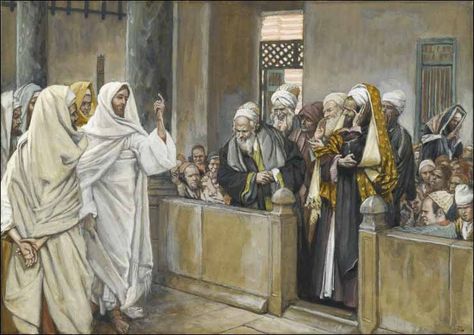
Our gospel reading this Sunday is from the first chapter of the Gospel of Mark.  Jesus  has come from his baptism in the River Jordan; he’s gathered disciples and now he’s living at Peter’s house in Capernaum along the Sea of Galilee.He enters the synagogue in the town and amazes people with his teaching. They’ve never heard anyone like him.

But a man in the synagogue who has an unclean spirit challenges him.  I’m not sure what an unclean spirit is. Certainly the man reacts violently to Jesus. Listen to him shouting out:
“What have you to do with us, Jesus of Nazareth? Have you come to destroy us? I know who you are—the Holy One of God!”

In other words: “Keep away from us; you’re only going to bring us trouble.” The man just wants to be left alone. Even if Jesus is from God, the man just wants to be left alone. “Get away from us!” he says.

That strong reaction was not limited to the synagogue in Capernaum. It continued as Jesus made his way to Jerusalem. Mark’s gospel insists that others rejected Jesus, sometimes strongly, sometimes by simply ignoring him, and he calls their rejection diabolic.

However wise his teaching, compassionate his healing, loving his words, some rejected Jesus in his lifetime. In the end, his enemies killed him.

We believe the gospel repeats itself, and so it’s repeated today as we relive and experience it.  “If today you hear his voice, harden not your hearts.” Can we reject Jesus too?

Doesn’t he stand in our synagogue today, in signs and in faith?

Belief in Jesus Christ is at the heart of everything. “I believe in God, the Father Almighty…I believe in Jesus Christ…I believe in the Holy Spirit.” Believing means hearing Jesus, listening to him, offering ourselves to him, entering into friendship with him, hoping in his strength, waiting patiently to receive what he promises.

Belief is not something we do once; we believe day by day. We’re always dangerously close to losing sight of Jesus. “Leave us alone,” we say, “You want to destroy us.” How easily we prefer isolation to communion with the One God has sent.
Perhaps an unclean spirit is not rare at all. If it’s a spirit that’s cloudy and dark then, when it takes hold of you, you cannot see the Light at all.

Deliver us, Lord, from an unclean spirit.

Watch! 1st Sunday of Advent

To listen to the audio for today’s homily please select file below:

Every once in awhile I watch Jeopardy on television. At one point the host poses a question and waits a few seconds for a contestant to get the answer. Here’s my question. What’s the last of the seven capital sins?

If you got the answer, Sloth, you’re right. Sloth is the last of the capital sins and that’s where you would expect to find it, at the end of the list. It’s sleeping there, because that’s what sloth is. It’s laziness; it’s complacency. It can be spiritual or intellectual or physical laziness or complacency. It could be one or all of them together.

The passage in St. Mark’s gospel we’re reading today begins on the Mount of Olives. Jesus and his disciples have just visited the temple in the city of Jerusalem and one of his disciples points out the majestic  temple across the Kidron Valley.  “Look, teacher, what stones and what buildings!” Jesus said to him, “Do you see these great buildings? There will not be one stone left upon another that will not be thrown down.”

Can we hear complacency in the disciple’s voice. “ We have everything here, a great place, what more could we want.” Sloth is complacency in that it thinks there nothing more to do; we’ve made it and we don’t need anything more. The Advent season warns us about complacency.

You can see laziness,too, another characteristic of sloth, in the servants Jesus mentions in today’s gospel. The Master goes away and they seem to breathe a sigh of relief. “He’s gone, now we can do whatever we want. We can take it easy.”

The message we hear at the beginning of Advent is the same message Jesus spoke to his disciples on the Mount of Olives. “Watch! Stay awake!” You don’t know when I will knock on your door.

Our first reading  today from the Prophet Isaiah is filled with similar warnings  about not paying attention to God. You’re like dirty rags, withered leaves, he says to them. You’ve become like mud, hard clay that stuck and hardened in place. You need a potter to come along and water the hardness in you and mold you again. You need the potter’s hands to soften you and give you new life.

That’s what the Advent season is about. We asking God to awaken us from complacency, from  laziness, from sloth. The psalm response in our today’s liturgy sums up that prayer so beautifully.

“Lord, make us turn to you, let us see your face and we shall be saved.”

What is the face of God we are to turn to  in this season? It’s the face of Jesus Christ, first as a child, born in Bethlehem. Then as a man, who speaks God’s words to us, who reaches into our lives and shares our sufferings. Then, as our Risen Lord whom we hope to see and who promises us life everlasting.

Advent, the season we begin today, is filled with the grace of God. Let’s watch for it.


The Mystery of the Cross

We’re reading the Letter of James and the Gospel of Mark these weekdays at Mass, writings going back to the 60s, from Jerusalem and Rome respectively. Three important Christian leaders were put to death in that decade: James, Peter and Paul. We see their deaths now as the glorious death of martyrs; Christians then were probably more aware of losing three religious leaders they depended on for guidance.

The Letter of James and the Gospel of Mark (traditionally acknowledged as the spokesman for Peter) were voices for these disciples in the churches they left behind.

In the 60s a growing turmoil engulfed the church in Jerusalem, as Jewish Christians faced growing opposition in the city. The death of James, their leader, at the hands of Jerusalem’s Jewish leaders is evidence of this antagonism. Because of it, many Jewish Christians left Jerusalem and went into exile. The destruction of the city by the Romans in 70 AD canceled any plans they had for returning home.

In the 60s, the Christians of Rome experienced persecution of another kind. It was a sudden, unexpected persecution by the Emperor Nero that followed the fire that destroyed most of the city in 64 AD.

The Disciples' Unbelief

The Disciples’ Unbelief

It’s good to keep the background of these writings in mind when reading them. In today’s reading, Mark emphasizes a theme that runs through his gospel. “Do you still not understand?” Jesus asks his disciples. (Mark 8,21) What the disciples, led by Peter, don’t understand especially is the mystery of his passion and death.

Writing for the Christians of Rome, Mark wants them to see in the incomprehension of Jesus’ first disciples their own incomprehension before the vicious suffering inflicted on them at the hands of a powerful and unjust emperor.
They don’t understand. It’s a mystery slowly understood.

And they wont be the last to not understand the mystery of the cross. We’re seldom ready for it and slow to recognize all the forms it takes.

A Holy Banquet

EucharistGod’s shows his love for his people by calling them to a banquet. During the Advent season, the Prophet Isaiah offers that promise of God to his people Israel. On Wednesday in Advent’s first week, he speaks of a holy banquet of rich food and drink that God will provide on his holy mountain in Jerusalem for all people. (Isaiah 25,6-10)

In the days after the Epiphany, the evangelists describe a holy banquet in Galilee. There Jesus, whose heart is moved with pity for those who follow him, feeds a vast crowd bread and fish, “And they all ate and were satisfied.” (Mark 6, 34-44) There in “the Galilee of the Gentiles” God’s promise is fulfilled. “All” people eat and are satisfied. We recall that sign of God’s love in our gospel reading today from Mark.

The love of God should fill us with wonder and praise. Yet Mark’s gospel goes on to say that the people who ate the loaves “did not understand” the mystery they had experienced. Still true? Do we understand the mystery of God’s love and the signs we experience here and now? One of these signs is the Holy Eucharist.