Love is the message Jesus offers in our gospel reading today. Love God and love your neighbor, he says to the scribe asking about the greatest commandment . (Mark 12, 28-34) We expect to hear about love on a lenten Friday, since every Friday is associated with the Friday called Good. Lenten Fridays especially prepare us for that great day of love.
The gospels dwell on what took place that day in great detail. Historians, scholars, artists approach the mystery of Jesus’ passion and death in different ways. What political or religious factors were behind it? Who were the people involved? What was crucifixion like? The day is a fascinating conclusion to a fascinating life.
But, above all, it’s a day about love. Hosea, the prophet we hear from in our first reading today was a man in love with a woman who betrayed him for another, but he never forgot her. She was the love of his life, and he saw everything else in the light of that experience. In an instance, he would take her back.
Why did Jesus suffer such a death, we ask? As God’s Son, no one could take his life from him. The only answer we can give is that Jesus gave himself up to death and accepted death on the Cross out of love for his Father and out of love for us. Love caused him to say in the Garden, “Your will be done.” Love called words of forgiveness from the cross: ”Father, forgive them, for they know not what they do.”
The cross was not something Jesus endured; he embraced it with his whole heart, his whole mind and all his strength. Before his cross, we stand before Love.
We should not avoid praying before the cross. All the saints recommend this prayer. We should see ourselves as we look on this mystery. It’s also true that if we see others through the cross, we will appreciate them more.
“When you experience dryness in your prayer, gently stir your spirit with loving acts then rest in God. Softly say to him, ‘How bruised your face, how swollen, how disfigured with spit. I see your bones laid bare. What suffering, what blows, what grief. Love is one great wound. Sweet are your wounds, sweet is your suffering. I want to keep you always close to my heart.” (Paul of the Cross:Letter 23)
Lord Jesus Christ, the scribe in today’s gospel repeated the command to love and you praised him for it. May I keep before me the great commandment to love God and my neighbor and live it as you did. Give me that grace. Amen.
Numbers seem to indicate power and popularity. We think that way; Jesus’ disciples must have thought that way too. In Mark’s gospel Jesus begins his ministry in Capernaum before an enthusiastic crowd. At the end of his first day, the whole town gathers at the door of Peter’s house and word reaches out to other towns and places that a prophet has come. The numbers go up. (Mark 1, 21-34)
But then enthusiasm dies down as Jesus’ authority is questioned. Religious leaders from Jerusalem and the followers of Herod Antipas cast doubts about him. His own hometown, Nazareth, takes a dim view of him.. Gradually, Capernaum and the other towns that welcomed Jesus enthusiastically turn against him. His numbers go down.
Why are the number going down, his disciples must have wondered? It didn’t make sense. Jesus’ answer comes in Mark’s gospel today. God’s kingdom is coming; God is at work in the world, but human beings are mostly unaware of it:
“This is how it is with the Kingdom of God; it is as if a man were to scatter seed on the land and would sleep and rise night and day and the seed would sprout and grow, he knows not how. Of its own accord the land yields fruit, first the blade, then the ear, then the full grain in the ear. And when the grain is ripe, he wields the sickle at once, for the harvest has come.” (Mark 4, 28-34)
Great power is at work in the scattered seed, but we know little how it grows. The seed takes time, with its own law of growth; a great harvest will come, but still there’s mystery we don’t see. We sleep.
Meanwhile, we worry about numbers. Why are growing numbers giving up going to church or synagogue? Why are there so few vocations to our religious communities? So many of the good things in this world seem to be diminishing.
What can we do? Look into the signs of the time. Treasure the seed we have. Scatter it as we can. Be patient as we sleep. The Kingdom of God comes.
After a tumultuous first day of ministry in Capernaum, Jesus left the following day for other places in Galilee, Mark’s Gospel says.
“Rising very early before dawn, he left and went off to a deserted place, where he prayed. Simon and those who were with him pursued him and on finding him said, ‘Everyone is looking for you.’ He told them, ‘Let us go on to the nearby villages that I may preach there also. For this purpose have I come.’ So he went into their synagogues, preaching and driving out demons throughout the whole of Galilee.” (Mark 1,36-39)
Was one of the nearby villages Magdala?
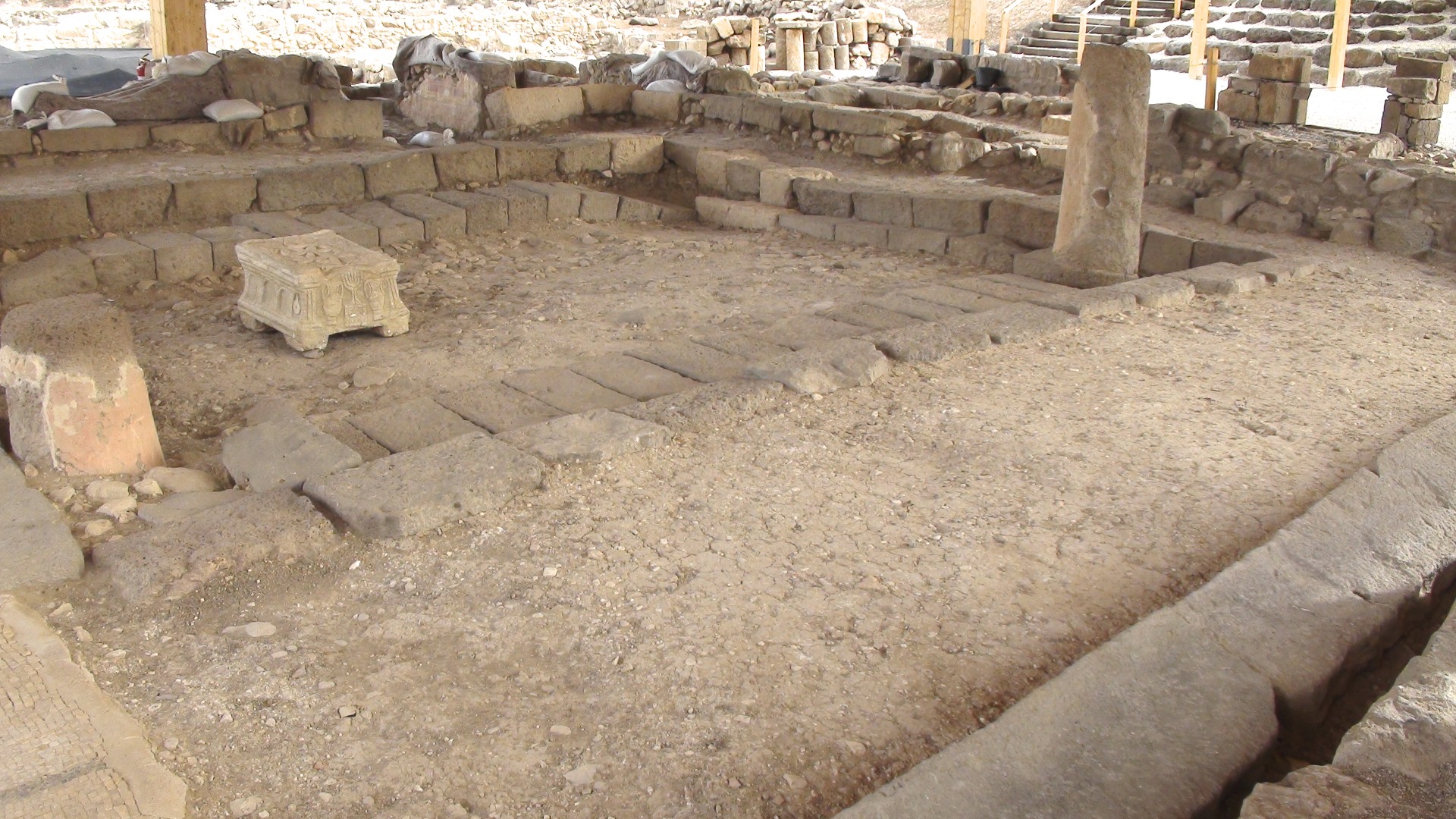
Magdala, or Migdal, a prosperous Jewish port city in the first century. was just five miles south of Capernaum on the south-western part of the Sea of Galilee. Some of the city has been uncovered recently by archeologists and the discovery opens another window into the gospel story.
Magdala’s economy was built on fishing and, in fact, it was the center of a highly developed industry on the Sea of Galilee in Jesus’ day. Written sources have it that salted fish from Magdala was sold in the surrounding areas and even as far as Rome; recent findings offer a further look at Magdala’s economy and its sophisticated techniques for storing and preparing fish for market. As a flourishing Jewish center on the Sea of Galilee, it was an obvious place for Jesus to visit.
The Jewish historian Josephus may be exaggerating when he says there were 40,000 people in Magdala, but certainly it had a good-sized, prosperous population in the time of Jesus. Christians recognize it as the home of Mary Magdalen.
New excavations in Magdala and also in Bethsaida on the northern tip of the Sea of Galilee help us understand the world of Jesus and what he did there. For example, there are two newly excavated synagogues at Magdala from his time. Did he stand in a place like this and teach and cure? Probably.
The recent findings also invite us to look again at Jesus’ disciples. What kind of people were Peter, Andrew, James and John, and the other Galilean fishermen whom Jesus called to follow him? They’re often described as “poor” “ignorant” fishermen, tagging along, open-mouthed, before the wonders Jesus worked and the words he spoke.
But Galilean fishermen seem more resourceful and knowledgeable than that. They knew the world around the Sea of Galilee. That world was more complex than we might think. On its western shore were mostly Jewish communities; on its eastern shores were the gentile cities of the Decapolis.
Jesus goes first to the lost sheep of the house of Israel, but then he crosses over to gentile world. Who takes him to this different world but savvy fishermen who know the places and the peoples around the sea?
They were certainly not ignorant. At one point in Mark’s Gospel, Jesus tells Peter that he’s thinking like a human being, trying to dissuade him from going to Jerusalem to face suffering and death. In fact, Peter and the rest were quite good at human thinking, quite confident in their own opinions and thoughts. In the gospel Jesus constantly challenges their “human thinking” with the thinking of God. .
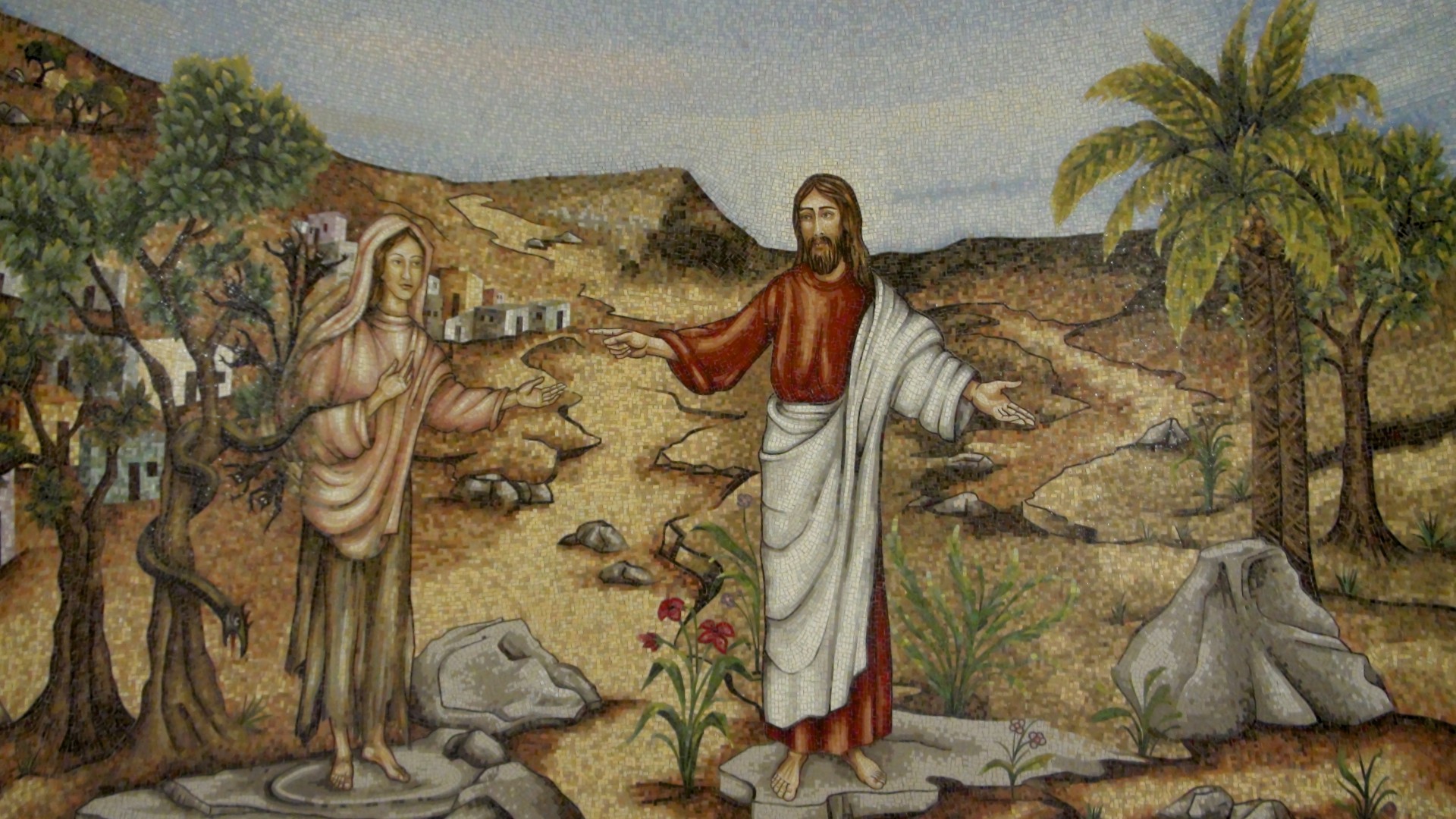
Where did he meet them? Mark’s gospel says it was along the Sea of Galilee. A mosaic of the call of the disciples in the new center at Magdala suggests it may have happened here. Another mosaic suggests that the raising of the daughter of Jairus, the ruler of the synagogue, may also have taken place here.
Speculation, maybe. It’s a good guess that Jesus met Mary Magdalene here and released her from the seven devils that messed up her life. She became a disciple.
Mark’s gospel doesn’t limit the followers of Jesus to twelve. He only mentions the twelve once in his gospel. In Mark’s and Luke’s gospels, a wide range of people become followers of Jesus, from the fishermen of Galilee, tax-collectors like Matthew, to women like Mary Magdalene and Johanna, the wife of Herod’s steward Cusa. Women were with the twelve, Luke’s gospel says:
“Accompanying him were the Twelve and some women who had been cured of evil spirits and infirmities, Mary, called Magdalene, from whom seven demons had gone out, Joanna, the wife of Herod’s steward Chuza, Susanna, and many others who provided for them out of their resources.” (Luke 8,1-3)
Herod Antipas’ capitol, Tiberias, was only a few miles from Magdala.
Like so many ancient cities, Magdala had its good days and days of decline. It was probably destroyed during the Jewish revolt in 68 AD. Only a few places in the city were left standing when the Crusaders arrived in the 12th century, then it disappeared in the earth.
The Legionaires of Christ bought the property along the Sea of Galilee in 2004 intending to build a 300 room hotel on the site, but in preparing the building site they uncovered the ruins of ancient Magdala. Construction stopped and the archeologists stepped in.
“For the Rev. Juan M. Solana, it was the spiritual equivalent of striking oil,” a New York Times article from May 14, 2024 said. “When he set out to develop a resort for Christian pilgrims in Galilee, he unearthed a holy site: the presumed hometown of Mary Magdalene and an ancient synagogue where experts say Jesus may well have taught.”
Our daily liturgy gives us scriptures to read and saints to celebrate. This week in our lectionary we continue to read from the Gospel of Mark and the 1st Book of Samuel. Today we remember Fabian, an early pope and martyr, and Sebastian, a soldier saint and martyr. Tomorrow we have Agnes, a young girl and early martyr.
Our lectionary readings are not chosen haphazardly. After the feast of the Baptism we began reading each day from the Gospel of Mark, the first of the gospels to be written, an appropriate reading for following Jesus as he begins his ministry in Galilee.
The saints point out how others have followed him. . The three martyrs we remember this week are examples of some who were put to death in persecutions that took place in the early church. Fabian was put to death at the beginning of the Decian persecution (250) because he was a church leader. The Roman strategy was to kill church leaders and their followers would scatter.
Sebastian was a soldier saint martyred in the Diocletian persecution. From what we know, Christians were highly regard by the emperor when he first came to power, but then he turned against them, especially the officer class. Like Sebastian, many of them holding influential positions in the empire were put to death for their supposed disloyalty.
Agnes was not killed in a general persecution like Fabian and Sebastian. She died because Christians were legally vulnerable in the centuries before Constantine. The Romans were suspicious of them. Agnes a victim of a powerful Roman man who used the Roman judicial system to punish a young Christian girl who would not let him have his way with her.
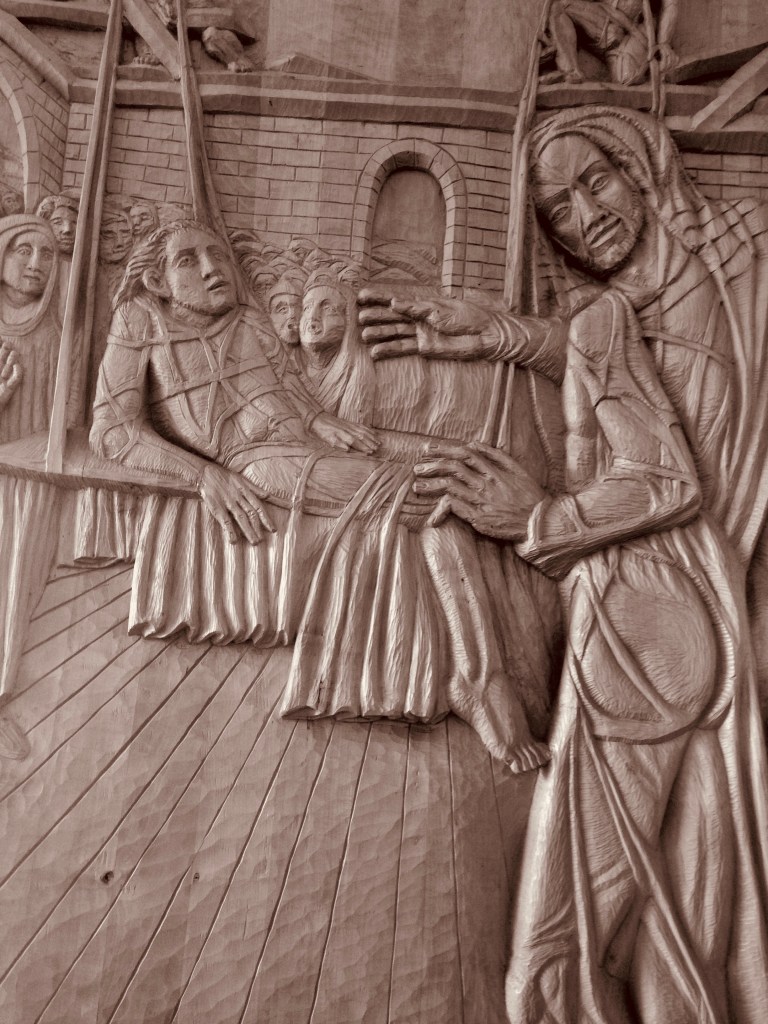
The healing of the paralytic told in today’s gospel from Mark is a great story.(Mark 2: 1–12) Four friends bring him to the door of Peter’s house in Capernaum but the crowds are so dense that they can’t get in to see Jesus so they climb up on the roof, cut a hole in it and lower him down before Jesus. Was the paralyzed man conscious, or half conscious? We don’t know.
What ingenuity! What nerve! What determination on the part of his friends! Think of the logistics involved in it all.
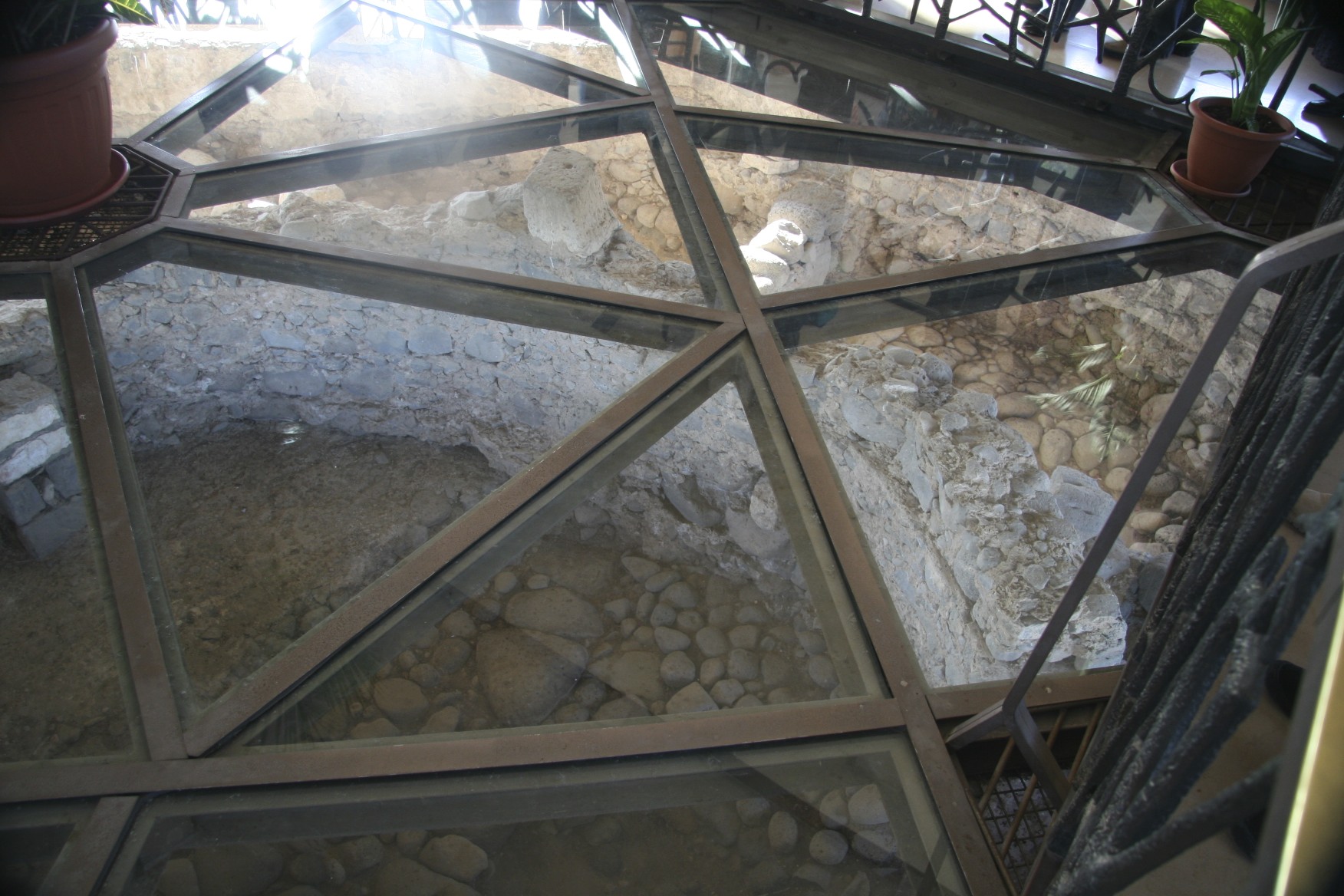
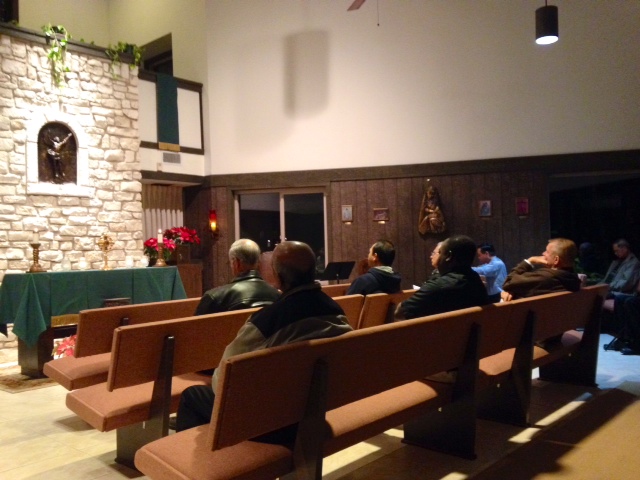
The picture above show the ruins of Peter’s house in Capernaum, now enclosed in a shrine. From a chapel above you can look down into Peter’s house below –possibly just where the man was lowered down. The picture at the beginning of our blog is also from that chapel.
We know Jesus forgave the man’s sins and then healed him completely, so he left the house carrying the mat that once bore him. The gospel story tells us that Jesus the healer is Jesus who forgives sins. Some who heard his words of forgiveness that day were shocked by this action which they rightly judged was divine.
But I’m led back to the four friends who had a part in this miracle. Let’s not forget them. They believe and their belief makes them go to extraordinary lengths to help someone . Faith reaches out; it doesn’t remain within. We believe for others as well as for ourselves. Believing prompts us to do daring things for others.
Back to Peter’s house. Did Peter look up that day and say, “Who’s going to pay for that hole in the roof?” The story of the paralyzed man is a wonderful story. But it also has an ominous part to it. Scribes, sitting in judgment, call Jesus a blasphemer for pronouncing sins are forgiven. Opposition to Jesus begins to build and it leads to his death.
Jesus’ ministry in Galilee begins with a remarkable day, a “paradigmatic day,” a day you can see everything you need to know about Jesus. That’s the day described in Mark’s gospel. A Sabbath day. (Mark 1:21-34)
Just before it, Jesus passed along the Sea of Galilee and called Simon and his brother Andrew, then James and his brother John. “Come after me, and I will make you fishers of men.” They accompany him into that day. .
They enter the synagogue in Capernaum on a Sabbath Day and Jesus begins to teach. The people are amazed; no one has taught like him before. Then, as it happens through his life, evil appears. A man with an unclean spirit cries out, “What have you to do with us, Jesus of Nazareth? Have you come to destroy us? I know who you are—the Holy One of God!”
The man with the unclean spirit is humanity helpless, fragile, beset by fear that it is forever in the hands of Evil.
Jesus rebuked him and said,“’Quiet! Come out of him!’ The man becomes a promise of humanity redeemed. The people who leave the synagogue tell everybody they meet. News spreads quickly in Capernaum, a trading center, and the day is still not over.
From the synagogue Jesus enters Peter and Andrew’s house in Capernaum where Peter’s mother in law is ill. “He grasped her by the hand, and helped her up and the fever left her. Immediately she began to wait on them.”
We shouldn’t dismiss this miracle or Mark’s simple observations: “He grasped her by the hand and helped her up.” In our drawing above, Rembrandt noticed that too. “She began to wait on them.” Now she was back, doing what she wished to do, feeding the others. A woman feeding others. A symbol of humanity restored. The mystery of the incarnation revealed in Judea at Christmas, now revealed in the miracles of healing in Galilee.
Again, the news spreads. “After sunset, as evening drew on, they brought all who were ill and those possessed by demons. Before long, the whole town was gathered outside the door. He cured many who were variously afflicted.” The whole world is represented in that crowd who come to the door to receive the Sabbath grace.
Truth and Life came to that town, and from that town other towns receive the promise: “ I must proclaim the good news to them too,” Jesus says.
Jesus confronts evil of all kind, wherever he goes. It won’t be long before leaders come from Jerusalem to question his authority to cure on the Sabbath. His own disciples and his own family do not understand him either. The towns that welcomed him, reject him. Still, he announces the good news.
To appreciate Mark’s remarkable day in perspective, try reading the gospels of these three days in our lectionary all a once. You can see Mark at his best, describing God’s beloved Son announcing the good news to the towns of Galilee and to the world as well. (Mark 1:16-39)
Mark’s account of Jesus’ ministry in Galilee is succinct. John has been arrested and Herod, who rules in Galilee, is ready to behead him. Not a good time, in human thinking, to begin a ministry. Better wait, we say.
But this is God’s time, different from ours. The Good News is God’s message, not ours. God will act according to his plan, not ours. (Mark 1:14-20)
The call of the four fisherman, Peter, Andrew, James and John occurs by the Sea of Galilee in Mark’s gospel. For the Jews the sea, like the wilderness, was a dangerous place; storms unsettled it; unpredictable winds made it fearful. Even an inland body of water twelve miles long and six miles wide was something to be wary of. They made a living on it, but still the sea was a dangerous place.
Mark’s gospel wants us to understand the call of disciples takes place by the sea.
Jesus says simply, “Come after me and I will make you fishers of men.” Mark’s Gospel sees the four fishermen with a lot to learn to be fishers of men. They slowly understand his call. Later on, twelve would be called, (Mark 3,13-19), still later their ministry would be explained. (Mark 6,7-13)
They keep learning, not something you learn in a book, or by yourself. “I will make you fishers of men,” Jesus said. “Come away by yourselves and rest awhile,” he said to his disciples who returned to him with reports of all they had done. (Mark 6,30ff) Every disciple has to learn what the call means for him and for her, and a great deal of it we learn with others. And a great t deal of that learning comes from prayer
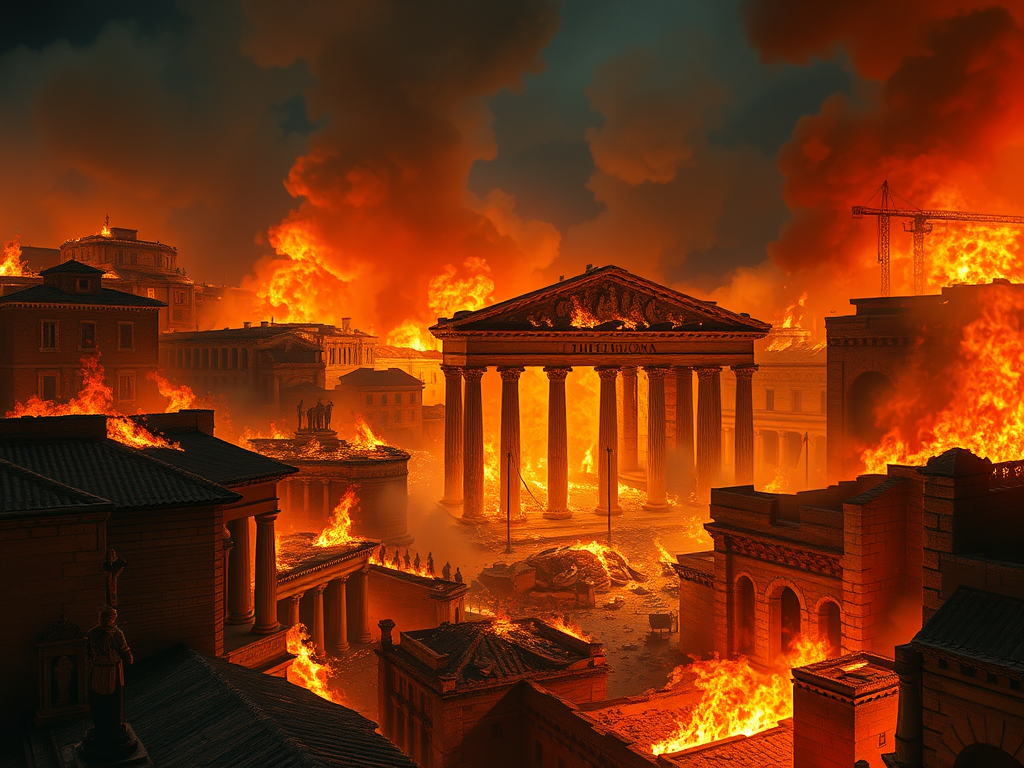
Today is the feast of the early Roman martyrs who suffered in Nero’s persecution along with the apostles Peter and Paul. The persecution began with an early morning fire on July 19, 64, that broke out in a small shop by the Circus Maximus and spread rapidly to other regions of Rome, raging for nine days through the city’s narrow streets and alleyways, where more than a million people lived in apartment blocks of wooden construction.
Only two areas escaped the fire; Trastevere, across the Tiber River, which had large Jewish population, was one.
Nero was at his seaside villa in Anzio when the blaze began, but he delayed returning to the city. They say that when he heard the news, he began composing an ode comparing Rome to the burning city of Troy. His absence caused resentment among the people. Rumors began that Nero himself set the fire in order to rebuild the city from his own plans.
To quell the rumors, Nero decided to blame someone else, and he chose a group of renegade Jews called Christians, who had caused trouble before, and had a bad reputation in the city. Earlier, about the year 49, the Emperor Claudius had banished some of them from Rome for starting upheavals in the city’s Jewish synagogues with their disputes about Christ.
“Nero was the first to rage with Caesar’s sword against this sect,” wrote the early-Christian writer, Tertullian. “To suppress the rumor,” the Roman historian Tacitus says, “Nero created scapegoats. He punished with every kind of cruelty the notoriously depraved group known as Christians.” Just how long the process went on and how many were killed, the Roman historian does not say.
The early Roman Christians came mostly from the 60,000 Jewish merchants and slaves with strong ties to Jerusalem. Even before Peter and Paul arrived in Rome, Jewish-Christians, clearly identified as followers of Jesus Christ, were counted among the city’s Jews.
At the time of the fire Jewish Christians had become alienated from the larger Jewish community and began separating from it. Where they lived and met was well known. The authorities, following the usual procedure, seized some of them, brought them to the Prefecture and forced them by torture to give the names of others.
“First, Nero had some of the members of this sect arrested. Then, on their information, large numbers were condemned — not so much for arson, but for their hatred of the human race. Their deaths were made a farce.” (Tacitus)
Instead of executing the Christians immediately at the usual place, Nero executed them publicly in his gardens and in the circus on Vatican hill. “Mockery of every sort accompanied their deaths. Covered with the skins of beasts, they were torn by dogs and perished, or were nailed to crosses, or were doomed to the flames and burnt, to serve as a nightly illumination, when daylight had expired.” (Tacitus)
Most thought Nero went too far. “There arose in the people a sense of pity. For it was felt that they (the Christians) were being sacrificed for one man’s brutality rather than to the public interest.” (Tacitus)
We celebrate the memory of the victims of Nero’s persecution, our ancestors in faith, on June 30th, following the feast of Saints Peter and Paul.
Further Reading
It would be good to have two New Testament writings in mind as we celebrate this feast– the Gospel of Mark and the First Letter of Peter.
Many scholars believe the Gospel of Mark was written in Rome following Nero’s persecution and before the destruction of Jerusalem in 70. Roman Christians, reeling from persecution and fearing troubles ahead, learned from this gospel.
Most belonged to a Jewish community that enjoyed extensive privileges under Rome’s emperors; they felt safe and secure– until Nero’s reign. There were brave martyrs, but there were others who betrayed their fellow Christians.
Mark’s Gospel presents the Passion of Jesus as a stark, brutal martyrdom that can’t be explained. How appropriate for Christians facing absurd, unmerited suffering meted out by a capricious emperor. At the same time, more than other gospels, Mark portrays Peter as a disciple who fails his Master and then receives mercy. He seems to remind Rome’s Christians that not only the strong, but the weak are part of their church.
Mark’s Gospel is meant for hard times. Jesus Crucified calls his disciples to follow him to the Cross.
First Letter of Peter
Another New Testament writing offered a similar message to the Roman community and Christians beyond the city. Like Mark’s Gospel, the First Letter of Peter, written in Rome, calls for courage in suffering, even unjust, absurd suffering.
“Christ suffered for you, leaving you an example that you should follow in his footsteps. He committed no sin and no deceit was found in his mouth. When he suffered he did not threaten; instead he handed himself over to the one who judges justly.” (1 Peter 2, 21-23)
The followers of Jesus should stay the course when suffering comes, Peter says. Stay where you are, the letter says, and “maintain good conduct among the Gentiles,” (1 Peter 2:12) “give honor to all, love the community, honor the king.”(1 Peter 2:17)
Following the Neronian persecution, many Jewish Christianss fled Jerusalem before Titus’ advancing legions. Seeing a sign of the last times, they prepared for the end. Rome’s Christians stayed where they were, it seems, and with their neighbors rebuilt their burnt city, waiting in hope for God’s kingdom to come.
They must have wondered whether to stay in this city, an evil city like Babylon. Should they go to a safer, better place? The Christians remained in the city. I wonder if the “Quo Vadis?” story was a story prompted by questions like these ?
The martyrs of Rome strengthen us to stand where we are and do God’s will, inspired by the Passion of Christ.
“Do you still not understand?” Jesus said this to his disciples in Mark’s gospel right after curing a blind man who only gradually gains his sight. He has to lay his hands on the man’s eyes a second time before he sees clearly. Is that the way we see and understand, gradually?
The cross Jesus says we all must bear takes many forms and I wonder if one form it takes in our time is the cross of confusion. We like clear sight for ourselves and everyone else, but in times of great change confusion is inevitable. Like the man in the gospel we’re living in a world of “talking trees” and that’s hard to take, reasonable, resourceful people that we are. It’s humbling to live in confusing times like ours..
It makes us angry. There’s a lot of anger around us today, the anger that boils over and lashes out, or the anger that retreats into a fortress of resistence and isolation.
Pope Francis often speaks of patience. He said patience keeps the church going. It keeps the world going too. He spoke once of the music of patience, a patience that hears and waits, like the patient blind man who waits for the hand of Jesus to reach out again.
That’s one of the lasting teachings of the Gospel of Mark. We’re human, we think as humans do, and that means we learn gradually, by patience.
“When Jesus and his disciples arrived at Bethsaida, people brought to him a blind man and begged Jesus to touch him. He took the blind man by the hand and led him outside the village. Putting spittle on his eyes he laid his hands on the man and asked, “Do you see anything?” Looking up the man replied, “I see people looking like trees and walking.” Then he laid hands on the man’s eyes a second time and he saw clearly; his sight was restored and he could see everything distinctly. Then he sent him home and said, “Do not even go into the village.” (Mark 8,22-26)
April 25th is the Feast of St. Mark, author of one of the gospels. We may forget that real people wrote the gospels, but the medieval portrait above shows the evangelist real enough as he adjusts his spectacles and pours over a book, surely his gospel. A lion looks up at him, the powerful voice of God.
He’s an old man, his eyes are going, He has to be old if he’s a disciple of Peter, as tradition claims. (cf. 1 Peter 5:14) Mark’s gospel appears shortly before or after the destruction of the Jewish temple in Jerusalem by the Romans in 70 AD. If he’s the author of the gospel, as it’s said, he’s in his 70s at least.
He may have written his account in Rome, where he came with Peter, who calls Mark in his 1st Letter “my son.” In 64 AD, Roman Christians experienced a vicious persecution at the hands of the Emperor Nero. Peter and Paul died in that persecution. For years afterwards, Christian survivors were still asking themselves, no doubt, why it happened.
They say Mark wrote his gospel in answer to that dreadful experience. He would have heard Peter’s witness to Jesus many times; he knows his story.
Yet Mark was not just a stenographer repeating Peter’s eyewitness account; he’s adapted the apostle’s story, adding material and insights he had gathered on his own. For a long time Mark’s gospel was neglected by the church, thought to be simply a synopsis of Matthew’s gospel. Today scholars admire it for its simplicity and masterful story telling. It’s the first gospel written and Matthew and Luke derive much of their material from it.
I like the wonderful commentary: The Gospel of Mark, in the Sacra Pagina series from Liturgical Press, by John Donohue,SJ and Daniel Harrington, SJ (Collegeville, Min. 2002). A great guide to this gospel and its rich message. We read Mark in the lectionary from the Feast of Baptism of Jesus up to Ash Wednesday, the beginning of Lent.
Mark’s Gospel offers a unique wisdom. It does not flinch before the mystery of suffering and does not try to explain it away. There’s a darkness about this gospel that makes it applicable to times like ours. We’re disciples of Jesus who must follow him, no matter what.
Our gospel for the feast is the final commission Jesus gives to his disciples, according to Mark. “Go into the whole world and proclaim the Gospel to every creature. Whoever believes and is baptized will be saved; whoever does not believe will be condemned. These signs will accompany those who believe: in my name they will drive out demons, they will speak new languages. They will pick up serpents with their hands, and if they drink any deadly thing, it will not harm them. They will lay hands on the sick, and they will recover.”
Like Jesus, his disciples will drive out demons and speak new languages. They’ll pick up serpents and drink poison, yet be unharmed. They will even believe, without understanding everything. In answer to Jesus’ command, tradition says Mark went to Egypt and founded the church in Alexandria.
Father, You gave St. Mark the privilege of proclaiming your gospel. May we profit by his wisdom and follow Christ more faithfully. Grant this, through Christ, your Son.





 The Victor's Place