Tag Archives: Epiphany

The Hudson and the Waters of the World are Blessed

img_1960
, New York Harbor

The Feasts of the Epiphany and the Baptism of Jesus are celebrated on cold days in my part of the world. Usually around this time, one of the New York papers carries the story of the Greek Archbishop of New York going down to the Hudson River and throwing a cross into its waters, which is then retrieved by some hardy Greek divers.

The waters of the Hudson this time of year are, like the world itself now, grim and cold, but that dramatic gesture, the cross in the water, the cross that represents Jesus Christ, says the Hudson River is blessed. Whatever it looks like, uninviting as it seems, Christ’s presence and Christ’s blessing are there.

When Jesus entered the River Jordan, he entered the Hudson, the waters of Long Island Sound, the rivers and waters of the world. The waters are holy the world over, this gesture says. The Spirit still broods over the waters. The grace of God is given to the Magi and all the peoples of the world they represent.

Here’s the way one of the saints of the Greek church, St. Proclus of Constantinople explains it:

“Our feast of the Epiphany and the Baptism manifests even more wonders than the feast of Christmas… At Christmas our King puts on the royal robe of his body; at Epiphany he, as it were, clothes the river.

On the feast of the Savior’s birth, the earth rejoiced because it bore the Lord in a manger;  but on today’s feast the sea is glad because it receives the blessing of holiness in the river Jordan.”

The United States Geological Survey has a wonderful site on water. Water is everywhere, not only in the seas and rivers, but in the air, the foods we eat, even our bodies. 71% of the earth’s surface is water.  60% of our bodies is water. Water’s a precious gift, a pervasive presence in our world.

That’s why water is the sign we receive in the Sacrament of Baptism. God tells us that, not only does he support us in life, but God promises support for this world of ours. God will be more present than water, through his Son, Jesus Christ.

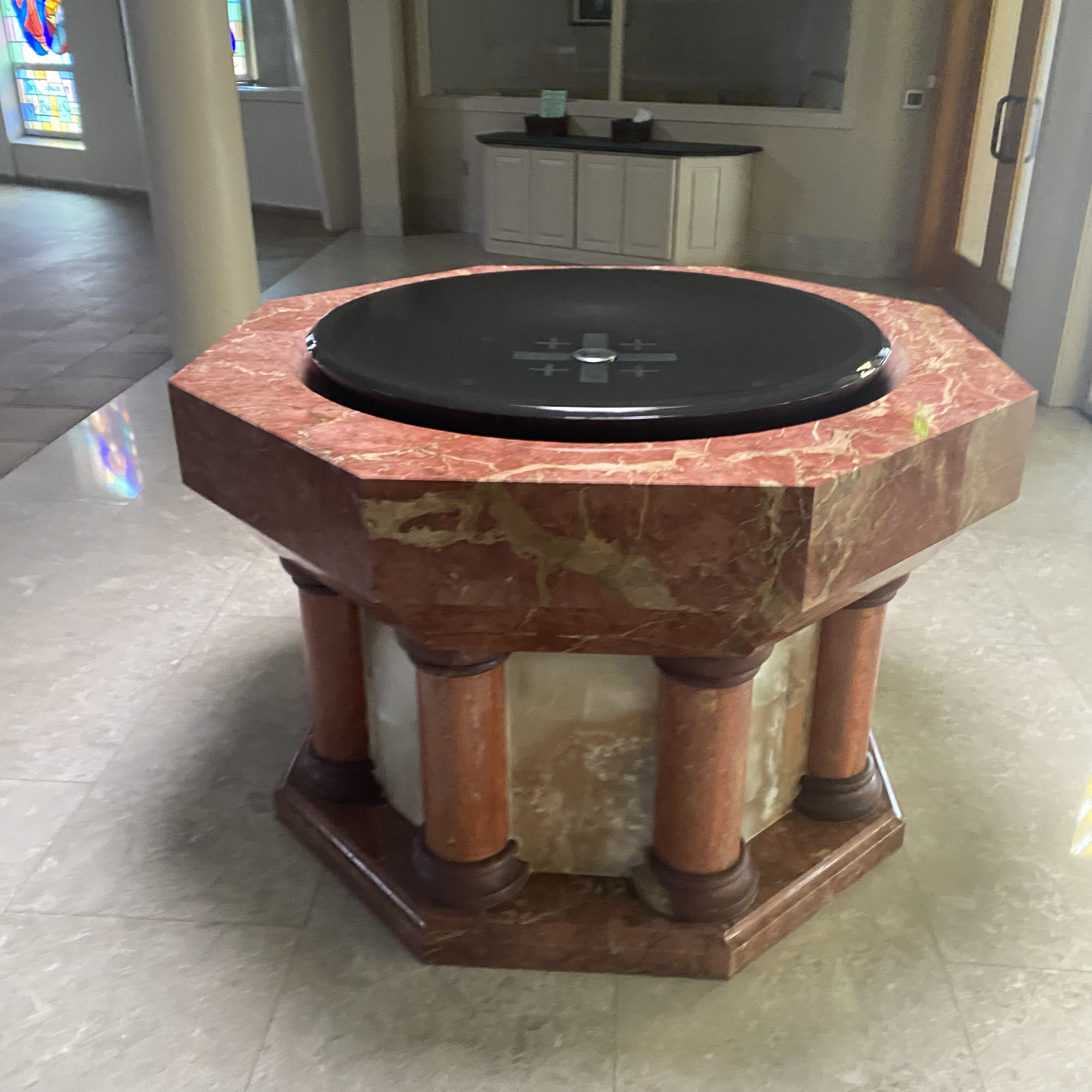
That’s why we bless ourselves with water when we enter and leave our church. Many people bless themselves with holy water when they enter and leave home. We don’t want to lose a sense of God’s power and presence with us, which can easily happen today. That’s why the feasts of the Epiphany and the Baptism have become more important to the western Christian churches.

Pope Francis has said that many of our rivers are “rivers of blood” because of war. He was speaking of the Dneiper and other rivers of the Ukraine. God gives us life. Let’s keep our world life-giving.

Dneiper River, Ukraine

Noah’s ark, the Magi, the Slaughter of the Innocents

Noah’s ark, the Magi, the Slaughter of the Innocents. “They’re just myths,” you hear it said. I don’t like those stories dismissed that way, because it easily leads to a further dismissal: ”Is any of it true? Probably not.”

We think straight reporting is the only thing true. “Just the facts, Mam.” Everything else is fake news. But are these stories fake?

https://www.youtube.com/watch?v=Oj2bS2Rrj3g

“The Secrets of Noah’s Ark” a recent Nova program on PBS examining the biblical story makes good sense to me. In early times, floods were common in the “Fertile Crescent” the area in Mesopotamia {modern Iraq} where the Tigris and Euphrates Rivers and the ancient city of Babylon were located. So you had to keep boats handy– you never know.

You had to be ready for a great flood too, but people have short memories and people then, as now, tend to forget “the big ones.” “As it was in the days of Noah, so it will be at the coming of the Son of Man. In those days before the flood, they were eating and drinking, marrying and giving in marriage, up to the day that Noah entered the ark. They did not know until the flood came and carried them all away.” (Matthew 24, 37-38)

I suspect some Babylonian priests– meteorologists and story tellers of their time– came up with a flood story thousands of years before the Noah story to keep the people of their day on their toes – and maybe challenge some early climate change deniers too. It reinforced important advice: “ Keep your boats in good shape and make sure there’s also a big boat around for ‘the big one.’”

dsc00301

Exile of Jews  to Babylon

In 587 BC, thousands of Jews were driven from Jerusalem, destroyed by Babylonian armies, and were forced to make the thousand mile journey in Babylon. It was their Exile. When they heard the story of the great flood they saw it as a symbol of their own tragic circumstances. “By the rivers of Babylon, we sat and wept, remembering Zion.” (Psalm137)

Returning from exile, the Jews incorporated their version of the flood story into the Torah. It became a reminder to keep the covenant God made with them and beware of living unfaithfully as “in the days of Noah.”

Does real history underlie the story of the Magi and the Slaughter of the Innocents? Begin with Herod the Great, ruler of Palestine then, whom secular sources and many archeological monuments from the time describe quite well. Herod was a micro-manager who built fortified palaces in Jerusalem, the Herodium outside Bethlehem and other places to keep watch over his kingdom.

dsc00291-version-4

Citadel, Herod’s Palace Fortress, Jerusalem

fullsizerender

Herodium, Mountain Fortress of Herod the Great

He promoted trade with the outside world; he built the seaport of Caesarea Maritima on the Mediterranean Sea and cultivated the trade routes from Yemen and other eastern parts that led all the way to Rome. He would have kept tabs on those arriving with spices and luxury goods of all kinds. He knew who came and went.

Were the Magi wealthy eastern traders, quite knowledgeable about the religious world of the people with whom they traded? Did they hear of the Child in Bethlehem? Herod’s advisors and everyone else knew Bethlehem was associated with the legendary King David and there were prophecies about an heir to his throne coming from there. Did the foreigners visit the Child, bring their gifts, gold, frankincense and myrrh, the prizes of their trade, and then quickly leave, well aware of Herod’s paranoia, quick temper and brutality.

Given Herod’s jealous hold on power, the story of the slaughter of the Innocents in Matthew’s Gospel doesn’t seem unlikely, True, it’s not mentioned in any secular source, but neither are many other tragic stories of the time. Bethlehem, after all, was a small town, off the beaten track. The death of perhaps 20 or so infants might go unnoticed and be quickly forgotten.

Matthew’s story is hardly a myth. Rather, it sees things through God’s eyes. The star points to the real power guiding human history; the magi represent the rest of the world coming to adore the Child. Angelic powers are always at our side. The slaughtered infants are like so many tragic deaths that seem to question God’s promise of life, but God doesn’t forget, the story says, even if human history doesn’t remember. “The souls of the just are in the hands of God and no torment shall touch them.”

If you ever visit Bethlehem, go to see the Herodium, Herod’s massive fortified palace looking down on the nearby town. Joseph wouldn’t need much urging to take the Child and his mother from this place,would he? Go to the Citadel in Jerusalem built on the highest spot in the city. You can walk where Herod once walked and imagine him looking down on his kingdom. But it was not his kingdom, after all, it was God’s. Go to Caesaria Martima, the splendid port city created by Herod. Did the Magi’s caravans reach here?

Then ask yourself if the stories of Jesus’ birth and infancy are myths.

dsc00006

Caesaria Maritima

Lectionary Readings after Epiphany: Matthew 4

DSC00036

The gospel readings at Mass for the week after the Feast of the Epiphany are connected to that great feast.

The Magi seeking the King of the Jews represent the nations, the Gentiles, who seek Jesus as their Savior. In our readings for Monday Jesus begins his public ministry after his baptism by John, going to Galilee. “The Galilee of the Gentiles,” Matthew’s gospel calls it. He brings light “to a people who sit in darkness.” (Matthew 4,12-17,24-25) In Galilee Jesus fulfills the promise made to the Magi.

He repeats the words John used to define his ministry: “Repent, for the kingdom of God is at hand.” But Jesus goes beyond John (Saturday, John 3,22-3); he calls a Gentile world as well as a Jewish world to turn to God, for the kingdom of God at hand.

Humanly speaking, it wasn’t a good time to begin such a mission. It’s “after John was arrested,” a dangerous time. Galilee, when Jesus began his mission, was ruled by Herod Antipas, who imprisoned John and then beheaded him. (Matthew 4, 12-25)

But God’s time is not our time. It probably wasn’t a good time either for the Magi to come to Bethlehem, in the days of Herod the Great. But God’s ways are not our ways. We can miss grace and its opportunities when we think of time in too human a way.

Accounts of the miracle of the loaves and the crossing of the Sea of Galilee from Mark’s gospel are read on Tuesday and Wednesday of this week. Commentators note that in Mark’s gospel the Sea of Galilee is a stormy path Jesus takes to reach the Gentile world of his day. The other side of the lake, the western side, was predominantly a Gentile area. They are given the same Bread he provides for the children of Israel.

It’s to “all of Galilee” that Jesus goes and “as a consequence of this his reputation traveled the length of Syria. They carried to him all those afflicted with various diseases and racked with pain: the possessed, the lunatics, the paralyzed. He cured them all.” (Matthew 4, 23-25)

Galilee is the “Galilee of the Gentiles,” where Jesus would bring good news to both Jew and Gentile.

The Epiphany and Severa

Today, as we remember the mysterious visitors from afar who came seeking the new-born King of the Jews, I remember wandering years ago through the catacombs of Rome where early Roman Christians buried their dead. On the burial places of their loved ones they scratched the name of the deceased, little symbols and prayers, sometimes a picture from the bible.


In the catacombs of Priscilla is a 3rd century grave belongs to a Roman woman named Severa. Her simple profile appears with an inscription that reads, “Severa, may you live with God.” Severa points to the figures of the three Magi coming with their gifts to the little Child sitting on Mary’s lap. Over the Child is a star and the figure of a man, probably Balaam, the prophet who predicted a star would announce a new king in Judea. (Numbers 24,15-19)

What did this mean to Severa, you wonder? She lived in Rome, so many miles from where the Child was born, yet she believed in promise he made to those strangers who once brought him gifts. His gift to Severa was greater than gold, frankincense and myrrh. The Child promised her eternal life. She would live with God.

The theme of the three kings is common in early Christian art.

Severa’s faith, contained in the Apostles’ Creed, is the same as ours today. God made this world and guides it to its destiny. Jesus Christ is God’s Son, born of Mary, he suffered under Pontius Pilate, was crucified, died and was buried. On the third day he rose from the dead.

Severa believed in his promise: the resurrection of the body and life everlasting. She knew, too, the story of Herod, the powerful king, who threatened the life of the new born Child. Powerful emperors ruling then were like the ruthless king, but Severa knew the Child was more powerful than them all. He would bring her to another world, God’s world.

“Severa, may we live with you in God.”


The Epiphany Feast Isn’t Over!

Kings Point, New York

Like the Christmas feast, we can pass over the Feast of the Epiphany too easily. It can become a quaint story of no significance.

I spoke about the meaning of the Epiphany on Sunday at the Maritime Academy in Kings Point, New York, where young men and women are being trained for service on the ships that sail our seas and waterways. This feast should mean something to them.

The only gospel that records this story is the Gospel of Matthew, so why is it there?

Matthew’s gospel was written for Jewish Christians in Galilee and Syria some time after the temple in Jerusalem was destroyed by the Romans in the year 70. We can’t imagine how shocked they were by the complete destruction of the temple and the city itself. These were places where God’s promises would be fulfilled, they thought. The Messiah would appear there. This was where Jesus would come again. All nations would stream to Jerusalem, prophets like Isaiah foretold. Now they were gone.

Matthew’s gospel reminds his hearers–and us too–that Jesus must be known by all nations before he comes again. “Go and make disciples of all nations,” Jesus says in his final words in Matthew’s gospel, “baptizing them in the name of the Father and of the Son and of the Holy Spirit, teaching them to observe all that I have commanded you. And behold, I am with you always, until the end of the age.” (Matthew 28, 18-20)

Matthew’s story of the Magi is a reminder that even as Jesus is born, messengers, strangers, wise men from afar, want to know and acknowledge him as their king and God.

Jesus Christ came, our gospel says, not for only one people or nation, but for all. Though his ministry was first to the Jews, Jesus wishes to make the world one. God doesn’t wish to save a few. He wants to save all– all the world.

The Magi came, our story says, from the east. Could that be from Iran or Yemen; two places we hardly view positively today in our country? More and more, as we look at the world only through the lens of politics and economics; we fear the stranger, we reject the immigrant, we create enemies, we reject people not like us. We’re becoming tribal instead of global. We’re falling into individualism. As the old song said, we’re looking for “perfect peace, where joys never cease, and let the rest of the world go by.”

But we can’t let the rest of the world go by and we won’t be safe behind walls. We’re living in a big world that God wants to be one. That’s what the story of the magi tells us. We’re all commissioned on this Feast of the Epiphany, which is followed next Sunday by the Feast of the Baptism of Jesus, to go out into the whole world, “ baptizing them in the name of the Father, and of the Son, and of the Holy Spirit,” teaching them to observe all that Jesus commands. And he will be with us, even to the end of time.

I told the young men and women at Kings Point on Sunday that they’re commissioned as people of the sea. The oceans and waterways are highways uniting this world of ours. They shouldn’t be looked at only through the eyes of economics or politics. They’re meant to connect peoples, they’re bridges that make us one.

As I left the chapel, I met some people who are “furloughed” by the current government shut-down. We don’t have to look far to see how dangerous it is to see the world only through the eyes of politics and economics. We need a brighter star.

The Epiphany

We’re into the New Year and automatically we wonder about the future. We can’t avoid it. We’re wondering what this year is going to bring. What’s coming?

Living in a secular age as we do, we see things mainly with eyes for the here and now, which often boils down to politics and economics. What’s the country going to be like under President Trump? What’s the economy going to be like? Unfortunately when we look at things only like that, we can end up being small minded. We can think that what we see and hear and touch now is all there is. We lose a larger vision of life.

We need the spark, the light, of revelation.

Can we see that light in the mystery of the Epiphany we celebrate today? It begins with a star, guiding some travelers on their way. Can this mystery lift up our secular minds and point out something more? Is our world being guided by a Star?

To start, let’s not see the story of the Magi as a cute story of some people riding on camels coming to see Jesus. More than that, it’s a revelation of God’ divine plan which carries news for us and our world, and it’s as important now as it was then.

The Magi story is only found in the Gospel of Matthew, who was writing for Jewish Christians in Galilee and the Syria about the end of the first century. The temple of Jerusalem was recently destroyed and Jewish Christians like other Jews were facing an unknown, disturbing future. When Jesus came to them, he began his mission saying to the Canaanite woman, who pleaded for a cure for her daughter, “I was sent only to the lost sheep of the house of Israel.” (Mt 15;24)  “Go nowhere among the Gentiles, and enter no town of the Samaritans, but go rather to the lost sheep of the house of Israel,” Jesus first told the twelve whom he sent out to preach. (Mt 10, 5) It looked as though the promises of God were for the Jews and them alone.

But that made the promises of God too small.

Matthew’s story of the Magi was a reminder that the gospel was meant for others besides. Jesus came for all, though his ministry was first to the Jews. God wants the world to be one family and he wishes his gifts and graces be given to many peoples and places. God doesn’t save a few.

The Magi may have come from present day Iran or Yemen; two places we hardly view positively today. We tend to see ourselves a privileged people and our own country a promised land. God is on our side. Better to leave the rest of the world to its wars, its earthquakes, its immigrants, its divisions, its problems. As the old song once said, let’s find “perfect peace, where joys never cease, and let the rest of the world go by.”

We can’t let the rest of the world go by. The story of the Magi reminds us we live in a big world that God means to be one. The story of the Magi is not a sweet story about people on camels who looked and dressed and spoke differently than us. They’re symbols of the world beyond ours that’s called by God to share in his promises.

And the newcomers come with gifts.

Advent: The Season of Joy

https://www.youtube.com/watch?v=NbMImf0zo7s&feature=em-upload_owner%5B/embed%5D

Christmas: A Call to Baptism

Matthew’s gospel was the gospel most used for catechesis in the early church. It also plays an important role in the creation of our Christmas season. It gives us the Feast of the Epiphany, for example. Jesus Christ came for the gentiles as well as for the Jews.

I think Matthew’s gospel is also an important source for our upcoming Feast of the Baptism of Jesus which closes the Christmas season. Matthew sees baptism as a way of repentance. That’s how John the Baptist describes it in Matthew’s gospel: “In those days, John the Baptist appeared in the wilderness of Judea, proclaiming: ‘Repent, the kingdom of God is near.’” (Mt 3,1-2)

When Pharisee and Sadducees come for baptism, John calls them “a brood of vipers” because they presume they are saved as “children of Abraham.” “God is able to raise up from these stones children of Abraham, “ John says to them.

Baptism is not an entitlement. Baptism is a commitment to repentance. That’s important for us to realize too.

But repentance is a difficult path. Can we do it alone?  John continues in Matthew’s gospel with the promise that one more powerful than he is coming. “He will baptize you with the Holy Spirit and fire.” When we are baptized into Christ, we are given the Holy Spirit and his fire to continue on the path of repentance.

Christmas is not just for looking at the Child in a manger; it’s a call  to enter into the mystery of Jesus Christ.


The Big Picture: The Magi

This is the time of the year when people make predictions about the future. It’s a time to look back and look forward.

Our local newspaper on Friday in Hudson County featured the predictions of a local psychic about the future of our mayor, our governor, our senator and a variety of local politicians. Psychics are big this time of year.

The host of PBS’s Newshour the other night asked his two experts to talk about the big picture ahead. “What does it look like?” They talked about the “Tea Party,” possible roll-backs in the health care program, the new Republican majority in Congress. That’s about as far as they went. I would guess the cable news channels talked about the same things from even a narrower perspective: politics and economics–American politics and the American economic picture.

Something’s missing. Our “big picture” is really a small picture. We seem to lack of larger vision of life.

We live in a secular age, an age of “expressive individualism.”(Charles Taylor) One of the drawbacks of the secular mind is its tendancy to be small-minded, to concentrate on the here and now, on what we see and do, on our personal interests. Even believers are part of a secular age and share its tendancies.

The secular age needs the spark of revelation.

What about the mystery of the Epiphany we celebrate today? Can it bring sparks to secular minds?

Let’s take the gospel story of the Magi out of its Christmas card setting and ask what its all about. The Magi were strangers, people coming from afar, bringing gifts. They recognized the Child whom others did not see. Then, we may surmise, they brought news of him back to their own people and part of the world.

The other day I was talking to a young priest from my community in Kenya, an African who’s studying now in Chicago. He was asking me about the new media and how to reach others through it. He wants to learn as much as he can from us, but he also thinks that Africa has something to offer the world, and his church in Kenya as something to contribute to the church beyond it.

Is he the Magi coming to us today?

Matthew’s gospel is the only gospel with the story of the Magi. The gospel was written for Jewish Christians in Galilee and the neighboring areas and it emphasizes that Jesus came first to them. “I was sent only to the lost sheep of the house of Israel,” Jesus tells the Canaanite woman, a gentile pleading for a cure for her daughter. (Mt 15;24)  “Go nowhere among the Gentiles, and enter no town of the Samaritans, but go rather to the lost sheep of the house of Israel,” Jesus instructs the twelve as he sends them out earlier in his gospel. (Mt 10, 5)

Were these stories Matthew’s way to bolster the faith of  Jewish Christians beset by a powerful Jewish orthodoxy that questioned their belief in Jesus Christ? Was Matthew’s story of the magi also a reminder that the gospel was meant for others besides them?

Jesus came to save all, even though his first ministry was to the Jews. God  saves the world and his gifts and graces are in many peoples and places. He doesn’t save the few.

We live in a big world that’s meant to be one. It’s not a world to be ignored. Great gifts and burdens are there, gifts and burdens meant to be shared. An earthquake in Haiti, for example,  is our tragedy too.  A worldwide depression is our problem too. More  and more, we tend to demonize the Muslim world. The Magi may have come from present day Iran or Yemen; two places we hardly view positively today.

We are tending to demonize immigrants in our own country today. Many of us are descendants of immigrants who came here with gifts and burdens. When they first arrived, those here often saw them only as burdens to this country. We know better.

The story of the Magi is not a sweet story about camels and men dressed in strange rich robes. It’s about the big picture, a picture we should see.

Sharing His Life

As “the true light, which enlightens everyone ” come into the world, Jesus came not only that we might see his glory but also that we might share in it. “From his fullness we have all received, grace for grace.” (John 1,16) His baptism in the Jordan and his presence at the marriage feast of Cana in Galilee – two themes from John’s gospel still closely connected with the Feast of the Epiphany– portray Jesus revealed as God’s Son who unites humanity to himself.

From earliest times the Feast of the Epiphany, like Easter, was a day for baptizing those who believed in his name. To them, “he gave power to become children of God.” (John 1, 12) The story of the Magi, from Matthew’s gospel, says that all people are called by God to share in the grace of Jesus Christ. “The Gentiles are fellow heirs, members of the same body, and partakers of the promise in Jesus Christ through the gospel.” (Ephesians 3, 5-6)

Some historians see the Feast of the Epiphany originating from early Jewish-Christian celebrations of the Jewish Feast of Tabernacles, which celebrated God’s glory in covenant, light and water. In John’s gospel it’s during this same Jewish feast that the question is asked: Who is Jesus Christ? (cf John 7-10) He is God’s divine Son, the gospel says.

In some places the Feast of the Epiphany is also called the Feast of the Holy Kings or Three King’s Day. Gifts are given in memory of the Magi’s gifts of gold, frankincense and myrrh. Homes are blessed with holy water, in remembrance of that blessed home where the Magi found the Child and his mother.

In the western church, the feast of the Baptism of Jesus follows the celebration of the Epiphany as a separate feast, but it should be seen as  part of that celebration.

“For on this day land and sea share between them the grace of the Saviour, and the whole world is filled with joy. Today’s feast of the Epiphany manifests even more wonders than the feast of Christmas.”  (St. Proclus of Constantinople)