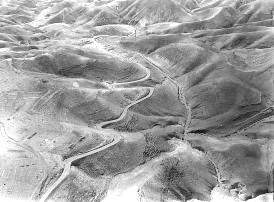
In the time of Jesus pilgrims from Galilee came up to Jerusalem a number of ways. Many came down the Jordan Valley, a journey of 90 miles. When they reached the city of Jericho they turned eastward onto a steep, winding road that ascended for 3500 feet and 15 miles to the city of Jerusalem. A picture taken from an airplane in the 1930s shows that winding, climbing road through the desert. It had to be the hardest part of their journey.
Now travelers go that route in air-conditioned buses. It took ancient travelers four days. Not it’s a few hours.
The bible sees the journey to Jerusalem, especially the last part up that steep winding desert road as a symbol of our journey to God. We’re pilgrims on our way, The way’s still hard, even with air-conditioned buses.
John the Baptist preached where that winding, climbing road began. His father, Zachariah, a priest in the temple in Jerusalem, told him at his birth: “You, my child shall be called a prophet of the most high, for you will go before the Lord to prepare his way.” (Luke 1)
John invited weary pilgrims into the refreshing waters of the Jordan river, that they might be strengthened for the journey.
Last week readings warned about falling asleep through complacency and laziness. This week readings remind us the day by day journey can tire us, Life can wear us out, even a life doing good.
Then, unexpected things, like sickness, failures and disappointments, come along, robbing our energy. The parable of the Good Samaritan happened on this road to Jerusalem. Unexpected things happen.
John the Baptist, and the Prophet Isaiah before him, spoke to weary pilgrims. “‘Comfort, give comfort to my people,’ says the Lord…They spoke words of hope to those on the way:
With God’s help, the winding, climbing, wearying road becomes a highway; every valley filled in, every mountain and hill made low, the rugged land made plain, the crooked way straight.
The Lord is ” a shepherd feeding his flock, in his arms he gathers the lambs, carrying them in his bosom and leading the ewes with care.” (Isaiah 40: 1-5,9-11) So don’t be afraid.
Advent is a beautiful season. “Go up with joy to the house of the Lord.”
John the Baptist may look and sound forbidding, but don’t let appearances put you off. He spoke in the wilderness, where looks are not important and you can’t keep up appearances. The wilderness symbolizes the hard places we all must pass through.
So we shouldn’t deny they exist. Or think a simple sentence will take them away. I suppose that’s why I prefer John the Baptist to Joel Osteen.
John’s father was Zachariah, a priest in the temple, a much more secure place to be. He told John: “You, my child shall be called the prophet of the most high, for you will go before the Lord to prepare his way.” (Luke 1) God called John to the wilderness to show people the way to God from there.
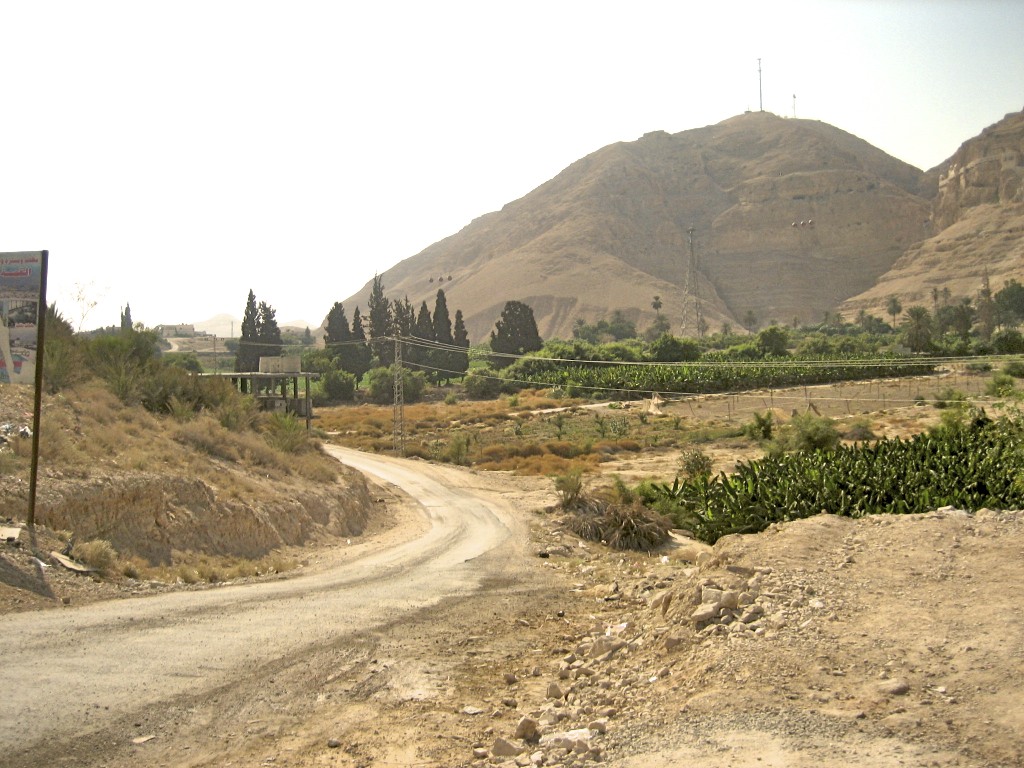
The Judean wilderness where John the Baptist baptized lay about 15 miles east of Jerusalem in the Jordan Valley north of the Dead Sea. Pilgrims from the north took an ancient road along the River Jordan and followed it as it veered right near the town of Jericho to ascend steeply about 3,500 feet up to the Holy City, about an 9 hour walk. A tough road in itself to travel.
Near where the road begins to ascend, John baptized great crowds in the river’s refreshing waters. He baptized Jesus and his disciples in these waters and then pointed Jesus out as “the Lamb of God” and told his followers to follow him as their Shepherd and Way.
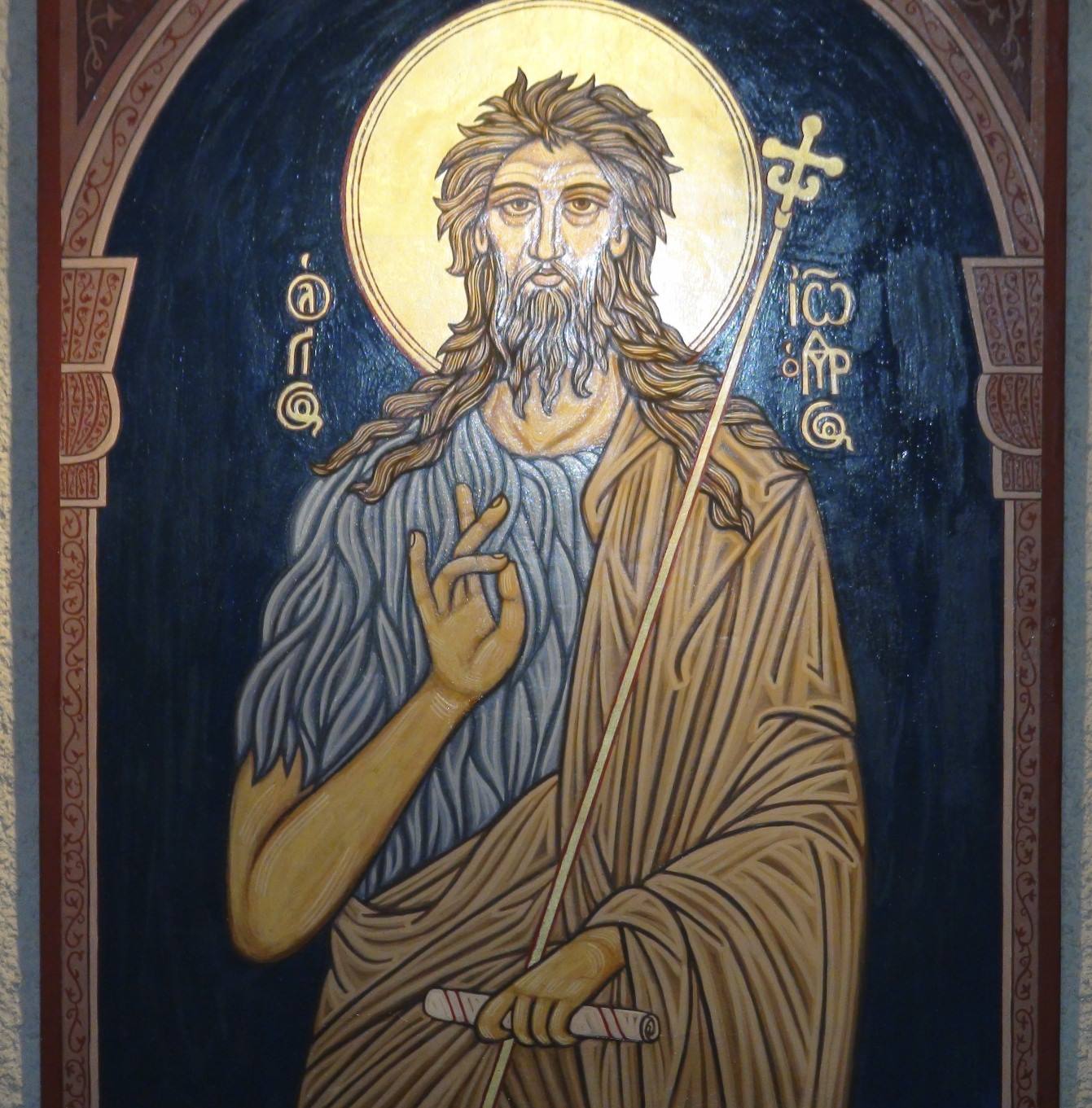
John was a voice pointing Jesus out in the wilderness. He still points him out in the wilderness today and tells us to follow him. “You’ll make it through the wilderness,” he says.
To listen to today’s homily, please select the audio file below:
Last year, CNN ran a series on television called Finding Jesus: Faith, Fact, Forgery. One of the segments was about John the Baptist. I’m afraid I didn’t like John as he was portrayed. He shouted a lot about the coming judgment. There was something scary and unstable about him and I thought to myself: “I don’t know if I would follow this man.”
In the CNN presentation scholars periodically commented on John and his relationship with Jesus. They seemed to say that Jesus was a copy of John, that he got everything from John; he learned everything from John. That made me wonder if I would follow Jesus, if that was the way he was.
I find the scriptures offer a more reliable picture of John and Jesus. Luke’s gospel sets the stage for John’s appearance. “In the fifteenth year of the reign of Tiberius Caesar,
when Pontius Pilate was governor of Judea,
and Herod was tetrarch of Galilee,
and his brother Philip tetrarch of the region
of Ituraea and Trachonitis,
and Lysanias was tetrarch of Abilene,
during the high priesthood of Annas and Caiaphas,
the word of God came to John the son of Zechariah in the desert.”
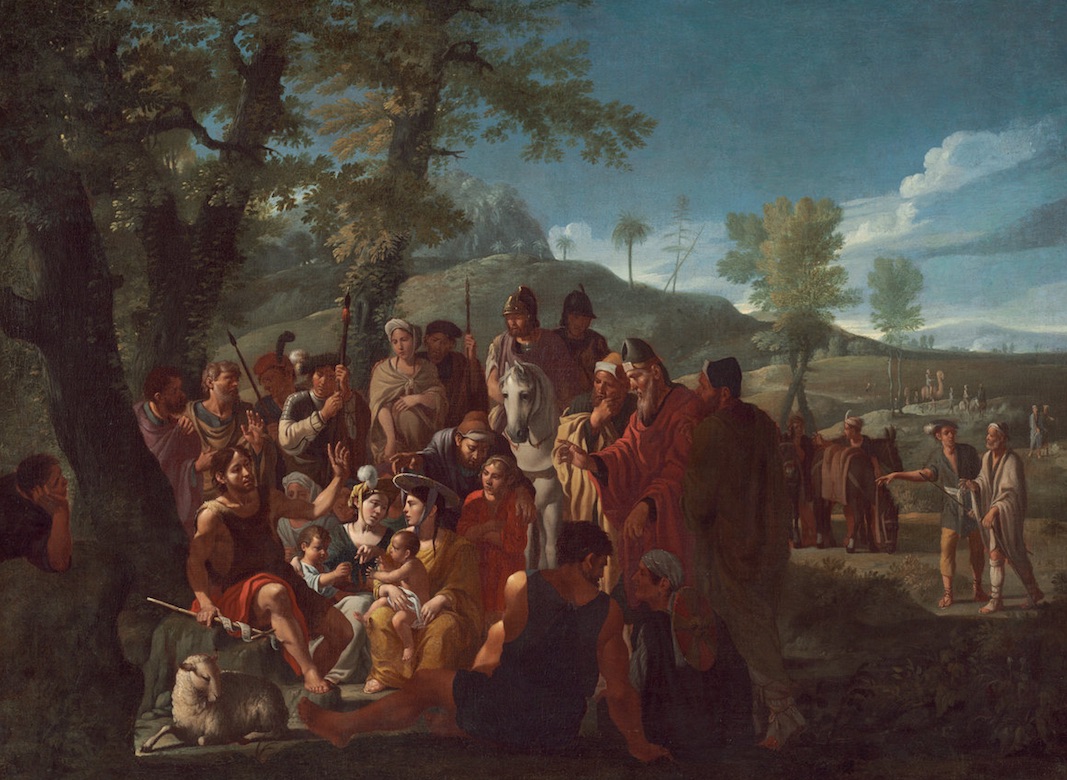
“In the desert.” John preached “in the desert,” in the Jordan valley where pilgrims from northern Israel traveled on their way up to Jerusalem. They’ve taken the time off to go up to the temple and then go back home to their work and life as before. They’ve been walking on rough roads in hot days. They’re stopping to get some water before walking the last 15 miles up to the holy city.
John approaches them. “Something is happening, something big is going on. Something that the prophets have promised. We have to get ready for it. God is ready to do something. Someone is coming. ‘Prepare the way of the Lord.’ God is coming to judge us.”
Yes, there’s an urgency about John, but he’s not insane. He sees there’s something great ready to happen. God, the judge of all is coming. Someone is coming to bring God’s judgment.
When Jesus comes, John is certainly not his teacher. He recognizes Jesus and baptizes him in the Jordan. But Jesus is not a copy of John. Later, from he’s in prison, John sends disciples to Jesus who ask “Are you he who is to come, or shall we look for another.” Jesus said to them in reply, “Go and tell John what you hear and see: the blind regain their sight, the lame walk, lepers are cleansed, the deaf hear, the dead are raised, and the poor have the good news proclaimed to them. And blessed is the one who takes no offense at me.” (Matthew 11, 5-6)
Jesus calls himself the face of God’s mercy, the hand of God’s mercy, the gift of God’s mercy. John was waiting for God who is judge, but Jesus reveals God who is kind and merciful.
On March 13, 2015, Pope Francis called for a Holy Year of Mercy, a year to live “in the light of the Lord’s words: ‘Be merciful, just as your Father is merciful.’ (Luke 6, 36) The year begins this week, December 8th, the Feast of the Immaculate Conception and ends on November 20, 2016, “the Sunday dedicated to Our Lord Jesus Christ, King of the Universe–and the living face of the Father’s mercy.”
Where are our John the Baptists today? I was watching Fr. Corapi on television last night on EWTN, preaching before a large appreciative audience. His talk was about Why Catholics Leave the Church. They leave because of pride, he said.
They don’t recognize the truth of the Church or the authority of the pope. By missing Mass and the sacraments they cut themselves off from sanctifying grace. Pride is their downfall. Fr. Corapi comes down hard on “lousy” seminaries and liberal schools, Catholic and secular. His world is black and white; he doesn’t like grey.
In today’s readings, John the Baptist speaks from the wilderness and with sharp eyes looks at the world of his day. They come from Jerusalem and Judea, from everywhere to hear him. No one is excluded from his call to repent, not even himself.
He’s especially hard on the Pharisees and scribes who think they’re safely home: “When he saw many of the Pharisees and Sadducees coming to his baptism, he said to them, “You brood of vipers! Who warned you to flee from the coming wrath? Produce good fruit as evidence of your repentance. And do not presume to say to yourselves, ‘We have Abraham as our father.’ For I tell you, God can raise up children to Abraham from these stones.”
When a John the Baptist preaches, no one is left out, including himself. Try this one out as a John the Baptist sermon for today,
In last week’s reading, Jeremiah looked out at the bleak landscape of Jerusalem, destroyed by the Babylonians, its people mostly in exile, and pointing to a shoot, a little sliver of life, told us to hope. This Sunday, his scribe Baruch describes a glorious restoration when God leads his people home.
The holy city clothed in glory will rise in splendor to welcome her returning children. “Led away on foot by their enemies they left you: but God will bring them back to you borne aloft in glory as on royal thrones.”
They have been “remembered by God, ” who levels mountains and valleys for their joyful journey, beneath fragrant trees, “with God’s mercy and justice for company.”
How unrealistic, many listening to the prophet’s vision must have thought!
How unrealistic the gospel reading also seems, as John the Baptist turns towards the desert to welcome “all flesh” to Jerusalem, still in the firm grip of the Romans, Herod’s dynasty and the priestly caste from Jerusalem.
Yet, the prophets speak the truth, even though we see only ruins and what is. Remember us, O Lord.

 The Victor's Place