Doctors of the Church

St. Teresa of Avila and St. Thérèse of Lisieux were named Doctors of the Church after the Second Vatican Council. The two Carmelite nuns took their among men so unlike them.  St. Ambrose, St. Augustine, St. Athanasius, St. Basil,  were public figures who produced an enormous body of homiletic and theological works in their lifetime. The two women were nuns in a cloister; their few works circulated publicly only after their death.

Doctor is a title implying extensive knowledge. A doctorate in theology, for example, comes after extensive study in an accredited university and an approved thesis writing on some theological subject. I imagine if we asked Teresa of Avila about a theological question in her lifetime she would tell us ask one of the learned priests she knew. The two women were not theologians. 

 Why, then, are they called Doctors of the Church? Perhaps the account in Luke’s gospel of the seventy two disciples whom Jesus sent out and his prayer at their return may help us with an answer: 

 “I give you praise, Father, Lord of heaven and earth, for although you have hidden these things from the wise and the learned you have revealed them to the childlike… No one knows who the Son is except the Father, and who the Father is except the Son and anyone to whom the Son wishes to reveal him.”   Turning to the disciples in private he said,“Blessed are the eyes that see what you see. For I say to you, many prophets and kings desired to see what you see, but did not see it, And to hear what you hear and did not hear it. “ (Luke 19 21ff)

The seventy two disciples knew what prophets and kings –people well versed in religious and secular knowledge– did not know. They knew Jesus Christ; they saw and heard him. They had an immediate knowledge of Jesus Christ who reveals a loving God present in this world to bring it salvation.

That’s the knowledge Teresa of Avila and Thérèse of Lisieux  had. They were experts in that knowledge. They knew Jesus Christ and through him they knew that God is a loving God who loves us all and is with us all. They had an immediate knowledge of him, and they teach us to know him in prayer and in the ordinary circumstances of life.

That message is also in the documents of Vatican II, particularly in its Constitution on Divine Revelation. “In his goodness and wisdom God chose to reveal himself and to make known to us the hidden purpose of His will…The invisible God out of an abundant love speaks to us as friends and lives among us, so that He may invite and take us into fellowship with Himself.” 

The Second Vatican Council shifted the church from a notion that God reveals himself through divine truths and a revelation based on propositions to a revelation predominantly based on a personal revelation of God to us.  “The shift is from a predominantly propositionalist notion of divine truth and revelation to a personalist notion of divine truth and revelation.”( Ormond Rush. The Vision of Vatican II: Its Fundamental Principles (pp. 39-40). Liturgical Press. Kindle Edition.) 

Mystics like Teresa and Thérèse of Lisieux  teach this. In one sense, they’re more important than all the theologians usually credited for the council. They’re Doctors of the Church. 

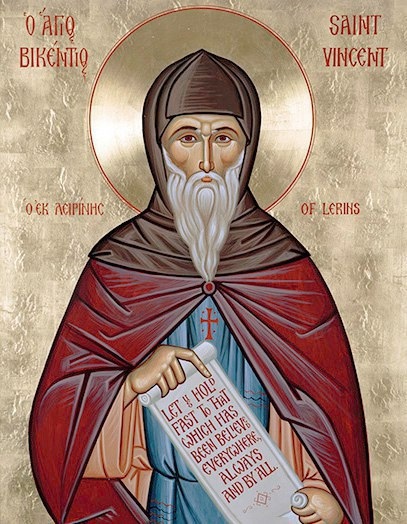
St. Vincent of Lerins Speaks to the Modern Church

By Gloria M. Chang

As the Synod on Synodality proceeds in Rome, we can all participate as the listening Church, the Bride of Christ, sitting at Jesus’ feet like Mary of Bethany (Luke 10:38). Enveloped in his peace, we can attune our hearts and minds to the Spirit of truth sent to us from the Father by the Son (John 15:26). 

In a world of distracting noise, the Lord invites us to listen to his voice in Sacred Scripture, the Holy Mass, the Liturgy of the Hours, and personal prayer. Heard in the silence of the Spirit, the ancient words resonating from centuries past speak to the present generation with striking relevance. May the Lord grant us “ears to hear” his voice amid the din of the latest buzz (Matthew 11:14).

In a recent passage from the Office of Readings (October 11, 2024), St. Vincent of Lerins, a fifth-century French monk, seemed to jump out of the pages to address the Synod in Rome during its second week. In his vision, the organism of the Church grows and matures like a child to an adult, but preserves her essential form. Human skeletal structure, facial features, limbs, and organs develop with maturity but do not evolve into another species. The Body of Christ, the Church, in its heavenward journey also grows in the Holy Spirit into the perfect image of the Incarnate Son of God and not a distortion (2 Corinthians 3:18). May the Blessed Virgin Mary, Mother of the Church, guide her sons and daughters in the Spirit to her Son, who is the Way, the Truth, and the Life.

From the first instruction by Saint Vincent of Lerins, priest

The development of doctrine

Is there to be no development of religion in the Church of Christ? Certainly, there is to be development and on the largest scale.

Who can be so grudging to men, so full of hate for God, as to try to prevent it? But it must truly be development of the faith, not alteration of the faith. Development means that each thing expands to be itself, while alteration means that a thing is changed from one thing into another.

The understanding, knowledge and wisdom of one and all, of individuals as well as of the whole Church, ought then to make great and vigorous progress with the passing of the ages and the centuries, but only along its own line of development, that is, with the same doctrine, the same meaning and the same import.

The religion of souls should follow the law of development of bodies. Though bodies develop and unfold their component parts with the passing of the years, they always remain what they were. There is a great difference between the flower of childhood and the maturity of age, but those who become old are the very same people who were once young. Though the condition and appearance of one and the same individual may change, it is one and the same nature, one and the same person.

The tiny members of unweaned children and the grown members of young men are still the same members. Men have the same number of limbs as children. Whatever develops at a later age was already present in seminal form; there is nothing new in old age that was not already latent in childhood.

There is no doubt, then, that the legitimate and correct rule of development, the established and wonderful order of growth, is this: in older people the fullness of years always brings to completion those members and forms that the wisdom of the Creator fashioned beforehand in their earlier years.

If, however, the human form were to turn into some shape that did not belong to its own nature, or even if something were added to the sum of its members or subtracted from it, the whole body would necessarily perish or become grotesque or at least be enfeebled. In the same way, the doctrine of the Christian religion should properly follow these laws of development, that is, by becoming firmer over the years, more ample in the course of time, more exalted as it advances in age.

In ancient times our ancestors sowed the good seed in the harvest field of the Church. It would be very wrong and unfitting if we, their descendants, were to reap, not the genuine wheat of truth but the intrusive growth of error.

On the contrary, what is right and fitting is this: there should be no inconsistency between first and last, but we should reap true doctrine from the growth of true teaching, so that when, in the course of time, those first sowings yield an increase it may flourish and be tended in our day also.


Reference

The passage from St. Vincent of Lerins can be found in the Office of Readings for Friday of the 27th Week in Ordinary Time.

Prayer Advice

Here’s some good advice about prayer from St. Ambrose:

 The Lord Jesus also taught you about the goodness of the Father, who knows how to give good things: and so you should ask for good things from the One who is good. Jesus told us to pray urgently and often, so that our prayers should not be long and tedious but short, earnest and frequent. Long elaborate prayers overflow with pointless phrases, and long gaps between prayers eventually stretch out into complete neglect. 

Next he advises that when you ask forgiveness for yourself then you must take special care to grant it also to others. In that way your action can add its voice to yours as you pray. The apostle also teaches that when you pray you must be free from anger and from disagreement with anyone, so that your prayer is not disturbed or broken into.  

The apostle teaches us to pray anywhere, while the Saviour says Go into your room – but you must understand that this “room” is not the room with four walls that confines your body when you are in it, but the secret space within you in which your thoughts are enclosed and where your sensations arrive. That is your prayer-room, always with you wherever you are, always secret wherever you are, with your only witness being God. 

Above all, you must pray for the whole people: that is, for the whole body, for every part of your mother the Church, whose distinguishing feature is mutual love. If you ask for something for yourself then you will be praying for yourself only – and you must remember that more grace comes to one who prays for others than to any ordinary sinner. If each person prays for all people, then all people are effectively praying for each. 

In conclusion, if you ask for something for yourself alone, you will be the only one asking for it; but if you ask for benefits for all, all in their turn will be asking for them for you. For you are in fact one of the “all.” Thus it is a great reward, as each person’s prayers acquire the weight of the prayers of everyone. There is nothing presumptuous about thinking like this: on the contrary, it is a sign of greater humility and more abundant fruitfulness.

28th Sunday b: The Rich Young Man

For this week’s homily please watch the video below.

Mary’s Faith and Our Mary Garden

On Saturday in St. Luke’s gospel Jesus responds to the woman in the crowd who called out “Blessed is the womb that bore you and the breasts that nursed you.” “Rather, blessed are those who hear the word of God and observe it,” he replied.

Jesus does not take anything away from Mary, his mother, in his response. In fact, he praises her faith.  Luke’s gospel, as it begins, praises Mary’s faith when the angel came with a mysterious message. She believed in God’s power and accepted his word, a message only great faith could accept.

We usually begin the Rosary with the Creed, “I believe in God the Father Almighty, Creator of heaven and earth…” That belief prompted Mary’s response to the angel who came to her at Nazareth.

Mary believed in the Creator of heaven and earth, a Father Almighty,  who could do all things. She believed in God’s promise of a Messiah to her people. What she was asked was far beyond what the words of scripture promised and her tradition taught, but Mary’s faith reached out and she believed.

 We need her example of faith in times like ours, when so many expect we’re headed for disaster and there’s little hope for the future.

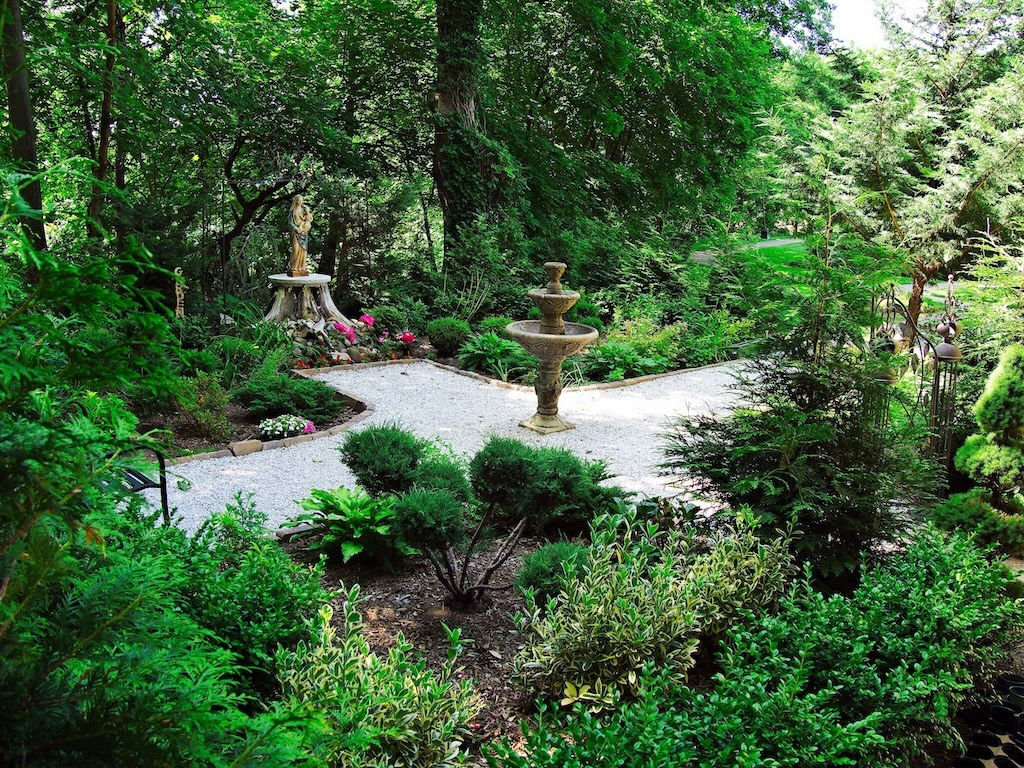
That leads me to Mary in our garden. There she stands with her mighty Child in her arms, looking out on creation. Don’t lose hope in this planet of ours, she says. Care for it, cherish it, and pray that God, the Creator of heaven and earth, will move the hearts of the children of Adam and Eve, so that we may flourish along with the creatures of the earth, the birds of the sky and the fish of the sea. 

“Pray for us, O Holy Mother of God, that we may be made worthy of the promises of Christ.”

Pierre Toussaint: A Prophetic Figure

Pierre Toussaint died in New York City June 30, 1853. Today the remains of Venerable Pierre Toussaint, who came to the United States as a Haitian slave, rest under the altar of St. Patrick’s Cathedral in New York City. He is venerated by the Catholic Church and his cause for sainthood is underway.

Saints are important in the Catholic Church. They witness to the presence of the Holy Spirit in their time and place, for one thing, but they also have a predictive role. They point out the direction the church and the world should take now under the guidance of the Spirit. For this reason we pay attention to them. They bless their own days and our days too.

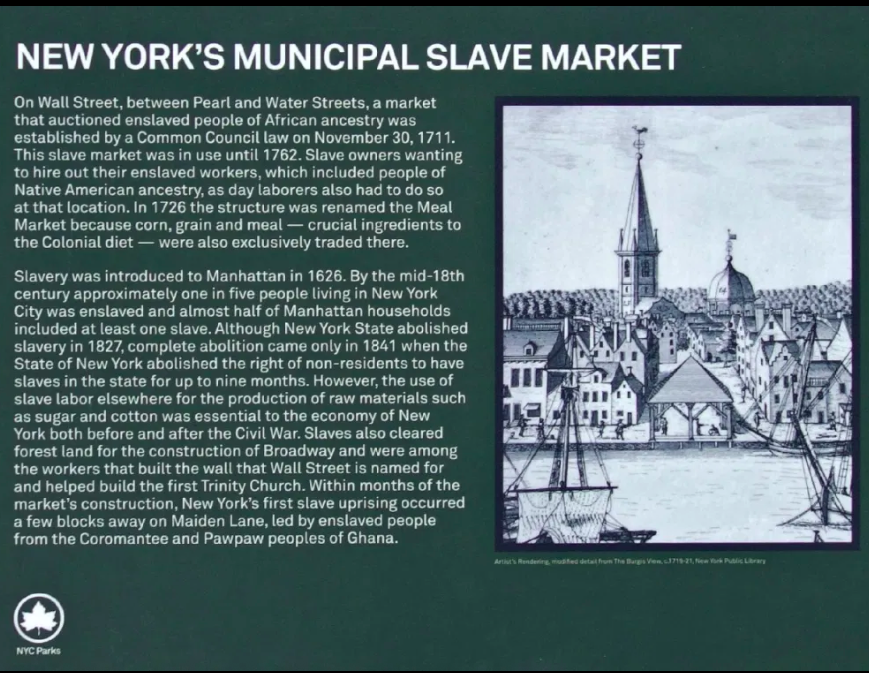
What does Pierre Toussaint tell us about our American church today? He brings important issues, racism and systemic racism, before us. When he came to this country in 1787 about half of the households in New York City had slaves. Slaves built much of the city’s early structures. Toussaint only received his freedom in 1807. 

 After slavery was completely abolished in 1841 in New York, black people and people of color faced systemic discrimination in housing, education, jobs and health care. They still face these issues today. The marker pointing out the slave market once on Wall Street is only a few years old. We forget.

Toussaint was an example of the goodness and gifts of his race to the people of his time. He changed the way they thought; he gained their appreciation and challenged them to be just. Saints bless their own times and times to come.  May he bless us.

Catholic Scholars Visit the Mary Garden

Photos: Gloria M. Chang

“What is theology?” asked Professor Andrea Florendo to a group of young Catholic Scholars in the Passionist Monastery Chapel.

“The study of God,” responded a sophomore brightly in the front row. 

“Yes, and where does theology begin?” Professor Florendo continued. Looking at each of the young faces, she exclaimed, “In a garden!” Following the creation account in Genesis, the story of God and humankind unfolds in the Garden of Eden. Flowers, trees, rocks, soil, animals, sun, moon, sky, water, humans—the whole natural world—declare the glory of God. Prayer and liturgy burst forth among flowering plants and birdsong in God’s garden of paradise. 

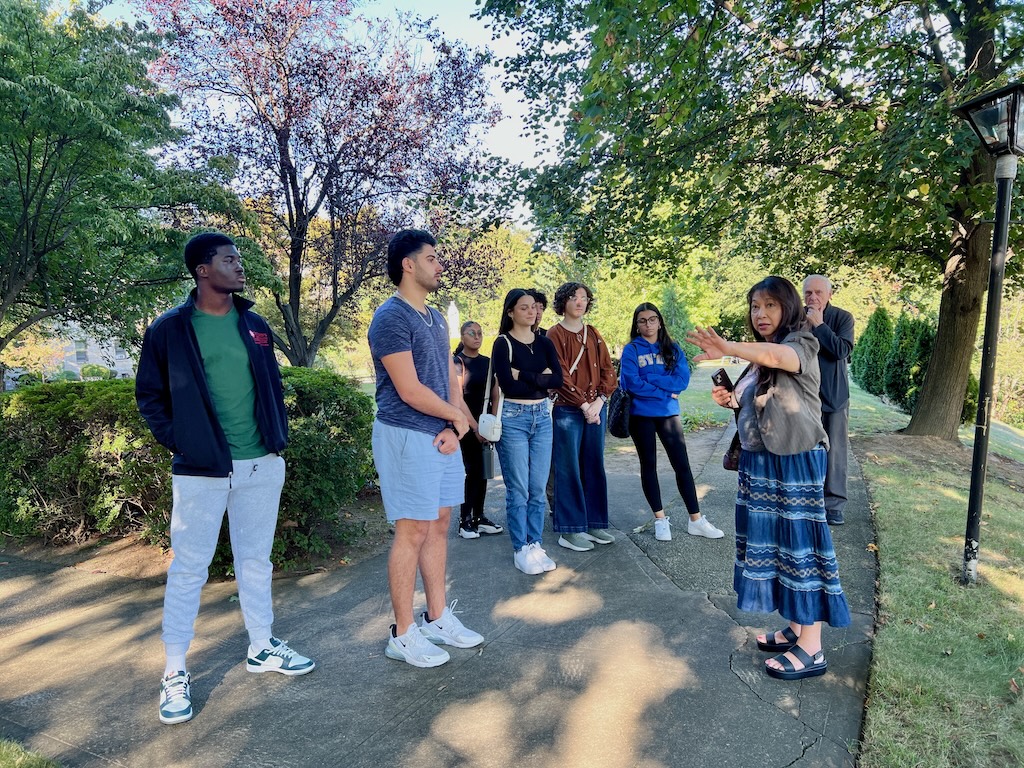
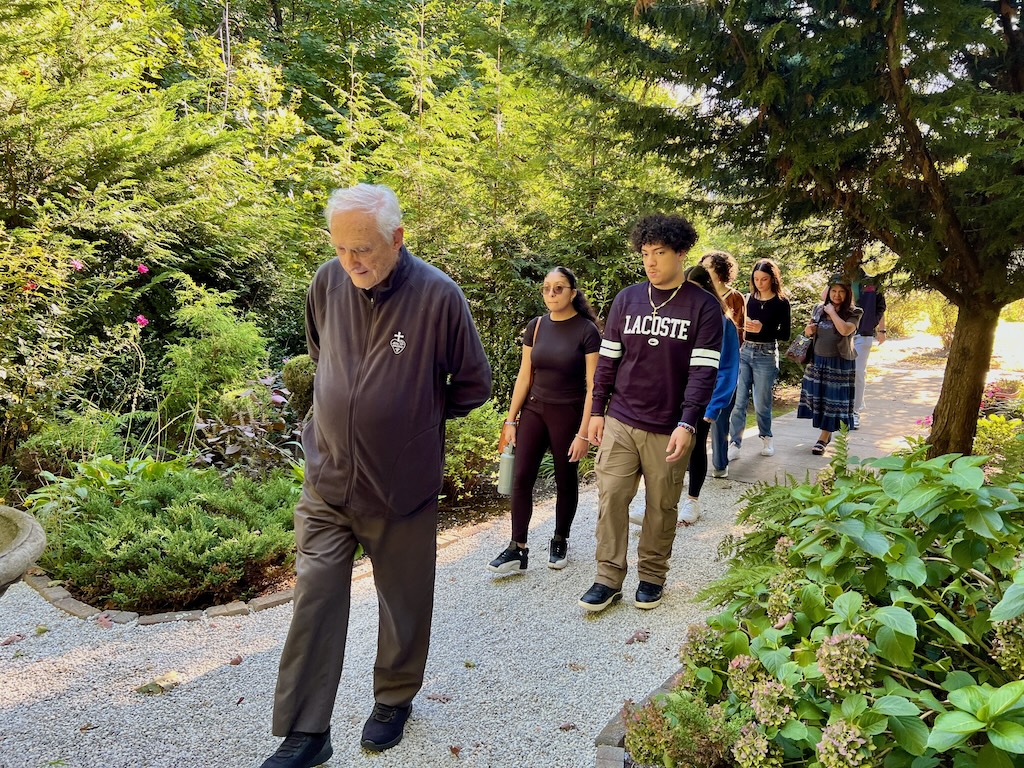
On Sunday, October 6, 2024, seven Catholic Scholars from St. John’s University visited the Mary Garden at the Passionist Monastery in Jamaica, NY. Fr. Victor Hoagland, C.P., Professor Andrea Florendo, and Gloria Chang, founders of the Mary Garden Guild at the Passionist Monastery, welcomed the students warmly. 

Fr. Victor, who has traveled extensively throughout the world on pilgrimages and missions, shared the global Passionist charism with the Catholic Scholars, who are preparing for a life of faith-inspired leadership. The Passionists, who received their mission from St. Paul of the Cross to keep alive in the world the love of Jesus Crucified as seen in His Sacred Passion, have expanded their charism to include the care of creation as taught by Pope Francis in his encyclical Laudato Si. Inspired also by Fr. Thomas Berry, C.P. (1914-2009), a pioneer in ecology, the Passionists have redesigned their retreat center in Jamaica, NY, in his name. 

Andrea Florendo, a retired theology professor at St. John’s University and designer of the Mary Garden, gave a tour, pointing out the significance of the enclosed garden as a symbol of Mary’s virginal womb, the fountain as Christ’s “fountain of living waters,” and the cross path as the four rivers in the Garden of Eden. 


Photo: Gloria M. Chang

Our visit in the Mary Garden ended in praise and thanksgiving to God with prayers from Scripture and a reading from the Book of Genesis. May the Lord bless our Catholic Scholars abundantly with faith and grace as they continue their studies and formation at St. John’s University.

How great is your name, O Lord our God,
through all the earth!

Psalm 8:1

Climate Change to Climate Crisis

Last year, on the Feast of St. Francis, Pope Francis spoke, not just of climate change, but climate crisis.“The world in which we live is collapsing and may be near the breaking point.” You can’t miss the urgency for action in his letter. “No one can ignore the fact that in recent years we have witnessed extreme weather phenomena, frequent periods of unusual heat, drought and other cries of protest on the part of the earth that are only a few palpable expressions of a silent disease that affects everyone.”

Some ridicule the claims of danger; Francis takes them seriously, laying  out the facts the scientific world provides. He also pointed out the responsibility of the richer countries for this situation and deals with the arguments for inaction that are raised, even by members of the Church.

“ I feel obliged to make these clarifications, which may appear obvious, because of certain dismissive and scarcely reasonable opinions that I encounter, even within the Catholic Church. Yet we can no longer doubt that the reason for the unusual rapidity of these dangerous changes is a fact that cannot be concealed: the enormous novelties that have to do with unchecked human intervention on nature in the past two centuries.”

There’s a growing belief, the pope says, that thinks “as if reality, goodness and truth automatically flow from technological and economic power as such”. [14] As a logical consequence, it then becomes easy to accept the idea of infinite or unlimited growth, which proves so attractive to economists, financiers and experts in technology”.

Pope Francis outlined the efforts the nations of the world have made so far to deal with the crisis and finds them lacking. He called for a new level of power to arise, from the grassroots, to energize the situation of political inertia. At the same time, he calls for the nations of the world to fulfill their responsibilities at the upcoming meeting on the climate,  COP28 in Dubai.

One interesting point for us in the United States. The pope began his exhortation quoting from the US Bishops: “This is a global social issue and one intimately related to the dignity of human life. The Bishops of the United States have expressed very well this social meaning of our concern about climate change, which goes beyond a merely ecological approach, because ‘our care for one another and our care for the earth are intimately bound together. Climate change is one of the principal challenges facing society and the global community. The effects of climate change are borne by the most vulnerable people, whether at home or around the world’”.

He ended his exhortation with this observation: “If we consider that emissions per individual in the United States are about two times greater than those of individuals living in China, and about seven times greater than the average of the poorest countries, [44] we can state that a broad change in the irresponsible lifestyle connected with the Western model would have a significant long-term impact.”

Are we changing our lifestyles?

Letter to the Galatians

Our first readings this week at Mass are from the Letter to the Galatians, who were non-Jews St. Paul converted probably on his second missionary journey through Asia Minor. When Paul left, some Jewish Christians arrived and were enticing the new converts to adopt Jewish practices, especially that of circumcision. They also called Paul’s authority into question, saying he wasn’t among the original witnesses to Jesus’ life and resurrection.

Paul responds in this emotional letter written in 54 or 55 AD in which he voices amazement that the Galatians are listening to the newcomers and losing sight of the faith they’ve learned. Paul gives an account of his own call; he defends his authority to preach the gospel and his communion with the other apostles.

But the theme of his letter is belief in Jesus Christ, who was crucified. “Stupid Galatians! Who has bewitched you, before whose eyes Jesus Christ was publicly portrayed as crucified?” ( Gal 3,1) Don’t lose sight of what’s most important, what’s central to your faith–Jesus Christ!

Of course, the Galatians are not the only ones who lose sight of what’s most important ; we do too. That’s especially true in times like ours today.

Some of Paul’s most beautiful expressions of his own faith are found in this letter.  He describes his own conversion as a “revelation of Jesus Christ,” a grace by which God “revealed his Son to me.” It wasn’t a book he read or a blinding light.  Jesus revealed himself to him and that revelation continued. “I have been crucified with Christ,yet I live, no longer I, but Christ lives in me; insofar as I now live in the flesh, I live by faith in the Son of God who has loved me and given himself up for me.” (Gal 2,19-20)

Do  we need to remember too the Lord’s revelation of himself to us today?

Living in Christ means living in his Spirit, Paul continues. The Galatians are enticed by practices of the Jewish law; Paul reminds them of the law Jesus taught. “The whole law is fulfilled in one statement,’ You shall love your neighbor as yourself.’” (Gal 5,14) Bearing one another’s burdens is the way you fulfill the law of Christ, by sharing good things with one another you fulfill his law. Don’t tire of doing good, keep doing it, Paul says to his children in faith. (Gal 6,2;6:9)

Paul doesn’t give the Galatians a book he wrote once about Jesus, he speaks to them from his own faith in Jesus which is living and constantly growing. He’s likely just read the verse from the Old Testament about the curse one bears who hangs on the tree. The Son of God took on that cursed condition of hanging on a tree! What greater love can there be? Paul’s thinking too of the promise Abraham embraced who lived long before the mosaic law existed. That was the promise Abraham saw in faith and that’s the revelation the gentiles see in the Crucified Christ.

The Letter to the Galatians is about forgotten essentials that are replaced by something else. Paul recalls the essentials. “I live by faith in the Son of God who has loved me and given himself up for me.”

Keep before your eyes Jesus crucified.

Contemplating the Face of Christ With Mary

“Contemplating the Face of Christ With Mary”
Our Lady of the Rosary
A reflection on Rosarium Virginis Mariae, Apostolic Letter of St. Pope John Paul II
©️2024 Gloria M. Chang

The Rosary: A Christocentric Prayer

The Rosary of the Virgin Mary, which gradually took form in the second millennium under the guidance of the Spirit of God, is a prayer loved by countless Saints and encouraged by the Magisterium. Simple yet profound, it still remains, at the dawn of this third millennium, a prayer of great significance, destined to bring forth a harvest of holiness. It blends easily into the spiritual journey of the Christian life, which, after two thousand years, has lost none of the freshness of its beginnings and feels drawn by the Spirit of God to “set out into the deep” (duc in altum!) in order once more to proclaim, and even cry out, before the world that Jesus Christ is Lord and Saviour, “the way, and the truth and the life” (Jn 14:6), “the goal of human history and the point on which the desires of history and civilization turn.”

The Rosary, though clearly Marian in character, is at heart a Christocentric prayer. In the sobriety of its elements, it has all the depth of the Gospel message in its entirety, of which it can be said to be a compendium. It is an echo of the prayer of Mary, her perennial Magnificat for the work of the redemptive Incarnation which began in her virginal womb. With the Rosary, the Christian people sits at the school of Mary and is led to contemplate the beauty on the face of Christ and to experience the depths of his love. Through the Rosary the faithful receive abundant grace, as though from the very hands of the Mother of the Redeemer.”

Apostolic Letter, Rosarium Virginis Mariae of St. Pope John Paul II, 1

Our Lady of the Rosary with Saints, 18th century (Brooklyn Museum)

Saints who pray the Holy Rosary
Adore the face of Christ with Mary.


This content by Gloria M. Chang was originally published online at Shalom Snail: Journey to Wholeness