On to Jerusalem: Mark 9: 14-29

It takes time to believe. The disciples of Jesus needed time to believe in him and understand the meaning of his life, death and resurrection. So did the man in today’s gospel from Mark who asks help in his unbelief. So do we.

As Jesus came down from the mountain with Peter, James, John
and approached the other disciples,
they saw a large crowd around them and scribes arguing with them.
Immediately on seeing him,
the whole crowd was utterly amazed.
They ran up to him and greeted him. 
He asked them, “What are you arguing about with them?”
Someone from the crowd answered him,
“Teacher, I have brought to you my son possessed by a mute spirit.
Wherever it seizes him, it throws him down;
he foams at the mouth, grinds his teeth, and becomes rigid.
I asked your disciples to drive it out, but they were unable to do so.”
He said to them in reply,
“O faithless generation, how long will I be with you?
How long will I endure you? Bring him to me.” 
They brought the boy to him.
And when he saw him,
the spirit immediately threw the boy into convulsions.
As he fell to the ground, he began to roll around   
and foam at the mouth. 
Then he questioned his father,
“How long has this been happening to him?” 
He replied, “Since childhood.
It has often thrown him into fire and into water to kill him.
But if you can do anything, have compassion on us and help us.”
Jesus said to him,
“‘If you can!’ Everything is possible to one who has faith.”
Then the boy’s father cried out, “I do believe, help my unbelief!”
Jesus, on seeing a crowd rapidly gathering,
rebuked the unclean spirit and said to it,
“Mute and deaf spirit, I command you:
come out of him and never enter him again!”
Shouting and throwing the boy into convulsions, it came out.
He became like a corpse, which caused many to say, “He is dead!”
But Jesus took him by the hand, raised him, and he stood up.
When he entered the house, his disciples asked him in private,
“Why could we not drive the spirit out?”
He said to them, “This kind can only come out through prayer.” Mark 9:14-29

Where are we now?

Since the Christmas season we have been reading from Mark’s Gospel, which end when Lent begins. Through lent we follow Jesus from Matthew’s Gospel mostly, as he journeys on to Jerusalem where he will die and rise again.  

Do his disciples fully understand him? Peter certainly doesn’t. (Mark 8, 27-33) Despite miracles and his inspired teaching,  his own family and hometown turn away from him. (Mark 3,1-5;  6, 1-6) Pharisees and scribes from Jerusalem come to Galilee to dismiss and condemn him.( Mark 7,1-15)

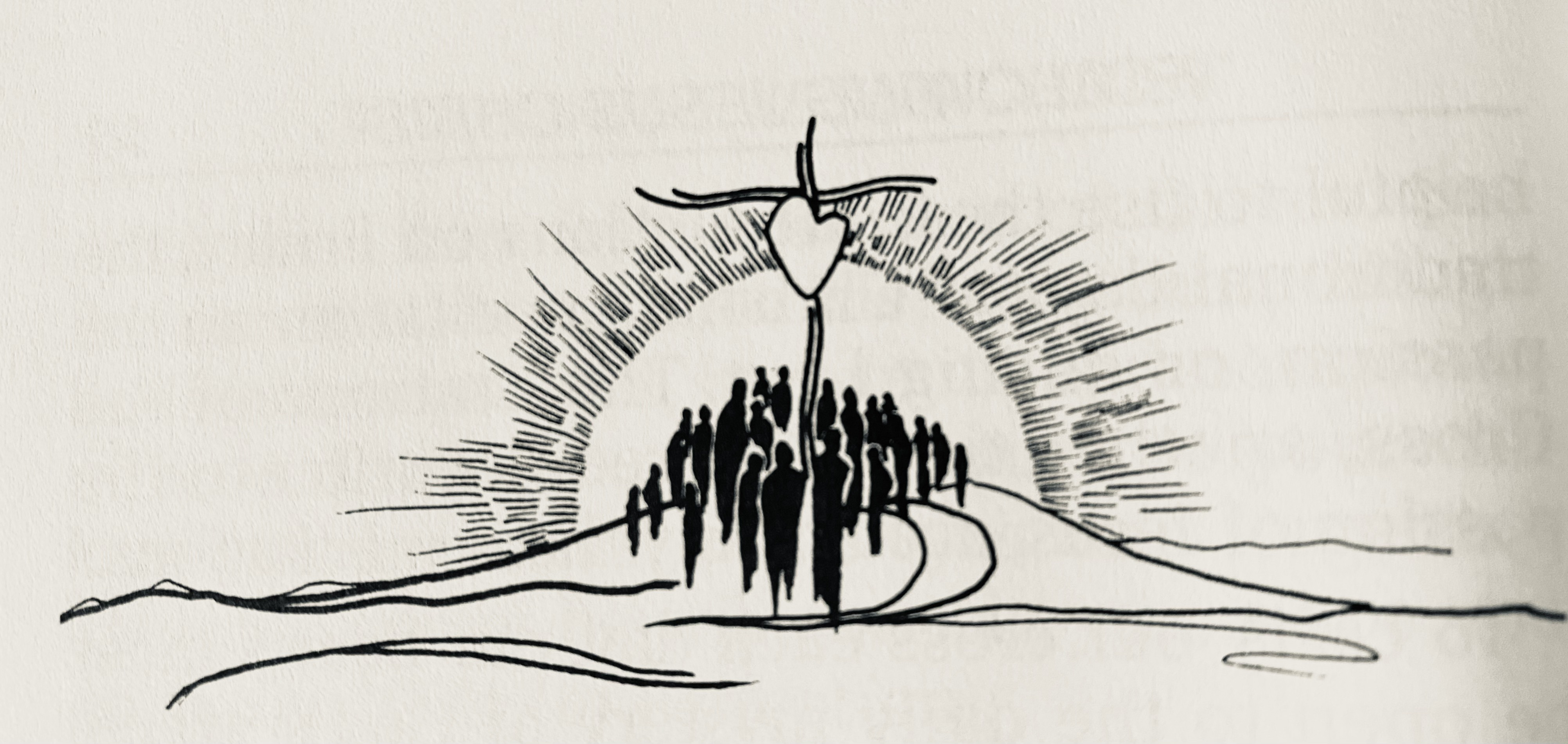
Yet, Jesus goes on to Jerusalem, with his disciples and with all of us. The lenten season’s readings and feasts will take us, like his disciples, from Galilee to Jerusalem. Lent will call us, as Jesus does in today’s gospel, to prayer.

Will this lent and Easter turn more people to join him?  Maybe. The world we live in is a lot like Galilee and Jerusalem. Still, like the disciples who first followed him there, we’re going up to Jerusalem. There will always be transfigured moments to lead us on.

In today’s gospel listen to a merciful God. “O faithless generation, how long will I be with you?” Jesus says. Yet then he says “Bring him to me.” And he cures the young boy possessed from childhood. He helps the half-believing father.

Is he unique? Isn’t faith itself always half-believing, always marked with the unbelief that comes from who we are, finite human beings who only see so far?


The Book of Sirach

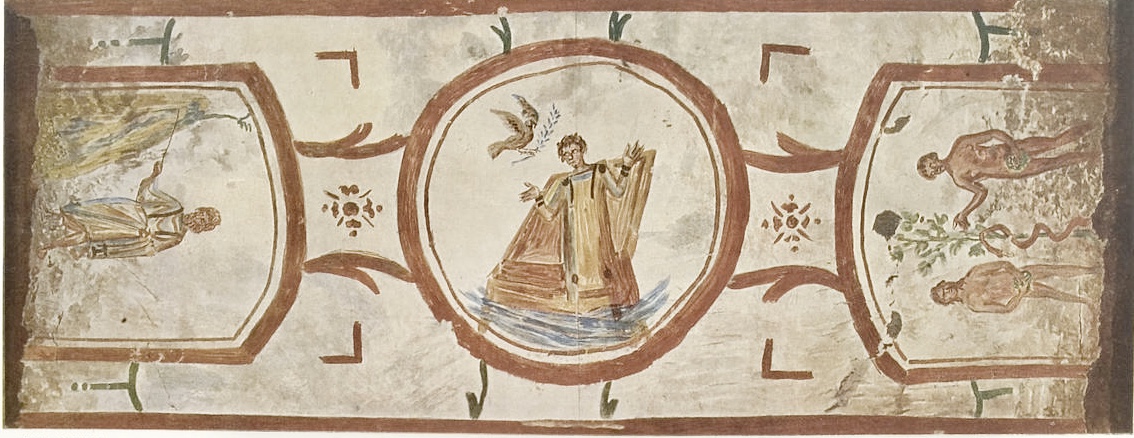
Christ, the Teacher… Catacombs, Rome

We’re reading from the Book of Sirach weekdays at Mass until Ash Wednesday,. It’s always helpful to look into the background of the books of scripture and ask when, for whom, and why were they written.

The Book of Sirach was written by a Jewish sage in Jerusalem around 200 BC in Hebrew and was translated into Greek sometime later. Sirach was a writer who loved his Jewish tradition and wanted to pass on its wisdom to a generation that might be saying: “We don’t see anything in it for us any more.”  Judea had come under the control of Alexander the Great and his generals who introduced their Jewish subjects, sometimes forcibly, to Hellenistic culture. They were succeeded in 64 BC by the Romans.

The Book of Sirach seems to be a grandfather’s attempt to dissuade his grandchildren from abandoning their tradition as they experience the powerful Greco-Roman culture of their time. Sound like today? 

Sirach often speaks of the “fear of the Lord.”  He’s not saying be afraid of God, but keep God who is all powerful and all wise before you always. Don’t get lost in yourself or your experiences of life.

What does Sirach do? He speaks strongly of the presence of God who’s everywhere, of a wisdom found in the world and the experience of daily life. Learn from your experience of life, he tells his descendants; your religious tradition and its heroes will help you.

Sirach isn’t saying either to be afraid of life. Life’s not easy, but Sirach sends the younger generation out into the world to find wisdom there. Learn from life, he says, as those before you have done. As I have done.  

“Trust God and God will help you;

trust God, and God will direct your way;

turn not away lest you fall.

Fear God and grow old therein.

You who fear the LORD, wait for his mercy,

and your reward will not be lost.

You who fear the LORD, trust him,

for lasting joy and mercy.

You who fear the LORD, hope for good things,

You who fear the LORD, love him,

Study the generations long past and understand.”

and your hearts will be enlightened. (Sirach 2, 1-11)


Loving Enemies?

Crucifix . Jamaica Chapel

The Crucifix in the Passionist public chapel of  Immaculate Conception Monastery, Jamaica, NY, is a gift of the German bishops of Bavaria to Fr. Fabian Flynn, CP, for helping restore a broken Europe, particularly Germany and Hungary, after the 2nd World War. A book describing his work, “The Priest Who Put Europe Back Together”, by Sean Brennan, an historian from the University of Scranton, appeared in 2018.

Father Fabian was ordained a Passionist in Immaculate Conception Monastery in 1931 and served in its retreat center after ordination. He went on to become an editor for The Sign magazine, a Passionist publication.

During the Second World War, Fabian became an army chaplain in 1943. He served in combat with the 1st Infantry Division for 16 months. His service included North Africa, Sicily, France, and Germany. His unit ended up in Nuremberg, Germany, during the Nuremberg war trials. Fabian became chaplain for Allied participants in that trial. He also ministered to Germans in Nuremberg, including those on trial as war criminals.

During the trial, he celebrated Mass every Sunday. The Mass brought Allied personnel and German Catholics together in one of Nuremberg’s war-torn Catholic churches.

After army service, Father Fabian became Director of the newly created Catholic Relief Services in Germany and Hungary from 1946-49. He worked for Catholic Relief until his death in 1973. He helped millions of refugees displaced by wars and other tragedies in Europe and elsewhere. 

Catholic Relief Services was established by the American bishops in 1943, as an agency to bring aid to the victims of war overseas. It was distinct from Catholic Charities whose task was to aid those in need in the United States..   

At the end of his service in Germany, the Catholic bishops of Bavaria honored Father Fabian. They did not give him a medal or other sign of appreciation. Instead, they gave him a large 16th-century crucifix from their war-ravaged country. It was an appropriate remembrance of his ministry. He fulfilled one of the hardest teachings of Jesus: “Love your enemies, do good to those who persecute you.” 

The Crucifix holds a prominent place in the Passionist monastery chapel today. It serves as a fitting expression of the work he did then. It is also a timely reminder of what we need to do today.

After the Second World War, the victorious Allied countries made a thoughtful decision. They avoided the mistake made after the First World War when Germany was left bitter and impoverished in defeat. They decided a peaceful Europe could only come through the development of a stable peacetime economy in Germany and other European countries. America channeled a large part of its relief aid through Catholic Relief Services. Father Fabian was an administrator of that aid. 

Historians today recognize the wisdom of that approach, and many warn about abandoning it. How we deal with enemies and rivals is currently a hot political issue.. 

People of faith, whatever their political affiliation, look to a higher wisdom Jesus teaches. “ Love your enemies, give to those who hate you…Be children of the Most High,for he himself is kind to the ungrateful and the wicked.
Be merciful, just as your Father is merciful.” ( Luke 6)

Jesus lived according to this wisdom. “Father, forgive them for they know not what they do,” Jesus said from the cross. The cross expresses his teaching.

The Crucifix in our Jamaica chapel holds the suffering Jesus, truly God and truly human. We profess this mystery over and over whenever we pray and celebrate our sacraments. We have to keep this mystery in mind. 

Jesus became one of us. He calls all humanity to his Cross: the poor who hunger and thirst, victims of war and other tragedies, soldiers lost or scared in battle, women and children without a home, the old, the sick, the frail, yes even our enemies and rivals. All are there.                                               

7th Sunday c: Love Your. Enemies

For this week’s homily please watch the video below.

The Chair of Peter: February 22

Holy Spirit

,

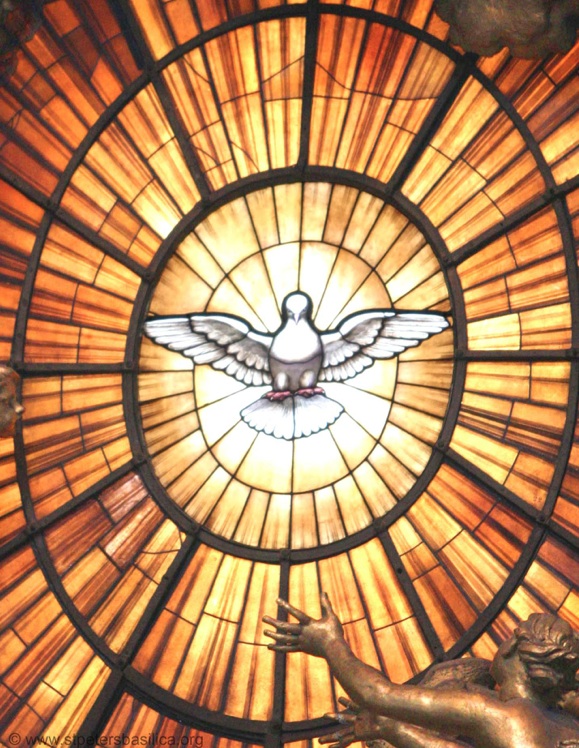
The Feast of the Chair of St. Peter has been celebrated on February 22nd  in the Roman Catholic Church since the 4th century. The chair is enthroned today in Bernini’s massive setting behind the main altar in St. Peter’s Basilica.  A window bearing the symbol of the Holy Spirit casts its light on the chair and those it represents – Peter the Apostle and those who succeed him.

Today’s feast derives from an ancient Roman custom. Families gathered at their burial places during an 8 day celebration culminating on February 22 to remember their dead. At a banquet a chair was provided for the living head of the family who welcomed new members.

You can see why such a setting would inspire of feast for Peter. He presided over the family of the church and spoke for it from its beginning in Jerusalem. He baptized and welcomed Cornelius and his family in the church; ; he was its leader in Antioch in Syria. Jesus said to him:

You are Peter,
and upon this rock I will build my Church,
and the gates of the netherworld shall not prevail against it.
I will give you the keys to the Kingdom of heaven.
Whatever you bind on earth shall be bound in heaven;
and whatever you loose on earth shall be loosed in heaven.””

Appropriately, the chair of Peter symbolizes those welcomed into the Catholic Church. Early on, Peter’s chair was set up near the baptistery in the Basilica of St. Peter in Rome. The chair of Peter is not a royal throne. It’s a father’s chair, a teacher’s chair. Appropriately, the pope today and his successors are called “Il Papa”.

Back in the 4th century, St. Jerome was baptized in the baptistery of St. Peter’s and he spoke of returning there to remember that great moment in his life when he was welcomed in the family of the church:

“I decided to consult the Chair of Peter, where faith was proclaimed by lips of an Apostle; I now come to ask for nourishment for my soul there, where once I received the garment of Christ. I follow no leader save Christ, so I enter into communion with you, that is, with the Chair of Peter, for this I know is the rock upon which the Church is built”.

Today’s a good day to look at our present “chairman”, “Il Papa”. Pope Francis , who became pope on March 13, 2013 and to ask God to keep him strong and faithful as a father and teacher of the church.

Here’s a study of Bernini’s setting for Peter’s chair.

.

The Journey to Glory: Mark 8:34-9:1

Jesus summoned the crowd with his disciples and said to them,
“Whoever wishes to come after me must deny himself,
take up his cross, and follow me.
For whoever wishes to save his life will lose it,
but whoever loses his life for my sake
and that of the Gospel will save it.
What profit is there for one to gain the whole world
and forfeit his life?
What could one give in exchange for his life?
Whoever is ashamed of me and of my words
in this faithless and sinful generation,
the Son of Man will be ashamed of
when he comes in his Father’s glory with the holy angels.” Mark 8:34-9:1

He also said to them,
“Amen, I say to you,
there are some standing here who will not taste death
until they see that the Kingdom of God has come in power.”

Mark notes that Jesus summoned the crowd  with his disciples as he begins his journey to Jerusalem. Here is a promise and a teaching meant for all.

Jesus tells those who wish to know “his Father’s glory” and see the Kingdom of God come in power that they must deny themselves and take up their cross and follow him. 

It’s no small gain he promises, not the riches or honors or pleasures human thinking can conceive. It’s no less than the Father’s glory and the glory of his kingdom. No less than your life must be given for that goal

He tells us all to take up the cross that comes from the circumstances of our lives, the cross that comes from life in our world, from the life we choose to lead and how we lead it. 

His call is made to all humanity. All creation is called to join him on his journey to Jerusalem.

Creation Renewed: Genesis 9:1-13


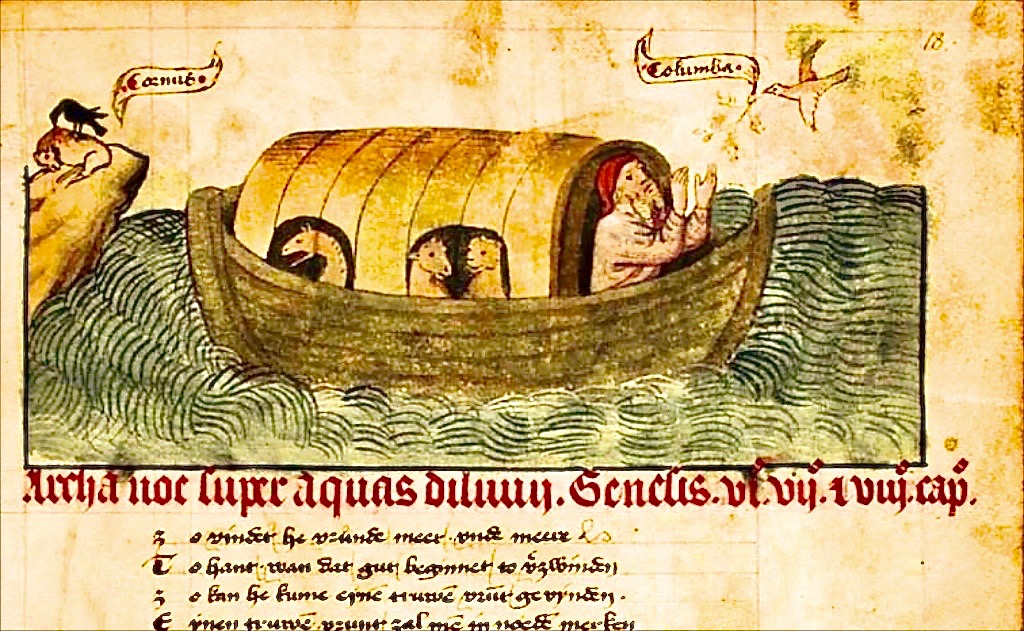
For almost two weeks at Mass we’ve been reading about the creation of the world and the origin and development of the human family, beginning with Adam and Eve, from the first 11 chapters of Genesis. An important source for understanding where we come from and our relationship with. God and creation, The medieval illustration above has a raven picking on a dead carcass, but Noah greets the dove holding an olive branch. How do we look at our world in flood times like now, as dead or as living?

In today’s reading God renews with Noah and his descendants the covenant made with humanity and the earth.  Once again, after the fall, as human beings go into different lands and take up various trades, they’re blessed by God. The renewal of the covenant is an act of mercy, the responsorial psalm for today reminds us. 

“The LORD looked down from his holy height, from heaven he beheld the earth, To hear the groaning of the prisoners, to release those doomed to die.” (Psalm 102)

God’s blessings will continue through time. His abiding mercy is signified in the God’s promise God there will not be another flood to devastate the earth. The rainbow signifies hope and mercy.

“I will establish my covenant with you, that never again shall all bodily creatures be destroyed by the waters of a flood; there shall not be another flood to devastate the earth.” (Genesis 9,12)

God’s blessings continues through time. God’s mercy will abide, but the human family still enjoys freedom. Made in the likeness of God, we’re free, and what we do with our freedom has consequences, not only for ourselves, but for creation itself. 

The abuse of human freedom leads to dire consequences for humanity and creation itself. “When my people did not hear my voice, when Israel would not obey, I left them in their stubbornness of heart to follow their own designs.” (Psalm 81)  God does not micro manage history.

Today some see God’s promise “never again shall all bodily creatures be destroyed” as repudiating the threat of climate change, but that’s not the promise made in Genesis. Human “stubbornness” can have disastrous consequences for humanity and the created world.

For humanity to flourish, it needs a good relationship with creation. Human flourishing doesn’t happen without a relationship with creation, not a dominating relationship, or a selfish relationship, but one of love and care.  Creation rises and falls with us.

Good to be aware of the question of water as it’s discussed in the United Nations. Here’s something from Passionists International:

And regarding ocean biodiversity, we recommend viewing the film“BluePeril”, which raises grave concerns regarding current efforts to increase deep sea mining of precious minerals in the rush to a transition to green energy, creating “blue peril”.
https://dsm-campaign.org/blue-peril/The International Seabed Authority has been in existence for over 40 years, and has a mandate to organize, regulate and control all mineral-related activities in the international seabed
for the benefit of humankind. To date, ISA has entered into 17 contracts for exploration which involves scraping of the ocean floor. We know however, that such mining risks destroying the breeding grounds of marine life. One such project in the territorial waters of Papua New Guinea will be the world’s first deep-seabed mining project aiming to extract copper, gold and silver. Many countries are calling for a pause, moratorium or complete ban on deep sea mining. Due to the imminent risks, French President Emmanuel Macron has called for a ban, citing the need to “protect the blue heart of our planet that sustains us all…to put sustainability and intergenerational equity first.”
Some major companies have already declared that they will not purchase any metals from companies that come from such sources. The Deep Seas Conservation Coalition has much information at: https://savethehighseas.org/An article on this topic can be found at: https://www.passblue.com/2023/01/02/opposition-
grows-among-countries-as-seabed-mining-efforts-push-ahead/

The focus will continue with the UN Water Conference in March (22-24), New York… (Scroll down for further information: Upcoming Commission Meetings.)

These conferences are attempting to address what is referred to as the triple planetary crisis – climate change, biodiversity loss, and pollution. All intersect, and all contribute to the success or failure of each and every one of the Sustainable Development Goals. We are all aware of the urgency to decrease global warming, and this requires countries to live up to our commitments to limit greenhouse gases/carbon emissions. While even fifty years ago we were

urged to reduce, re-use, recycle, unheeded, we are facing a fierce urgency of now. We have reached unsustainable levels of production and consumption, and “our unlimited extraction of resources from the Earth is having a devastating impact on the natural world, propelling climate change, destroying nature , and raising pollution levels.” See more re: triple planetary crisis: https://www.unep.org/news-and-stories/speech/triple-planetary-crisis-forging-new- relationship-between-people-and-earth

Pope Francis’ Laudato Si has stirred the hearts and consciousness of all of us to respond to this moral, ethical, and spiritual challenge to love and care for all of creation, and ensure the well- being of all the world’s inhabitants. It is our Call to Action. And we are invited to join with people of other faiths and Indigenous traditions in responding! See UN Environmental Program and World Parliament of World’s Religions’ joint project and rich resource, Faith for Earth: A Call to Action

https://www.unep.org/resources/publication/faith-earth-call-action

Caesarea Philippi: Mark 8: 27-33

Ruins of Caesarea Philippi, 20 miles north of Capernaum

Jesus and his disciples set out
for the villages of Caesarea Philippi.
Along the way he asked his disciples,
“Who do people say that I am?”
They said in reply,
“John the Baptist, others Elijah,
still others one of the prophets.”
And he asked them,
“But who do you say that I am?”
Peter said to him in reply,
“You are the Christ.”
Then he warned them not to tell anyone about him.

He began to teach them
that the Son of Man must suffer greatly
and be rejected by the elders, the chief priests, and the scribes,
and be killed, and rise after three days.
He spoke this openly.
Then Peter took him aside and began to rebuke him.
At this he turned around and, looking at his disciples,
rebuked Peter and said, “Get behind me, Satan.
You are thinking not as God does, but as human beings do.” Mark 8: 27-33

“ Jesus and his disciples set out for the villages of Caesarea Philippi.” A change of place prepares for something significant in Mark’s Gospel, especially here as Jesus and his disciples begin the journey to Jerusalem.  Responding to Jesus’ question, “Who do you say I am?” Peter, speaking for the others, says “You are the Christ.” The Messiah. Matthew’s gospel later adds “you are the Son of living God.” 

Mark’s first readers from the church of Rome would certainly note the place of confession. Caesaria honors Caesar. They would also recognize that Peter, after acknowledging the divine mission of Jesus falls into thinking “as human beings do” after Jesus announces he will suffer greatly, be rejected, die and rise again. How easily it is to fall into “human thinking” when faced with suffering.

In tomorrow’s reading, Jesus says “Whoever wishes to come after me must deny himself, take up his cross, and follow me.” Mark’s Roman readers would also recognize–as we should too – that Jesus speaks to all, as well as to his disciples. We are all on the journey to Jerusalem.

Today and tomorrow are crucial passages from Mark’s Gospel. 

The Sign of Noah: Genesis 8:16-13, 20-22)

Noah and the flood is a major story, not only in the Old and New Testament, but  also in our liturgy and our summaries of faith. Jesus says you have to understand the times of Noah to understand his times. (Matthew 24:37) To understand baptism, you have to appreciate the story of Noah and the flood, the Letter of Peter says. ( 1 Peter 3:20)

The patristic tradition is filled with commentaries on the story of Noah. He’s an image of Jesus, the Savior. He’s the new Adam, who brings humanity to the safety of a new creation. The wood of the ark prefigures the saving wood of the cross. The ark is a symbol of the church. Are those who enter the arch the righteous, or are sinners part of the church as well? The waters of the flood, are they waters that destroy, or are they waters than bring new life?

Noah and the ark is one of the most popular images in the catacombs. The story elicits questions  about death and life through the simplest symbols. 

At the end of forty days Noah opened the hatch he had made in the ark,
and he sent out a raven,
to see if the waters had lessened on the earth.
It flew back and forth until the waters dried off from the earth.
Then he sent out a dove,
to see if the waters had lessened on the earth.
But the dove could find no place to alight and perch,
and it returned to him in the ark,
for there was water all over the earth.
Putting out his hand, he caught the dove
and drew it back to him inside the ark.
He waited seven days more and again sent the dove out from the ark.
In the evening the dove came back to him,
and there in its bill was a plucked-off olive leaf!
So Noah knew that the waters had lessened on the earth.
He waited still another seven days
and then released the dove once more;
and this time it did not come back. (Genesis 8:6-14)

Noah sends out a raven and a dove to discover whether it’s safe to land and disembark. The raven is a bird that feeds on dead things. It sees no sign of life.  The dove, on the other hand, finds a sign of life, the olive branch. Not  quickly or easily,  we should note. 

Two ways of looking at the world of Noah and the world of the Son of Man?  Two ways of looking at the world of today. Like a raven, or like a dove?  

The last words of our reading, God’s promise, are blocked off for emphasis:

” As long as the earth lasts,
seedtime and harvest,
cold and heat,
Summer and winter,
and day and night
shall not cease.” (Genesis 8: 20-22)

A World of Talking Trees: Mark 8:22-26

“Do you still not understand?” Jesus said this to his disciples in Mark’s gospel right after curing a blind man who only gradually gains his sight. He has to lay his hands on the man’s eyes a second time before he sees clearly. Is that the way we see and understand, gradually?

The cross Jesus says we all must bear takes many forms and I wonder if one form it takes in our time is the cross of confusion. We like clear sight for ourselves and everyone else, but in times of great change confusion is inevitable. Like the man in the gospel we’re living in a world of “talking trees” and that’s hard to take, reasonable, resourceful people that we are.  It’s humbling to live in confusing times like ours..

It makes us angry. There’s a lot of anger around us today, the anger that boils over and lashes out, or the anger that retreats into a fortress of resistence and isolation.

Pope Francis often speaks of patience. He said patience keeps the church going. It keeps the world going too. He spoke once of the music of patience, a patience that hears and waits, like the patient blind man who waits for the hand of Jesus to reach out again.

That’s one of the lasting teachings of the Gospel of Mark. We’re human, we think as humans do, and that means we learn gradually, by patience.

“When Jesus and his disciples arrived at Bethsaida,
people brought to him a blind man and begged Jesus to touch him.
He took the blind man by the hand and led him outside the village.
Putting spittle on his eyes he laid his hands on the man and asked,
“Do you see anything?”
Looking up the man replied, “I see people looking like trees and walking.”
Then he laid hands on the man’s eyes a second time and he saw clearly;
his sight was restored and he could see everything distinctly.
Then he sent him home and said, “Do not even go into the village.”
(Mark 8,22-26)