In today’s gospel reading Jesus reminds the scribe and another disciple as they prepare to cross the sea ( Matthew 8 18-22 ) that following him comes at a cost. The storm they encounter is a sign of things to come. Matthew’s gospel waits till Chapter 10 to name the Twelve in the boat with him.
The apostles carry on his work in a special way. That’s why we celebrate a feast of an apostle each month in our church calendar. They handed on through “their preaching, by the example they gave, by the institutions they established, what they themselves had received–whether from the lips of Christ, from his way of life and his works, or whether they had learned it at the promptings of the Holy Spirit.” (Catechism of the Catholic Faith 76)
July 3rd, we honor the Apostle Thomas. He reminds us that the witnesses chosen by Jesus were both weak and strong. Everyone in the Upper Room the night of Jesus’ resurrection believed that he had risen. The absent Thomas doesn’t. “Unless I see the mark of the nails in his hands and put my finger into the nailmarks and put my hand into his side, I will not believe.” Only when Jesus patiently appears to him a week later and has him touch the wounds in his hands and his side, does he believe. “My Lord and my God.”
Is Thomas unique in his weakness of faith? Were the others Jesus chose as foundation stones of the church unlike him? From the slight information the gospels provide, all the other apostles are both weak and strong–Peter, their leader, is a prime example.
Were the apostles changed completely by the Holy Spirit at Pentecost? Perhaps not as completely as we may believe. The story of the two disciples on the way to Emmaus in St. Luke’s gospel may better describe the post-resurrection church and its leaders.
Hardly a triumphalist church and hardly perfect leaders. Their strength and their guide was the patient Jesus. The Risen Jesus was with them then and he is with us now.
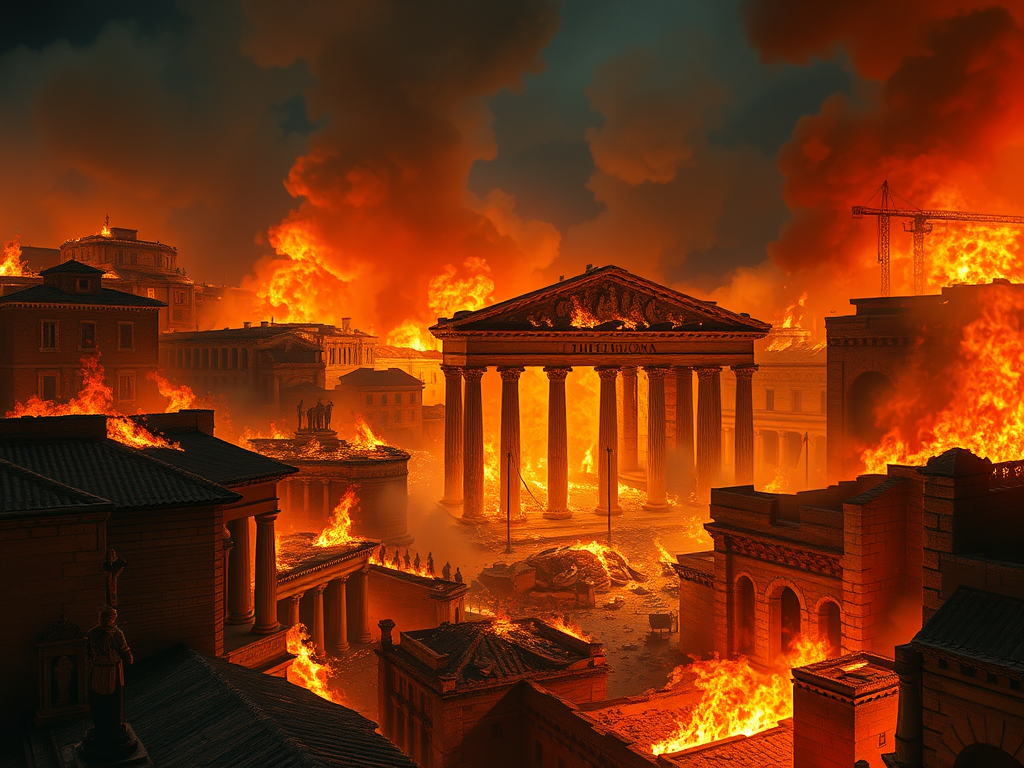
Today is the feast of the early Roman martyrs who suffered in Nero’s persecution along with the apostles Peter and Paul. The persecution began with an early morning fire on July 19, 64, that broke out in a small shop by the Circus Maximus and spread rapidly to other regions of Rome, raging for nine days through the city’s narrow streets and alleyways, where more than a million people lived in apartment blocks of wooden construction.
Only two areas escaped the fire; Trastevere, across the Tiber River, which had large Jewish population, was one.
Nero was at his seaside villa in Anzio when the blaze began, but he delayed returning to the city. They say that when he heard the news, he began composing an ode comparing Rome to the burning city of Troy. His absence caused resentment among the people. Rumors began that Nero himself set the fire in order to rebuild the city from his own plans.
To quell the rumors, Nero decided to blame someone else, and he chose a group of renegade Jews called Christians, who had caused trouble before, and had a bad reputation in the city. Earlier, about the year 49, the Emperor Claudius had banished some of them from Rome for starting upheavals in the city’s Jewish synagogues with their disputes about Christ.
“Nero was the first to rage with Caesar’s sword against this sect,” wrote the early-Christian writer, Tertullian. “To suppress the rumor,” the Roman historian Tacitus says, “Nero created scapegoats. He punished with every kind of cruelty the notoriously depraved group known as Christians.” Just how long the process went on and how many were killed, the Roman historian does not say.
The early Roman Christians came mostly from the 60,000 Jewish merchants and slaves with strong ties to Jerusalem. Even before Peter and Paul arrived in Rome, Jewish-Christians, clearly identified as followers of Jesus Christ, were counted among the city’s Jews.
At the time of the fire Jewish Christians had become alienated from the larger Jewish community and began separating from it. Where they lived and met was well known. The authorities, following the usual procedure, seized some of them, brought them to the Prefecture and forced them by torture to give the names of others.
“First, Nero had some of the members of this sect arrested. Then, on their information, large numbers were condemned — not so much for arson, but for their hatred of the human race. Their deaths were made a farce.” (Tacitus)
Instead of executing the Christians immediately at the usual place, Nero executed them publicly in his gardens and in the circus on Vatican hill. “Mockery of every sort accompanied their deaths. Covered with the skins of beasts, they were torn by dogs and perished, or were nailed to crosses, or were doomed to the flames and burnt, to serve as a nightly illumination, when daylight had expired.” (Tacitus)
Most thought Nero went too far. “There arose in the people a sense of pity. For it was felt that they (the Christians) were being sacrificed for one man’s brutality rather than to the public interest.” (Tacitus)
We celebrate the memory of the victims of Nero’s persecution, our ancestors in faith, on June 30th, following the feast of Saints Peter and Paul.
Further Reading
It would be good to have two New Testament writings in mind as we celebrate this feast– the Gospel of Mark and the First Letter of Peter.
Many scholars believe the Gospel of Mark was written in Rome following Nero’s persecution and before the destruction of Jerusalem in 70. Roman Christians, reeling from persecution and fearing troubles ahead, learned from this gospel.
Most belonged to a Jewish community that enjoyed extensive privileges under Rome’s emperors; they felt safe and secure– until Nero’s reign. There were brave martyrs, but there were others who betrayed their fellow Christians.
Mark’s Gospel presents the Passion of Jesus as a stark, brutal martyrdom that can’t be explained. How appropriate for Christians facing absurd, unmerited suffering meted out by a capricious emperor. At the same time, more than other gospels, Mark portrays Peter as a disciple who fails his Master and then receives mercy. He seems to remind Rome’s Christians that not only the strong, but the weak are part of their church.
Mark’s Gospel is meant for hard times. Jesus Crucified calls his disciples to follow him to the Cross.
First Letter of Peter
Another New Testament writing offered a similar message to the Roman community and Christians beyond the city. Like Mark’s Gospel, the First Letter of Peter, written in Rome, calls for courage in suffering, even unjust, absurd suffering.
“Christ suffered for you, leaving you an example that you should follow in his footsteps. He committed no sin and no deceit was found in his mouth. When he suffered he did not threaten; instead he handed himself over to the one who judges justly.” (1 Peter 2, 21-23)
The followers of Jesus should stay the course when suffering comes, Peter says. Stay where you are, the letter says, and “maintain good conduct among the Gentiles,” (1 Peter 2:12) “give honor to all, love the community, honor the king.”(1 Peter 2:17)
Following the Neronian persecution, many Jewish Christianss fled Jerusalem before Titus’ advancing legions. Seeing a sign of the last times, they prepared for the end. Rome’s Christians stayed where they were, it seems, and with their neighbors rebuilt their burnt city, waiting in hope for God’s kingdom to come.
They must have wondered whether to stay in this city, an evil city like Babylon. Should they go to a safer, better place? The Christians remained in the city. I wonder if the “Quo Vadis?” story was a story prompted by questions like these ?
The martyrs of Rome strengthen us to stand where we are and do God’s will, inspired by the Passion of Christ.
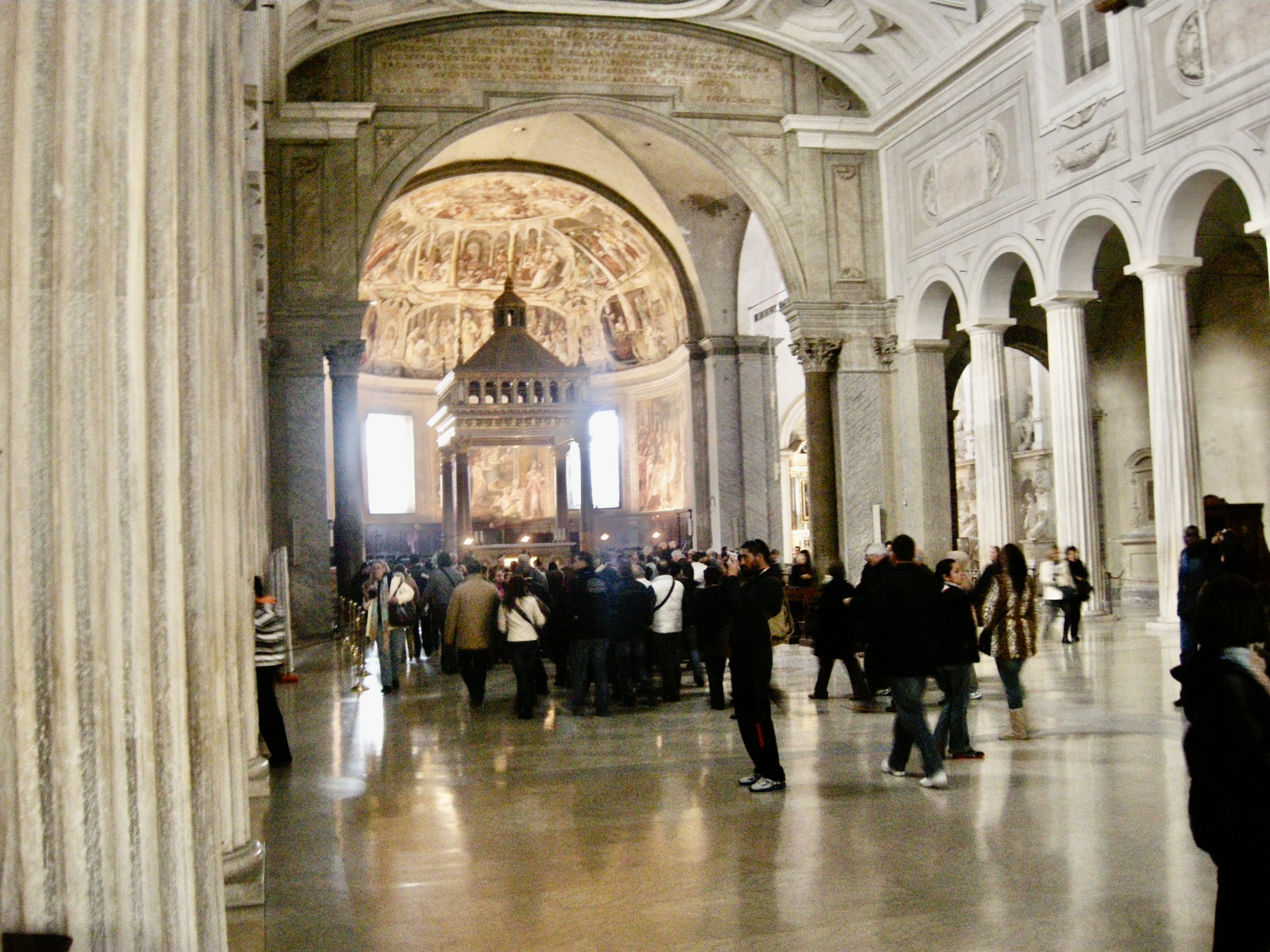
The Vatican Basilica where Peter the Apostle is buried is a prime destination for pilgrims to Rome today, but another important place dedicated to the memory of the apostle is the Church of St. Peter in Chains. It was built in the 5th century by the Empress Eudoxia on the western slope of the Esquiline Hill, next to the site of the early Roman Prefecture, not far from the Colosseum and the Roman Forum.
Justice was still being dispensed at the Roman Prefecture in Eudoxia’s day. Rome’s main prison was also nearby, where suspected criminals were tortured, questioned and judged. Not far away, just outside the city, those condemned were beheaded or strangled.
I would guess that Eudoxia was inspired to build this church next to the Roman Prefecture by the dramatic story we read today from the Acts of the Apostles of Peter being freed from his chains from a Jerusalem prison. (Acts 12:1-11) I imagine she saw the Prefecture as the place where judgment was carried out for so many Christians, even Peter and Paul.
Eudoxia gathered chains from the prisons in Jerusalem and Rome and placed them under the altar of this church she built, according to reports. Modern visitors usually turn to Michelangelo’s famous statue of Moses, located in the same church, but they should keep the chains in mind. They represent the imprisonment of Christian martyrs like Peter and Paul, and so many others.
A strong tradition among early Christian communities — affirmed today by many historians and archeologists — says that Peter met his death at Nero’s circus on the Vatican and Paul was beheaded along the Via Ostia near the place where Constantine later built a church in his honor. The apostles Peter and Paul, were martyred late in the persecution. Many details of their martyrdom are unknown, but like others they must have been arrested, put in chains, questioned, and sentenced before being executed.
Were Peter and Paul and many of the Christian martyrs who died in Nero’s persecution arrested, enchained and sentenced here?
There are later legends, of course. One says Peter and Paul were imprisoned in the Mamertime Prison, near the Capitoline Hill, where they converted and baptized their jailers. Peter, freed from his chains, escaped and fled along the Via Appia until he reached the place where the chapel, Domine, Quo Vadis? now stands. There he met Jesus coming into the city. “Where are you going, Lord?” Peter asked. When Jesus told him he was going to join those suffering, the apostle turned to embrace the same fate.
In the apse of the church of St Peter in Chains there’s a 16th century painting of Eudoxia presenting the chains to the pope. According to some 8th century homilies, one is from a Jerusalem prison. The other is from a Roman prison, possibly the one nearby? Eudoxia was a woman who listened to the scriptures with her imagination and saw connections. Good example for us who listen to the scriptures today.
Basilica di s.pietro in vincoli, A.P.Frutaz, Rome ?
The Roman Catacombs and Their Martyrs, l. Hertling SJ and E.Kirschbaum,SJ, Milwaukee, USA 1956
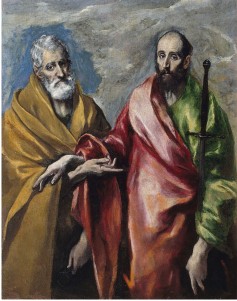
The church of Rome considers Peter and Paul, who came to the city and preached and died there during the persecution by Nero in the early 60s, her founders. Their burial places are marked by great churches, St. Peter at the Vatican and St. Paul Outside the Walls.
They could not be more unlike: Paul, the educated Pharisee from Tarsus was a latecomer to Christianity but like a runner raced from place to place in the Roman world to plant the faith. In the end, he believed God would give him “a crown of righteousness” for his efforts.
Peter, the fisherman from Galilee, was named by Jesus the Rock on whom he would build his church. Denying Jesus three times, he was called by Jesus three times to shepherd the flock. Warily, he went to baptize a Roman soldier, Cornelius, in Caesaria; then he went to the gentile cities of Antioch and Rome to tell of the One he had seen with his own eyes.
The church today prays for Paul’s zealous faith to bring the gospel to the world and for Peter’s deep love for Jesus Christ which he proved by his preaching and death.
Commenting on Jesus’ threefold call to Peter. St. Augustine says it conquered the apostle’s “self-assurance.”
“Quite rightly, too, did the Lord after his resurrection entrust his sheep to Peter to be fed. Not that he alone was fit to feed the Lord’s sheep, but when Christ speaks to one, he calls us to be one. And he first speaks to Peter, because Peter is the first among the apostles.
“Do not be sad, Peter. Answer once, answer again, answer a third time. Let confession conquer three times with love, because your self-assurance was conquered three times by fear. What you had bound three times must be loosed three times. Loose through love what you had bound through fear. And for all that, the Lord once, and again, and a third time, entrusted his sheep to Peter.”
“Today we celebrate the the passion of two apostles. These two were as one; although they suffered on different days, they were as one. Peter went first, Paul followed. We are celebrating a feast day consecrated for us by the blood of the apostles. Let us love their faith, their lives, their labors, their sufferings, their confession of faith, their preaching.”
“We are all called to be holy. ‘Each in his or her own way,’” Pope Francis says in his exhortation “ Gaudete et exultate”.We’re all different; saints are different too.
Today, the church remembers St. Irenaeus,yesterday we remembered St. Cyril of Alexandria. Two different people, two different saints.. Cyril was a forceful, confrontative bishop of Alexandria; Irenaeus, as his name suggests, was a fair man and a peacemaker.
I learned about Irenaeus many years ago in a course on Gnosticism in Rome under Fr. Antonio Orbe, SJ, an expert on the subject. Gnosticism threatened Christianity in the 2nd century; afterwards most of its writings were destroyed. A large cache of its writings buried in the sands of Egypt had been recently unearthed and Father Orbe was just back after studying them. Until then, the Gnostic teachings were known mostly through the writings of St. Irenaeus, whom we honor today.,
Fr. Orbe observed that as he compared the gnostic writings to Irenaeus’ reports of them he was struck how accurately and fairly Irenaeus described them,, not distorting anything they said or omitting their ideas. He was fair and respectful. Irenaeus was fair minded and respectful to friend and foe alike. He was a peace-maker. Cyril of Alexandria was different. He would have left those writings buried in the sands of Egypt.
Irenaeus is not a bad example for today when hot words and smear attacks, distortions and lies dominate so much communication. Peace makers like him don’t destroy, they heal and unite. That’s why they’re called blessed. He was named the 37th Doctor of the Church by Pope Francis in 2022, who said he was a “Doctor of Church Unity.”
Irenaeus also had a deep respect for creation. Some scholars today insist that the ancient gnostics were broadminded, creative people–rather like themselves– more progressive than the plodding, conservative people of the “great church”– a term Irenaeus used..
In fact, the gnostics made the world smaller than it is, because they made much of the world evil, only some of it meant anything at all. Forget about the rest of it.
All creation is God’s, Irenaeus wrote. “With God, there is nothing without purpose, nothing without its meaning or reason.” All creation is charged with the glory of God.
Irenaeus saw the Eucharist as a sign of this. Bread and wine represent all creation. God comes to us through these earthly signs. We go to God through them.
“God keeps calling us to what is primary by what is secondary, that is, through things of time to things of eternity, through things of the flesh to things of the spirit, through earthly things to heavenly things.”
We should not demean creation, Ireneaus taught. That’s also the message of Pope Francis in “Laudato si.”
When I typed in “Sacred Heart” with “Pope Francis” on the Vatican website yesterday, I got 1826 results. In his 13 years as pope, Francis referenced the Sacred Heart of Jesus that many times in his public statements. . He did it in talks to religious communities dedicated to the Sacred Heart who came to Rome for a general chapter, to representatives of hospitals, universities and places associated with this devotion. There is even a reference to the Sacred Heart in a talk the pope gave on artificial intelligence.
His Encyclical Dilexit Nos, written last October, is a long work that surely reflects years of thought on this mystery. Francis believed a world increasingly heartless needed to be reminded of God’s love.
It’s a work well worth reading. I took away a number of things from Dilexit Nos on the symbolism of the heart. For one thing, Pope Francis cautions against being fixed on one artistic representation of this mystery. The meaning of the Sacred Heart can be expressed in many ways, not just the symbolic heart or the image of Christ showing us his heart that usually recalls this mystery.
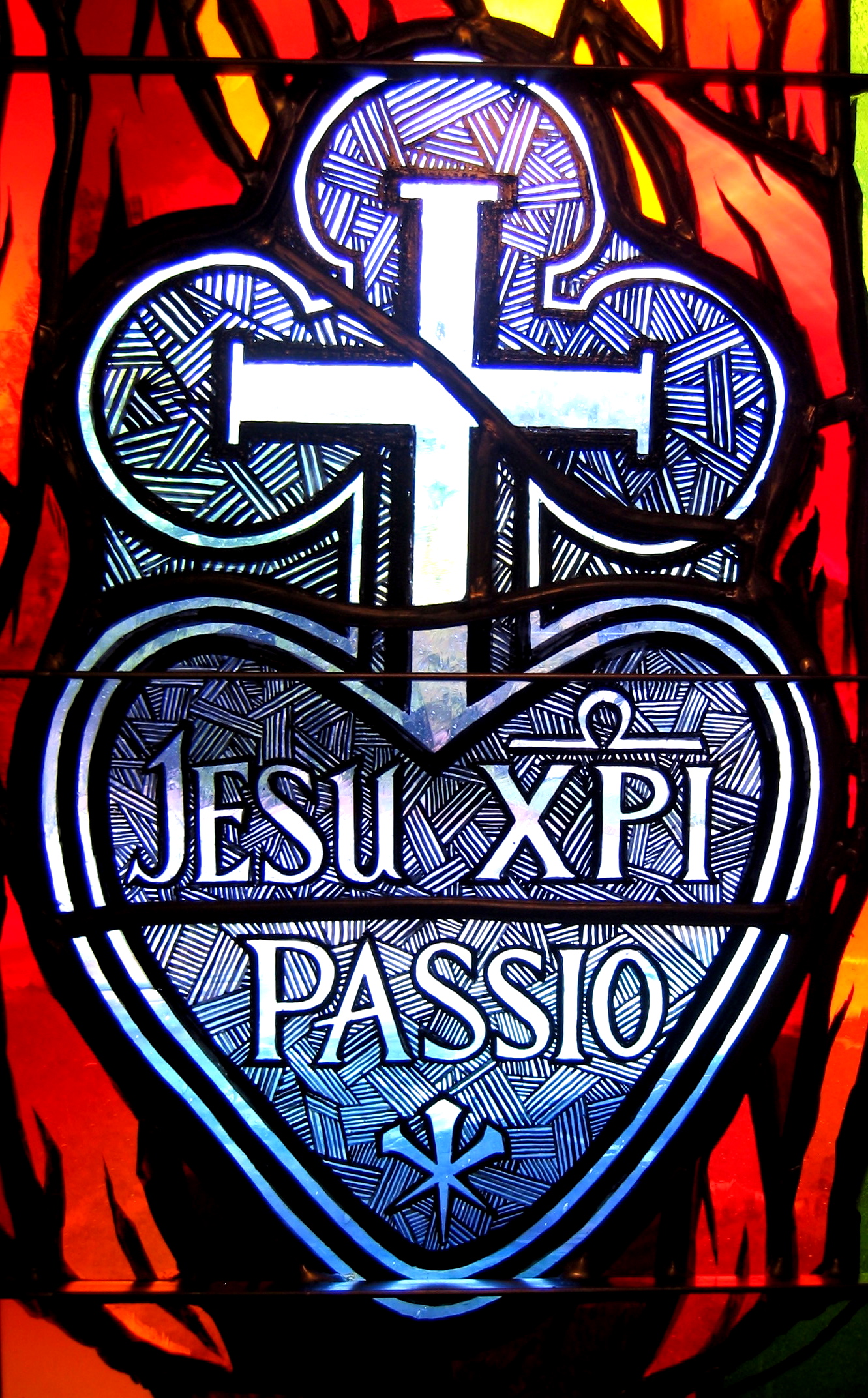
The gospel at Mass today of the Shepherd searching for the lost sheep is an image of the love of God for us. The sign my community the Passionists wears is a symbol of God’s infinite love. The pope is his letter sees a sign of that love in a mother who takes her little child into her arms after the child has done wrong as an example. No matter what her child has done, the mother still loves. The love of God takes many forms; the heart symbolizes them all.
I also like the pope’s observation that devotions change over time. The devotion of First Friday Mass and Communion originally was a response to Jansenism that saw humanity unworthy to approach Jesus present in the Eucharist.
Today, as so many ignore the Eucharist, the pope sees the devotion calling us to remember this Sacrament of God’’s Love.
Faith says great things in simple ways. Sometimes a few words say it all, like the few words of the Creed. Sometimes signs like bread and wine point far beyond themselves to an infinitely generous God.
How is it possible to sum up the love of Jesus Christ for us? Today’s Feast of the Sacred Heart expresses divine love, which cannot be measured, through the human heart. Pope Francis offered an important recent reflection on the Sacred Heart in his Encyclical Letter, Dilexit nos,
The Feast of the Sacred Heart is always celebrated on Friday, the day Jesus showed the depth of his love, the day he faced rejection and gave himself for us. On that day a soldier pierced his heart as he hung on the cross, and blood and water poured out. “Immediately blood and water poured out.”
See these signs with eyes of faith, John’s gospel says. They reveal God’s love for us and for our world. His pierced heart says it all. The heart can never be separate from the Person whose heart it is: Jesus Christ. He can never be separate from the Father and the Holy Spirit, so his heart represents the love of the Trinity for the world.
Consider
Consider who hangs on the cross for you, his death gives life to the dead, his passing heaven and earth mourn, even the hard stones split. Consider how great he is, who he is. He slept on the cross that the church be formed from his side and scripture might be fulfilled:
“They shall look on him who they have pierced, One of the soldiers pierced his side with a spear, blood and water flowed out paying the price of our salvation. He gave his blood that the sacraments might give grace, living water, eternal life.
Bride of Christ, arise and like the dove, like the sparrow finding a home, drink from the wells of your Savior. He is the spring flowing in the midst of Paradise. from him four rivers flow to every heart, watering the whole world and making it fruitful.
Run with longing, cry out from your inmost heart: Beauty of God most high, Shining everlasting light, Life that gives life to all life, Light that illumines every light, Water eternal and unseen, clear and sweet, flowing from a spring hidden from all, A spring whose depths can’t be plumbed, whose height can’t be measured, whose shores can’t be charted, whose purity can’t be muddied. From him flows the river that makes glad the city of God.
So with songs of thanksgiving, we sing hymns of praise. With you is the fountain of life and in your light we shall see light. Adapted from St. Bonaventure.
Almighty God and Father, we glory in the Sacred Heart of Jesus, your beloved Son, as we call to mind the great things his love has done for us.Fill us with the grace that flows in abundance from the Heart of Jesus, the source of heaven’s gifts. Who lives and reigns with you in the unity of the Holy Spirit, one God, for ever and ever.Amen.
To be a saint doesn’t mean you’re perfect, Pope Francis says in his exhortation “Gaudete et exsultate“, on holiness in today’s world. That’s good to remember when we consider St.Cyril of Alexandria, the 4th century bishop of Alexandria and doctor of the church, whose feast is today, June 26th.
If you read his online biography in Wikipedia–where many today look for information about saints – you’ll find that he was deeply involved in the messy partisan politics of his time, when Christians, Jews and pagans fought and schemed to control over Alexandria, the city then probably the most important city in the Roman empire. Some called him a “proud Pharaoh;” “ a monster” out to destroy the church, an impulsive, scheming bishop in a riotous city. The Wikipedia biography mainly sees him that way.
He was a saint, other biographies say. Why a saint? Well, Cyril was absorbed in understanding and defending the Incarnation of the Word of God. How did the Word of God come among us? Who was Jesus Christ? Pursuing that mystery defined Cyril during life. It was at the heart of things for him, and the voluminous collection of sermons, letters, commentaries and controversial essays he left bears out that interest.
He thought and wrote extensively about this mystery. The way he came to express it was used at the Council of Ephesus (431) and became the way we also express it in our prayers. Mary was the Mother of God. The One born of her was not simply another human being. Her Son was true God, who would be truly human and eventually die on the Cross. God “so loved the world” that he came among us as Mary’s Son.
What we see as “the totality” of Cyril’s life, his “life’s jouney”, the “overall meaning of his person”, to use the pope’s words, is not his involvement in the violent politics of his day. Yes, that was there. But his abiding quest was to know Jesus Christ.
“‘The Word was made flesh’ [John 1:14], can mean nothing else but that he became flesh and blood like ours; he made our body his own and came forth man from a woman, not casting off his existence as God, or his generation of God the Father, but in taking to himself flesh remaining what he was.
“This is the correct faith proclaimed everywhere. The holy teachers taught this and so they called the holy Virgin, the Mother of God, not as if the nature of the Word or his divinity began from the holy Virgin, but because that holy body with a rational soul, to which the Word, personally united, was born of her according to the flesh.”
— St. Cyril of Alexandria, First Letter to Nestorius
“When poisonous pride swells up in you, turn to the Eucharist; and that Bread, which is your God humbling and disguising himself, will teach you humility. When the fever of selfish greed rages in you, feed on this Bread; and you will learn generosity. When you feel the itch of intemperance, nourish yourself with the Flesh and Blood of Christ, who practiced heroic self-control during His earthly life, and you will become temperate. When you are lazy and sluggish about spiritual things, strengthen yourself with this heavenly Food; and you will grow fervent. Lastly, when you feel scorched by the fever of impurity, go to the banquet of the Angels; and the spotless Flesh of Christ will make you pure and chaste.”
Saints are example of the “whole mystery of Christ and God’s power on earth.” They’re examples of faith in their time, and they help us envision faith for our time. They assure us that “holiness is not bound by time and place.”
Yes, saints are men and women of their own time and place, with all the limitations that brings. We can’t understand them unless we appreciate the world and times they lived in.
Some today might strongly object to some we honored recently as saints: John Fischer and Thomas More (June 22) lived in the fierce world of the Reformation and English power politics, Cyril of Alexandria (June 27) was bishop of Alexandria in Egypt when the city engulfed in factional rivalries, and he was in there fighting with the rest of them, Junipero Serra (July 1) was part of the Spanish colonization of the New World. His statue was recently toppled in San Francisco as a subjugator of the native peoples.
So, are these people really saints?
Saints, according to the The Second Vatican Council, are examples of the “whole mystery of Christ” and God’s power on earth. Their feasts “proclaim and renew the paschal mystery of Christ.” (Paul VI) The saints in our calendar recently are examples.
Pope Francis in his Apostolic Exhortation “Gaudete et exultate” describes ordinary holiness in our world, beginning with “the saints next door”. “Their lives may not always have been perfect, yet even amid their faults and failings they kept moving forward and proved pleasing to the Lord. Amid their faults and failings they persevere.”
Canonized saints have faults and failings too, the pope says. “Not everything a saint says is completely faithful to the Gospel; not everything he or she does is authentic or perfect. What we need to contemplate is the totality of their life, their entire journey of growth in holiness, the reflection of Jesus Christ that emerges when we grasp their overall meaning as a person.” (22) We can’t judge them entirely from the perspective of our own times or an idealized time.
Later in his letter, Francis cautions about the dangers of modern day Pelagianism: “When some say ‘ all things can be accomplished with God’s grace’, deep down they tend to give the idea that all things are possible by the human will, as if it were something pure, perfect, all-powerful, to which grace is added. They fail to realize that not everyone can do everything, and that in this life human weaknesses are not healed completely and once for all by grace. ” (49)
No one, not even a saint, is perfect, the pope says. In an imperfect society there are no perfect people. We all await the mercy of God. That’s good to remember when we consider Saints Thomas More and John Fischer, Cyril of Alexandria, and Junipero Serra and so many others.
They were holy, but not perfect. They lived in an imperfect society and shared in their society’s imperfections– as we do today. Yet, they were seen by many as their lives ended, not as unscrupulous political figures or colonial oppressors, but as people reflecting Jesus Christ and recipients of his mercy.
These days in northeast USA are dry and very hot,, so I look especially at the trees. Peter Wolhleben in”The Hidden Life Of Trees,(, Vancouver,Ca 2016} writes that he began his career as a forester working for a German commercial firm harvesting lumber. Then he switched over to managing a natural forest in Germany. His whole approach to trees changed.
He began seeing trees, not from a human perspective — dollars and cents or how they fit around your homes or on your street—but from their place in the forest before we humans decided what they’re good for.
He finds that trees communicate with one another, among other things. They have a language all their own.They struggle and strategize and unite to form a glorious whole. Trees are parents helping their kids and kids helping their parents; well trees help the sick. Trees respond to the universe of air, water, and soil. They respond to a drought.
We humans can learn from them. Just go out your back door and see, Wolhleben says. So I’m watching the trees these hot days. The new trees we planted,, the red oak and the American elm. The evergreens around our Mary Garden. The big oaks that have watched over us for years. They’re holding on these dry, hot days. So should we.
That’s what Jesus does in today’s gospel. He brings. before us the example of trees:
By their fruits you will know them. Do people pick grapes from thornbushes, or figs from thistles? Just so, every good tree bears good fruit, and a rotten tree bears bad fruit. A good tree cannot bear bad fruit, nor can a rotten tree bear good fruit. Every tree that does not bear good fruit will be cut down and thrown into the fire. So by their fruits you will know them.”



 The Victor's Place