Lenten Images


        By Orlando Hernandez                                                                                                                  

    Every Lent, my wife and I watch the religious movie “The Shack”. This year I was especially drawn to a scene where the man is weeping bitterly over his unspeakable tragedy. Sarayu (“a Wind that goes where It wills”), a female representation of the Holy Spirit, takes this beautiful “tear flask” and carefully puts it to his face. She says, “This is one thing I do, I collect your tears.” She sure does this! And I venture to say, quite often she is the One that inspires them. Lately folks have been telling me how their greatest prayer moments are when they are driven to tears. 


    Later in the film, Sarayu (the Spirit) sprinkles those tears upon the ground and a beautiful tree, symbolic of love, forgiveness, life and joy, grows miraculously. I am reminded of psalm 126. This psalm, which was read on the 5th Sunday of Lent says:
 When the Lord brought back the captives of Zion, we were like men dreaming.
 Then our mouths were filled with laughter, and our tongue with rejoicing.
 Then they said among the nations, “The Lord has done great things for them.”
 The Lord has done great things for us; we’re glad indeed.
 …..Those that sow in tears shall reap rejoicing.
  Although they go forth weeping, carrying the seeds to be sown,
   they shall come back rejoicing, carrying their sheaves. 


    On April 6, Fr. Rogie Castellano, CP spoke to our group about the “paradox of the Cross”, how strength can be found in weakness, how our God can bring joy and healing out of the greatest sorrow. Fr. Rogie courageously shared with us his own story, his own cross, which had just about everyone in the place shedding tears. To really “finish us off” he played a short video of a Catholic wedding ceremony taking place in a hospital. The lovely bride held the hand of her emaciated, dying groom, who, in his bed would drift in and out of consciousness. A Sacrament was taking place. The bridesmaids, the family, sang and cried and laughed. Children ran around and danced by themselves. The bride tenderly stroked the hair of her new husband. He opened his eyes and smiled at her and then looked straight into the camera. I knew in my very heart that his beautiful smile was the smile of our Beloved Jesus, filling us with His love, right there in that church hall. I walked out drying my face, feeling peace, and well, I don’t know what else. I was “like men dreaming.”


    It has felt like this all Lent, a jumble of emotions and attitudes, joy and sorrow, love and anger, guilt and peace, intense prayer and bone-dryness. The only thing that has held steady has been the obsession with what I used to call “my cross”, you know, the one I wrote about two weeks ago. I might have built this cross, but it is no longer mine. It belongs to the many people who have written their prayers all over it, on both sides. It belongs to the ones who have carried it in prayer, who have embraced it and kissed it. I am in awe of them. My wife Berta and I have stood in front of churches and chapels and invited people to write their prayers with the Sharpees that we would offer them. Some people have passed us right by, looking the other way. Others simply said “No”. But many were so enthusiastic to do this, so grateful.  


    A young man had walked into Mass to get the keys to his apartment from his uncle. He had not gone to Mass in years, but he asked us “Do you feel Him? Do you feel God? You must, if you are doing this. I went to Catholic school all the way to high school. I used to feel Him, but things happened to me in college, and now I don’t.”  He wrote at the very top of the cross, “Please God , help me find my way back to You.” 


    A fast-walking man passed me by. When I asked him if he wold like to write a prayer on the cross he said, “Naa, I don’t do that.” He started walking up the stairs and suddenly turned around and asked me, “Give me one of those pens.” After he finished writing his prayer he started telling me about how worried he was about his grandson who is being bullied in school. We spoke for a while. The story has stuck to my mind. There are so many others.
    A child wrote, “God bless America and every person in the whole world.” So many people wrote about their love and gratitude for God. Others wrote names of people in need. Many wrote about the need for peace and forgiveness. A group of priests, deacons, and ministers of faith formation wrote such beautiful things. I read these prayers and feel like going down on my knees before the beauty of God’s people. These prayers seem like signs of His Mystical Body on this rough, home-made cross. Wow! Does He love me! 


    We brought the cross for our small Wednesday evening prayer group ( 15 people). It was standing over us. It seemed that day everyone was feeling down for some reason. Most of them have demanding jobs. We started singing the songs in a way that made me think this was going to be a rather dreary prayer meeting. I really did not want to be there, just go home and forget about everyone and everything, even God. I closed my eyes and tried to ignore everyone and just look for God “within me”. Of course He was there. I opened my eyes and to my surprise just about everyone was standing up, moving their bodies and singing with joy. I remained sitting and closed my eyes again, but then I heard a man’s deep voice singing behind me. The thought came, “Jesus, is that You?” I turned around and it was actually Matthew, a young energetic member of our group, who had snuck in late. I started laughing, got up, and told him what had just happened to me. We laughed together and sang together with everyone. It turned out to be one of the finest prayer meetings we have had in a long time.  Sarayu not only collects tears. She revels in our joy. 


    We took a picture around the wooden cross where they too had written their prayers, and we looked like fun people at a party. How could we feel so good around this wooden symbol of suffering and death? We all know why. This is, more than anything, the symbol of God’s wonderful love for us. The next Sunday the same group carried this cross, and we prayed the Stations outside of the Passionist Monastery in Jamaica, Queens. They did not look so happy then. They were remembering His suffering. The intensity of their reverence was overwhelming to me. They love God so much! They are such a source of hope and faith in my life. I find myself asking , “How did my life turn into this incredible dream? Who are these people? Why are they in my life?  Who are You? Why do You love me so? Why am I on my knees before You? What is this mystery that I live in You?

Orlando Hernandez
Possession

by Orlando Hernandez


     This Lent I have been asking myself, “What is the essence of this life in Jesus that I seek and often eludes me?” In the second reading (Phil 3:8-14) for the 5th Sunday of Lent, St. Paul writes about his pursuit of holiness that leads to eternal life with Jesus. Paul acknowledges his lack of “righteousness of my own.” It is God’s gift of faith that gives him hope and strength to go on:


     “That which comes through faith in Christ, the righteousness from God, depending on faith to know Him and the power of His resurrection and the sharing of His sufferings by being conformed to His death, if somehow I may attain the resurrection from the dead. It is not that I have already taken hold of it or have already attained perfect maturity, but I continue my pursuit in hope that I may possess it, since I have indeed been taken possession of by Christ Jesus. Brothers and Sisters, I for my part do not consider myself  to have taken possession. Just one thing: forgetting what lies behind but straining forward to what lies ahead, I continue my pursuit toward the goal, the prize of God’s upward calling, in Christ Jesus.”


    This great saint was still “straining forward,” like all of us! In paragraph 7 of his Apostolic Exhortation “Gaudete et Exsultate” , Pope Francis writes:           “I like to contemplate the holiness present in the patience of God’s people: in those parents who raise their children with immense love, in those men and women who work hard to support their families, in the sick, in elderly religious who never lose their smile. In their daily perseverance I see the holiness of the Church militant. Very often it is a holiness found in our next-door neighbors, those who, living in our midsts, reflect God’s presence. We might call them ‘the middle class of holiness.’ Let us be spurred on by the signs of holiness that the Lord shows us through the humblest members of that people which shares also in Christ’s prophetic office, spreading abroad a living witness to Him, especially by means of a life of faith and charity.”


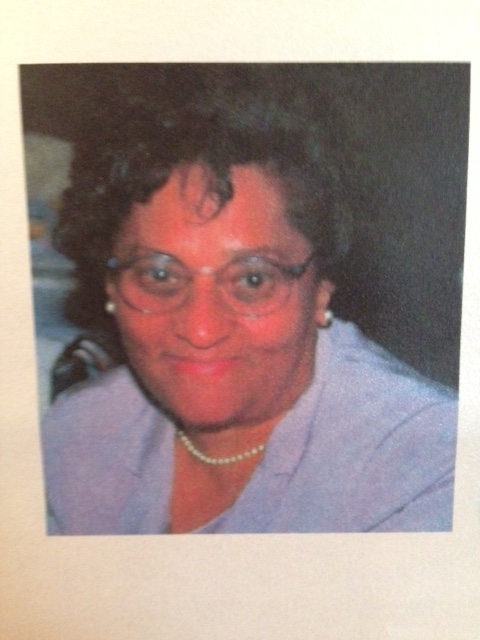
     Since I met her 9 years ago, I have always thought of Marie Claude Menuau,TOC, as one of those “saints next door”, an incredibly powerful example of what it means to live in God. Every time I would go to the eleven o’clock Mass at the Passionist Monastery in Jamaica, New York she was always there. She would have everything ready for the celebration of this public Mass. She would even help the priests with their vestments. As I would sit there, I would see her kneel before the Tabernacle after making sure there were enough Consecrated Hosts. She would do this with such reverence and devotion that I was truly touched.

I just knew that I was in the presence of someone especially close to God. Just by her quiet example she inspired me in those early days when I was re-discovering my faith. She would graciously let me do the readings for the Mass, when I asked, and whenever there was no-one else, she would also do this job, speaking in a clear, reverent manner, singing the psalms for us. She would even do the Holy Wash at home (the washing and ironing of the cloths used during Mass) every week.   

 Marie Claude was so totally focused on her ministry and her prayer before and after Mass that we never got a chance to talk. Even though I hardly knew her, when I went to the Holy Land in 2011, I found myself getting her a cross at one of the shops. She accepted it, quietly smiling, with such humble dignity.     About a year ago, she stopped coming to the eleven o’clock Mass most days. Other folks were taking over for her. I wasn’t sure, but did I see a look of pain in her face every time she came to do her job? Was she quietly carrying a very painful cross? She told my wife, Berta, that she could no longer do this job. My wife thought it had to do with the Holy Wash, but after this we never saw her again. A friend of hers told us she was very sick and went to a nursing home in Long Island, near her family. I missed her always at the eleven o’clock Mass, but life went on.

Why didn’t I get to know her better? I began to forget about her until the end of this March, when we found out that she had passed away. It seems so true, what the Bible says abut our being like chaff in the wind. We disappear from each other’s lives so quickly and completely. I have kept her all these weeks in my thoughts and prayers. I found myself daring to ask her for her intercession in Heaven, for I am sure she is a saint in God’s arms.      

I realize now that I was not the only one who had great admiration for this quiet woman of God. On April 5, a luminous Mass was celebrated in her name at Immaculate Conception Church, in Jamaica, Queens. Five priests that she had worked with were there. A large group of Lay Carmelites came to represent her, a beloved member of the order. Her fellow friends at the Legion of Mary  were there. A large number of lovely relatives were present to honor her and to participate in the Liturgy of the Word. But there were so many fellow parishioners at the service, who, like me, were drawn to the light of her memory.    

 Her niece spoke eloquently about her life. Marie Claude had been a teacher and school principal in her country of Haiti, and a librarian in New York City until she retired. She then dedicated her time to God, participating at her parish in so many ways, and bringing communion to home-bound folks and in nursing homes.   

 What a mystery each human being is. What a marvel, miracle. We are as “nothing”, like St. Paul of the Cross says, and yet, some of us are so possessed by Jesus that we cannot help but keep our eyes on that “goal, the prize of God’s upward calling, in Christ Jesus.” Some people, agents of God, help light the way for us. Thank you so much, Marie Claude Menuau. Please pray for us! 
Orlando Hernandez

The Story of Suzannah

The story of Suzanna from the Book of Daniel is one of our readings for Monday, the 5th week of Lent. It would made a great TV special.  You can’t listen to it without thinking of present efforts to stop violence against women and the problem of sexual abuse.

Her story is about, first of all,  an abuse of power. The two old men, judges with lots of power; think they can do anything they want. Abuse of power, combined with lust, is still behind so many of our sexual problems today. It’s found in the workplace, in politics, in the celebrity and sports world, and also unfortunately in the world of religion. 

Suzannah refuses to give in to their advances and she finds a champion in Daniel who faces up to these powerful men. 

That’s the second thing to remember about this story. It’s important to stand up for the truth and to fight against abuses of power wherever we find them. Jesus gives us an example in the mystery of his passion. We have examples too in Suzannah and Daniel. 

Readings for April 8-14

APRIL 8 Mon Lenten Weekday

Dn 13:1-9, 15-17, 19-30, 33-62 or 13:41c-62/Jn 8:12-20 (second choice) (251)

9 Tue Lenten Weekday

Nm 21:4-9/Jn 8:21-30 (252)

10 Wed Lenten Weekday

Dn 3:14-20, 91-92, 95/Jn 8:31-42 (253)

 The following readings may be used on any day this week, especially in Years B and C when the Gospel of the Man Born Blind is not read on the Fourth Sunday of Lent: Mi 7:7-9/Jn 9:1-41 (243).

The following readings may be used on any day this week, especially in Years B and C when the Gospel of Lazarus is not read on the Fifth Sunday of Lent: 2 Kgs 4:18b-21, 32-37/Jn 11:1-45 (250).

11 Thu Lenten Weekday

[Saint Stanislaus, Bishop and Martyr]

Gn 17:3-9/Jn 8:51-59 (254)

12 Fri Lenten Weekday

Jer 20:10-13/Jn 10:31-42 (255)

13 Sat Lenten Weekday

[Saint Martin I, Pope and Martyr]

Ez 37:21-28/Jn 11:45-56 (256)

14 SUN PALM SUNDAY OF THE PASSION OF THE LORD

Lk 19:28-40 (37)/Is 50:4-7/Phil 2:6-11/Lk 22:14—23:56 or 23:1-49 (38)

Two readings from John are suggested for this week, the Gospel of the Man Born Blind and the Gospel of Lazarus, because they are important readings for understanding Baptism. The man born blind receives the gift of sight; Lazarus receives the gift of life. 

In this weeks other gospel readings from John, Jesus says plainly as he celebrates the Jewish feasts who he is and what is his mission among us. He bring light and life.

”When you lift up the Son of Man,

then you will realize that I AM,

and that I do nothing on my own,

but I say only what the Father taught me.” (John 8)  

5th Sunday of Lent c: The Woman and Mercy Incarnate

For this week’s homily please watch the video below.

The Inhabitants of Jerusalem

St. John’s gospel carefully suggests that Jesus went regularly to Jerusalem to celebrate the main Jewish feasts. The beginning of chapter 7 sees him celebrating the feast of Tabernacles, a popular autumn feast that drew crowds of visitors to the city. As he enters the city, he’s noticed by some officials who earlier in his ministry in Galilee thought him dangerous and should be put to death. They’re watching him.

Another interesting group notices his arrival as well – “the inhabitants of the city.” They’re not the city’s leaders, nor visitors coming from outside; they’re the people who live there all the time.  They’re those who see who’s coming and going,  who watch the leaders, who follow the trends and pass the gossip. They watch Jesus with curiosity as he enters the temple area and begins to teach.

“Do our leaders now believe he’s the Messiah?” they say. “How can he be, because he’s from Galilee and no one will know where the Messiah is from?” 

Can we call the inhabitants of the city the undecided, the people who go back and forth and wait to see who wins or loses before taking sides, who wait to see what most people say, waiting for public opinion to tell them? 

Jesus criticizes  them, because they are undecided, because they stay on the fence and just watch. Life isn’t just for watching, life is for choosing what’s right and living according to your choice. (Jn 7, 1-2,10,25-30)

That’s what Lent is about–choosing what’s right and living according to that choice.  God asks us to be committed , to reaffirm our choice, and God’s grace is given to be committed. Pray for the grace, not to sit on the fence and just watch, but to decide. Pray to take sides, the right side.

Lord, give us the grace to know you, to love you and to serve you.

Give us the grace to make right decisions,

Give that grace now.

Give that grace always. 

Lord, have mercy.

Christ, have mercy.

Lord, have mercy.


Lord, Help Your Church

Don’t miss the first reading today from the Book of Exodus.

Moses prays to God who threatens to exterminate this “stiff-necked” people on their desert march and start all over again. Moses’ prayer is an interesting example of intercessory prayer.

He doesn’t tout the good points of his people, their virtues or their hard experiences in Egypt and escaping from there. He grants they’re “stiff-necked.” 

But it will look bad, Moses seems to say. God will look bad to the Egyptians; Abraham, Isaac and Jacob will look bad.

”Why, O LORD, should your wrath blaze up against your own people,

whom you brought out of the land of Egypt

with such great power and with so strong a hand?

Why should the Egyptians say,

‘With evil intent he brought them out,

that he might kill them in the mountains

and exterminate them from the face of the earth’?

Let your blazing wrath die down;

relent in punishing your people. 

Remember your servants Abraham, Isaac and Israel,

and how you swore to them by your own self, saying,

‘I will make your descendants as numerous as the stars in the sky;

and all this land that I promised,

I will give your descendants as their perpetual heritage.’”

I find myself like Moses. “Your church looks bad; our good and wise tradition looks bad. Our saints look bad. You look bad. Don’t exterminate us from the face of the earth.”

“So the LORD relented in the punishment

he had threatened to inflict on his people.”

We need to pray for our church.

Sabbath Rest

We can get bogged down in the readings from John’s gospel these last days of lent, long and often difficult to understand as they are. Today’s reading (John 5, 31-47) seems like a record from a court trial, and in many ways it is. Jesus presents witnesses to testify for him, vouching for his claims.

He claims to be God’s Son, true God from true God.

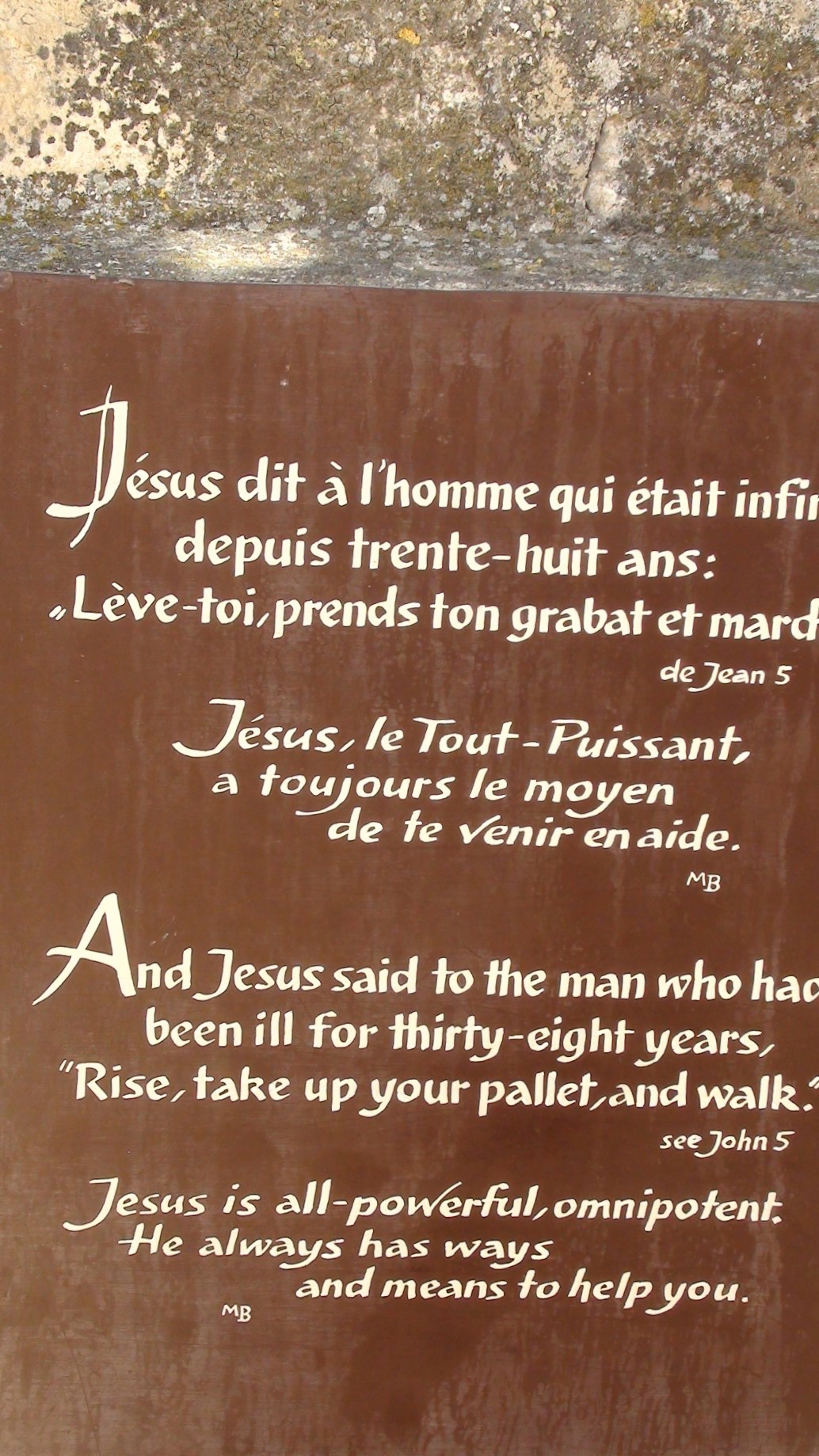
Unfortunately, lengthy readings cause us to forget what sparked them.  Jesus has come up for a feast; on a Sabbath day during that feast he meets a poor fellow who’s paralyzed, who can’t get into a pool of healing water to be cured.  For 38 years he’s been there. Jesus cures him and tells him to take up his mat and go. The man’s confronted by the Pharisees who criticize him for carrying his mat on the Sabbath and criticize Jesus for curing on the Sabbath. ( John 5,1-14)

It’s a dispute about the Sabbath Rest  and Jesus takes the side of God. He cures the man because mercy doesn’t take a day off. God’s merciful every day and so should we be. But Jesus doesn’t leave it at that, he takes it much further. He is the Lord of the Sabbath, God from God, Light from Light, true God from true God. He makes a divine claim. (John 5,17-30)

Father Francis Maloney in his commentary on John’s gospel ( The Gospel of John, Francis Moloney, S.D. B. Sacra Pagina, Liturgical Press) suggests we look at the issues a gospel raises. Don’t give up on readings hard to understand.

There’s the issue of the Sabbath Rest, for example. I’m sure Jesus kept the Sabbath Rest all his life, but he kept it in a merciful way, as his cure of the paralyzed man shows. At the same time, he recognized the value to the Sabbath Rest. It wasn’t a slavish law; it was a call to rest in a special way.  

In his encyclical Laudato si, Pope Francis says the Sabbath Rest is still needed today “when many people sense a profound imbalance which drives them to frenetic activity and makes them feel busy, in a constant hurry, which in turn leads them to ride rough shod over everything around them.”    

The law forbidding work and calling for rest on the seventh day arose “so that your ox and your donkey may have rest, and the son of your maidservant, and the stranger, may be refreshed” (Ex 23:12). Rest opens our eyes to the larger picture and gives us renewed sensitivity to the rights of others.” (LS 237)

That’s what the Sabbath Rest means. We need contemplative time that “opens our eyes to the larger picture and gives us renewed sensitivity to the rights of others.” We also need contemplative time to recognize the claims of Jesus. God and man, divine and human, he came to live and die for us. We need time to know him. 

Can A Mother Forget Her Child?

Wednesday of the 4th week of Lent was an important day for the early church in Rome which met today at the church of St. Paul Outside the Walls with its catechumens who were to be baptized at Easter. The cross was traced on their foreheads. They were given the Apostles’ Creed  to be memorized and reflected upon as a summary of faith.  They were also given the Our Father to be prayed as their basic prayer. 

Penitents were also reconciled to the church this week.

This week the Roman Catholic Church throughout the world, reading from the same scriptures read then, still gathers those to be baptized to pray for them and to give them the creed and the Our Father to sustain them in their Christian life. 

What about the penitents? Certainly there are penitents of the usual kind we should pray for today,  but  what about those who have left our church angry over the sexual abuse issue or issues of discrimination? What about the young who have left? We need to pray for them.

Our readings and prayers this week recognize that God gives the gift of faith and restores it in us.  John’s gospel, read from now on till after Easter at Mass, reminds us we need God’s grace.  The man waiting for 38 years at the pool of Bethesda, the man born blind, Nicodemus in the dark, Lazarus in the tomb are signs of the helplessness of humanity that waits for the life-giving Word of God. God alone makes the weak strong and those who have nothing live.

Waters from the temple flow through the world, yesterday’s reading from Ezechiel says. We’re not meant to be a small church.

Baptism is a gift meant for all, today’s first reading states. God is a mother who never forgets the children of her womb, but calls them from all parts of the world, Isaiah says:  

“I will cut a road through all my mountains,

and make my highways level.

See, some shall come from afar,

others from the north and the west,

and some from the land of Syene.

Sing out, O heavens, and rejoice, O earth,

break forth into song, you mountains.

For the LORD comforts his people

and shows mercy to his afflicted.

But Zion said, “The LORD has forsaken me;

my Lord has forgotten me.”

Can a mother forget her infant,

be without tenderness for the child of her womb?

Even should she forget,

I will never forget.”  (Isaiah 49, 8-15)

We start to read today from the long gospels of John where Jesus announces he is “I am” to an often hostile crowd . “I say to you, the Son cannot do anything on his own, but only what he sees the Father doing; for what he does, the Son will do also. For the Father loves the Son and shows him everything that he himself does…I do not seek my own will but the will of the one who sent me.”

John’s gospel was St. Paul of the Cross’ favorite and he drew much of his spirituality from it. John’s theme of the light shining in the darkness described the spiritual journey for him. The Word made flesh leads us to the Father through the dark world of  temptation and sin.

Even now, we can find rest in the light of God’s Presence. Even now, we can rest in the Father as adopted children. John’s Gospel calls us to remember our “nothingness”, a favorite expression of  St. Paul of the Cross. Only through humility and mystical death can we receive God’s saving power. Only through humility and mystical death does our church live.

The Weak Things

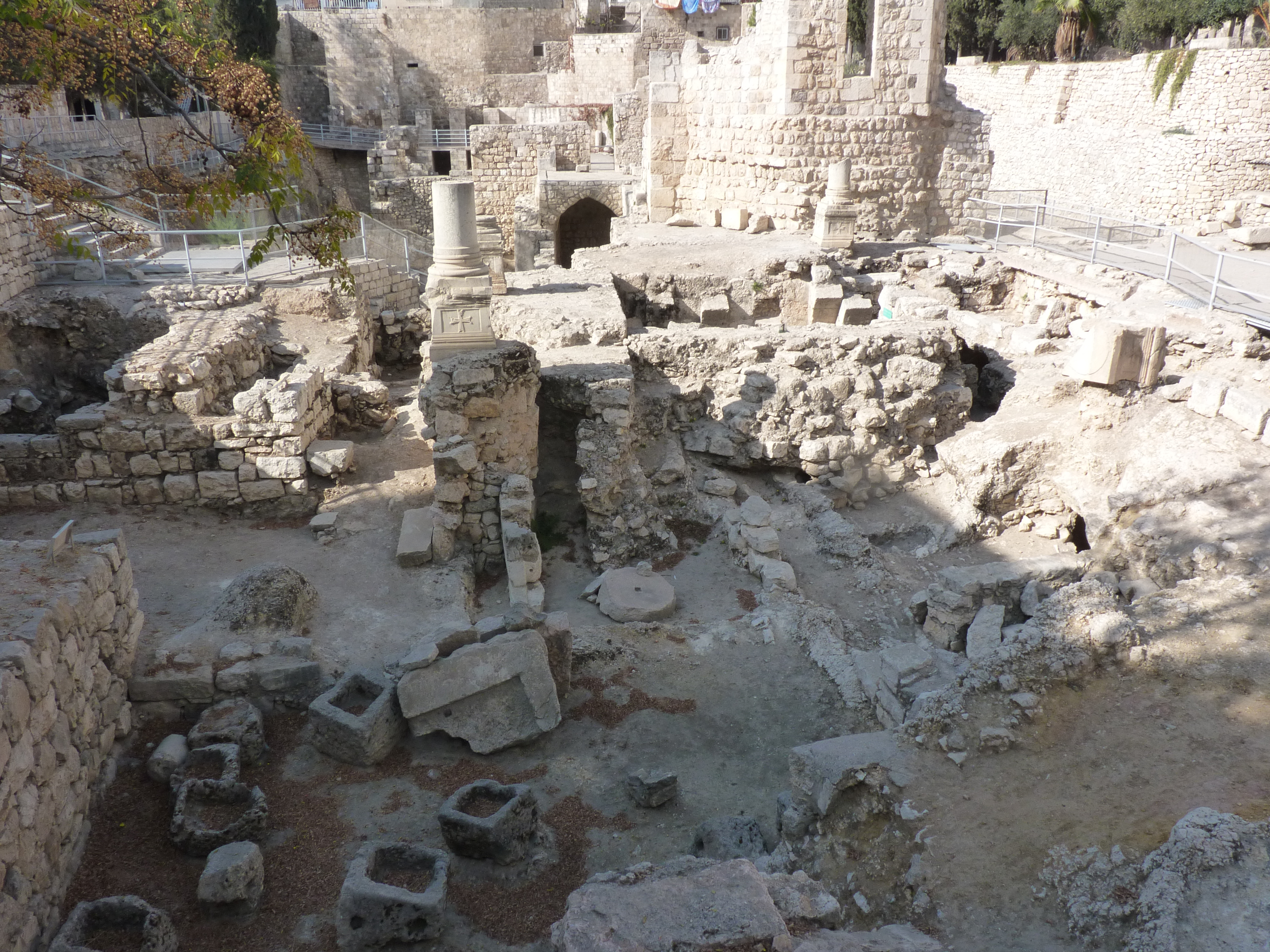
Bethesda, Ruins of the Healing Pool

It’s interesting to compare in John’s Gospel for today the paralyzed man at the pool at Bethesda with the official from Capernaum who sought a cure for his son.  Obviously, the official had standing in his community. He knew how to get things done and came intent on getting Jesus to do something for him. He was a resourceful man.

The paralytic at Bethesda, on the other hand, seems utterly resourceless. For 38 years he’s come to a healing pool– archeologists identify its location near the present day church of St.Anne in the city– and he can’t find a way to get into the water when it’s stirring. He’s paralyzed, too slow, and he doesn’t know how to get anybody to help him. He doesn’t approach Jesus, but Jesus approaches him.

“Do you want to be well?”

Instead of lowering him into the water, Jesus cures the paralyzed man directly and tells him to take up the mat he was lying on and walk.

Through it all, the man has no idea who cured him until Jesus makes himself known later in the temple area. He’s slow in more ways than one.

“God chose what is weak in the world to shame the strong; God chose what is low and despised in this world, things that are not, to reduce to nothing things that are, so that no one might boast in the presence of God,” St. Paul wrote to the Corinthians.

Here’s one of the weak, the lowly, the nobodies God chooses, and he will not be the only one.