Ash Wednesday People

Call of Matthew, Tissot

Our church was overflowing with people on Ash Wednesday; they came all day for ashes. The Ash Wednesday People.

Is Matthew, the tax collector, whose call is remembered so beautifully in today’s Lenten gospel, one of them? “I came to call sinners,” Jesus says, the people on the edges, the outsiders, the ones you don’t see much in church.

Does Mathew, the tax collector, whom Jesus called, represent them all? During Lent Jesus calls unlikely people besides the “just” to follow him. 

Great graces are given in Lent.

Besides individuals whole societies are called to be restored, our first reading today from Isaiah say that::


“Thus says the LORD:

If you remove from your midst oppression,

false accusation and malicious speech;

If you bestow your bread on the hungry

and satisfy the afflicted;

Then light shall rise for you in the darkness,

and the gloom shall become for you like midday;

Then the LORD will guide you always

and give you plenty even on the parched land.

He will renew your strength,

and you shall be like a watered garden,

like a spring whose water never fails.

The ancient ruins shall be rebuilt for your sake,

and the foundations from ages past you shall raise up;

“Repairer of the breach,” they shall call you,

“Restorer of ruined homesteads.” (Isaiah 58.9-14)

Remember you are Dust

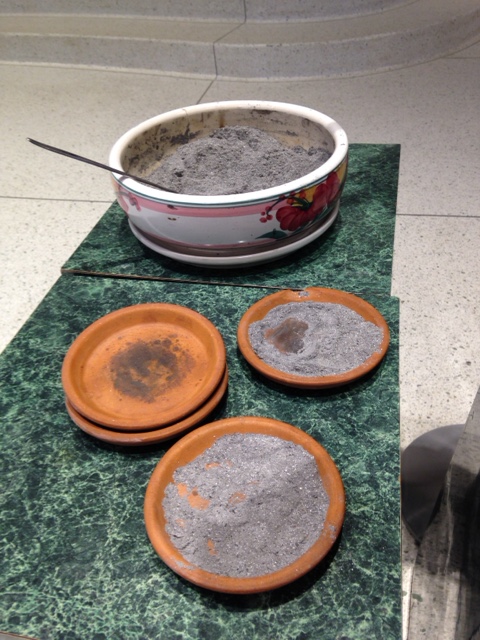
On Ash Wednesday, the beginning of Lent, ashes are bestowed in the form of a cross.  “Remember you are dust, and to dust you shall return.” A rite inspired by the Book of Genesis.

In the first creation account, Genesis I, God creates the world in 6 days. On the 6th day he  creates human beings in his image and likeness, giving them dominion over the earth and its creatures. On the 7th day God rests, finding everything very good. 

The second creation account, Genesis 2, offers another version of the creation story. Instead of  watery chaos, God creates from a dusty earth, enlivened by a stream of water. “Then the LORD God formed the man out of the dust of the ground and blew into his nostrils the breath of life, and the man became a living being.The LORD God planted a garden in Eden, in the east, and placed there the man whom he had formed. “ (Genesis 2, 7-8)

God, like a farmer, creates a world that’s a garden, with trees “delightful to look at and good for food, with the tree of life in the middle of the garden and the tree of the knowledge of good and evil.” Adam and Eve take fruit from that forbidden tree and begin to feel the consequences immediately.

Where are you?” God asks Adam, hiding naked in the garden. The question is asked, not in judgment or in anger, but from love and concern. “Where are you?” a merciful God asks..

 “Where are you?” The sentence for disobedience is already being  carried out. The two do not die physically immediately, they live on for hundreds of years, scripture says.  But forms of death and a new uneasiness disturb their relationship with each other, with the animal world, and with the earth itself. 

They blame each other. “The woman made me do it.” Their relationship with each other has changed. Their relationship with the animal world is broken; they’re betrayed by the wisest of animals, the snake. The earth that gave them abundant food and drink and a delightful beauty becomes hard and unyielding. The first physical death recorded in Genesis is the murder of Abel by his brother Cain. Violence enters the world.

When God asks “Where are you?” death has already come. God is not leveling a sentence. God comes in loving kindness to the creature made in his image. A God of mercy comes.

God fashions garments of skin for Adam and Eve as they’re driven from the garden. God promises a woman, a new Eve, will be mother of all the living. 

The Jewish scribes who fashioned the ancient creation stories into the Book of Genesis end it with God’s call and promise to Abraham. A merciful God does not abandon the world he made . A new people will bring life to the world.

We symbolize the Genesis story in the ashes, placed on us in the form of a Cross. Jesus Christ comes to enliven all creation. God so loves the world he made. 

Ash Wednesday

cross copy

On Ash Wednesday ashes are placed on our foreheads in the form of a cross as simple words are said: “Remember you are dust and to dust you shall return.”

A reminder we will die. Our physical life will end, the ashes say; the day and hour unknown.

But there’s more. The ashes are in the form of the cross, which means Jesus Christ changes death. “Dying, you destroyed our death. Rising, you restored our life.” Jesus Christ has made his risen life ours. He promises we will enter into his glory, though his promise is hidden now. We believe it is so..

ashes

St. Paul of the Cross once wrote in a letter about mystical death, something to think about today,.

“Life means dying every day as servants and friends of God. ‘We die daily; for you are dead and your life is hidden with Christ in God.’ We undergo a mystical death.

“I’m confident you’ll be reborn to new life in the sacred mysteries of Jesus Christ, as you die mystically in Christ more and more each day, in the depths of the Divinity. Let your life be hidden with Christ in God…

“What’s mystical death? It means concentrating on divine life, desiring God, accepting all God sends without worry. It means letting God work in your soul, in the sanctuary of your soul, where no creature, angelic or human, can go. Know that God is working there and being born in you as you mystically die.

“But I’m in a hurry, and this note is getting too mystical, so take it with a grain of salt. It’s hard to understand. “    (Letter, Dec 28, 1758)

Yes, God’s work is hard to understand. God works in unknown ways, hidden yet sure. We accept it, desire it, try to be attentive to it, but still we can only glimpse what God does in his mercy and love.

The saint has to hurry off, he says– like the rest of us. He’s going somewhere and has something to do, someone to see. He tells his correspondent we can’t think about deep things too long. No, we can’t.

“O death, where is your victory? O death where is your sting?….Thanks be to God who has given us the victory through our Lord Jesus Christ. ( 1 Corinthians, 15, 55,57)

“In you, Lord, is our hope. ..We shall dance and rejoice in your mercy.” (Evening Prayer, Office of the Dead)

7th Sunday of the Year a: Forgiveness

For this weeks homily please play the video below.

Human versus Divine Thinking

DSC00804“Who do you say that I am?” Jesus asks his disciples on the way to Caesarea Philippi. “You are the Christ,” Peter says in reply, going beyond what the crowds were saying then of Jesus.

But then as Jesus speaks of suffering greatly, being rejected, killed and rising after three days, Peter rejects his prediction. In reply Jesus says to him “Get behind me Satan. You are thinking not as God does, but as humans do. ” (Mark 8,27-33)

The Gospel of Mark, more than the others, presents us with the human Peter, thinking as humans do. He appears in the story of the Passion of Jesus failing miserably as he denies Jesus three times and deserts him in his last hours. If Peter is the voice behind Mark’s gospel, he certainly hasn’t made himself a hero nor does he excuse his failures. Many times he seems to say as he says elsewhere in the gospel; “I’m a sinful man.”

Yet, he was called upon by Jesus to lead and teach.

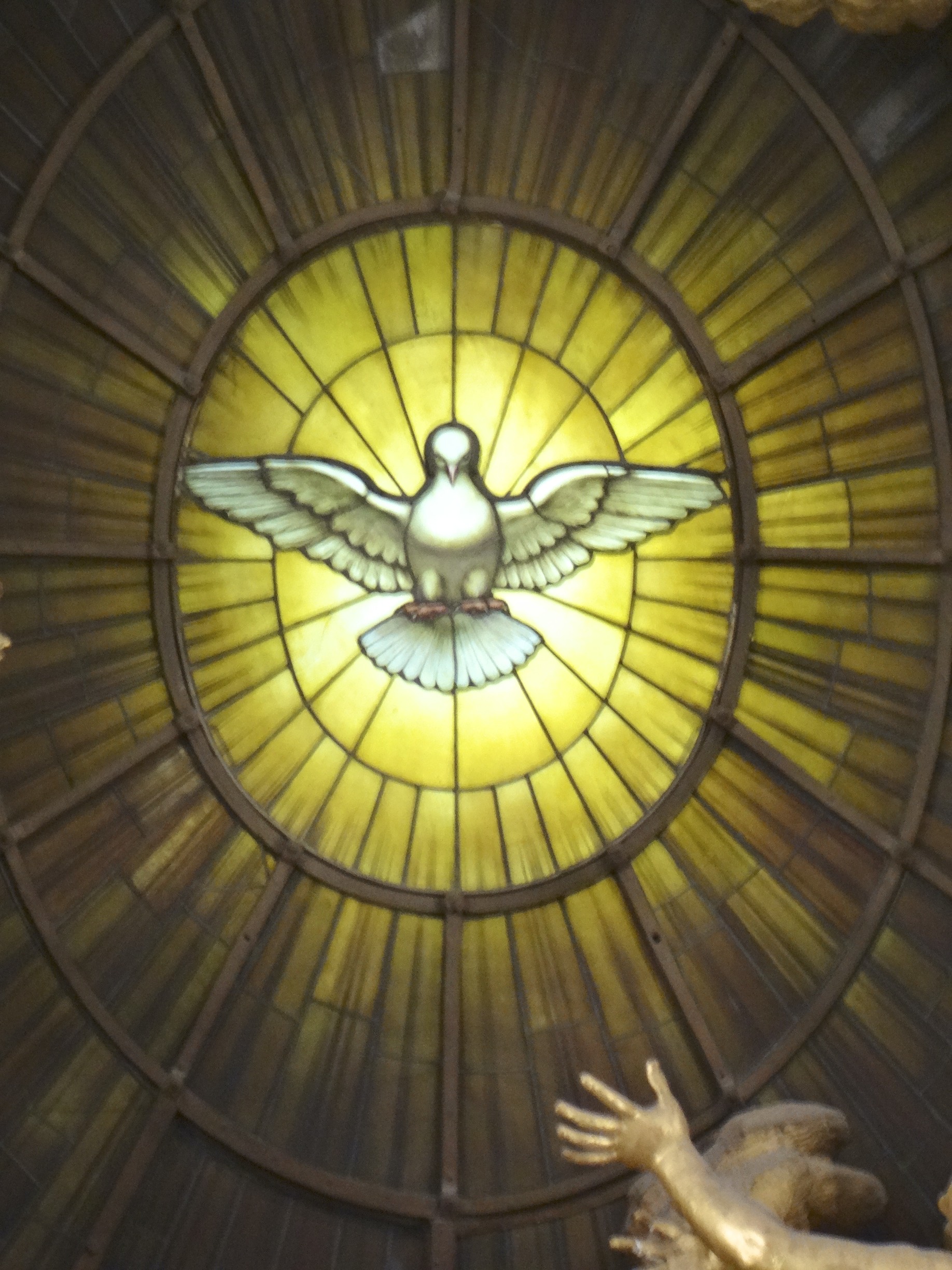
In a few days (February 22nd) we’re going to celebrate the Feast of the Chair of St. Peter. The chair is in the Vatican Basilica beneath the window of the Holy Spirit which sheds its bright light upon it. It’s a teacher’s chair, not a throne, and from Mark’s gospel we get a picture of the one who, with the Spirit’s help, leads and teaches the church.

A human hand reaches from the darkness to the divine.

Indigenous Wisdom, Indigenous Holiness

Last night ABC News reported on the secret war in the Amazon, as that region is being plundered by timber merchants, ranchers and other third parties. Pope Francis in his exhortation “Querida Amazonia” recently said the world should be outraged by what’s happening there. It’s an ecological and human disaster.

The loss of the Amazon region and great land forests in the Congo and Borneo will impoverish the earth and humanity, the pope writes. Already, the majority of the population of the Amazon have been driven away from their ancestral home to live in big cities where they experience exploitation, xenophobia, sexual exploitation and human trafficking. (10)

We’re losing a treasure of the natural world. The pope bemoans the “disappearance of thousands of plant and animal species which we will never know, which our children will never see, because they have been lost forever. The great majority become extinct for reasons related to human activity. Because of us, thousands of species will no longer give glory to God by their very existence, nor convey their message to us. We have no such right” (54)

The pope calls the Amazon “a theological locus”, a place that awakens the sense of God, now so weakened by our technological world. “ Its loss diminishes our contemplative sense. “Let us remember that ‘if someone has not learned to stop and admire something beautiful, we should not be surprised if he or she treats everything as an object to be used and abused without scruple’. On the other hand, if we enter into communion with the forest, our voices will easily blend with its own and become a prayer: “as we rest in the shade of an ancient eucalyptus, our prayer for light joins in the song of the eternal foliage’”

“Jesus said: ‘Are not five sparrows sold for two pennies? Yet not one of them is forgotten in God’s sight’ (Lk 12:6). God our Father, created each being in the universe with infinite love, …Jesus himself cries out to us from their midst, “because the risen One is mysteriously holding them to himself and directing them towards fullness as their end. The very flowers of the field and the birds which his human eyes contemplated and admired are now imbued with his radiant presence”.

An “indigenous wisdom” and “indigenous holiness” is being lost, the pope says. “The aboriginal peoples give us the example of a joyful sobriety and in this sense, “they have much to teach us”.[101] They know how to be content with little; they enjoy God’s little gifts without accumulating great possessions; they do not destroy things needlessly; they care for ecosystems and they recognize that the earth, while serving as a generous source of support for their life, also has a maternal dimension that evokes respect and tender love.”  (71)

Teach us to number our days aright, O Lord, that we may gain wisdom of heart.

Querida Amazonia

Pope. Francis, sketch by Duk Soon Fwang

I was preaching a retreat to my community in Pittsburgh all last week. My community, the Passionists, was founded 300 years ago in Italy by St. Paul of the Cross– before the United States. And last week we were thanking God for those 300 years.

During the retreat we were reflecting on three questions. Where are we in this world of ours? Where are we in this church of ours? And where are we in this community of ours. Big questions.

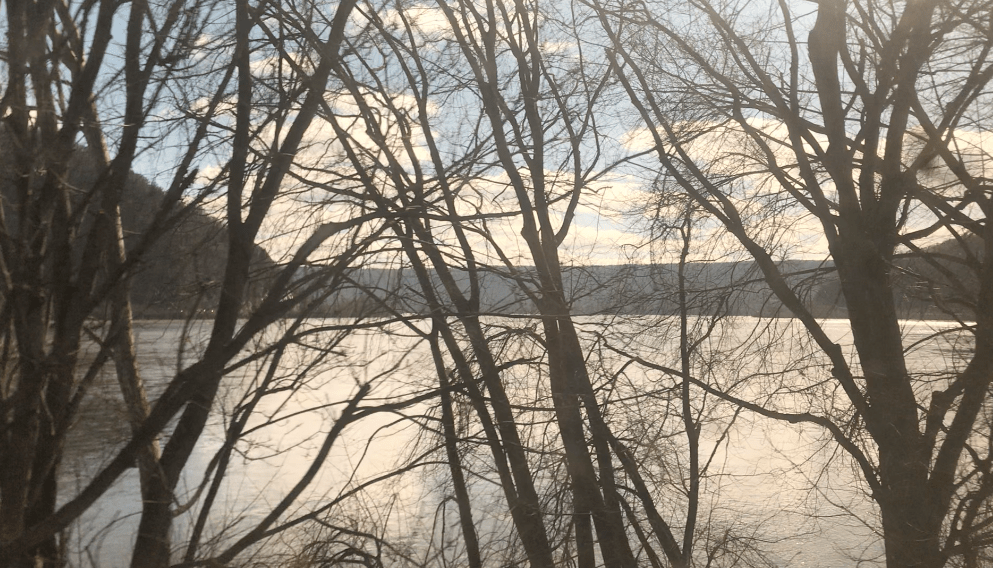
I went to Pittsburgh and came back by train. A 9 hour trip. You can do a number of things on a 9 hour trip, read a book or look at your iPad, close your eyes and sleep, talk to someone next to you, or look out the window.  I spent most of the time looking out the window. 

You see a lot of our history on that route looking out the window. The train from New York to Pittsburgh follows the old roads, that follow the rivers and the old Indian trails that were the first pathways westward through our country. At Trenton, you go over the Delaware River, that George Washington crossed, Philadelphia where the Declaration of Independence was signed, You pass through the beautiful farmlands in the Lehigh Valley, then climb into the mountains after Harrisburg till you get to Pittsburgh.

We live in a beautiful country.  

But you can also see challenges our country’s facing as you look out the  train window. The rivers are still beautiful, but some, like the Passaic, the Hackensack, parts of the Susquehanna, Juanita, Ohio and Monongahela are spoiled from human waste. Some of the beautiful mountains are gashed from abandoned strip mines. 

From the railroad you can also see parts of our country that aren’t doing well either Abandoned factories and steel mills and empty stores are frequent sights along the railroad tracks, especially as you  pass through cities like Altona and Johnstown and Greensburg and on the outskirts of Pittsburgh itself. A gigantic empty factory stands near the train station at Johnstown. How many people did that put our of work?

I was thinking at the end of my trip, “Wouldn’t it be good if all those involved in our national political campaign would ride the train from New York to Pittsburgh and tell what they see from the window and what they would do. 

Last week Pope Francis delivered his response to a meeting on the Amazon region that he called recently, “Querida Amazonia”. He’s  looking out the window. The Amazon region is “a multinational and interconnected whole, a great biome shared by nine countries:” During the meeting the question about married priests and the ordination of women came up, but the pope obviously didn’t want to address these questions at this time. He wants to emphasize the care of the environment and care of the people who live in the Amazon. 

The issues facing the Amazon are issues facing the whole world, the pope says. Before him, Pope Benedict condemned “the devastation of the environment and the Amazon basin, and the threats against the human dignity of the peoples living in that region”. Francis is passionate about the Amazon.

“The equilibrium of our planet also depends on the health of the Amazon region. Together with the biome of the Congo and Borneo, it contains a dazzling diversity of woodlands on which rain cycles, climate balance, and a great variety of living beings also depend. It serves as a great filter of carbon dioxide, which helps avoid the warming of the earth.” (48)

Powerful industries are exploiting the area, looking at it as a resource instead of a home, the pope says, but the interest of a few powerful industries should not be considered more important than the good of the Amazon region and of humanity as a whole.

The pope keeps calling the church and the world itself to “an ecological conversion”, but we’re slow to grasp what’s happening. We seem to think technology will save us; and we don’t like changing our lives.

 Obviously, the pope’s looking out the window at the world. So should we.

Readings for the 6th Week

February 17 Mon Weekday

[The Seven Holy Founders of the Servite Order]

Jas 1:1-11/Mk 8:11-13

18 Tue Weekday

Jas 1:12-18/Mk 8:14-21 

19 Wed Weekday

Jas 1:19-27/Mk 8:22-26 

20 Thu Weekday

Jas 2:1-9/Mk 8:27-33 

21 Fri Weekday

[Saint Peter Damian, Bishop and Doctor of the Church]

Jas 2:14-24, 26/Mk 8:34—9:1 

22 Sat The Chair of Saint Peter the Apostle Feast

1 Pt 5:1-4/Mt 16:13-19 

23 SUN SEVENTH SUNDAY IN ORDINARY TIME

Lv 19:1-2, 17-18/1 Cor 3:16-23/Mt 5:38-48 (79)

6th Sunday A: Commandments about Love

Please watch today’s homily by selecting the video below:

Signs of Holiness Today

Pope Francis describes 5 “signs” of the holiness we need today in his exhortation “Guadete et exultate”. The first is perseverance, patience and meekness. God calls us in this “fast-paced, noisy and aggressive world” to keep on the right path ourselves, but also not desert others in bad times when anger and aggressiveness, ridicule and lying infest the world around us. (112-121) 

Keep your sense of humor,. we need Joy today. “Hard times may come, when the cross casts its shadow, yet nothing can destroy the supernatural joy that “adapts and changes, but always endures, like a flicker of light born of our personal certainty that, when everything is said and done, we are infinitely loved’”.

Boldness and passion are other signs of holiness for today. (129– 131} “Look at Jesus. His deep compassion reached out to others. It did not make him hesitant, timid or self-conscious, as often happens with us. Quite the opposite. His compassion made him go out actively to preach and to send others on a mission of healing and liberation. Let us acknowledge our weakness, but allow Jesus to lay hold of it and send us too on mission. We are weak, yet we hold a treasure that can enlarge us and make those who receive it better and happier. Boldness and apostolic courage are an essential part of mission.”

“Like the prophet Jonah, we are constantly tempted to flee to a safe haven. It can have many names: individualism, spiritualism, living in a little world, addiction, intransigence, the rejection of new ideas and approaches, dogmatism, nostalgia, pessimism, hiding behind rules and regulations. We can resist leaving behind a familiar and easy way of doing things. Yet the challenges involved can be like the storm, the whale, the worm that dried the gourd plant, or the wind and sun that burned Jonah’s head. For us, as for him, they can serve to bring us back to the God of tenderness, who invites us to set out ever anew on our journey.” (134)

Don’t go it alone, the pope says. We need to be with other in community, not apart by ourselves where we can “ grow too isolated, lose our sense of reality and inner clarity.” (141) 

The common life, whether in the family, the parish, the religious community or any other, is made up of small everyday things. This was true of the holy community formed by Jesus, Mary and Joseph, which reflected in an exemplary way the beauty of the Trinitarian communion. It was also true of the life that Jesus shared with his disciples and with ordinary people. Let us not forget that Jesus asked his disciples to pay attention to details.

The little detail that wine was running out at a party.

The little detail that one sheep was missing.

The little detail of noticing the widow who offered her two small coins.

The little detail of having spare oil for the lamps, should the bridegroom delay.

The little detail of asking the disciples how many loaves of bread they had.

The little detail of having a fire burning and a fish cooking as he waited for the disciples at daybreak.

 A community that cherishes the little details of love,[107] whose members care for one another and create an open and evangelizing environment, is a place where the risen Lord is present, sanctifying it in accordance with the Father’s plan. There are times when, by a gift of the Lord’s love, we are granted, amid these little details, consoling experiences of God.” (144-145)

Constant prayer is needed today, the pope says. The saints found ”an exclusive concern with this world to be narrow and stifling, and, amid their own concerns and commitments, they long for God, losing themselves in praise and contemplation of the Lord. I do not believe in holiness without prayer, even though that prayer need not be lengthy or involve intense emotions.” 

“ We need to remember that “contemplation of the face of Jesus, died and risen, restores our humanity, even when it has been broken by the troubles of this life or marred by sin. We must not domesticate the power of the face of Christ”.[113] So let me ask you: Are there moments when you place yourself quietly in the Lord’s presence, when you calmly spend time with him, when you bask in his gaze? Do you let his fire inflame your heart? Unless you let him warm you more and more with his love and tenderness, you will not catch fire. How will you then be able to set the hearts of others on fire by your words and witness? If, gazing on the face of Christ, you feel unable to let yourself be healed and transformed, then enter into the Lord’s heart, into his wounds, for that is the abode of divine mercy.” (151-152)