February 8-14

FEBRUARY 8 Mon Weekday

[Saint Jerome Emiliani; Saint Josephine Bakhita, Virgin]

Gn 1:1-19/Mk 6:53-56 

9 Tue Weekday

Gn 1:20—2:4a/Mk 7:1-13 

10 Wed Saint Scholastica, Virgin Memorial

Gn 2:4b-9, 15-17/Mk 7:14-23 

11 Thu Weekday. [Our Lady of Lourdes]

Gn 2:18-25/Mk 7:24-30 

12 Fri Weekday.  SOLEMN COMMEMORATION OF THE PASSION (Passionists)

Isaiah 15:1-12/ 1 Cor 1:18-25/ John 19:17-30

13 Sat Weekday

Gn 3:9-24/Mk 8:1-10 

14 SUN SIXTH SUNDAY IN ORDINARY TIME

Lv 13:1-2, 44-46/1 Cor 10:31—11:1/Mk 1:40-45

The Book of Genesis is read this week and the weekdays until Ash Wednesday, February 17th. It’s the first book of the Torah, the 5 foundational books of the Jewish scriptures. 

Saint Josephine Bakhita, an abused woman; Saint Scholastica, a sister whose prayers brought on a storm, are saints we celebrate this week.

February 11 is the Feast of Our Lady of Lourdes.  Beginning on this day until July 16,1858, Mary appeared 18 times to the humble Bernadette Soubirous in Lourdes, France.  We have a Lourdes grotto in our garden, so some of us will visit it (weather permitting) on the feast.

We’re drawing near to Lent. The Passionists celebrate the Solemn Commemoration of the Passion this Friday to prepare for it. 

The readings for most of this week can be found at https://bible.usccb.org/readings/calendar

5th Sunday B: Peter’s Mother-in-Law

For this week’s homily please watch the video below.

February 1-7


February 2 is the Feast of the Presentation of Jesus in the Temple, a major feast of our calendar.

February 5 and February 8 we remember two valiant women saints, St. Agatha and St. Josephine Bakhita. Both faced the evils of human trafficking and abuses against women. Timely examples of present evils and God’s grace that works against them.

February 6 we celebrate Saint Paul Miki and Companions, martyrs of the church in Japan. Our calendar reminds us every nation has holy people. That day let’s remember Japan, our church there and its holy people.

Our readings this week continue from chapters 5 and 6 of Mark’s gospel. He begins chapter 5: “They came to the other side of the sea, to the territory of the Gerasenes.” That’s pagan territory. He begins chapter 6: ”He departed from there and came to his native place, accompanied by his disciples.” Two important destinations for us, as well. Our own hometown and the world beyond.

FEBRUARY 1 Mon Weekday. Heb 11:32-40/Mk 5:1-20 

2 Tue The Presentation of the Lord Feast

Mal 3:1-4/Heb 2:14-18/Lk 2:22-40 or 2:22-32

3 Wed Weekday

[Saint Blaise, Bishop and Martyr; Saint Ansgar, Bishop]

Heb 12:4-7, 11-15/Mk 6:1-6 

4 Thu Weekday

Heb 12:18-19, 21-24/Mk 6:7-13 

5 Fri Saint Agatha, Virgin and Martyr Memorial

Heb 13:1-8/Mk 6:14-29 

6 Sat Saint Paul Miki and Companions, Martyrs

Memorial Heb 13:15-17, 20-21/Mk 6:30-34

7 SUN FIFTH SUNDAY IN ORDINARY TIME

Jb 7:1-4, 6-7/1 Cor 9:16-19, 22-23/Mk 1:29-39 


Rejected at Nazareth: Mark 6:1-8

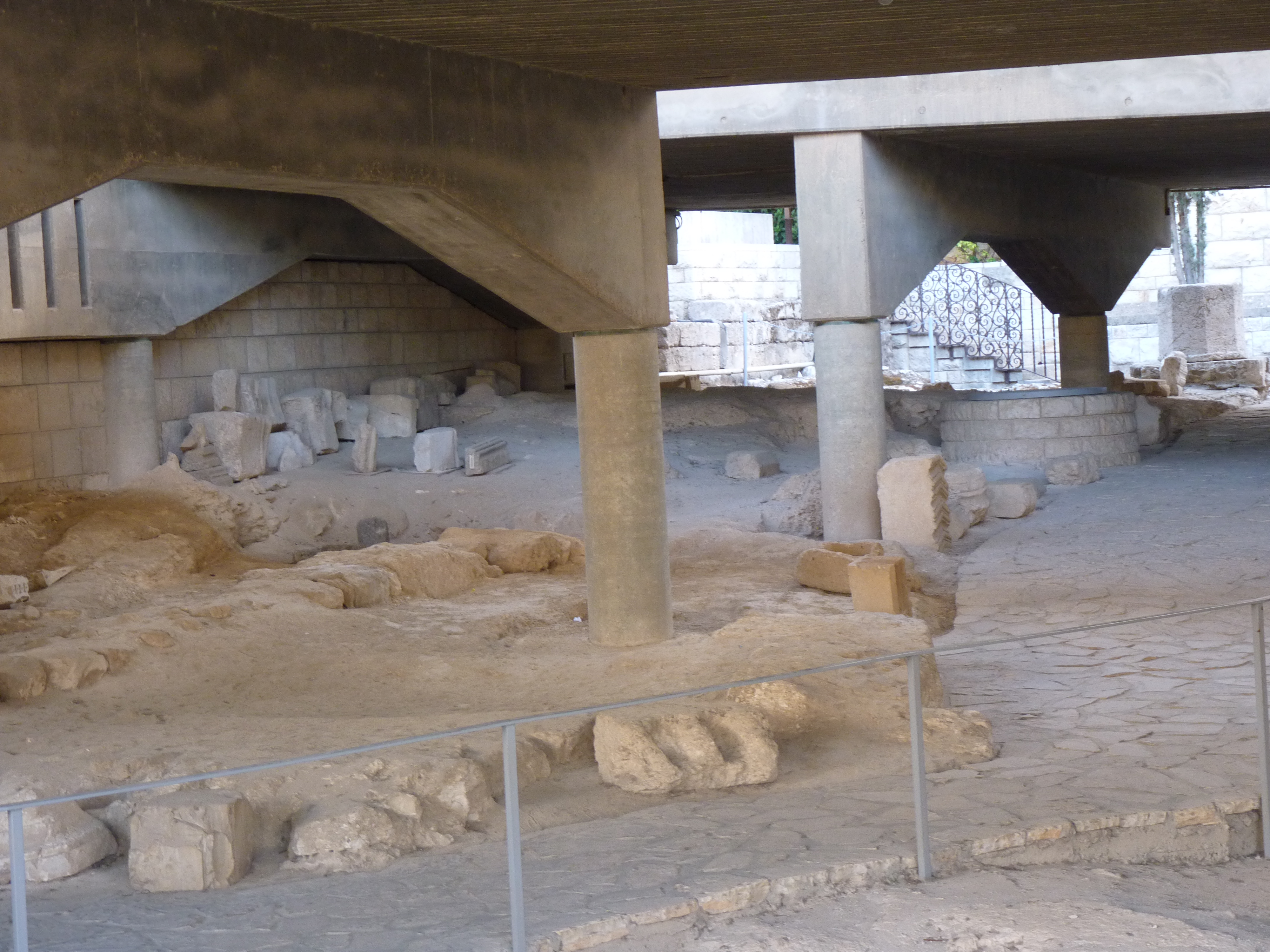
Nazareth: Ruins of the Town

Our gospel reading at Mass today is from the 6th chapter of Mark. “Jesus departed from there and came to his native place accompanied by his disciples.” (Mark 6, 1)

He came to Nazareth from Capernaum where he brought back the daughter of Jairus from the dead and healed the woman who touched his garment. (Mark 5, 21-43) That news surely reached his hometown before he arrived.

When Jesus enters their synagogue on the Sabbath, the people are initially impressed by his teaching and news of “his mighty deeds” but then they recall he’s “‘the carpenter, the son of Mary, and the brother of James and Joses and Judas and Simon? And are not his sisters here with us?’ And they took offense at him.“

“‘A prophet is not without honor except in his native place and among his own kin and in his own house,” Jesus tells them. “So he was not able to perform any mighty deed there, apart from curing a few sick people by laying his hands on them. He was amazed at their lack of faith. “ (Mark 6, 1-6)

Over and over we hear in Mark’s Gospel what we wouldn’t expect: that Jesus was rejected in places where he went. In Capernaum, he drives out an unclean spirit, cures Peter’s mother-in-law and, at the end of the day, the whole town is at his door. {Mark 1, 16-34) But the enthusiasm doesn’t last. Capernaum and other towns in Galilee first receive him, then reject him. (Matthew 11,23)

In pagan territory, over the Sea of Galilee on the east bank, he also meets rejection. He casts out the unclean spirit there, as he did at Capernaum, but when the pigs stampede down into the sea the townspeople ask him to leave. He’s endangering their economy, they say. (Mark 5, 1-20)

Jesus doesn’t have continual path of success in his ministry, or an unbroken parade of achievements, Mark insists. Even his own hometown, his family, don’t receive him well. Final rejection takes place on Calvary in his passion and death, but rejection and misunderstanding meet him all through his public life.

Nazareth has a prominent place in the story of Jesus’ rejection. From his earliest years as a child, he was thought little of there, it seems. Later apocryphal gospels that date from the 2nd century relate miraculous stories about Jesus as a child in Nazareth, but they lack credibility. Jesus did nothing remarkable in his “hidden years.” Some blissful modern portrayals in music and art miss this point. They did not watch his every move with expectation as he grew up.

Jesus “was not able to perform any might deed” in Nazareth; he did not impress or convert many there, as far as we know. He was just “the carpenter’s son.”  Like any other human being, he seemed part of the world in which he lived, someone of the time and place. Subject to Mary and Joseph, hardly noticed, “ he grew in wisdom and age and grace before God and man.” (Luke 2,52)

From his time and through the centuries, Nazareth never seems to have accepted the one we call God’s Son. Historians say early Jewish-Christians after his resurrection were expelled from the town. The Christian presence in Nazareth has been small, even till today.

Nazareth is part of the mystery of the Incarnation. The scandal of the Incarnation.

4th Sunday b: Deliver Us From Evil

For this week’s homily please watch the video below.

3rd Sunday: The Hill We Climb

In this Sunday’s reading from Mark’s Gospel Jesus calls some fishermen on the Sea of Galilee to follow him and announce the coming of God’s kingdom. When we hear Jesus calling them, we should hear him calling us. In our first reading God calls Jonah to set out to convert the great city of Nineveh. We should hear God calling us to change the world we live in.  

Last week at the Inauguration in Washington, DC, President Biden and Vice-President Harris were called to serve the people of this country. It was more than a political event, a transfer of power. It was more than a call to two people, or some people, or a political party. It was a call to all the people of the nation to come together to work for its good. A call to us.

That was the message of the speeches, the prayers, the poems, the songs, the symbols of last Wednesday. 

It was the message that Amanda Gorman, the 23year old black woman, spoke that day in her inspired poem  “The Hill We Climb.”

“We are striving to forge a union with purpose,

To compose a country committed to all cultures, colors, characters and conditions of man.

And so we lift our gaze not to what stands between us,

But what stands before us.

We close the divide, because we know to put our future first,

We must first put our differences aside.

We lay down our arms

So we can reach out our arms to one another.

We seek harm to none and harmony for all.

Let the globe, if nothing else, say this is true:

That even as we grieved, we grew,

That even as we hurt, we hoped,

That even as we tired, we tried,

That we’ll forever be tied together, victorious—

Not because we will never again know defeat

But because we will never again sow division.

Scripture tells us to envision

That everyone shall sit under their own vine and fig tree,

And no one shall make them afraid.

If we’re to live up to our own time,

then victory won’t lie in the blade but in all the bridges we’ve made.

That is the promised glade,

The hill we climb if only we dare it.

Because being American is more than a pride we inherit,

It’s the past we step into and how we repair it.”

That message captured the day, I think. Amanda got it right. We need a president and vice-president, governments, political parties, but “we” climb the hill. All of us. We lift up our eyes, we close the divide, we put our differences aside, we reach out our arms, we grieve and grow, get tired and keep trying, we climb the hill and dare it.

That’s also the message of our scriptures. Jesus called the fishermen along the Sea of Galiee and they followed him. He also calls us to dare to go with him. God called Jonah to go into the great city of Nineveh and change it, and he did, reluctantly. He calls us too.

It’s a steep hill God calls us to climb. We face a pandemic, climate change, racism, a broken economy, fear of the stranger. With God’s grace, we will climb it. 

“For there is always light if only we’re brave enough to see it,

If only we’re brave enough to be it.”  

3rd Sunday b: A Paradigmatic Day

For this week’s homily please watch the video below.

2nd Sunday b: We Go to God Together

For this week’s homily, please play the video below:

www.ourchildrenpray.com

As I’ve contributed over the years to this blog, “The Victor’s Place”, I’ve thought about its aim and its readers. The aim of this blog is to provide others with a taste of our Christian prayer tradition found in our liturgy, its readings from scripture, its feasts and seasons and its celebration of saints. It’s “daily bread” for daily life.

This blog is followed by adults from all over. But what about children? They need the “daily bread” that comes from prayer and reflection too.

Here’s “OurChildrenPray”, a website for helping children to pray. Its aim is “offer support for those helping children to pray and thus to begin their relationship with God. It provides short explanations from the Catholic tradition for the ordinary prayers we say and introduces children to the seasons of the year we celebrate.”

If you are a parent, grandparent, godfather, godmother, or someone guiding children take a look at this site. Children thirst for God from birth. Teaching them to pray is one of the greatest things we can do for them.

Fishermen from Galilee

We’re beginning to read from the Gospel of Mark in the liturgy these days. Yesterday, Jesus called disciples, some fishermen, to be “fishers of men”  and to announce his Kingdom. (Mark 1, 14-20) They were the people he chose.

The gospels never enhance or exaggerate their profile. They’re fishermen. Hardly the people you would pick to begin a worldwide movement. But their power is not the power that brings about the Kingdom. It’s Jesus, who shared his mission with them and, surprisingly, with us.

A famous 5th century mosaic in the  Church of San Pudentiana in Rome pictures the apostles dressed as Roman senators solemnly seated at a messianic banquet. Wouldn’t they  squirm in a role like that? Imagine Peter going about the city dressed like a Roman senator.

I don’t think so.

I think they always remembered who they were and where they came from. They knew their limitations and their failings. They were fishermen from Galilee, who had been invited to be part of a great enterprise through no merit of their own.

There’s nothing wrong with humility, which is recognizing the truth about yourself and where  power and wisdom come from.